
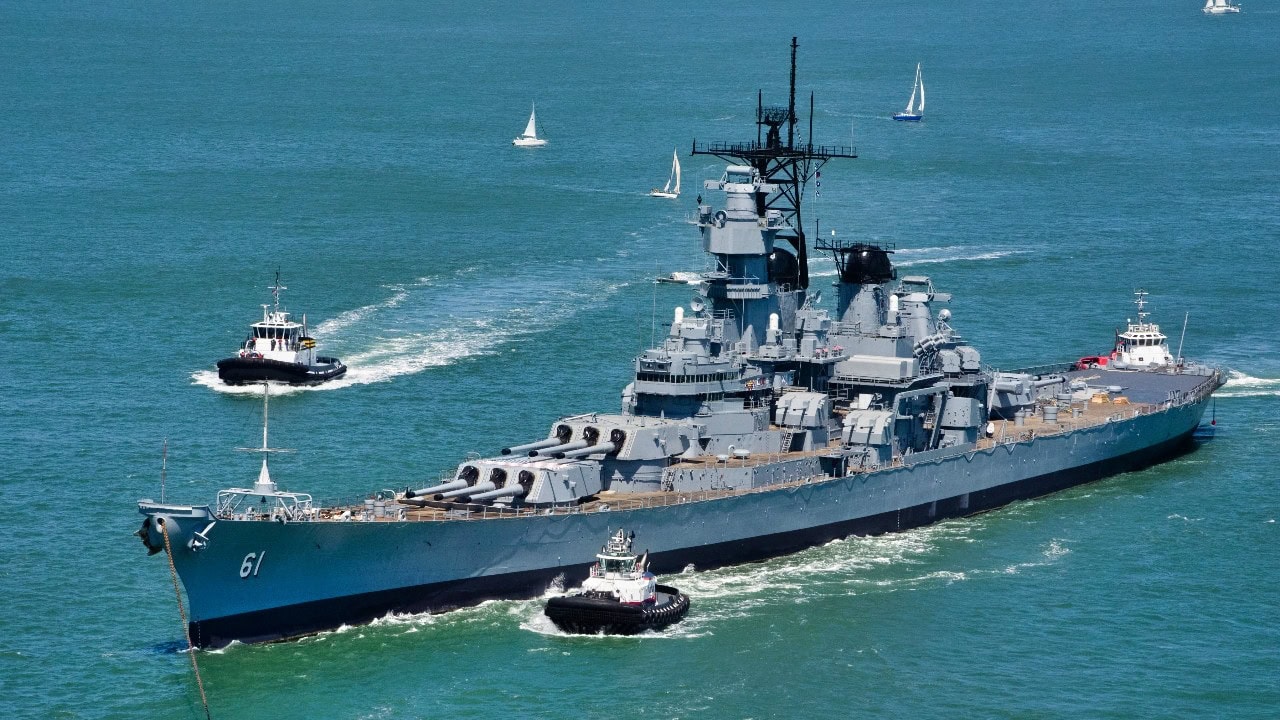
Key Points and Summary – President Trump’s call for a new “Trump-class” battleship with 120 VLS cells and hypersonic missiles faces skepticism due to China’s growing anti-ship arsenal.
-The Pentagon’s latest report confirms that Beijing’s new DF-27 hypersonic missile (5,000–8,000 km range) and YJ-20 (Mach 10) threaten US ships well outside the first island chain.
-While experts worry the large battleship is a vulnerable target, its proposed “Conventional Prompt Strike” capability—launching intercontinental hypersonic missiles—could offer a valuable new layer of strategic deterrence to counter China’s reach.
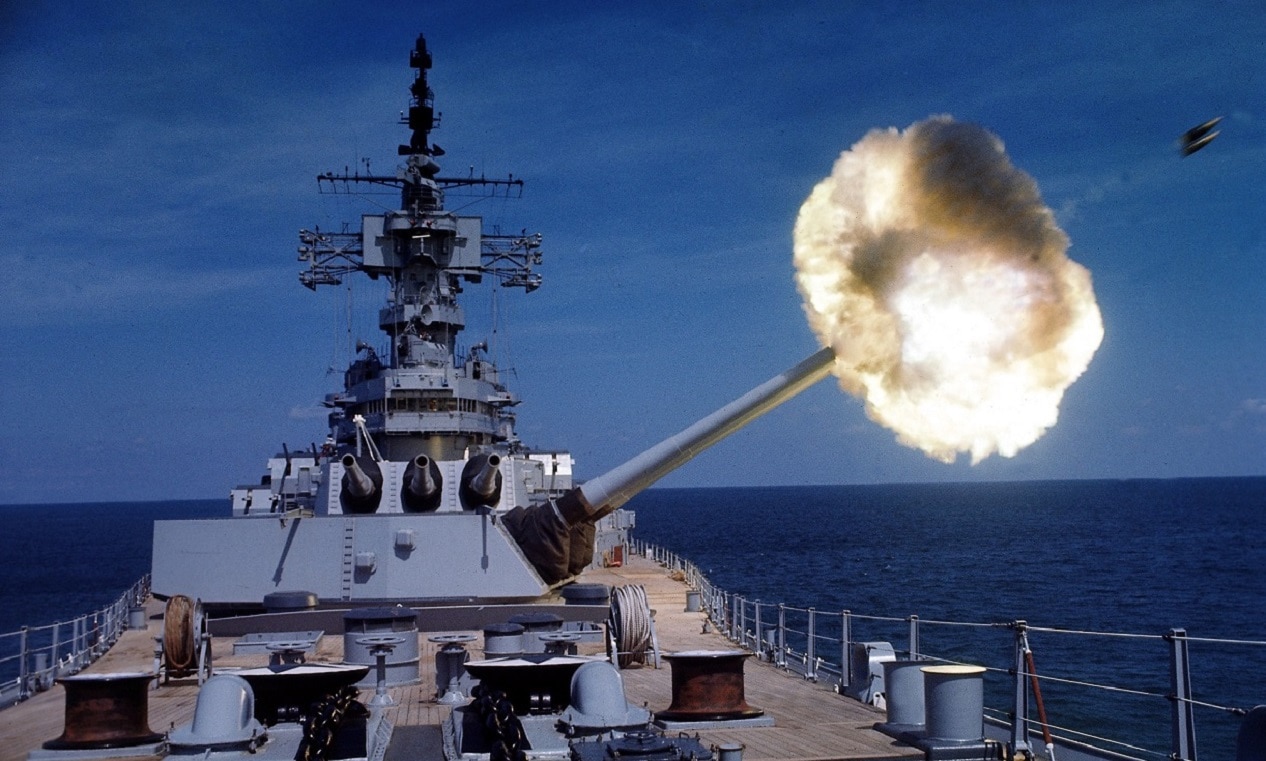
USS New Jersey Iowa-Class Battleship. Image Credit: US Navy.
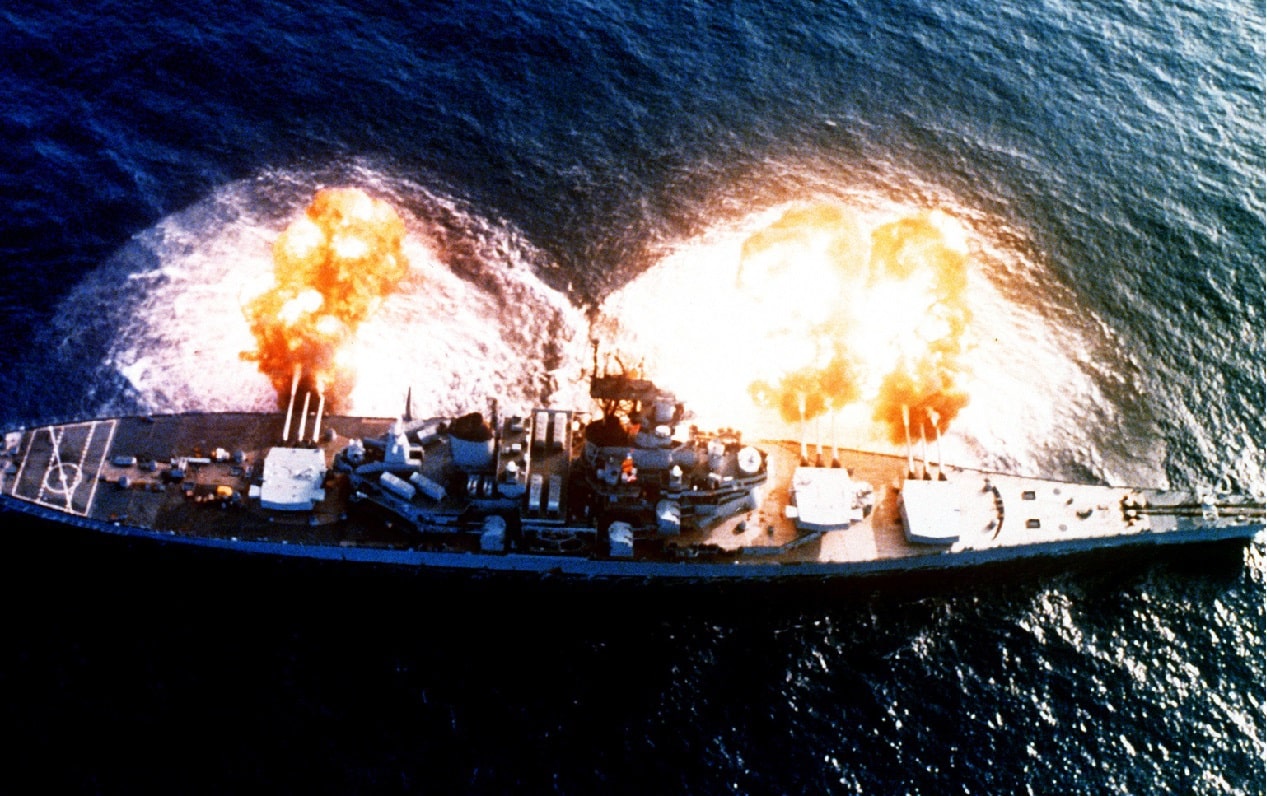
An overhead view of the battleship USS NEW JERSEY (BB-62) firing a full broadside to starboard during a main battery firing exercise.
Iowa-class. Image Credit: Creative Commons.
In 4 Words: Ready for China War?
The Trump-Class Battleship: Explained
U.S. President Donald Trump in December called for the development of a new type of battleship, which would be dubbed the Trump-class battleship. Plans are to equip the ship with more than 120 vertical launch system (VLS) cells, hypersonic missiles, directed-energy weapons, and even a railgun.
The announcement was received mostly with skepticism. While there are legitimate reasons to employ larger, more resilient warships, there are many reasons to worry about the prospective battleship’s survival in modern warfare. China has been building up its inventory of long-range anti-ship ballistic missiles that can hit targets as far away from the mainland as Guam. The Trump-class would have to operate in an environment in which many experts argue the new battleship is not equipped to thrive.
China’s Growing Arsenal
On December 23, the Pentagon released its annual Report to Congress on China’s Military Power. This is not the place to dive into the details of the report, but I highly recommend readers peruse its contents, as they offer valuable insight into the direction of China’s military growth.
Beijing is rapidly expanding its inventory of conventional and nuclear ballistic missiles. Currently, the Department of War estimates that China has about 600 active nuclear warheads in its arsenal, and that number is expected to reach 1,000 by 2030.
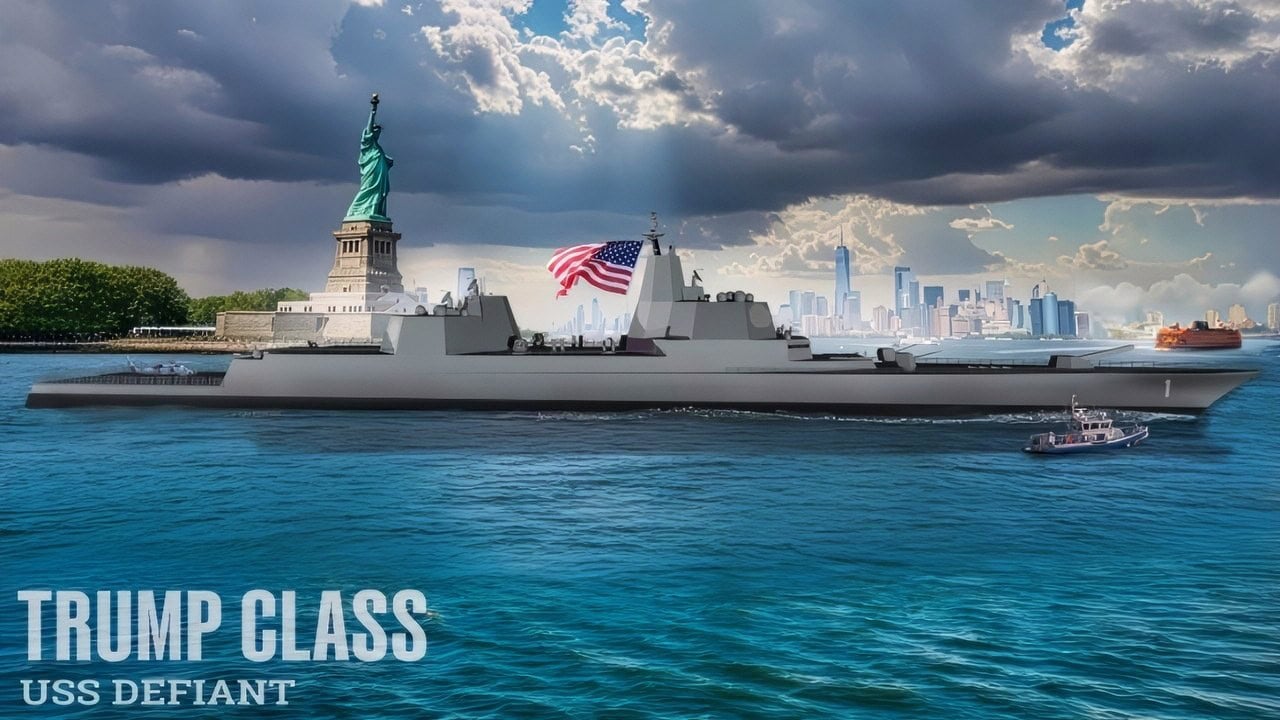
Trump-Class Battleship. Image Credit: Creative Commons/White House.
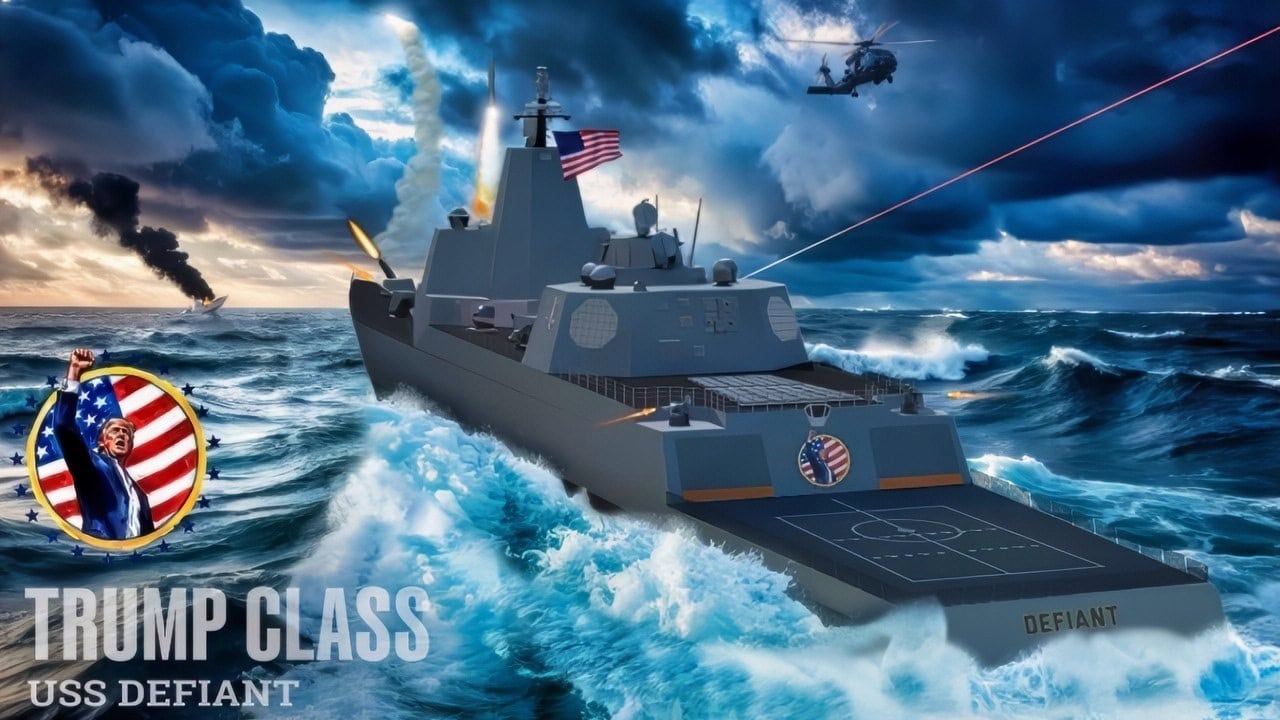
Trump-Class Battleship. Image Credit: Creative Commons/White House Photo.
The biggest threat to a Trump-class battleship would be the Dongfeng-27, one of China’s newest hypersonic ballistic missiles.
This missile is equipped with a hypersonic glide-vehicle warhead that is extremely difficult to intercept thanks to its high speeds and unpredictable movement patterns.
The missile has an estimated range of 5,000–8,000 kilometers, making it capable of striking targets well outside China’s first island chain. In 2021, the Pentagon stated that the missile was in development, but it was successfully tested in February 2023, according to leaked reports.
Now, the Pentagon regards the DF-27 as fully operational and in service with China’s missile forces.
China’s Anti-Ship Missiles
The DF-21 is commonly referred to as China’s original “carrier killer.” It was the first solid-fuel rocket developed by China and entered service in 1991. The missile has a more modest range of about 1,770 km, putting it squarely in the medium-range ballistic-missile category. Originally designed as a strategic missile, the DF-21 was transformed into an anti-ship ballistic missile that could reportedly destroy an aircraft carrier in one hit. This claim has been disputed by many experts, but the point is that carriers and other large ships are extremely vulnerable to this missile once they are inside its range.
The YJ-20 hypersonic ballistic missile was designed for naval use and can be launched from VLS cells on Type 055-class destroyers, as well as from nuclear and diesel-electric submarines. Each Type 055 destroyer can be equipped with several dozens of these missiles, giving one vessel the potential to destroy an entire fleet—at least on paper.
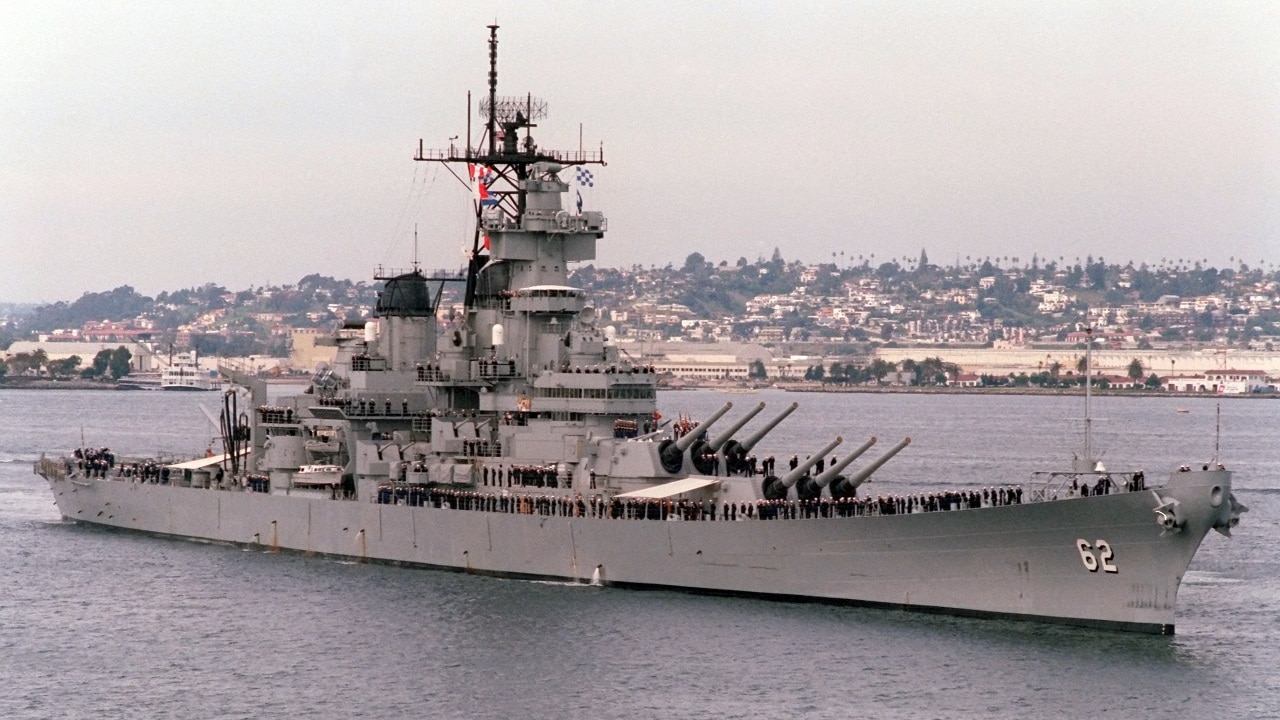
Iowa-class battleship.
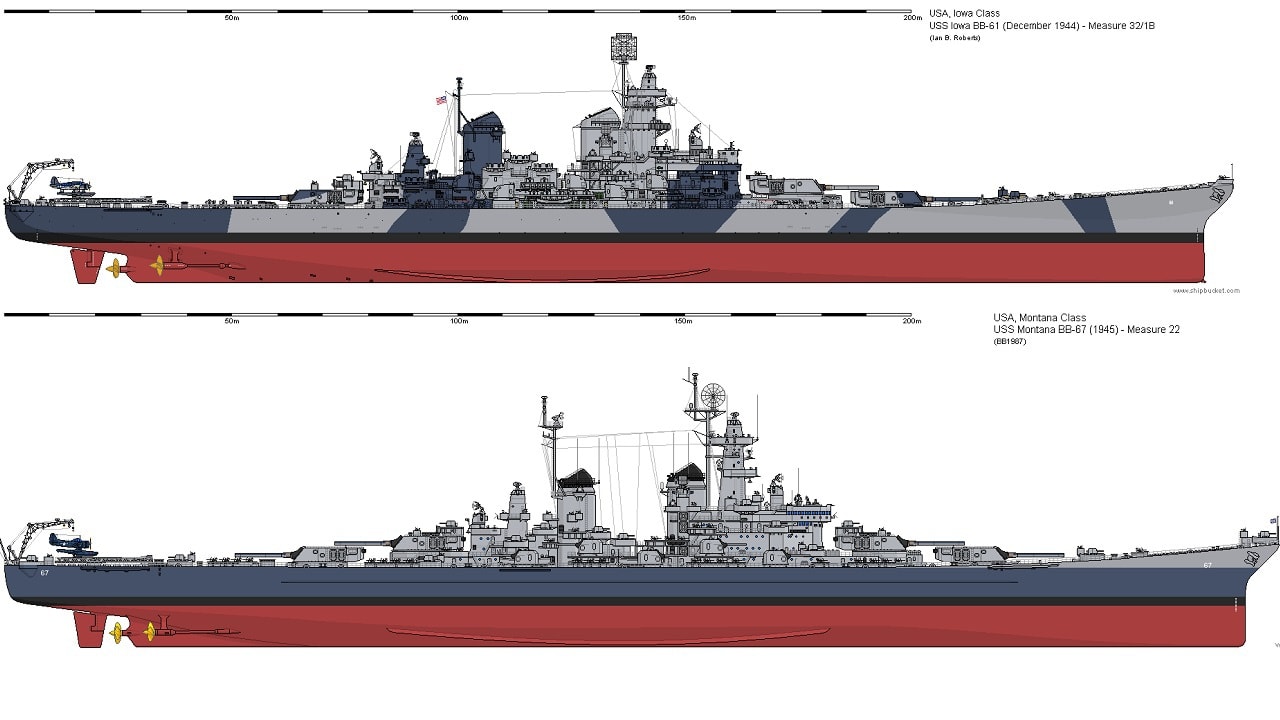
Image of Iowa-class battleship compared to Montana-class battleship that was never built. Image Credit: Creative Commons.
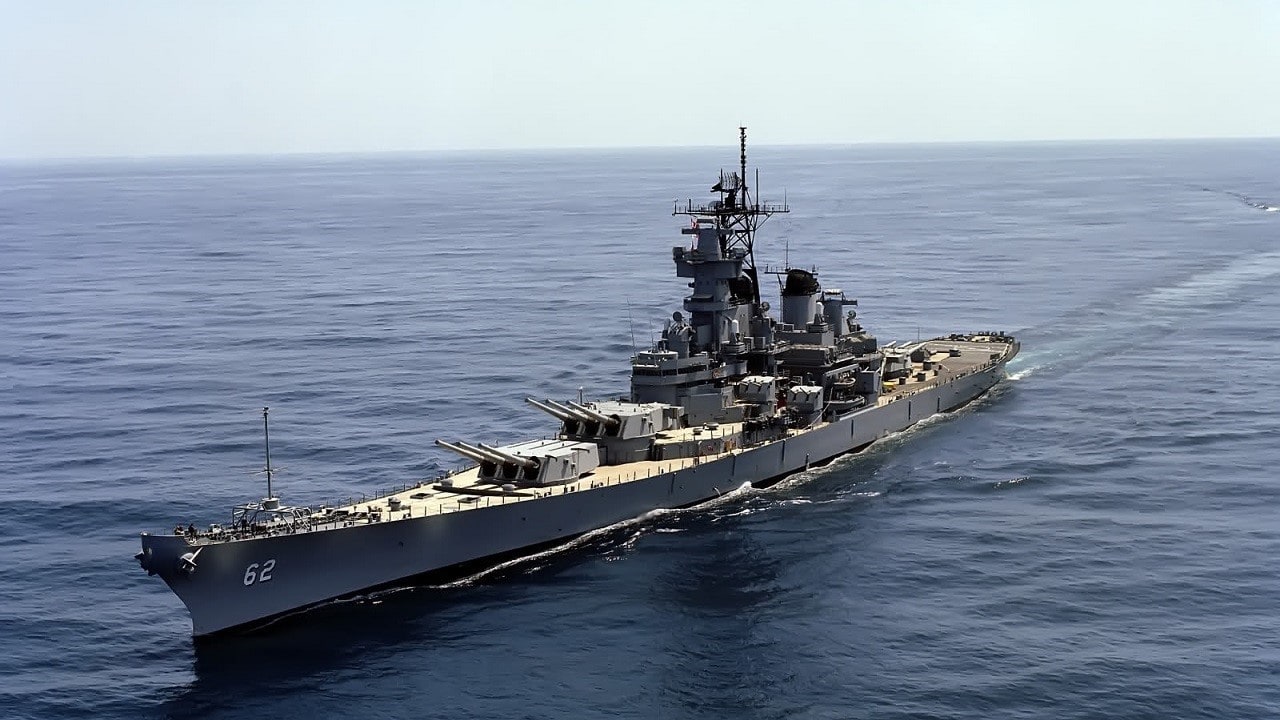
Image is of an Iowa-class battleship. Image Credit: Creative Commons.
The YJ-20 is capable of cruising at speeds between Mach 6 and Mach 10 and possesses a range of some 1,500 km—longer than Russia’s Zircon hypersonic missiles, which have a range of 1,000 km. The YJ-20 is designed to evade enemy defenses and cause massive damage through sheer kinetic force.
There are many other anti-ship missiles in China’s inventory, both air-launched and surface-launched. Other assets include unmanned aerial vehicles, unmanned surface vehicles, and unmanned underwater vehicles, which China is working hard to develop and refine.
China’s fifth-generation aircraft are a significant threat, and sixth-generation aircraft are under development.
All of this is to say that a Trump-class battleship would enter a very hostile environment if and when accepted into service.
The Trump-Class Battleship: Dead on Arrival?
So, is it already game over for the Trump-class battleship? Not necessarily.
While the proposed vessel is large and potentially vulnerable to long-range missiles, so are all surface ships. The Trump-class is not necessarily unique in its vulnerability to anti-ship missiles, but its large size does raise concerns about its survivability in a hypothetical war in the Pacific.
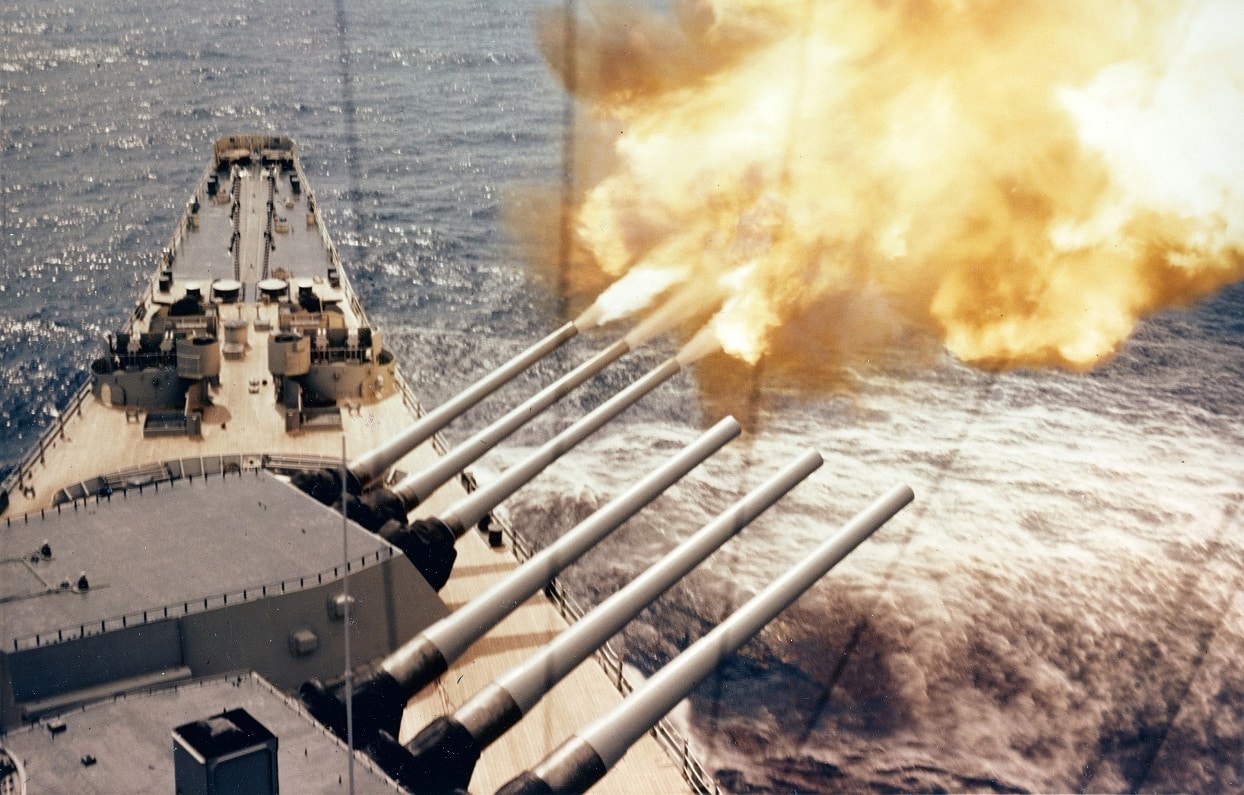
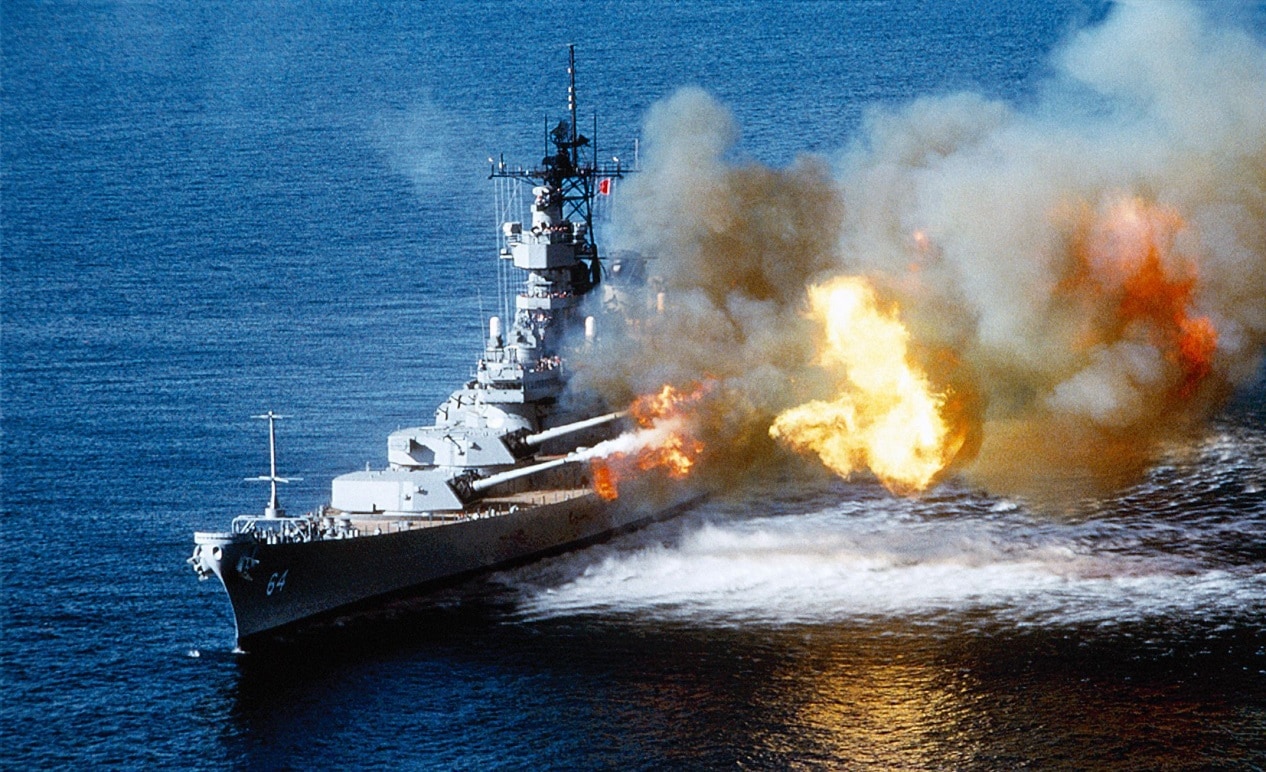
USS Wisconsin (BB-64) Fires a three-gun salvo from her forward 16/50 gun turret, during bombardment duty off Korea. Photograph is dated 30 January 1952. Official U.S. Navy Photograph, now in the collections of the National Archives.
That being said, the new battleship has a few weapons of its own that could make it valuable in a war against China.
The goal is to outfit the class with 12 Conventional Prompt Strike cells capable of launching intercontinental hypersonic ballistic missiles that can strike targets anywhere around the world. The missiles can be nuclear or conventionally armed, adding a new layer of strategic deterrence for the U.S. Navy to wield.
Thus, while China has the potential to strike from more than 8,000 km away, the Trump-class could strike China from long distances as well.
About the Author: Isaac Seitz
Isaac Seitz, a Defense Columnist, graduated from Patrick Henry College’s Strategic Intelligence and National Security program. He has also studied Russian at Middlebury Language Schools and has worked as an intelligence Analyst in the private sector.