
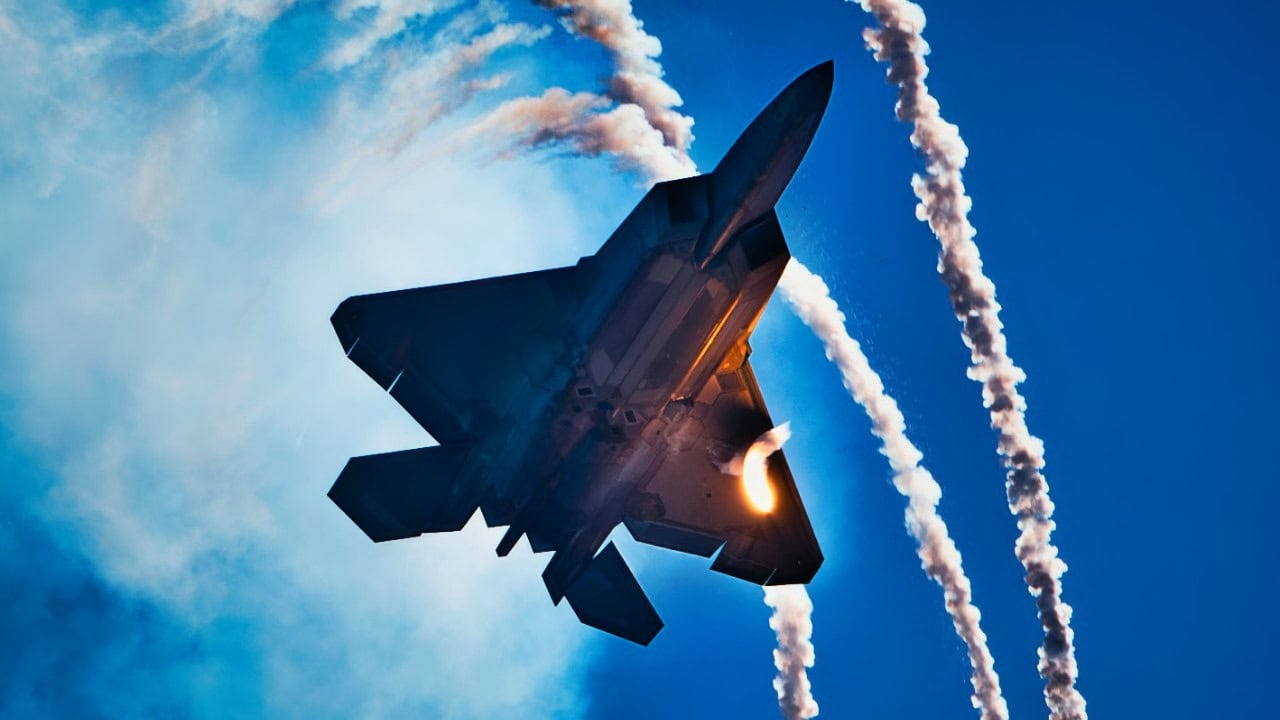
Key Points and Summary – Dr. Andrew Latham argues that President Trump’s rhetoric regarding potential military action against Mexican cartels is “political theater” rather than sound strategy.
-Unlike the Venezuela operation, which was framed around geopolitical rivalry with China and Russia, Mexico poses no such threat, and cartels remain a law enforcement issue rather than a military one.
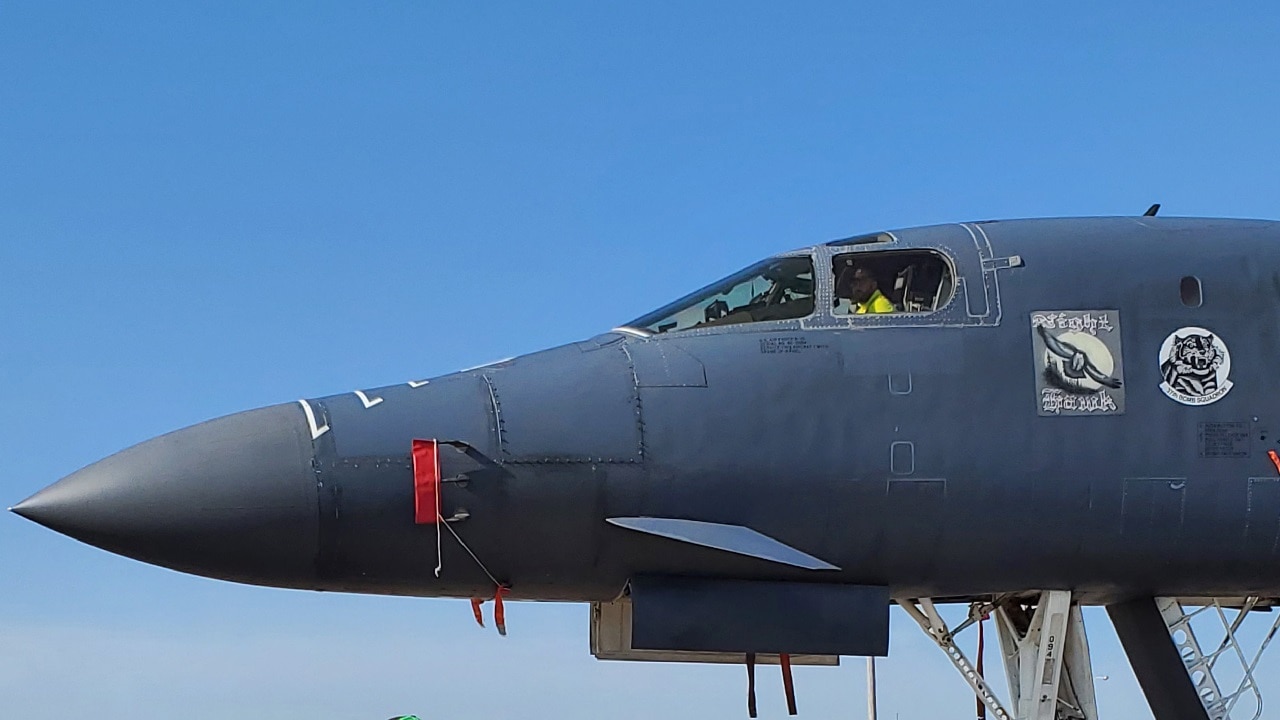
A B-1B Lancer, tail number 86-0094, is moved across Douglas Blvd. to the Maintenance Repair and Overhaul Technology Center (MROTC) to receive an initial portion of Gate 1 of programmed depot maintenance April 21. 567th AMXS personnel will perform three days of maintenance which include single system checks on 40 individual actuators validating voltage outputs as
well as interrogating each actuator for hydraulic leaks. After single systems are completed, the horizontal stabilizers will be removed from the aircraft. This is the first time that horizontal stabilizers have ever been removed at the MROTC. Once complete, the aircraft and horizontal stabilizers will be brought back across Douglas to the 569th AMXS strip facility for plastic media blasting. Once stripped, the horizontal stabilizers will be routed to the 76th Commodities Maintenance Group for overhaul and repairs. (U.S. Air Force photo/Kelly White)
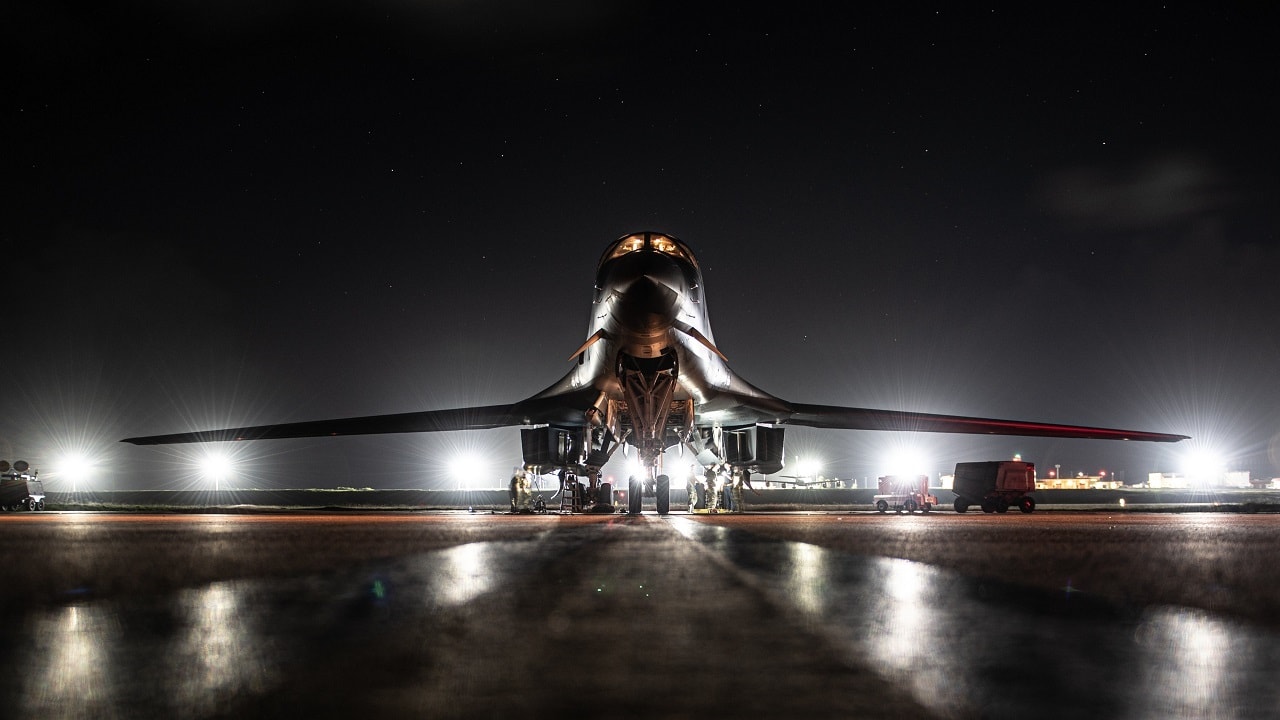
B-1B Lancer Bomber. Image Credit: U.S. Air Force.
-Latham warns that unilateral strikes would be a “category error” that could trigger a massive migration crisis, fracture diplomatic relations, and fail to dismantle embedded criminal networks.
Trump’s Mexico Gambit: Theater, Not Strategy
In the wake of a much-criticized US military operation in Venezuela that resulted in the capture of Nicolás Maduro, Trump and his spokespeople have hinted that Mexico could be “next,” framing the problem in blunt, militaristic terms. He’s suggested that cartels “run” Mexico and that “something will have to be done.” His recent remarks tie together rhetoric about military land strikes and disdain for international law, as well as threats to other countries, including Greenland.
This isn’t a discrete policy suggestion so much as another iteration of Trump’s signature flourish: gesture first, think later. That pattern—big, showy moves with limited grounding in geopolitical reality—defined America’s messy pivot on Venezuela and now threatens to warp US–Mexico relations in a way that’s counterproductive and unnecessary.
No Geopolitical Threat from Mexico
To be sure, the cartels pose a threat to peace, order, and good government in Mexico. But they do not constitute a geopolitical threat that could plausibly justify military action against the country. The cartels are not proxy armies of any of the great-power adversaries of the United States. They are criminal networks, violent and corrosive of law and order, but not paramilitary actors posing geopolitical threats. They are, to put it bluntly, a law-enforcement problem rather than a strategic one.
Nor, despite the challenges it faces, can Mexico be considered a failed state. It remains a functioning sovereign country whose government has explicitly rejected any suggestion of US military intervention on its soil.
Compare that to Venezuela: the Trump administration framed its January operation in part through the lens of hemispheric dominance, a revival of Monroe Doctrine-like language (what critics have dubbed a “Donroe Doctrine“). In that context, Trump and his advisers argued that Venezuela was increasingly aligning with China, Russia, and Iran—powers Washington wants to check in the Western Hemisphere. That, at least, could be couched as geopolitical competition.
Mexico does not sit in that same orbit. There is no evidence that it is hosting Russian or Iranian military forces, and Washington does not treat it as a strategic outpost of China’s foreign policy. Mexico’s international orientation doesn’t materially imperil US national security, as was claimed in Venezuela. Any suggestion otherwise is more than a stretch – it’s a delusion.
Trump’s “Threat” Isn’t Strategic Thinking
If you strip away the theatrics, Trump’s implied logic boils down to this: the United States has shown force in dealing with Venezuelan drug cartels; drug cartels also exist in Mexico; therefore, military action in Mexico is a logical next step. That’s weak causal reasoning. One operation does not create a strategic rationale for another. The Venezuela operation itself was justified in official statements on a blend of counter-narcotics and geopolitical competition. In reality, it was mainly an exercise in geopolitical signaling motivated by great-power rivalry. In the Mexican case, however, there is no such geopolitical context—no rival great-power alignment, no strategic partnerships with US adversaries—and therefore no strategic grounds for military action.
The Real Costs of Military Escalation
Going to war against cartels on Mexican soil wouldn’t be a surgical strike; it would be a disruption with enormous potential for blowback. Historically, when the US has deployed forces beyond its borders on dubious strategic grounds, the results have been mixed at best. Consider Afghanistan and Iraq: tactical success against discrete actors didn’t translate into strategic stability. A similar dynamic could unfold in Mexico. Even if cartel leaders were targeted and removed, their networks are deeply embedded in local economies and social structures. Removing leadership doesn’t eradicate the underlying conditions that allow these organizations to flourish.
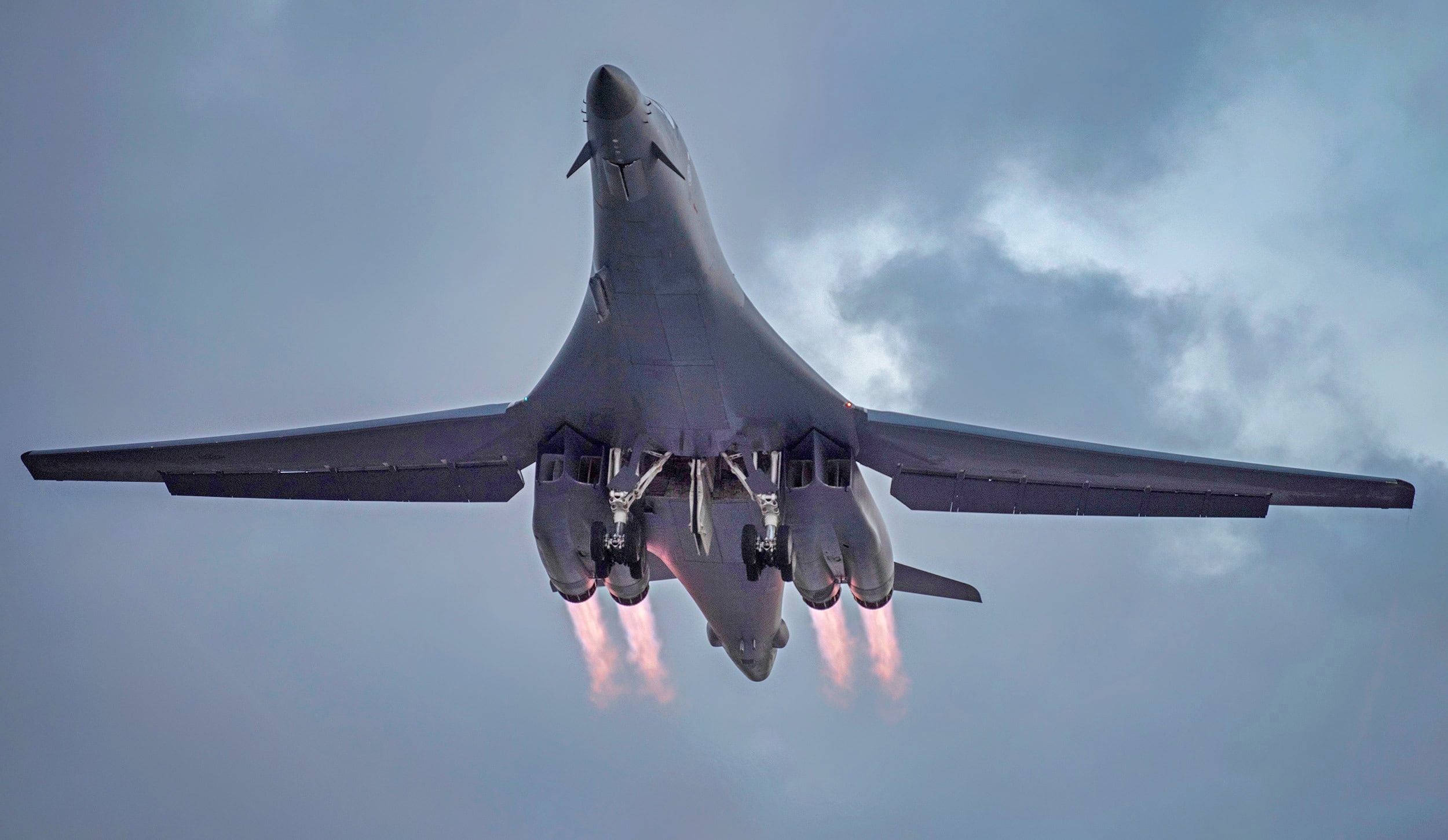
B-1B Lancer Bomber. Image Credit: Creative Commons.

A B-1B Lancer assigned to Ellsworth Air Force Base, S.D, takes off in support of a Bomber Task Force mission at Naval Support Facility Diego Garcia, Nov. 2, 2021. Bomber missions provide opportunities to train and work with our allies and partners in joint and coalition operations and exercises. (U.S. Air Force photo by Staff Sgt. Hannah Malone)
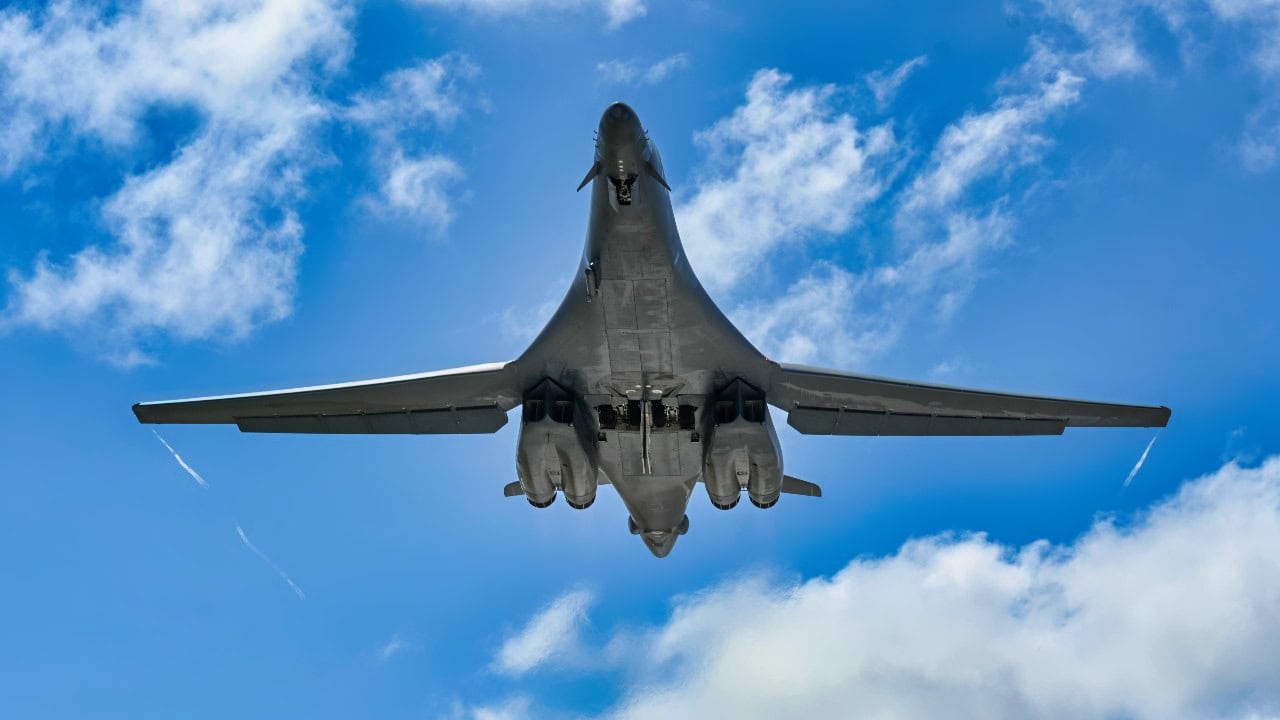
A U.S. Air Force B-1B Lancer assigned to the 34th Expeditionary Bomb Squadron takes off for a mission in support of Bomber Task Force 25-1, at Andersen Air Force Base, Feb. 16, 2025. Bomber Task Force missions demonstrate lethality and interoperability in support of a free and open Indo-Pacific. (U.S. Air Force photo by Airman 1st Class Alec Carlberg)
A US military operation against Mexican cartels would almost certainly prompt a surge of cross-border migration. People fleeing violence and instability don’t respect diplomatic niceties; they seek safety. An attack on Mexico would put hundreds of thousands of Mexicans in a position where crossing into the United States doesn’t look like an escape from crime but survival from war. That would exacerbate the very migration pressures Trump claims to want to alleviate.
The Mexican government’s response underscores this risk. President Sheinbaum has drawn firm lines on sovereignty, rejecting military intervention while affirming cooperation on security issues. Mexico has increased its own operations against cartels and carried out expulsions of high-level suspects. That’s the kind of binational strategy that makes sense when confronting organized crime, not unilateral strikes.
There’s also the diplomatic cost. U.S.–Mexico relations are a cornerstone of Western Hemisphere stability. Economic ties, shared border management, and collaborative security efforts have been built slowly over the course of decades. A US military blitz in Mexico would fracture trust and isolate Washington diplomatically in the region.
What Trump’s Comments Reveal
Trump’s rhetoric about Mexico reveals more about political theatre than about strategy. By styling himself as the commander who never backs down—untethered from international law and limited only by his own morality—he casts policy debates as contests of will rather than technical problems requiring calibrated solutions. That may play well to parts of his base, but it collapses nuance and invites reckless escalation.
The idea that Mexico is somehow the next geopolitical “front”—that it warrants US military action because of internal criminal networks—is a category error. It confuses law enforcement challenges with international security threats.
It inflates the narrative of American vulnerability to justify theatrically muscular action. The outcome of acting on this confusion would be instability, migration crises, damaged alliances, and a distraction from genuine strategic competitors.
If policy is not grounded in sober analysis of causes and effects, what remains is spectacle. Trump is selling spectacle. The rest of us should call it what it is.
About the Author: Dr. Andrew Latham
Andrew Latham is a non-resident fellow at Defense Priorities and a professor of international relations and political theory at Macalester College in Saint Paul, MN. You can follow him on X: @aakatham.