
The Space Force Is 6 Years Old: Is It Really an Independent Military Service?
The United States Space Force (USSF) is now six years and one month old. President Trump founded the service in 2019, and his re-election in 2024 ensured that it would continue to exist for the foreseeable future. That said, the USSF, as an organization, remains remarkably different from its compatriots in the Department of Defense (the Administration renamed the Department of War) and plays an unsettled role in the future of America’s defense establishment.
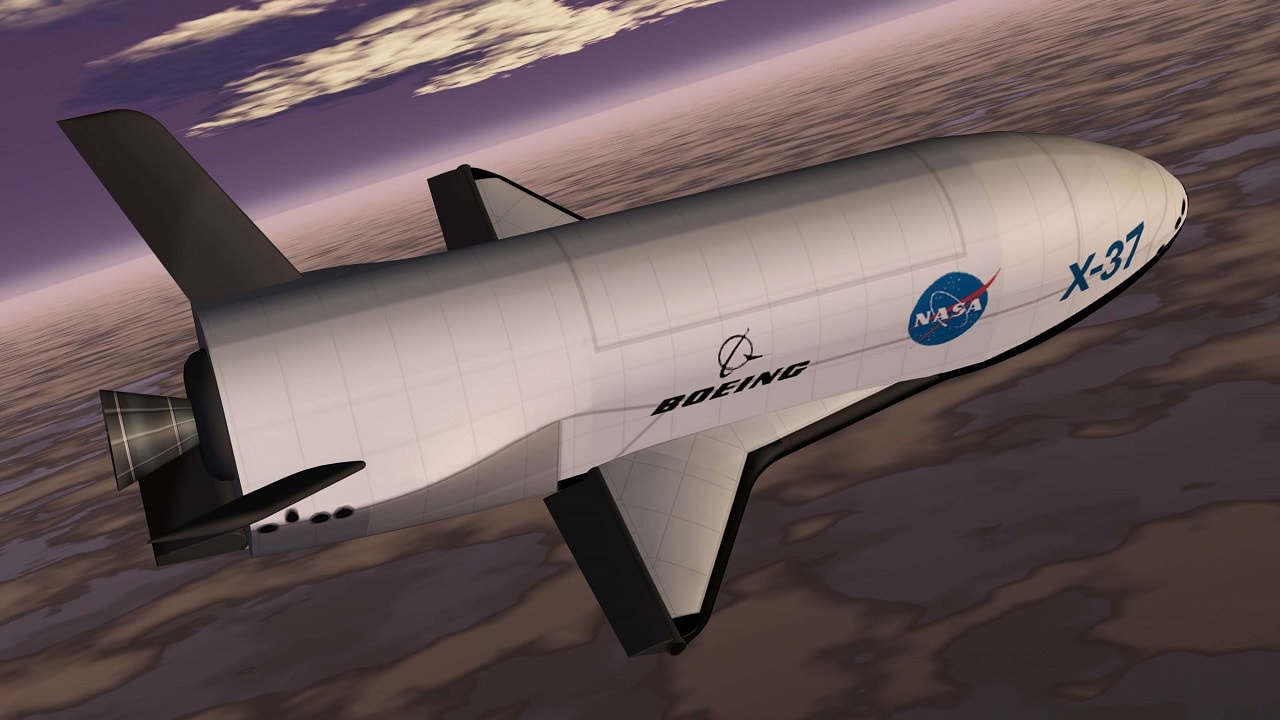
X-37B. Image Credit: Creative Commons.
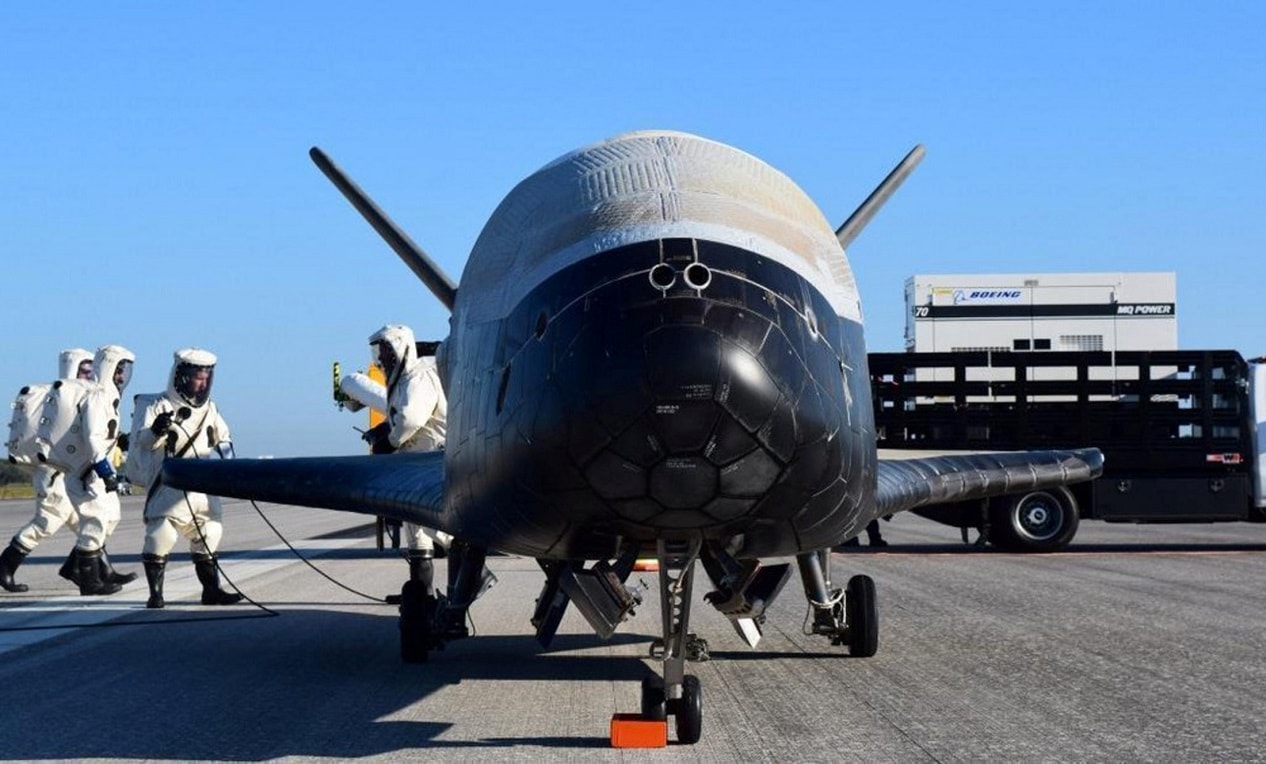
The U.S. Airforce’s X-37B Orbital Test Vehicle mission 4 after landing at NASA’s Kennedy Space Center Shuttle Landing Facility in Cape Canaveral, Florida, U.S., May 7, 2017. U.S. Air Force/Handout.
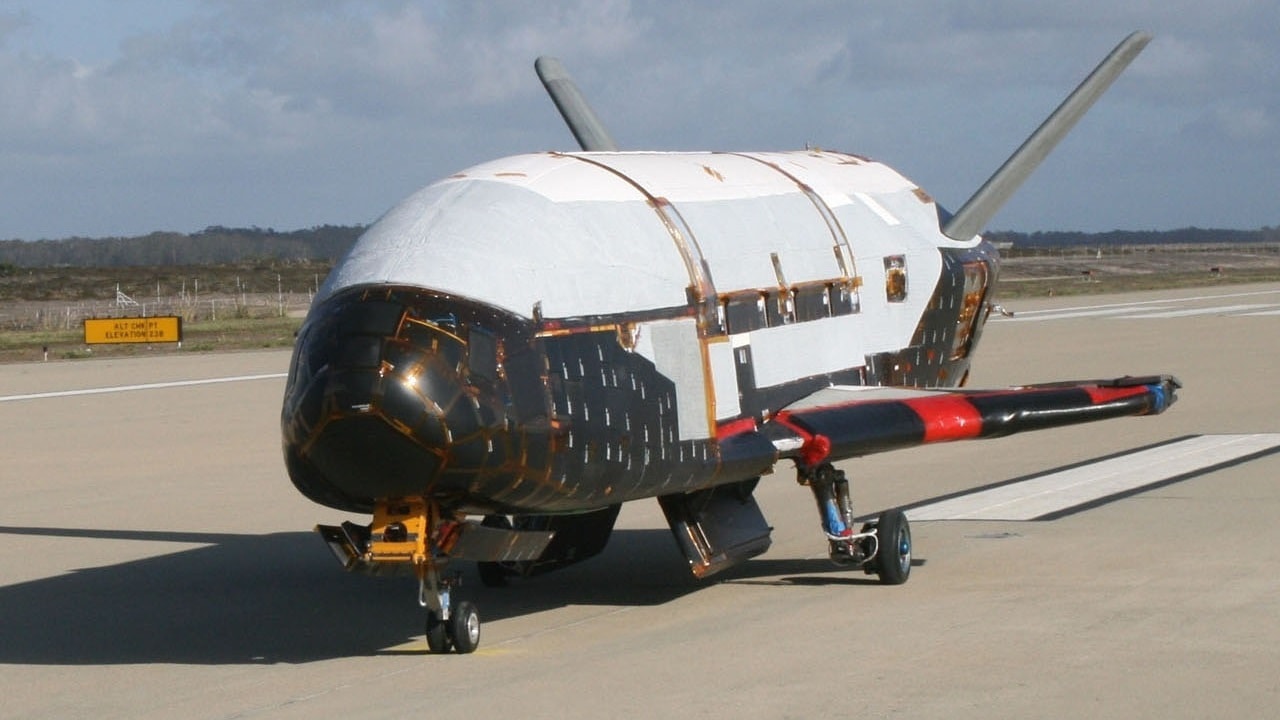
In a testing procedure, the X-37B Orbital Test Vehicle taxis on the flightline March 30, 2010, at the Astrotech facility in Titusville, FLa. (Courtesy photo)
Independence
The first and most significant question is whether the US Space Force is actually an independent military service (as we use the term to describe the Air Force or the Marine Corps) or something else that is simply masquerading as one.
The Space Force is very small (roughly 5 percent the size of the next largest branch), does not have a service academy, does not have its own civilian department (as the Marine Corps sits in the Department of the Navy, the Space Force is in the Department of the Air Force), and does not have a mission set that can be described independently from the other services.
Given that the Space Force emerged almost fully formed from Air Force Space Command, it’s worth wondering how its independence actually matters in day-to-day operations. That said, given that the Pentagon calls the USSF an independent service, we have little choice but to treat it as such even if it falls short on many metrics.
Culture
Every organization has a culture that acclimates members into a shared mission. This culture is as true of a magazine as of a university, as of a football team, as of a military service. Military services are particularly attuned to the needs of culture because they often require their members to make extraordinary sacrifices on behalf of the organization.
Culture building, thus, is a key metric of how a new service is doing.
The Space Force seems to be doing okay in terms of culture, at least with respect to giving its members reasons to identify with the organization. It has developed the fundamental hallmarks of an independent culture, including a name for its members (Guardians), uniforms, a unique organizational unit (Deltas), and a motto (“Secure Our Nation’s Interests In, From, and To Space”). To be sure, this culture has not yet been tested in combat against an enemy, whether that enemy comes from another country or the other side of the Pentagon.
Effectiveness
Generally speaking, evaluating the effectiveness of a military service requires that it perform its core function: helping fight a war. The United States has engaged in several minor military conflicts since the inception of the USSF, but none that have really offered an opportunity to test the Space Force’s bona fides.
Complicating the problem is that the Space Force is a complex organization to measure.
The USSF’s mission is to support the other services in their combat, information, and logistical endeavors. Thus, to the extent that the USSF performs its mission, it does so in collaboration with the other services. This makes it difficult to separate out the specific contribution of Space Force to military success.
International
One key question raised by the creation of USSF was whether it would spur other countries to create similar institutions, thereby increasing the militarization of space and emphasizing the competitive rather than the collaborative aspects of space exploitation.
On this point, the evidence is mixed. While several countries have set up space-themed military organizations, none of them look quite like an independent service in the American sense of the term. Moreover, the inexorable force of technological advance in space has undoubtedly convinced many countries to beef up their capabilities. Nevertheless, the fact that the USSF has been, at the very least, a harbinger of the global militarization of space warrants notice.
Domestic
A second question regarding the impact of the Space Force on the space domain involved its relationship with NASA, America’s civilian space agency, and with private firms that have become involved in space launch. On this question, the return to power of President Trump, along with the increased prominence of Elon Musk, has seen a dramatic shift in attention from civilian to military institutions.
Musk’s DOGE had a significant impact on NASA, leading to numerous layoffs and substantial funding cuts. At the same time, Musk’s company (SpaceX) won several significant Pentagon contracts. On the one hand, improving engagement with the private space sector was part of the USSF’s point.
On the other hand, USSF was not supposed to replace or supplant NASA’s role in the exploration and exploitation of space. Trump 47 has jump-started the former and made the latter an even more serious concern.
What Next for Space Force?
It is essential to keep in mind that the US Space Force is a bureaucratic reform designed to achieve specific ends- namely, the protection and development of technology and human capital to protect US interests in space and on Earth.
Military services are people, but they are also paperwork, and if the paperwork doesn’t function correctly, then the military can’t do its job.
Because of the political realities inherent to its founding, the USSF is here to stay.
It still has work to do to determine whether it can do the job that it was created to do.
About the Author: Dr. Robert Farley, University of Kentucky
Dr. Robert Farley has taught security and diplomacy courses at the Patterson School since 2005. He received his BS from the University of Oregon in 1997 and his Ph. D. from the University of Washington in 2004. Dr. Farley is the author of Grounded: The Case for Abolishing the United States Air Force (University Press of Kentucky, 2014), the Battleship Book (Wildside, 2016), Patents for Power: Intellectual Property Law and the Diffusion of Military Technology (University of Chicago, 2020), and most recently Waging War with Gold: National Security and the Finance Domain Across the Ages (Lynne Rienner, 2023). He has contributed extensively to a number of journals and magazines, including the National Interest, the Diplomat: APAC, World Politics Review, and the American Prospect. Dr. Farley is also a founder and senior editor of Lawyers, Guns and Money.