

Summary and Key Points: General George S. Patton’s famous maxim, “I don’t measure a man’s success by how high he climbs, but by how high he bounces when he hits bottom,” reflects his own lifelong struggles with adversity.
-Historians suggest Patton overcame undiagnosed dyslexia to graduate from West Point and become a celebrated WWII commander, leading U.S. forces to victory in North Africa and Sicily.
However, his career hit “rock bottom” after he controversially slapped two shell-shocked soldiers in 1943, leading to his removal from D-Day command.
-True to his quote, Patton “bounced back” to lead the 3rd Army during the Battle of the Bulge, relieving Bastogne and crossing the Rhine to capture Frankfurt in 1945.
“How High He Bounces”: The Story Behind Patton’s Most Famous Quote
The quote by Gen. George S. Patton — “I don’t measure a man’s success by how high he climbs, but by how high he bounces when he hits bottom” — is one of the general’s most oft-cited maxims, although it’s not especially clear exactly when he said it.
The quote is regularly featured in lists and collections of motivational quotes, as well as by the military branches themselves.
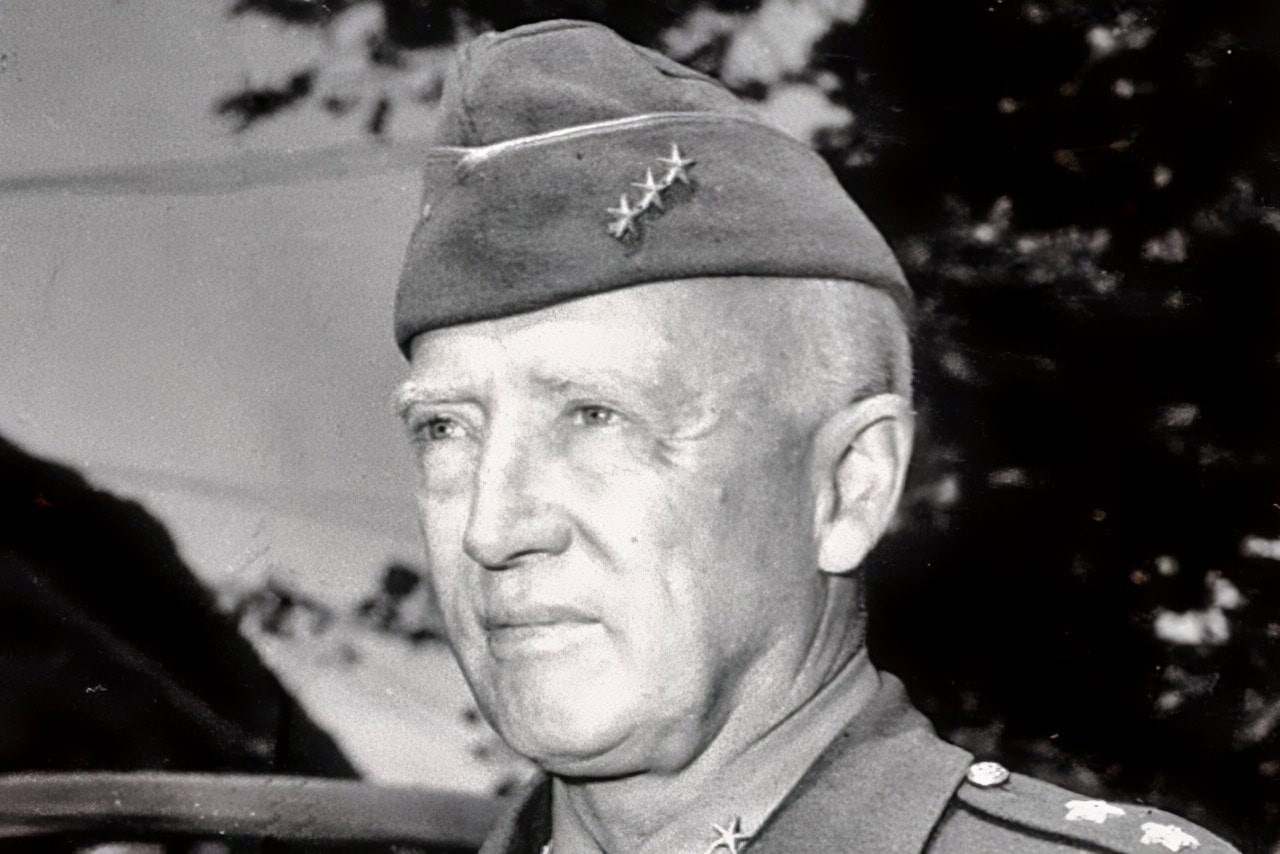
George S. Patton Quote of the Day. Creative Commons Image.
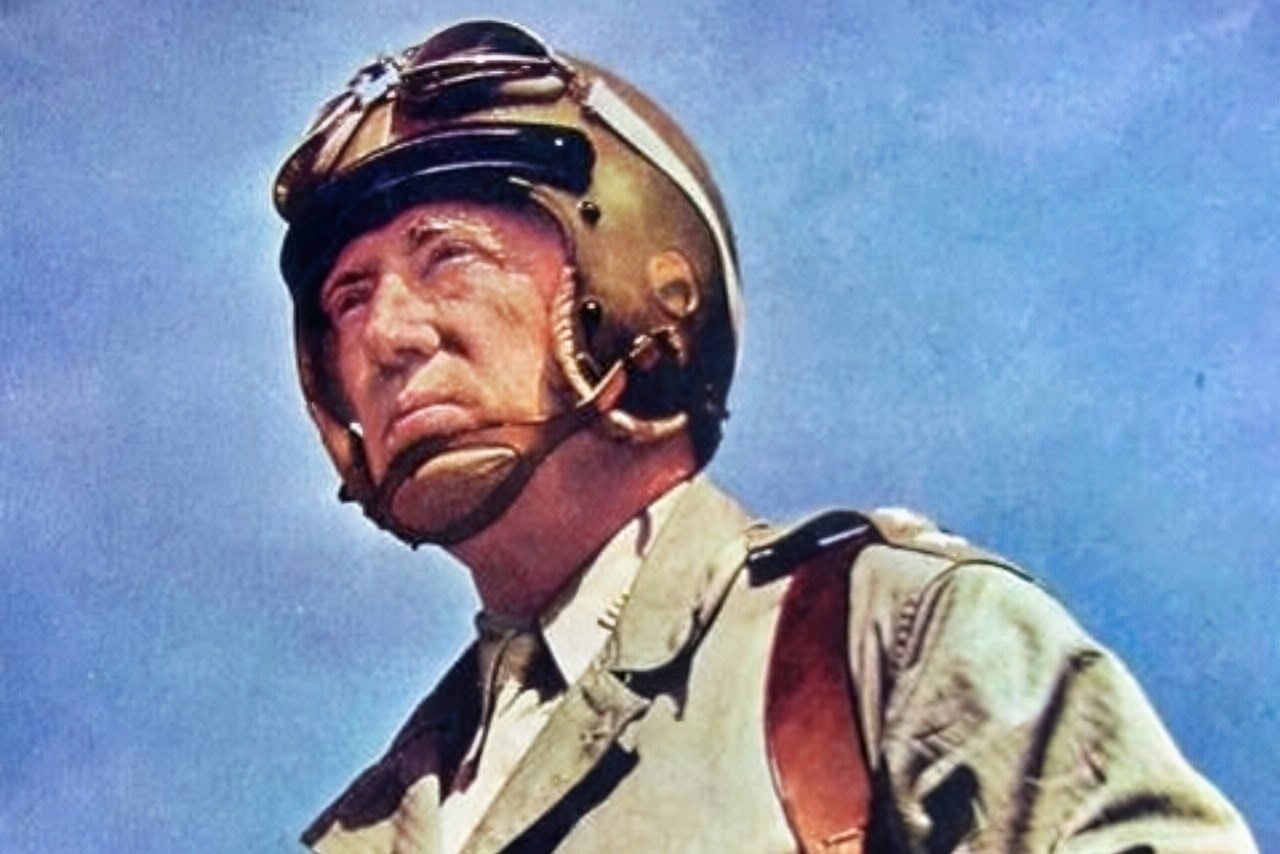
General George Patton of the U.S. Army. Image Credit: Creative Commons.
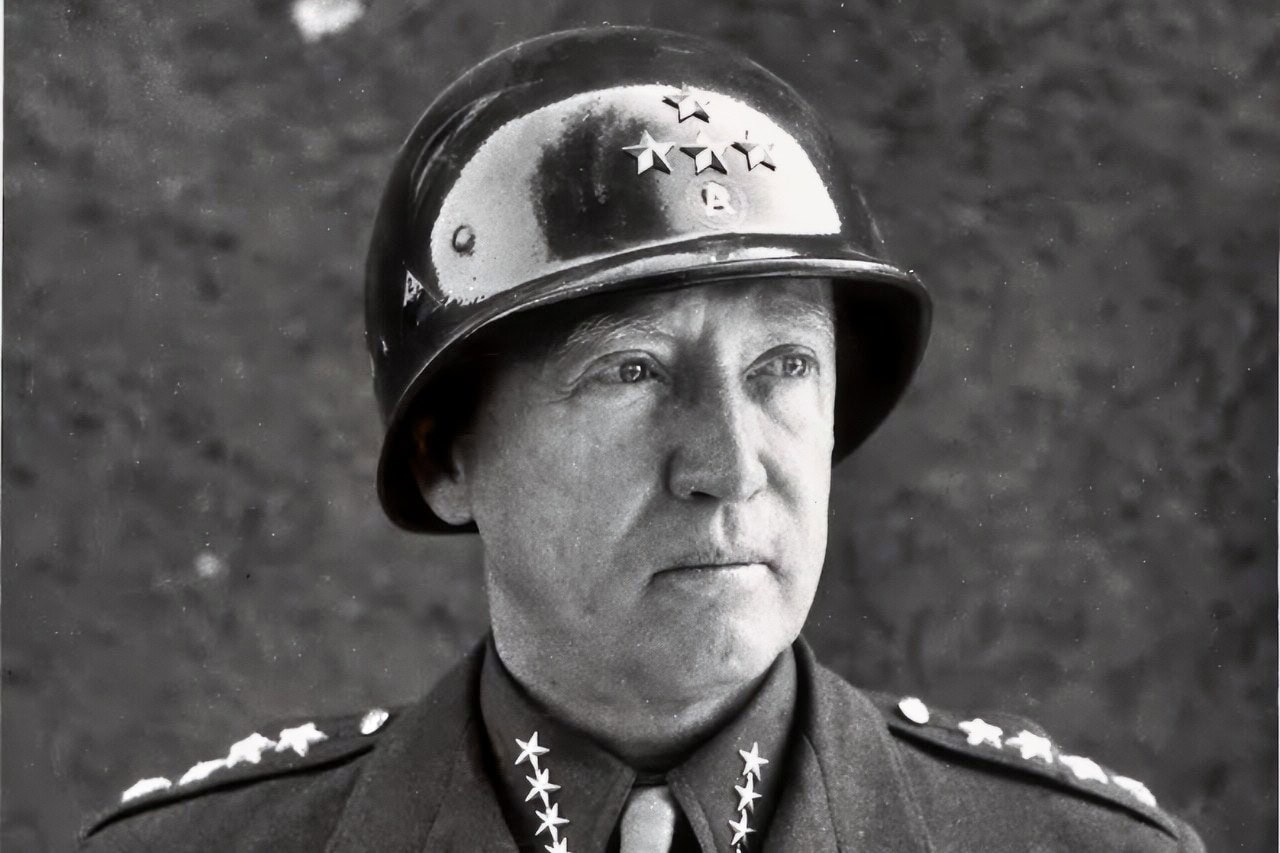
U.S. Army General George Patton
In an article published by Air Forces Central in 2012, Lt. Col. Richard Blair of the 386th Expeditionary Medical Group tied the quote to Gen. Patton’s academic struggles in his youth, and how he overcame them to become one of the most successful and admired military leaders in history.
“Although an articulate and forceful speaker, he struggled with schoolwork his entire life. Beginning in childhood, he was plagued by bad grades and poor academic performance,” the article said, noting that Patton was originally rejected by West Point, starting at the Virginia Military Institute instead. While he got into West Point eventually, he struggled upon arriving there.
“Throughout his freshman year at West Point, Patton’s academic performance was again substandard, to the point he failed to complete the necessary coursework required for advancement to sophomore standing. If he was to ever graduate, he would be required to repeat his freshman year. More importantly, it would take him six long years of full-time study to earn his undergraduate degree.”
Historians now believe Patton may very well have been dyslexic. One book reviewer, meanwhile, has argued that Patton may have suffered from what’s now known as bipolar disorder, although that is by no means the consensus of most Patton experts.
Patton would continue to face adversity and often overcome it in his military career.
World War II Commands
Per the History Channel biography, upon U.S entry into World War II, Patton was given command of the 1st and 2nd Armored Divisions. After a time leading a training center in California, Patton headed to North Africa in 1942.
“With this formidable aggression and unrelenting discipline, the general managed to put U.S. forces back on the offensive after a series of defeats and win the war’s first major American victory against Nazi-led forces in the Battle of El Guettar in March 1943,” the History Channel account said.
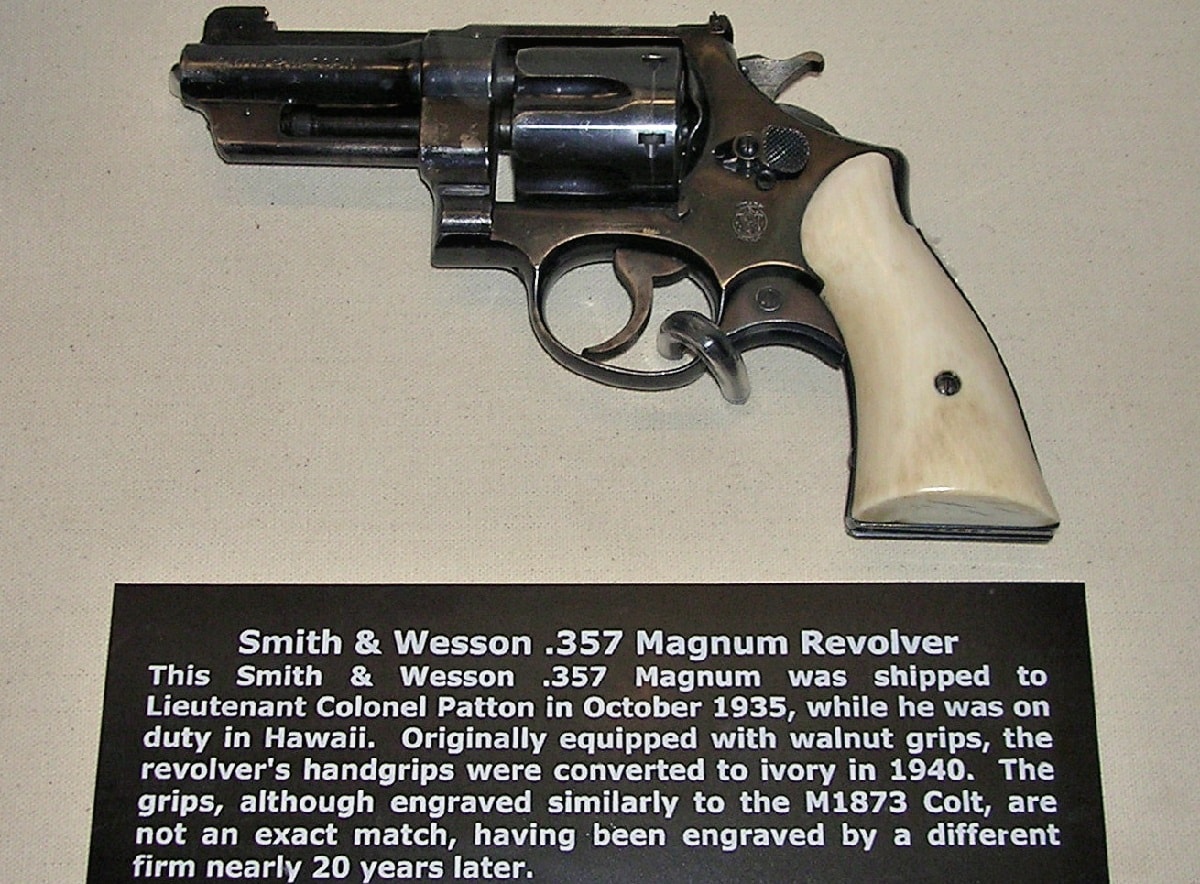
Patton’s well-known custom ivory-handled revolver.
After that, Patton was ordered to prepare an invasion of Sicily. But after that successful mission came the infamous incident, immortalized later in the Patton movie, in which the general slapped a soldier.
The Slap
In 2019, the Army War College’s Parameters wrote about the slap incident and its consequences by Alexander G. Lovelace.
The incident happened in August of 1943, when the general was visiting the 15th Evacuation Hospital.
According to one of the doctors, after a soldier told Patton that he “just couldn’t take it,” the general replied angrily.
“The General immediately flared up, cursed the soldier, called him all types of a coward, then slapped him across the face with his gloves, and finally grabbed the soldier by the scruff of his neck and kicked him out of the tent,” the account said.
Patton did something similar at another hospital in Sicily, the 93rd Evacuation Hospital, a week later.
“These episodes, collectively known as the slapping incidents, are among the most well-known facts about Patton’s career. Yet little is known about what Patton actually knew about shell shock. Most of his contemporaries, and subsequent historians, simply claim the general did not believe it existed,” Lovelace wrote in the article.
According to the account, Patton subscribed to an “older definition” of shell shock, one he knew from his experiences in World War I.
“The greatest weapon against the so-called battle fatigue is ridicule. If soldiers would realize that a large proportion of men allegedly suffering from battle fatigue are really using an easy way out, they would be less sympathetic,” Patton once wrote of “battle fatigue. “Any man who says he has battle fatigue is avoiding danger and forcing on those who have more hardihood than himself the obligation of meeting it. If soldiers would make fun of those who begin to show battle fatigue, they would prevent its spread, and also save the man who allows himself to malinger by this means from an afterlife of humiliation and regret.”
Patton Takes Frankfurt
After the slaps, Patton was reprimanded by then-General Eisenhower and made to apologize. Soon after, he was passed over for command of the D-Day forces and instead given command of what the History Channel called “a fictitious force that was supposedly preparing for an invasion in southeastern England,” meant to distract the Germans from the real invasion.
But starting later in 1944 came one of Patton’s greatest battlefield glories, when he led the push into Germany itself. According to another History Channel account, it happened during the famous Battle of the Bulge.
“In late December 1944, during the Battle of the Bulge, General Patton broke through the German lines of the besieged Belgian city of Bastogne, relieving its valiant defenders. Patton then pushed the Germans east. Patton’s goal was to cross the Rhine, even if not a single bridge was left standing over which to do it,” the History Channel said.
“As Patton reached the banks of the river on March 22, 1945, he found that one bridge—the Ludendorff Bridge, located in the little town of Remagen—had not been destroyed. American troops had already made a crossing on March 7—a signal moment in the war and in history, as an enemy army had not crossed the Rhine since Napoleon accomplished the feat in 1805. Patton grandly made his crossing, and from the bridgehead created there, Old Blood and Guts and his 3rd Army headed east and captured Frankfurt on the 29th.”
About the Author: Stephen Silver
Stephen Silver is an award-winning journalist, essayist, and film critic, and contributor to the Philadelphia Inquirer, the Jewish Telegraphic Agency, Broad Street Review, and Splice Today. The co-founder of the Philadelphia Film Critics Circle, Stephen lives in suburban Philadelphia with his wife and two sons. For over a decade, Stephen has authored thousands of articles that focus on politics, national security, technology, and the economy. Follow him on X (formerly Twitter) at @StephenSilver, and subscribe to his Substack newsletter.