Summary and Key Points: U.S. authorities filed warrants authorizing the seizure of dozens more tankers tied to Venezuelan oil exports and Russia, building on actions that have already placed five vessels under U.S. control since the January 3 operation that captured and extradited Nicolás Maduro.
-The legal basis comes from civil forfeiture filings in U.S. district courts seeking to confiscate ships and cargo involved in trading sanctioned oil.
-Officials describe many targets as part of a Russian-controlled “shadow fleet” that obscures origins while moving Venezuelan crude—often bound for China.
-The policy is framed as a long-term effort to choke off revenue and pressure Caracas and Havana, while Russia condemns the interdictions as unlawful. A key shift is the move from seizing cargo alone to taking the vessels themselves.
U.S. Files Warrants to Seize Dozens More “Shadow Fleet” Tankers Linked to Venezuela Oil and Russia
FORT LAUDERDALE, FLORIDA – The U.S. government on Tuesday filed warrants authorizing the seizure of dozens more tankers connected to the Venezuelan oil trade. The reports are confirmed by unnamed government officials in Washington, as well as other sources in South Florida.
One of the main objectives of the U.S. administration following the January 3 raid to capture and extradite Venezuelan president Nicolas Maduro to the United States is to take control over any oil shipments in and out of the South American country. To date the United States has taken control of five vessels in a process designed to choke off any revenue Venezuela earns from these exports.
The longer-term objective of this policy, said U.S. President Donald Trump on Sunday, is to make sure that Cuba will receive no more money from the sale of Venezuelan oil. In theory, this would force the Communist-ruled island nation—a long-time thorn in the side of U.S. Caribbean policy—to adopt a more subservient position vis-a-vis Washington.
On Friday the U.S. stated that plans for intercepting and commandeering these vessels were on a temporary hold, but that more such actions could be expected. In the weeks since the raid on Maduro’s compound, the U.S. Navy and Coast Guard have seized five vessels in international waters.
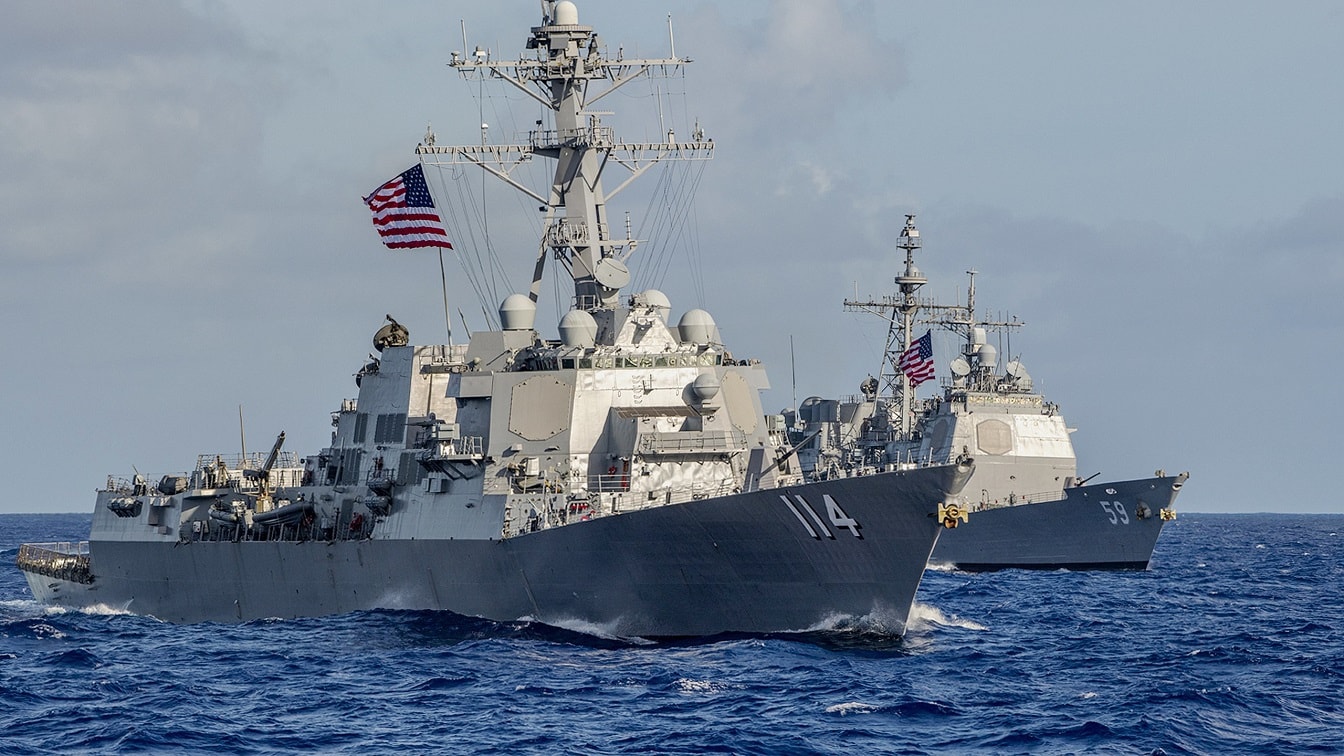
The Arleigh Burke-class guided-missile destroyer USS Ralph Johnson (DDG 114) and the Ticonderoga-class guided-missile cruiser USS Princeton (CG 59) steam in formation during dual carrier operations with the Nimitz and Theodore Roosevelt Carrier Strike Groups (CSG). Dual carrier operations unify the tactical power of two individual CSG, providing fleet commanders with an unmatched, unified credible combat force capable of operating indefinitely. The CSGs are on a scheduled deployments to the Indo-Pacific.
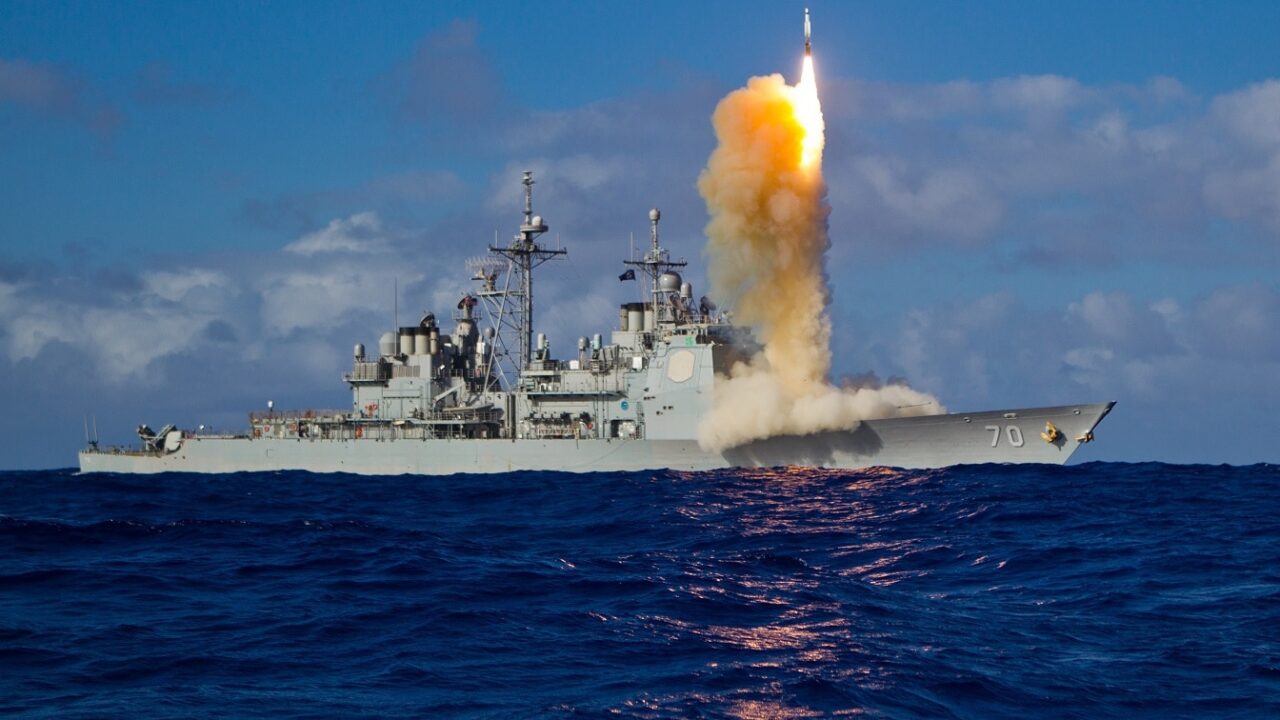
A Standard Missile-3 (SM-3) Block 1B interceptor missile is launched from the guided-missile cruiser USS Lake Erie (CG 70) during a Missile Defense Agency and U.S. Navy test in the mid-Pacific. The SM-3 Block 1B successfully intercepted a target missile that had been launched from the Pacific Missile Range Facility at Barking Sands in Kauai, Hawaii. Lake Erie detected and tracked the target with its on board AN/SPY-1 radar. The event was the third consecutive successful intercept test of the SM-3 Block IB missile. (U.S. Navy photo/Released)
Rebuilding Venezuela’s Petroleum Sector
The legal justification for these actions originates from multiple civil forfeiture actions filed in U.S. district courts, primarily in Washington, D.C. The legal motions provided authorization for the seizure and confiscation of ships involved in the illegal trading and transporting of sanctioned oil, as well as their cargo.
Trump has said seizing these tankers is part of a larger plan to control Venezuela’s oil resources. The actions may continue indefinitely, say sources in the U.S. capital.
The Venezuelan oil industry has been “exploited and ‘strip-mined’ by a cabal of Russian, Chinese and Cuban entities. They have turned a once-promising and lucrative sector of Venezuela’s economy into a basket case,” sources told 19FortyFive. “The industry is at a point where its resurrection is almost impossible.”
Sources in Washington stated that intercepted vessels were under U.S. sanctions or were part of a largely Russian-controlled “shadow fleet.”
These are ships that disguise their origins as they move oil exported from the key sanctioned producers: Iran, Russia, or Venezuela.
Tanker Hunting Season
There are numerous tankers at sea transporting Venezuelan oil to the country’s main buyer, China, or that have been involved in this trade for some time already. Washington previously imposed sanctions on many of these same ships for involvement in the oil trade with Venezuela or Iran.
Writing on X last Friday, Pentagon spokesman Sean Parnel stated the U.S. Department of War, in conjunction with other agencies, would “hunt down and interdict ALL dark fleet vessels transporting Venezuelan oil at the time and place of our choosing.”
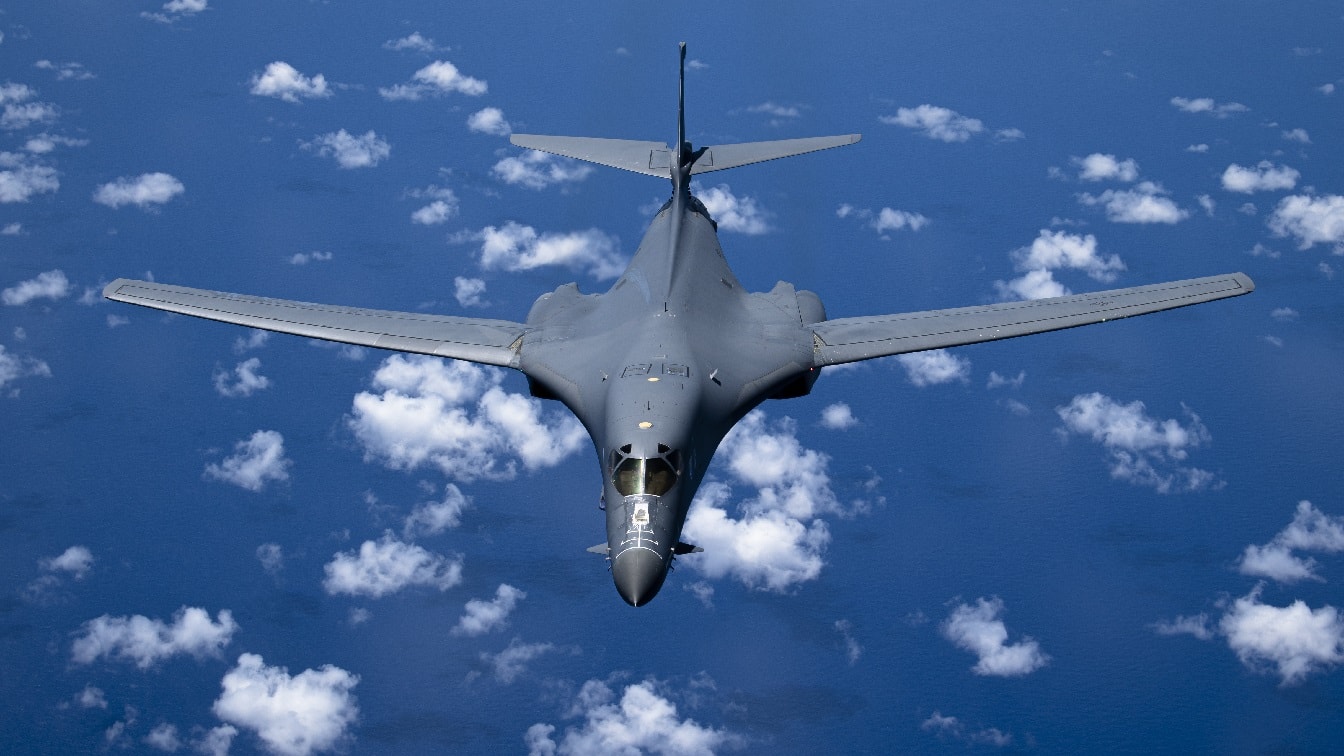
A U.S. Air Force B-1B Lancer, attached to the 34th Expeditionary Bomb Squadron, Ellsworth Air Force Base, South Dakota, flies over the Pacific Ocean after taking off from Andersen Air Force Base, Guam, June 12, 2022. Bomber Task Force missions contribute to joint force lethality and deter aggression in the Indo-Pacific by demonstrating the United States Air Force’s ability to operate anywhere in the world at any time in support of the National Defense Strategy. (U.S. Air Force Photo by Tech. Sgt. Chris Hibben)
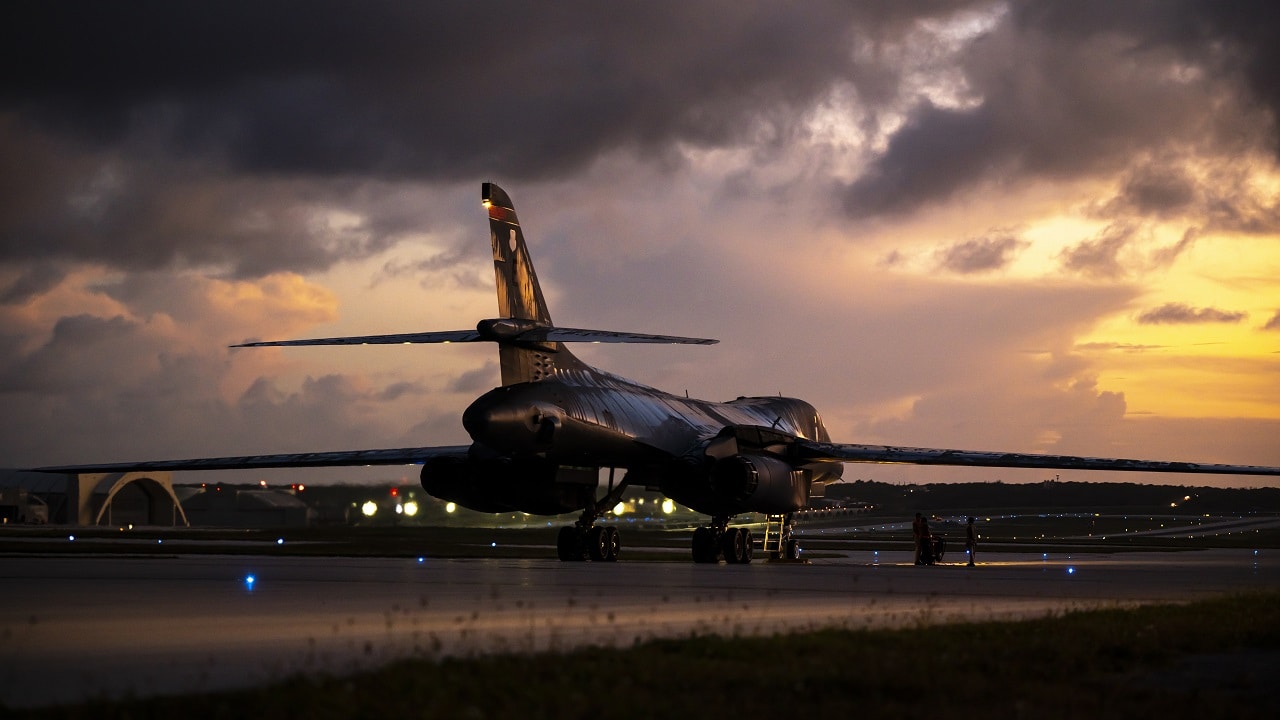
A B-1B Lancer bomber assigned to the 34th Expeditionary Bomb Squadron, Ellsworth Air Force Base, S.D., waits to be guided into a parking spot after returning to Andersen Air Force Base, Guam, from a bomber task force mission, June 8, 2022. U.S. Air Force photo by Master Sgt. Nicholas Priest.
Both Russia and Venezuela depend on the shadow fleet to trade in sanctioned oil. Russia’s Foreign Ministry denounced the seizure as “the illegal use of force” by the U.S. and charged that the use of sanctions in this instance was “without legal foundation.”
The United States has targeted both the vessels and their cargoes in recent seizures. That is a break from previous U.S. policy and contrasts with U.S. seizures of Iranian cargoes from 2020–23. In these earlier actions, U.S. law enforcement confiscated the oil cargo, but not the vessel.
The Department of Justice was “monitoring several other vessels for similar enforcement action”, U.S. Attorney General Pam Bondi stated on social media on January 7 after the seizure of the Bella-1 tanker.
The ship when seized was not carrying any cargo, and it was the first time that the U.S. military had seized a Russian-flagged vessel.
About the Author: Reuben F. Johnson
Reuben F. Johnson has thirty-six years of experience analyzing and reporting on foreign weapons systems, defense technologies, and international arms export policy. Johnson is the Director of Research at the Casimir Pulaski Foundation. He is also a survivor of the Russian invasion of Ukraine in February 2022. He worked for years in the American defense industry as a foreign technology analyst and later as a consultant for the U.S. Department of Defense, the Departments of the Navy and Air Force, and the governments of the United Kingdom and Australia. In 2022-2023, he won two awards in a row for his defense reporting. He holds a bachelor’s degree from DePauw University and a master’s degree from Miami University in Ohio, specializing in Soviet and Russian studies. He lives in Warsaw.