
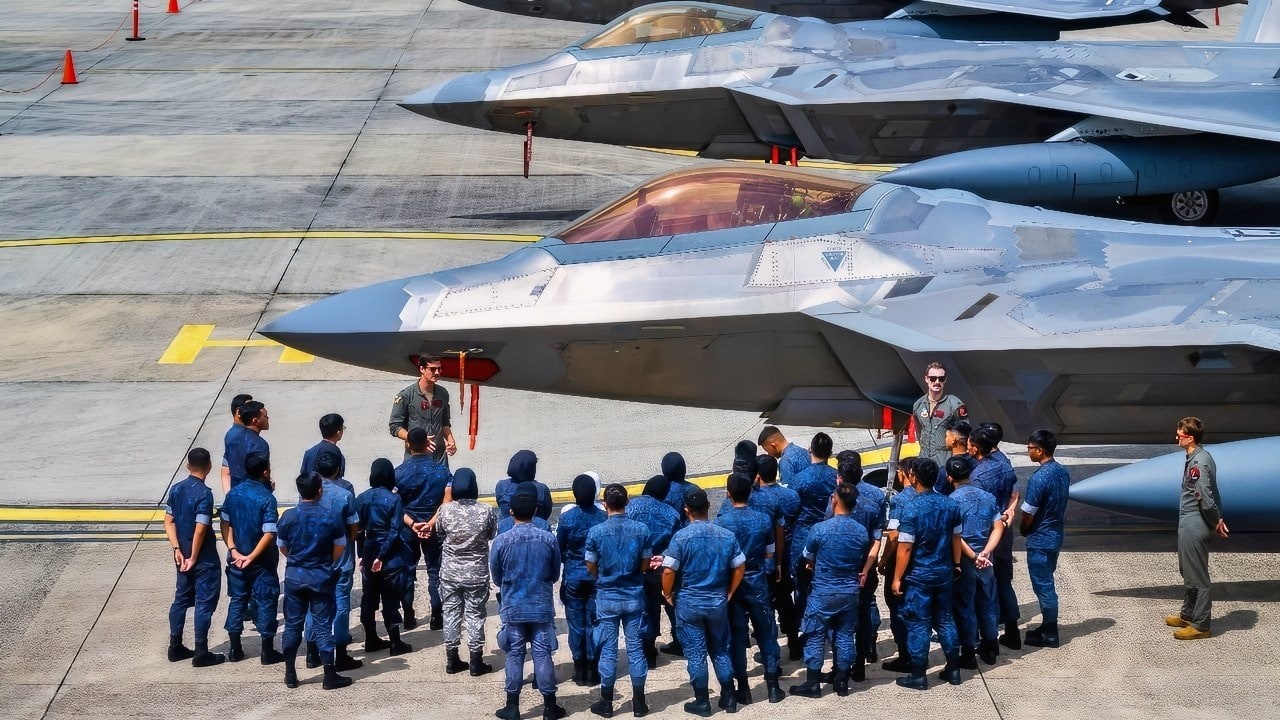
Summary and Key Points: Eleven U.S. Air Force F-22 Raptors have reportedly arrived at Ovda Air Base in southern Israel, a rare forward deployment as tensions with Iran rise.
-The move doesn’t confirm an imminent strike, but it changes the regional airpower balance by putting America’s premier air-dominance fighter closer to the fight.

F-22 Raptor. Image: Creative Commons.
-Built for stealthy air superiority, the F-22 is designed to clear the skies, hunt enemy aircraft, and help dismantle defenses that would threaten follow-on strike packages.
-Stationing Raptors in Israel also reduces political friction compared to some regional basing options, giving Washington faster, cleaner operational flexibility.
11 F-22 Raptors Just Landed in Israel: What That Really Signals About Iran
Reports this week have confirmed that eleven U.S. Air Force F-22 Raptors arrived at Ovda Air Base in southern Israel, marking a rare forward deployment of America’s premier air-dominance fighter into the Middle East amid rising tensions with Iran. Fox News first reported the movement, citing former U.S. and Israeli officials who described it as an expansion of presidential military options amid continued friction over Tehran’s nuclear program and missile development.
It’s important to note that the arrival of F-22s does not suggest there will be an immediate strike, but it does materially change the military equation in a region where air superiority would be necessary for any sustained campaign.
Why the F-22 – and Why Now?
The F-22 Raptor was designed specifically to establish air superiority against advanced adversaries. The American stealth fighter combined advanced avionics and sensor-fusion technology, making it a valuable asset for defeating enemy fighters in heavily defended airspaces.
Unlike multirole aircraft such as the F-35, the F-22’s core mission is air dominance – clearing hostile aircraft from the skies and suppressing threats before strike platforms enter contested areas. Lockheed Martin describes the jet as capable of penetrating integrated air defense systems and executing both air-to-air and air-to-ground missions.
Iran maintains a layered air defense network that includes Russian-supplied S-300 surface-to-air missile systems, which Tehran confirmed receiving in 2016. The S-300 family is designed to engage aircraft and ballistic missiles at long ranges.
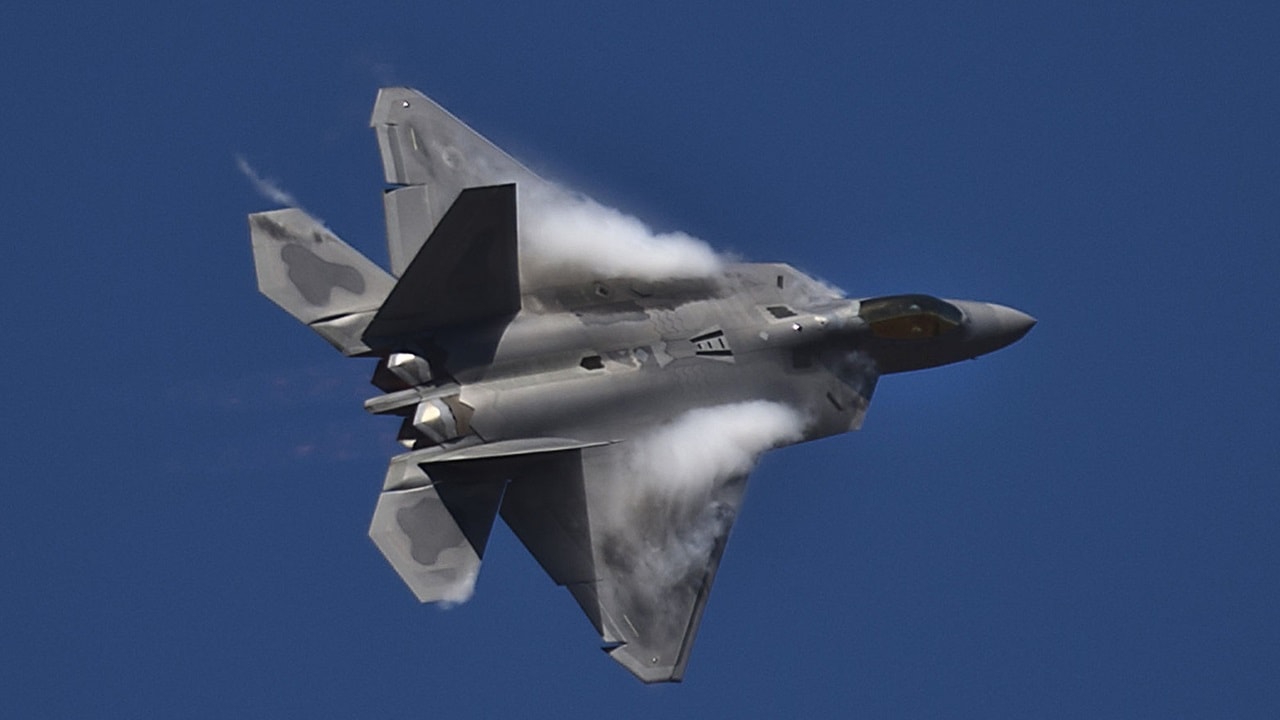
A U.S. Air Force F-22 Raptor from 94th Fighter Squadron Langley Air Force Base, Va., takes off to perform an aerial demonstration for an estimated 180,000 spectators at the Australian International Airshow, March 2, 2013 at Avalon Airport in Geelong, Australia. The F-22 demo team are currently deployed to the 18th Fighter Wing, Kadena Air Base, Japan to support pacific theater operations. This is the first official demonstration of the F-22 Raptors capabilities at an airshow outside the United States. The Australian International Airshow 2013 (AIA13), is held biennially, and is one of the largest international trade shows in the Pacific. The Airshow is expected to draw 350,000 visitors and has featured 500 defense exhibitors from 35 countries and is designed to bolster business opportunities in the international aviation sector. U.S. Pacific Command (USPACOM) participation in AIA13 directly supports theater engagement goals and objectives and further enhances relationships with other Pacific nations. (Department of Defense photo by U.S. Air Force Tech. Sgt. Michael R. Holzworth/Released)
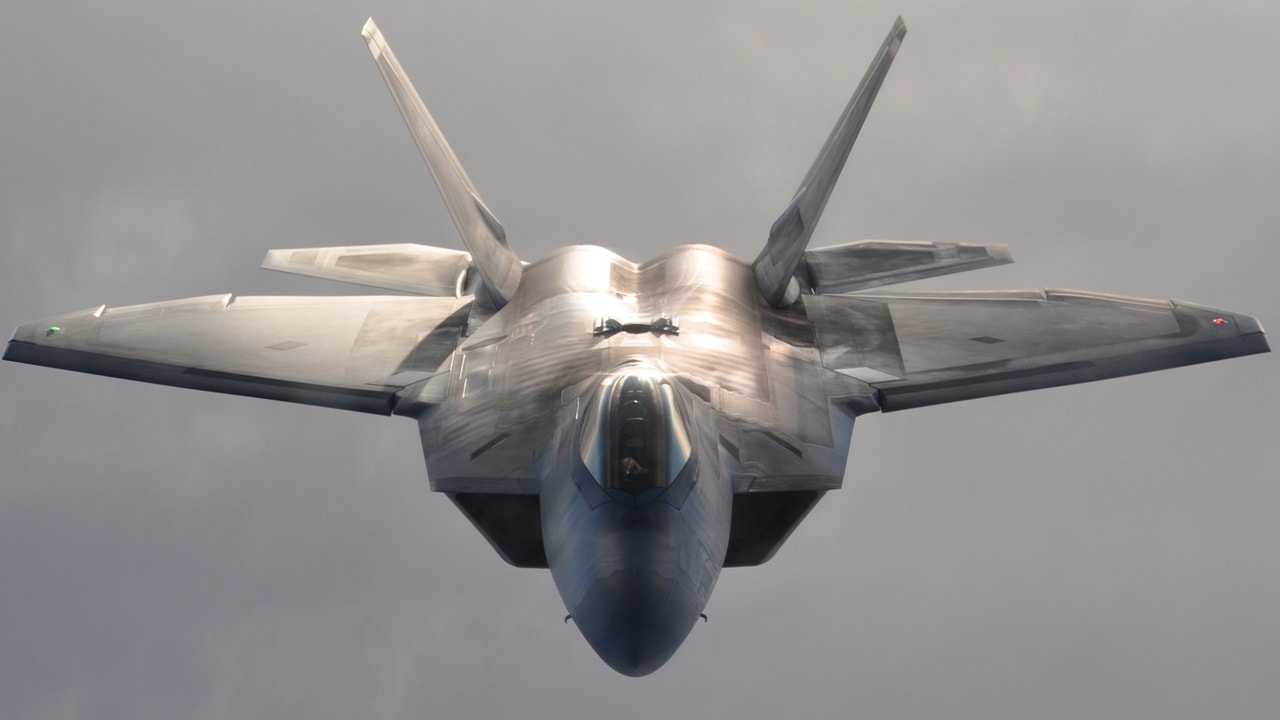
An F-22 Raptor flies over Alaska terrain after refueling Jan. 5, 2013. The F-22 is assigned to the 3rd Wing and flown by a Reserve pilot assigned to the 302nd Fighter Squadron at Elmendorf Air Force Base, Alaska. (U.S. Air Force Reserve photo/Tech. Sgt. Dana Rosso)
Clearing or degrading such defenses would be essential before bombers or strike aircraft could safely approach hardened targets. The F-22’s ability to operate inside contested airspace makes it uniquely suited to that role.
The size of the deployment also matters. Only 187 F-22s were ever built before production ended in 2011. Of those, fewer are combat-coded at any given time due to maintenance cycles, so forward-deploying eleven aircraft represents a significant operational commitment, not just a symbolic gesture.
Israel as a Launch Platform
Basing in Israel carries operational and political meaning. The U.S. and Israel have long cooperated on missile defense programs, including Iron Dome and Arrow systems. Joint exercises and interoperability between U.S. Central Command (CENTCOM) and the Israel Defense Forces have increased since Israel was formally moved into the CENTCOM area of responsibility in 2021.
Unlike some Gulf bases, which can involve host-nation sensitivities and operational constraints, Israel provides a close strategic partner with fewer political caveats. That distinction matters in contingency planning, especially in a potential crisis involving Iran.
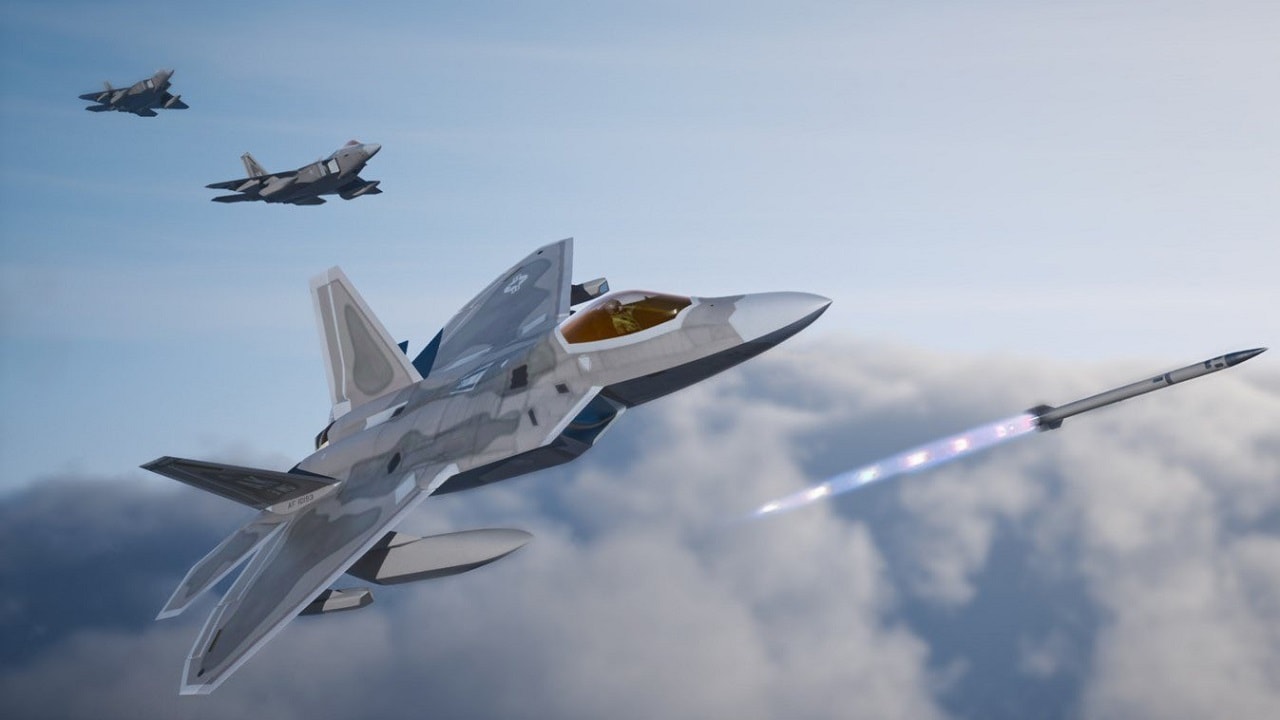
F-22 Raptor. Image Credit: U.S. Air Force Social Media.
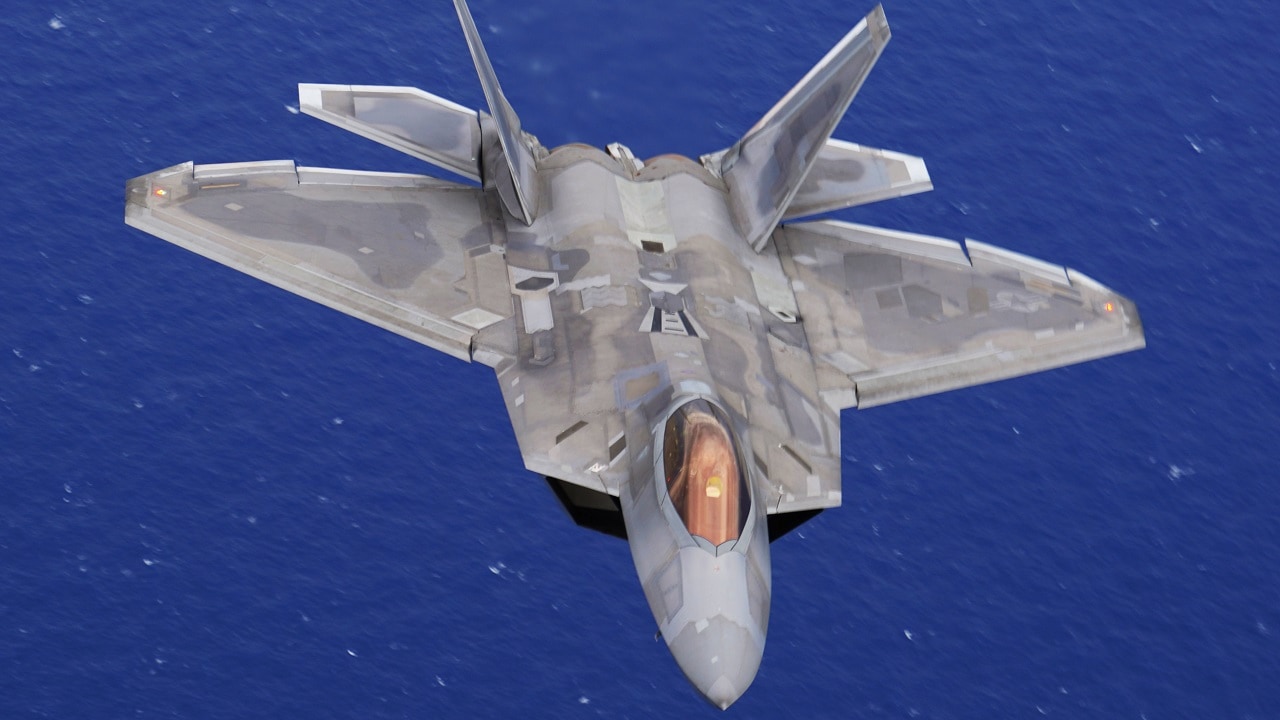
F-22 Hawaiian Raptor flies over Joint Base Pearl Harbor-Hickam, Hawaii, Dec. 5, 2019. Image Credit: Creative Commons.
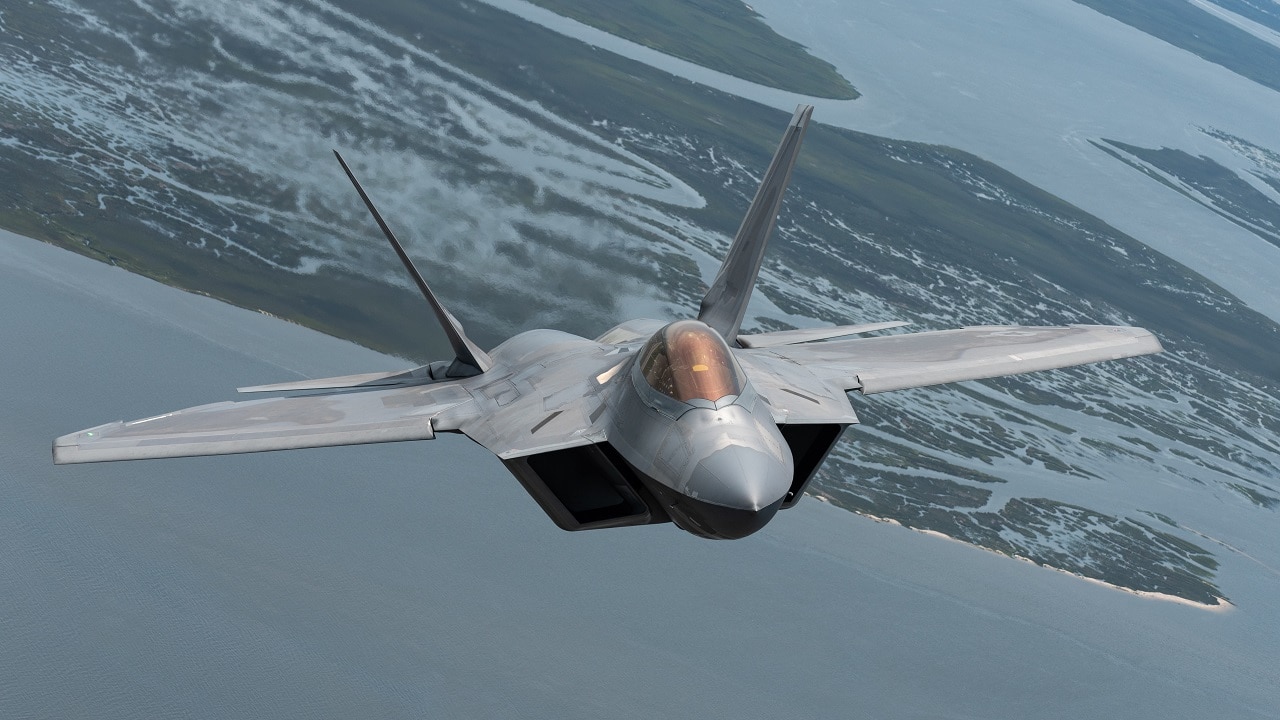
U.S. Air Force Maj. Paul ‘Loco’ Lopez, F-22 Demo Team commander/pilot, performs an aerial demonstration during the MCAS Beaufort air show, April 27, 2019. Maj. Lopez has over 1,500 hours flying both the F-15 and the F-22 and is in his second year as the commander of the F-22 Raptor Demonstration Team. (U.S. Air Force photo by 2nd Lt. Samuel Eckholm)
The U.S. military’s overall posture in the region has shifted, too. The Pentagon has previously surged assets – including B-52 bombers and carrier strike groups – in response to Iranian activity. In 2023 and 2024, U.S. forces were reinforced following Iranian proxy attacks on American personnel.
Positioning F-22s in Israel fits into this pattern of deterrence through forward presence – but the difference now is that the United States has moved two carrier strike groups to waters surrounding Iran, indicating that a strike could well be on the cards.
Washington Now Has More Options
Forward deployments like this provide greater flexibility for Washington. Military planners prefer assets to be in place before a crisis peaks because it can reduce response time in the event the assets are needed.
Any strike campaign against Iranian nuclear or missile infrastructure would require a huge amount of coordination between different assets, including suppression of enemy air defenses, aerial refueling, intelligence, surveillance, reconnaissance (ISR), and potentially cyber operations.
The F-22 would likely serve as an escort and air-dominance platform rather than the primary bomb carrier. Long-range bombers such as the B-2 or B-52 would carry heavy munitions, including bunker-busting bombs like the GBU-57 Massive Ordnance Penetrator, designed to target hardened facilities.
Iran has previously demonstrated its ability to respond – albeit in a limited capacity. In January 2020, Tehran launched a ballistic missile at U.S. forces stationed at Al Asad Air base in Iraq following the killing of Qassem Soleimani. Iran also retains the ability to threaten maritime traffic in the Strait of Hormuz, through which roughly 20% of global oil passes. However, it remains uncertain how far Iran would go, knowing that its only hope of taking on the much larger American naval presence would be through asymmetric tactics. And, those asymmetric tactics would likely be met by overwhelming force that Tehran cannot match in any meaningful way.
The air deployment comes amid a widening naval buildup by U.S. forces. The Pentagon has confirmed that two U.S. carrier strike groups are now operating in or near the Arabian Sea and eastern Mediterranean, reinforcing CENTCOM’s posture in the region.
The U.S. Navy’s Fifth Fleet, headquartered in Bahrain, is also continuing its maritime security operations in the Strait of Hormuz. The air and naval decisions made in recent weeks and months strongly indicate that Washington is, at the very least, posturing for sustained deterrence.
About the Author:
Jack Buckby is a British researcher and analyst specialising in defence and national security, based in New York. His work focuses on military capability, procurement, and strategic competition, producing and editing analysis for policy and defence audiences. He brings extensive editorial experience, with a career output spanning over 1,000 articles at 19FortyFive and National Security Journal, and has previously authored books and papers on extremism and deradicalisation.