
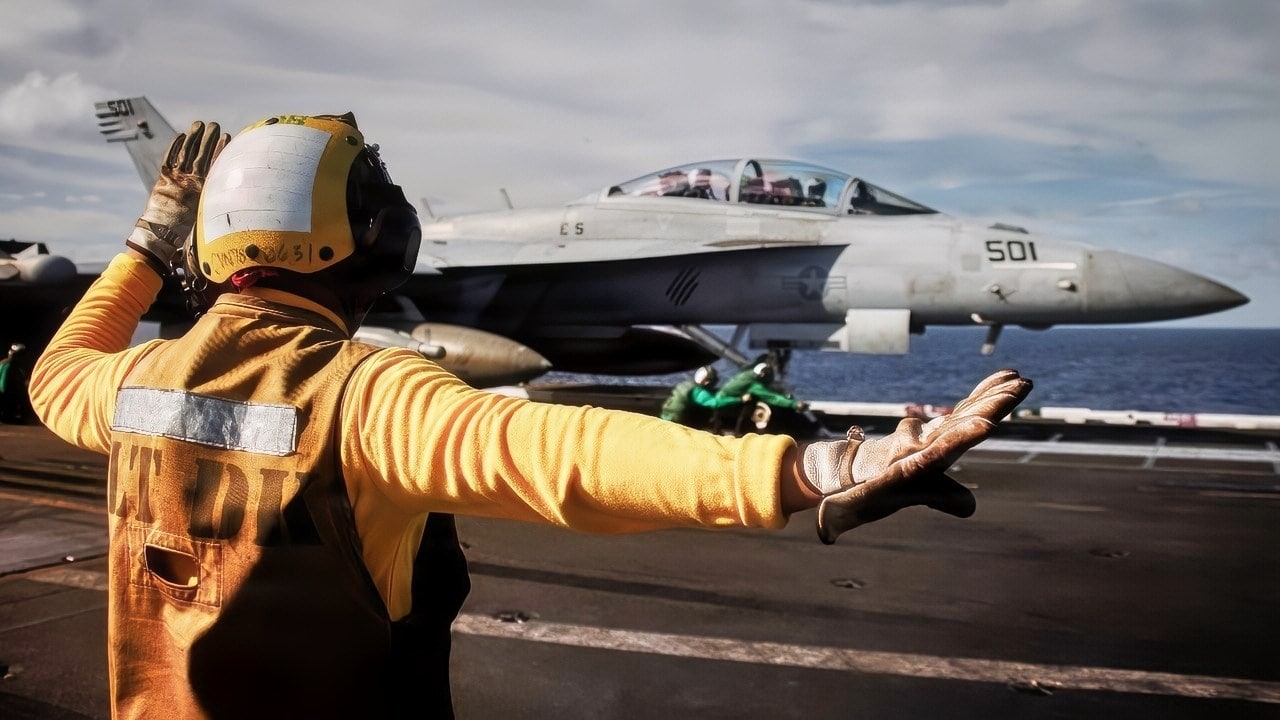
Summary and Key Points: With the U.S. Navy aircraft carrier USS Abraham Lincoln already positioned in the Arabian Sea, the USS Gerald R. Ford is now being pushed toward the Middle East after roughly eight months at sea.
-The move highlights both American resolve and a growing readiness concern: the Ford’s crew has already logged extensive miles and high operational tempo, and the additional transit from the Caribbean to CENTCOM waters adds strain on sailors and ship systems.
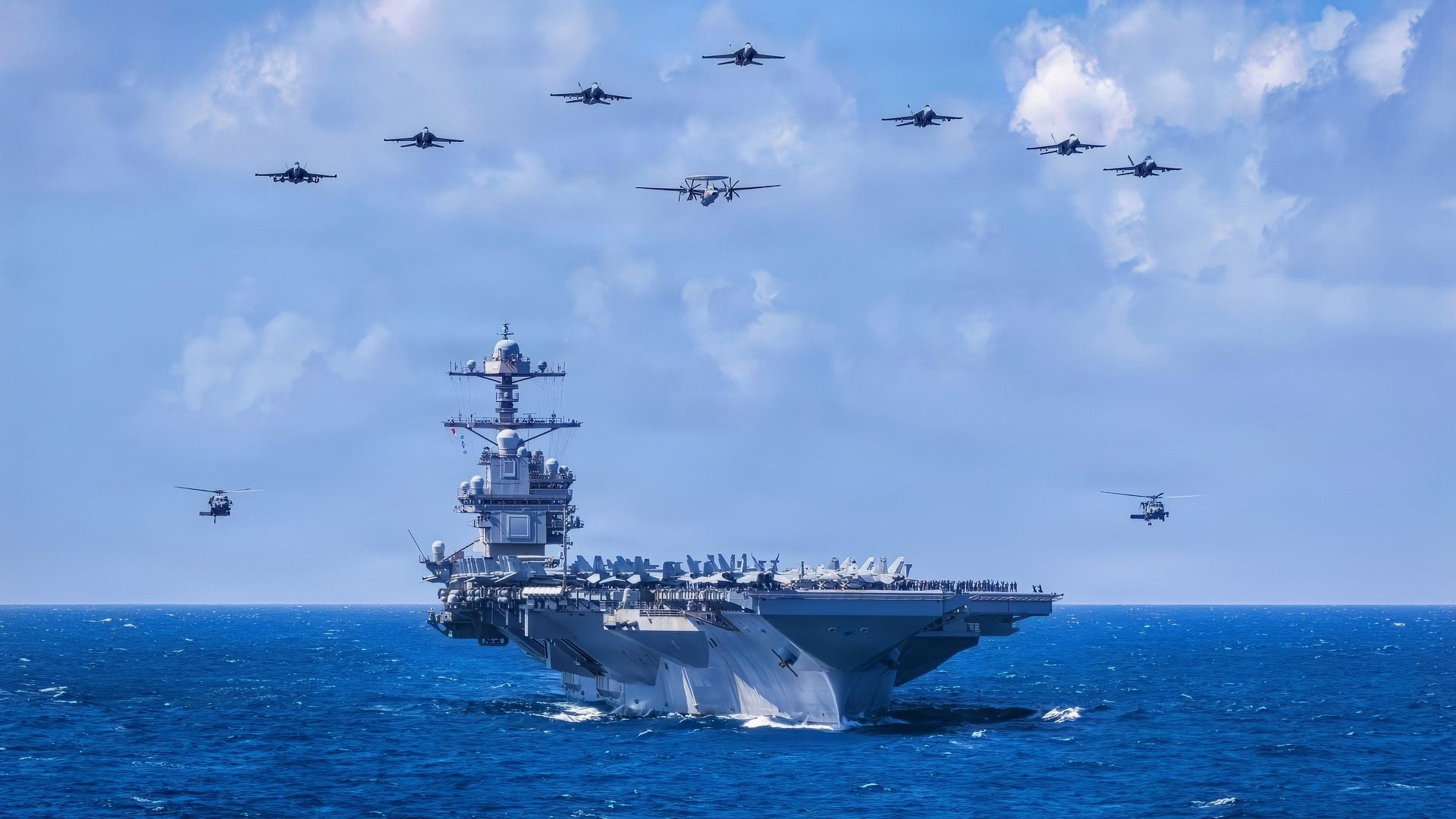
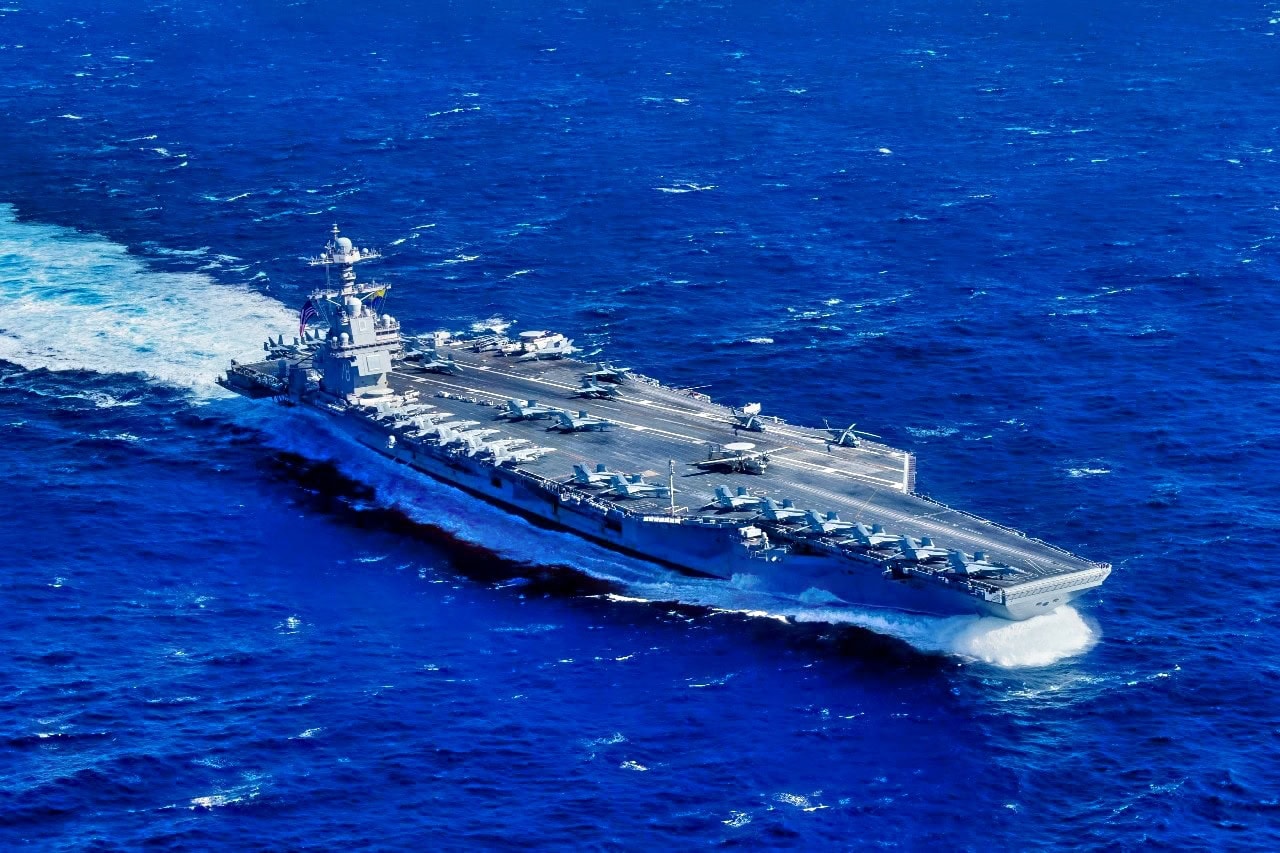
USS Ford Supercarrier U.S. Navy. Image Credit: U.S. Navy.
-The broader issue is structural—RCOH maintenance cycles and the Navy’s “rule of thirds” mean only a handful of carriers are truly available at any time, making extensions more likely as crises pile up.
Two U.S. Navy Aircraft Carriers vs. Iran: Why the Ford’s Deployment Pace Raises Red Flags
The USS Abraham Lincoln (CVN-72) is currently deployed in the Arabian Sea and poised for possible action against Iran. Now she is being backed up by the USS Gerald R. Ford (CVN-78). The fact that the Ford is backing up the Lincoln is all well and good. (Ironically enough, Jerry Ford’s most famous saying was, “I Am a Ford, not a Lincoln.”)
There is reason for concern, however, that the operational tempo of the Ford might be spreading its sailors too thin.
Bottom Line Up Front (BLUF): Supercarrier Mistake?
As per the title of an article by Kai Greet in The Aviationist: “USS Gerald R. Ford Ordered to the Middle East After Eight Months Already at Sea.” Yes, you read that correctly: eight months.
As Greet elaborates: “Setting sail from Norfolk, Virginia in the latter half of June 2025, the USS Gerald R. Ford (CVN-78) spent several months operating in European waters before an unexpected shift in operational focus led to the redeployment of the carrier and its strike group to the Caribbean. Ford, its escorts, and its air wing then took part in Operations Southern Spear and Absolute Resolve…This change of plans was expected by many to have shelved original plans for further operations by the Ford carrier strike group (CSG) in Europe or the Middle East during its current deployment, instead heading directly for home after wrapping up operations and leaving the U.S. Southern Command (SOUTHCOM). We now know that this homecoming will not happen so soon.”
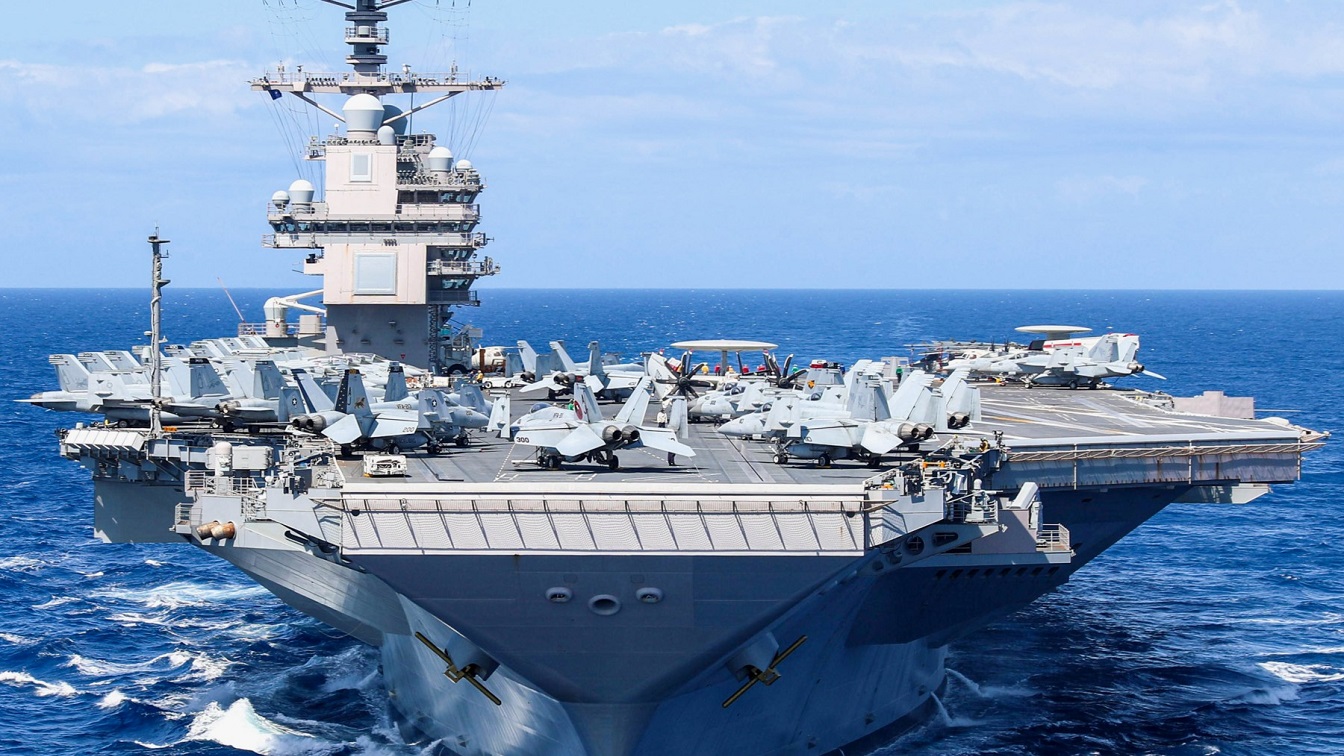
Ford-Class. Ford-Class Aircraft Carrier USS Ford.
Regarding Operations Southern Spear and Absolute Resolve, they were, respectively, a large-scale military and surveillance operation against alleged drug-smuggling boats and the capture of Venezuelan dictator Nicolás Maduro. And given the now-defunct Maduro regime’s amicable relationship with Iran, there’s something poetically apropos about the prospect of CVN-78 going from helping take down Maduro to possibly helping take down Supreme Leader Ali Khamenei.
To paraphrase Indiana Jones, “It’s not the months, it’s the mileage.”
Besides the length of time of the USS Ford’s deployment, there’s the sheer distance covered sailing from the Caribbean to the Middle East: somewhere between 10,000 to 11,000 nautical miles.
Given the concerns that Secretary of War Pete Hegseth has raised about military readiness, one cannot help but wonder how much longer the Ford’s crew, as dedicated, skilled, and highly trained as they undoubtedly are, can maintain an optimal level of mental sharpness without at least a temporary respite.
ROCH Rigamarole and Rotation Regs Strike Again
Greet adds, “As outlets reported on rumors that U.S. Government officials were eyeing the fielding of a second carrier in the U.S. Central Command (CENTCOM) area of operations, alongside the USS Abraham Lincoln (CVN-72), many – including The Aviationist – pointed out that in ideal terms there were no carriers available…the deployment of a second carrier today has only been possible through a less-than-ideal deployment extension.”
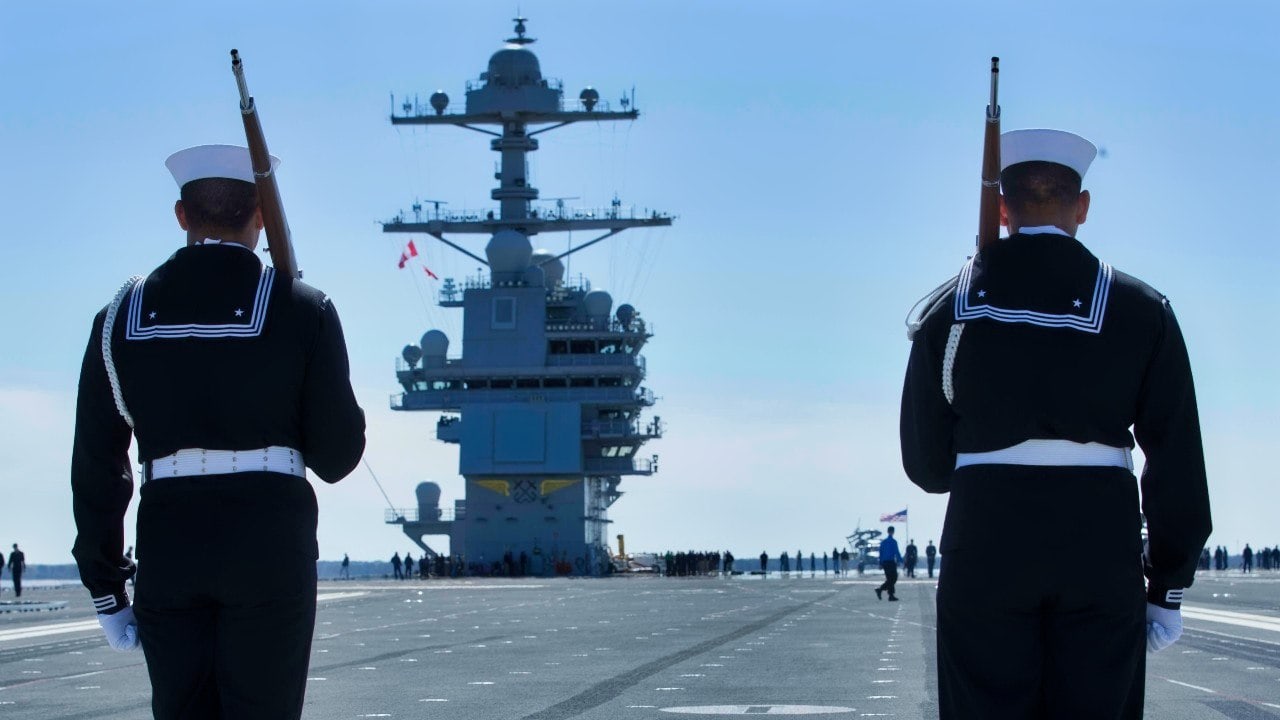
(April 8, 2017) — Logistics Specialist 3rd Class Miguel Monduy, from Miami, Florida, and Aviation Ordnanceman Airman Michael Valdez, from Pheonix, Arizona, assigned to Pre-Commissioning Unit Gerald R. Ford (CVN 78), stand on the flight deck for shifting colors. The future USS Gerald R. Ford (CVN 78) is underway on its own power for the first time. The first-of-class ship — the first new U.S. aircraft carrier design in 40 years — will spend several days conducting builder’s sea trials, a comprehensive test of many of the ship’s key systems and technologies. (U.S. Navy photo by Mass Communication Specialist Seaman Gitte Schirrmacher)
That passage merits further examination, as it underscores a major dual problem undermining the Navy’s supercarrier fleet: RCOH and rotational regulations.
“RCOH” stands for refueling and complex overhaul, a procedure that entails cutting a massive hole into the hull and replacing everything from catapult systems to water purifiers. CVNs must undergo this procedure once every 25 years.
RCOH might still be bearable if it weren’t also coupled with the Navy logisticians’ “rule of thirds” for carrier deployments: At any given time, one-third of the vessels are deployed, one-third are prepping for deployment, and one-third are undergoing maintenance (such as RCOH). With 11 carriers in the fleet, this means that only three to four are typically ready to fight.
The world’s largest aircraft carrier, USS Gerald R. Ford (CVN 78), sails in formation with the Arleigh Burke-class guided missile destroyers USS Winston Churchill (DDG 81), USS Mitscher (DDG 57), USS Mahan (DDG 72), USS Bainbridge (DDG 96), and USS Forrest Sherman (DDG 98) in the Atlantic Ocean, Nov. 12, 2024. The Gerald R. Ford Carrier Strike Group is underway in the Atlantic Ocean completing Group Sail. Group Sail is the first at-sea integrated phase training event during a routine deployment training cycle. It is designed to challenge the Gerald R. Ford CSG’s ability to use the capabilities of the USS Gerald R. Ford (CVN 78), USS Winston S. Churchill (DDG 81), Carrier Air Wing (CVW) 8, Destroyer Squadron (DESRON) 2, and embarked Information Warfare team as a cohesive Strike Group to meet Navy and Joint Warfighting requirements that increases warfighting capability and tactical proficiency across all domains. (U.S. Navy photo by Mass Communication Specialist 2nd Class Maxwell Orlosky)
Jerry Ford’s USN Career in Brief
On a more pleasant note…
Since this article is being drafted on President’s Day weekend, it’s only fitting to wrap it up with a homage to President Gerald R. Ford’s World War II naval career. He served from 1942 to 1946, separating with the rank of lieutenant commander.
During those four years of honorable service, performed his sea duty on an aircraft carrier, the USS Monterey III (CVL-26), from June 1943 to December 1944. There, he served as the ship’s assistant navigator, athletic officer, and antiaircraft artillery battery officer.
About the Author: Christian D. Orr, Defense Expert
Christian D. Orr is a Senior Defense Editor. He is a former Air Force Security Forces officer, Federal law enforcement officer, and private military contractor (with assignments worked in Iraq, the United Arab Emirates, Kosovo, Japan, Germany, and the Pentagon). Chris holds a B.A. in International Relations from the University of Southern California (USC) and an M.A. in Intelligence Studies (concentration in Terrorism Studies) from American Military University (AMU). He is also the author of the newly published book “Five Decades of a Fabulous Firearm: Celebrating the 50th Anniversary of the Beretta 92 Pistol Series.”