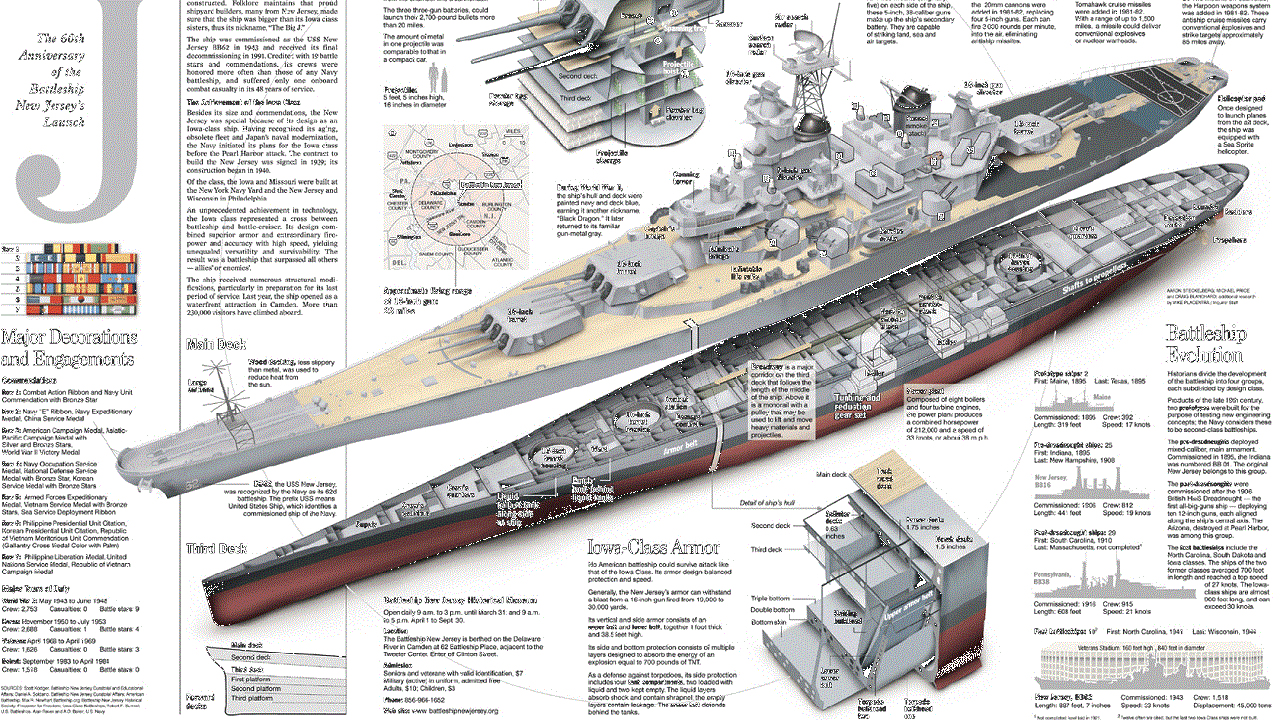
Summary and Key Points: The USS Kentucky (BB-66) occupies a unique place in naval history as the “ghost” of the Iowa class—a 57,000-ton fast battleship laid down in 1944 but never completed.
-Overtaken by the rise of the aircraft carrier, the unfinished hull served as a testbed for radical conversion proposals, including plans to transform it into a guided-missile battleship (BBG-1) armed with Talos launchers or even a fast carrier.
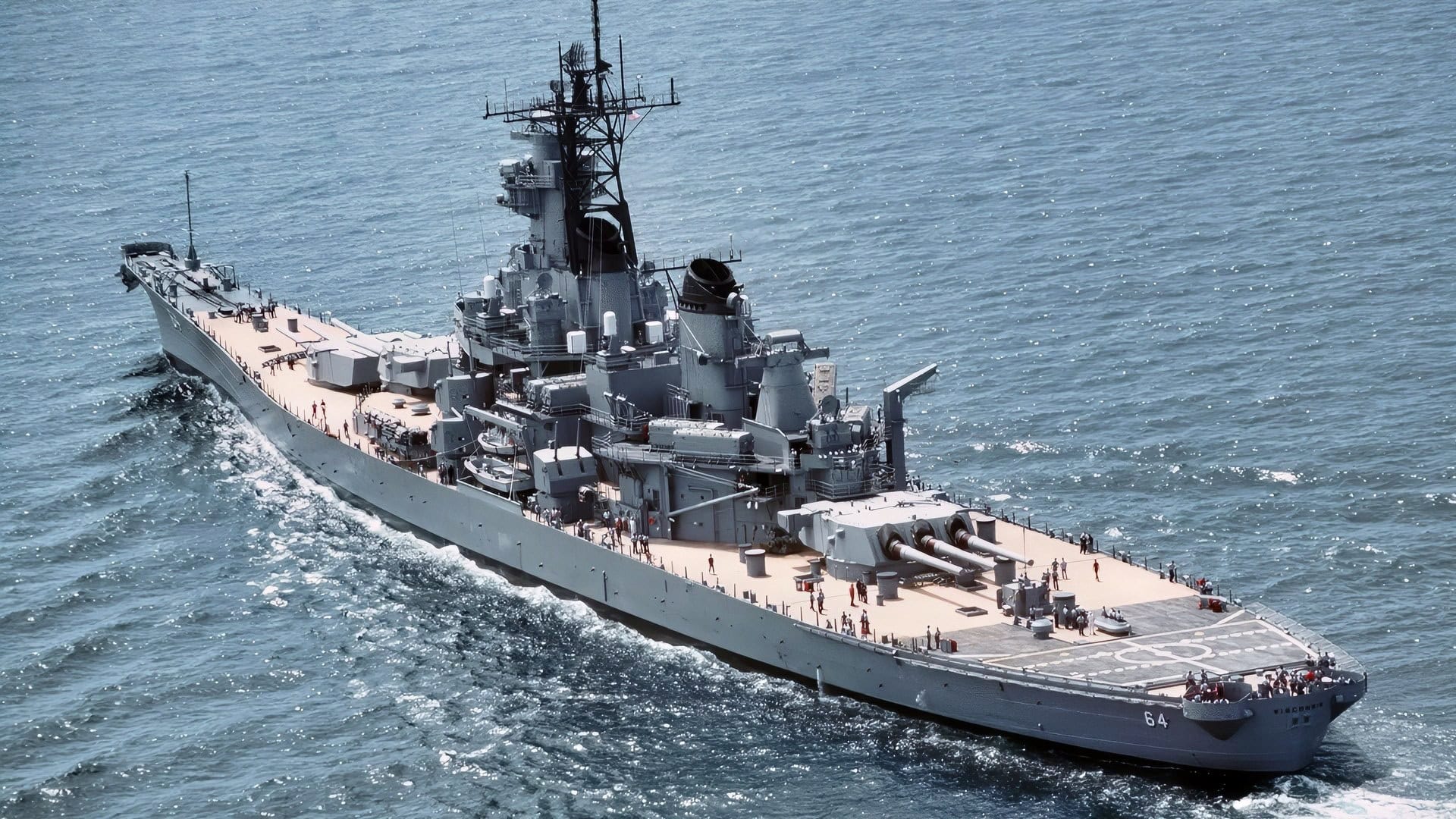
U.S. Navy Iowa-Class Battleship. Image Credit: Creative Commons.
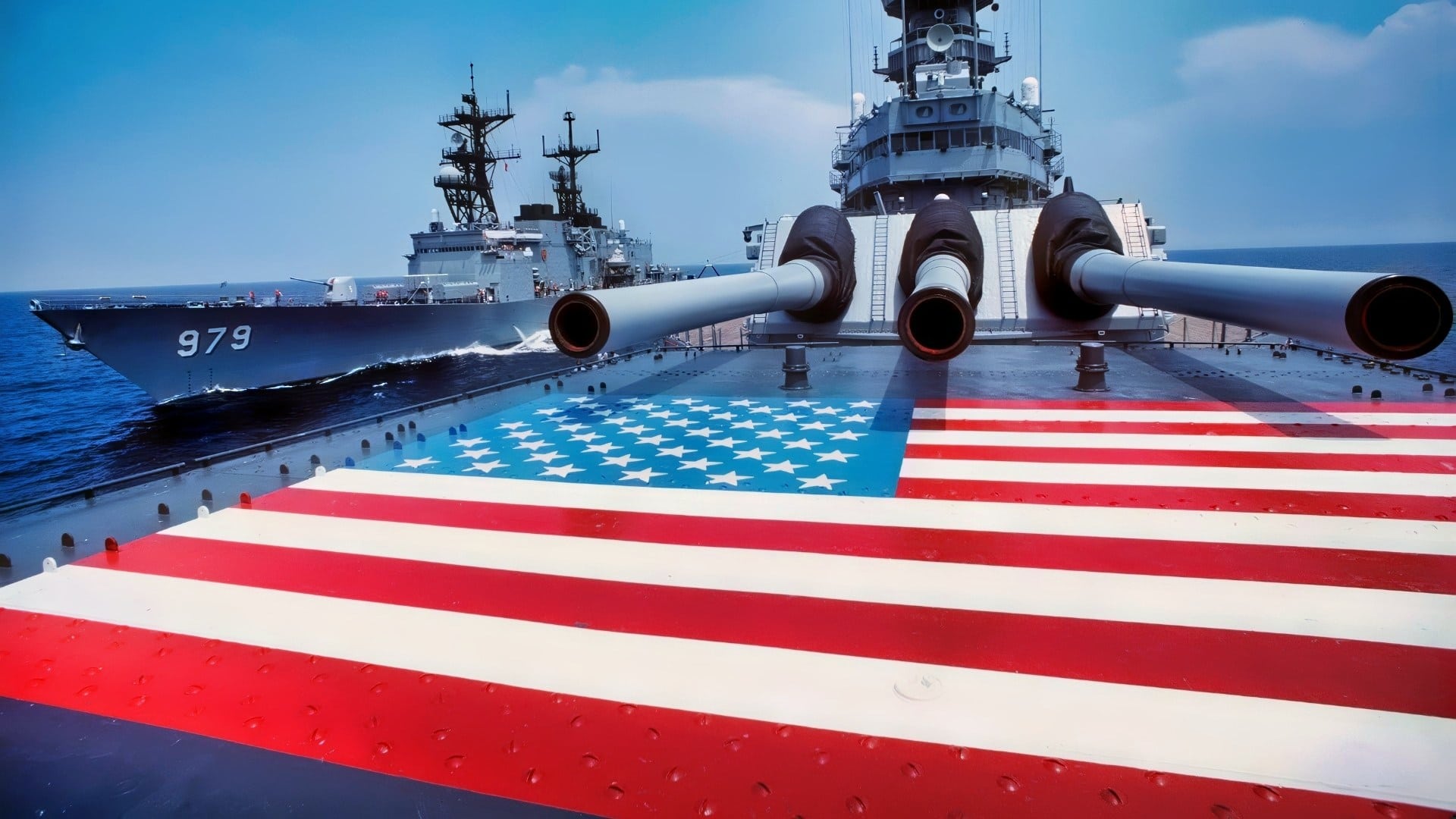
Iowa-Class U.S. Navy Battleships Flag. Image Credit: Creative Commons.
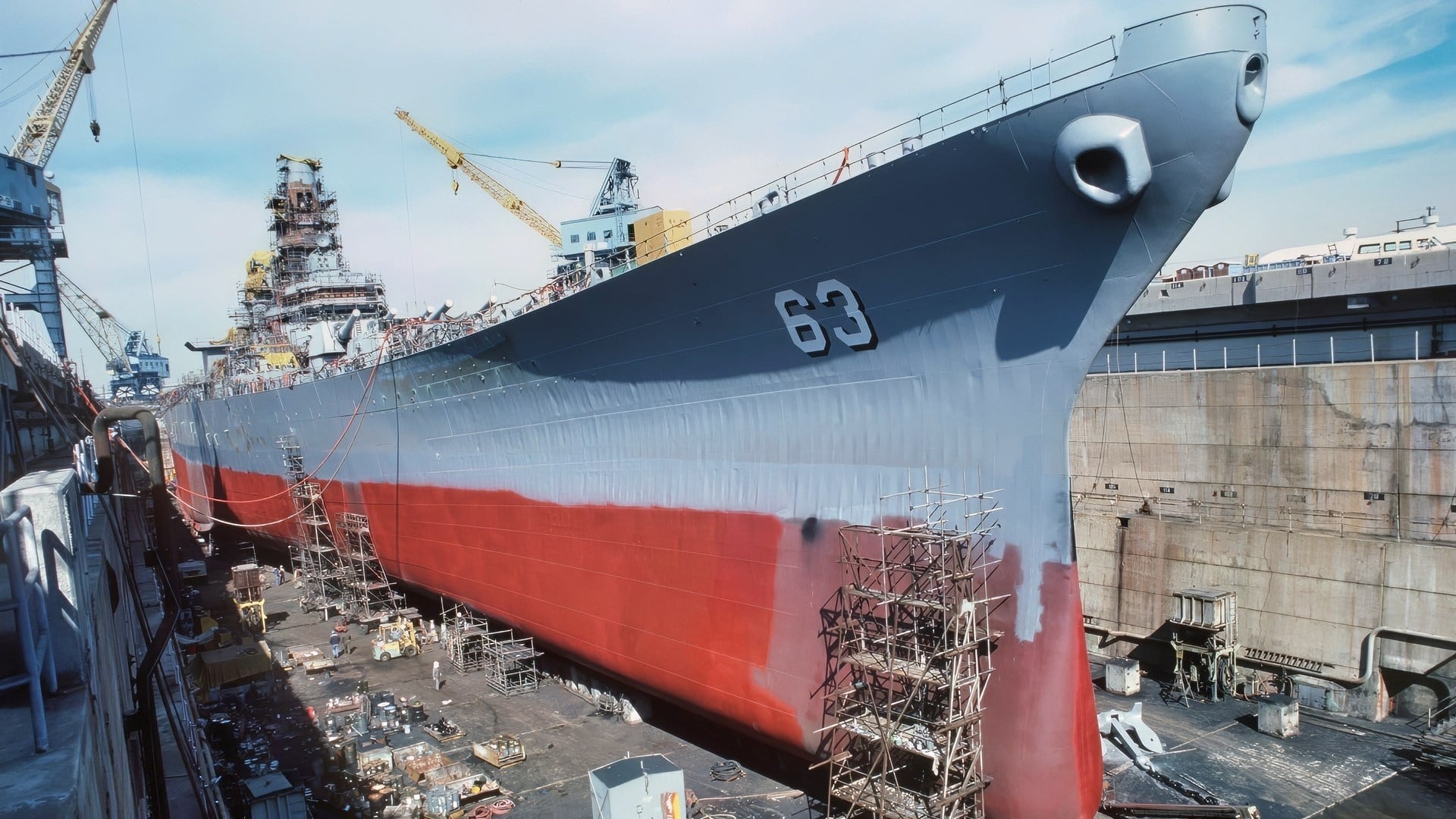
A starboard bow view of the battleship USS MISSOURI (BB 63) in dry dock for reactivation/modernization work prior to recommissioning. Image Credit: Creative Commons.
-Ultimately, Kentucky found its greatest purpose as a vast repository of spare parts.
-In a famous episode of naval cannibalization following a May 6, 1956, collision, a 68-foot, 120-ton section of the Kentucky’s bow was removed and grafted onto the damaged USS Wisconsin (earning the ship the nickname “WisKy”).
-The Kentucky’s engines were later salvaged to power fast combat support ships like the USS Sacramento, marking the symbolic end of the all-gun battleship era.
The Battleship That Never Was: The Tragic Tale of the USS Kentucky
The USS Kentucky (BB-66 in Navy parlance, as she was never commissioned) is better known for what the ship could have been, rather than what it actually accomplished. The ship was laid down in 1944 and was to be the sixth Iowa-class battleship of World War II fame.
She would have been almost identical to the four original Iowa-class ships, the Iowa, New Jersey, Missouri, and Wisconsin, but events moved faster than the ship could be built.
The Design
In terms of design, the Kentucky was a member of the final, last generation of US Navy fast battleships. When fully loaded with ammunition, fuel, and crew supplies, the ship would have displaced about 57,000 tons.
It would have made 33 knots when underway, while also carrying the Iowa-standard nine 16-inch main guns armed in three triple turrets and supported by a heavy secondary battery as well as an anti-aircraft battery.
The ship’s hull was relatively long and thin, an optimization that allowed the ship to keep pace with carrier task forces, which had become the center of US Navy power, particularly the Essex-class carriers, and represented, at the time, the apex of American battleship design and sea power.
Theory and Practice
But the Kentucky would have differed slightly from her sister ships. By the time the BB-66 keel was laid down at Norfolk Naval Shipyard, the United States Navy was already cognizant of the outsized role that aircraft carriers played and the decisive qualities they brought, making continued investment in more battleships increasingly redundant. Consequently, progress on the Kentucky build was slow and modified.
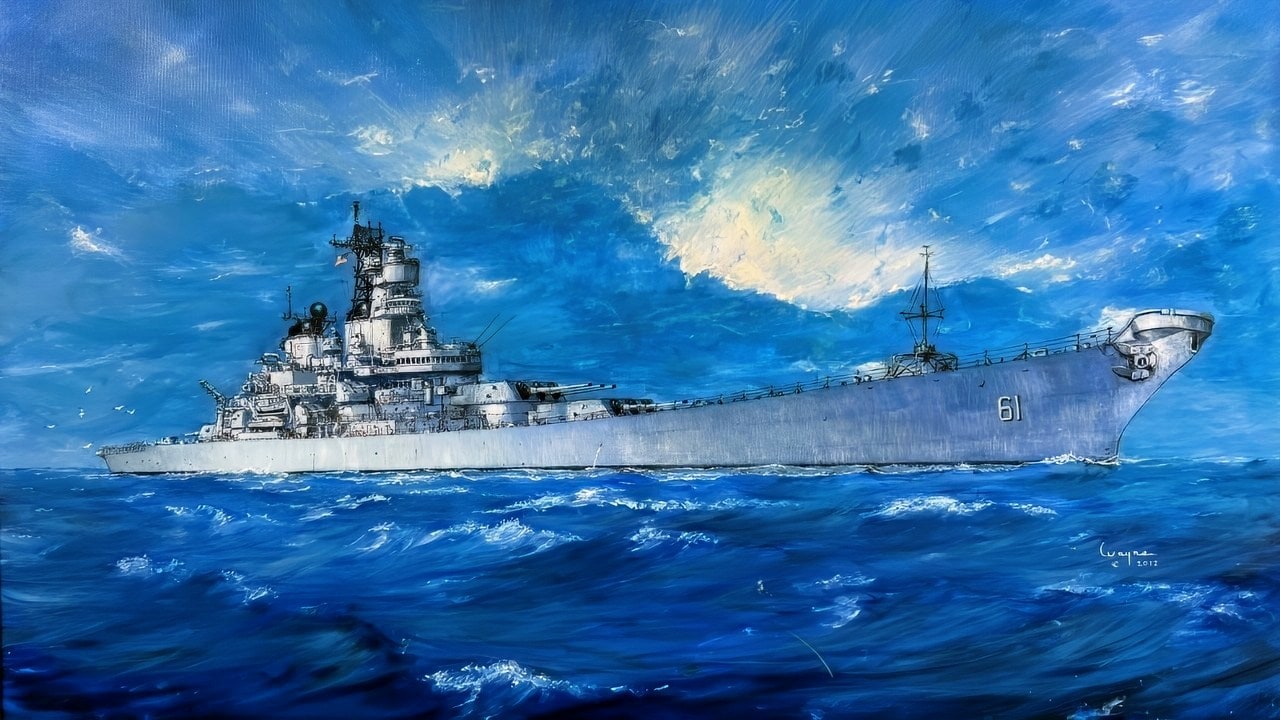
Image taken by Harry J. Kazianis aboard the USS Iowa on August 15, 2025. Image is of a painting of the USS Iowa of the Iowa-Class. USS New Jersey is also a Iowa-Class battleship.
The ship was never outfitted with the planned 16-inch guns, armor belting, or machinery, and was launched in 1950 to free up port space.
The ship also served as a test bed of sorts. Lessons learned during the Second World War fighting Imperial Japanese kamikaze attacks showed the need for a more robust anti-aircraft umbrella, providing the impetus for conversion evaluation. The US Navy also considered converting the battleship into a guided-missile battleship.
This hybrid would have seen some of Kentucky’s 16-inch batteries replaced with missile launchers for Talos or Terrier missiles of the era. Another proposal was to turn the ship into a fast carrier or command ship. But ultimately, none of these proposals moved past the design phase and reflect the US Navy’s transition from gun-centric fleets to fleets centered on air power and newly emerging missile technology.
Though the ship never entered service with the US Navy, the Kentucky did come to the aid of one of her sister ships, the USS Wisconsin, following a collision in 1956. The Kentucky donated her bow section to Wisconsin, allowing the ship to return to service much faster than otherwise possible.
Later, the ship’s engines were removed and installed on the fast combat support ships USS Sacramento (AOE-1) and USS Camden (AOE-2).
Grand Strategy
At the strategic level, the USS Kentucky’s biggest impact on the US Navy was the cancellation of her construction. The last battleship laid down by the United States was ultimately scrapped in 1958, marking the end of the battleship as the primary capital ship for the United States Navy.
In contrast to the USS Missouri or USS New Jersey, two of the original four Iowa-class battleships, the BB-66 lacked diplomatic symbolism, a combat record, and had not captured the public imagination. Instead, that hull’s legacy was as the bookend to the era of the battleship, the beginning of the dominance of other platforms like the aircraft carrier and submarine, and the passing of large-caliber naval guns in favor of missile technology.
In a twist of irony, the four completed Iowa-class ships were famously reactivated during the 1980s, part of the Regan administration’s goal of building a 600-ship navy.
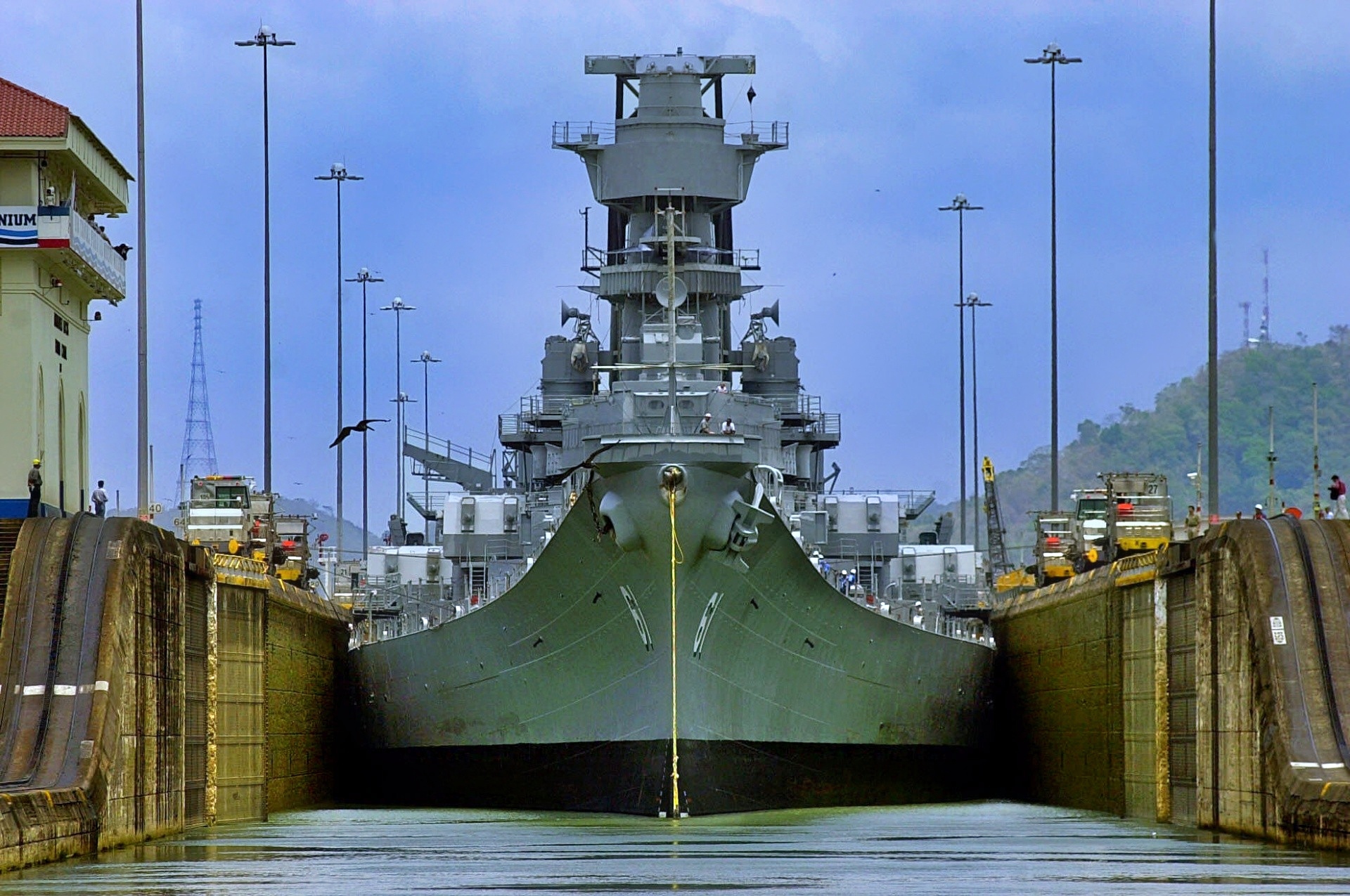
USS Iowa Battleship. Image Credit: Creative Commons.
Those hulls received a raft of modernizations, including new radars, modern anti-ship and strike missiles, and air defense systems. Despite the costs of the Iowa-class modernization and reactivation, the collapse of the Soviet Union, and the subsequent end of Cold War hostilities and the defense drawdowns that quickly put those battleships back into retirement, they did see service during the Gulf War as well as other, smaller engagements in the 1980s.
BB-66 is a footnote in United States naval history, but one that is insightful. That hull demonstrated how quickly technology can change—making one era’s capital ship another era’s liability.
Though the Trump Administration indicated a return to the battleship—albeit in a more modernized form—the ship’s viability is widely questioned, ensuring BB-66’s legacy as the last American battleship.
About the Author: Caleb Larson
Caleb Larson is an American multiformat journalist based in Berlin, Germany. His work covers the intersection of conflict and society, focusing on American foreign policy and European security. He has reported from Germany, Russia, and the United States. Most recently, he covered the war in Ukraine, reporting extensively on the war’s shifting battle lines from Donbas and writing on the war’s civilian and humanitarian toll. Previously, he worked as a Defense Reporter for POLITICO Europe. You can follow his latest work on X.