
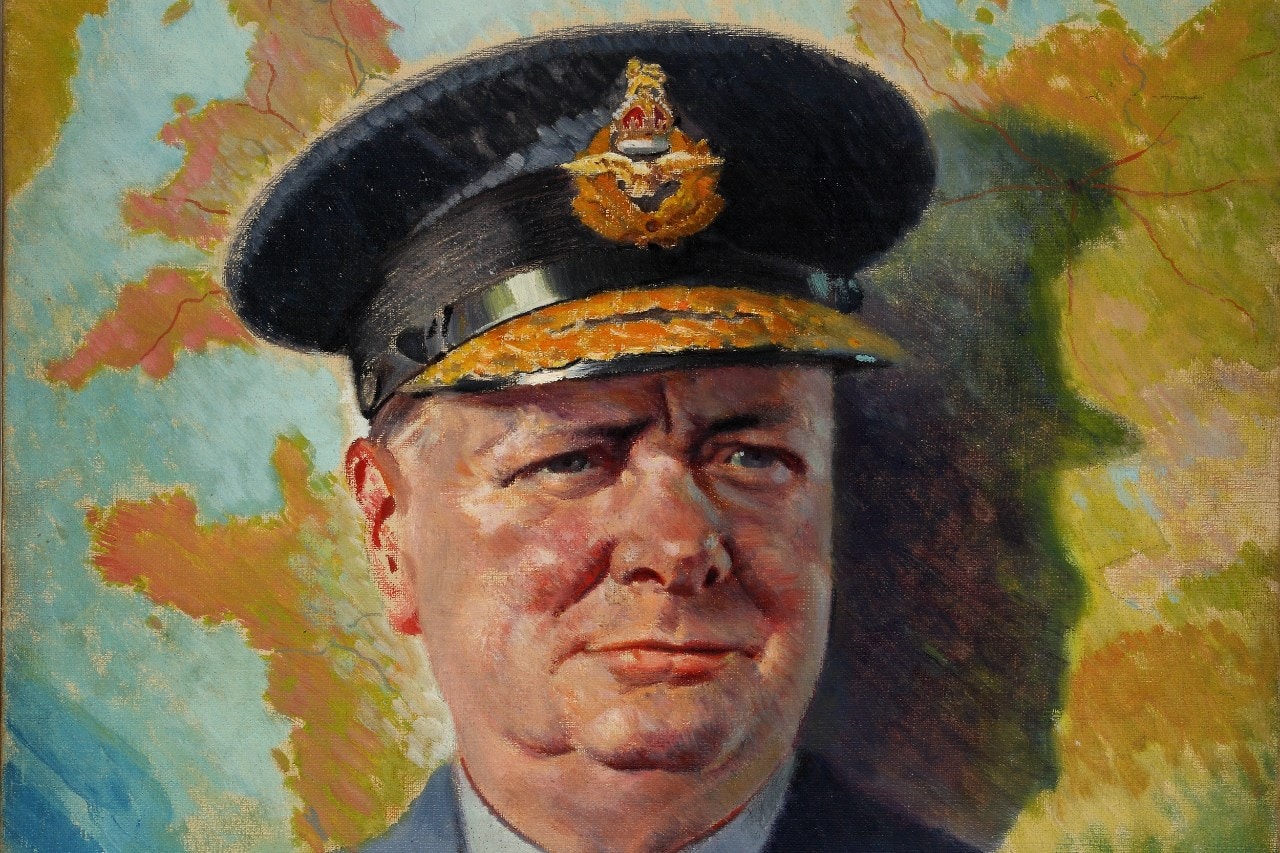
Summary and Key Points: Winston Churchill’s rise in 1940 came at Britain’s darkest moment, just as Hitler prepared Operation Sealion and the Luftwaffe sought air superiority over southern England.
-After years of warning about German rearmament, Churchill returned from political exile, replaced Neville Chamberlain, and took office as prime minister on May 10, 1940.
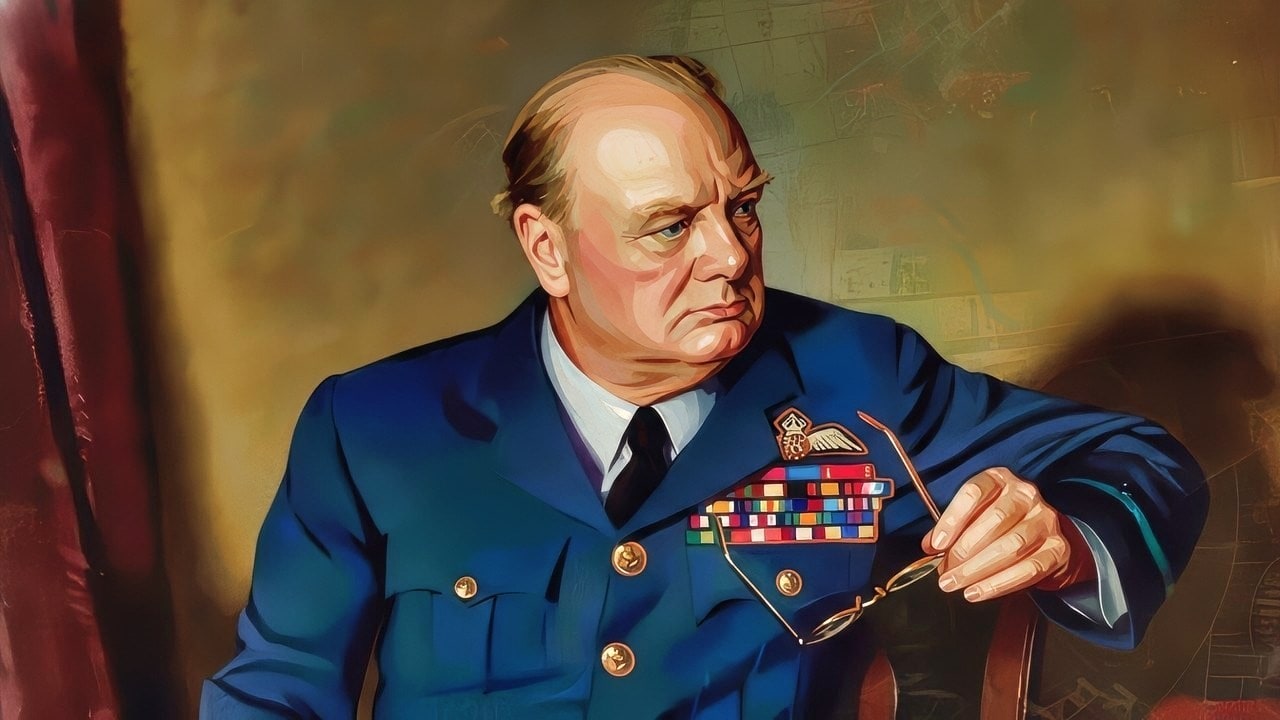
Winston Churchill Watercolor Enhanced with Nano Banana.
-His leadership helped frame Britain’s refusal to surrender even as invasion fears grew.
-The RAF’s stand in the Battle of Britain became a defining military moment, but Churchill’s political comeback and wartime resolve gave it a voice.
-His “blood, toil, tears, and sweat” speech set the tone for a long fight built on survival through victory.
Quote of the Day from Winston Churchill, Sort of
“Courage is the first of human qualities, because it is the quality which guarantees all others.” -Winston Churchill, by Way of Aristolte
That quote belongs to the ancient Greek philosopher Aristotle, and it was a favorite of Sir Winston Leonard Spencer Churchill, whom I unapologetically consider to be Great Britain’s all-time greatest leader.
Sir Winston himself embodied that Aristotelian quote, especially in 1940 when it looked like Hitler would invade the United Kingdom. C
hurchill would rightfully refer to the heroic stand against Nazi Germany’s Luftwaffe by the Royal Air Force’s (RAF’s) Hawker Hurricane and Supermarine Spitfire pilots during the Battle of Britain as “Their Finest Hour.”
Yet, 1940 can also be considered Sir Winston’s finest hour.
Backstory: Operation Sealion
Feeling confident and flushed with victory after winning the Battle of France in June 1940, Hitler set his sights across the English Channel and envisioned his next Western European conquest.
The planning for Operation Seelöwe (Sealion) began in earnest the following month, after Britain rejected Hitler’s final offer of a negotiated peace settlement. (Unlike the Jews and Slavs, whom Hitler considered to be subhuman, the Britons were seen as fellow Nordic peoples in Hitler’s eyes—peoples he did not necessarily want to enslave or subjugate. However, this still would have been slim comfort to the British people, especially considering they’d emerged victorious over Germany a mere 22 years earlier.)
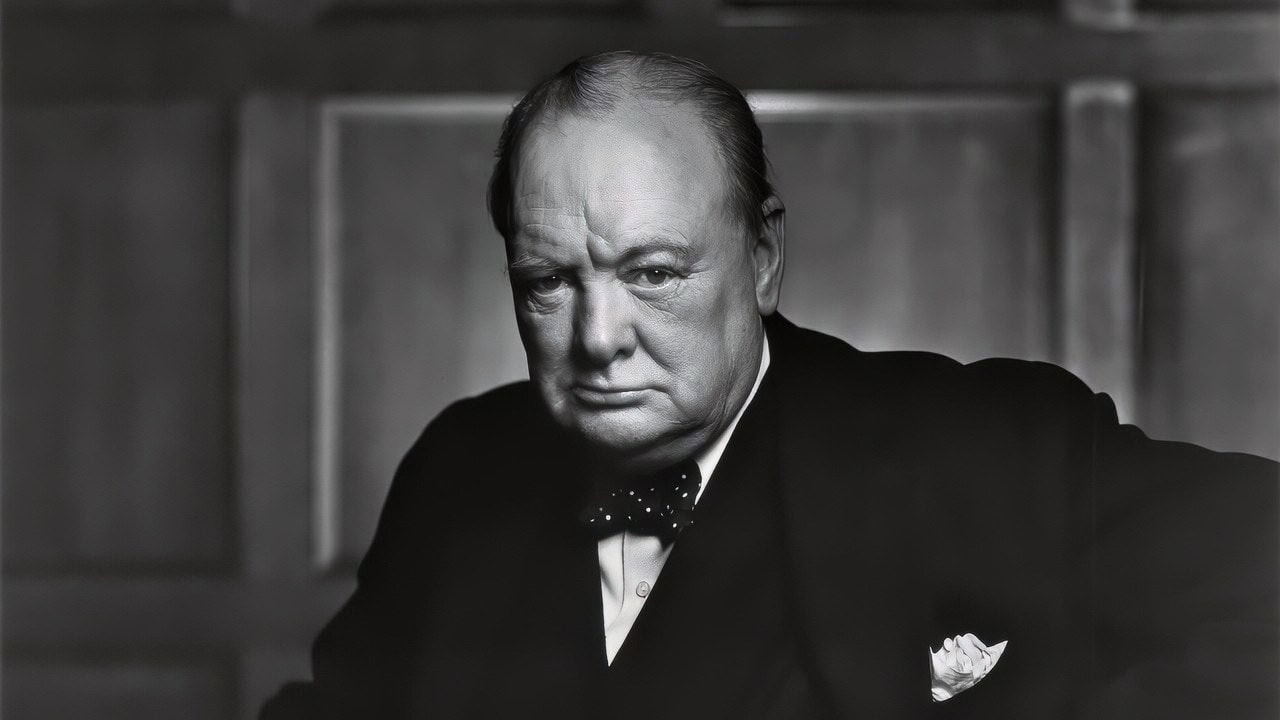
Sir Winston Churchill. Image Credit: Creative Commons.
As the RAF Museum website explains, “Hitler wanted an immediate invasion to prevent the British army recovering from its defeat in France. All this was to be completed by 10 August 1940. The assembly of a large invasion fleet of barges, tugs, trawlers and merchant ships was begun at Calais and Rotterdam.
“In August, Göering launched the Luftwaffe’s campaign to destroy the RAF and win control of the English Channel and the air over southern England. This would enable the German navy [Kriegsmarine] to provide the invasion fleet with the maximum protection. Once reinforcements had been landed the advance northwards was to begin but London would have been bypassed until resistance in the rest of Britain had collapsed.”
Thanks to Churchill and the RAF, the Luftwaffe never attained the air superiority needed to make the invasion feasible. But before Churchill could do his part, he had to make the political comeback from his so-called wilderness years.
Bouncing Back and Replacing an Appeaser
When Britain first entered into World War II in September 1939 after Hitler’s invasion of Poland, Neville Chamberlain was the prime minister. Chamberlain had appeared to coddle Hitler in Munich the year prior and prematurely declared “peace for our time.”
During this time, Winston Churchill was still a political backbencher. Throughout the 1930s, he had been outspoken in his warnings about German rearmament, Britain’s lack of comparable military strength, and the rise of Hitler. However, much of Britain’s political leadership, including his own Conservative Party, acted like the metaphorical ostrich hiding its head in the sand.
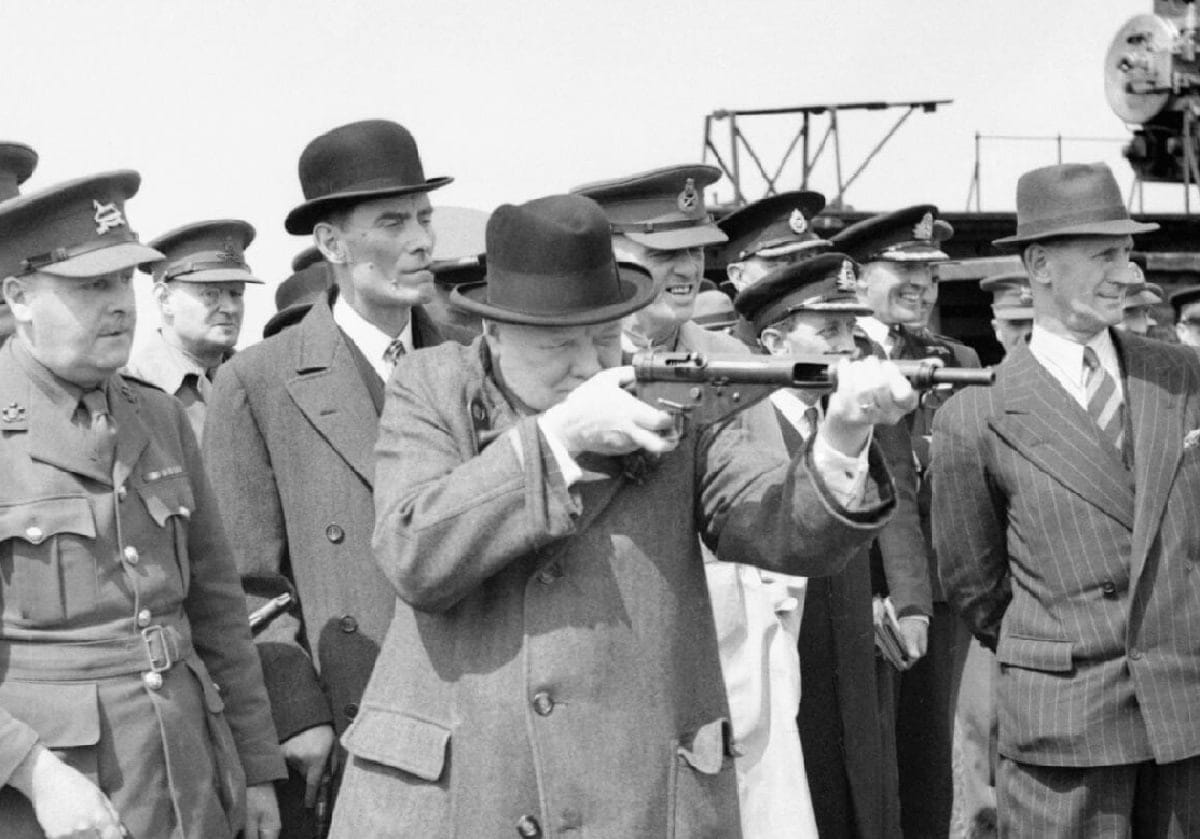
Winston Churchill. Image: Creative Commons.
Hitler’s invasion of Poland finally forced those political ostriches to pull their collective heads out, and on September 3, 1939, the same day that Britain officially declared war on Germany, Chamberlain reluctantly reappointed Churchill as First Lord of the Admiralty—the same position from which Sir Winston had been sacked after the disastrous Gallipoli campaign back in 1915.
Then came the Allies’ failed naval campaign to liberate northern Norway in April 1940, which led to the so-called “Norway debate” in Parliament from May 7 to May 9, 1940. As Battlefield Tours describes it:
“[Chamberlain] with Clement Attlee, leader of the Labour Party, on 9 May. Chamberlain wanted Labour to join his government and attempted to persuade Attlee to do so.
“Attlee, however, was unwilling. But he did agree that the Labour Party would form a coalition government with the Conservatives under a different Prime Minister … Chamberlain decided to resign from office the following day. Chamberlain went to Buckingham Palace to resign and advised the King to send for the new Prime Minister, Winston Churchill.”
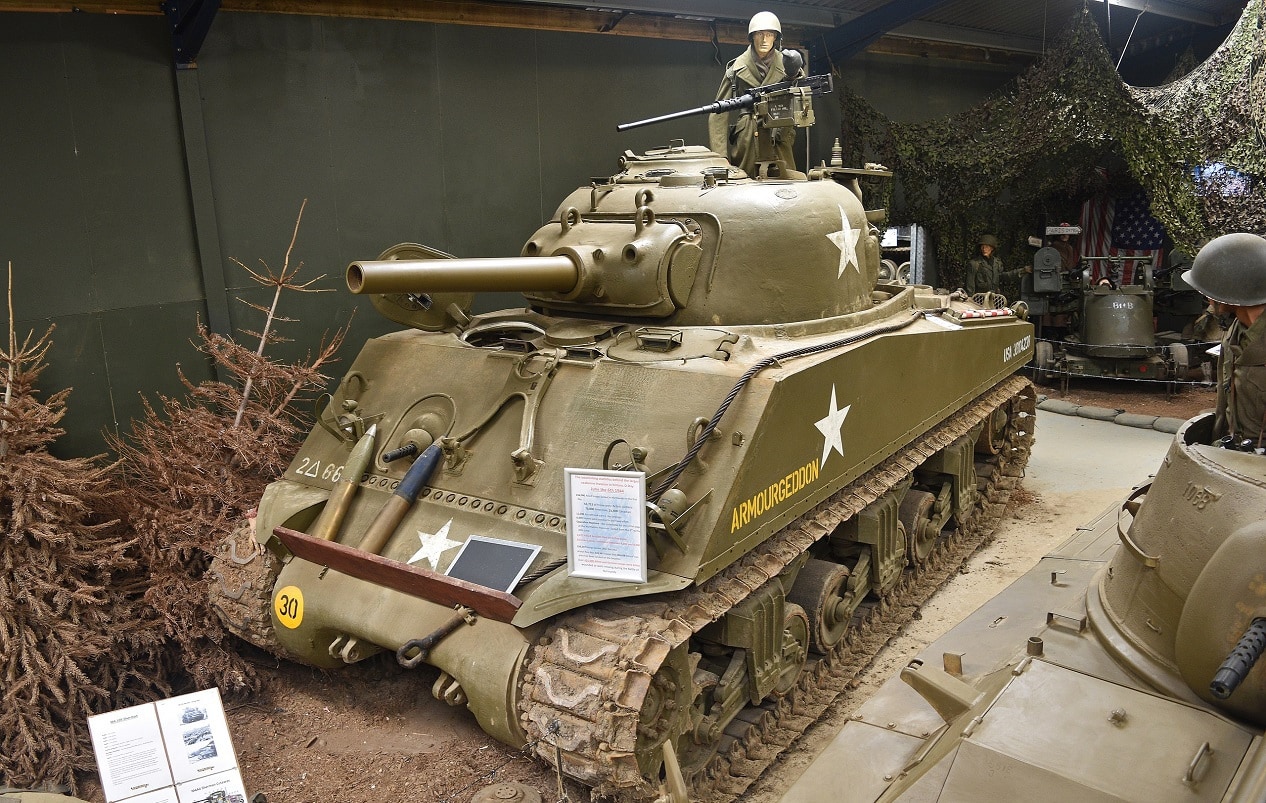
M4 Sherman Tank.
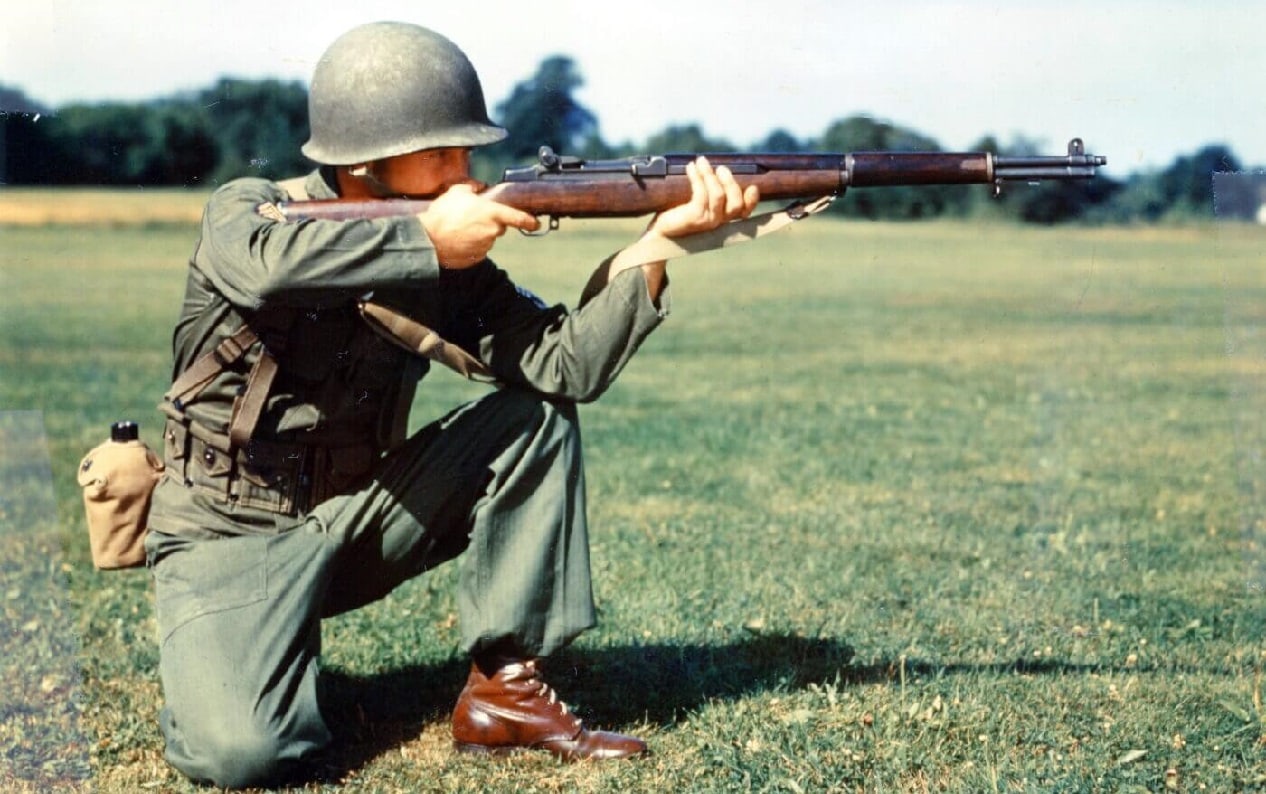
M1 Garand. Image Credit: Creative Commons.
Cementing the Winston Churchill Comeback
On May 10, 1940, Winston Churchill officially took up residence in the Prime Minister’s Office at 10 Downing Street. Three days after this stunning comeback, he made his iconic first speech as prime minister to the House of Commons:
“I have nothing to offer but blood, toil, tears, and sweat. We have before us an ordeal of the most grievous kind. We have before us many, many long months of struggle and of suffering. You ask, what is our policy? I can say: It is to wage war, by sea, land and air, with all our might and with all the strength that God can give us; to wage war against a monstrous tyranny, never surpassed in the dark, lamentable catalogue of human crime. That is our policy. You ask, what is our aim? I can answer in one word: It is victory, victory at all costs, victory in spite of all terror, victory, however long and hard the road may be; for without victory, there is no survival.”
About the Author: Christian D. Orr, Defense Expert
Christian D. Orr is a Senior Defense Editor. He is a former Air Force Security Forces officer, Federal law enforcement officer, and private military contractor (with assignments worked in Iraq, the United Arab Emirates, Kosovo, Japan, Germany, and the Pentagon). Chris holds a B.A. in International Relations from the University of Southern California (USC) and an M.A. in Intelligence Studies (concentration in Terrorism Studies) from American Military University (AMU). He is also the author of the newly published book “Five Decades of a Fabulous Firearm: Celebrating the 50th Anniversary of the Beretta 92 Pistol Series.”