Summary and Key Points on the Air Force’s Stealth ‘Gap’ Problem: A new Mitchell Institute report warns that current Pentagon plans for 185 F-47s and 100 B-21 Raiders are insufficient to deter China. Scholars argue that at least 500 stealth aircraft—including 200 B-21s—are required to hold inland Chinese “sanctuaries” at risk.
-The study maintains that standoff weapons cannot reach hardened or buried targets deep within the mainland.
-To prevent a rapid “Fait Accompli” takeover of Taiwan, the U.S. must possess the capacity to penetrate and dominate Chinese airspace, a tactic recently validated by June 2025 stealth strikes against fortified installations in Iran.
The Air Force Needs More Stealth (As in More F-47 NGAD and Stealth Bombers)
The current Pentagon plan calls for constructing a force of at least 185 F-47s and 100 B-21s. Yet, any realistic or credible effort to deter or counter China would require nearly twice as many combined stealth fighters and bombers, according to a recently published Mitchell Institute paper called “Strategic Attack: Maintaining The Air Force’s Capacity to Deny Enemy Sanctuaries.” The research says a force of at least 500 stealth fighters and bombers would be the very least amount of aircraft needed to successfully “scale” a force capable of countering the People’s Liberation Army (PLA).
“The Air Force will soon field new, long-range stealthy bombers and fighters that can deny sanctuaries to PLA forces wherever they are located—if it can acquire enough of them. Multiple studies have recommended procuring at least 200 B-21s to meet operational demand for penetrating strikes. Stealthy F-47s and F-35As are also required at scale, but delaying or truncating their acquisition for budgetary reasons would create a future force that cannot take the fight to China,” the study authors write.
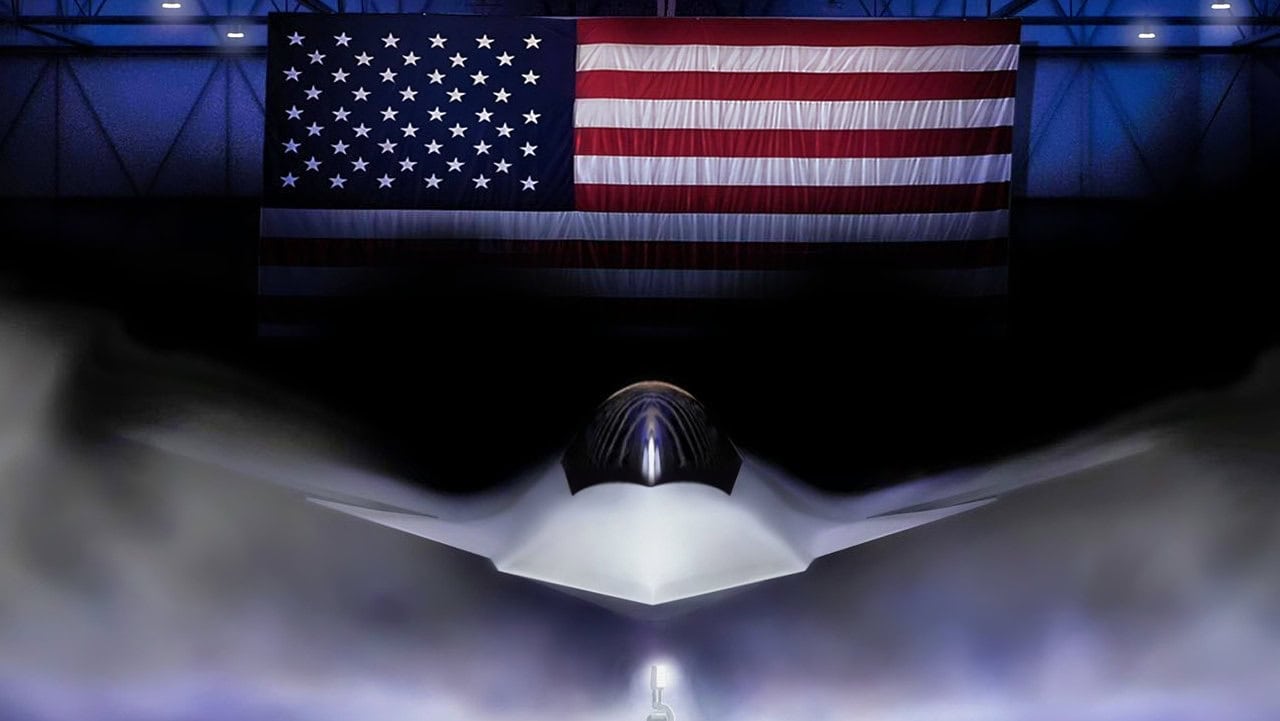
F-47 Fighter from U.S. Air Force.
The argument for a large, impactful force of stealth fighters and bombers is well supported by research, with strategic, tactical, and technological evidence indicating that long-range ground- and surface-fired weapons would not be sufficient to meet or counter any major Chinese threat in the Pacific.
For example, the research paper argues that merely stopping a rapid “Fait Accompli” takeover of Taiwan through immediate intervention from the air, the surface, and the undersea would be woefully insufficient as a deterrence platform for containing China.
The U.S. already forward-deploys Carrier Strike Groups, 5th-generation aircraft, attack submarines, and long-range missiles throughout the Pacific theater and the first island chain, in large measure to ensure that responsive U.S. and allied forces are in place to prevent a surprise Chinese takeover of Taiwan.
“Fait Accompli” Take-Over
The concept of Fait Accompli, as often discussed in the Pentagon’s annual China report, would be for the PLA to seek to acquire Taiwan suddenly and establish a “presence” on the island before any U.S. or allied force could respond.
The idea would be to simply make it too costly in human lives and military effort to “extricate” an embedded Chinese force from Taiwan. However, the Mitchell scholars maintain that preventing a “Fait Accompli” through the forward positioning of war assets and military alliances with Japan, South Korea, and the Philippines would not be “enough” to contain China in a large-scale conflict.
The reason efforts to prevent a rapid Taiwanese surprise takeover are not enough to contain China overall is that the PLA deliberately locates massive amounts of weapons and military assets hundreds of miles inland inside mainland China.
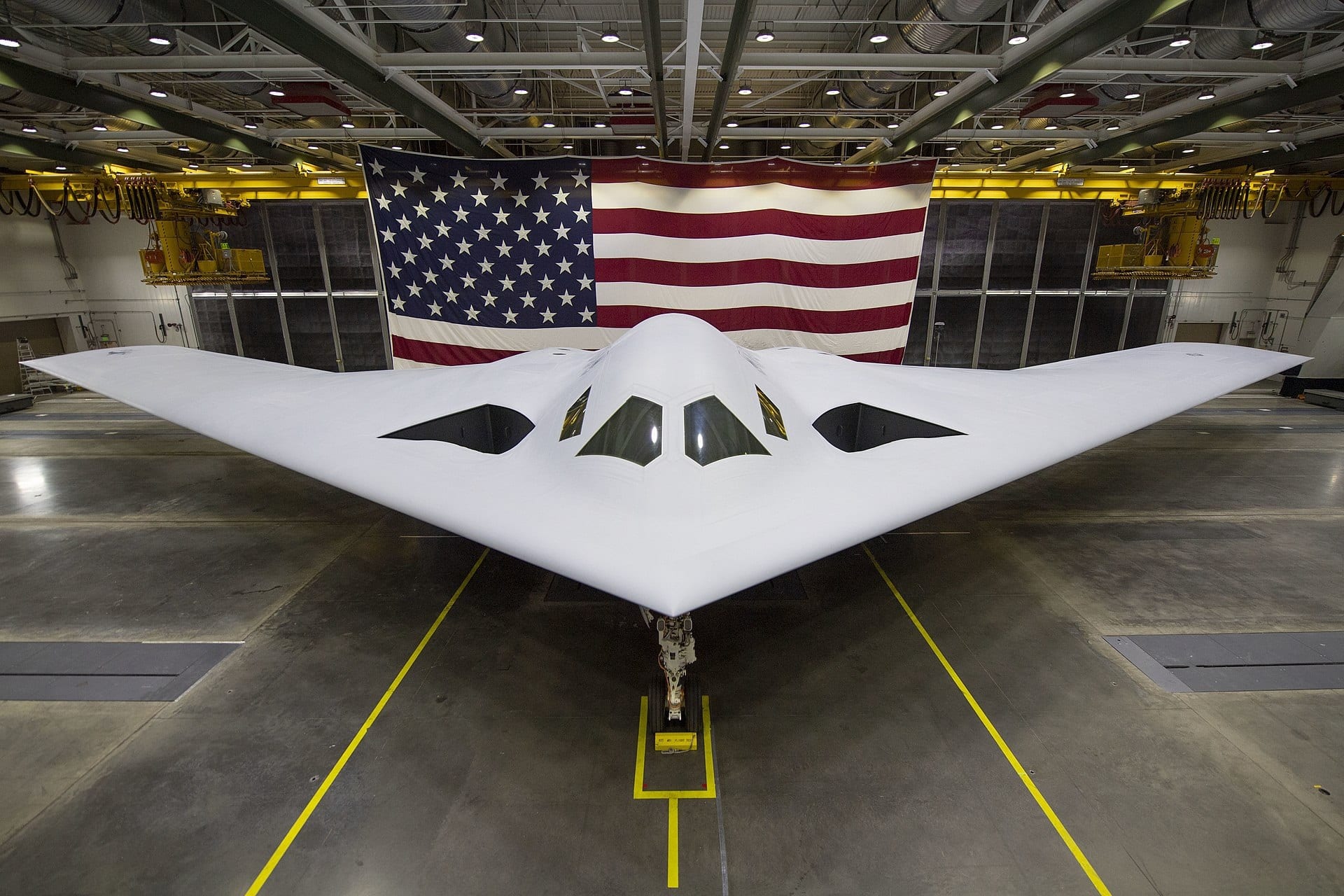
The B-21 Raider was unveiled to the public at a ceremony December 2, 2022 in..Palmdale, Calif. Designed to operate in tomorrow’s high-end threat environment, the B-21 will play a critical role in ensuring America’s enduring airpower capability. (U.S. Air Force photo)
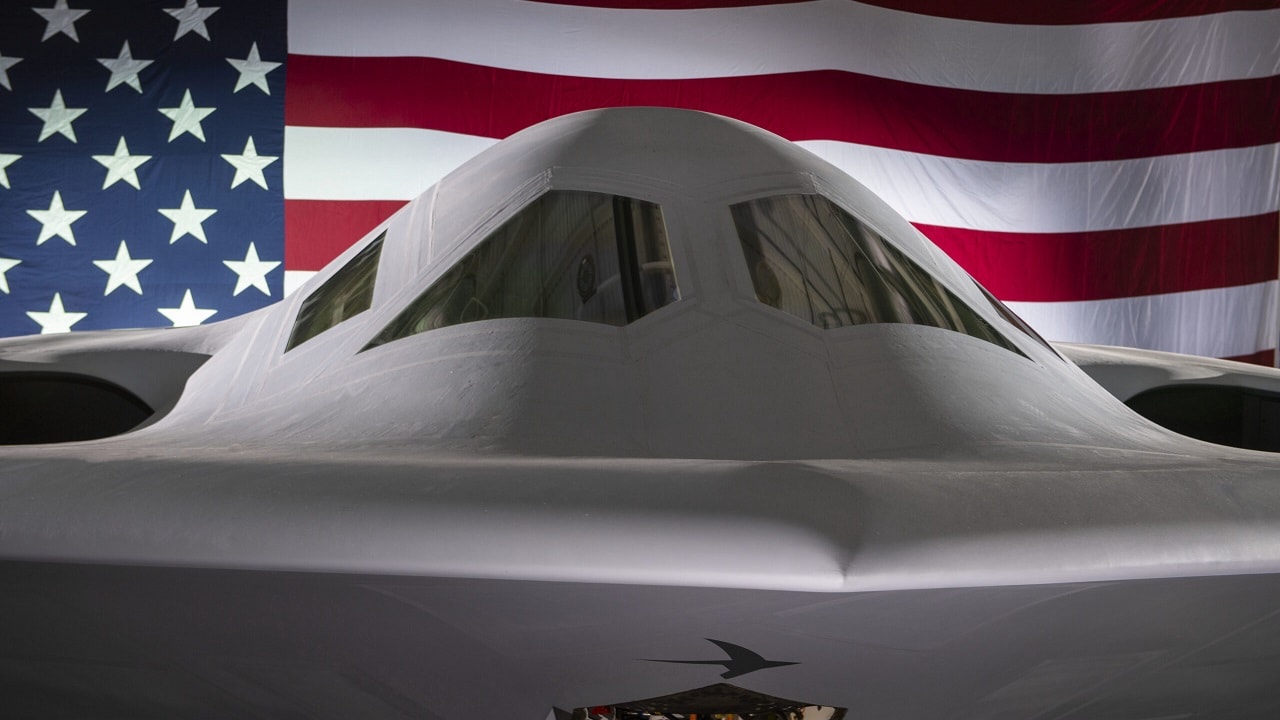
The B-21 Raider was unveiled to the public at a ceremony December 2, 2022 in
Palmdale, Calif. Designed to operate in tomorrow’s high-end threat environment, the B-21 will play a critical role in ensuring America’s enduring airpower capability. (U.S. Air Force photo)
These Chinese military assets, platforms, and weapons, the Mitchell Report maintains, cannot reliably be destroyed purely through the use of medium and long-range stand-off weapons such as ballistic missiles or ship-fired cruise missiles.
Instead, it seems clear that the Mitchell authors believe the U.S. must operate an aerial fighter and bomber force sufficient to “penetrate” and “dominate” airspace over mainland China, in part to hold its inland military assets at risk from the air.
“A U.S. force design that is overly reliant on stand-off strikes will not be capable of directly attacking critical sources of the PLA’s long-range combat power. This is because U.S. conventional stand-off munitions lack sufficient range to reach many high-value targets and military assets that China has purposefully located hundreds of miles in its interior. Fighting on China’s distant periphery would allow the PLA the freedom to generate air and missile attacks from secure locations inside China that could fatally stanch U.S. operations to defeat Chinese aggression,” the Mitchell study writes.
Tactical Need for Stealth Bombers & Fighters
This argument lays out a clear “tactical” basis for the Air Force’s request for a larger bomber and fighter fleet.
Mass in terms of hundreds of F-47s and B-21s would not only be necessary to counter any Chinese attack in the air.

Shown is a graphical artist rendering of the Next Generation Air Dominance (NGAD) Platform. The rendering highlights the Air Force’s sixth generation fighter, the F-47. The NGAD Platform will bring lethal, next-generation technologies to ensure air superiority for the Joint Force in any conflict. (U.S. Air Force graphic)
Still, it would also be critical to any successful effort to disable the PLA’s forces embedded within mainland China.
There is yet another tactical variable associated with this need for a large, stealthy U.S. force of bombers and fighters, the Mitchell authors maintain, and that is that many high-value targets dispersed throughout interior portions of mainland China are likely to be “buried,” hidden, or obscured from stand-off targeting and attack capabilities.
Indeed, there are likely many critical targets within mainland China, such as ICBM silos, mobile missile launchers, or weapons locations, which could only truly be destroyed by attacks from air platforms, a dynamic evidenced by the June 2025 stealth bomber strikes over Iran.
“Stand-off weapons cannot deliver enough kinetic punch to defeat very hardened and deeply buried targets. This is why the DoD chose to use stealthy B-2 bombers in June 2025 to deliver the world’s most capable penetrating weapons against deeply buried and fortified nuclear installations in Iran,” the study states.
About the Author: Kris Osborn, Warrior Maven President
Kris Osborn is the President of Warrior Maven – Center for Military Modernization. Osborn previously served at the Pentagon as a highly qualified expert in the Office of the Assistant Secretary of the Army—Acquisition, Logistics & Technology. Osborn has also worked as an anchor and on-air military specialist at national TV networks. He has appeared as a guest military expert on Fox News, MSNBC, The Military Channel, and The History Channel. He also has a Masters Degree in Comparative Literature from Columbia University.