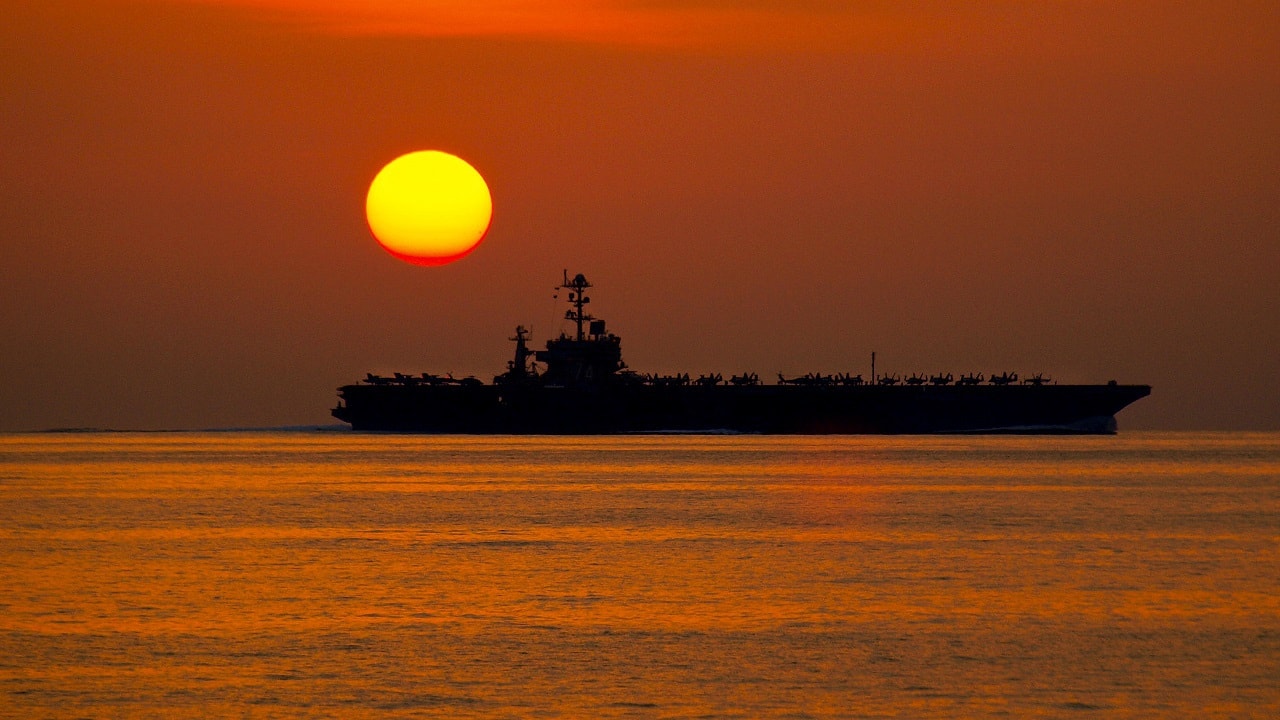
Summary and Key Points: Brandon J. Weichert, Senior National Security Editor, evaluates the shifting “maritime equation” in the Indo-Pacific. While the U.S. Navy maintains superior aircraft carrier air wing capacity and combat experience, China’s A2/AD network—anchored by PLARF hypersonic and anti-ship ballistic missiles—has effectively pushed American supercarriers over the horizon.
-This report analyzes how Beijing uses these land-based systems as a shield for its own carriers, forcing Carrier Strike Groups to “punch through” a dense defensive bubble.
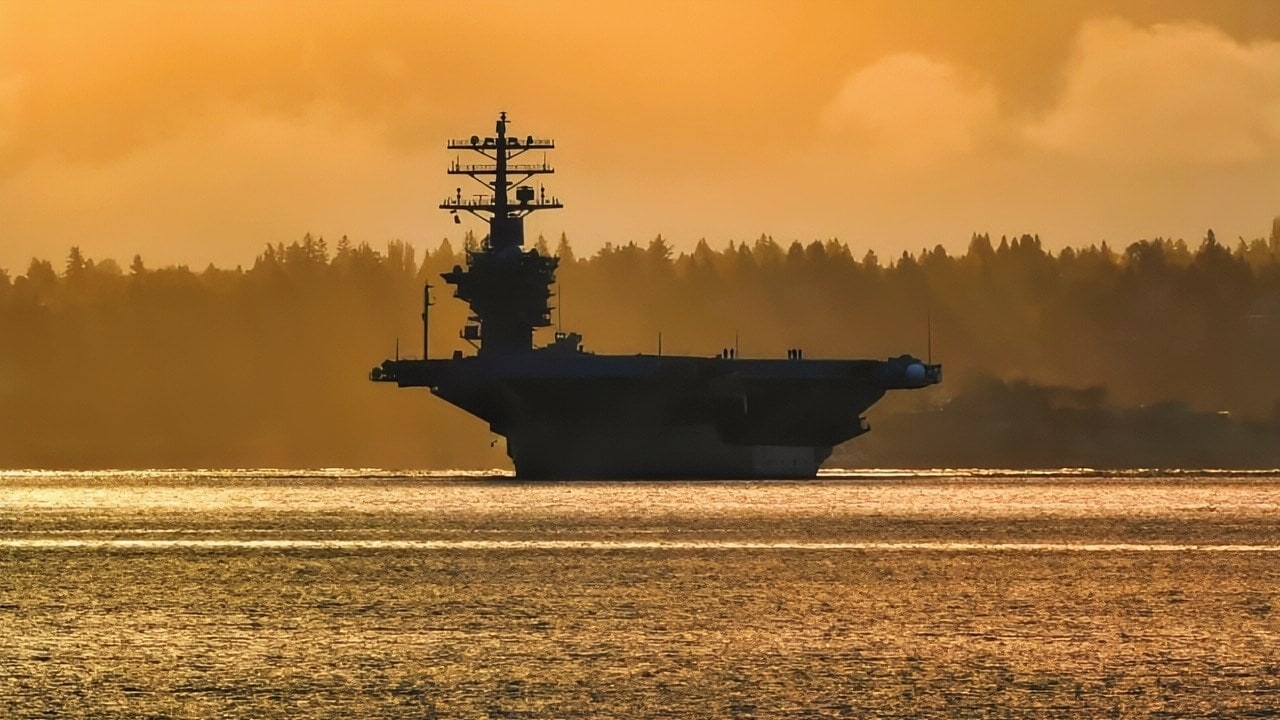
MANCHESTER, Wash. (April 28, 2017) USS Nimitz (CVN 68) transits Puget Sound, past the Seattle skyline enroute to its homeport, Naval Base Kitsap-Bremerton. The return to homeport marks the end of an underway along with its Carrier Strike Group 11, having successfully completed its final pre-deployment assessment, Composite Training Unit Exercise, April 21, and is now fully certified to deploy later this year. (U.S. Navy photo by Mass Communication Specialist 2nd Class Vaughan Dill/Released
-Weichert concludes that the 1990s era of unchallenged sea power is over, replaced by a 2026 reality where ASBMs and layered sensors dictate naval outcomes.
The A2/AD China Reality Check: Why U.S. Aircraft Carriers Can No Longer Sail with Impunity in 2026
The United States is an overstretched expeditionary power that relies primarily on its Navy to lead the way in conventional power projection. Specifically, the U.S. Navy deploys massive, nuclear-powered aircraft carriers for the task.
From Unchallenged Sea Power to Contested Waters
For decades, the Americans have been the unquestioned dominant player in the aircraft carrier department. That gave Washington clear military advantages, especially after the Soviet Union collapsed.
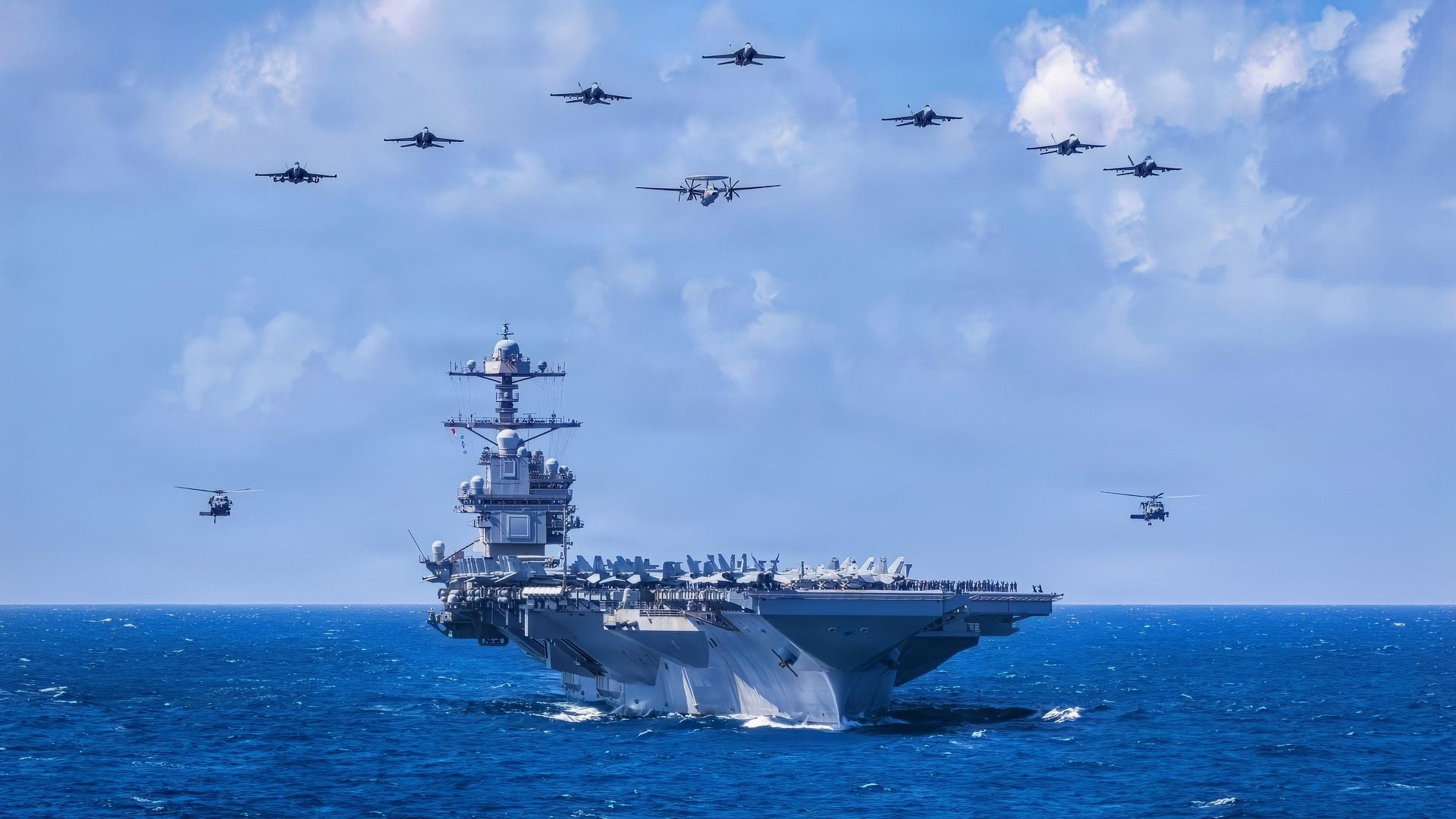
USS Ford Supercarrier U.S. Navy. Image Credit: U.S. Navy.
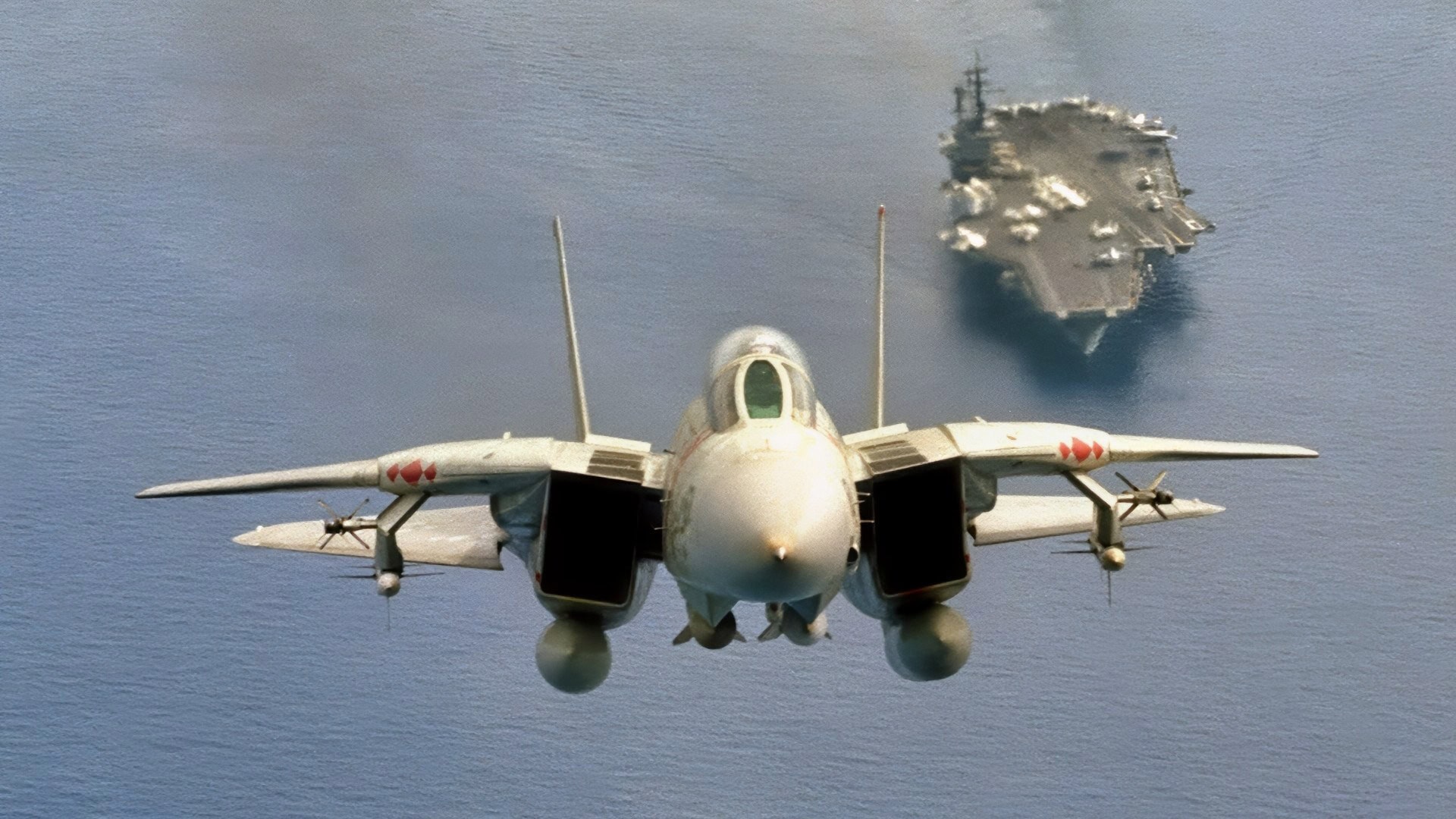
F-14 Tomcat Flying Near Aircraft Carrier. Image Credit: Creative Commons.
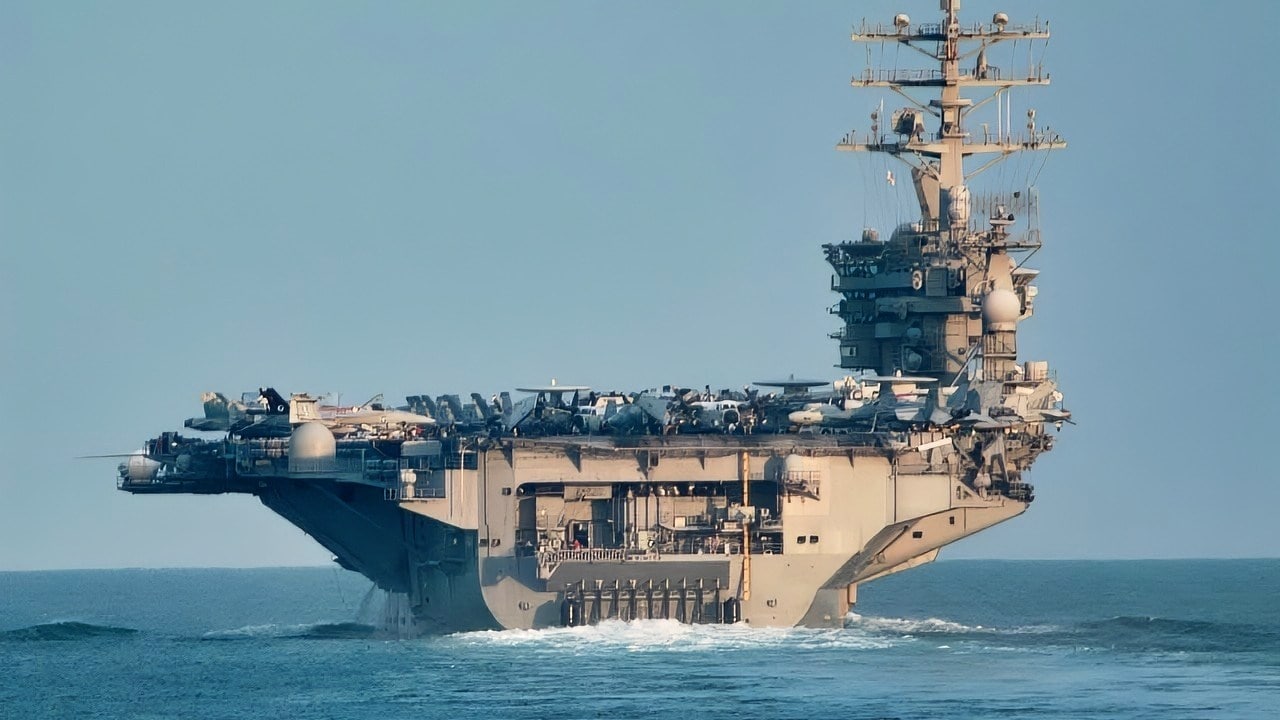
(September 11, 2003) – USS Nimitz (CVN 68) navigates one of the busier sea lanes in the Indian Ocean. Nimitz is deployed with Nimitz Carrier Strike Force in support of Operation Iraqi Freedom, the multi-national coalition effort to liberate the Iraqi people, eliminate Iraq’s weapons of mass destruction and end the regime of Sadaam Hussein. US Navy photo by Photographer’s Mate 2nd Class Monica L. McLaughlin.
Today, however, the situation is much different from what it was in the 1990s.
U.S. carriers can no longer count on freedom of movement to nestle close to the shorelines of their adversaries and launch airstrikes with near impunity. The United States’ rivals have effectively created countermeasures to prevent the carriers from coming near their forces.
In the case of China, they’ve gone a step farther and created comprehensive defenses against U.S. carriers, as well as their own growing fleet of increasingly advanced carriers.
China’s Real Advantage
Sure, Chinese carriers don’t outclass American nuclear-powered carriers. But their advantage is the fact that, at least for now, any conflict they engage in would be waged close to their territory.
Beijing has spent more than a decade building up a comprehensive web of anti-access/area-denial (A2/AD) capabilities.
Together, China intends on using their A2/AD capabilities, specifically their advanced anti-ship ballistic missiles (ASBMs) as a shield behind which their carriers can operate—all while keeping U.S. carriers over the horizon.
The PLARF Missile Umbrella
The People’s Liberation Army Rocket Force (PLARF) has a dense inventory of land-based ballistic, cruise, and hypersonic missiles that can target U.S. carriers before these enter striking range. These PLARF systems plan to overwhelm U.S. carrier strike groups’ considerable defenses by using swarming tactics.
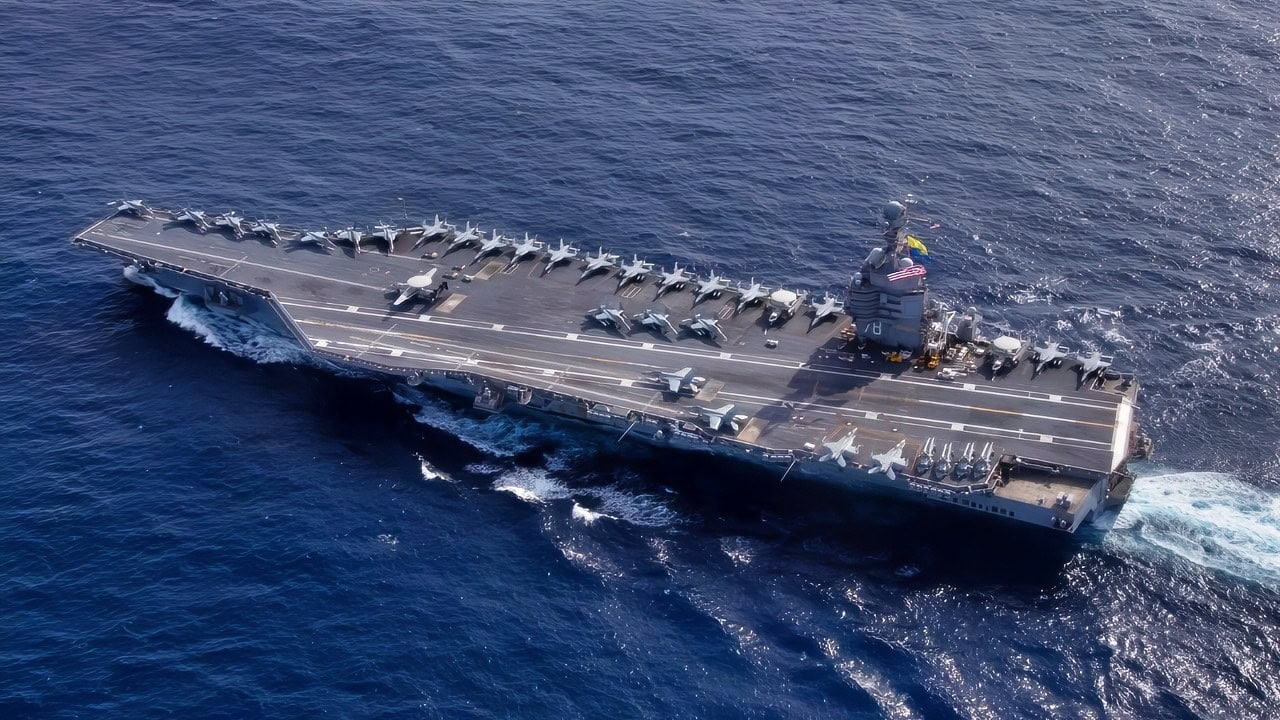
The first-in-class aircraft carrier USS Gerald R. Ford (CVN 78) steams in the Atlantic Ocean, Nov. 7, 2022. Exercise Silent Wolverine is a U.S.-led, combined training exercise that tests Ford-class aircraft carrier capabilities through integrated high-end naval warfare scenarios alongside participating allies in the Eastern Atlantic Ocean. The Gerald R. Ford Carrier Strike Group is conducting their first deployment in the U.S. Naval Forces Europe area of operations. (U.S. Navy photo by Mass Communication Specialist 3rd Class Jacob Mattingly)
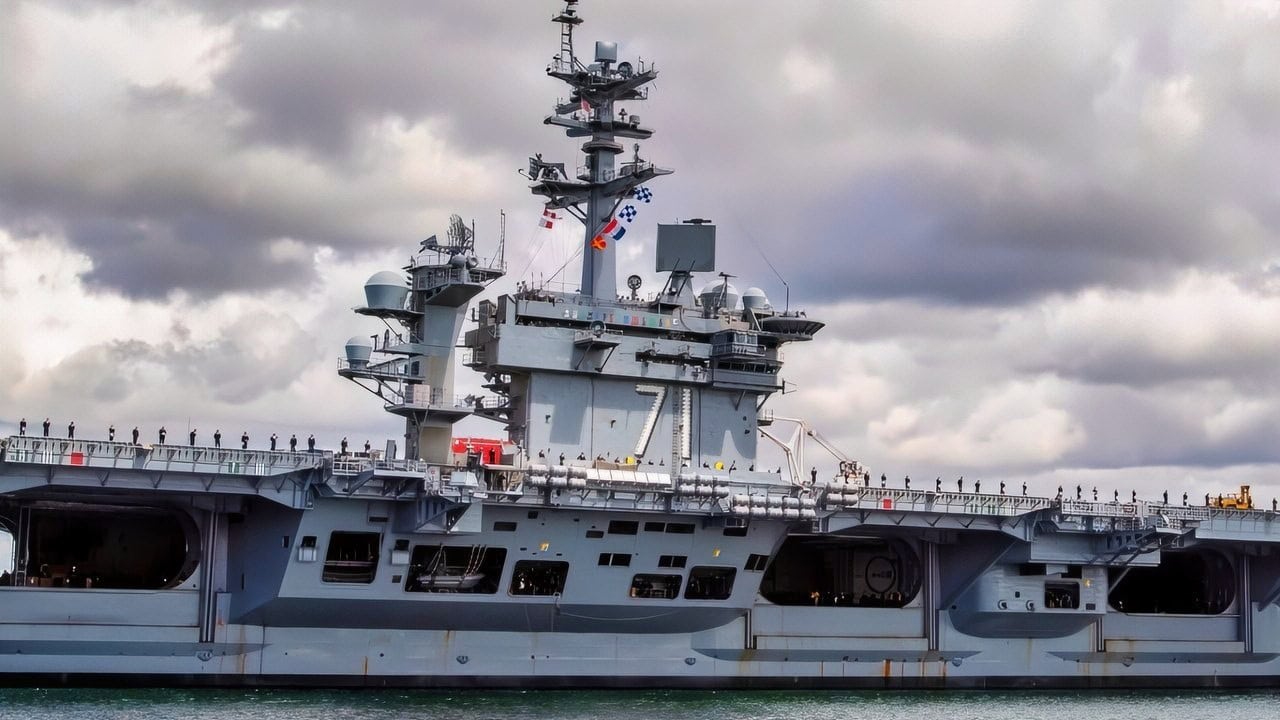
(March 23, 2023) Nimitz-class aircraft carrier USS Theodore Roosevelt (CVN 71) returns to Naval Air Station North Island following a regularly-scheduled maintenance availability and completion of sea trials, March 23. The ship changed its homeport from Bremerton to San Diego after completing an 18-month docking planned incremental availability in Bremerton, Washington, during which the ship received extensive restorations and upgrades to support the F-35C Lightning II, E-2D Advanced Hawkeye, and CMV-22B Osprey, as well as future platforms such as the MQ-25 Stingray unmanned aircraft system. (U.S. Navy photo by Mass Communication Specialist 2nd Class Keenan Daniels)
Of course, U.S. carriers still win in air wing capacity, combat experience, and operational flexibility. But the early stages of any conflict with China in their part of the world would force carriers to punch their way through China’s dense, protective A2/AD bubble.
Fighting Into the Teeth of A2/AD
Then add in the airpower that China’s carriers, operating from the protective bubble that PLARF’s A2/AD systems provide, could severely threaten a U.S. carrier sailing toward contested waters in the Indo-Pacific during any conflict with China.
So, it doesn’t really matter if China’s carrier force isn’t as advanced or experienced as America’s. China is doing a great job of providing active defenses for their carriers in ways the Americans cannot when they are forward deployed in distant, contested regions.
Therefore, these A2/AD bubbles do more than simply provide for fodder in defense publications in the West, such as this one. The A2/AD capability is a true deterrent that keeps the United States’ most important power projection platform, the aircraft carrier, away from contested areas.
Missiles, Sensors, and the New Maritime Equation
As for the ASBMs, these are truly decisive weapons. Merging advanced, layered tracking capabilities that can range approaching U.S. aircraft carriers, these long-range missiles are a significant challenge for U.S. expeditionary forces that come within range.
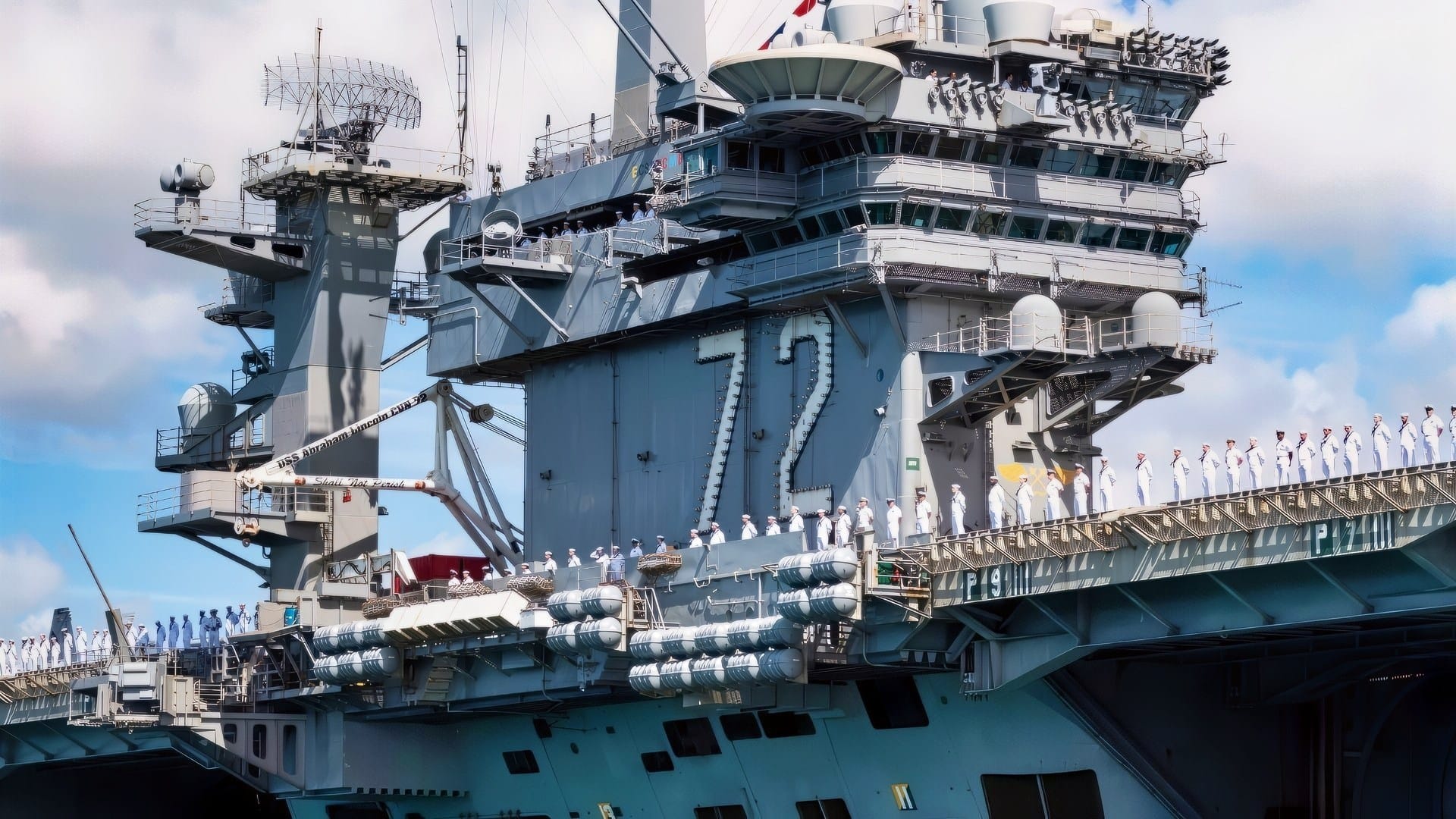
(June 28, 2022) – Nimitz-class aircraft carrier USS Abraham Lincoln (CVN 72) arrives at Joint Base Pearl Harbor-Hickam to participate in Rim of the Pacific (RIMPAC) 2022, June 28. Twenty-six nations, 38 ships, four submarines, more than 170 aircraft and 25,000 personnel are participating in RIMPAC from June 29 to Aug. 4 in and around the Hawaiian Islands and Southern California. The world’s largest international maritime exercise, RIMPAC provides a unique training opportunity while fostering and sustaining cooperative relationships among participants critical to ensuring the safety of sea lanes and security on the world’s oceans. RIMPAC 2022 is the 28th exercise in the series that began in 1971. (U.S. Navy photo by Mass Communication Specialist 1st Class Devin M. Langer)
While not focused on U.S. carriers alone, China’s ASBMs support the broader notion that keeping the Americans at standoff ranges and expanding China’s own missile reach are critical components of their regional defense strategy.
In any engagement, in the new age of maritime combat, aircraft carriers alone will not decide the outcome. It will be decided by a panoply of long-range missiles, sensors, and A2/AD systems, along with warships, carriers, and submarines that operate within the protective bubble of those missiles, sensors, and other A2/AD systems.
The Americans enjoy several advantages on paper in military dominance, notably with their aircraft carrier fleet. In terms of sheer numbers of carriers, experience, logistics, and global sustainment. But these facts rarely account for saturation threats in a Pacific conflict.
Geography is Destiny
The geography of the Pacific is vast. The primary geographical feature is the Pacific Ocean, and the United States would have to deploy its Navy far from its own shores, close to hardened Chinese shores, in any potential conflict.
All these elements combine to give China real advantages when it comes to defending against U.S. military intervention. This is not the 1990s. America cannot simply stop a rising power, like China, from asserting its will in its own region simply by sailing an aircraft carrier or two through the Taiwan Strait, as they did during the Taiwan Strait Crisis in 1996.
Those days are over.
About the Author: Brandon J. Weichert
Brandon J. Weichert is the Senior National Security Editor at 19FortyFive.com. He was previously the senior national security editor at The National Interest. Weichert is the host of The National Security Hour on iHeartRadio, where he discusses national security policy every Wednesday at 8pm Eastern. He hosts a companion show on Rumble entitled “National Security Talk.” Weichert consults regularly with various government institutions and private organizations on geopolitical issues. His writings have appeared in numerous publications, among them Popular Mechanics, National Review, MSN, and The American Spectator. And his books include Winning Space: How America Remains a Superpower, Biohacked: China’s Race to Control Life, and The Shadow War: Iran’s Quest for Supremacy. Weichert’s newest book, A Disaster of Our Own Making: How the West Lost Ukraine, is available for purchase wherever books are sold. He can be followed via Twitter/X @WeTheBrandon.