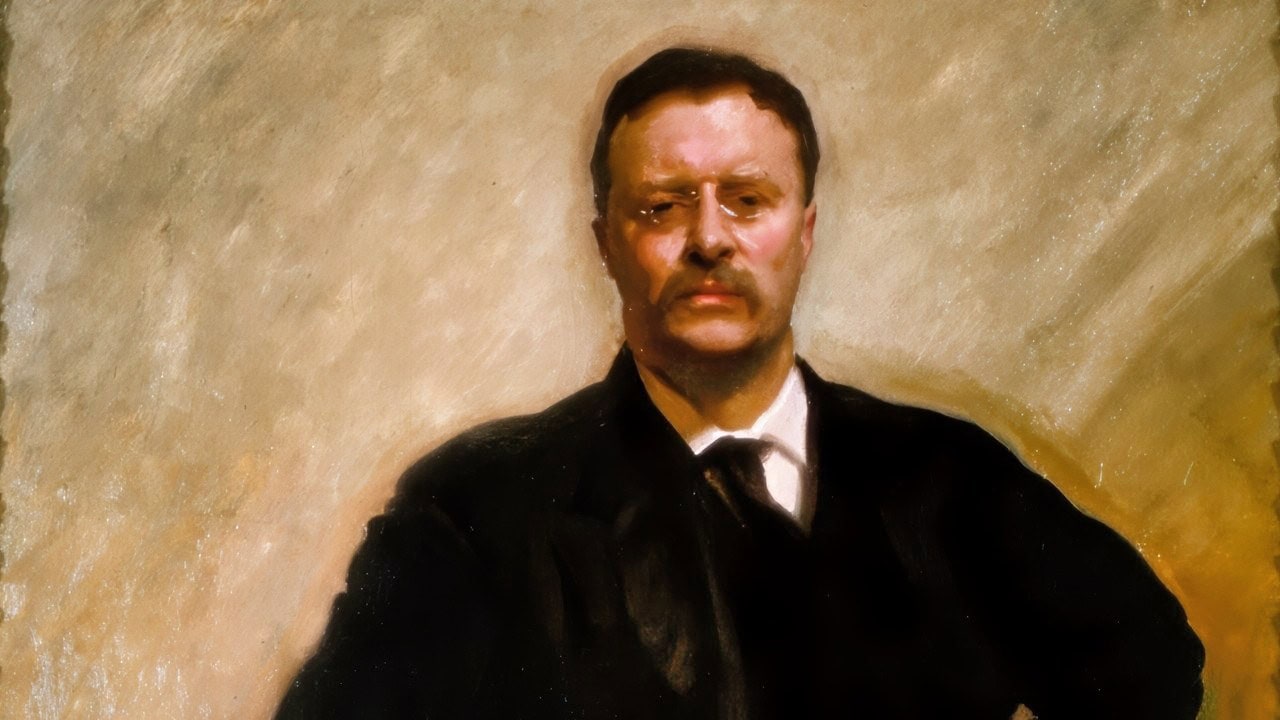
Summary and Key Points: Defense writer Isaac Seitz notes that Theodore Roosevelt was a sickly child who couldn’t breathe through the night — and became the most physically formidable president in American history.
-His father issued a challenge that defined everything: “You have the mind but not the body. You must make your body.”
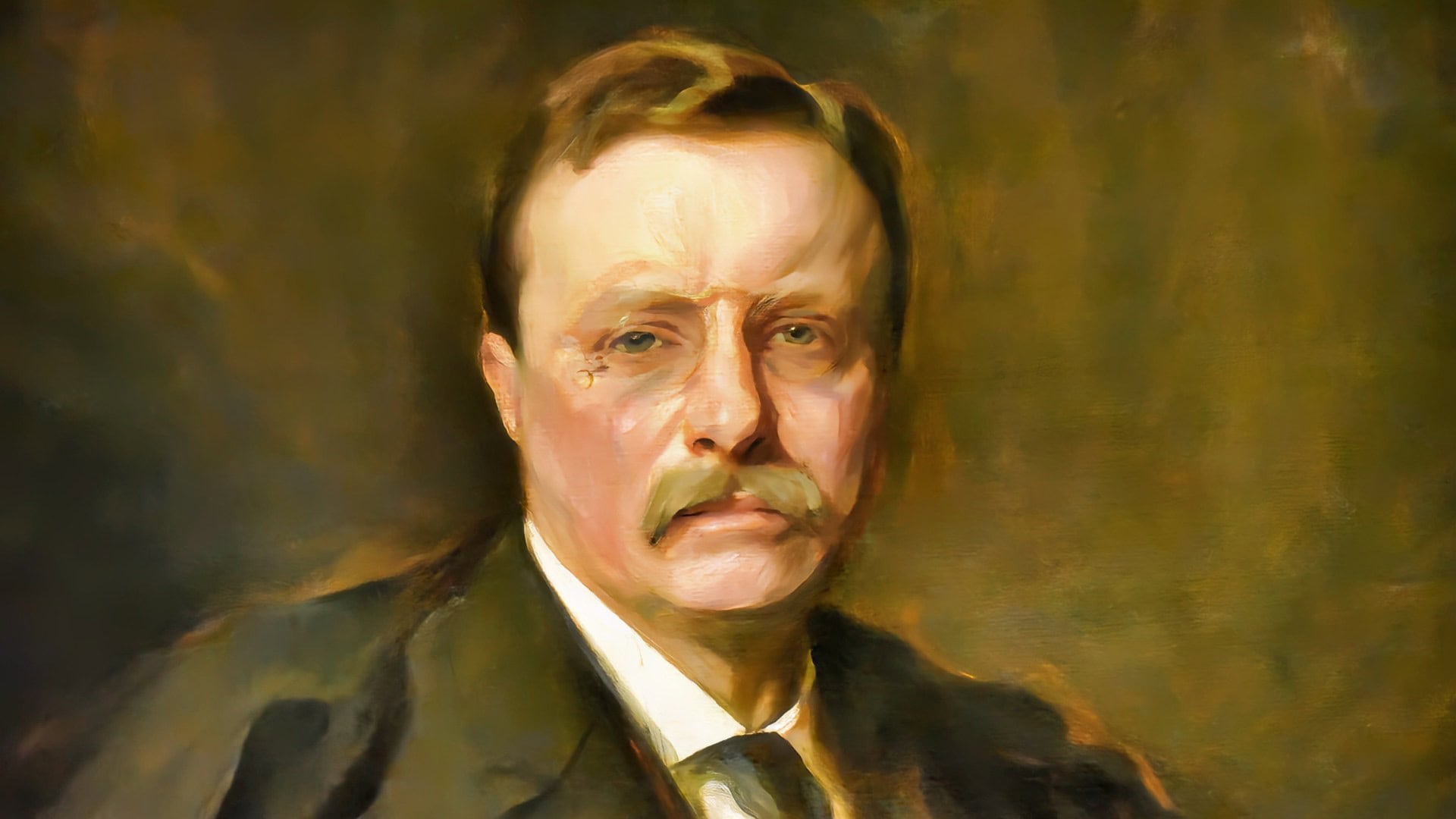
Theodore Roosevelt 19FortyFive.com Image from National Portrait Gallery Taken on 1/23/2026.
-Roosevelt responded by building himself from scratch through boxing, weightlifting, and horseback riding.
-He lost his father, then his wife, then retreated to the Dakota Badlands to chase outlaws and rebuild his soul. By the time he charged up Kettle Hill with the Rough Riders in 1898, the transformation was complete.
Quote of the Day from President Theodore Roosevelt
“It is hard to fail, but it is worse never to have tried to succeed.” – Theodore Roosevelt
Few figures in American history possess the dynamism, intensity, and sheer force of will that defined Theodore Roosevelt.
Long before he entered the presidency in 1901, he had already lived a life of hardship, reinvention, and ceaseless purpose. His early years shaped a philosophy rooted in energy and action, a worldview he famously called “the strenuous life.”
Early Life and Physical Struggles
Theodore Roosevelt Jr. was born in New York City on October 27, 1858, into a wealthy and prominent family.
Despite the comfort that surrounded him, Roosevelt’s earliest years were dominated by severe and frightening asthma attacks.
In the nineteenth century, doctors had few treatments, and the family could do little but wait out the long nights as young Theodore gasped for breath. These physical limitations would have discouraged many children, but Roosevelt developed an intense curiosity that thrived despite his frail body.
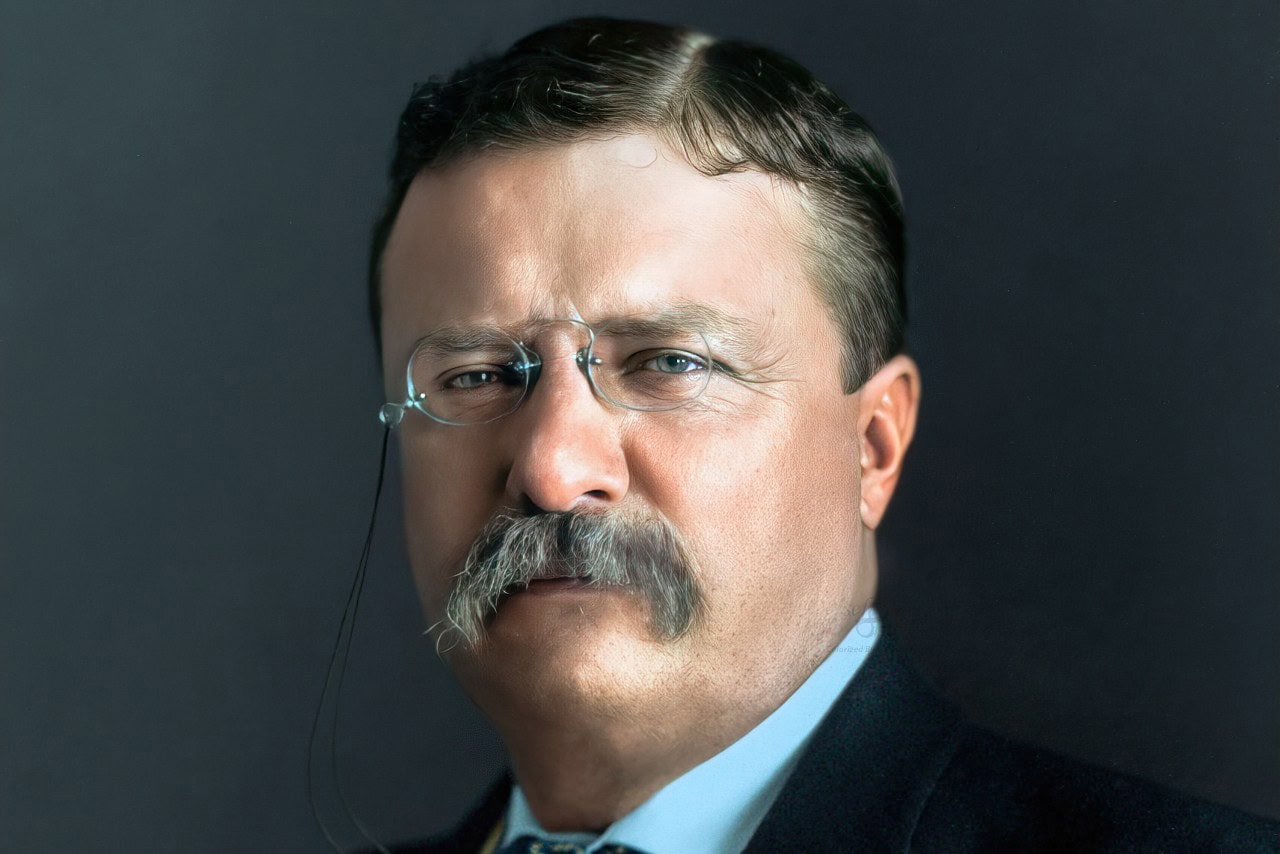
Theodore Roosevelt Quote of the Day. Image Credit: Creative Commons.
He devoured books, spent hours observing animals, and began compiling meticulous notes about nature.
His father, Theodore Sr., was a powerful influence. Deeply moral and filled with warmth and integrity, he believed that action, courage, and service were the obligations of a life well lived. Recognizing his son’s keen intellect but frail health, he issued a challenge that became the cornerstone of Roosevelt’s personal philosophy: “You have the mind but not the body. You must make your body.” Young Theodore took these words to heart. Determined to overcome his physical limitations, he established a rigorous exercise routine.
He took up boxing, horseback riding, weightlifting, hiking, anything that could harden him. Over time, he transformed himself from a sickly child into a vigorous young man whose physical fortitude matched his mental drive.
Theodore Roosevelt: Higher Education and Political Beginnings
Roosevelt entered Harvard in 1876. There, he immersed himself in academics, focusing on biology, history, philosophy, and languages. Although socially a bit eccentric and sometimes awkward, he possessed a combination of intensity and earnestness that made him memorable.
His time at Harvard was marked by both intellectual growth and emotional upheaval. In 1878, the sudden death of his father left him devastated. Roosevelt revered him, and the loss created a void he spent much of his life trying to fill. More significantly, it sharpened his resolve to live boldly, passionately, and purposefully.
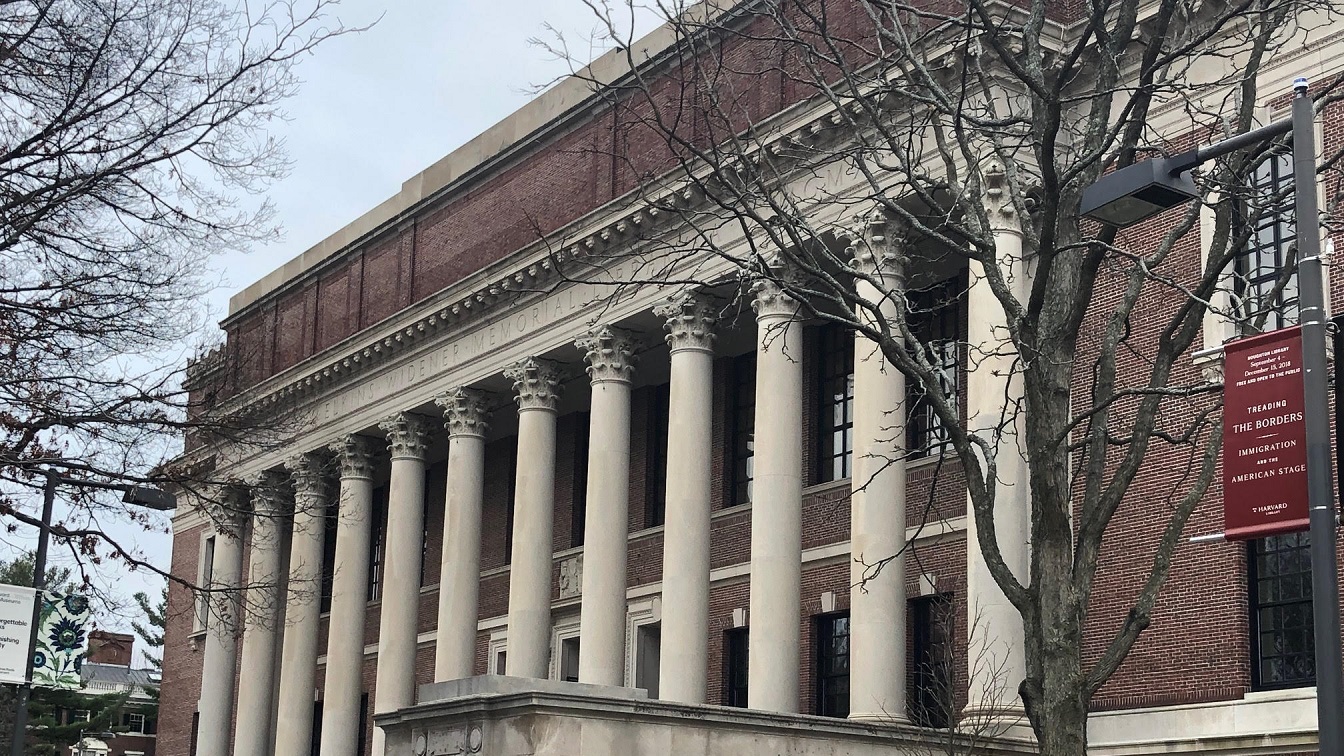
Harvard University from back in 2018. Image Credit: 19FortyFive Staff.
Theodore Roosevelt entered politics almost immediately, winning a seat in the New York State Assembly in 1881 at only twenty-three years old.
He arrived in Albany driven by reformist ideals and a belief in government’s power to improve society. In a political environment dominated by entrenched party machines and backroom deals, Roosevelt’s moral rigidity and confrontational style made him both respected and resented. He publicly denounced corruption, fought for civil service reform, and earned national attention as one of the assembly’s most outspoken young members.
Brief Time Away
Seeking escape and renewal after the death of his mother and also his wife, Theodore Roosevelt headed west to the Dakota Badlands.
There, amid the vast plains and rugged landscapes, he began a new chapter. He purchased two ranches and plunged into the life of a cowboy and rancher. He rode long distances alone across the open range, confronted harsh winters, chased outlaws, and lived with a simplicity far removed from his aristocratic upbringing.
The West toughened him physically and mentally, deepened his understanding of the country beyond the Eastern elite, and provided material for many of the books he would later publish. Though many of his cattle ventures ended in financial loss, the Badlands years gave Roosevelt a renewed sense of purpose and a deeper resilience.
When he returned to public life, he did so with the seasoned confidence of a man who had faced wilderness, hardship, and the rebuilding of his own sense of self. In 1889, President Benjamin Harrison appointed him to the U.S. Civil Service Commission, where he worked to break the spoils system by enforcing merit-based hiring.
Roosevelt embraced this task with characteristic zeal. His uncompromising enforcement of reform earned admiration from some and fierce opposition from others.
Climbing the Political Ladder
In 1895, Roosevelt became New York City’s Police Commissioner. The NYPD of the era was rife with corruption, and Roosevelt approached reform with tireless energy. He modernized the force, instituted regular inspections, cracked down on bribery, and personally patrolled the streets at night to ensure officers were performing their duties.
His tenure became legendary, partly because Roosevelt’s commitment to law and order was matched by his willingness to confront wrongdoing wherever it occurred.
His next role took him back to Washington. In 1897, he was appointed Assistant Secretary of the Navy. Roosevelt had long been a student of naval power and believed that a strong navy was essential to American influence. Even before the war with Spain broke out, he pushed for modernization, readiness, and expansion of U.S. naval forces.
When the Spanish–American War began in 1898, he resigned his post to join the fight directly.
The Rough Riders and Roosevelt’s Rise to Fame: He Even Had an Aircraft Carried Named After Him
Roosevelt’s experiences in the Dakotas had prepared him for the physical and mental demands of warfare. He helped form the First U.S. Volunteer Cavalry, known in history as the Rough Riders, composed of an eclectic mix of Ivy League athletes, cowboys, Native Americans, and adventurers. Roosevelt quickly became the unit’s most famous figure.
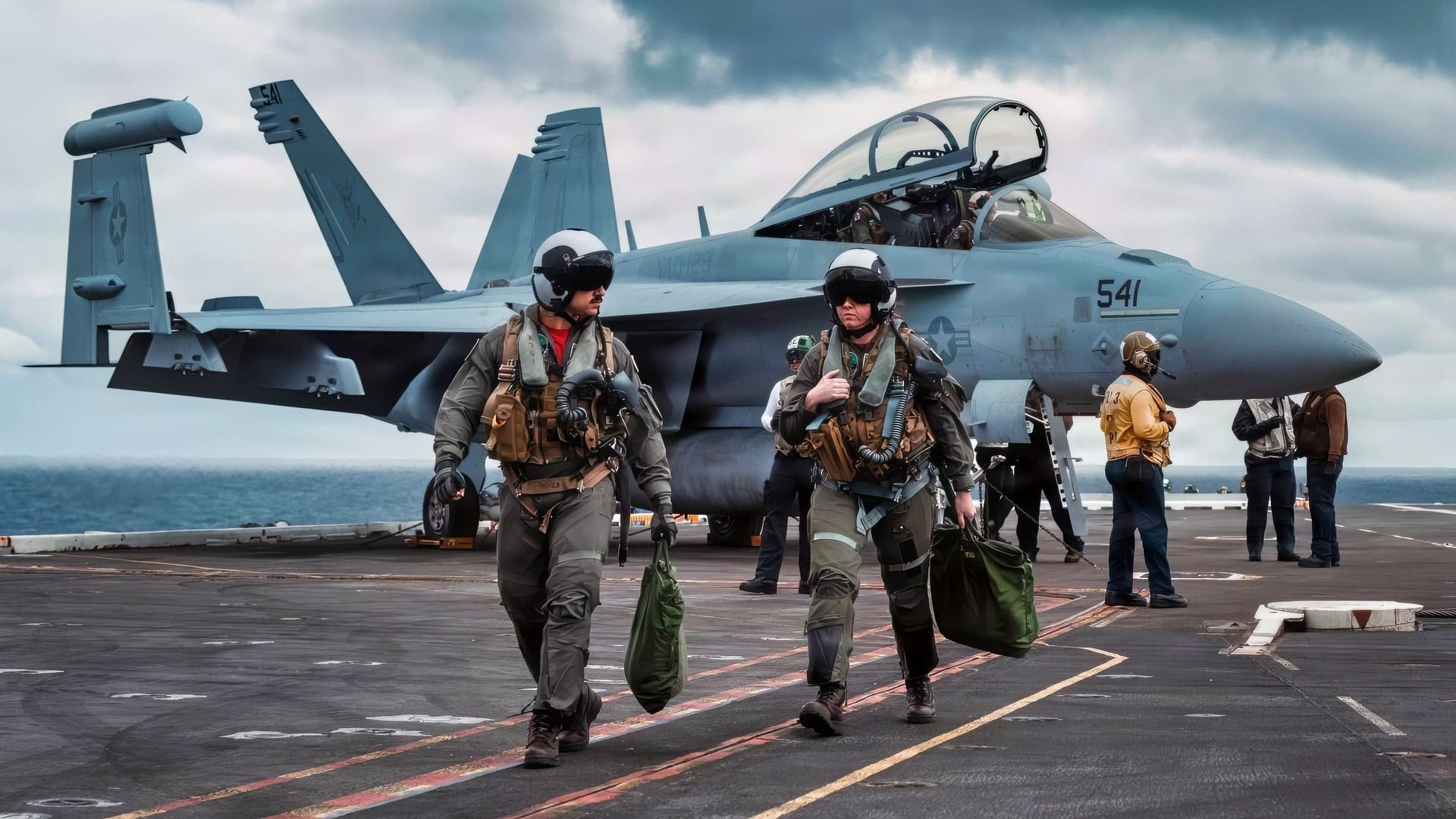
PACIFIC OCEAN (Jan. 24, 2026) – U.S. Navy Lt. Patrick Urrutia, left, and U.S. Navy Lt. Jg. Gabriela Patrick depart a U.S. Navy EA-18G Growler attached to Electronic Attack Squadron (VAQ) 129 on the flight deck of the Nimitz-class aircraft carrier USS Theodore Roosevelt (CVN 71), Jan. 24, 2026. Theodore Roosevelt, flagship of Carrier Strike Group (CSG) 9, is underway conducting exercises to bolster strike group readiness and capability in the U.S. 3rd Fleet area of operations. (U.S. Navy photo by Mass Communication Specialist Seaman Apprentice Cesar Nungaray)
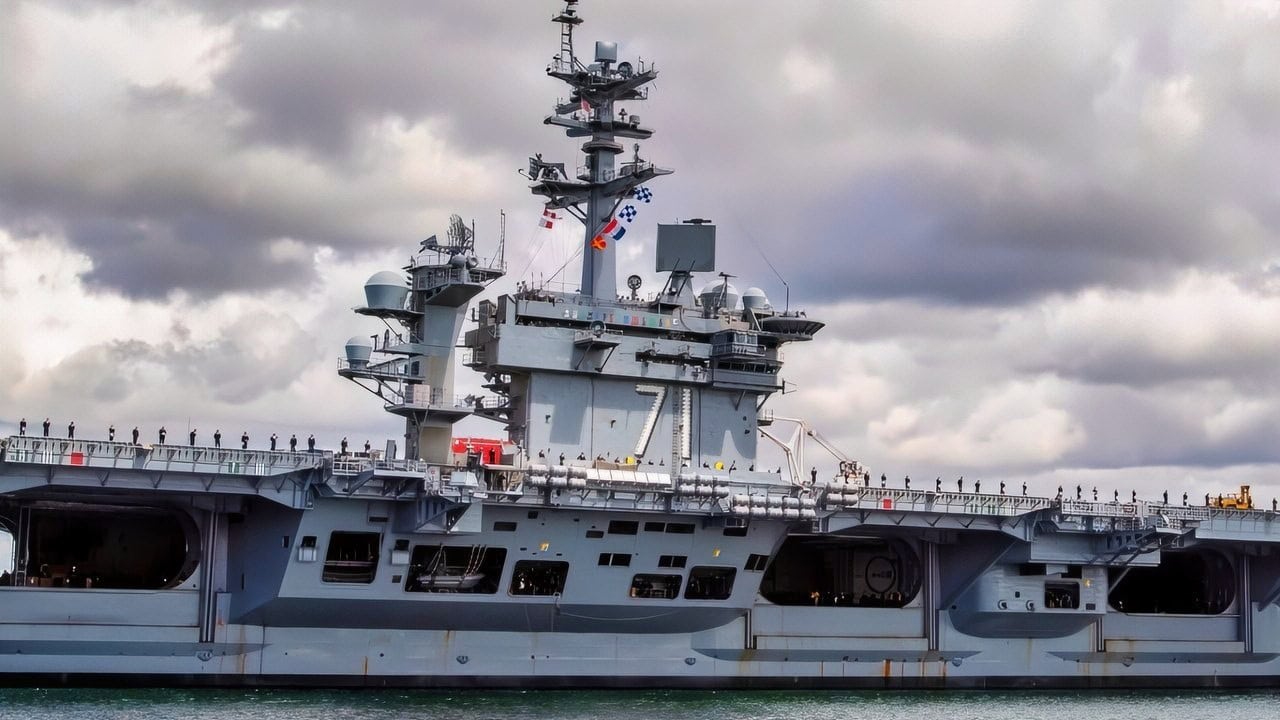
(March 23, 2023) Nimitz-class aircraft carrier USS Theodore Roosevelt (CVN 71) returns to Naval Air Station North Island following a regularly-scheduled maintenance availability and completion of sea trials, March 23. The ship changed its homeport from Bremerton to San Diego after completing an 18-month docking planned incremental availability in Bremerton, Washington, during which the ship received extensive restorations and upgrades to support the F-35C Lightning II, E-2D Advanced Hawkeye, and CMV-22B Osprey, as well as future platforms such as the MQ-25 Stingray unmanned aircraft system. (U.S. Navy photo by Mass Communication Specialist 2nd Class Keenan Daniels)
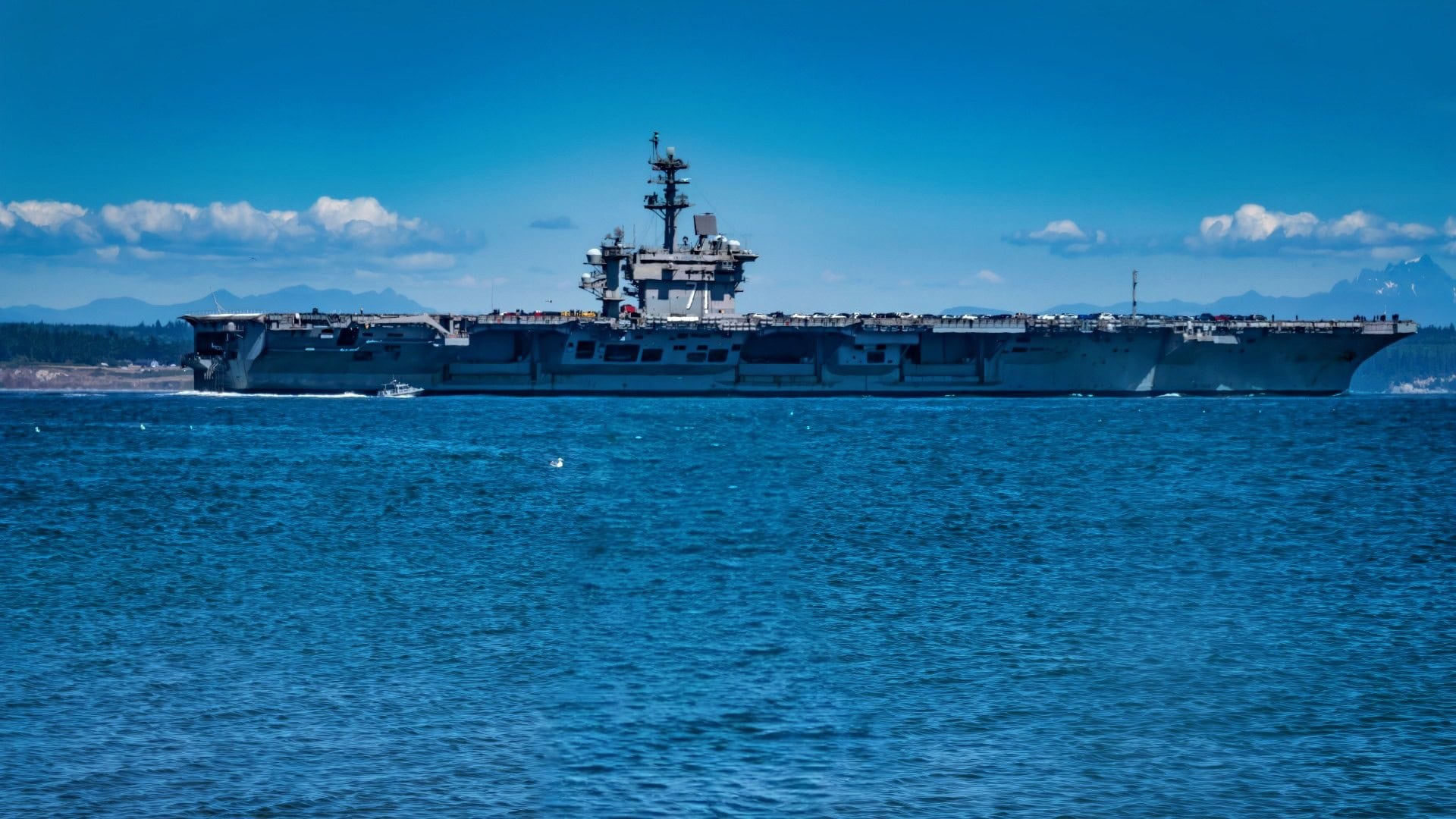
Aircraft carrier USS Theodore Roosevelt (CVN 71) passes Fort Worden before its arrival at Naval Base Kitsap in Bremerton, Washington, July 22, 2021.
His leadership during the Battle of San Juan Hill, particularly the charge up Kettle Hill, became the defining moment of the war in the American imagination. Newspapers celebrated him as a national hero, solidifying his public image as a fearless man of action.
Riding a wave of popularity, Roosevelt was elected Governor of New York in 1898. True to form, he governed energetically, pushing reforms to target corruption and the undue influence of wealthy corporations. His independence frustrated party leaders, who sought to sideline him by promoting him as the Republican vice-presidential candidate in the 1900 election.
They believed the vice presidency would neutralize him. Theodore Roosevelt accepted the nomination and campaigned vigorously for the ticket, helping secure President William McKinley’s victory.
About the Author: Isaac Seitz
Isaac Seitz, a Defense Columnist, graduated from Patrick Henry College’s Strategic Intelligence and National Security program. He has also studied Russian at Middlebury Language Schools and has worked as an intelligence Analyst in the private sector.