
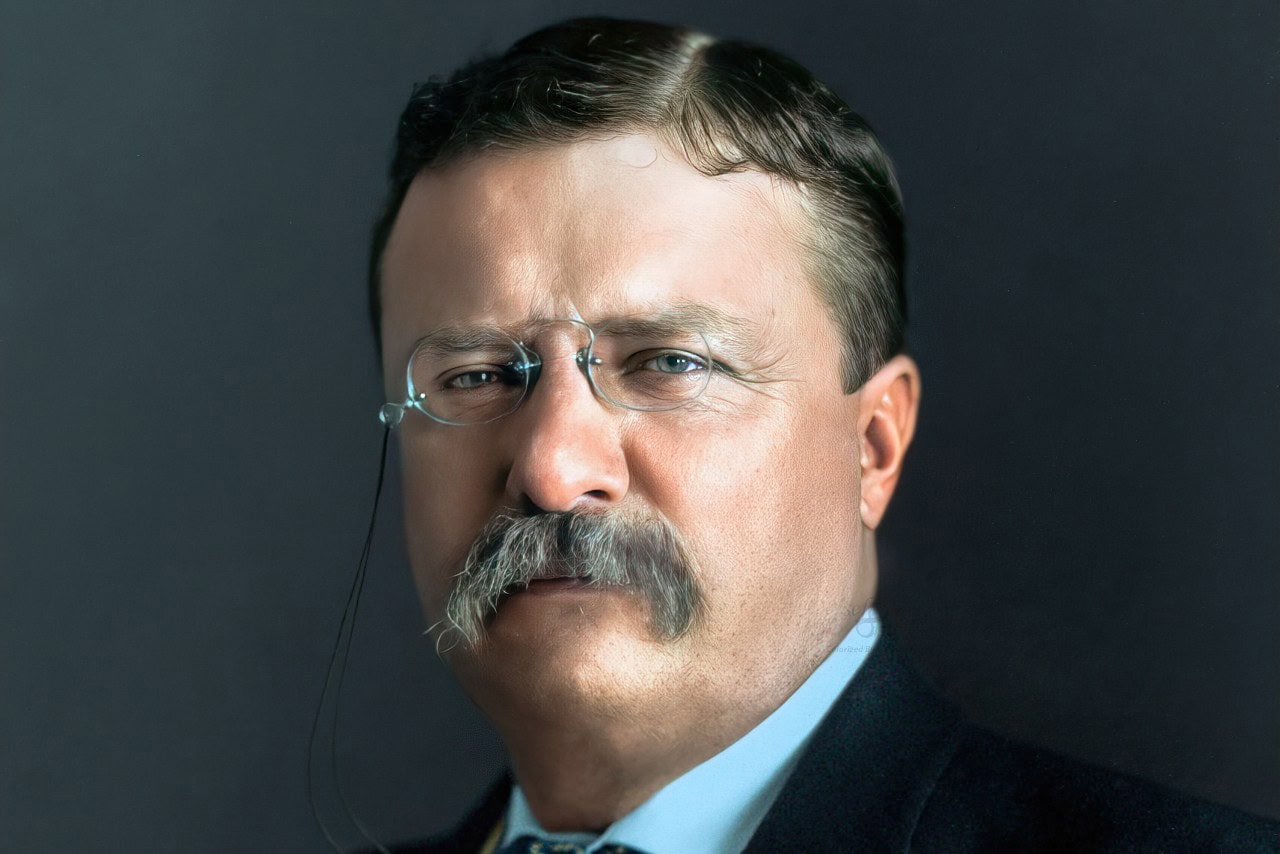
Summary and Key Points – Army Quote of the Day – Attributed with the quote “The first step… is to teach men to shoot,” Theodore Roosevelt’s military philosophy was forged through a lifetime of physical discipline and historical study.
-Overcoming childhood frailty, Roosevelt served as Assistant Secretary of the Navy, modernizing the fleet before resigning to lead the “Rough Riders” in the Spanish-American War.
-His famous charge up Kettle Hill defined his public image, propelling him to the presidency where he practiced “Big Stick Diplomacy.”
-Uniquely, Roosevelt remains the only person to receive both the Medal of Honor (posthumously) and the Nobel Peace Prize.
“The first step in the direction of preparation to avert war if possible, and to be fit for war if it should come—is to teach men to shoot!” This quote, often attributed to Theodore Roosevelt, aligns with his “Big Stick Diplomacy,” which holds that peace is best achieved from a position of strength.
Teddy was no stranger to war. Even from a young age, he was fascinated by naval strategy and history, eventually becoming the Assistant Secretary of the Navy. From there, I joined a volunteer cavalry regiment and personally fought in the Spanish-American War. Later, he would reach the highest position as Commander-in-Chief of the US Armed Forces and President of the United States.
Getting Tough
Roosevelt’s preparation for military life began long before he ever wore a uniform. As a child, he suffered from debilitating asthma and physical weakness, conditions that deeply frustrated him. Rather than accepting fragility, Roosevelt resolved to rebuild himself through rigorous exercise and disciplined living. This transformation informed his lifelong belief that struggle and exertion were morally ennobling.
During his years at Harvard University, Roosevelt combined physical conditioning with intensive historical study, especially in military and naval history. His first major scholarly work, The Naval War of 1812, published in 1882, showed a deep understanding of maritime warfare and argued that naval power was central to national survival and international influence.
In 1897, President William McKinley appointed Roosevelt Assistant Secretary of the Navy. Although the role was civilian, Roosevelt treated it as a position of strategic military responsibility. At the time, the US Navy was still suffering from decades of neglect following the Civil War.
Roosevelt worked aggressively to improve readiness by ensuring ships were properly armed, stocked with ammunition, and staffed with competent officers.
He pressed for modernization and prepared detailed plans for a potential war with Spain, anticipating that American interests in Cuba and the Pacific might soon lead to conflict.
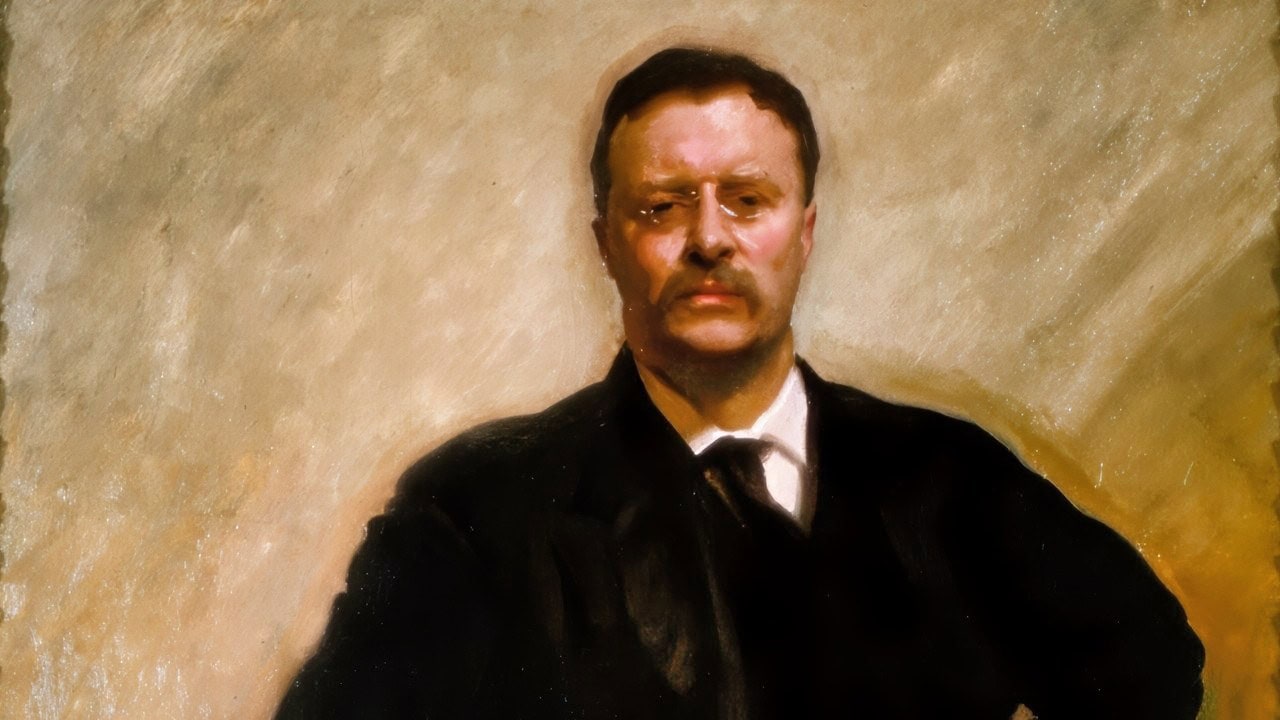
‘Speak softly and carry a big stick; you will go far.’ A Quote by Theodore Roosevelt.
The Spanish-American War
The explosion of the USS Maine in Havana Harbor in February 1898 accelerated Roosevelt’s efforts. Although the precise cause of the explosion was uncertain, Roosevelt believed Spain was responsible and viewed war as inevitable.
During a brief period as Secretary of the Navy, he issued orders that brought American naval forces to a high state of readiness, a decision with lasting strategic consequences. Yet Roosevelt believed that leadership required personal participation in danger. When war was formally declared in April 1898, he resigned his post in the Navy Department and sought combat duty.
Roosevelt’s transition from administrator to soldier was swift. Partnering with Leonard Wood, a physician and army officer, he helped raise a volunteer cavalry unit officially designated the First United States Volunteer Cavalry.
Roosevelt accepted the rank of lieutenant colonel, with Wood serving as colonel. The regiment quickly became famous under the nickname “the Rough Riders.” Its composition was unusually diverse for its time, drawing together western cowboys, miners, Native Americans, former lawmen, and elite eastern college athletes. United more by enthusiasm than formal discipline, the Rough Riders embodied Roosevelt’s ideal of rugged, energetic citizenship.
Their training period was brief, and they were soon dispatched to Cuba, notably without their horses, forcing them to fight as dismounted infantry.
Theodore Roosevelt’s First Combat Outings
The Rough Riders first experienced combat at the Battle of Las Guasimas on June 24, 1898. Though small in scale, the engagement tested the regiment’s cohesion and Roosevelt’s leadership under fire.
Roosevelt personally directed troop movements and exposed himself repeatedly to enemy fire, behavior that earned him the respect of his men and contributed to his growing reputation for courage. The defining episode of Roosevelt’s military career occurred a week later during the assault on San Juan Heights, including the strategically important Kettle Hill, near Santiago de Cuba.
On July 1, 1898, American forces launched a coordinated attack on Spanish defensive positions. Confusion and hesitation plagued portions of the advance, but Roosevelt, newly promoted after Wood assumed brigade command, pushed his men forward.
In one of the most famous episodes of the war, he led a charge up Kettle Hill, briefly mounted on horseback before continuing on foot. The assault succeeded, and the American forces secured the heights, a turning point in the campaign. Roosevelt later referred to the battle as “the great day of my life,” and it became central to the heroic image he cultivated afterward.
The Spanish-American War ended quickly, and Roosevelt returned home as one of its most celebrated figures. He capitalized on his fame by publishing The Rough Riders, a memoir that combined battlefield narrative with reflections on leadership and courage.
The book reinforced his reputation as a warrior-statesman. It propelled him rapidly up the political ladder, leading first to the governorship of New York and then to the vice presidency. Although he was nominated for the Medal of Honor for his conduct at San Juan Hill, political considerations prevented the award during his lifetime.
More than a century later, in 2001, the medal was awarded to him posthumously.
Post-War Career
Roosevelt’s military career did not end with his service in Cuba. As president of the United States from 1901 to 1909, he served as commander in chief and pursued policies shaped by his wartime experiences.
He expanded and modernized the Army and Navy, authorized the construction of powerful battleships, and sent the Great White Fleet on a global tour to demonstrate American naval reach and readiness. His philosophy combined military strength with diplomatic engagement, famously summarized as speaking softly while carrying a big stick.
Ironically, despite his reputation as a warrior, Roosevelt became the first American president to receive the Nobel Peace Prize. In 1906, he was honored for mediating the peace that ended the Russo-Japanese War, an achievement that reflected his belief that credible military power enabled effective diplomacy.
Even after leaving office, Roosevelt sought active duty during World War I, though he was ultimately denied a combat command due to age and health concerns.

Image: Creative Commons.
About the Author: Isaac Seitz
Isaac Seitz, a Defense Columnist, graduated from Patrick Henry College’s Strategic Intelligence and National Security program. He has also studied Russian at Middlebury Language Schools and has worked as an intelligence Analyst in the private sector.

