
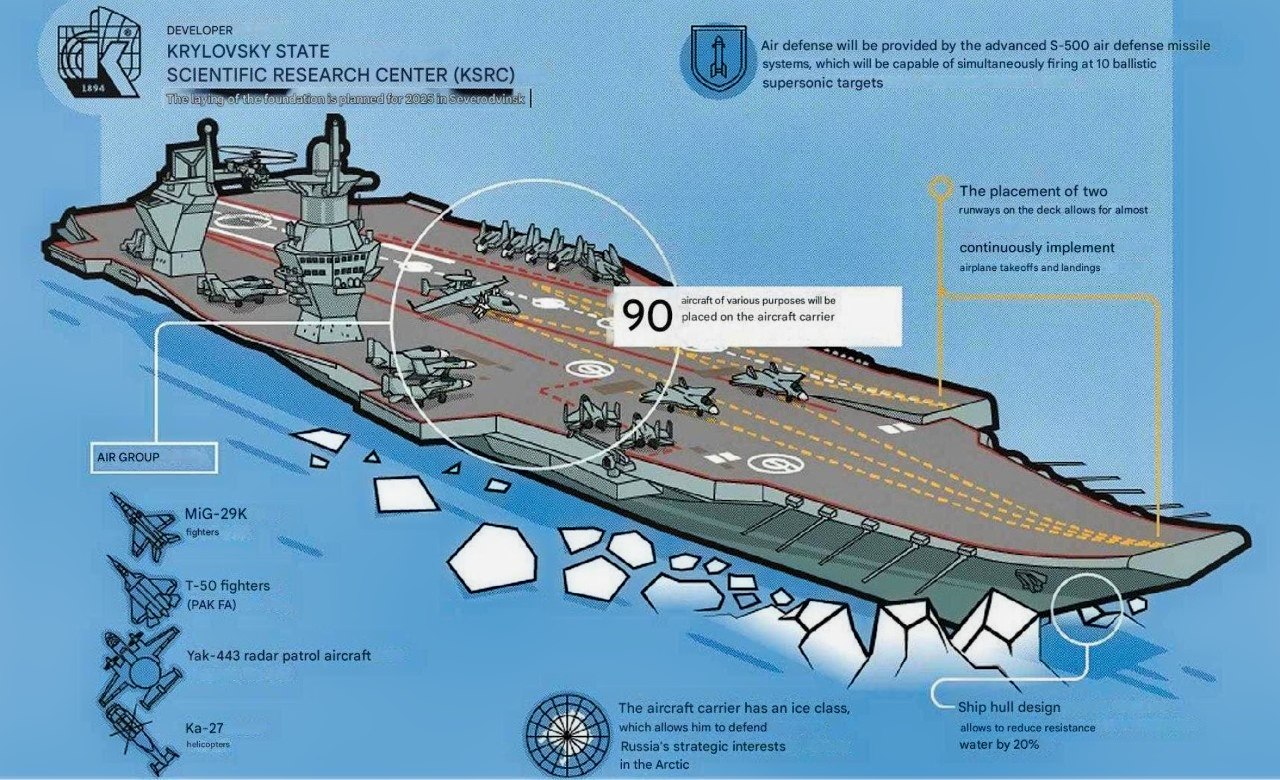
With work on Admiral Kuznetsov discontinued, the future of Russia’s aircraft carrier ambitions is currently in question. In 2015, a new type of aircraft carrier was first proposed to the Russian Navy under the title Project 23000, also known as Shtorm. According to some officials, the aircraft carrier was supposed to be laid down sometime between 2025 and 2030, but as of the writing of this, there has been no confirmation on the carrier’s prospects.
Project 23000 or Shtorm Aircraft Carrier Origins and Design Philosophy
Project 23000 was designed by the Krylov State Research Center, Russia’s premier naval research and testing institution, with participation from the Nevskoye Design Bureau.
Krylov has a long lineage stretching back to the Soviet era, having contributed to many of the USSR’s largest surface combatants and submarine programs. The Shtorm design arose from internal studies assessing the future of Russian naval aviation once it became clear that Admiral Kuznetsov, the country’s only aircraft carrier, was both technologically obsolete and chronically unreliable.
From the outset, Project 23000 was intended to break away from the limitations of Soviet-era designs. Kuznetsov was officially classified as a “heavy aircraft-carrying cruiser” to bypass restrictions in the Turkish Straits. Consequently, she was burdened with anti-ship missiles that displaced aviation capacity.
Shtorm was conceived as a Western-style fleet carrier whose sole purpose was to launch and recover aircraft.
The proposal was considered in 2017 to hopefully expand Russia’s carrier fleet to around four vessels by the 2030s.
Size, Hull, and Overall Characteristics
In physical terms, Project 23000 was designed to rival American Supercarriers like the Nimiz-class and the Ford-class.
According to estimates, the ship would have a full-load displacement of around ninety to one hundred thousand metric tons, placing it directly alongside some of the largest carriers in the world. The hull length was projected to be roughly 330 meters, with a beam of about 40 meters at the waterline and a draft of approximately 11 meters.

Shtorm Aircraft Carrier. Image Credit: Artist Rendering/Creative Commons.
The hull was designed to operate in all areas of the world, but particular emphasis was placed on arctic operations, which has been a particular point of interest for Russia. Krylov engineers claimed the hull form would reduce hydrodynamic drag compared to earlier Soviet designs, potentially improving efficiency and speed. This design, along with the many other proposed improvements, would make Project 23000 the most advanced carrier ever fielded by the Russian Navy in its entire history.
Nuclear Propulsion and Endurance
A defining feature of Project 23000 was its proposed nuclear propulsion system.
The aircraft carrier was intended to be powered by either RITM‑200 or RITM‑400 nuclear reactors, the same reactor family used in Russia’s newest nuclear icebreakers.
These reactors would drive four propeller shafts and generate ample electrical power for onboard systems, including advanced sensors and electromagnetic catapults. This would theoretically allow the carrier to remain at sea for months at a time without refueling, limited primarily by food supplies and crew endurance rather than fuel.
In principle, this propulsion scheme placed Shtorm on equal footing with American nuclear carriers.
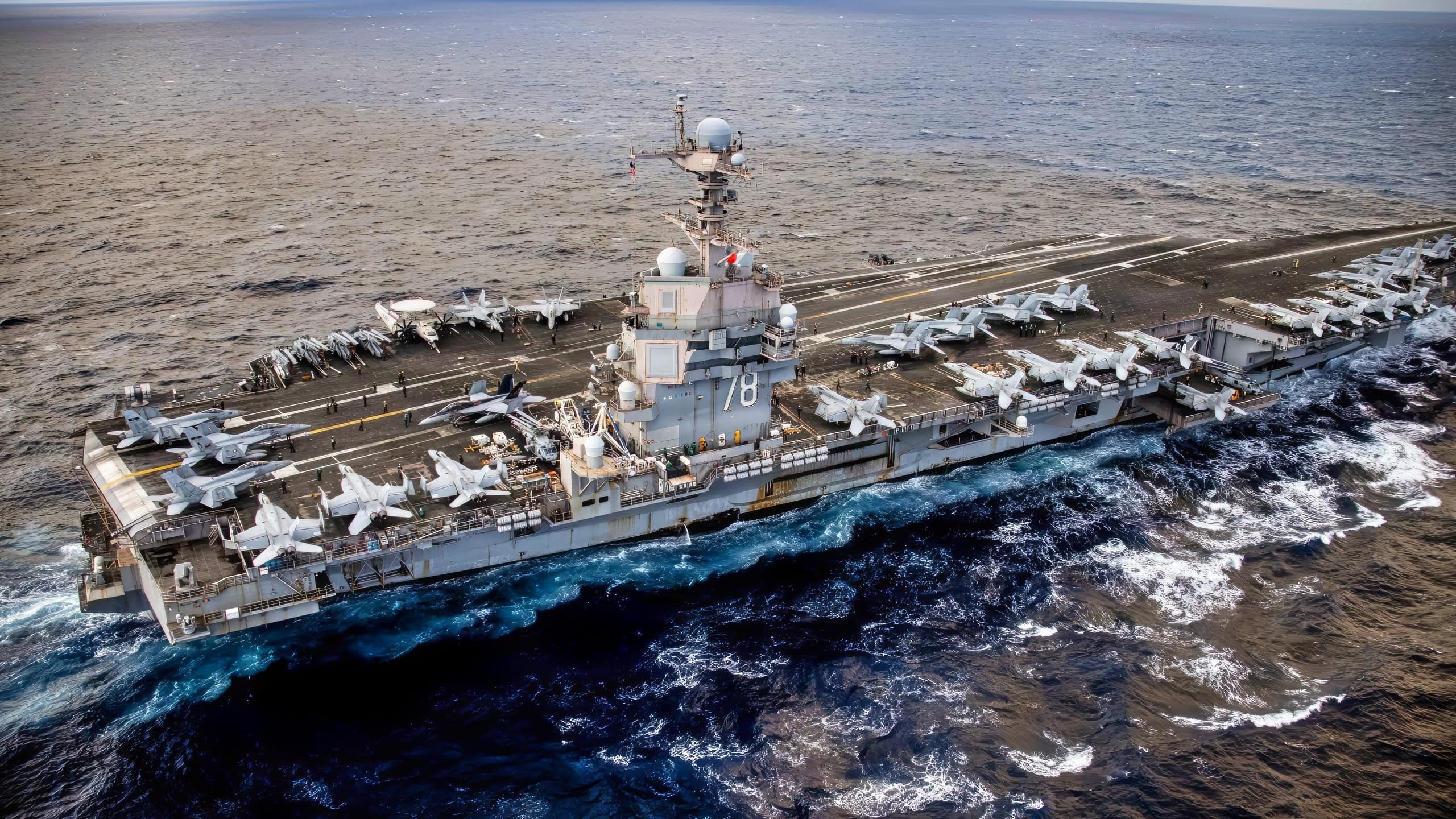
The world’s largest aircraft carrier, USS Gerald R. Ford (CVN 78), transits the Eastern Mediterranean Sea, March 22, 2026. Gerald R. Ford is on a scheduled deployment in the U.S. 6th Fleet area of operations to support the warfighting effectiveness, lethality and readiness of U.S. Naval Forces Europe Africa, and defend U.S., Allied and partner interests in the region. (U.S. Navy photo by Mass Communication Specialist 2nd Class Tajh Payne)
While Russia has never operated a nuclear carrier, it currently operates nuclear submarines, nuclear battlecruisers, nuclear icebreakers, and so on. The idea of adopting a nuclear carrier is certainly ambitious for Russia, but not outside the realm of possibility.
Flight Deck Layout and Launch Systems
Perhaps the most radical element of Project 23000 was its proposed flight deck configuration. Unlike Admiral Kuznetsov, which relies on a ski-jump ramp and lacks catapult launch capability, Shtorm was designed with a hybrid arrangement combining ski-jump takeoffs and electromagnetic catapults. The deck layout included four launch positions, two forward ski-jump lanes, and two catapult tracks, along with a conventional angled landing area equipped with arresting gear.
The ship also featured a dual-island superstructure, a configuration intended to separate navigation and flight-control functions while reducing radar interference over the deck. This design is similar to the U.K’s Queen Elizabeth-class aircraft carriers and other proposed designs.
Economic and Industrial Limitations
One of the biggest limitations to Russia’s carrier ambitions has always been material costs. While advocates have argued that the cost is ultimately worth it, the project would still cost a fortune.
According to some estimates, the cost for the carrier alone exceeded five billion U.S. dollars, not to mention the cost for developing and procuring new types of aircraft. With the War in Ukraine still in full swing, Russia’s defense resources are already strained, and adding a new aircraft carrier to the mix is simply unfeasible with Russia’s current budget.
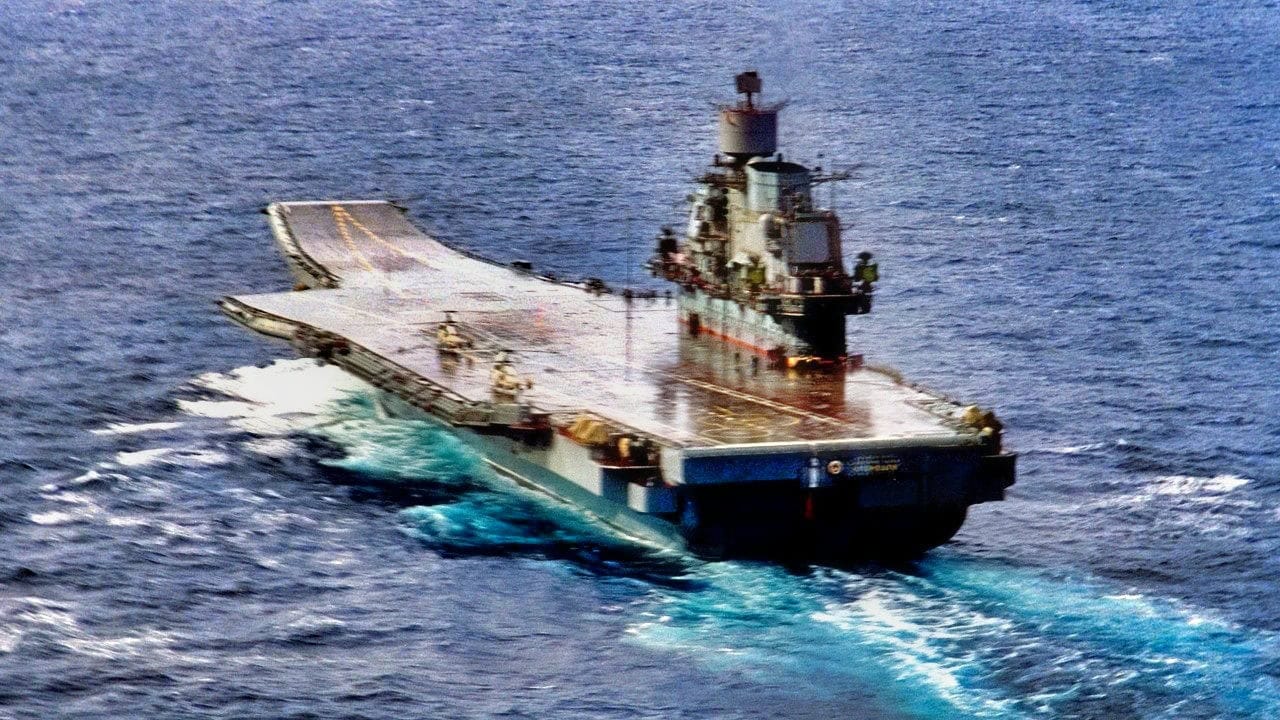
Admiral Kuznetsov Aircraft Carrier Russia. Image Credit: Creative Commons.

Admiral Kuznetsov. Image Credit: Creative Commons.
Additionally, there is the issue of manufacturing. After the fall of the USSR, Russia’s shipbuilding industry was gutted by corrupt officials and poor management. While the Kremlin has tried to, with moderate success, to rejuvenate domestic shipbuilding, Russia still has a long way to go before it is ready to build an aircraft carrier from scratch.
Does Russia Want a New Carrier?
While manufacturing is certainly a problem, these hurdles can be overcome if the Russian Ministry of Defense expresses interest in a new carrier. The problem, however, is that the Russian Navy does not seem interested in a new carrier.
Many prominent voices believe that the aircraft carrier is becoming obsolete. According to Sergei Avakyants, the former commander of Russia’s Pacific Fleet, “[the aircraft carrier] is already a bygone era.
These are very expensive and ineffective naval weapons.” He continues, “A huge, expensive structure that can be destroyed within a few minutes by modern types of weapons. The future belongs to carriers of robotic systems and unmanned aircraft.” This line of thought was used to discontinue work on Admiral Kuznetsov.
Officially, the Russian Ministry of Defense has made no comments on any future aircraft carrier acquisition plans.
In general, based on recent naval deliveries, the Russian Navy is moving towards a fleet doctrine of smaller, distributed operations, a direction many in the U.S. have also advocated.
It is not that Russia cannot build or repair larger surface vessels; Admiral Nakhimov is proof of that. The issue is that Russia seems unwilling to invest in an aircraft carrier.
About the Author: Isaac Seitz
Isaac Seitz, a Defense Columnist, graduated from Patrick Henry College’s Strategic Intelligence and National Security program. He has also studied Russian at Middlebury Language Schools and has worked as an intelligence Analyst in the private sector.