
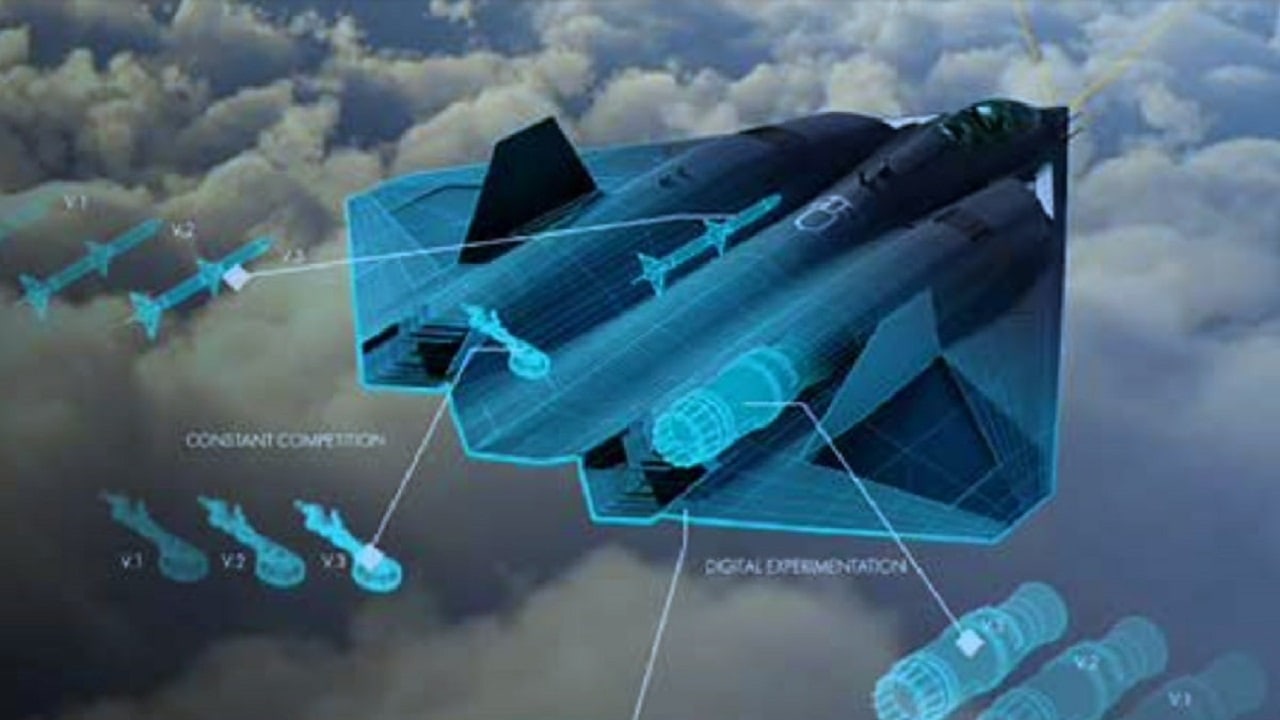
The Lockheed Martin X-44 MANTA (Multi-Axis No-Tail Aircraft) was a conceptual late-1990s US Air Force/NASA design for a tailless fighter, derived from the F-22 Raptor with a stretched delta wing.
Designed to rely solely on 3D thrust vectoring for pitch, roll, and yaw, it aimed to maximize stealth and reduce drag. The program, however, was canceled in 2001 due to a lack of funding.
It should be noted that the original X-44 MANTA is a different aircraft from the Lockheed Martin X-44A MANTA, a real, small, unmanned tailless technology demonstrator that flew in 2001.
The X-44 Manta Set The Stage For 6th-Generation Fighter.
The X-44 MANTA was a “tailless” design lacking vertical or horizontal stabilizers, intended to minimize its radar signature.
The aircraft relied entirely on engine thrust vectoring to replace traditional aerodynamic control surfaces. It was based on the F-22 Raptor airframe and, in some designs, was expected to use modified twin-turbofan Pratt & Whitney F119 engines to achieve high speed and agility.
Thrust vectoring, in simple layman’s terms, “offers the ability to aim or point the nozzle of the jet engine. On some platforms, such as the F-22 Raptor, nozzle aiming is done in a single plane (up or down), while on other jets, like Russia’s 4th-generation Su-35, the nozzle can move in 360 degrees, offering even more dramatic options for rapid direction changes”.
Intended for high maneuverability, greater internal fuel capacity, and improved low-observability.
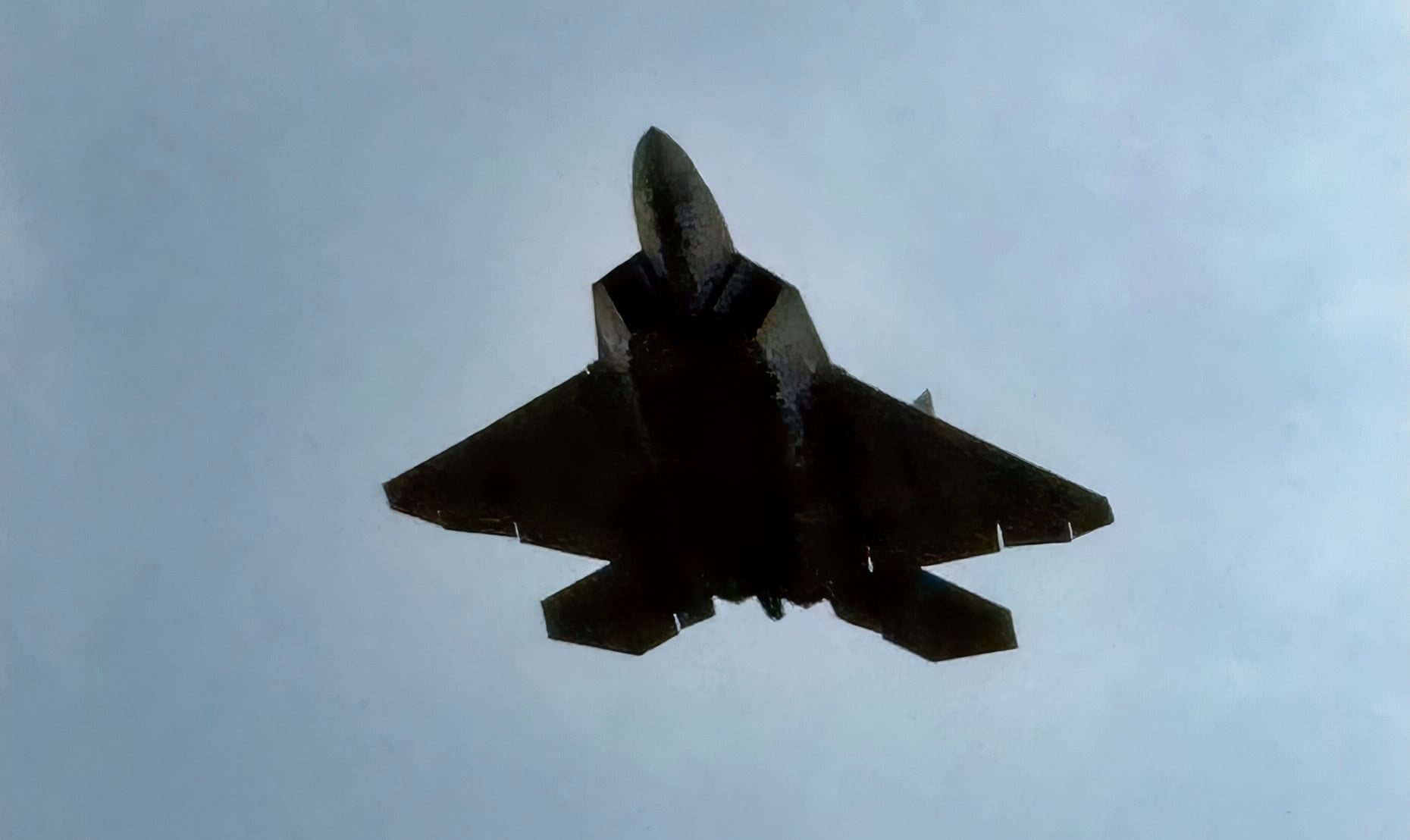
F-22 at Lakeland Air Show 2026. Taken on March 19, 2026, by 19FortyFive.com
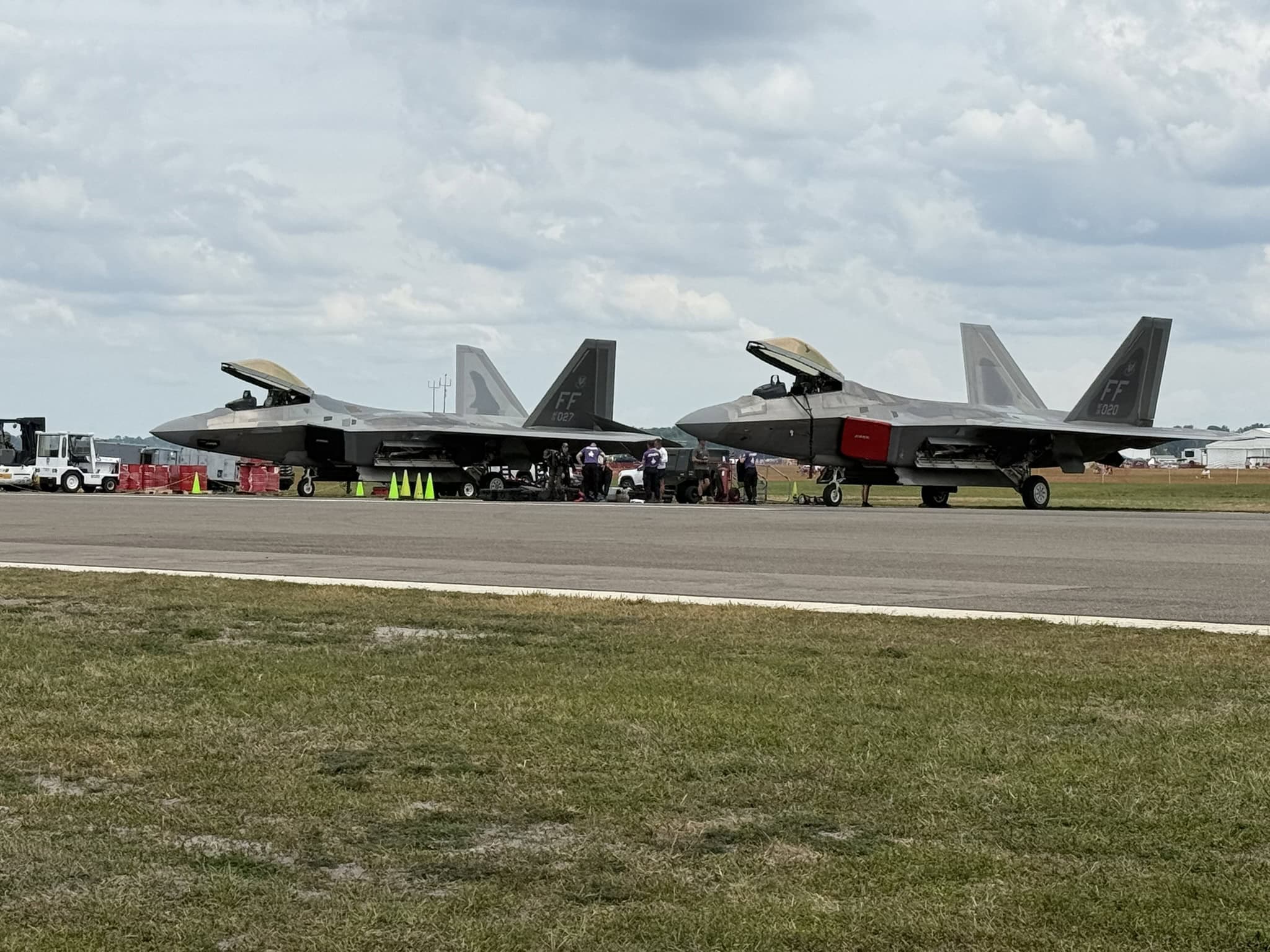
F-22 Raptors on the ground. 19FortyFive.com image taken in Lakeland, Florida on 4/19/2026.
While the manned X-44 MANTA concept was canceled in 2000, it laid the groundwork for modern tailless, 6th-generation fighter design studies, such as the Air Force’s F-47 NGAD.
The X-44 MANTA Design Was Years Ahead Of Its Time:
Although it’s hard to believe, the design of the Air Force’s newest NGAD fighters dates back 30 years to Lockheed Martin’s X-44 program.
The designers envisioned a “tailless” aircraft that drew on aspects of the F-22 Raptor, including the engines, some avionics systems, and the front frame.
However, they constructed the aft of the aircraft with a smooth, tailless, delta-winged design with 3-D thrust vectoring.
Unfortunately, although one prototype was planned, this aircraft never left the drawing board. The aircraft was a purely experimental project.
The X-44 Was Expected To Be Fast…And Stealthy:
Lockheed Martin’s engineers believed the X-44 would hit speeds of Mach 2.02 (1,500 mph), with its twin Pratt & Whitney engines generating 35,000 pounds of thrust.
The broad Delta-wing would house more internal fuel; the absence of verticals would lower radar signature and reduce interference drag; and removing large moving surfaces would reduce mechanical complexity on paper.
The aircraft would have had a ceiling of 49,000 feet and a range of about 2,000 miles, far more than the Raptor.
The X-44 Manta would have low drag for better performance and radar evasion. The larger weapons bays could have accommodated a diverse array of weapons, including AIM-9 Sidewinders, AIM-120 AMRAAMs, and 1,000-pound GBU-23 Joint Direct Attack Munitions.
Is The F-47 NGAD’s Design Close To Lockheed Martin’s X-44?
While no one has yet seen the Air Force’s 6th-gen NGAD demonstrator, now in limited production for security reasons, most industry renderings have shown tailless, completely horizontal, stealthy airframes consistent with Lockheed Martin’s initial conceptual visions for the X-44 MANTA.
A smooth, Delta-winged fuselage is much stealthier than a plane with vertical structures, and 3-D thrust vectoring, if the designers can get the aircraft to handle as well as the Raptor, would give it incredible agility.
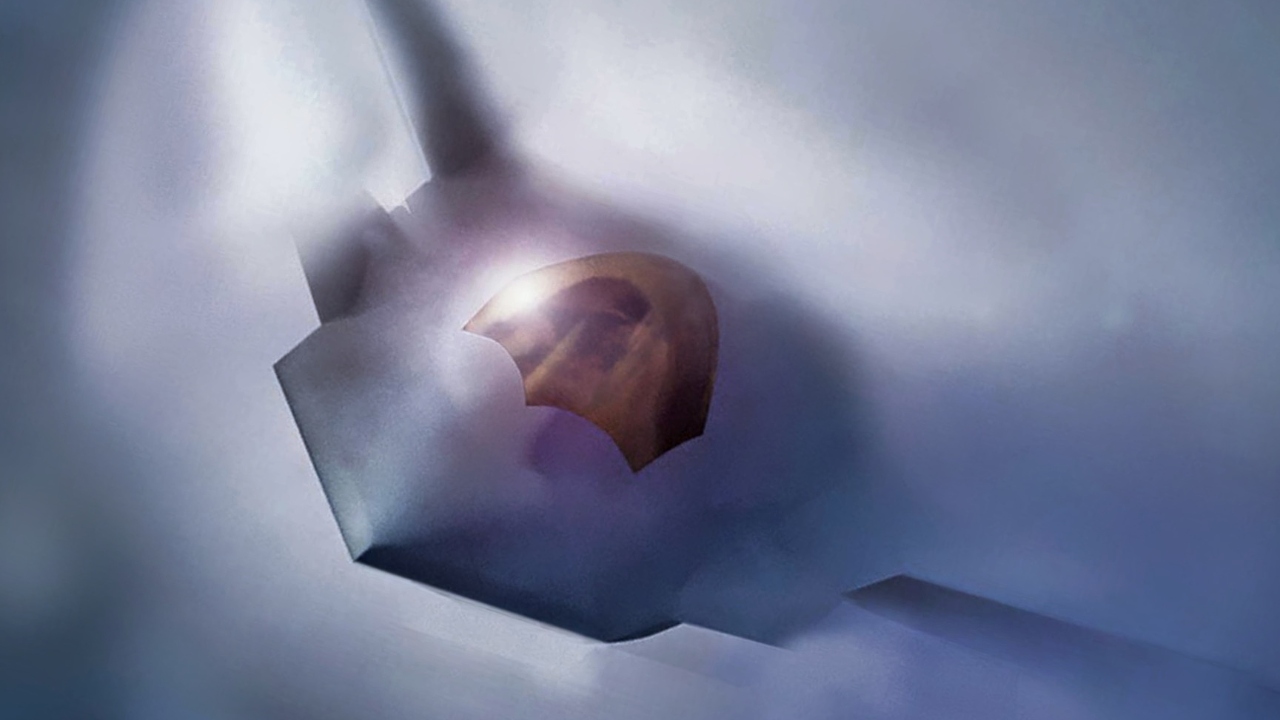
Shown is a graphical artist rendering of the Next Generation Air Dominance (NGAD) Platform. The rendering highlights the Air Force’s sixth generation fighter, the F-47. The NGAD Platform will bring lethal, next-generation technologies to ensure air superiority for the Joint Force in any conflict. (U.S. Air Force graphic)
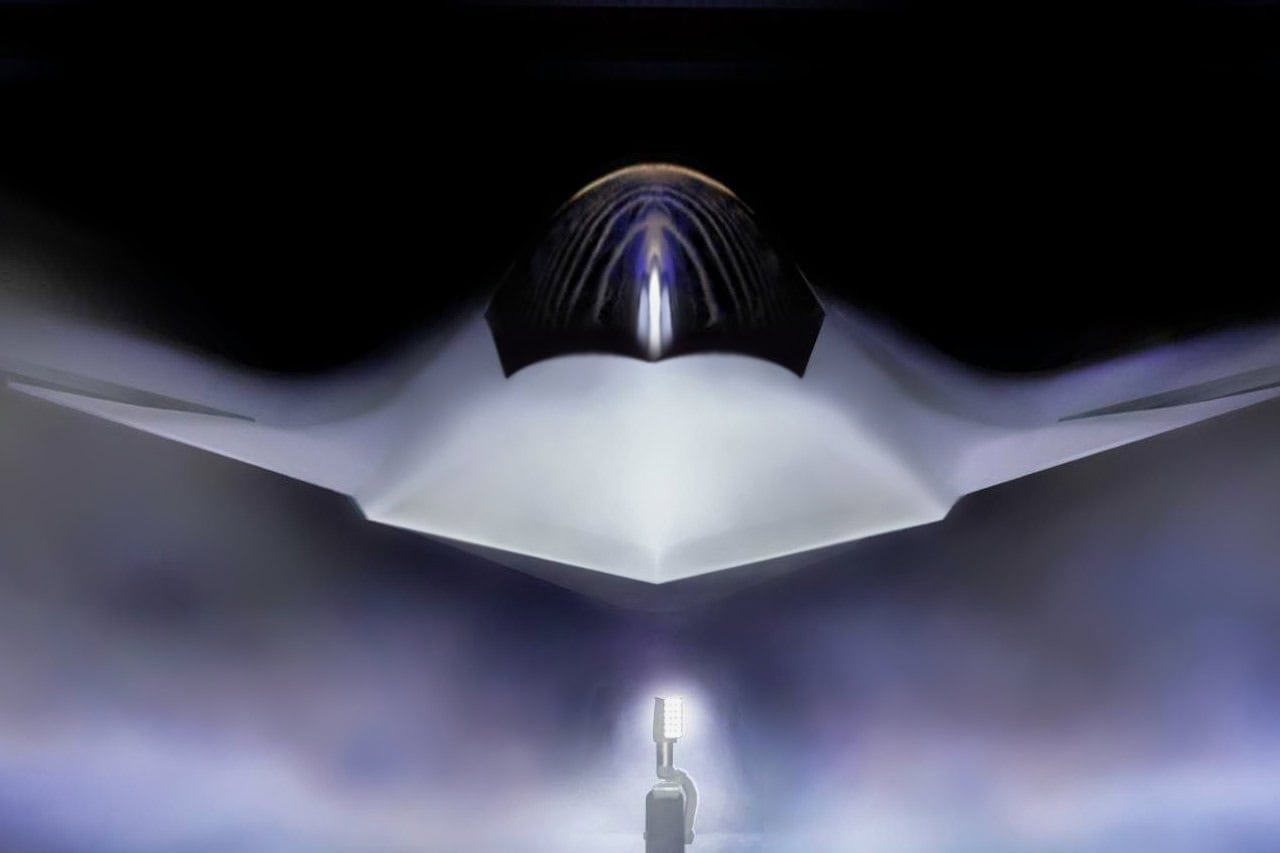
Shown is a graphical artist rendering of the Next Generation Air Dominance (NGAD) Platform. The rendering highlights the Air Force’s sixth generation fighter, the F-47. The NGAD Platform will bring lethal, next-generation technologies to ensure air superiority for the Joint Force in any conflict. (U.S. Air Force graphic)
The X-44 MANTA was envisioned as an airframe capable of full pitch, yaw, and roll without vertical structures or tailpipes. Interestingly, NASA initiated the contract to procure a pair of crewed, tailless aircraft for research.
Would The X-44 Be Stable and Maneuverable Enough?
But was the aircraft as capable as the F-22? Some analysts didn’t believe so.
“The tailless design of the X-44 Manta had some great benefits, including broadband low-observability, drag reduction to sustain high-speed dashes, and increased fuel capacity. However, the stability and maneuverability issues created from removing vertical tails could only be partially compensated for by thrust vectoring,” Emily Davis, a flight test engineer for Lockheed Martin, wrote.
How Expensive Would The Project Have Been?
While the aircraft may or may not have been as maneuverable as advertised, the cost of building and maintaining the X-44 MANTA may have been prohibitive.
The current F-47 NGAD is projected to cost up to $300 million per aircraft.
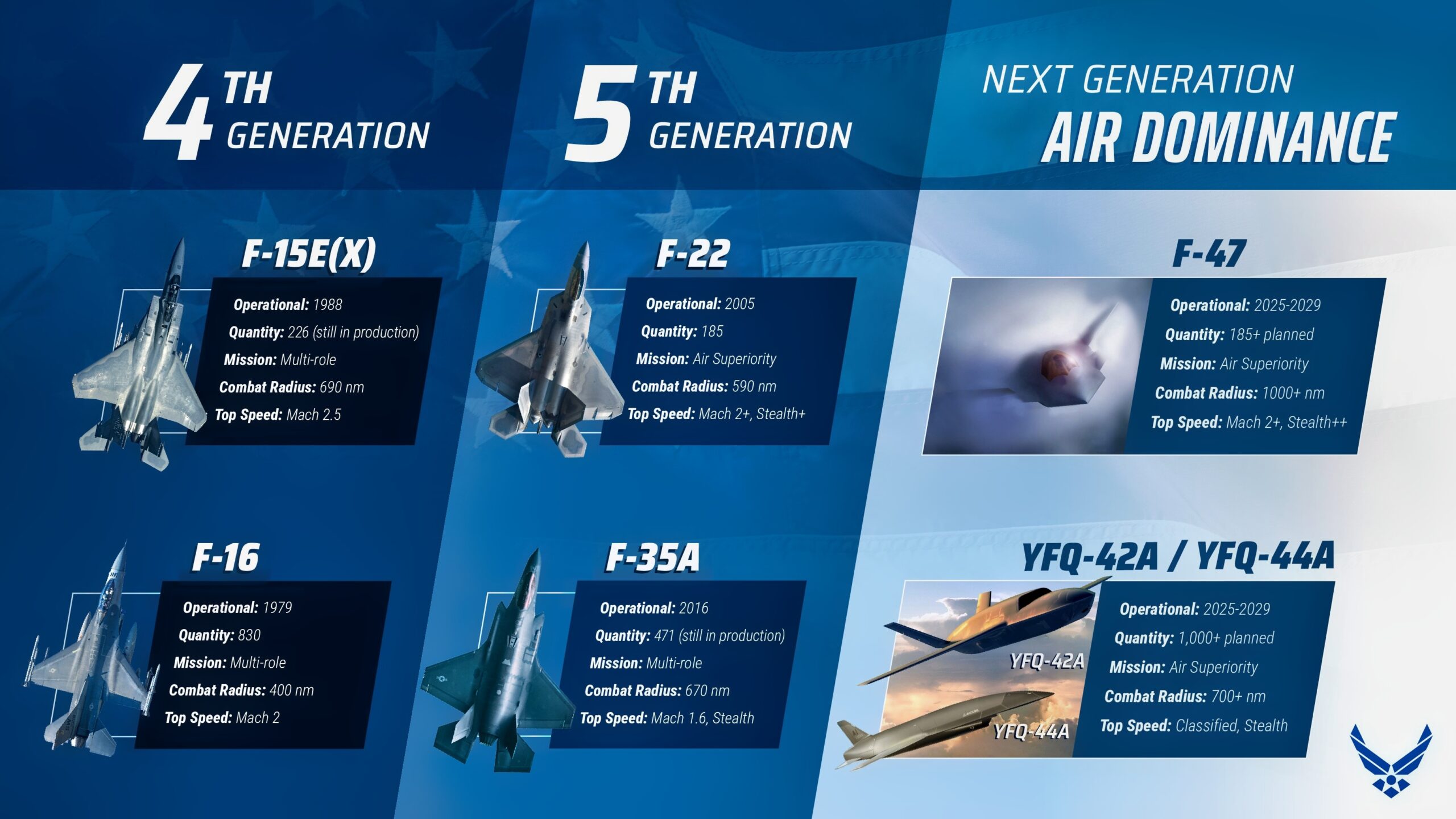
F-47 Infographic. Image Credit: U.S. Air Force
And although the Air Force is already moving ahead with limited production of the NGAD, its cost may limit how many of these aircraft are eventually built.
But the X-44 was a significant stepping stone for the US in its 6th-generation aircraft development.
The current designs continue to look to eliminate as many surfaces as possible to reduce drag and improve the stealth of 6th-generation aircraft. And thrust vectoring will continue to be developed.
And in the end, Lockheed Martin was ahead of the curve in developing an F-22 Raptor-like tailless aircraft, as evidenced by the current development of the Air Force’s NGAD 6th-gen. Fighter.
About the Author: Steve Balestrieri
Steve Balestrieri is a National Security Columnist. He served as a US Army Special Forces NCO and Warrant Officer. In addition to writing on defense, he covers the NFL for PatsFans.com and is a member of the Pro Football Writers of America (PFWA). His work was regularly featured in many military publications.