
Defense contractor Northrop Grumman released an update on its next-generation stealth bomber, the B-21 Raider, on April 14, 2026. On the surface, the release appears to be a routine milestone for the program, but the announcements within it suggest the aircraft is progressing quickly and performing as expected, indicating it is finally approaching operational service.
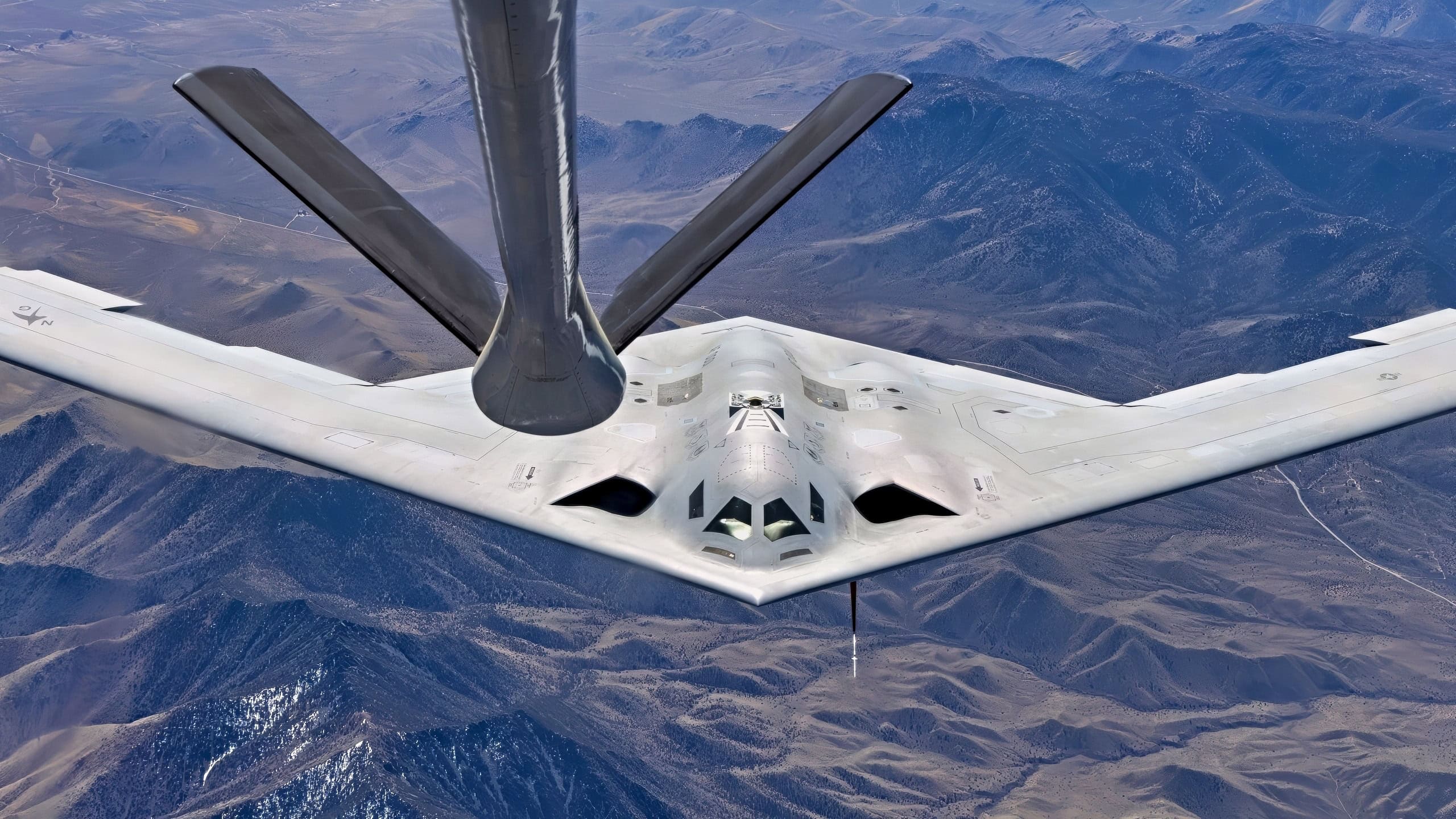
The announcement focuses on the news that the Raider has successfully conducted aerial refueling during its flight test campaign, proving that it can operate alongside the U.S. Air Force’s KC-135 Stratotanker refueling aircraft. The announcement was accompanied by newly released imagery that shows the bomber refueling during flight – the first such visual of its kind from the program.
“Our teams are moving the B-21 Raider through testing at an unprecedented pace, continually proving its outstanding performance – including aerial refueling,” Tom Jones, the corporate vice president and president of Northrop Grumman Aeronautics Systems, said in the statement. “We’ve designed and built a reliable, adaptable aircraft that is vital to our warfighters’ missions, while operating with a sense of wartime urgency to accelerate production and deliver this capability.”
The B-21 is plowing ahead and preparing to become a deployable system, but what else can we learn from Northrop’s lengthy new statement?
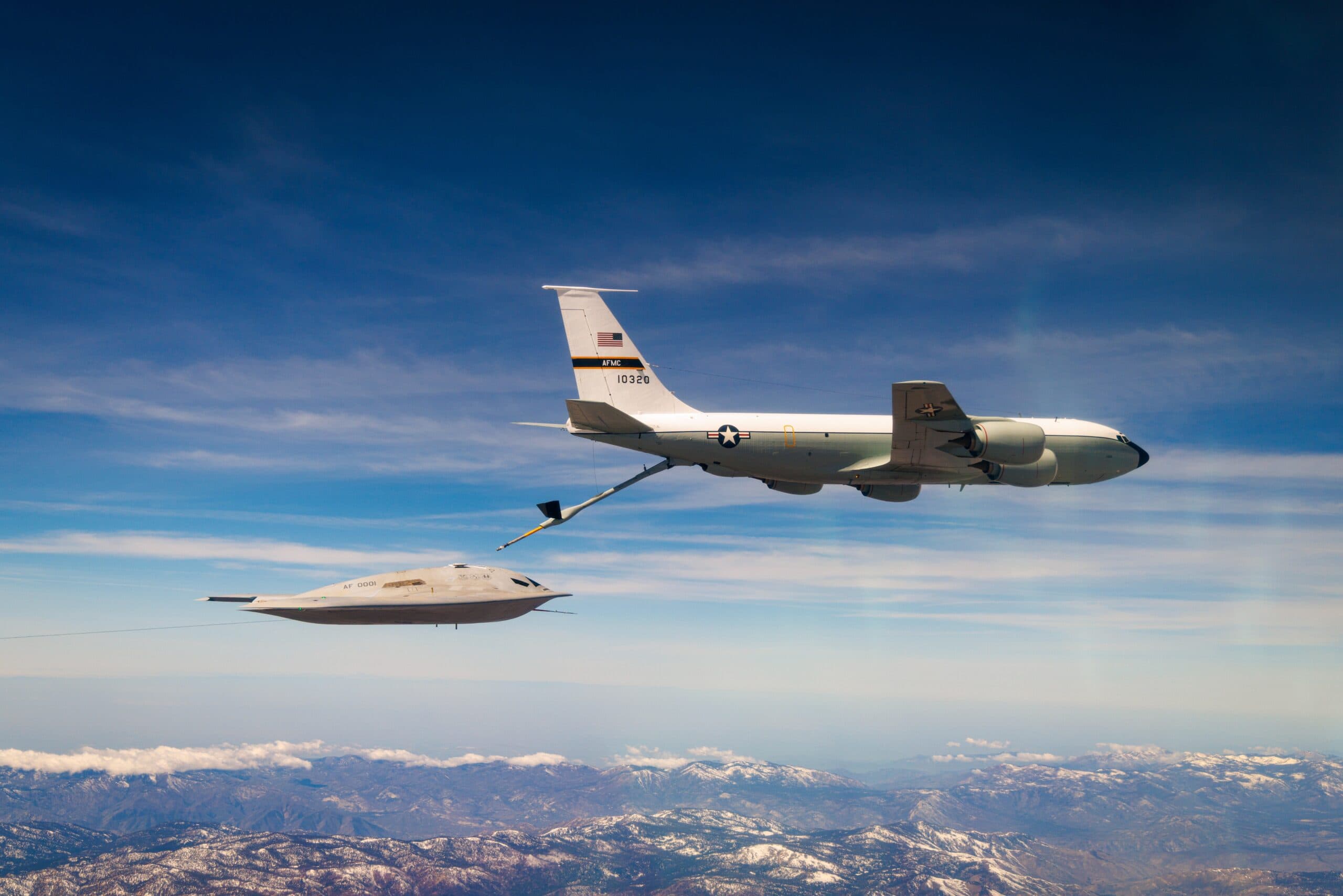
B-21 Raider Taking on Fuel. Image Credit: U.S. Air Force.
What Northrop Actually Announced
While the announcement contained a plethora of details about the program and the advancements over its predecessor, the B-2 Spirit, it focused largely on the release of new images of the aircraft refueling.
It also made clear that the Raider has entered a more advanced phase of testing, moving the aircraft from basic flight validation to testing realistic operational conditions.
“The B-21 Raider test campaign now includes aerial refueling, extending the stealth bomber’s global reach and enabling longer, more efficient test sorties as critical weapons and mission systems evaluations continue,” the statement explains.
Aerial refueling is a critical box to check during testing.
It is necessary for global strike operations, the primary reason the Raider was built. By demonstrating that the aircraft can refuel in flight, Northrop is confirming that the B-21 can execute intercontinental missions.
The imagery released alongside the announcement shows, for the first time, a clear overhead view of the aircraft flying and refueling.
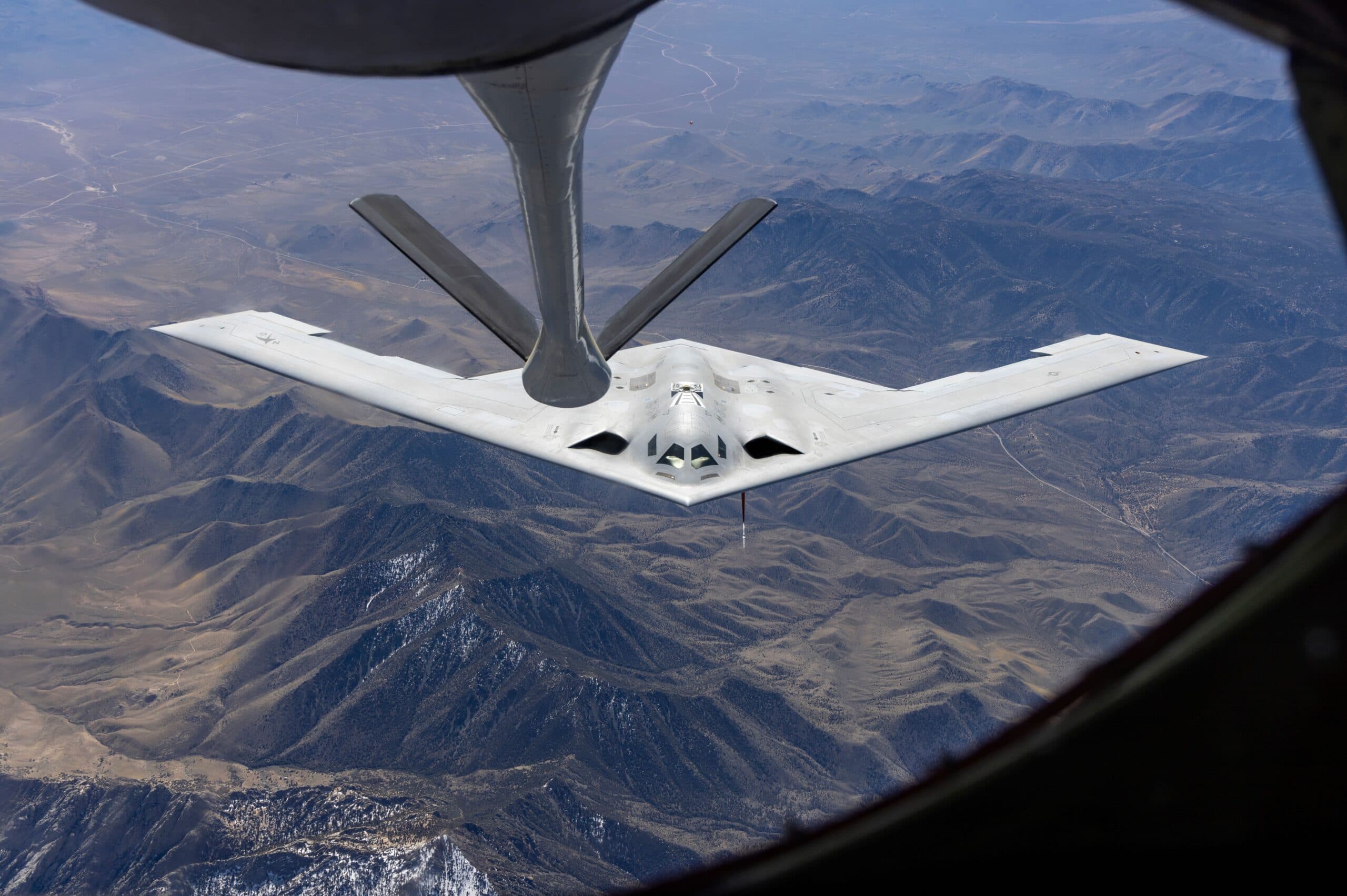
B-21 Raider. Image Credit: USAF.
The photograph also reveals details of the design, including the dorsal refueling receptacle and previously hidden airframe features. As noted in The Aviationist, the dorsal refueling receptacle appears to be different from the rotating receptacle on the B-2 Spirit, featuring a “two-piece clamshell door arrangement.”
Other Announcements
The release also provided several additional program updates that are easy to overlook, but which are significant together. First, the test campaign now involves multiple aircraft, meaning a fleet is being tested. That means there is a reduced technical risk, and ongoing testing is generating more data.
“Multiple B-21 Raider aircraft are currently in flight test, consistently exceeding expectations. Most sorties achieve ‘code one’ status, indicating the aircraft returned from its flight without maintenance issues and is ready to fly again. This reaffirms the quality of the design and build, and signals strong future operational performance,” the release explains.
The reference to aircraft returning in “code one” condition also indicates that the aircraft is proving reliable, returning from flight without requiring significant maintenance. That is a key metric for operational viability, particularly for a stealth platform.
Third, the company also reiterated that the B-21 is designed to be the most fuel-efficient bomber ever built. Not just the most fuel-efficient bomber Northrop Grumman has ever built, but of all time. That achievement directly affects logistics, because a more efficient bomber reduces dependence on tanker fleets, which are themselves high-value assets that are vulnerable in contested environments.

The B-21 Raider was unveiled to the public at a ceremony December 2, 2022 in Palmdale, Calif. Designed to operate in tomorrow’s high-end threat environment, the B-21 will play a critical role in ensuring America’s enduring airpower capability. (U.S. Air Force photo)
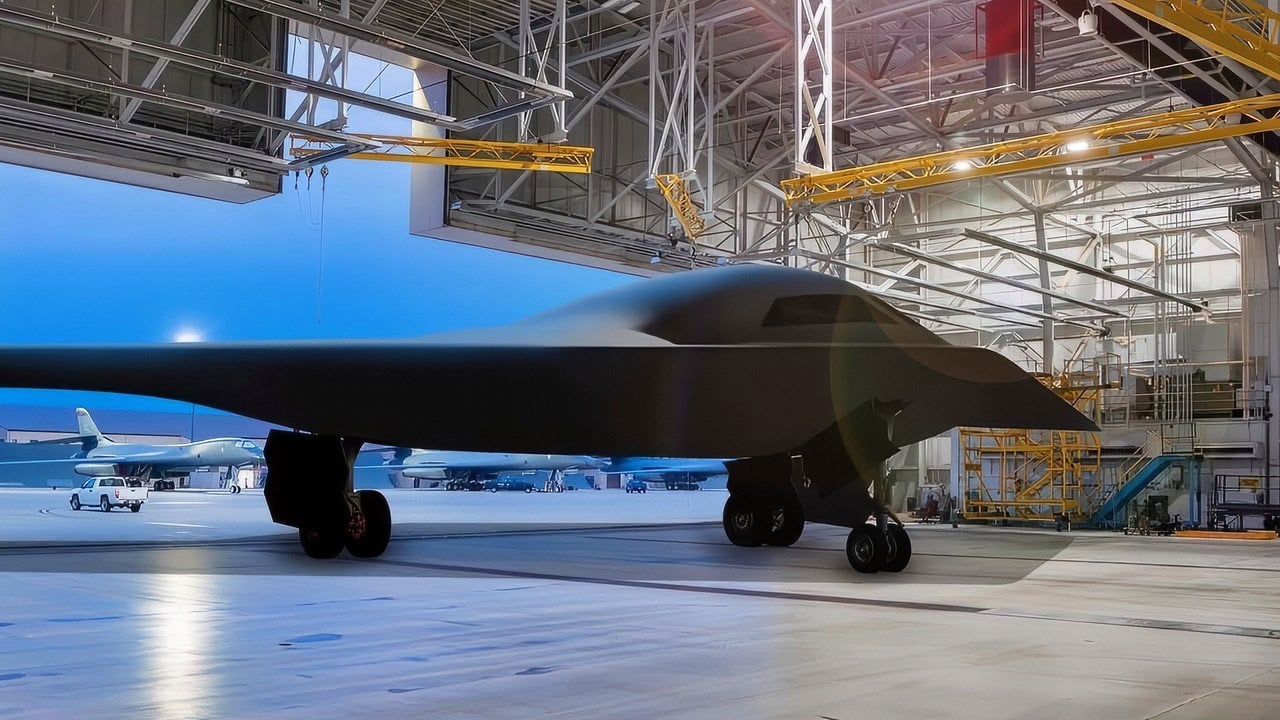
Artist rendering of a B-21 Raider in a hangar at Ellsworth Air Force Base, South Dakota, one of the future bases to host the new airframe. AFCEC is leading a $1 billion construction effort at Ellsworth to deliver sustainable infrastructure to meet warfighter demands for bomber airpower. (U.S. Air Force graphic)
“As the most fuel-efficient bomber ever built, the B-21 consumes a fraction of the fuel used by fourth- and fifth-generation aircraft. This reduces demand for theatre tanker logistics and provides operational commanders with greater flexibility in force packaging,” the release says.
The Raider Is On Schedule
What’s more, the release also confirms that the aircraft is on schedule. The first Raiders are expected to be delivered to Ellsworth Air Force Base in 2027, with production already accelerating.
The release specifically references the recent announcement that production capacity for the B-21 will be dramatically increased, allowing the aircraft to be manufactured more quickly and opening the possibility of a larger order.
“Northrop Grumman’s advanced manufacturing processes, including digital and augmented reality tools, enable technicians to visualize tasks and solve problems before ever touching the plane. This approach connects technicians to design engineers as never before, improving efficiency and cultivating expertise throughout the manufacturing workforce,” it reads.

B-21. Image Credit: Northrop Grumman
Why Release This Now?
Defense contractors routinely issue updates on programs like this, but sometimes the timing and framing are worth considering.
Major acquisition programs are of particular interest to the press, industry, interested individuals, and others, so press releases like this are typically shared as new platforms progress through testing milestones. Aerial refueling is a good point at which a program like this can provide an update, and new imagery is certainly a great addition to the story.
The tone of the release, however, is worth analyzing. It references “wartime urgency” and repeatedly emphasizes accelerating production, suggesting that Northrop is well on its way to producing these aircraft in large numbers.
The primary audience here is also largely domestic. The U.S. Air Force, Congress, and budget stakeholders are all being reminded that the program is delivering results, although those in official positions are given access to this kind of information before releases are made public. But the B-21 is of particular and wider interest because it is expected to form the backbone of the future bomber fleet, with current plans calling for at least 100 aircraft, and speculation rife that the order may be increased to 145 or more.
In a way, Northrop is making the case for expanding that order, making it quite clear that its production lines are digitally efficient and prepared to move.
As for the external audience – those overseas and working for foreign governments and militaries – the release is interesting because it is coinciding with a period of very active U.S. military operations in the Middle East.
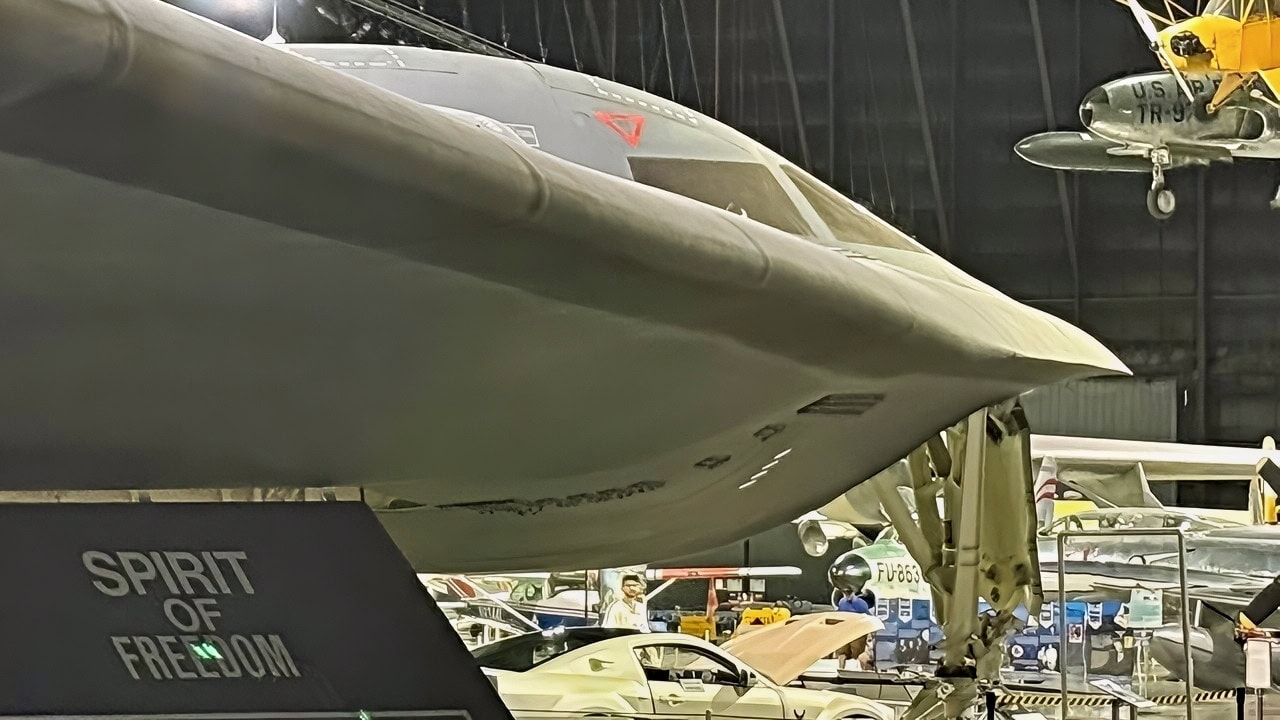
B-2 Spirit. 19FortyFive.com Image.
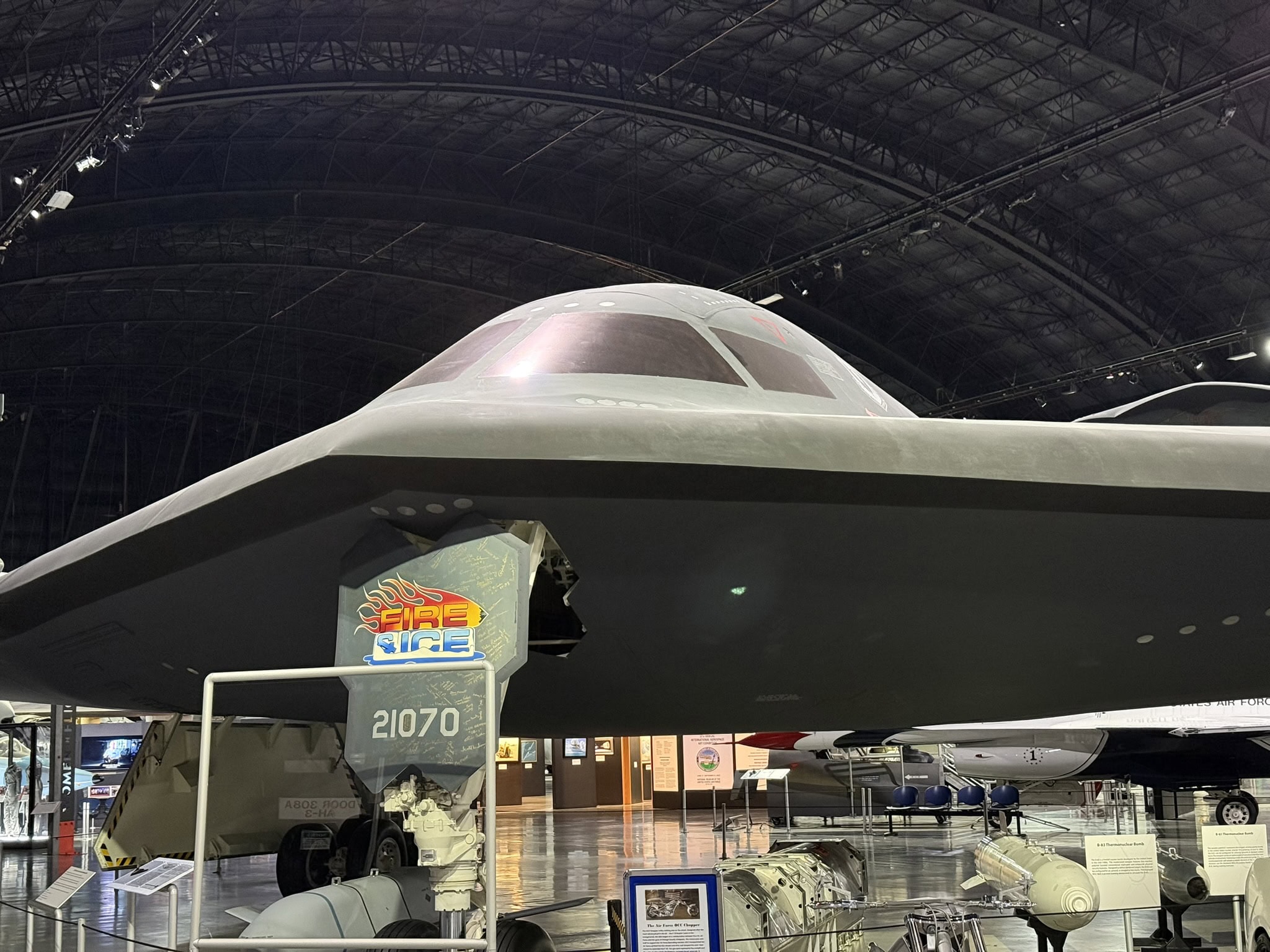
B-2 Spirit Stealth Bomber. 19FortyFive.com Photo from National Museum of the U.S. Air Force Visit in 2025.
While the B-21 is obviously not operational and has no role in current operations, the context is worth noting. Long-range strike capability, tankers, stealth aircraft, and extended-range missions are central to ongoing operations, and the B-21’s ability to refuel in flight – and its reduced dependence on tankers – directly addresses the known constraints in current force structure.
“As the world’s most advanced aircraft to take the skies, the B-21 Raider combines unmatched range, access, and payload in a single system designed to perform specialized missions no other aircraft can accomplish,” the statement reads.
That doesn’t mean the release is a direct response to the Iran conflict, but it does signal that the United States is investing in systems designed to operate at global range under contested conditions. And it also tells the world that these extremely capable new platforms are on the verge of becoming operational.
About the Author: Jack Buckby
Jack Buckby is a British researcher and analyst specializing in defense and national security, based in New York. His work focuses on military capability, procurement, and strategic competition, producing and editing analysis for policy and defense audiences. He brings extensive editorial experience, with a career output spanning over 1,000 articles at 19FortyFive and National Security Journal, and has previously authored books and papers on extremism and deradicalization.