
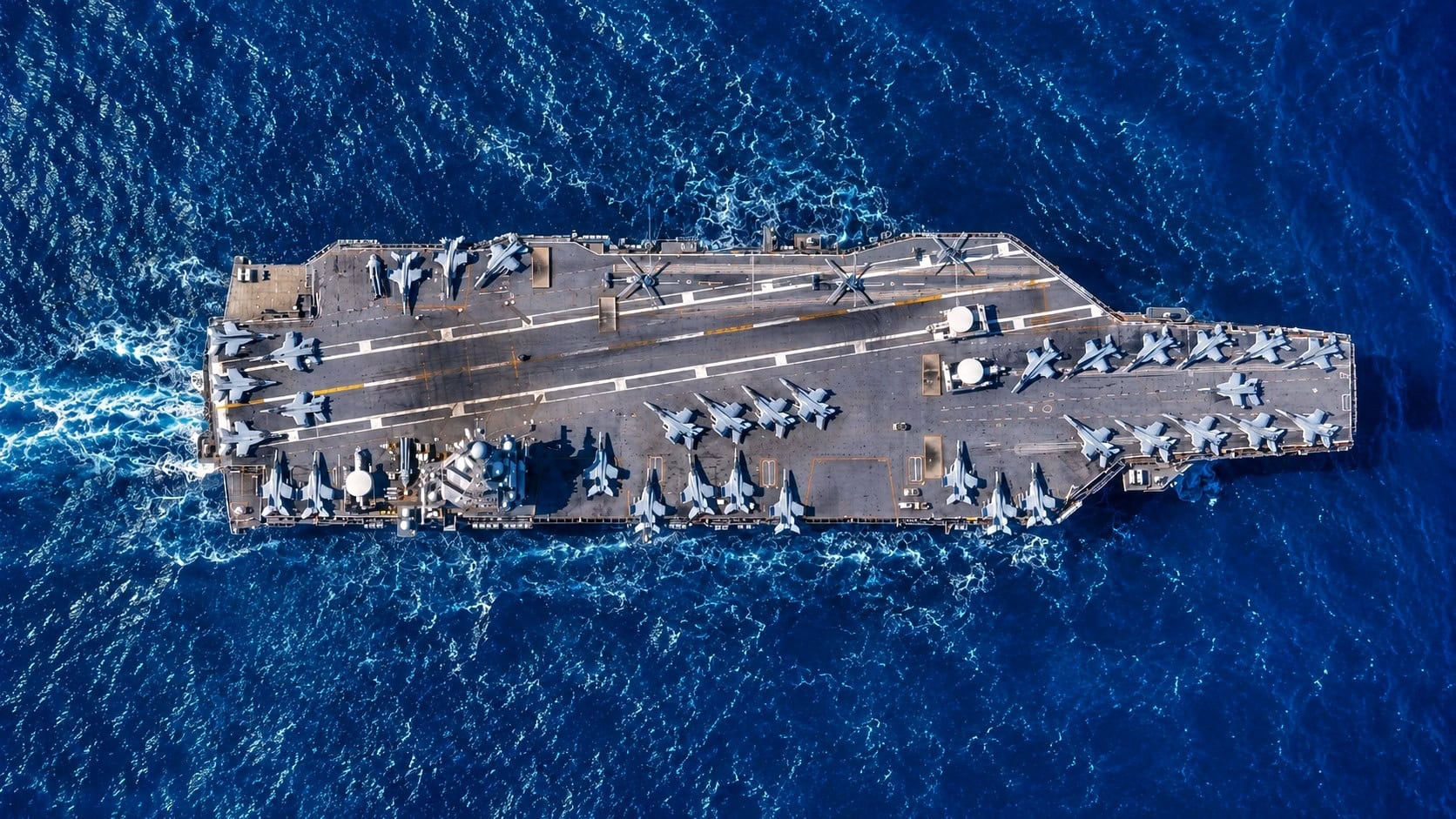
Earlier this month, CNN revealed footage of the USS Gerald R. Ford after the onboard fire that burned down more than 600 bunks and caused extensive damage to the ship’s living spaces.
The fire, it has now been revealed, was allowed to spread due to a malfunction in the ship’s fire-control system, which failed to activate.
The onboard fire was one of multiple setbacks Ford and her crew had experienced after a nearly year-long combat deployment.
The whole ordeal raises questions about whether the Navy is pushing its carriers too hard by deploying them for longer and longer periods.
Unfortunately, with demand for carriers rising and the number of available ships limited, the Navy has little choice but to keep its carriers at sea as long as possible.
The Onboard Fire that Almost Destroyed a Supercarrier
The onboard fire broke out in March, while the carrier was participating in Operation Epic Fury.
The Navy had originally attempted to downplay the incident, stating only that the fire had been “contained” and that two sailors had received medical attention for non-life-threatening injuries.
However, given what we now know, it is clear that the fire was much worse than the public was led to believe.
Footage from the carrier reveals extensive damage to many interior spaces, with the roofing hollowed out and wires dangling from the ceiling above the charred remains of the sailors’ bunks.
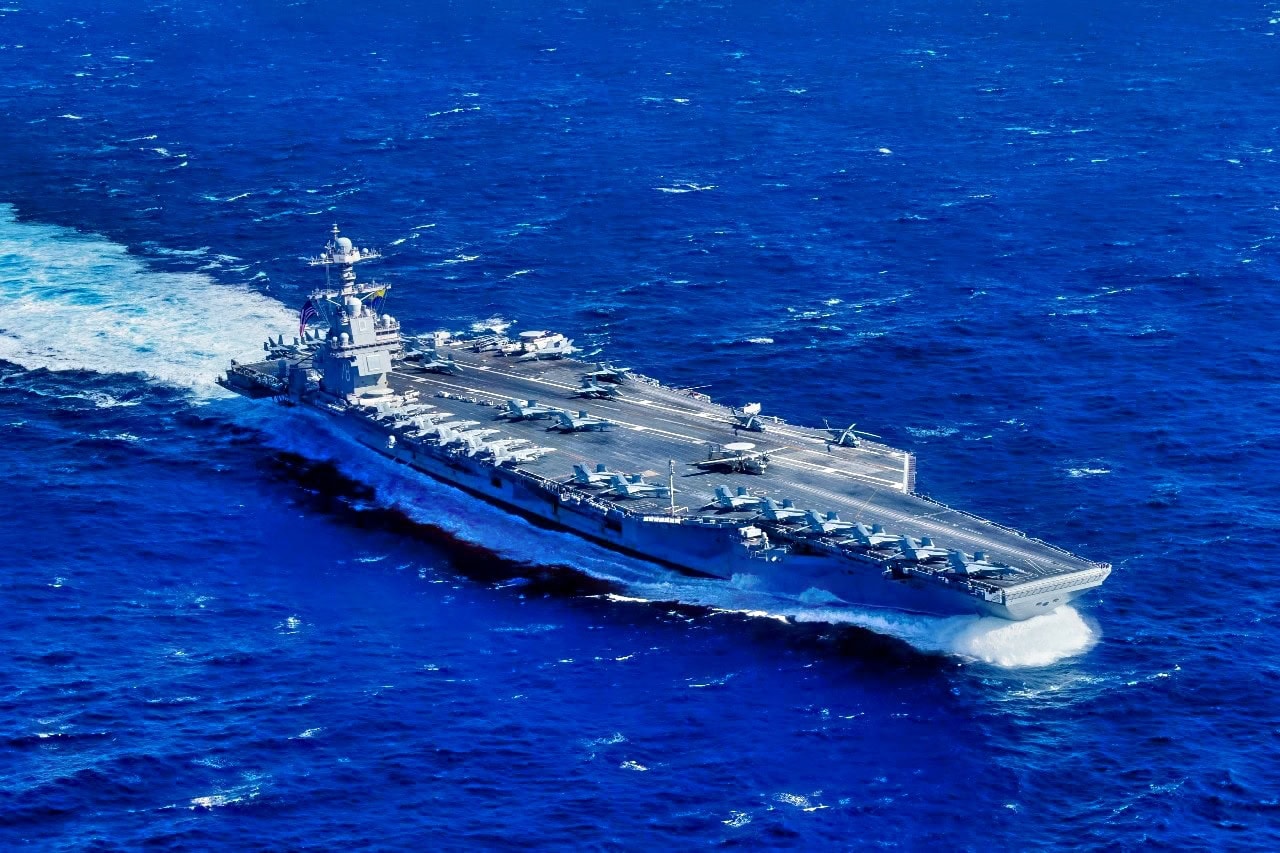
The world’s largest aircraft carrier, USS Gerald R. Ford (CVN 78), sails in formation with the Arleigh Burke-class guided missile destroyers USS Winston Churchill (DDG 81), USS Mitscher (DDG 57), USS Mahan (DDG 72), USS Bainbridge (DDG 96), and USS Forrest Sherman (DDG 98) in the Atlantic Ocean, Nov. 12, 2024. The Gerald R. Ford Carrier Strike Group is underway in the Atlantic Ocean completing Group Sail. Group Sail is the first at-sea integrated phase training event during a routine deployment training cycle. It is designed to challenge the Gerald R. Ford CSG’s ability to use the capabilities of the USS Gerald R. Ford (CVN 78), USS Winston S. Churchill (DDG 81), Carrier Air Wing (CVW) 8, Destroyer Squadron (DESRON) 2, and embarked Information Warfare team as a cohesive Strike Group to meet Navy and Joint Warfighting requirements that increases warfighting capability and tactical proficiency across all domains. (U.S. Navy photo by Mass Communication Specialist 2nd Class Maxwell Orlosky)
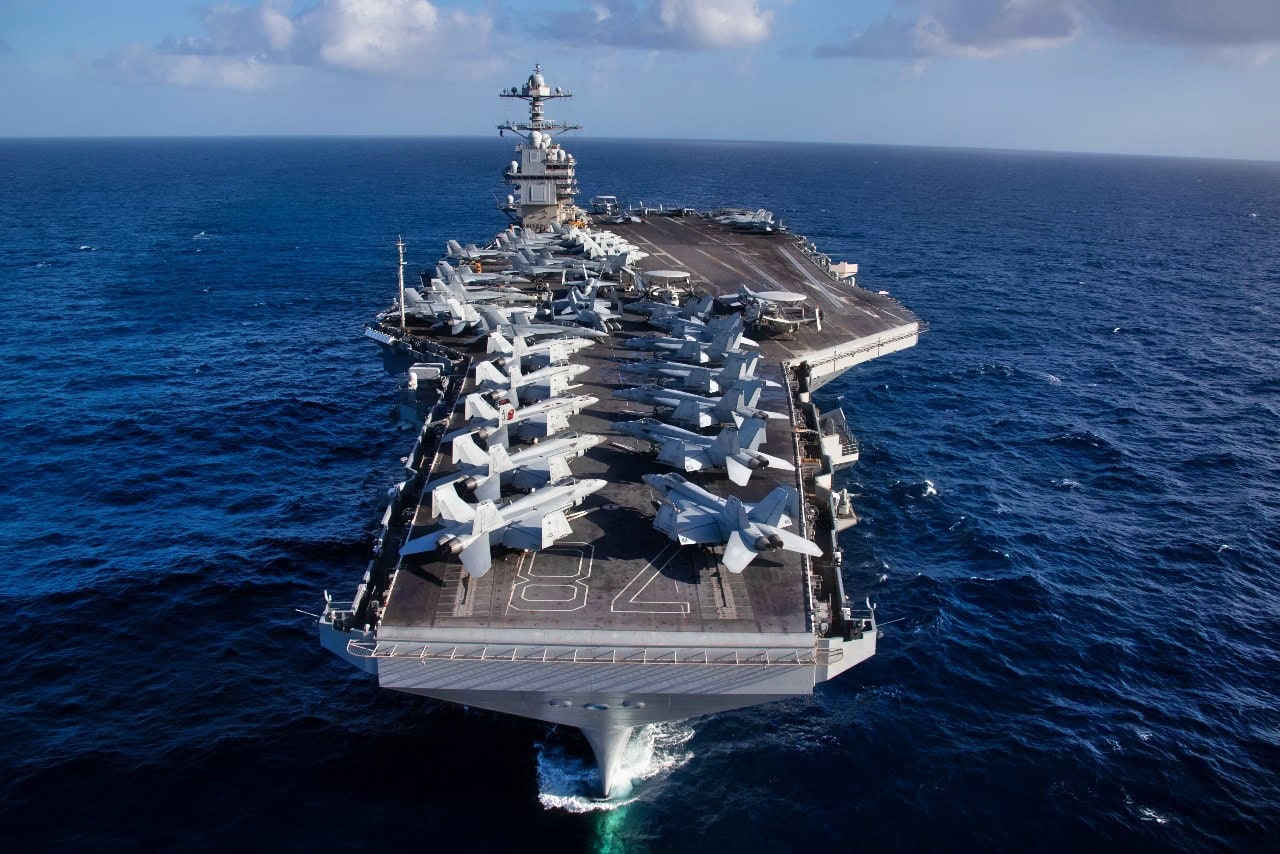
The world’s largest aircraft carrier USS Gerald R. Ford (CVN 78), steams in the Mediterranean Sea, Dec. 24, 2023. The Gerald R. Ford Carrier Strike Group is currently operating in the Mediterranean Sea. The U.S. maintains forward-deployed, ready, and postured forces to deter aggression and support security and stability around the world. (U.S. Navy photo by Mass Communication Specialist 2nd Class Jacob Mattingly)
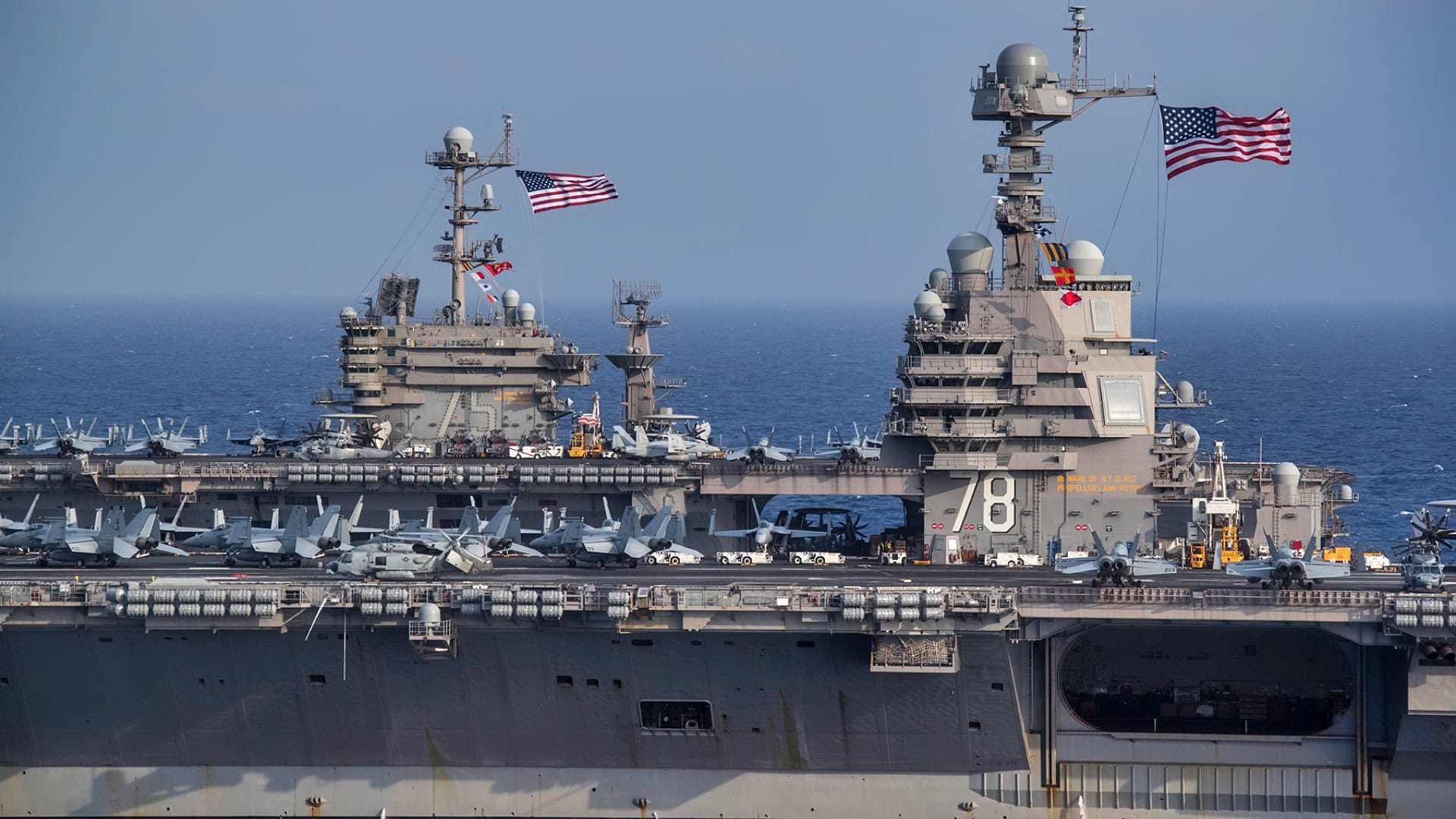
The Ford-class aircraft carrier USS Gerald R. Ford (CVN 78) and the Nimitz-class aircraft carrier USS Harry S. Truman (CVN 75) transit the Atlantic Ocean June 4, 2020, marking the first time a Ford-class and a Nimitz-class aircraft carrier have operated together underway. Ford is underway conducting integrated air wing operations, and the Harry S. Truman Carrier Strike Group remains at sea in the Atlantic as a certified carrier strike group force ready for tasking in order to protect the crew from the risks posed by COVID-19, following their successful deployment to the U.S. 5th and 6th Fleet areas of operation. (U.S. Navy photo by Mass Communication Specialist 2nd Class Ruben Reed)
According to some news reports, bunks from Ford’s sister ship, John F. Kennedy, which is still under construction, were sent over to replace the ones lost in the fire.
Ideally, the ship’s onboard fire suppression systems should have dealt with the laundry fire rather quickly.
However, according to a senior U.S. official, the system failed to activate, allowing the fire to spread much farther than it should have.
“It shouldn’t have gotten that bad. The fire-suppression system built into the ship should have put it out,” said one anonymous sailor.
“Everybody—me included—helped put the fire out.” When asked about the failure of the fire-control system, the Navy responded that “the investigation of the fire is ongoing.”
The fire reportedly took 30 hours to control and destroyed bunks and personal property belonging to more than 600 sailors.
11 Months at Sea for Aircraft Carrier USS Gerald R. Ford
The onboard fire was further compounded by the other technical difficulties the ship faced during her 11-month-long deployment.
The ship’s vacuum-based sewage system experienced clogs, rendering almost half the toilets inoperable and causing some sewage flooding. Vacuum-based sewage is not unique to Ford.
Multiple naval ships use a similar plumbing system, and most have experienced similar issues in the past.
In addition to these two issues, the carrier had to maintain its operational tempo and launch combat sorties.
“The crew handled that so well, and they fought it brilliantly and courageously and basically were back in the fight within a matter of days,” said Adm. Daryl Caudle.
Combat duty in the Red Sea was the last assignment in Ford’s nearly year-long deployment. In June 2025, she left her homeport in Norfolk, VA, where she was initially supposed to reinforce the U.S. naval buildup in response to the Twelve-Day War between Israel and Iran.
She was instead reassigned to the North, near Norway, where she participated in joint exercises in the Arctic Circle. Afterward, she was sent to the Caribbean as part of a military buildup against Venezuela.
In January 2026, she participated in the operation to abduct Nicholas Maduro and was promptly redirected to the Middle East once again as tensions between Iran and the U.S. reached their boiling point.
In May, the ship was finally allowed to return home to Norfolk, Virginia, after a long and grueling 11-month deployment.
No Other Options for the Navy
The multiple incidents aboard the Ford could likely have been avoided had the Navy allowed the carrier and her weary crew to return home sooner.
Unfortunately, the U.S. Navy has little choice but to keep its carriers at sea for as long as possible. On paper, the U.S. possesses 11 fully operational carriers.
However, in practice, some of these flattops are unavailable for maintenance, others are out on patrol around the world, and some are being used for training. In reality, the U.S. has a limited number of carriers available at any given time.
This issue is further compounded by increased maintenance delays, which have left some carriers out of action for longer periods.
Unfortunately, there is no easy or quick solution to the Navy’s problem. It is not as if more carriers can be built in a short time.
The only recourse available at this time is to extend the deployment times of its current fleets.
This, however, has the risk of causing more structural fatigue on the Navy’s flattops, thereby prolonging the amount of time that they spend in maintenance.
While there are efforts underway to modernize naval shipyards to reduce maintenance downtime, these efforts will take years to yield significant results.
Until then, there is no option but to extend deployment times as demand for carriers decreases.
About the Author: Isaac Seitz
Isaac Seitz, a Defense Columnist, graduated from Patrick Henry College’s Strategic Intelligence and National Security program. He has also studied Russian at Middlebury Language Schools and has worked as an intelligence Analyst in the private sector.