
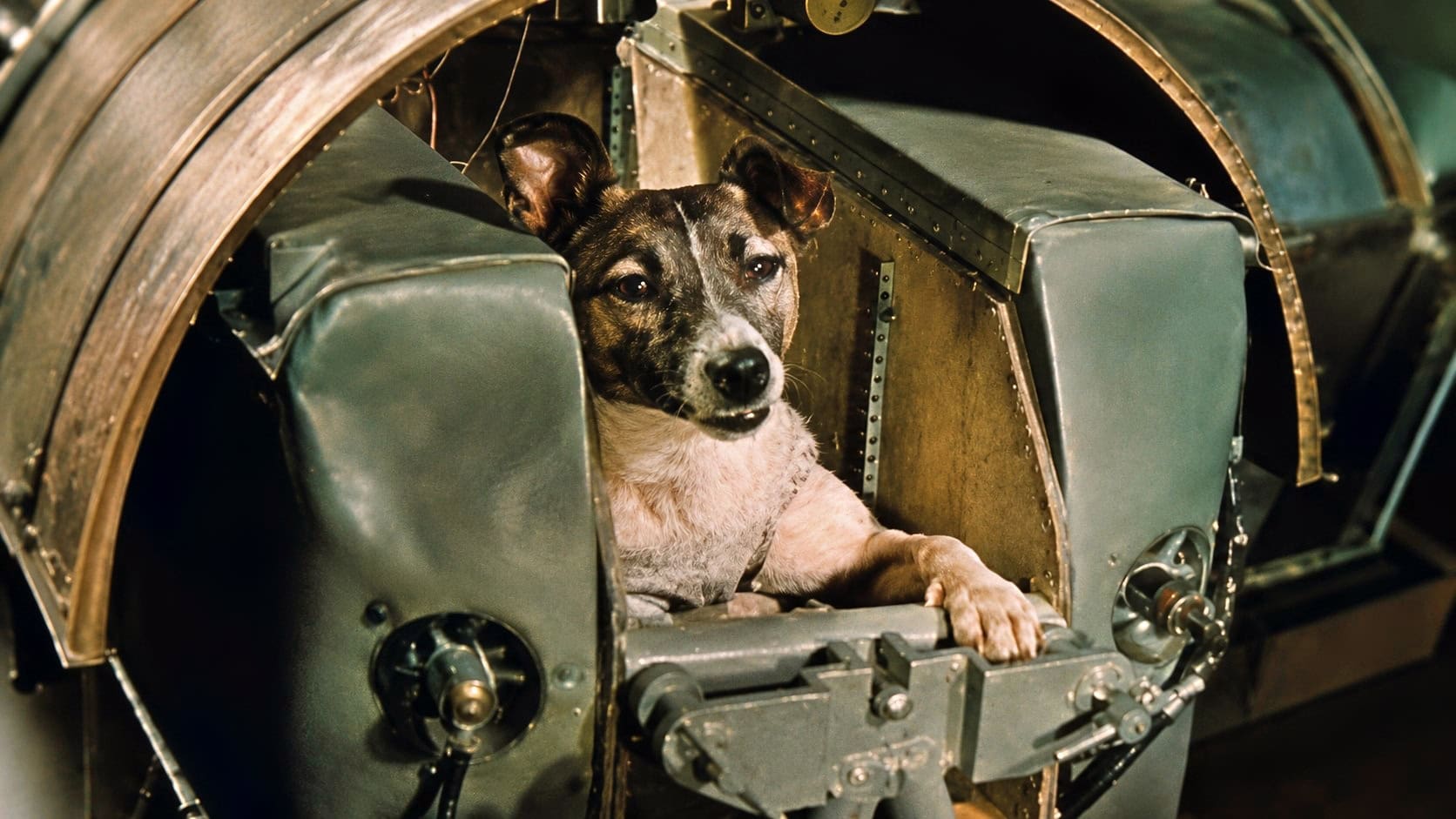
In November 1957, the Soviet Union sent a stray Moscow dog named Laika, the first living creature to orbit the Earth, and everyone involved knew before she ever left the ground that she would not survive. The technology to bring a spacecraft safely back through the atmosphere did not yet exist. Sputnik 2 had no heat shield and no way to return, so Laika’s death was certain by design. The mission asked a single question: whether a mammal could survive the launch and the first hours of weightlessness, and it was rushed into space to meet a political deadline that left no time to finish a working cooling system.
For 45 years, the Soviets told the world Laika had lived peacefully in orbit for days before dying gently. The truth, finally admitted in 2002, was that she died within hours of overheating, on roughly the spacecraft’s fourth circuit of the planet.
The animal who opened the door to human spaceflight was a frightened stray, sentenced to death before launch, and her real fate was hidden for nearly half a century.
A Stray From The Moscow Streets
Laika was a small mongrel of about six kilograms, roughly two years old, picked up from the streets of Moscow.
Soviet handlers favored strays on the reasoning that an animal that had already survived a Moscow winter would better tolerate cold, hunger, and confinement, and they used female dogs for practical reasons of fit and waste collection in a cramped capsule.
She was originally called Kudryavka, “Little Curly,” and was renamed Laika, the Russian word for “Barker.” NASA refers to her as a part-Samoyed terrier, though her true pedigree was never known. The scientists who worked with her described her as quiet and even-tempered.
The training was hard on the animals. To prepare them for the tiny cabin, the dogs were kept in progressively smaller cages for up to 20 days, leaving them restless and in declining condition. They were also spun in centrifuges and exposed to recordings of launch noise to accustom them to the acceleration and sound.
Laika’s backup was a dog named Albina, who had already flown on high-altitude test rockets. Albina was spared the flight in part because she had recently given birth to a litter, and her keepers were reluctant to send a mother on a one-way mission. Laika was chosen as the flight dog primarily for her calm temperament.
Rushed Into Orbit For An Anniversary
The schedule was set by politics, not readiness.
After Sputnik 1 stunned the world on October 4, 1957, Soviet leader Nikita Khrushchev wanted a second, more spectacular satellite in orbit by November 7, the 40th anniversary of the Bolshevik Revolution. A more capable spacecraft was already under construction but would not be ready until December, so a simpler craft carrying a dog was approved instead, with the decision coming only in mid-October.
That left the engineers under four weeks to design and build Sputnik 2, and the spacecraft was built in under a month, much of it from rough sketches. The compressed timeline is the reason the life-support and thermal-control systems were never properly finished.
The deadline shaped everything that followed.
A Mission With No Way Home
No spacecraft had yet been built that could survive the heat of re-entry, and Sputnik 2 was no exception.
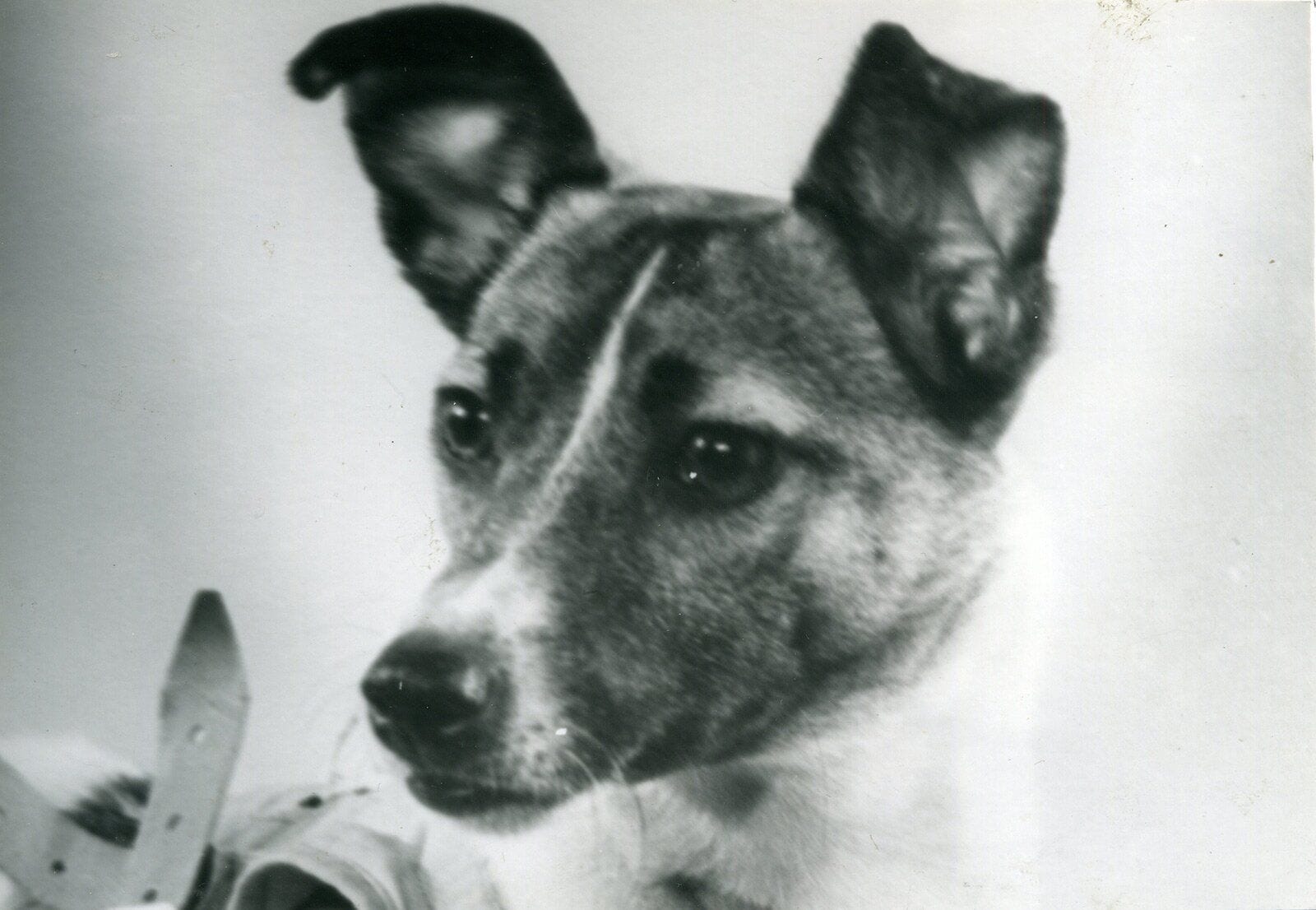
Laika the Space Dog. Image Credit: Creative Commons.
It had no heat shield, no recovery system, and no provisions to recover her were ever part of the plan. Laika was going to die in orbit, and everyone on the program knew it.
The original intention was that she would die gently after the science was gathered, with engineers expecting a painless death from oxygen depletion after about seven days, and Soviet doctors had even planned to euthanize her with a poisoned final portion of food, a plan that in the end was not carried out.
Both the Soviet Union and the United States had by then sent animals into space, but only on suborbital flights, brief up-and-down hops that did not circle the planet. Laika was the first living creature to orbit the Earth. Sputnik 2 launched from the Baikonur Cosmodrome on November 3, 1957, a cone-shaped capsule weighing about 508 kilograms, six times the mass of Sputnik 1, that was not designed to separate from the rocket stage that carried it to orbit.
A sealed, padded cabin held Laika, fitted with a harness, a waste bag, electrodes to monitor her vital signs, and a small television camera.
What The Sensors Recorded
The data the spacecraft sent back showed how hard the launch was on her. Her heart rate, measured through implanted electrodes, climbed from about 103 beats per minute before liftoff to around 240 during the acceleration, and her breathing rate rose to three or four times its normal pace.
After she reached orbit and weightlessness, her pulse came down only slowly, taking about three times as long to settle as it had in ground tests, a sign of the stress she was under. The early telemetry indicated she was agitated but eating her food.
Then the cabin began to overheat. The thermal-control system, never adequately developed in the rush, failed to keep the temperature down, and contributing factors made it worse, including a rocket core that did not separate as planned and an orbit that came out higher and more sunlit than intended. The cabin temperature climbed past 40 degrees Celsius.
Laika died of overheating within a few hours of reaching orbit, on roughly the fourth circuit of the Earth. The exact timing is uncertain because the rocket’s late engine cutoff skewed the timing of data transmissions to Soviet ground stations, and the scientists received only fragmentary information about her condition.
The figure usually given is that she survived for about 5 to 7 hours after launch.
The 45-Year Lie
For decades, the Soviet account bore little resemblance to the data. The official story was that Laika had lived in orbit for several days and died painlessly, variously from oxygen depletion around the sixth day or from a planned, humane euthanasia before the air ran out. The spacecraft itself kept circling long after she was gone, and burned up on re-entry on April 14, 1958, after about 2,570 orbits, its body visible as a bright streak crossing the sky on a path from New York toward the Amazon.
The correction took 45 years, and it did not come from a leak or an investigation.
In October 2002, at the World Space Congress in Houston, Dimitri Malashenkov, a scientist who had worked on the mission, presented a paper revealing that Laika had died within hours from overheating, drawing on telemetry described in a declassified report from the Institute of Biological Problems.
His paper concluded that it had been “practically impossible to create a reliable temperature control system” in the time the engineers were given. The decision to leave the world with a gentler story appears to have been political rather than scientific, since the real telemetry had been available to Soviet scientists from the start. Some of those involved had already begun to speak about the flight with discomfort.
In 1998, Oleg Gazenko, one of the scientists responsible for the mission, said, “We shouldn’t have done it,” adding that they had not learned enough to justify the dog’s death.
What Laika Made Possible
Not everyone on the program treated her as a piece of equipment. Before the launch, one of her keepers, Vladimir Yazdovsky, took Laika home to play with his children, writing later that he wanted to do something nice for her because “she had so little time left to live.” A technician who prepared the capsule recalled kissing her nose before the hatch was sealed, knowing she would not survive.
Her flight settled the question it was sent to answer. Laika proved that a living being could survive launch and the first hours of orbit, which directly informed the path to Yuri Gagarin’s first human spaceflight on April 12, 1961, less than four years later. The Soviets also recovered dogs alive from orbit, including Belka and Strelka, in 1960.
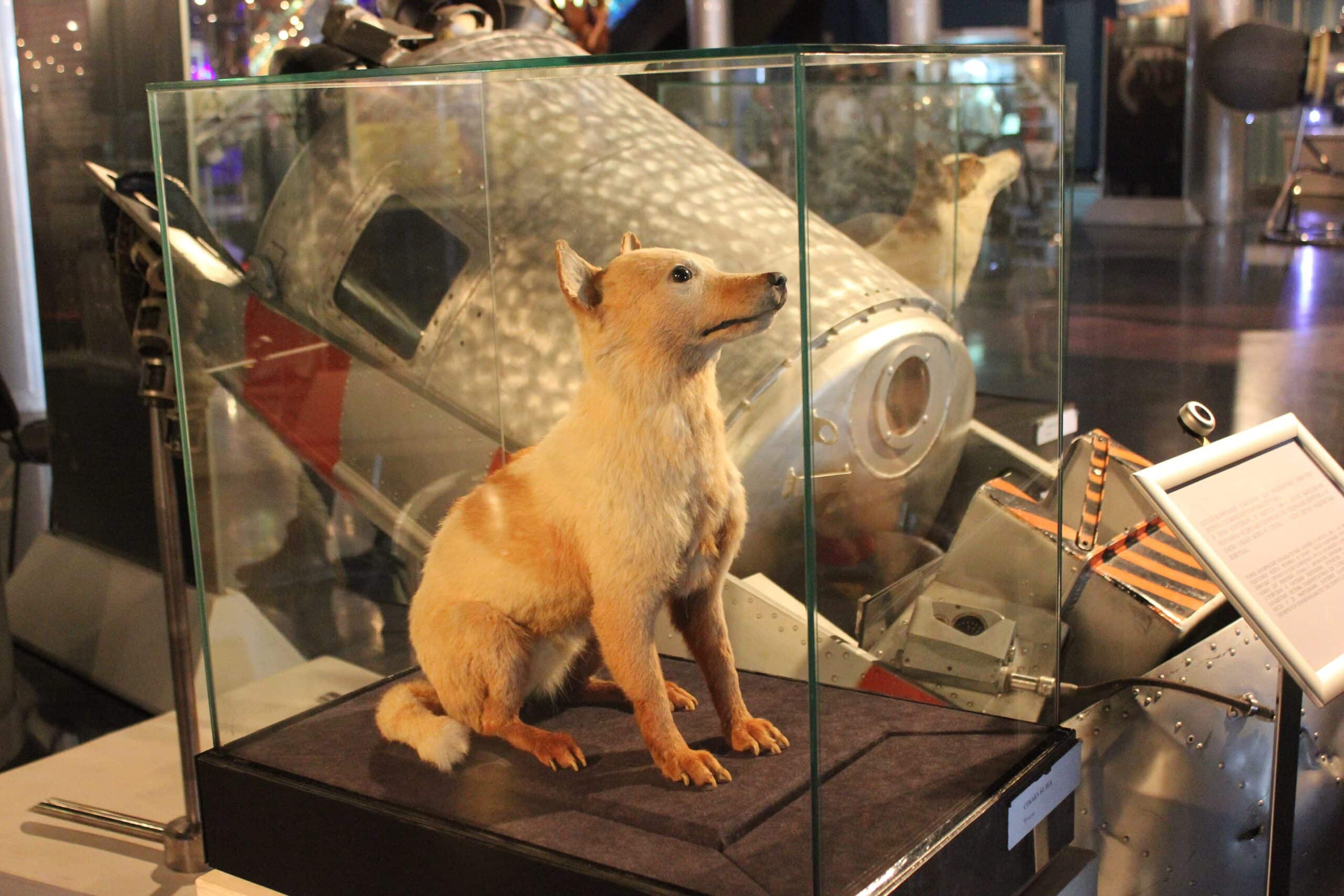
Belka the Space Dog. Image Credit: Creative Commons.
Her death also prompted real debate about the use of animals in spaceflight. Animal-welfare groups in the West protested, with calls in Britain for a minute of silence and pickets outside Soviet offices, while open criticism within the Soviet bloc was rarer, though some Polish scientists called the dog’s loss regrettable. She is memorialized today on Moscow’s Monument to the Conquerors of Space, completed in 1964, and in 2008, Russian officials unveiled a monument depicting her standing atop a rocket near the research facility that had prepared her flight.
Laika was a stray that had survived on the streets of Moscow, sentenced to die before she was ever placed in the capsule, and sent up inside a machine she could not understand on a mission no one expected her to come back from. She died frightened and overheated within hours, and for nearly half a century, the people who sent her let the world believe she had gone peacefully. The first creature to circle the Earth opened the way for every human who has flown since, and the truth about how she died had to wait 45 years to be told.
About the Author: Harry J. Kazianis
Harry J. Kazianis (@Grecianformula) was the former Senior Director of National Security Affairs at the Center for the National Interest (CFTNI), a foreign policy think tank founded by Richard Nixon based in Washington, DC. Harry has over a decade of experience in think tanks and national security publishing. His ideas have been published in the NY Times, The Washington Post, The Wall Street Journal, CNN, and many other outlets worldwide. He has held positions at CSIS, the Heritage Foundation, the University of Nottingham, and several other institutions related to national security research and studies. He is the former Executive Editor of the National Interest and the Diplomat. He holds a Master’s degree focusing on international affairs from Harvard University.

