
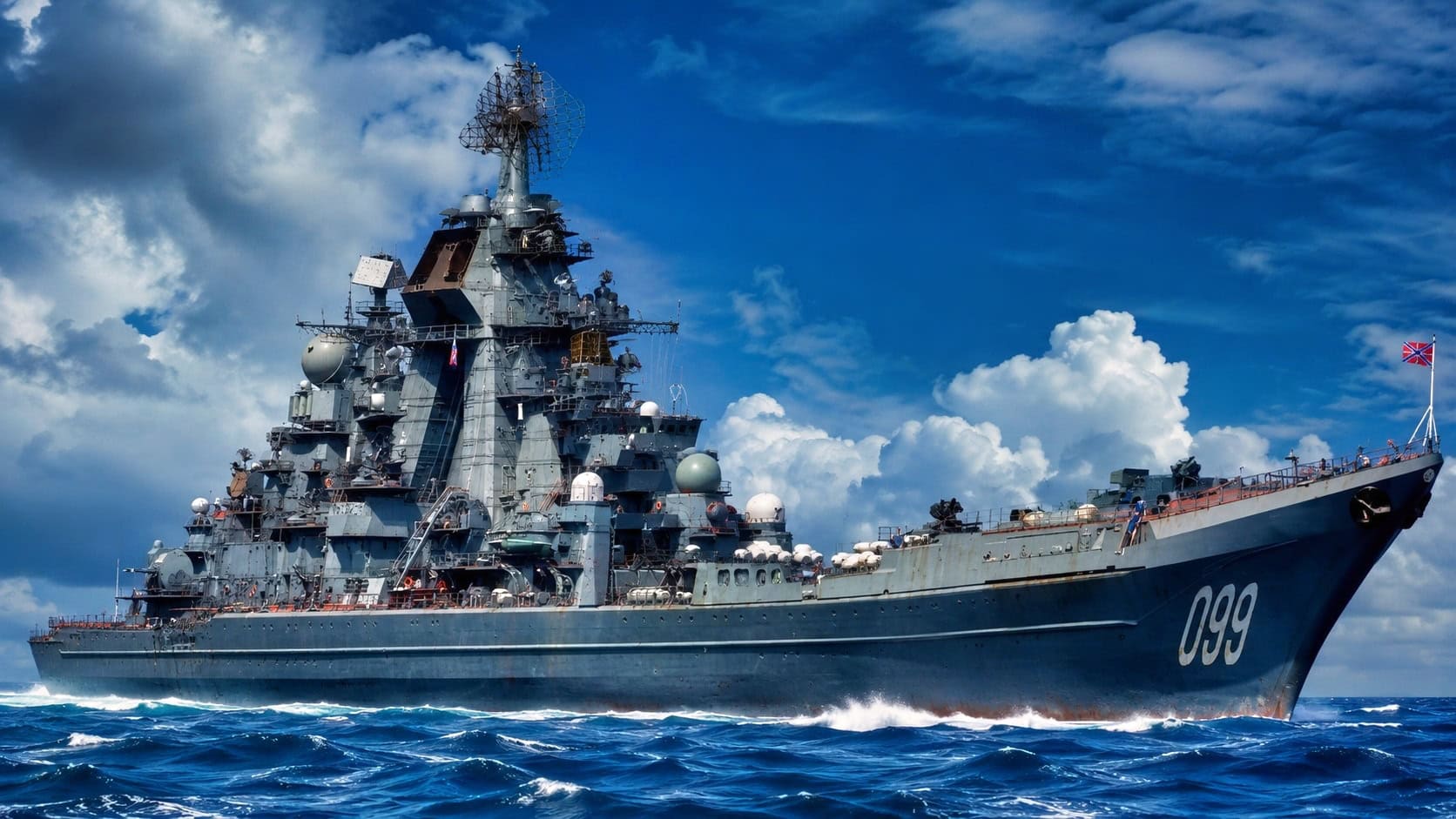
The largest surface combatant afloat anywhere outside an aircraft carrier is finishing its sea trials in the cold waters off northern Russia, and when it joins the fleet, it will do one job above all others. Russia’s heavy nuclear-powered battlecruiser Admiral Nakhimov is the only nuclear-powered surface warship in the world that is not a carrier, a roughly 28,000-ton giant several times the size of an American destroyer, and it is headed to the Arctic to help guard the submarines that carry the survivable leg of Russia’s nuclear deterrent. After nearly three decades tied up in a shipyard, the ship is back at sea, and the mission waiting for it is the one task that makes a nuclear-powered cruiser worth having in the first place.
The Only Nuclear Surface Warship That Isn’t A Carrier
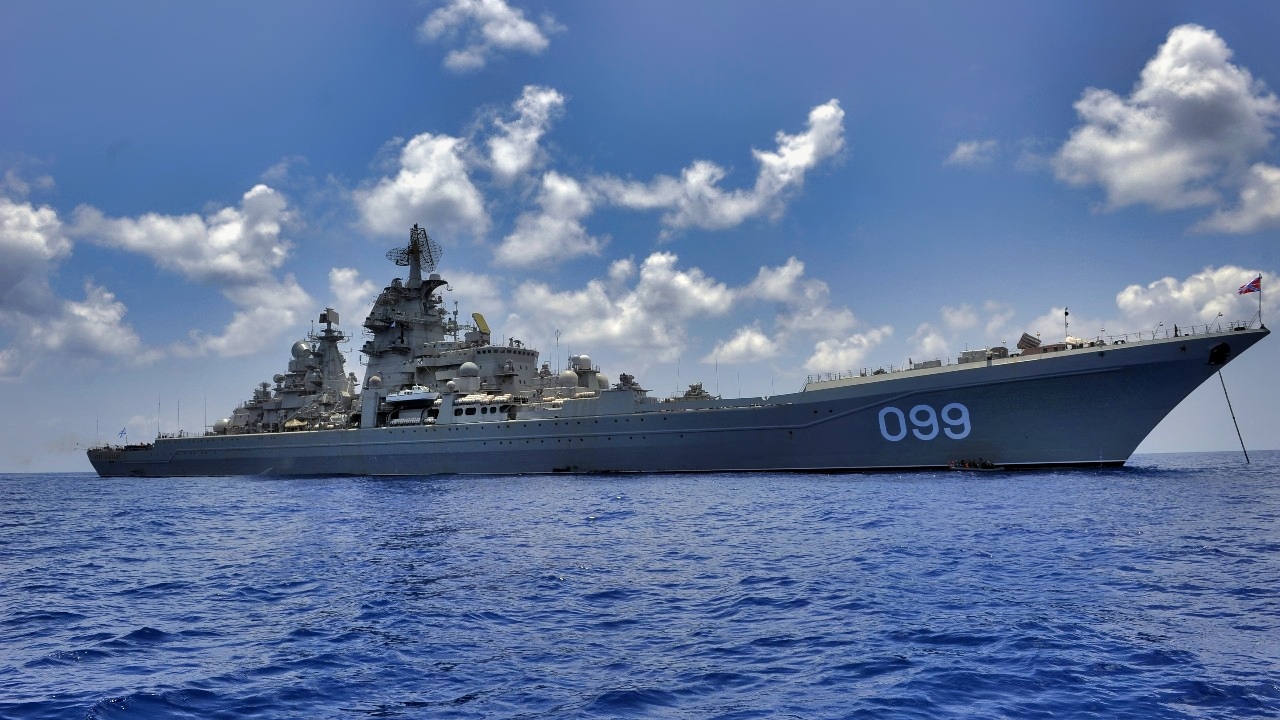
Kirov-Class Russian Navy. Image Credit: Creative Commons.
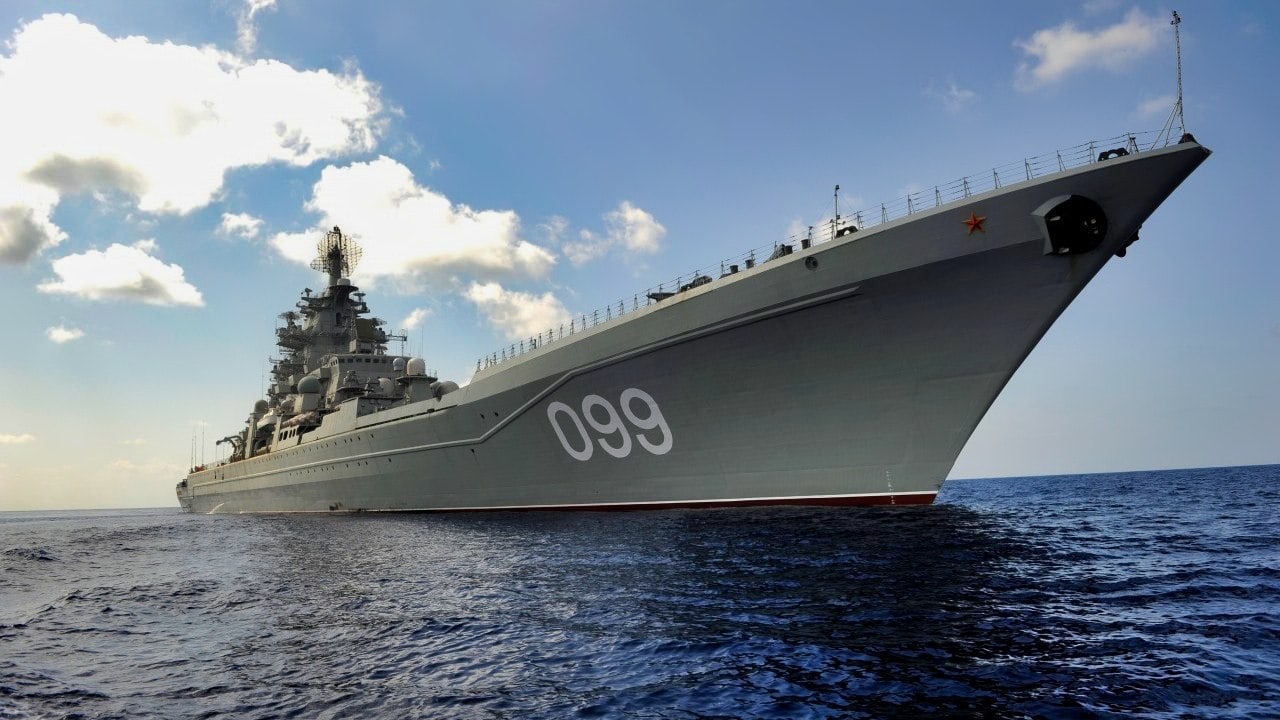
Kirov-Class Battlecruiser Russian Navy
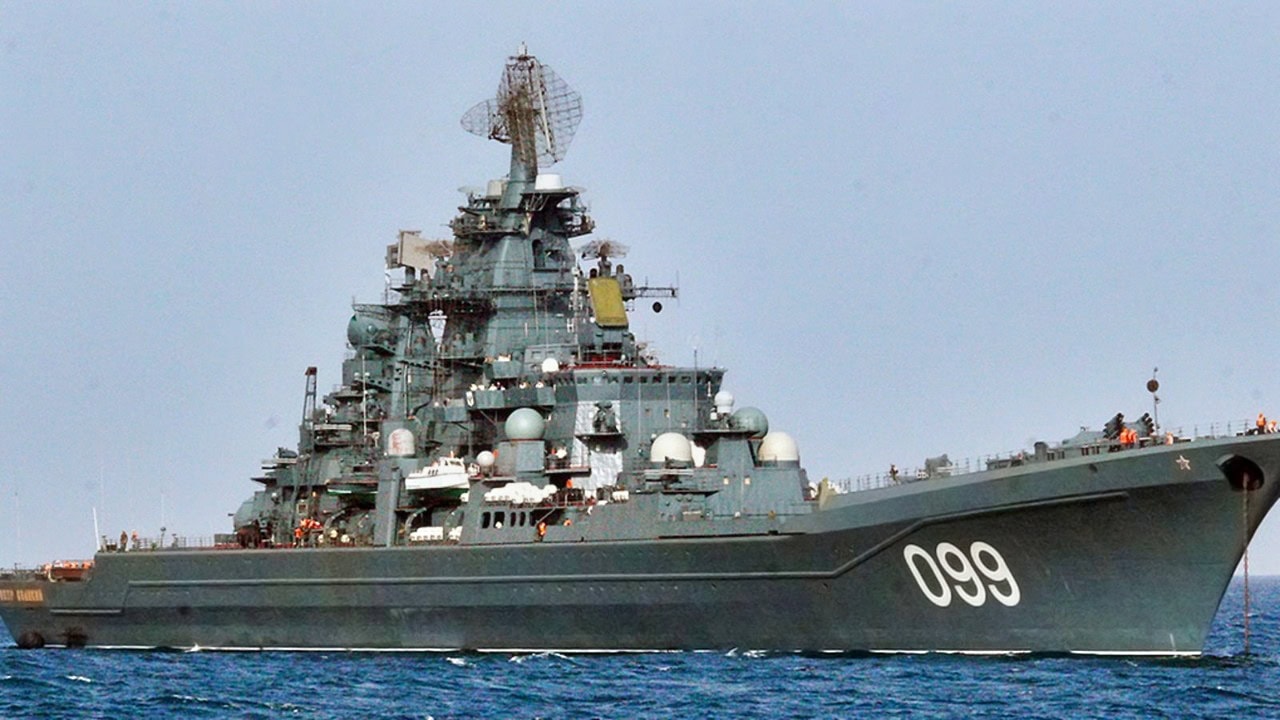
Kirov-Class Battlecruiser Russian Navy. Image Credit: Creative Commons.
The Nakhimov belongs to the Soviet-designed Project 1144 Orlan class, known in the West as the Kirov-class, the heaviest surface combatants built by any navy since the Second World War. At about 28,000 tons fully loaded and 251 meters long, it dwarfs the cruisers and destroyers of every other fleet, running roughly three times the displacement of a US Arleigh Burke. The United States and France put nuclear reactors only in their carriers when we think of surface vessels. Russia is the only country that ever built a nuclear-powered surface warship that fights as a cruiser, and with the rest of the class gone or going, the Nakhimov is about to be the last one in service anywhere.
It is the third of four Kirovs ever completed, originally commissioned into the Soviet Northern Fleet in 1988 as Kalinin and renamed in 1992. The class was conceived for a very different Cold War world, and the ship spent only a handful of active years at sea before the collapse of the Soviet Union and the long financial drought of the 1990s pulled it out of service.
Back At Sea After 28 Years
The Nakhimov last sailed under its own power in July 1997, then sat at the Sevmash shipyard in Severodvinsk from 1999 onward, while a modernization that was supposed to take a few years stretched on for decades.
The reactors were finally restarted, the first in December 2024 and the second in February 2025, and the ship began factory sea trials in the White Sea in August 2025, moving on its own for the first time in 28 years.
By December 2025 it had completed an initial round of trials and was on its third outing, and it departed Sevmash again on May 31, 2026 to begin the final phase of trials, confirmed by a Russian Ministry of Transport announcement the following day.
The tense matters here. The ship is not yet in service. It is finishing builder’s trials that will test its weapons, radars, and combat systems before the navy formally accepts it, and delivery to the fleet is expected no earlier than 2026, with even that schedule uncertain after years of slips.
Once accepted, the Nakhimov is widely expected to take over as the surface flagship of the Northern Fleet and to operate primarily in Arctic waters.
Why Nuclear Power Is The Point In The Arctic
In most of the world’s oceans, putting a reactor in a cruiser is an expensive luxury. In the Arctic, it is closer to the whole point. The theater is vast, the distances enormous, and there are very few ports where a warship can refuel and resupply. A conventionally powered, gas-turbine ship operating that far north is limited by its fuel, tied to tankers and bases that may not be there in a crisis. A nuclear-powered ship is not.
The Nakhimov uses a combined nuclear and steam propulsion system, with two reactors driving it to about 32 knots when its oil-fired steam turbines are engaged for maximum speed.
On reactor power alone, it can cruise at around 25 knots for an unlimited period, which means it can stay on station far longer than any conventionally fueled warship without pausing to refuel. The Kirov design also carried Soviet-era winterization for high-latitude operations, heated equipment and enclosed working spaces meant for exactly this environment. Endurance in a bare, frozen theater is the capability nuclear propulsion actually buys, and it is the reason this particular ship fits the Arctic mission better than anything else Russia can float.
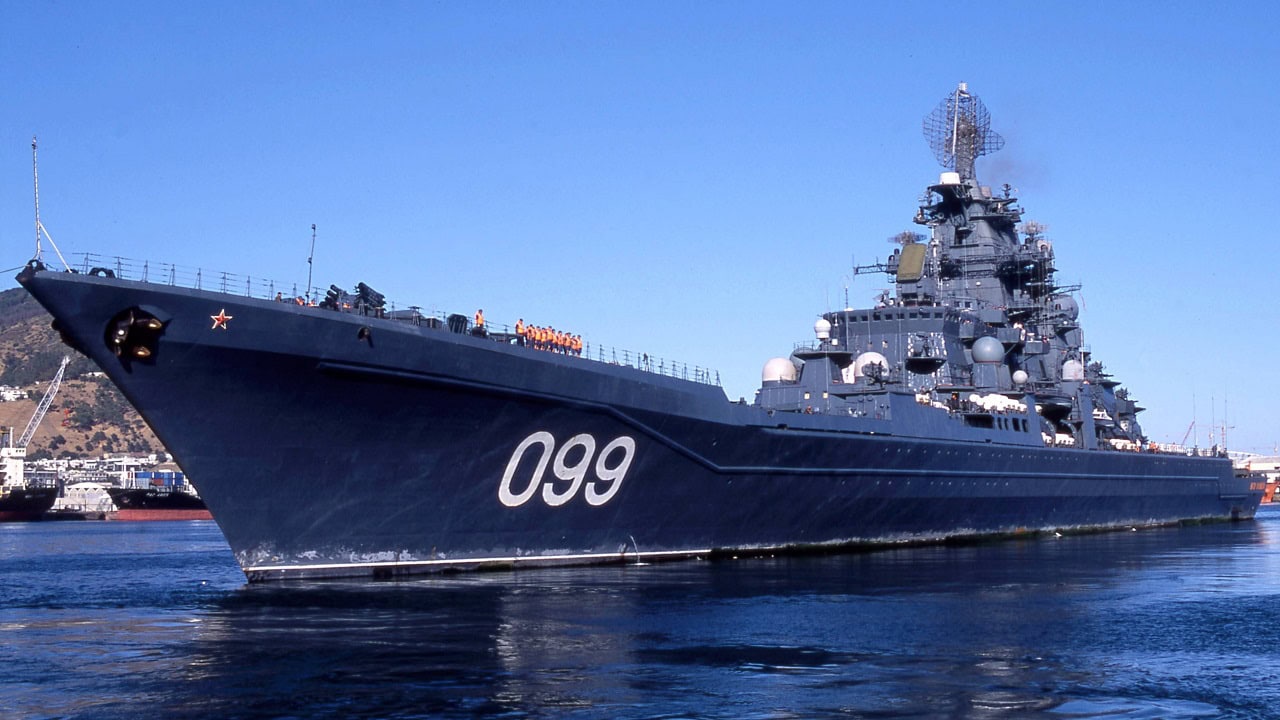
Russian Navy Kirov-Class Battlecruiser. Image Credit: Creative Commons.
Guarding The Bastion
The mission that justifies the ship is the defense of Russia’s sea-based nuclear deterrent.
The Northern Fleet accounts for roughly two-thirds of the Russian navy’s nuclear strike capability, and its primary task, inherited from the Soviet era, is what Russian doctrine calls bastion defense.
The fleet’s ballistic missile submarines, the survivable leg of the nuclear triad that can ride out a first strike and retaliate, operate from bases on the Kola Peninsula, and in a crisis, they would withdraw into protected waters in the Barents and Kara Seas, where Russia can shield them.
That protected zone is held through sea denial and interdiction, keeping Western submarines, surface ships, and aircraft away from the boomers across an area that stretches from the Kola toward the Greenland-Iceland-United Kingdom gap.
The submarines themselves are the prize. Russia fields a mix of Delta IV and Borei boats carrying Bulava and other submarine-launched ballistic missiles, and by US intelligence estimates, around two-thirds of that sea-based deterrent now sits in the Arctic, with roughly seven submarines based on the Kola. That bastion is screened by surface combatants, attack submarines, and maritime patrol aircraft, and the Nakhimov is explicitly part of that screen, a heavily armed mobile node layered on top of the coastal missile batteries and radars that ring the Kola.
There is a full circle in this. The Kirov class began development in 1968 with anti-submarine warfare as a central purpose, built to hunt enemy submarines, before it was reoriented around the heavy anti-ship missiles meant to kill American carrier groups.
Returning the Nakhimov to a mission centered on protecting submarines and screening against Western submarines brings the class back toward the role for which it was first imagined.
The Arctic is also the shortest route between North America and Russia’s industrial heartland, which is why control of these waters carries weight far beyond the ships and submarines that operate there.
The Teeth
The refit gutted the ship’s Cold War armament and rebuilt it around modern missiles. The 20 fixed P-700 Granit launchers that defined its original carrier-killing role are gone, replaced by 80 vertical launch cells in ten eight-cell modules that can fire the Kalibr family of cruise missiles, Oniks anti-ship missiles, and, by multiple reports, the 3M22 Zircon hypersonic missile.
Those are the strike cells. Add the ship’s air-defense loadout and the reported total reaches around 174 to 176 cells, which on paper is more launch cells than any other surface combatant in the world, more than China’s Type 055, more than the US Ticonderoga-class cruisers or Arleigh Burke destroyers.
The long-range air-defense fit is harder to pin down, and the reporting genuinely disagrees: some accounts describe a navalized version of the S-400, while others describe an upgraded S-300F variant, so the precise system and missile counts should be treated as reported rather than confirmed. The same caution applies to the hypersonics, since Zircon’s real-world performance rests heavily on Russian claims.
What is clear is the design intent. A single hull carrying that many cells, networked with the fleet’s submarines, maritime patrol aircraft, and MiG-31 interceptors, is meant to function as a reconnaissance-strike node that can both defend the bastion against air and missile attack and hold distant targets at risk, compressing the warning time NATO would have in the High North. Those are the capabilities on paper, for a ship still in trials that has not fired a shot in anger.
One Lonely, Costly Ship
The honest part of the story is how alone this ship is. There is no class behind it. Of the four Kirovs ever built, two, the Admiral Ushakov and Admiral Lazarev, are out of service and already slated for dismantling, and the fourth, the Pyotr Velikiy, is expected to be decommissioned rather than given a matching modernization, because the cost and the years involved are not worth it to the Russian navy. The largest naval modernization program post-Soviet Russia has attempted produced exactly one operational cruiser.
It produced that one cruiser slowly and at enormous expense. The 2013 contract was worth roughly 50 billion rubles, about $667 million, and anticipated a return to service in 2018. Instead, the ship entered final trials in 2026, with cost estimates climbing toward 200 billion rubles, around $2.7 billion, according to unofficial assessments, and some Western estimates running as high as $5 billion. It stands among one of the most expensive refits in modern naval history and runs years behind even its own repeatedly slipped schedule.
Concentrating that much firepower and cost in a single hull is a risk that Russian and Western analysts alike point to. Losing one destroyer from a fleet of dozens barely dents overall capability, while losing a unique cruiser carrying a disproportionate share of the navy’s missiles would be a strategic blow. The sinking of the cruiser Moskva in 2022 and the broader rise of cheap anti-ship missiles and drones have shown that even very large surface combatants can be killed by weapons costing a tiny fraction of their price.
The Nakhimov is genuinely well-suited to the Arctic mission, and it is also the only one of its kind Russia can field, a single ultra-expensive ship entering a theater already defended by submarines and coastal missiles, valuable enough that its loss would hurt as much as its presence helps.
About the Author: Harry J. Kazianis
Harry J. Kazianis (@Grecianformula) was the former Senior Director of National Security Affairs at the Center for the National Interest (CFTNI), a foreign policy think tank founded by Richard Nixon based in Washington, DC. Harry has over a decade of experience in think tanks and national security publishing. His ideas have been published in the NY Times, The Washington Post, The Wall Street Journal, CNN, and many other outlets worldwide. He has held positions at CSIS, the Heritage Foundation, the University of Nottingham, and several other institutions related to national security research and studies. He is the former Executive Editor of the National Interest and the Diplomat. He holds a Master’s degree focusing on international affairs from Harvard University.

