
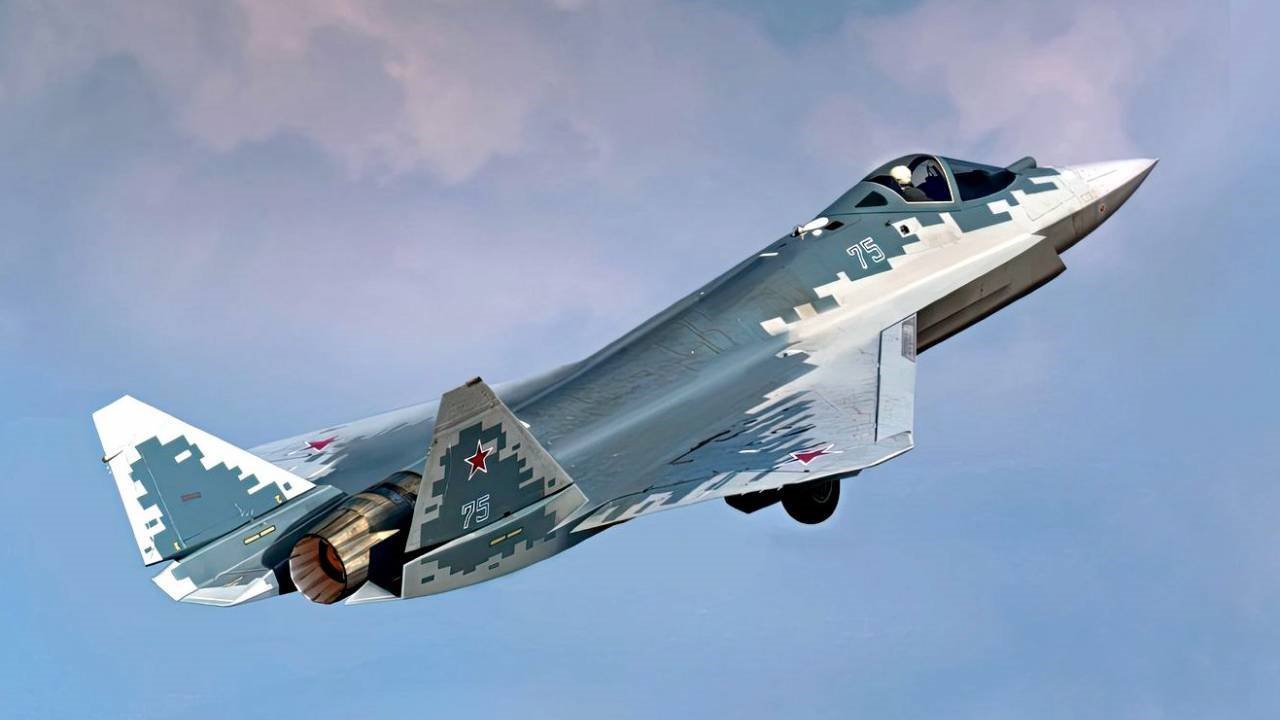
Russia’s Su-75 “Checkmate” Has Slipped Again—Will It Ever Actually Fly?
The Sukhoi Su-75 Checkmate is Russia’s latest attempt at producing a fifth-generation stealth fighter. Unlike the Su-57, which is a heavyweight multi-role aircraft with a strong emphasis on A2A engagements, the Checkmate is a lightweight fighter designed primarily for air-to-ground strike missions. In the West, the Su-75 is seldom discussed, largely due to a lack of reliable information and the aircraft’s slow development.
The aircraft was originally scheduled to take its first flight in 2023, but the date has been repeatedly postponed to the point that some experts question whether the project will ever see the light of day. So, what happened to Su-75?
Has the project reached a dead end, or is there actually a chance that the Checkmate will take to the skies?
Development Timeline and Delays
Developed under the LTS (Light Tactical Aircraft) project, the Su-75 was first publicly revealed at the 2021 MAKS air show in Moscow.
Sukhoi presented a static mockup of the aircraft in 2021 to showcase its general design and highlight its expected specifications. Over time, the aircraft’s airframe underwent modifications to improve aerodynamic performance and reduce its radar cross-section. The aircraft was designed to be lightweight and to share many of the same systems as the Su-57 to reduce costs and simplify maintenance. The Su-75 (or T-75, as Sukhoi designates it) was originally expected to take its first flight in 2023, but the date was pushed back.
The outbreak of the war in Ukraine delayed the development of the Su-75 in several ways. First, stringent Western sanctions made it extremely difficult (though not impossible) for Russia to obtain advanced semiconductors and electronics.
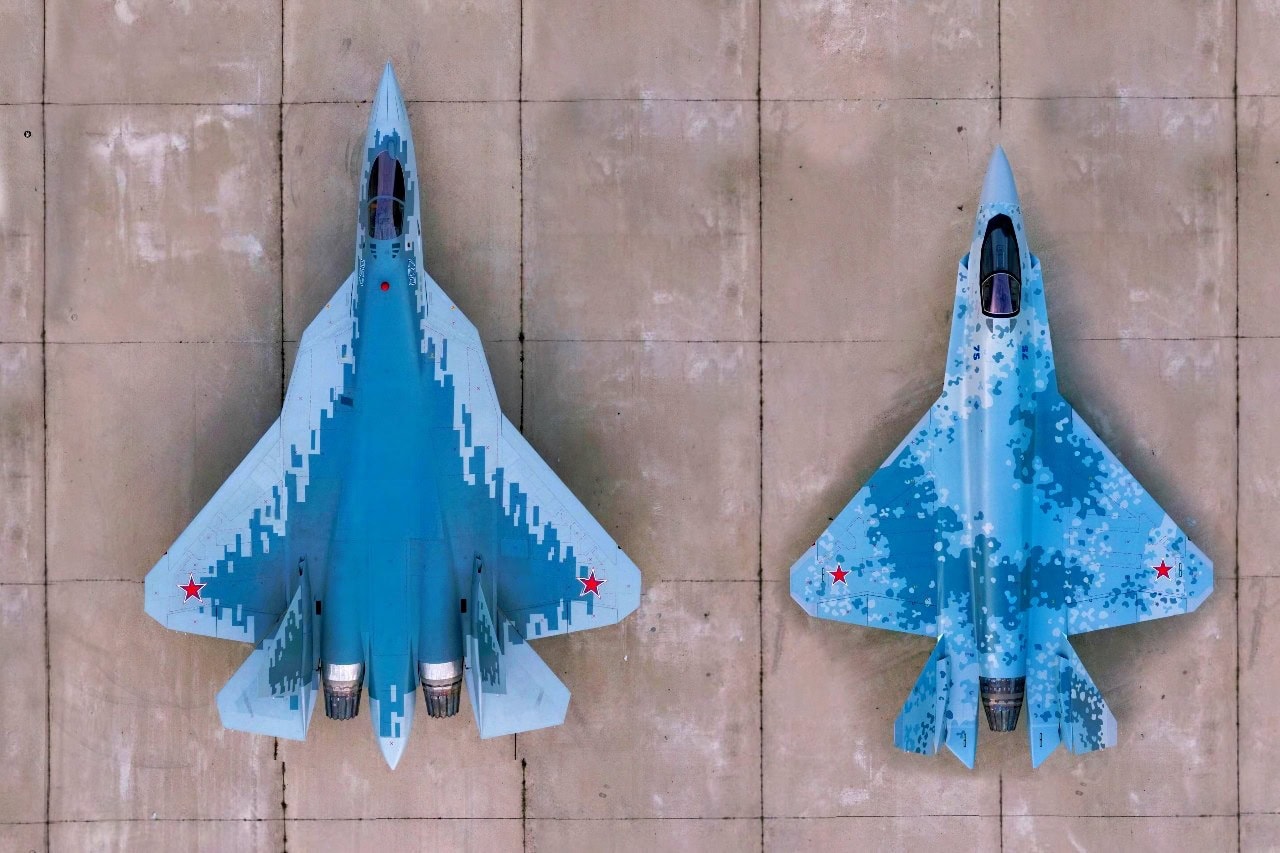
Su-57 Felon and Su-75 Fighters From Russia. Image Credit: Creative Commons.
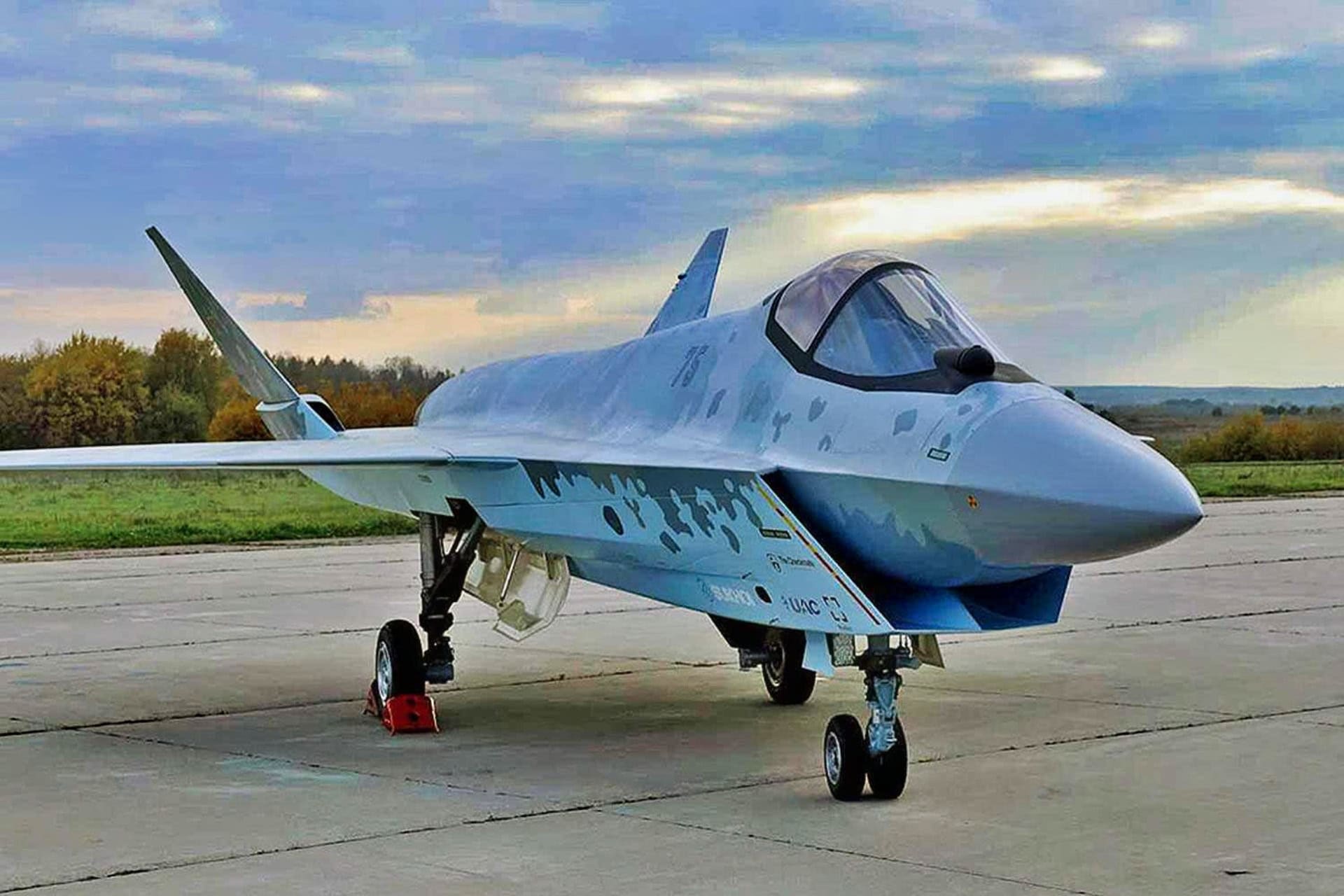
Su-75 Checkmate Russia Stealth Fighter. Image Credit: UAC.
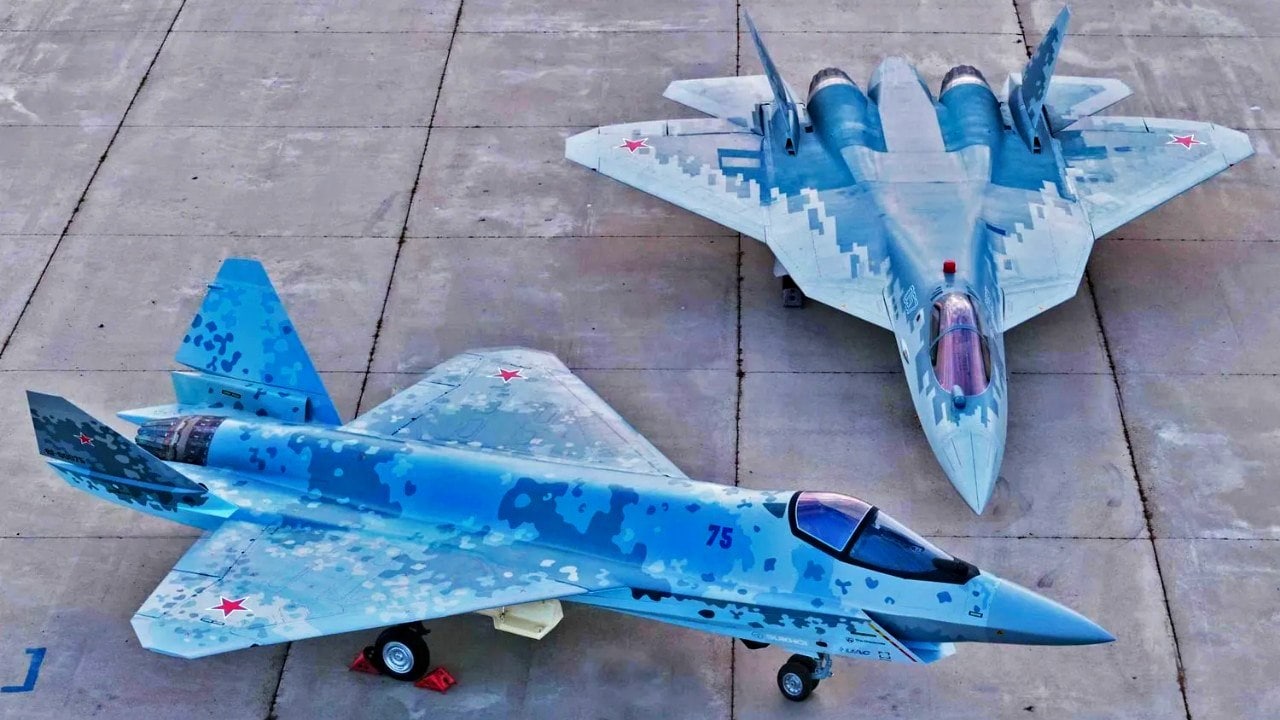
Su-57 and Su-75 Checkmate Russian Air Force.
Russia’s export sector also suffered due to its inability to make payments using U.S. dollars. Secondly, the war required Moscow to redirect its resources to immediate wartime needs.
That means future aircraft projects like the Su-75, MiG-41, PAK DA, and even the Su-57 were, to some degree, placed on the back burner. Finally, the war has given the Russian Air Force extensive combat experience in engaging modern air defense systems and enemy fighters.
The lessons learned so far have led to redesigns and tweaks across several projects to ensure they meet the Air Force’s needs and are not rendered obsolete immediately.
Where is the Su-75 and Will it Ever Fly?
Taken together, these factors led to the Su-75 disappearing for a long time, with very little information coming out about the project. Many analysts, therefore, assumed the project was effectively dead.
However, at the Dubai Airshow in 2025, the topic of the “Checkmate” resurfaced once again.
The aircraft itself did not appear, but several models were displayed, including a single-seat, a double-seat, and an unmanned variant. Sergey Chemezov, head of Russia’s state-run defense company Rostec, confirmed that the aircraft was nearing its first flight. “Basically, we are almost at the stage of the testing flights, and in the near future, we will be launching it into production,” Chemezov said.
Sergei Bogdan, Sukhoi’s chief test pilot, also weighed in on the Su-75’s development. “The plane is already in the workshop being finalized,” Bogdan said. “It’s already, well, defined… there are definite plans for the timelines, so as they say, with God’s help, everything should happen quite soon.” Bogdan said flight tests would begin in 2026, but Russian state media later reported that the Su-75 would make its maiden flight in early 2027.
Sometime in 2026-27, the Checkmate is expected to enter its first flight trials. Based on experience with the Su-57, the Su-75 will likely remain in development for several years after its first flight to complete all military trials before entering production.
Design and Projected Specifications
In terms of design, the Su-75 is a sleek, maneuverable, single-engine stealth fighter featuring advanced aerodynamic features such as a diverterless supersonic inlet, internal weapons bays, and a V-tail layout. The aircraft features a single chin-mounted air intake that closely resembles the Boeing X-32 demonstrator. Russia claims these features give the aircraft a significantly reduced radar cross-section.
The aircraft is also expected to incorporate modern avionics, an open-architecture cockpit, and a cost-effective AESA radar system, all derived from the Su-57. The Su-75 is reportedly intended to use the Saturn AL-51F-1 engine, although export versions will likely use Izdeliye 177S engines.
According to Russian sources, the Su-75 has a total range of roughly 3,000 km, a maximum speed of 1.8-2.0 Mach, and a payload capacity of approximately 7,000-7,400 kg. The aircraft can carry a mixture of air-to-air and air-to-ground missiles along with guided and unguided conventional bombs. According to some sources, the Checkmate is intended to be a spiritual successor to Soviet fighters such as the Su-17 and MiG-27. More broadly, the aircraft was intended to replace the MiG-29 in the global arms market, particularly as demand for lightweight, cost-effective strike aircraft remains high.
About the Author: Isaac Seitz
Isaac Seitz, a Defense Columnist, graduated from Patrick Henry College’s Strategic Intelligence and National Security program. He has also studied Russian at Middlebury Language Schools and has worked as an intelligence Analyst in the private sector.