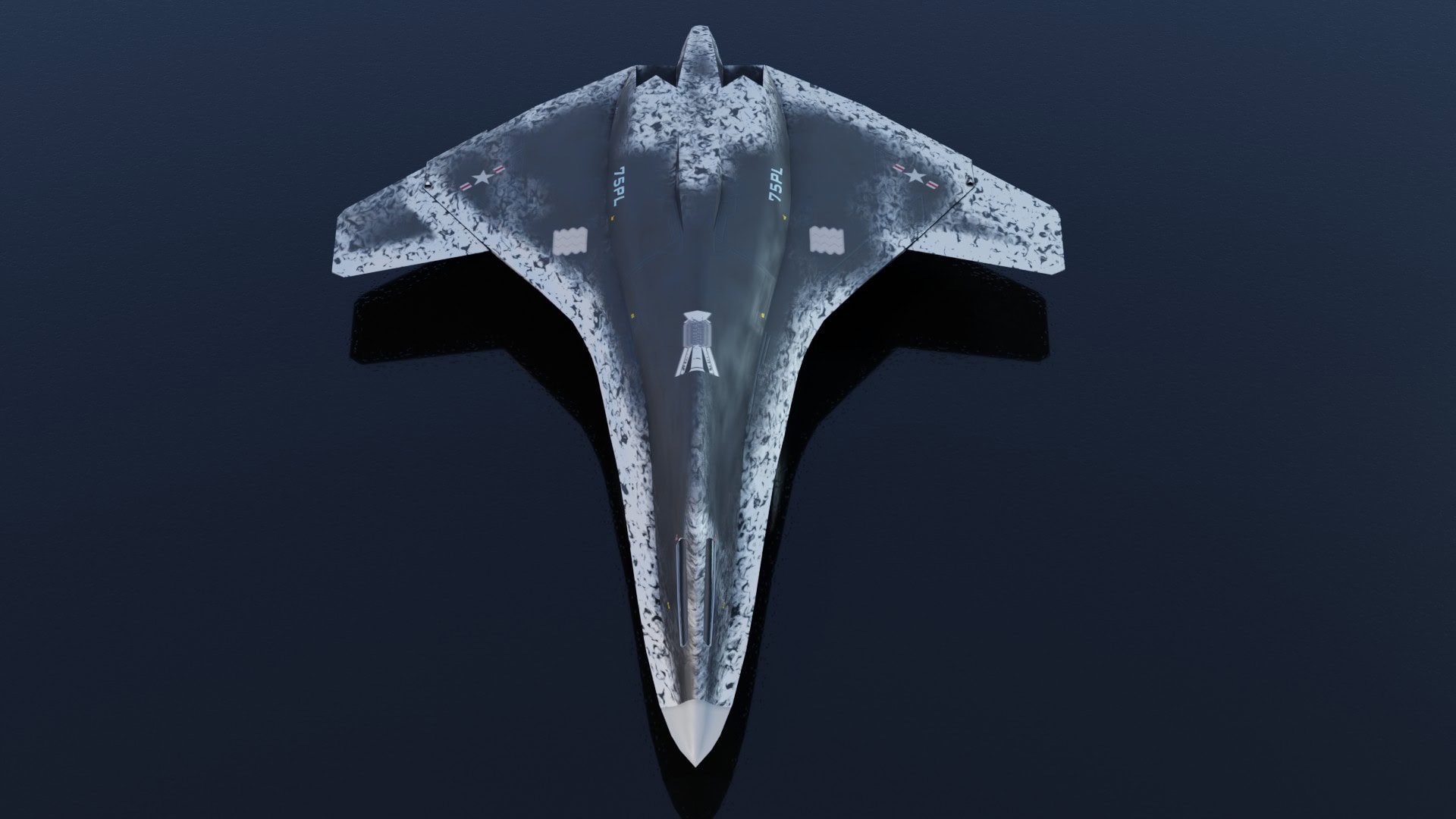
Summary and Key Points: At roughly $300 million per jet, F-47 NGAD fighter costs are expected to climb as adaptive engines, modular bays, cockpit AI, and drone-teaming with Collaborative Combat Aircraft add complexity.
-That creates a decades-long, one-trillion-dollar sink that could crowd out the affordable mass the United States needs as China scales fighters and cheap drones.
-The warning signs look familiar: overpromises and small fleets, echoing the F-35, Zumwalt, and LCS.
-The prescription: cancel the F-47, fund swarms, and consider restarting the F-22 line.
$300 Million F-47: Cancel It Before It Becomes a One Trillion Dollar Fighter
When he announced the United States Air Force’s new sixth-generation warplane, at the time known as the “Next Generation Air Dominance” (NGAD) fighter, President Donald Trump changed the designation to the “F-47.” This was clearly done to appease the forty-seventh president by appealing to his legendary vanity.
Before that big reveal, there was real concern among the Pentagon’s leadership that the forty-seventh president might not want to continue supporting the program due to the massive price tag, cost overruns, and likely technical complications that would inevitably delay the deployment of this allegedly next-generation warplanes (adding to the cost).
Not to worry! Those marketing geniuses at Boeing made it all about Trump. The president fell for it.
Now, Boeing (a company that in recent years has become increasingly associated with controversy) is getting their next batch of wealth courtesy of President Trump.
It is wealth derived from We, the Struggling American People, and it is wholly undeserved (see my reference above to the controversy that has consumed Boeing’s reputation these last few years).
F-47 NGAD and That Giant Sucking Sound
A single F-47 is projected to cost around (hold your breath) a whopping $300 million per plane.
Indeed, most military aviation experts familiar with the program privately admit that the plane’s costs will “absolutely” increase as the program progresses.
That will make the F-47 significantly more expensive than the F-35 fifth-generation multirole stealth warplane (itself an overhyped boondoggle).
The Pentagon believes it can keep costs below what it ultimately paid for the F-22 Raptor (which is hilarious, given that the F-22 is unequivocally the best warplane in the world, but the production line has been shuttered, and it never reached the production level it was supposed to).

The F-22 Raptor Demonstration Team uniform is worn during a practice demonstration at Langley Air Force Base, Virginia, Nov. 13, 2025. The all-black flight suit is a signature look for Air Combat Command demonstration teams. (U.S. Air Force photo by Staff Sgt. Lauren Cobin)
And what are we getting for all this money?
According to the Department of Defense and its attendant defense contractors, the group that hasn’t passed an audit in years (but who keep being given more of our money), the F-47 will integrate new, adaptive engines, modular weapon bays, and the Collaborative Combat Aircraft (CCA) program.
There’s also the inclusion of advanced artificial intelligence (AI), newer stealth features and materials used in the creation of the plane, all of which increase the complexity and cost of production.
How is China Beating Us?
The United States faces in China a true, near-peer threat.
China is technologically nearly caught up with the United States. In many cases, especially considering China’s mass production capacity, China has surpassed the United States in military capabilities (notably when it comes to operating in the First Island Chain, which is the territory stretching from Kamchatka through Japan and Taiwan down to the Philippines).
Because the F-47 is so absurdly expensive, and the United States has an obvious need for complete air dominance, with China clearly outpacing the United States in terms of quantity of their warplane fleet (and catching up in quality as well), the idea that the F-47 is the solution to America’s strategic airpower woes is ridiculous.
This plane is a boondoggle-in-waiting. It is the flying equivalent of the Navy’s failed Zumwalt-class destroyer or the Littoral Combat Ship (LCS).
Just Like the LCS and Zumwalt-class Warships
In both instances, the Zumwalt and the LCS overpromised and underdelivered.
In fact, the LCS was such an overpriced, poorly constructed, and badly performing warship that her sailors started referring to it as “Little ****** Ship.” The Air Force is now replicating these Navy experiences with their sixth-generation plane.
As noted above, there was a moment—however brief—where it looked as though the Trump administration was going to put an end to this black hole of tax dollars.
Alas, the Air Force and their pals at Boeing deftly played to Trump’s ego and got him to abandon one of his core campaign promises (to “drain the swamp.”)
Now, here we are, staring down the prospect of a program that will take 20 years and over a trillion dollars to build while the Chinese build fleets of cheap, advanced, easily replaceable drones.
F-47 as the New Maginot Line
Empires on their last legs often feed into delusions of military grandeur. They become obsessed with fighting the last war by creating complex systems that have no real significance for the realities of the modern battlefield. The French with their Maginot Line in the Second World War. The Soviets with their military spending which bankrupted the USSR. Now, the United States with wasteful projects like the F-47.
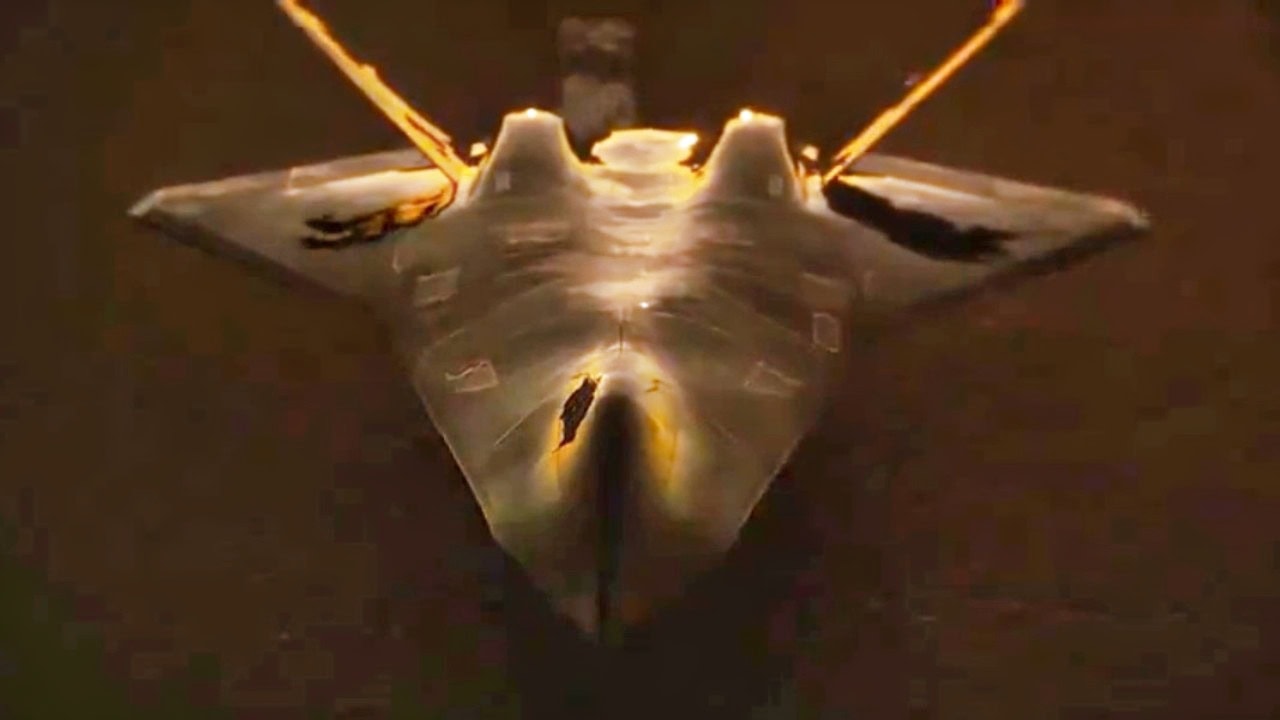
F-47 Fighter from Boeing. Image Credit: U.S. Air Force Screenshot.
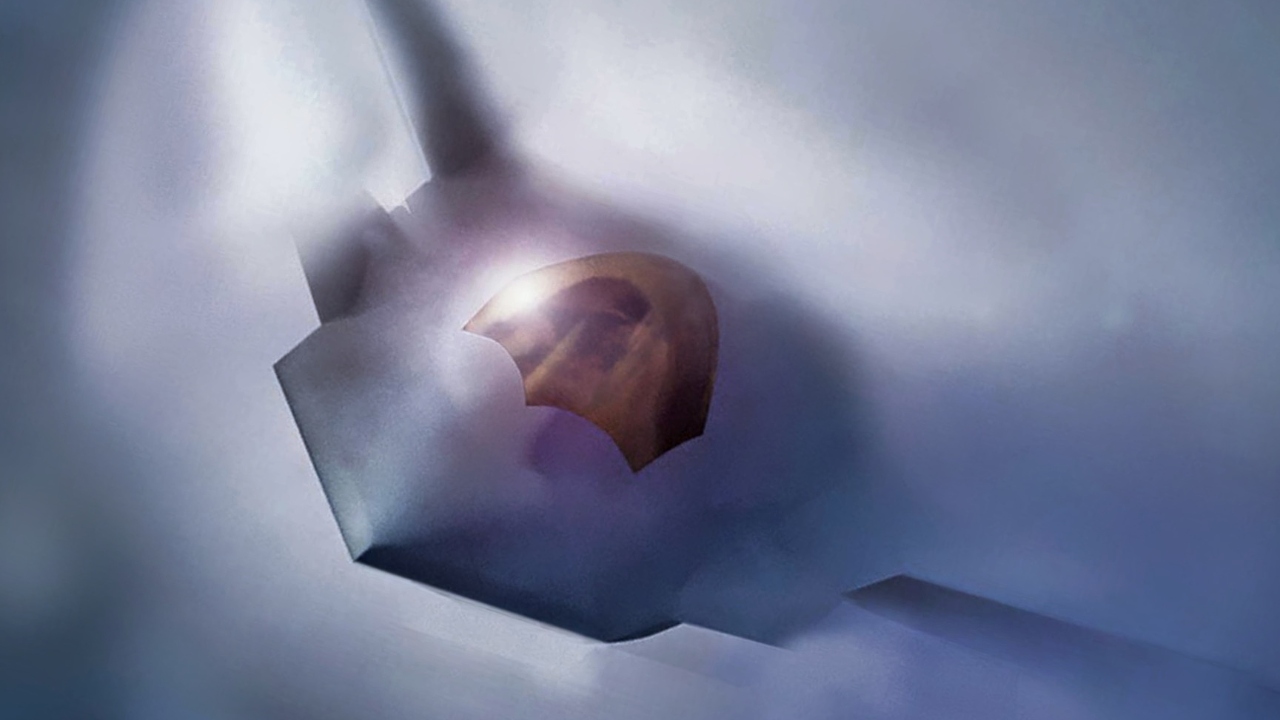
Shown is a graphical artist rendering of the Next Generation Air Dominance (NGAD) Platform. The rendering highlights the Air Force’s sixth generation fighter, the F-47. The NGAD Platform will bring lethal, next-generation technologies to ensure air superiority for the Joint Force in any conflict. (U.S. Air Force graphic)
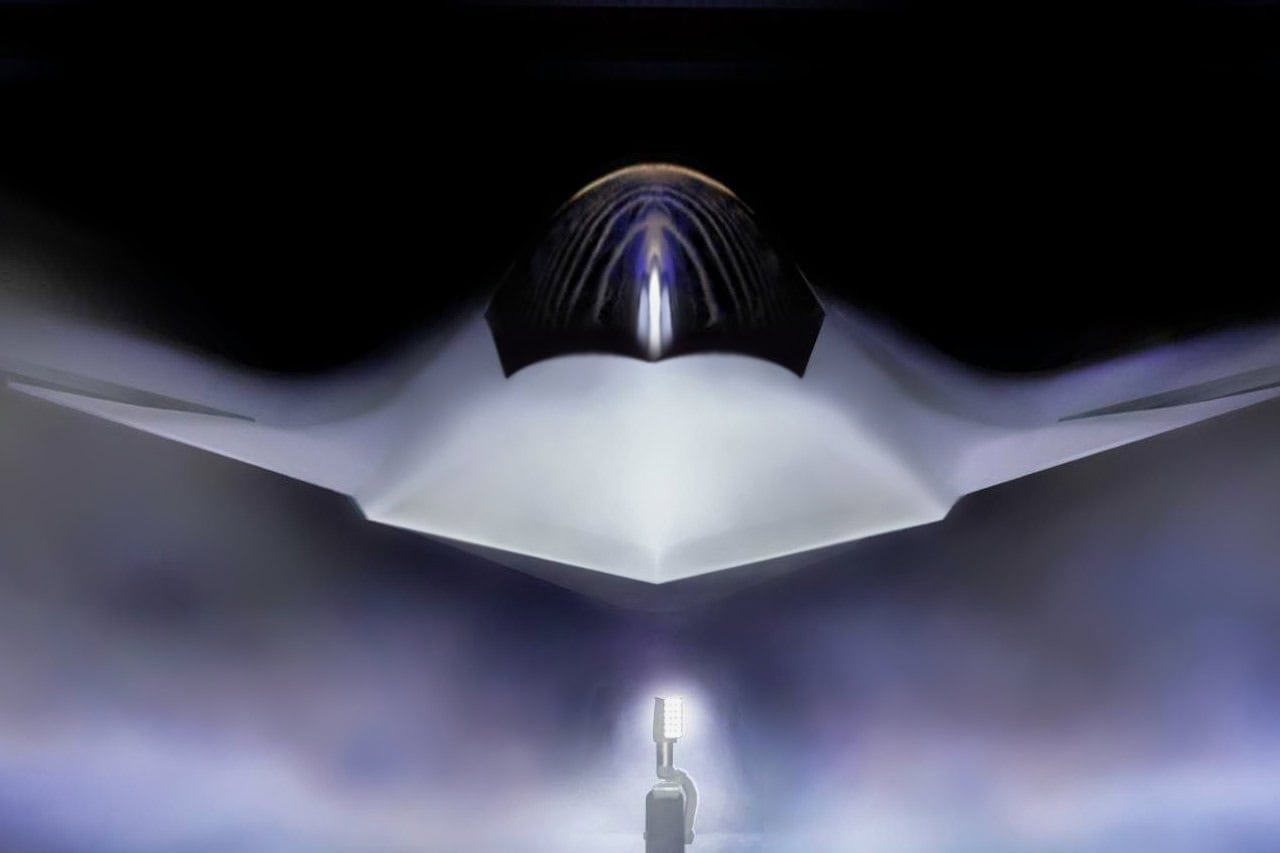
Shown is a graphical artist rendering of the Next Generation Air Dominance (NGAD) Platform. The rendering highlights the Air Force’s sixth generation fighter, the F-47. The NGAD Platform will bring lethal, next-generation technologies to ensure air superiority for the Joint Force in any conflict. (U.S. Air Force graphic)
America has barely utilized its F-22s, and its F-35s have yet to live up to their hype after 20 years. The idea that we are now going to spend more money over a longer time without possibly being able to match the size of the air fleets of increasingly advanced warplanes and drones is simply infuriating. The F-47 is a mirage.
It will never deliver on its promises and will soak up far too many resources that could be invested in more relevant technologies.
Eventually, the kind of waste (and graft) we are witnessing in current defense programs will harm America’s military readiness.
The F-47 should be canceled immediately, and the resources should be spent on developing better drones and possibly even restarting the F-22 production line.
About the Author: Defense Expert Brandon J. Weichert
Brandon J. Weichert is the Senior National Security Editor at 19FortyFive.com. He was previously the senior national security editor at The National Interest. Weichert is the host of The National Security Hour on iHeartRadio, where he discusses national security policy every Wednesday at 8pm Eastern. He hosts a companion show on Rumble entitled “National Security Talk.” Weichert consults regularly with various government institutions and private organizations on geopolitical issues. His writings have appeared in numerous publications, among them Popular Mechanics, National Review, MSN, and The American Spectator. And his books include Winning Space: How America Remains a Superpower, Biohacked: China’s Race to Control Life, and The Shadow War: Iran’s Quest for Supremacy. Weichert’s newest book, A Disaster of Our Own Making: How the West Lost Ukraine, is available for purchase wherever books are sold. He can be followed via Twitter/X @WeTheBrandon.