
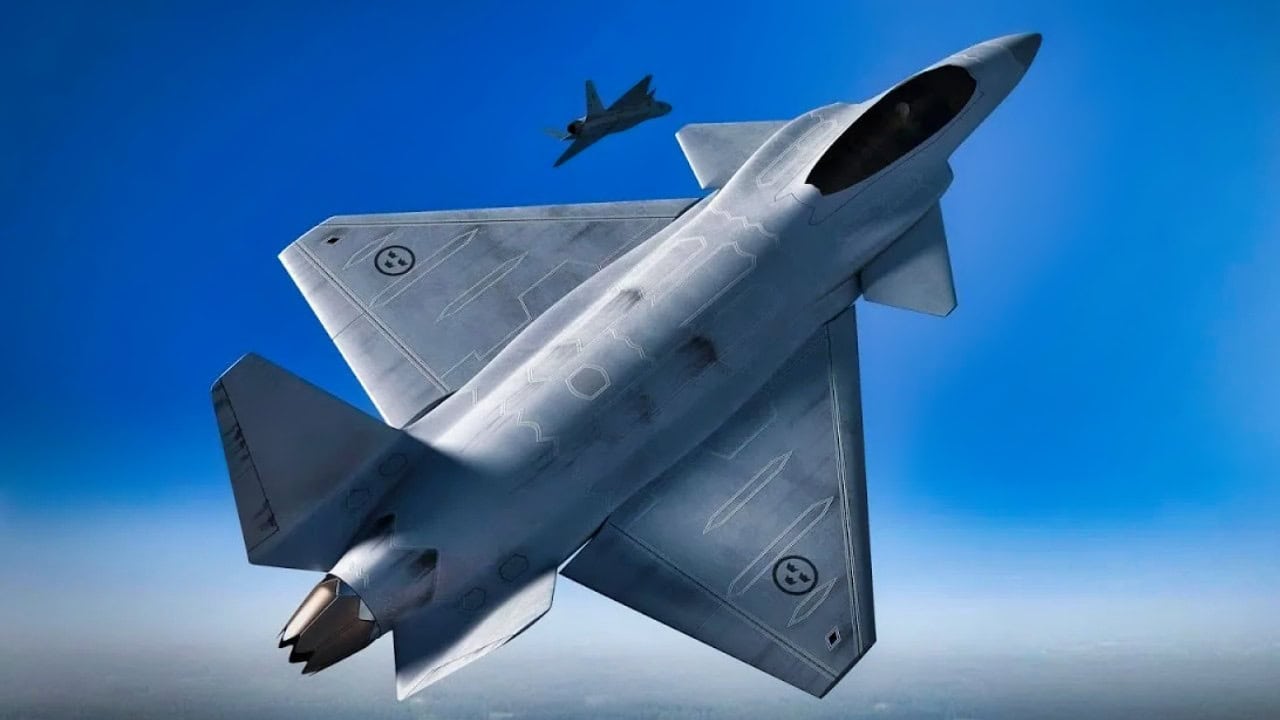
Summary and Key Points – Sweden’s Koncept för Framtida Stridsflyg (KFS) program, led by Saab, represents a strategic shift toward a “system-of-systems” approach to airpower. Moving beyond the JAS 39 Gripen, the initiative focuses on a networked ecosystem involving stealthy crewed nodes and autonomous uncrewed combat air vehicles (UCAVs).
-A major milestone was achieved in 2025 through test flights with the Helsing “Centaur” AI agent, demonstrating autonomous beyond-visual-range decision-making.
-Supported by significant FMV funding, the KFS project aims to field a technology demonstrator by 2027, prioritizing software-defined flexibility, advanced electronic warfare, and sensor fusion to maintain sovereignty in increasingly contested airspace.
Beyond the JAS 39 Gripen: Inside Saab’s Plan for New Fighter Jet
For the past two years, Sweden has been ramping up its research and, hopefully, development of a next-generation air system. Under the Koncept för Framtida Stridsflyg (KFS) project (often translated as Future Combat Air System in European initiatives), Sweden seeks to develop a range of manned and unmanned next-generation systems that incorporate advanced stealth and AI capabilities.
The effort is led primarily by Saab, Sweden’s premier aircraft manufacturer, which has conducted extensive research on unmanned aerial platforms.
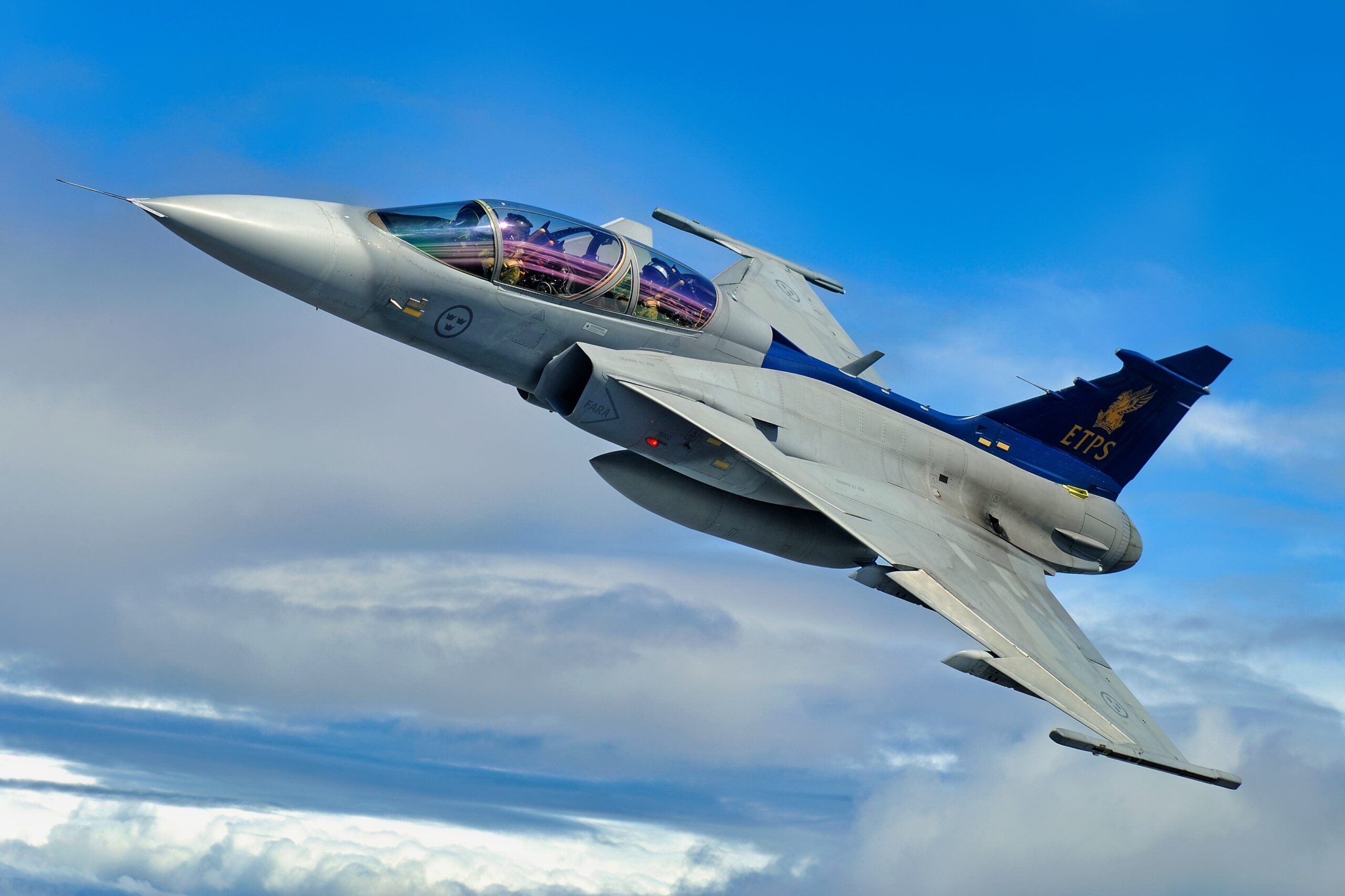
JAS 39 Gripen Fighter from Sweden. Image Credit: Creative Commons.
What Is Sweden’s KFS Program?
Several concepts related to the KFS program were officially revealed by Saab in 2024 following Sweden’s call for a next-generation aircraft platform. The program has likely been in development for some time, but it has gained momentum in recent years.
This was set against the backdrop of the war in Ukraine, Sweden’s NATO accession, and a growing need for survivability in contested airspace. The country had previously participated in the UK-led Team Tempest but chose not to join the merged Global Combat Air Programme with Japan in late 2022, opting instead for an independent reassessment of national needs and export ambitions.
Between late 2024 and late 2025, Stockholm has been ramping up its efforts to research a next-generation fighter, with the aim of delivering a demonstrator aircraft as soon as possible. In October 2025, FMV awarded Saab contracts totaling roughly SEK 2.6 billion (about $238–$276 million) for continued conceptual studies and technology development covering 2025–2027, with explicit scope for both crewed and uncrewed aircraft, technology maturation, and demonstrator work.
In 2024, an agreement between Saab and the government was reached to begin research and development on the program, though the exact requirements had reportedly not yet been finalized.
Replacing the JAS 39 Gripen or Completely Changing the Air Force?
Rather than relying on a single model, Sweden aims to create multiple new systems that will share the same “brain.” The emerging approach treats the future air force as a team, with a stealthy crewed aircraft serving as the mission commander, supported by families of unmanned systems tailored to roles such as long-range sensing, electronic attack, decoying, and weapons carriage.
This “system-of-systems” approach is designed to distribute risk and capability, overwhelm adversary defenses with complexity and scale, and enable rapid evolution by introducing new unmanned types without redesigning the core fighter. Sweden’s leadership has been explicit about pursuing both crewed and uncrewed options under the same umbrella.
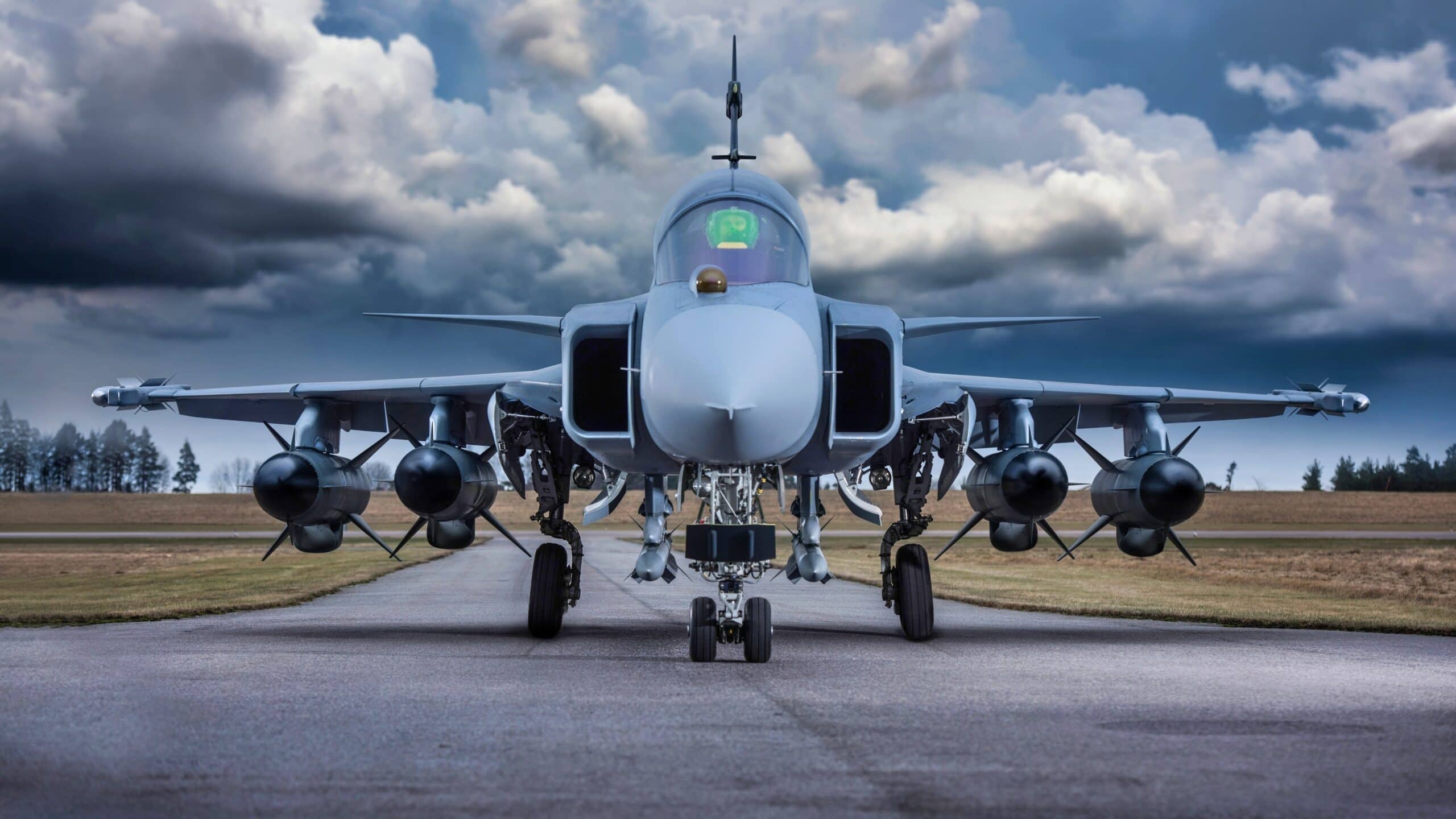
JAS 39 Gripen. Image Credit: Creative Commons.
One of the main goals of the project is to integrate artificial intelligence and increase overall autonomy of the new aircraft. In 2025, Saab, in collaboration with the German defense-AI firm Helsing, conducted test flights in which a JAS 39 Gripen E handed over elements of beyond-visual-range tactical decision-making to an onboard AI agent, a public entity.
This was a pivotal experiment for future manned-unmanned teaming (MUM-T) efforts that the KFS project aims to expand. Since 2024, Saab has unveiled several conceptual designs for unmanned Collaborative Combat Aircraft (CCA) and uncrewed combat air vehicles (UCAVs). Interestingly, Saab appears to view UCAVs as a central component of its future air force rather than a complementary one.
Current Prospects?
Saab has yet to produce a working stealth fighter. Despite the Gripen E/F’s advanced avionics, the company has little experience producing a fifth-generation stealth fighter. Nevertheless, in 2024, Saab unveiled several designs for uncrewed stealth UCAVs.
Many of these systems share designs and components with the Saab JAS 39 Gripen, likely to keep costs down and shorten development timelines.
The only stealth aircraft Saab has flown are small, low-cost drones such as the Swedish Highly Advanced Research Configuration (SHARC) and the Innovative Low-Observable Unmanned Research (FILUR) vehicle. These small drones were first flown in the early 2000s and provided valuable experience for Saab in low-observable technology.
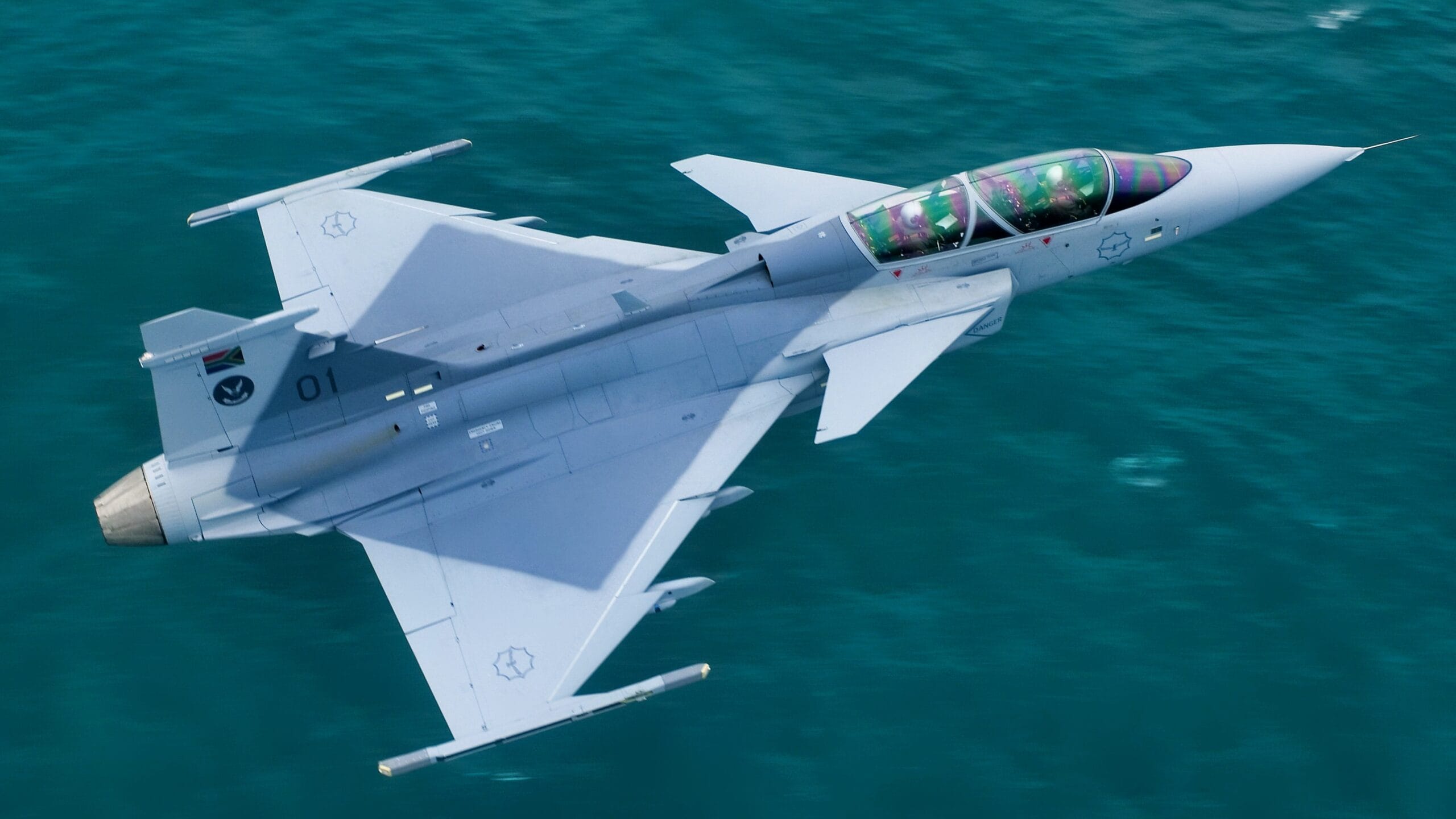
JAS 39 Gripen Fighter. Image Credit: Creative Commons.
Currently, Sweden is keeping its options open, allowing Saab to evaluate several before settling on a single option. Unlike the British/European FCAS, Sweden is not operating under a tight schedule or set timeline; the program is scheduled to run until 2030, after which the government will decide how to proceed.
This gives Saab the freedom to experiment with several concepts to determine what works and what doesn’t as the Air Force sorts out its requirements. While there is no set timeline for the KFS, Saab is confident that a demonstrator aircraft will take its first flight sometime in 2027.
High Hopes for the KFS Program
Sweden’s next-generation air combat program is not simply a quest for a “Gripen successor.” It is an attempt to redefine how a sovereign nation fields airpower in the mid-twenty-first century: a flexible, export-minded ecosystem that blends a stealthy crewed node with autonomous teammates underpinned by AI, electronic warfare, and exquisite sensor fusion.
The steady flow of FMV funding since 2024–2025, the visible preparation of demonstrators, and the country’s deep bench in networking and EW all suggest that Stockholm is serious about this project.
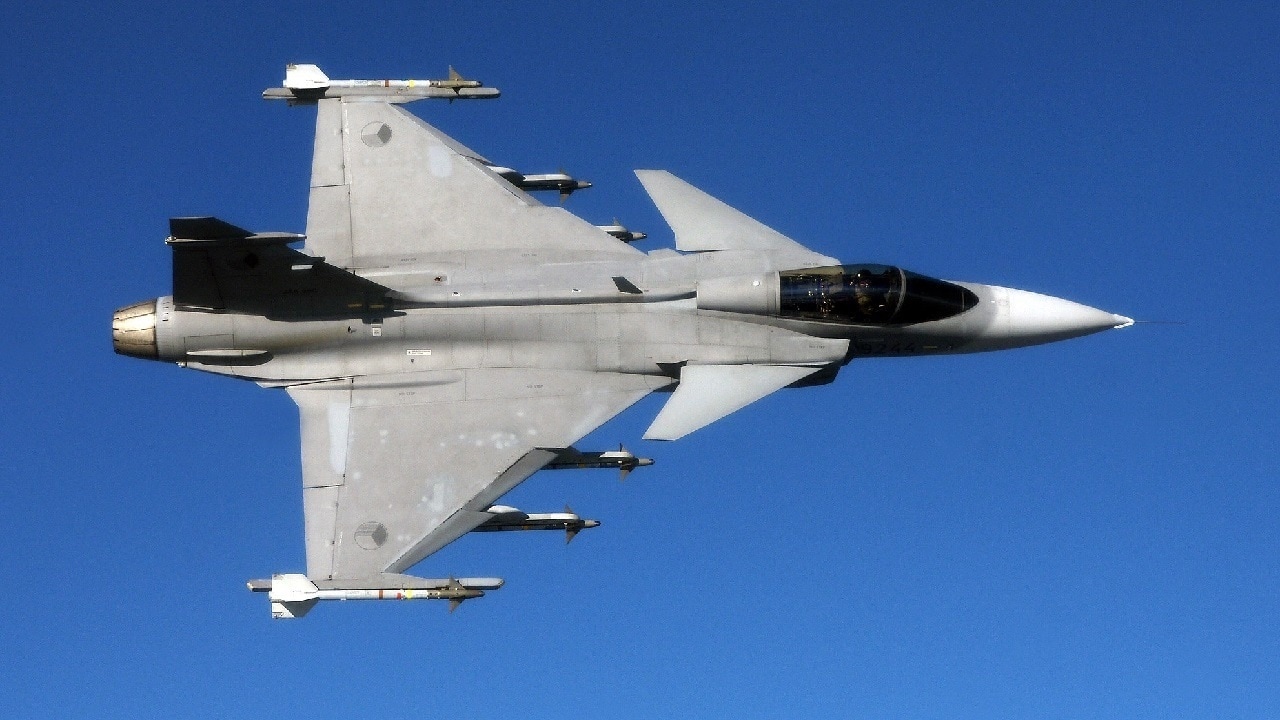
JAS 39 Gripen. Image Credit: Creative Commons.
Some may debate whether Sweden is “leading” the next generation, but what is undeniable is that its quiet, independent progress is among the most intriguing experiments in future airpower now underway.
About the Author: Isaac Seitz
Isaac Seitz, a Defense Columnist, graduated from Patrick Henry College’s Strategic Intelligence and National Security program. He has also studied Russian at Middlebury Language Schools and has worked as an intelligence Analyst in the private sector.

