

Summary and Key Points: Jack Buckby, a national security researcher, evaluates the potential collapse of the Future Combat Air System (FCAS).
-Triggered by Chancellor Friedrich Merz’s public skepticism regarding the cost of manned 6th-generation fighters, the program faces a “three-way disagreement” over industrial workshare and intellectual property.
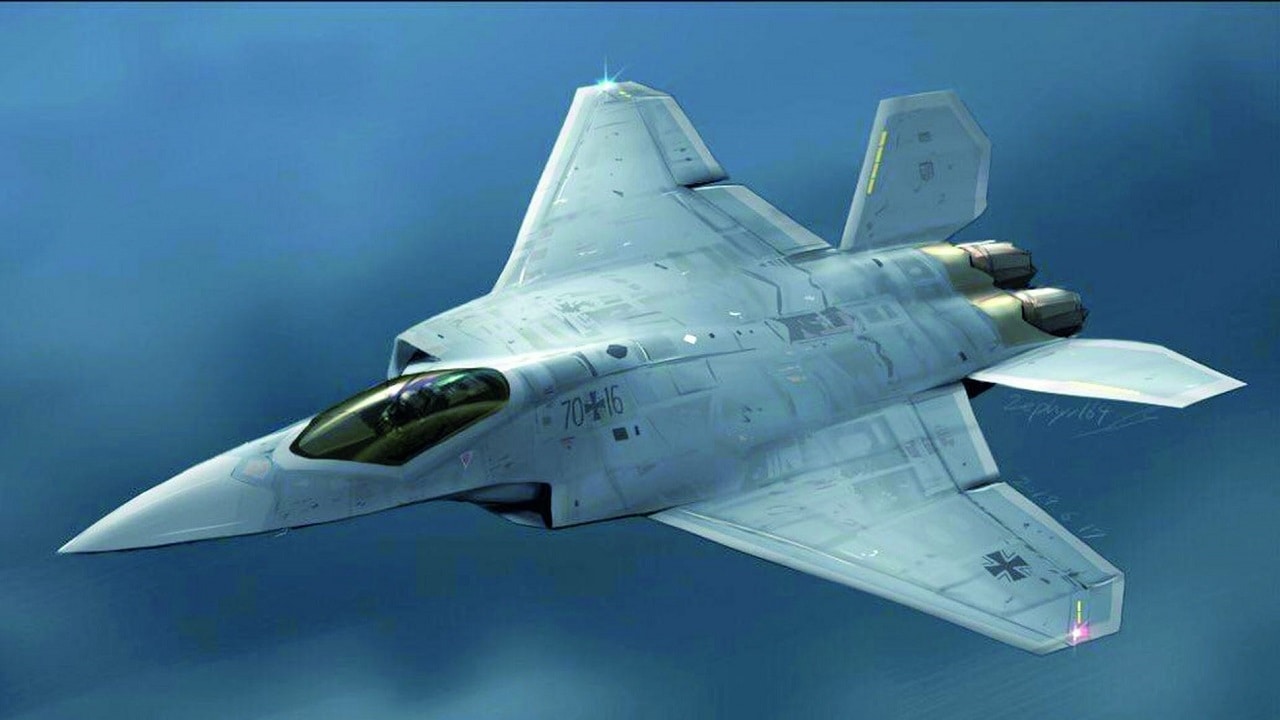
FCAS. Image Credit: Creative Commons.
-This 19FortyFive report analyzes how Germany’s purchase of the F-35 and France’s carrier-based nuclear requirements have created irreconcilable design pressures.
-Buckby concludes that an FCAS failure would likely force Europe into a “vacuum” filled by U.S. upgrade pathways, ending the continent’s dream of an independent, sovereign air-combat ecosystem.
A Sovereignty at Risk: How the Franco-German Split Over FCAS Could Empower U.S. Aerospace
Europe’s flagship plan to build a next-generation air combat system is headed toward potential failure. If the program breaks down, the consequences will go well beyond one delayed or canceled aircraft.
The Future Air Combat System (FCAS) is a Franco-German-Spanish program launched in 2017 to deliver a sixth-generation system of systems built around a new manned fighter, networked remote carriers, and a digital combat cloud that supports sensor fusion.
In mid-February, German Chancellor Friedrich Merz publicly questioned whether Germany even needs a new, expensive, manned next-generation fighter. Speaking on the Machtwechsel podcast, Merz explicitly stated:
“Will we still need a manned fighter jet in 20 years’ time? Do we still need it, given that we will have to develop it at great expense?”
The comments sparked fresh speculation that industrial fighting over leadership and workshare could doom the project.
If Berlin pulls away, the FCAS would certainly be left on the brink.
However, rather than simply collapsing, the project also could transition toward a looser bundle of sub-projects built on the original premise of developing a shared European air-combat capability. What form that would take, however, remains to be seen, and the risk of the project collapsing remains.
What FCAS Is, and Why It Matters
The FCAS was conceived as Europe’s answer to an era in which air dominance is defined less by a single platform and more by connected sensors, electronic warfare, long-range missiles, and human-machine teaming.
Airbus says the program integrates crewed and uncrewed systems linked through advanced networking and data processing, with a target of full collaborative combat around 2040.
Politically, FCAS was intended to do two things at once: preserve European aerospace know-how at the high end, and reduce dependence on U.S. combat aircraft during a moment Europe’s security environment was hardening. That logic has only intensified since Russia’s invasion of Ukraine, which triggered Germany’s “Zeitenwende” rearmament push, including a €100 billion special fund for the Bundeswehr.
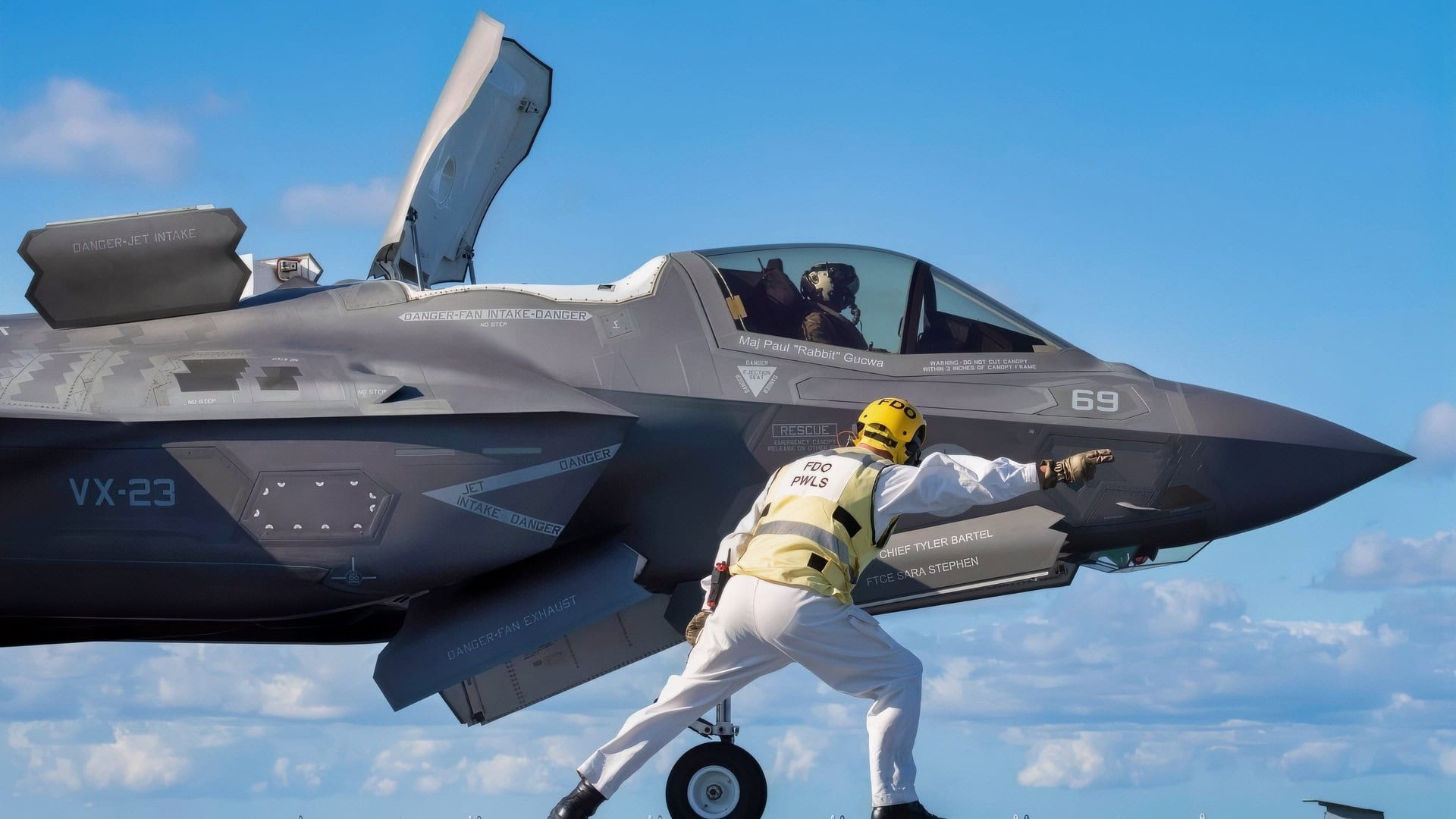
The HMS Prince of Wales (R09) aircraft carrier flight deck officer “shoots” an F-35B Lightning II short takeoff vertical landing (STOVL) variant fighter jet for a STO launch from a ski jump aboard the U.K.’s newest carrier Oct. 24, 2023. The 5th generation strike aircraft for Navy, Air Force, Marines, and allies is aboard to conduct developmental test phase 3 (DT-3) flight trials, which continue today. During the ship’s deployment to the U.S. Eastern Seaboard for WESTLANT 2023, a Pax River F-35 Integrated Test Force (Pax ITF) team is working closely with the ship’s company to conduct the sea trials that continue pushing the boundaries of carrier aviation. (Photo by Michael D. Jackson)
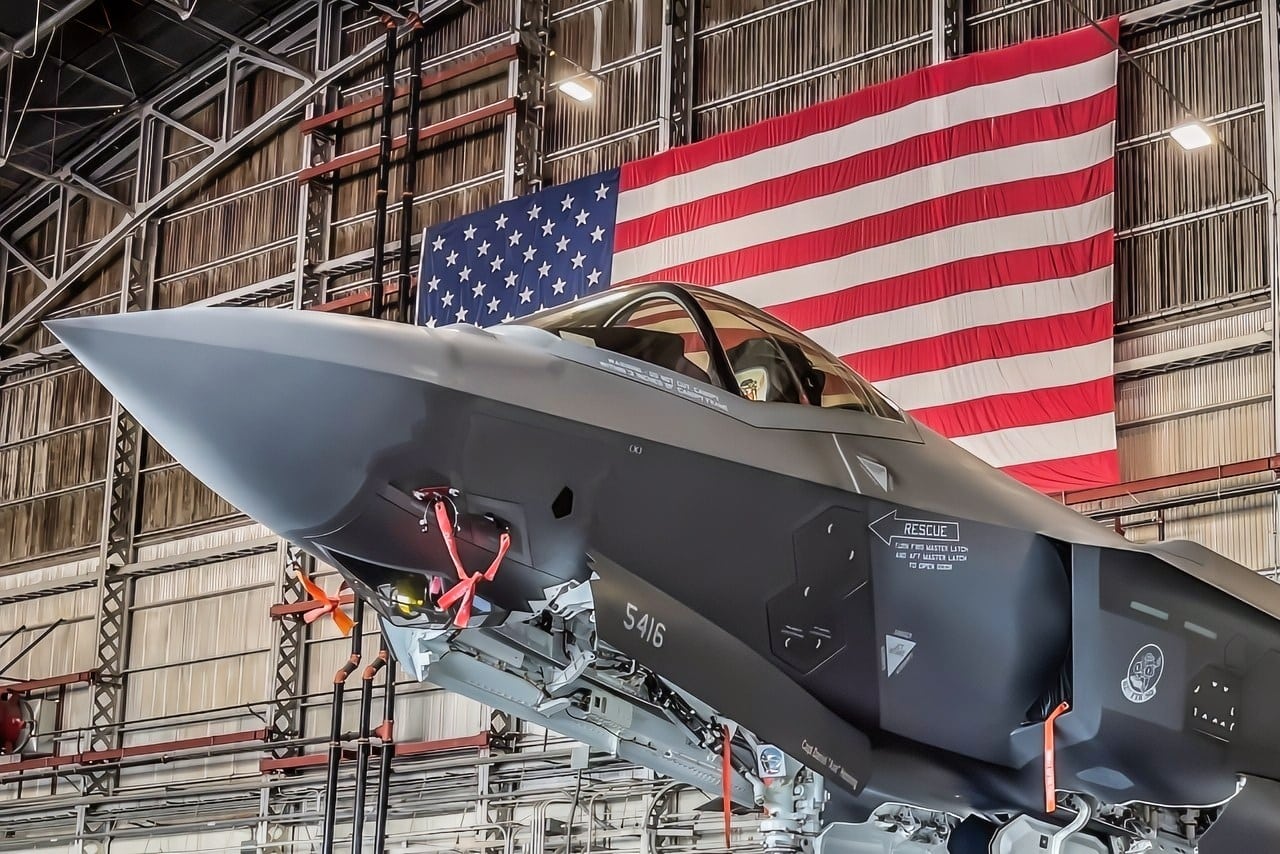
An F-35 Lightning II assigned to the 62nd Fighter Squadron, Luke Air Force Base, Ariz., sits in a hangar ahead of operations for the F-35 Lightning II TDY, Oct. 28, 2021, at Joint Base San Antonio-Kelly Field, Texas. The 62nd FS will be training with F-16s from the 149th Fighter Wing and the 301st Fighter Wing, along with T-38s from the 301st Fighter Wing. The multi-role capabilities of the F-35 allows them to perform missions which traditionally required numerous specialized aircraft. The complimentary air superiority capabilities of the F-35 will augment our air superiority fleet and ensure we continue to “own the skies” over future battlefields. (U.S. Air Force photo by Brian G. Rhodes)
For France, the FCAS also carries particular requirements that many similar European projects do not: Paris needs the next fighter to support the airborne leg of its nuclear deterrent and to operate from an aircraft carrier.
Those requirements put constraints on the shape, size, weight, and overall design of the aircraft, and have been part of the political bargain from the start. Now, however, they sit at the center of the dispute over the program’s future.
Why It’s Falling Apart
The program is falling apart as a result of a three-way disagreement.
Germany’s procurement timeline has moved. Berlin’s decision to purchase the F-35 to replace its Tornado aircraft for NATO nuclear-sharing tasks gave the Luftwaffe a fifth-generation option for the next two decades, reducing the urgency to accept France’s design demands for a program that is expected to deliver much later. That’s problem number one.
Problem number two is that industrial governance has become toxic. Dassault insists that a complex aircraft program like this requires clear authority over design decisions, while Airbus has pushed for a different workshare and leadership balance.
The fight is now over which party controls integration decisions, makes decisions about future exports, and owns or controls intellectual property. The parties simply cannot agree, and the spat has often spilled out into the public sphere.
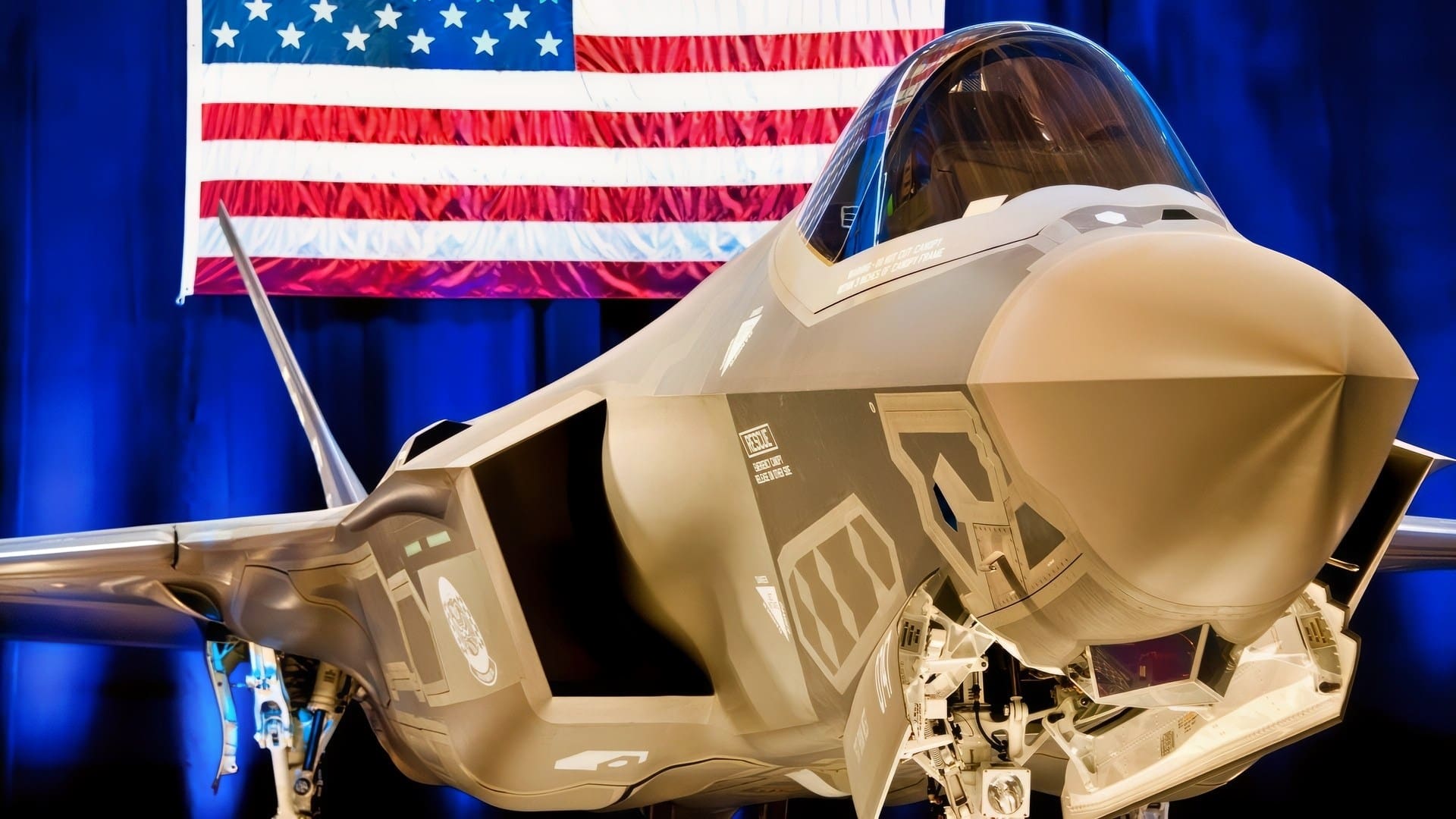
F-35 Fighter With U.S. Flag. Image Credit: Creative Commons.
Third, Merz’s comments about Germany perhaps not needing an aircraft tailored to nuclear and carrier roles have been interpreted in Paris as an attempt to walk away from program constraints Germany formally accepted years ago—and a signal that Berlin is comfortable shopping for alternatives.
For those reasons and others, Airbus has floated the idea of keeping parts of the FCAS alive while splitting the core fighter project into separate national designs, effectively admitting the flagship concept cannot fit into one airframe.
What Happens Now to FCAS
If the FCAS fighter pillar comes loose, the immediate effect would be a vacuum likely filled by more U.S. aircraft, more U.S.-controlled upgrade pathways, and more U.S. weapons integration.
That would be the most obvious solution, simply because these options exist right now.
That’s why FCAS turmoil has been accompanied by recurrent reporting and discussion about Germany’s future fighter fleet, including the prospect of additional F-35 buys, even if Berlin is publicly downplaying it.
Europe would still have fighters—Rafale, Eurofighter, and F-35 fleets are real and continue to grow—but the direction in which Europe was heading will change.
A collapsed FCAS program would also weaken one of the most ambitious ideas from the project: a shared future aircraft that could have created a deeper European operational ecosystem that mirrors what the Americans are doing with Lockheed Martin’s F-35 platform.
In short: if FCAS collapses, Europe won’t lose fighter jets, but it will lose an opportunity to use its industrial power to build a system that may work alongside America’s current and next-generation fighters, while also delivering sovereignty.
About the Author: Jack Buckby
Jack Buckby is a British researcher and analyst specialising in defence and national security, based in New York. His work focuses on military capability, procurement, and strategic competition, producing and editing analysis for policy and defence audiences. He brings extensive editorial experience, with a career output spanning over 1,000 articles at 19FortyFive and National Security Journal, and has previously authored books and papers on extremism and deradicalisation.