
Summary and Key Points: National Security Columnist Steve Balestrieri evaluates the accelerating military cooperation between Iran and China. Led by Deputy Defense Minister Massoud Oraei, an Iranian delegation is negotiating for CM-302 supersonic anti-ship missiles and maybe more.
-This report analyzes the reported $5 billion package, including Sunflower-200 drones and HQ-9B batteries.

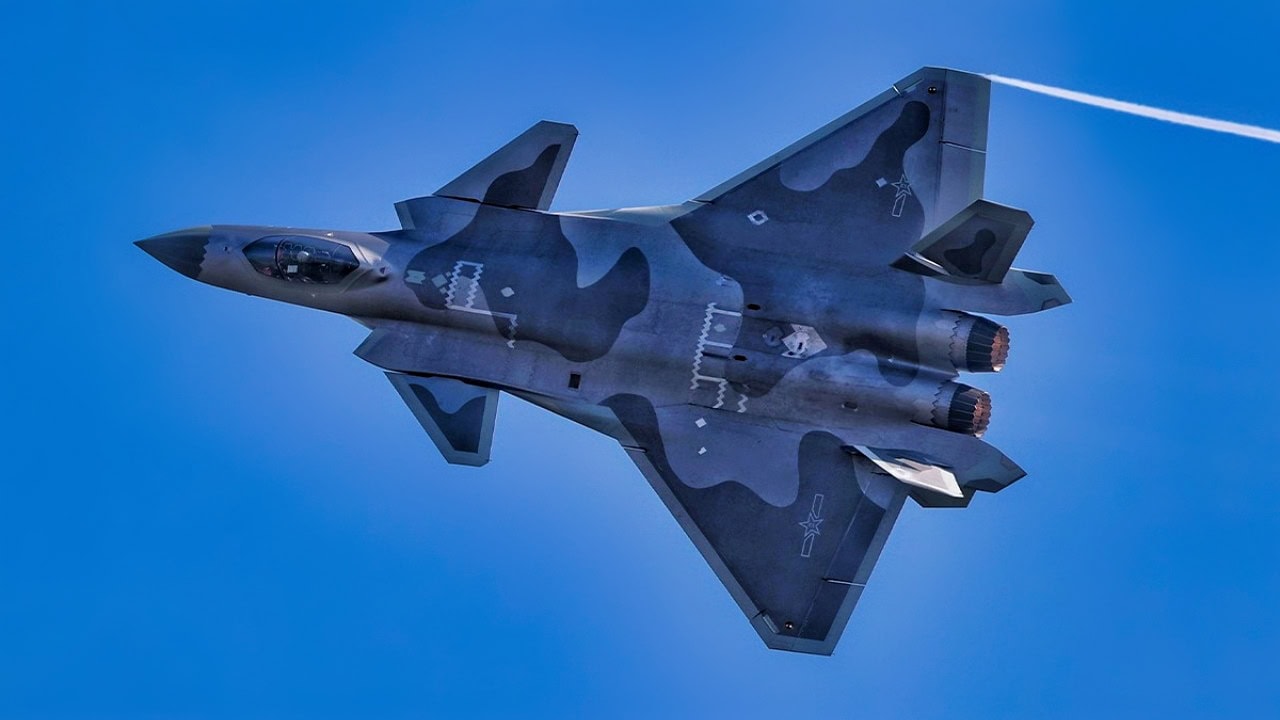
J-20 Fighter. Image Credit: Chinese CCTV.
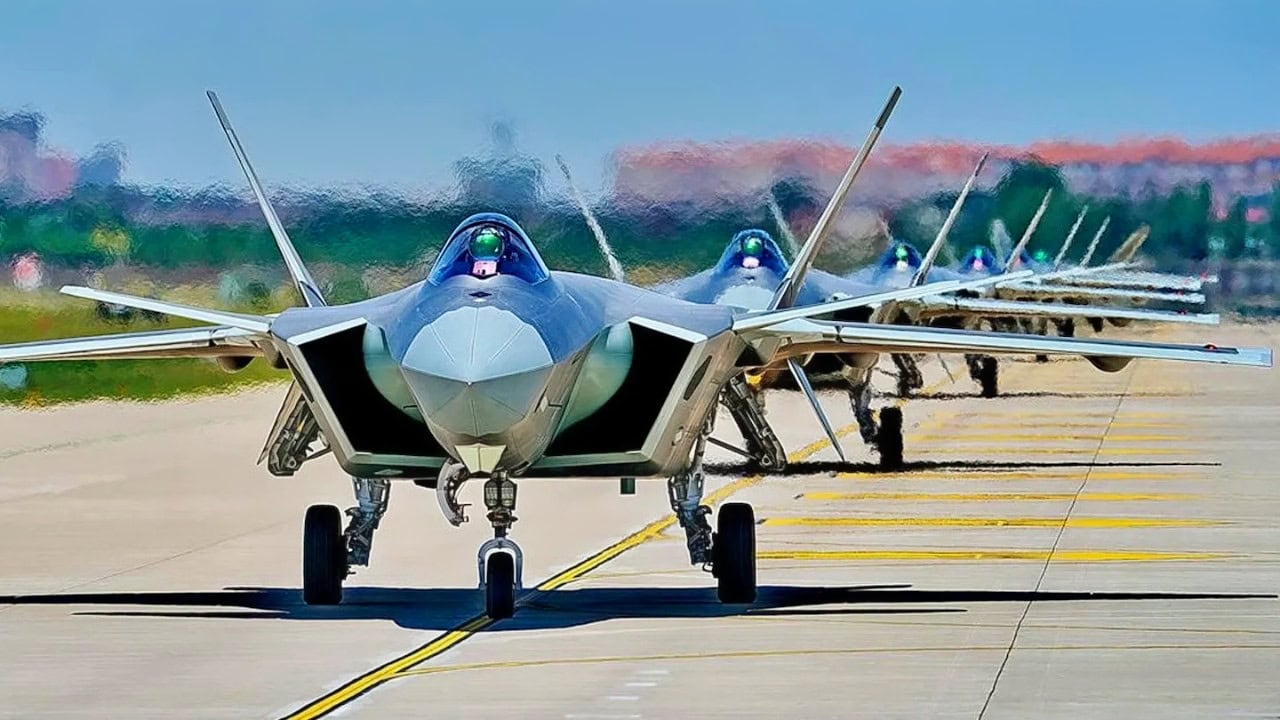
J-20 Fighter from PLAAF China. Image Credit: Creative Commons.
-Balestrieri explores the 2026 “performance gap,” noting that U.S. SM-3 and SM-6 interceptors successfully neutralized Iranian-launched CM-302s, suggesting that Chinese “carrier killer” technology may struggle against advanced American naval integrated fire control.
The $5 Billion Shadow Deal: Why Iran is Pivoting to Chinese CM-302 Missiles to Rebuild its Decimated Defenses
Iran is reportedly in negotiations to significantly upgrade its military capabilities through Chinese technology. Reports of possible exchanges suggest deals for advanced CM-302 anti-ship missiles, drone technology, and a symbolic gesture involving a model of the J-20 Mighty Dragon stealth fighter.
These technologies would bolster Iran’s defense against regional adversaries following the degradation of its air defenses in the crushing air campaigns of Israel and the United States.
According to reports, negotiations on such systems began at least two years ago but quickly accelerated after the 12-Day War last June.
According to Iranian officials, Tehran dispatched a delegation led by Deputy Defense Minister Massoud Oraei to China. Oraei was accompanied by a group of officials from the defense ministry and the foreign affairs department. The number of missiles Iran would add to its arsenal remains unknown.
China’s “Carrier Killer,” The CM-302 Anti-Ship Missile:
The deal for the Chinese‑made CM‑302 missiles is near completion, though no delivery date has been agreed, six people with knowledge of the negotiations told Reuters. However, that report came just before the start of the current air campaign, which has taken out much of Iran’s defenses and airfields.
The CM-302 is a supersonic anti-ship cruise missile. It is widely considered an export version of the YJ-12 family and is marketed as a premier “carrier killer.”
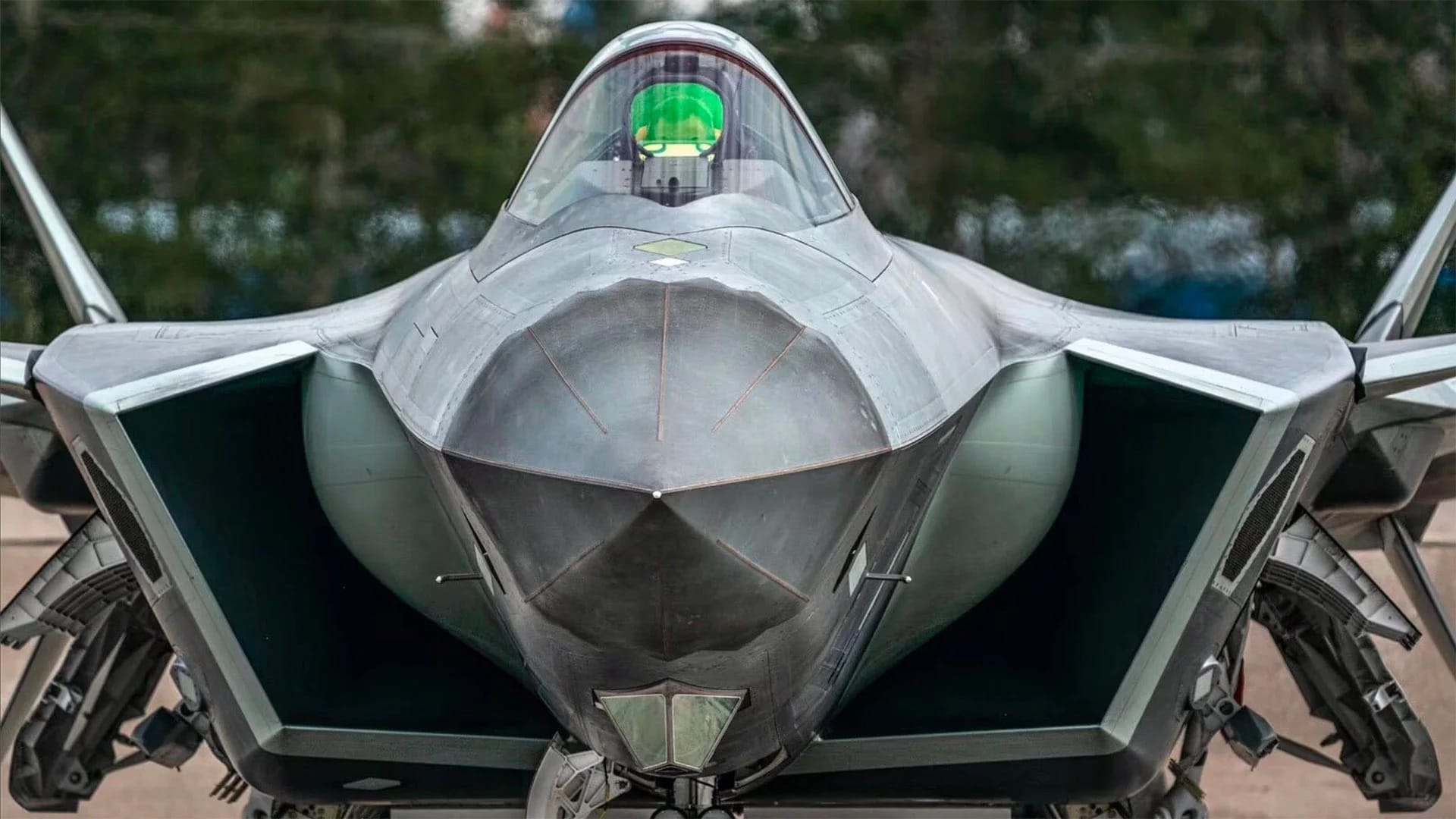
J-20 Stealth Fighter. Image Credit: Industry Handout.
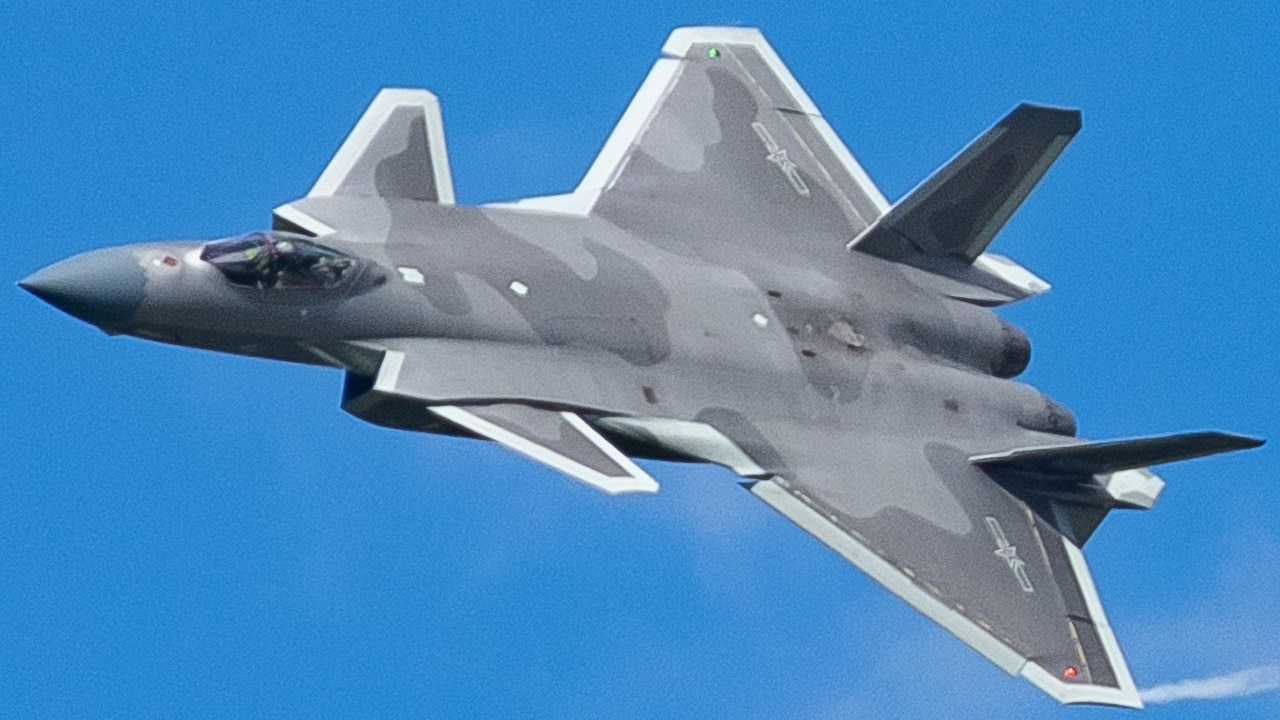
J-20 Fighter. Image Credit: Creative Commons.
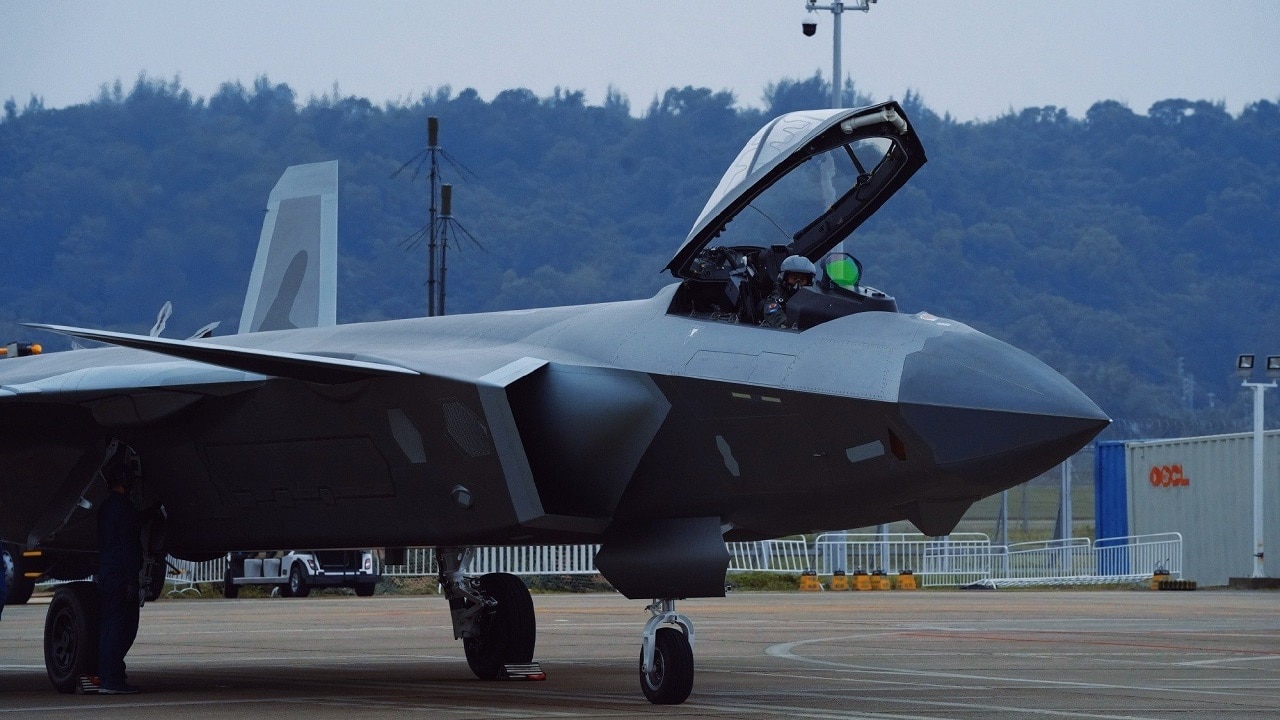
J-20
It features a 280–290 kilometer range, Mach 2.5–3.0 speeds, and a 250 kilogram warhead. It has a low-altitude sea-skimming, high-speed terminal-flight profile.
“It’s a complete game-changer if Iran has supersonic capability to attack ships in the area,” said Danny Citrinowicz, a former Israeli intelligence officer and now senior Iran researcher at Israel’s Institute for National Security Studies think tank. “These missiles are very difficult to intercept.”
However, these would be the most advanced weapons transferred to Iran by China. They also would violate a United Nations weapons embargo imposed in 2006. The embargo was suspended during the nuclear deal in 2015 and was reimposed in September 2025.
Other Key Details on Potential Chinese-Iranian Military Deal
A Chinese military attaché presented a scale model of a J-20 stealth fighter to Iran’s Air Force commander on February 10, signaling a possible transfer of these fifth-generation fighters to upgrade Iran’s aging air force. Such a transfer would be unlikely in the short term.
The presentation of the J-20 mock-up to Brigadier General Bahman Behmard—the images of which circulated on Instagram—fueled speculation that Iran could obtain the aircraft. No official announcement was made.
The J-20 Would Be A Huge Upgrade For Iran’s Decimated Air Force
The J-20 is China’s premier fifth-generation fighter jet. It has a long range, advanced avionics, and an impressive weapons capacity built into a stealthy design. It is designed to penetrate modern air defenses and contest air superiority against top adversaries.
There are five key features of the J-20 stealth fighter worth noting: The jets feature advanced stealth design, a powerful WS-15 engine for supercruise, integrated avionics with 360-degree sensor coverage, a large internal weapons bay, and high maneuverability from their canard-delta wing configuration.
These features work together to allow the J-20 to penetrate enemy airspace, strike high-value targets, and perform complex combat missions.
The J-20 is far more advanced than anything Iran has ever possessed. It is believed that the final F-14 Tomcats that Iran purchased from the United States in the 1970s were destroyed in U.S. and Israeli airstrikes. Iran also possessed F-5s, ancient F-4 Phantoms, and MiG-29s purchased from the Soviets and Russians. They also received Su-35s from Russia, one of which was shot down by an Israeli F-35.
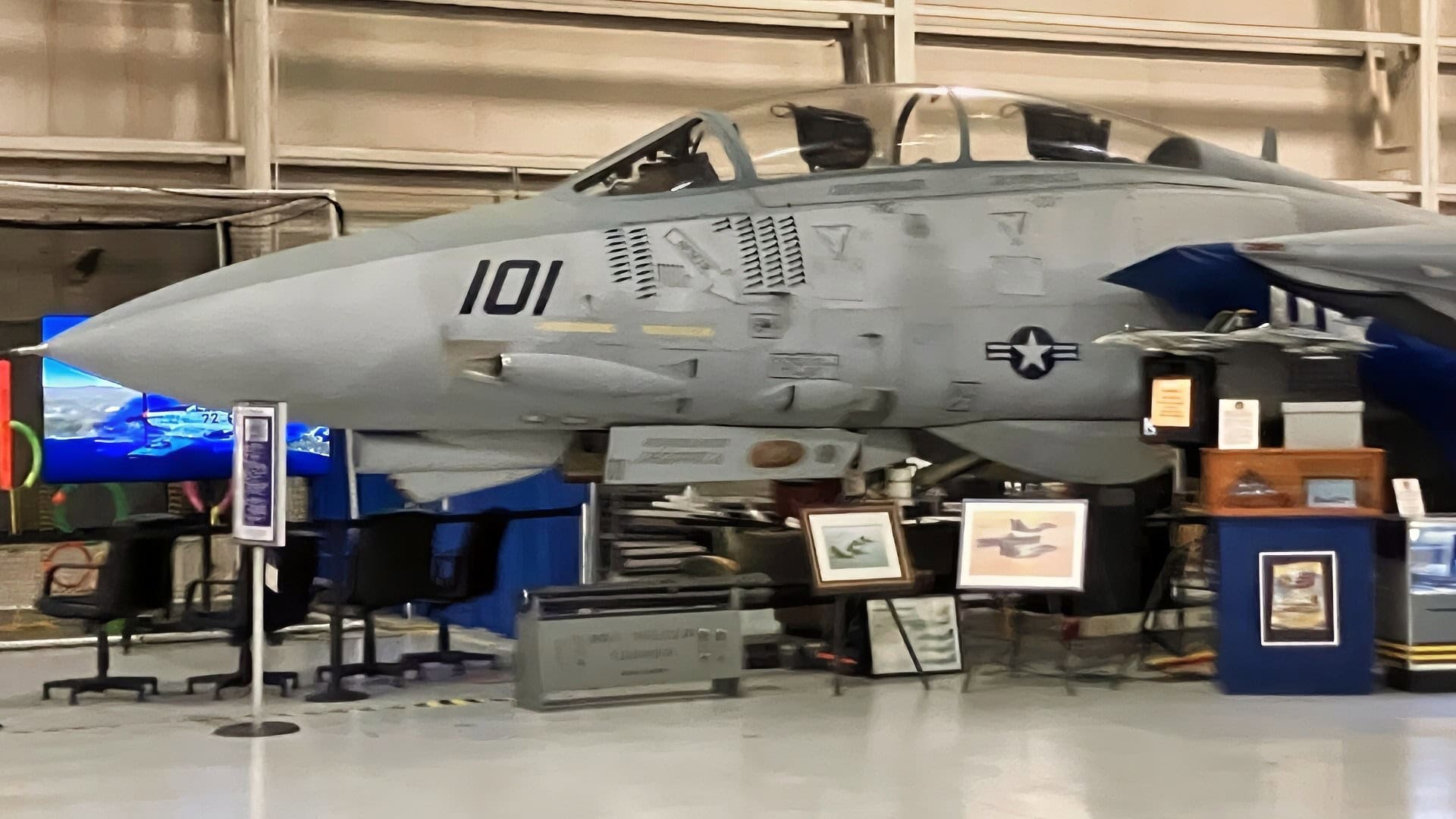
Aviation Museum of Kentucky F-14 Tomcat. Image Credit: 19FortyFive author Christian D. Orr. Taken on March 1, 2026.
Given how badly Iran’s air defenses have been shattered, it would be difficult for the Chinese to hand over the J-20s to Iran and have them set up at an airfield while also preventing a strike to take them out before they could become operational.
However, in January, the Chinese dispatched 16 cargo planes to Iran via a rapid airlift to provide “technical and military” assistance.
Also in January, Modern Diplomacy reported that “China began implementing a strategy to replace Western technologies in Iran with secure, closed Chinese systems that are difficult to penetrate, aiming to bolster Iranian ‘digital sovereignty’ and counter cyberattacks.”
China has sent drones and components to Iran. Beijing is also reported to be supplying drone technology, including loitering “kamikaze drones,” as well as dual-use components and materials for solid rocket fuel used in ballistic-missile manufacturing.
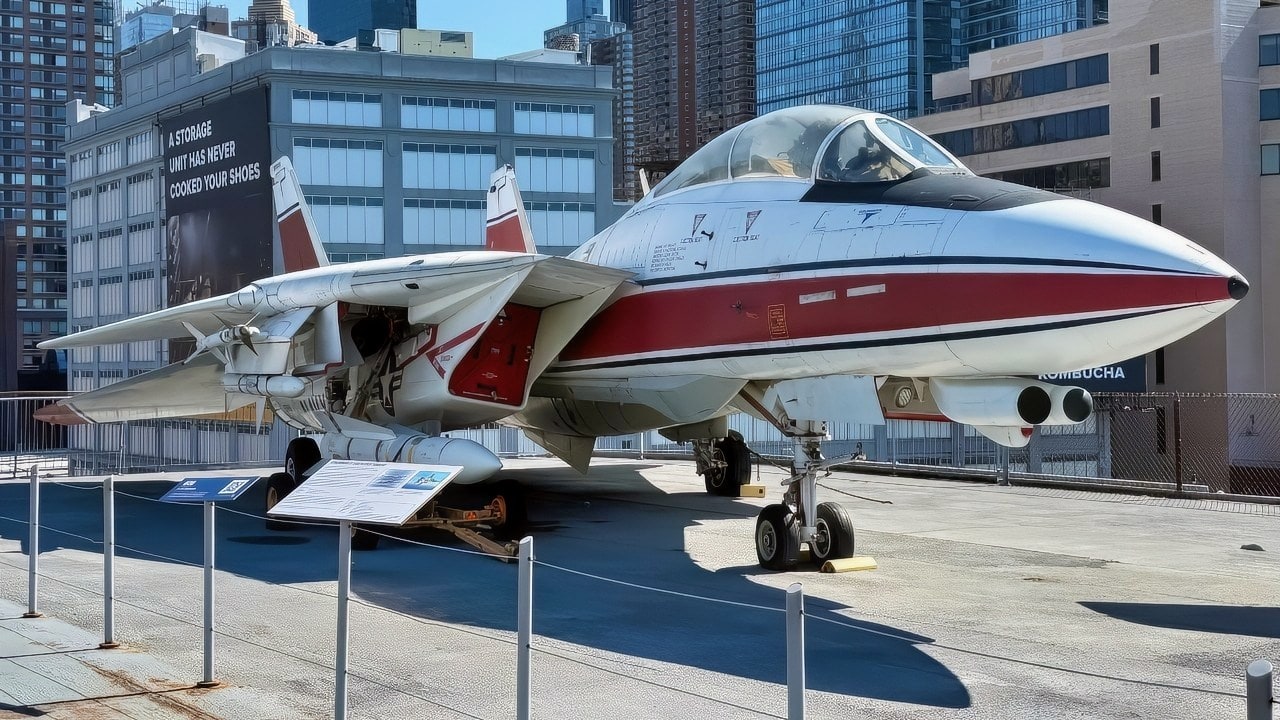
F-14 Tomcat Fighter in USS Intrepid Deck. Image taken late on 2025 by Jack Buckby for 19FortyFive. All Rights Reserved.
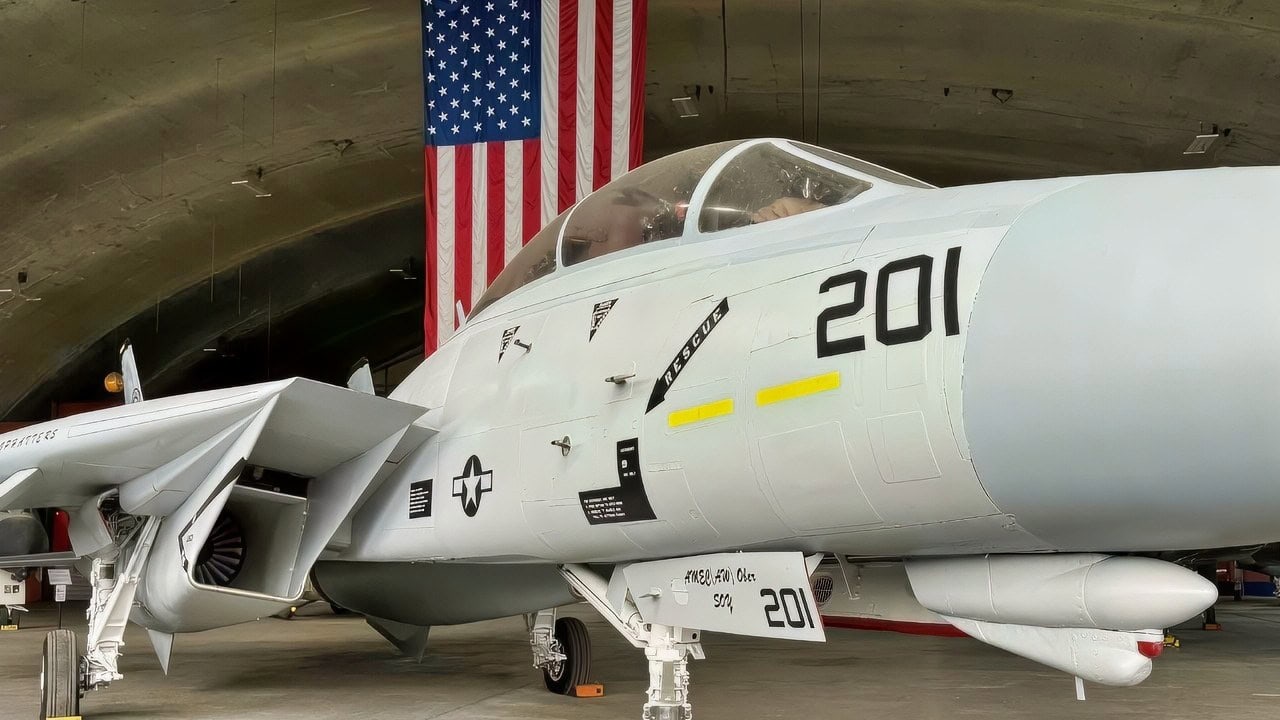
F-14 Tomcat Fighter U.S. Navy. 19FortyFive Field Research Image.
Middle East Eye reported that Iran purchased Chinese surface-to-air missile batteries in July to replace the missiles destroyed by Israel during the 12-Day War. Tehran paid for those missiles with oil, according to sources.
Did China’s Weapons Already Fail To Hit US Ships and Aircraft?
According to other reports, the Chinese have already supplied Iran with CM-302 anti-ship missiles, and none of them hit U.S. warships.
According to Global Defense, China already sent 50 CM-302 anti-ship missiles, six HQ-16B surface-to-air missiles, 1,200 FN-6 man-portable air defense systems, 300 Sunflower-200 kamikaze drones, three HQ-9B anti-ballistic missile systems, and 50 HQ-9 anti-satellite missiles. The reported package would be worth $5 billion.
However, Global Defense reported, U.S. Central Command intercepted most of the CM-302s using U.S. Standard Missile (SM)-3 and SM-6 anti-aircraft missiles.
Apparently, some of the missiles malfunctioned mid-flight and failed to reach the target due to technical glitches.
During the initial U.S. airstrikes, many missiles were destroyed on the ground.
These reports, if accurate, would signal a growing effort to keep Iran firmly within Beijing’s sphere of influence. But the apparent failure of these Chinese weapons to hit any U.S. targets would be an uncomfortable moment for Chinese weapons manufacturers.
They have constantly hyped their weapons as being built to sink U.S. warships, especially its carriers.
About the Author: Steve Balestrieri
Steve Balestrieri is a National Security Columnist. He served as a US Army Special Forces NCO and Warrant Officer. In addition to writing on defense, he covers the NFL for PatsFans.com and is a member of the Pro Football Writers of America (PFWA). His work was regularly featured in many military publications.