Summary and Key Points: Naval expert Brent D. Sadler evaluates the sinking of the Iranian frigate Dena by a U.S. nuclear submarine.
-The incident has sparked indignation in New Delhi, as the ship had recently participated in India’s Exercise Milan.
-This report analyzes the Newport Manual on the Law of Naval Warfare, justifying why the submarine remained submerged to avoid “undue hazard” while coordinating rescue through U.S. Indo-Pacific Command.
-Sadler also addresses the presence of Australian sailors under the AUKUS initiative, concluding that their “non-participation” status preserves Australian neutrality in the conflict.
Submarine Warfare 101 and the Geopolitics of Sinking Iranian Frigate Dena
At sea, there is a common, unforgiving enemy: the ocean.
As such, all sailors – even in war – respect it and, per custom, render assistance even to their enemies. An example of this played out recently in the waters south of Sri Lanka, when a U.S. nuclear submarine sank the Iranian frigate Dena, killing 87 of her crew and rescuing 32.
The Dena had, days before its sinking, completed a series of operations to the north in the Bay of Bengal as a participant in India’s biannual exercise Milan, which included live-fire weapons drills and anti-submarine practice.
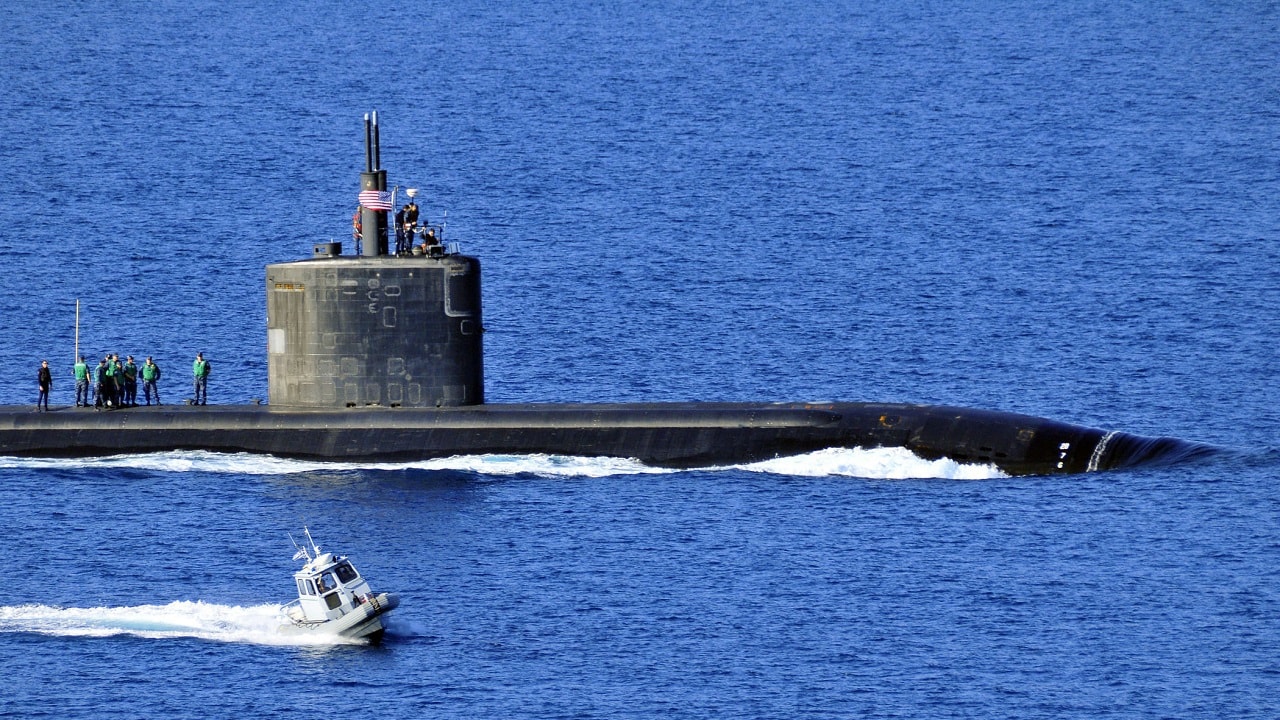
Los-Angeles Class submarine USS Annapolis.
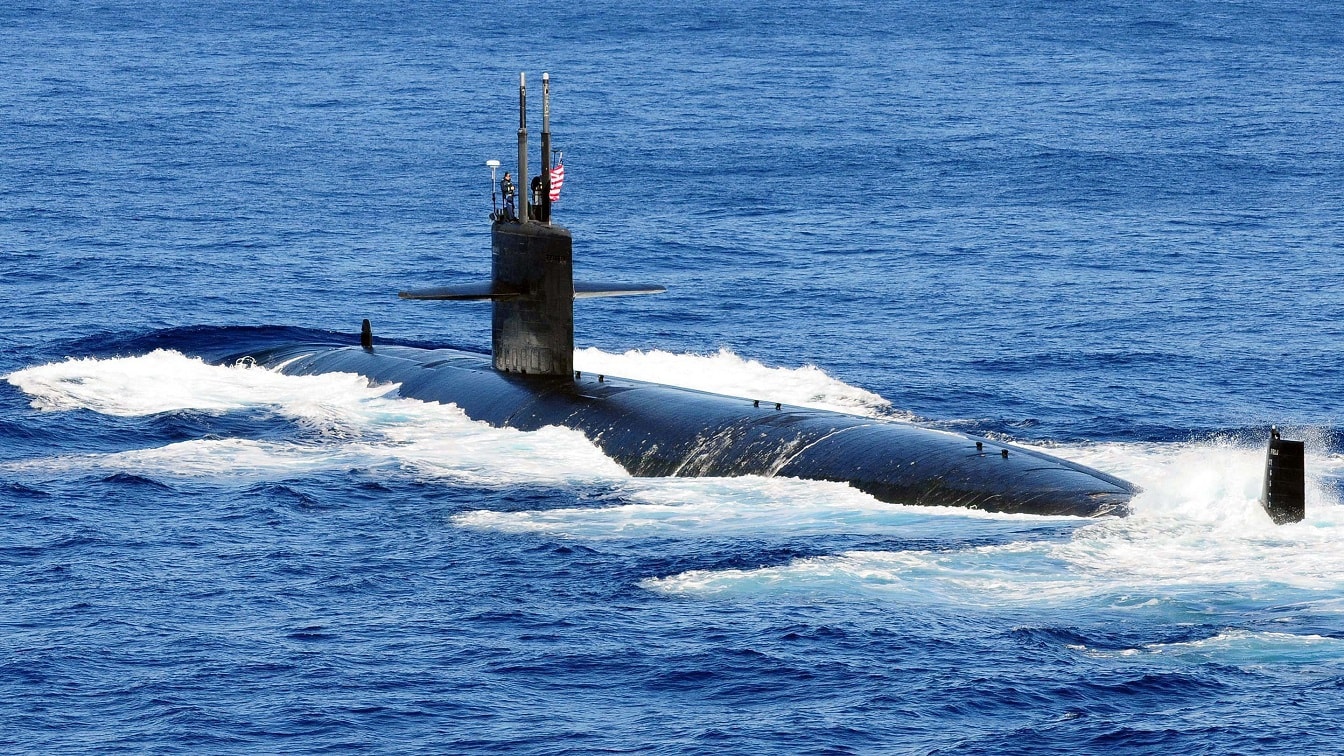
PACIFIC OCEAN (Dec. 10, 2010) The Los Angeles-class attack submarine USS Houston (SSN 713) takes part in a photo exercise at the conclusion of exercise Keen Sword 2011. The exercise enhances the Japan-U.S. alliance which remains a key strategic relationship in the Northeast Asia Pacific region. Keen Sword caps the 50th anniversary of the Japan – U.S. alliance as an “alliance of equals.” (U.S. Navy photo by Mass Communication Specialist 3rd Class Casey H. Kyhl/Released)
Additionally, the crew ashore participated in parades and at-sea evolutions for the International Fleet Review. These events concluded on Feb. 25, three days before the conflict between the U.S. and Iran began.
While on its way back to Iran, and on day four of conflict with the U.S., the Dena was sunk in international waters, triggering indignation in New Delhi, given that the ship was recently hosted in India and was close to its and Sri Lankan waters. However, much of what ensued in the public space was at best uninformed about naval warfare, laws, and customs.
The first accusation was that the warship was unarmed. This is patently ludicrous, and if true would reflect an unprofessionalism uncommon even for Iran’s navy. The fact that the crew participated in live-fire drills should have immediately put this to rest, not to mention the fact that the ship was armed with torpedoes and a helicopter intended to hunt submarines.
Moreover, warships like the Dena are sovereign territory of their nation. As such, there is no requirement that they be unarmed to participate in exercises like Milan or to visit India’s ports – something early detractors, but especially commenting retired naval officers, would have known.

Los Angeles-Class Submarine. Image Credit: Creative Commons.
Relatedly, days after the attack, reports indicated that Australian sailors were onboard as part of the ongoing AUKUS initiative to develop an Australian nuclear submarine program. The fact that the submarine is sovereign U.S. territory conducting U.S. missions absolves the Australian government of any entanglement to the conflict with Iran.
Moreover, the Australian sailors, it was learned later, were ordered to their bunks and told not to take part in the engagement, as the Australian Prime Minister has stated this aligns with longstanding third-party agreements for such ship rider programs.
A second accusation is that the stranded Iranian sailors were left to drown. This too ignores the facts of the incident, as well as the history and nature of submarine warfare. Case in point: the absolution of such wrongdoing at the trial of German Admiral and submariner Karl Doenitz at Nuremberg for his Standing Order 154, directing U-boats not to render assistance at sea to survivors of their attacks.
This order was ardently reissued following the September 1942 Laconia incident in which U-boats rendering assistance to survivors were repeatedly attacked by an Allied airplane. This case continues to inform U.S. and international law today.
The Newport Manual on the Law of Naval Warfare, the authoritative reference on the subject, points to case law and naval guidance: “…if search and rescue after an engagement would subject the submarine to undue additional hazard or prevent it from accomplishing its military mission, it should pass the location of possible survivors at the first opportunity to a surface ship, aircraft, or shore facility capable of rendering assistance.” Given the nearby presence of another Iranian warship and the weapon systems of Dena, surfacing or loitering in the area would pose undue risks to the submarine.
The swift arrival of a Sri Lankan rescue was initiated upon receiving a notice from the U.S. submarine’s parent comment the U.S. Indo-Pacific Command. That notice complied with international law regarding aid to survivors following the attack on Dena.
Next is the fate of the other two Iranian warships in the area: Bushehr, moored in Sri Lanka and Lavan, moored in India. These ships’ fate rest on adherence to international law by their neutral hosts – specifically article 12 of Hague Convention of 1907, which stipulates that a belligerent warship cannot visit a neutral power’s port for more than 24 hours.
These limits on visiting neutral ports played out early in World War II when the German pocket-battleship Graf Spee was compelled to sortie from the port of Montevideo and sunk in the ensuing Battle of River Plate.
At the time of writing this article, both these Iranian warships have overstayed their allowed time in a neutral port. The question is, will the U.S compel its Indian and Sri Lankan hosts to evict these ships or impound them? Unknown are any demands the U.S. has made on their fate or that of their crews.
All told, two things stand out in the historic sinking of the Dena: the crew of the U.S. submarine met all standards of international law, and far too many subject matter experts and otherwise responsible officials engaged in uninformed rhetoric.
About the Author: Brent Sadler
Brent Sadler is a senior research fellow specializing in naval warfare and advanced technology at The Heritage Foundation’s Allison Center for National Defense.