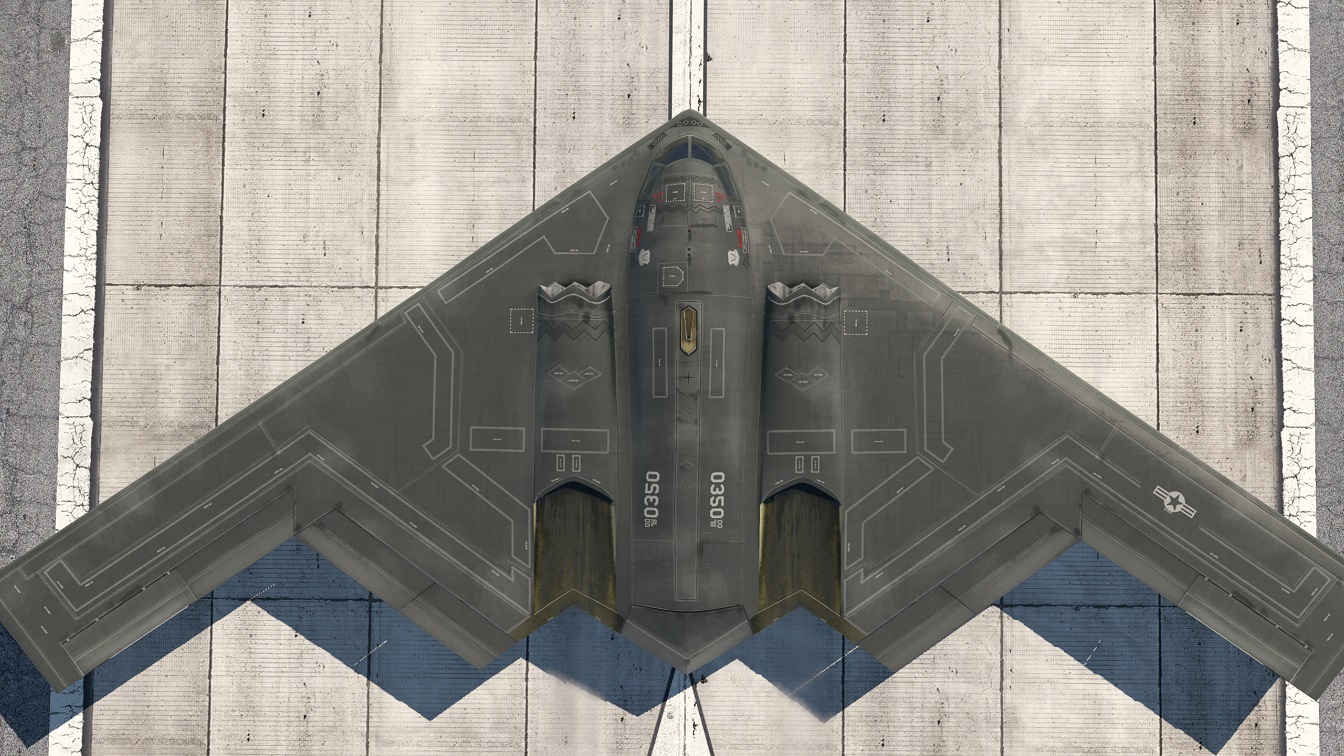
Summary and Key Points: Kris Osborn — President of Warrior Maven, former Pentagon highly qualified expert, Columbia University master’s graduate, and Fox News and MSNBC military analyst — provides an authoritative technical breakdown of the B-2 Spirit stealth bomber’s ongoing combat operations against Iran.
-Following its celebrated role in Operation Midnight Hammer, the B-2 is now targeting buried Iranian weapons facilities, drone stockpiles, and underground ammunition depots using 30,000-pound Massive Ordnance Penetrators, GBU-28 bunker busters, and precision-guided JDAMs.
-Osborn details how the B-2’s bat-wing radar-absorbent configuration, buried engines for thermal signature management, and upgraded fiber-optic flight management processors allow the stealth platform to penetrate Iran’s Russian-built air defense networks undetected — creating safe air corridors for B-52 Stratofortress and B-1B Lancer follow-on strikes across Iranian territory.
The B-2 Spirit’s Bunker Buster Missions Over Iran Explained by a Pentagon Insider
Eluding Iranian radar and air defenses with a stealthy bat-like wing-body configuration, radar absorbent materials, electronic warfare(EW), altitude, thermal signature management, and forward operating fire support, B-2s have been attacking Iranian targets with massive, precision-guided earth-penetrating bombs.
Highly praised for its performance in Operation Midnight Hammer, the enduring and now classic upgraded B-2 bomber is leveraging its massive weapons arsenal to target high-value Iraqi weapons, boats, drones, and ammunition in underground facilities.
The B-2 is armed with large, earth-penetrating bombs able to cut through rock, concrete, and mountainous terrain before detonating at a specific, pre-determined depth.
The idea is to use a delayed fuse so that weapons can explode once they have penetrated beneath the earth to the necessary depth to destroy buried targets.
These kinds of missions are a clear follow-on to the clandestine, high-altitude bombing missions the B-2 likely conducted at the outset of the war, during which the stealth platform targeted and destroyed whatever Iranian air defenses were operational.
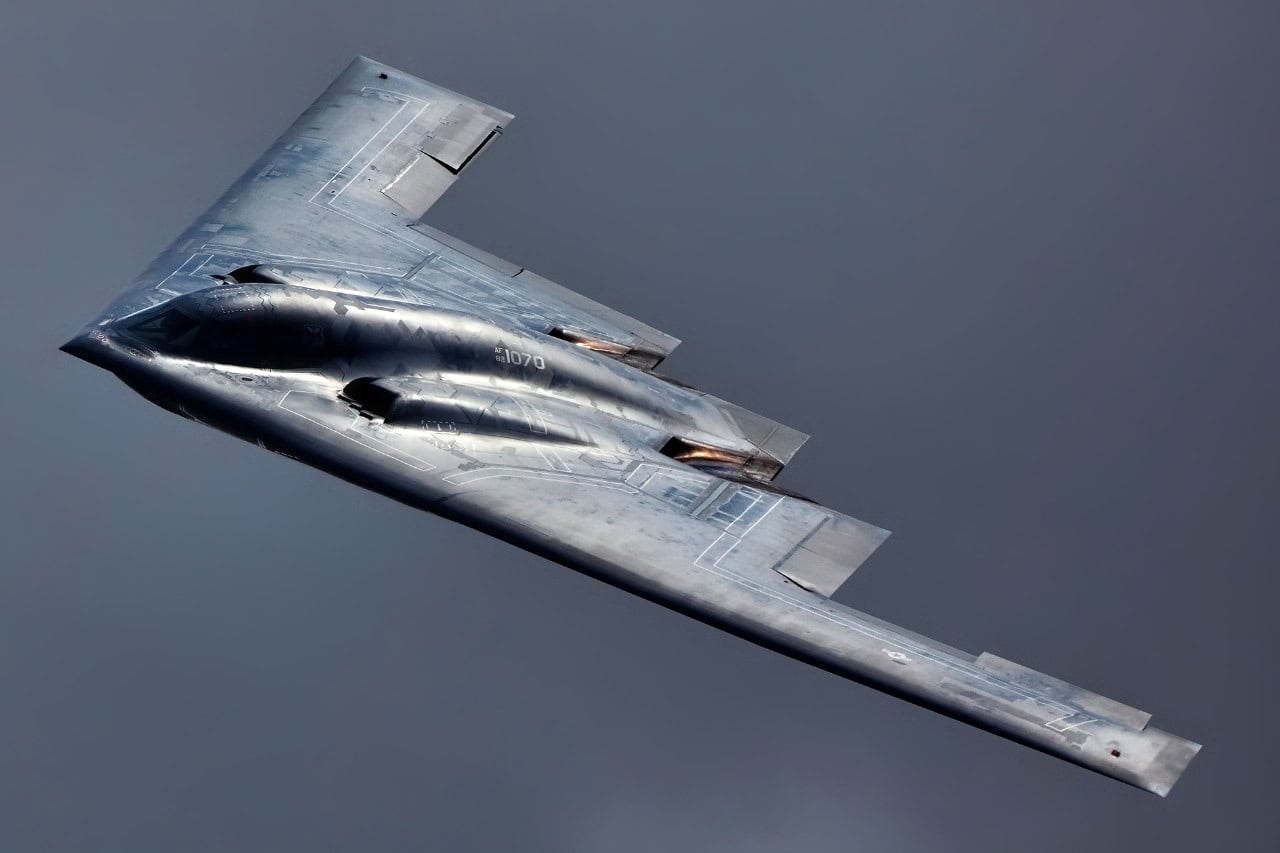
B-2 Bomber. Image Credit: Creative Commons.
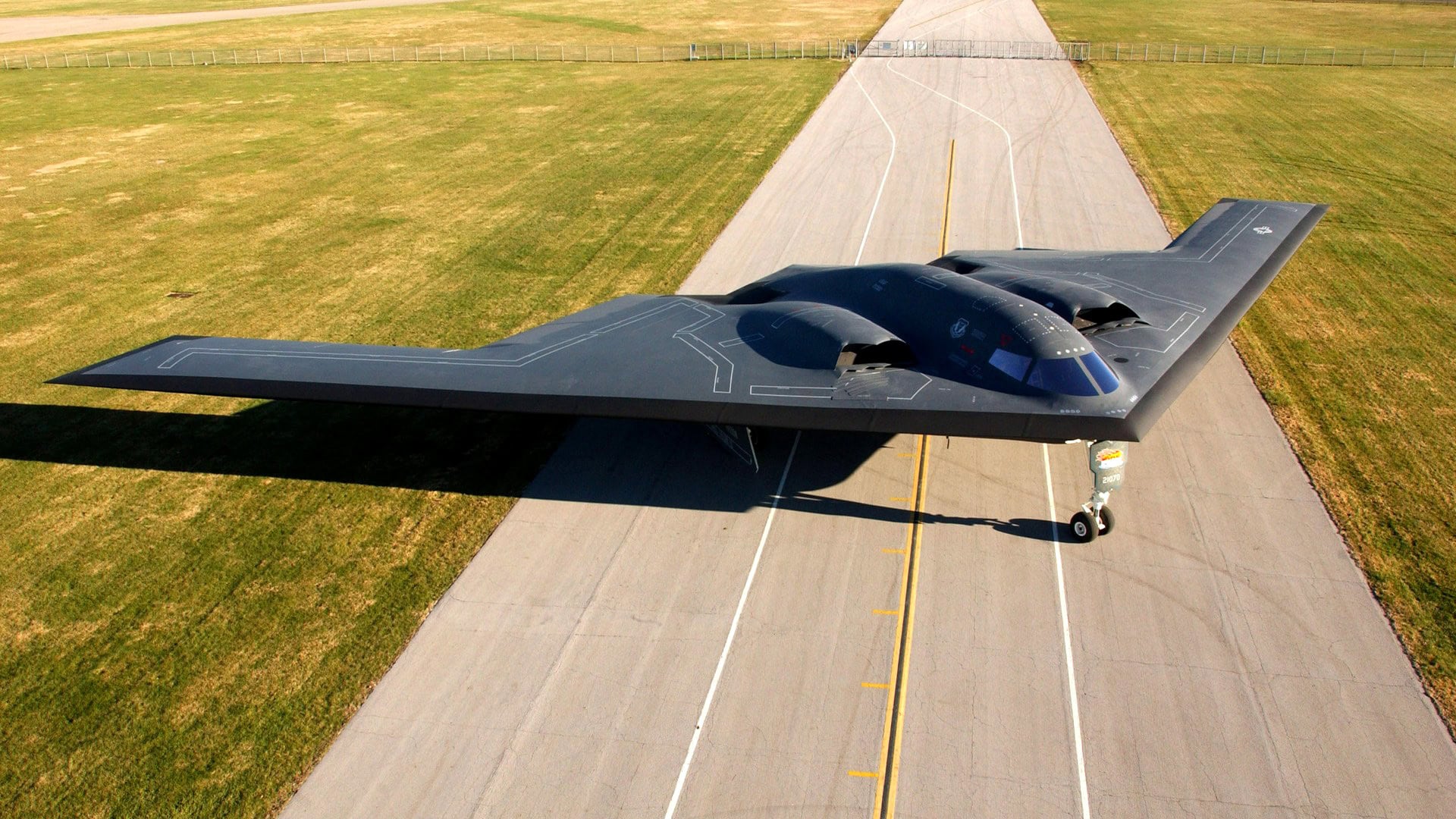
B-2 Bomber. Image Credit: Creative Commons.
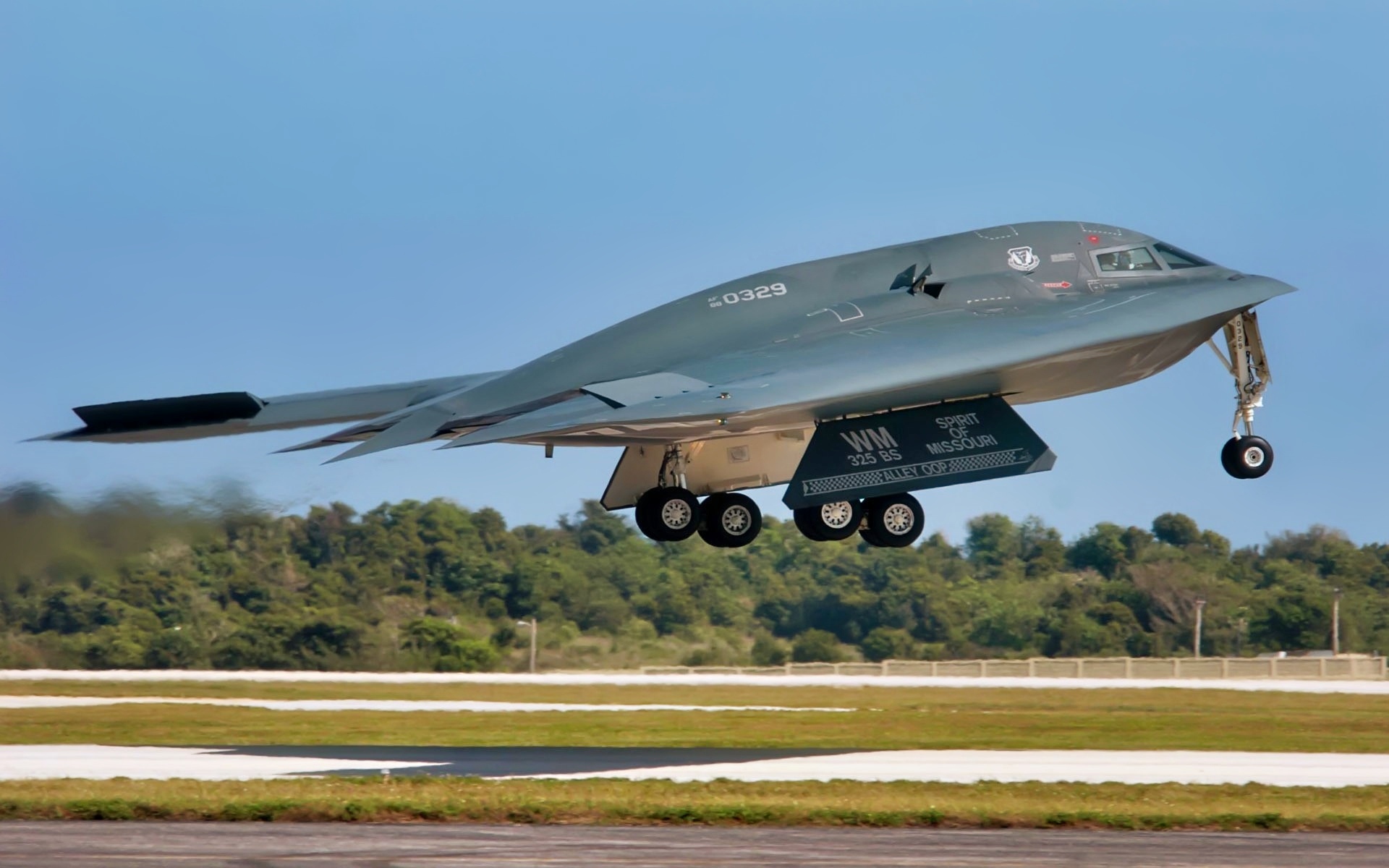
B-2 Bomber. Image Credit: Creative Commons.

B-2 Spirit Bomber. Image Credit: Creative Commons.
These initial attacks are consistent with the B-2’s core mission: launch secret, quiet, undetected attacks over heavily defended enemy territory to create a safer air corridor for less stealthy planes to operate within extremely lethal, otherwise uninhabitable airspace.
Weapons selection, navigational data, and intelligence analysis are all controlled by a human pilot operating a digital display, a computer screen, and a fire control system in the sky.
The aircraft has eight displays, and incoming data from different sensor pools can now likely be “fused” into a common picture for pilots.
B-2 Weapons
In recent years, the B-2 has been testing with the B-61 Mod 12, an upgraded variant of several nuclear bombs that integrates their functionality into a single weapon.
This not only reduces payload but also multiplies the attack options for pilots.
For instance, a B-2 could quickly adjust from a point-detonate variant of the B-61 Mod 12 to one designed with penetration capabilities, Air Force officials said.
Alongside its nuclear arsenal, the B-2 carries a wide range of conventional weapons, including precision-guided 2,000-pound Joint Direct Attack Munitions or JDAMs, 5,000-pound JDAMs, Joint Standoff Weapons, Joint Air-to-Surface Standoff Missiles, and GBU 28 5,000-pound bunker buster weapons, among others.
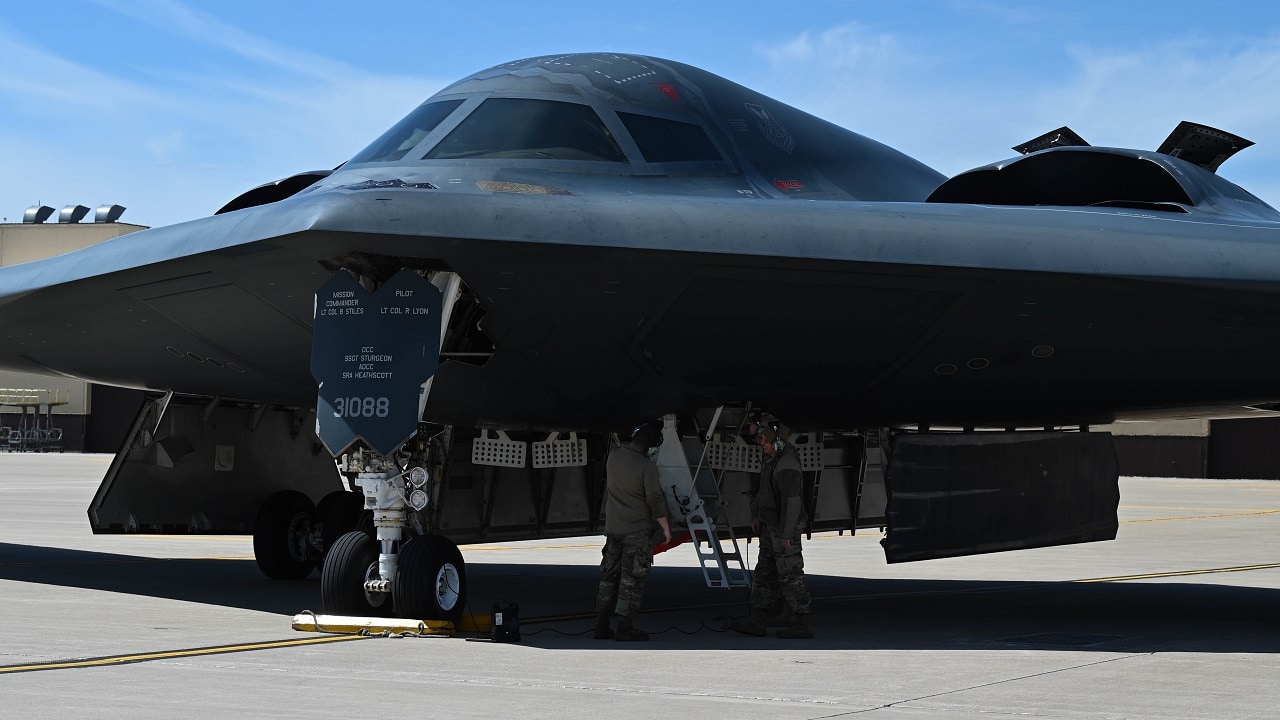
Crew chiefs assigned to the 509th Aircraft Maintenance Squadron prep a B-2 Spirit stealth bomber for a hot-pit refuel, at Whiteman Air Force Base, Missouri, April 4, 2022. Exercise Agile Tiger promotes resilience, innovation, competitiveness and process improvement, all talents required to address today’s complex challenges. (U.S Air Force Photo by Senior Airman Christina Carter)
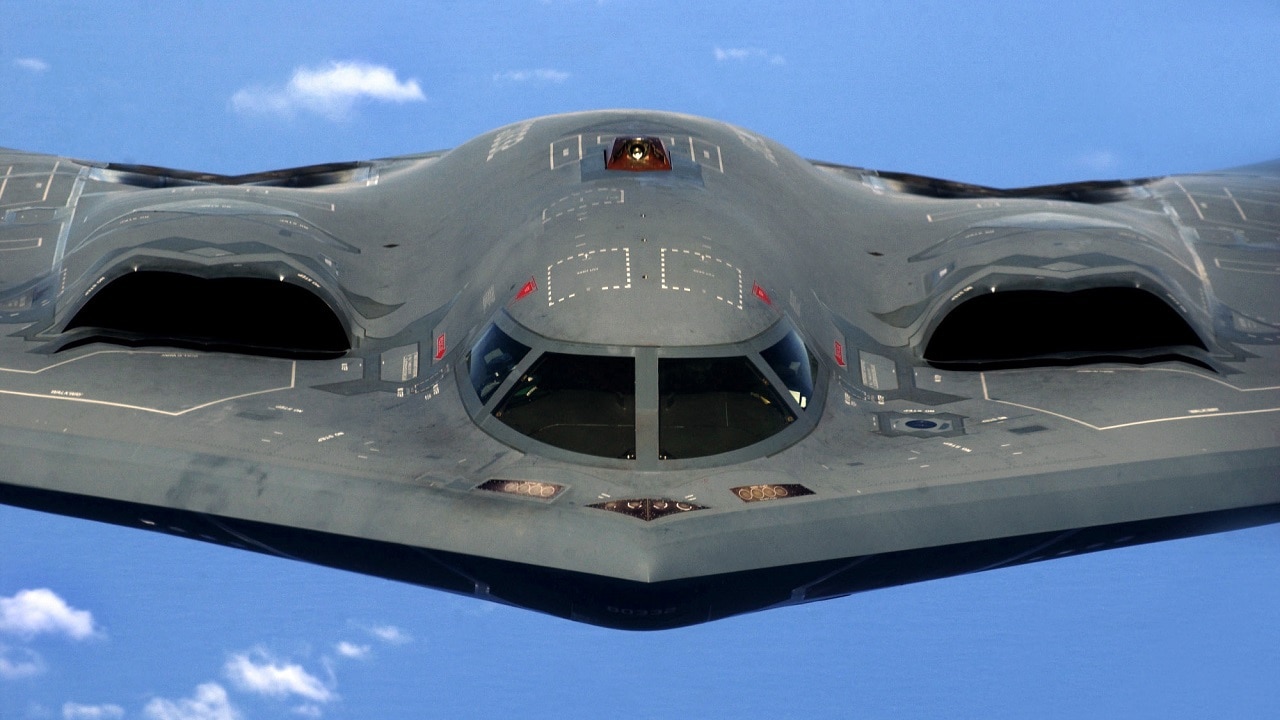
A U.S. Air Force B-2 Spirit “Stealth” bomber, 393rd Expeditionary Bomb Squadron, 509th Bomb Wing, Whiteman Air Force Base, Mo., flies over the Pacific Ocean after a recent aerial refueling mission, May 2, 2005. The Bombers are deployed to Anderson Air Force Base, Guam, as part of a rotation that has provided the U.S. Pacific Command a continous bomber presence in the Asian Pacific region since February 2004, enhancing regional security and the U.S. commitment to the Western Pacific. (U.S. Air Force photo by Tech Sgt. Cecilio Ricardo) (Released)
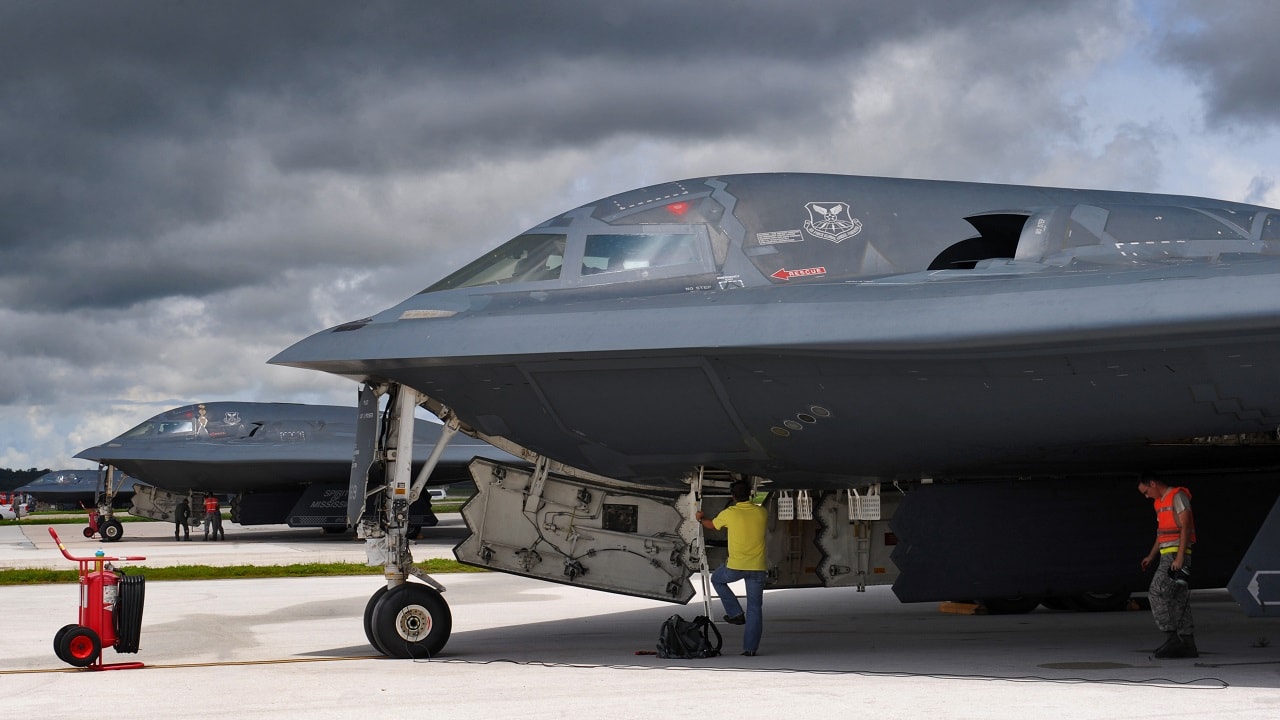
U.S. Air Force B-2 Spirit aircraft undergo pre-flight inspections prior to take off at Andersen Air Force Base, Guam, Aug. 11, 2016. More than 200 Airmen and three B-2s deployed from Whiteman Air Force Base, Mo., to conduct local sorties and regional training and integrate with regional allies in support of Bomber Assurance and Deterrence missions. (U.S. Air Force photo by Tech. Sgt. Miguel Lara III)
The B-2 also carries a 30,000-pound conventional bomb known as the Massive Ordnance Penetrator, a weapon described as a more explosive version of the Air Force GBU-28 bunker buster. As many know, the MOP was used against Iranian nuclear targets in Operation Midnight Hammer.
Large, bunker-busting bombs are likely being used now against buried Iranian targets.
The B-2 has flown missions over Iraq, Libya, and Afghanistan. Given its ability to fly as many as 6,000 nautical miles without needing to refuel, the B-2 flew from Missouri all the way to an island off the coast of India called Diego Garcia – before launching bombing missions over Afghanistan during Operation Enduring Freedom.
Modern, Upgraded B-2
While the original engineering may have come from the 1980s, many upgrades, adaptations, and technological improvements have sought to keep the bomber current, relevant, and ahead of evolving threats.
The upgrades are multi-faceted and, among other things, they involve the re-hosting of the flight management control processors, the brains of the airplane, onto much more capable integrated processing units.
This results in the laying of new fiber-optic cable rather than the mix bus cable previously used, because original B-2 computers from the 80s could be overloaded with data in a modern war environment, Air Force officials said.
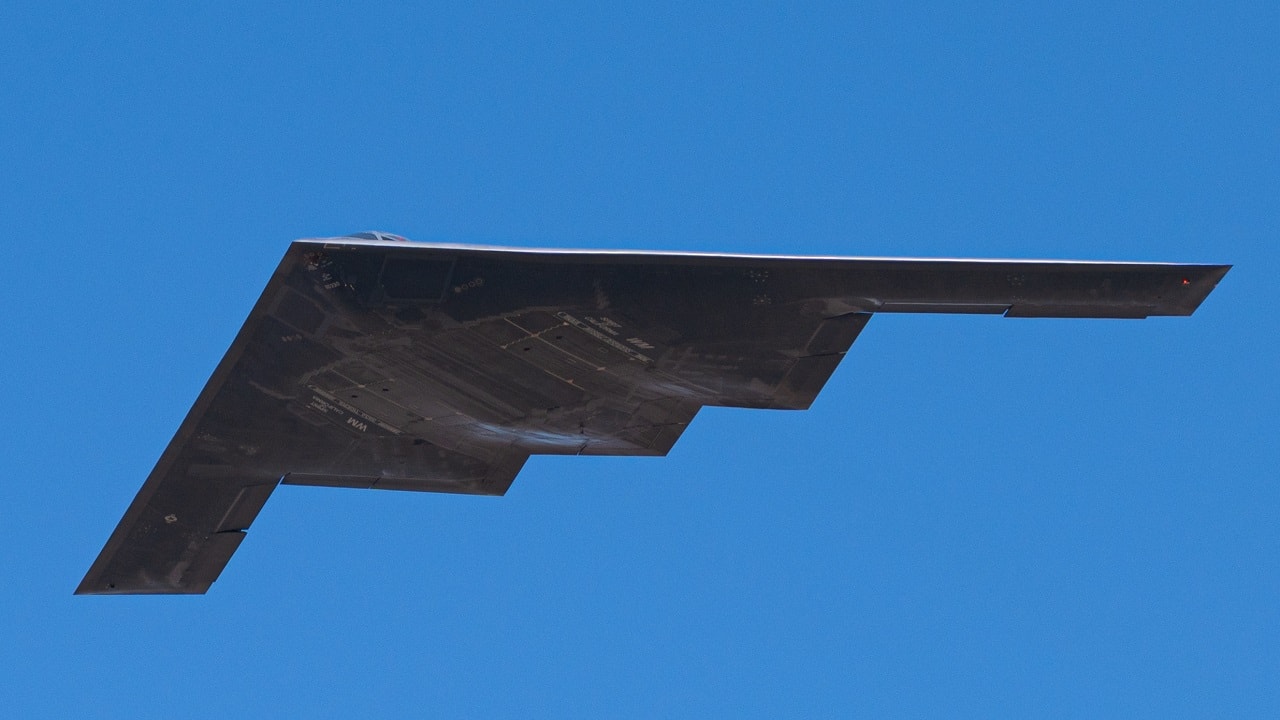
A B-2 Spirit stealth bomber from Whiteman Air Force Base completes a fly-over during the Sound of Speed Airshow at Rosecrans Air National Guard Base, in St. Joseph, Missouri, May 1, 2021. The air show was hosted by the city of St. Joseph and 139th Airlift Wing, Missouri Air National Guard to thank the community for their support. (U.S. Air National Guard photo by Airman Janae Masoner)
The B-2 is not only rounded and curved but also entirely horizontal, without vertical structures. This creates a scenario in which a return electromagnetic ping or radar signal cannot obtain an actual rendering of the plane.
The exterior is both smooth and curved, with no visible seams joining the fuselage sections. Weapons are carried internally, and antennas and sensors are often built into parts of the fuselage to minimize detectable shapes on the aircraft.
Stealth Success
By avoiding protruding objects, shapes, or certain vertical configurations such as fins, the bomber blinds enemy radar, which is unable to generate enough returning electromagnetic “pings” to determine that an aircraft is present.
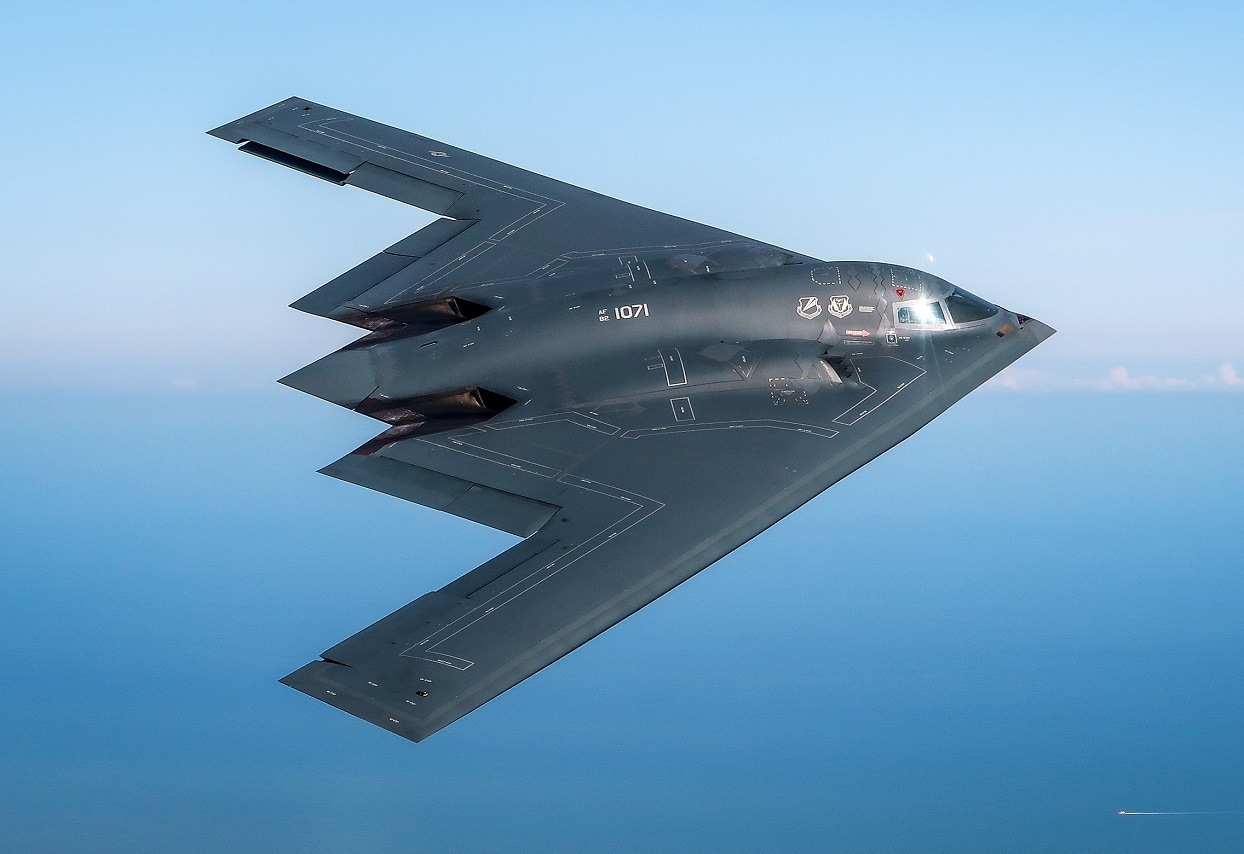
B-2 Bomber. Image Credit: Creative Commons.
An indispensable premise of B-2 sustainment is that the aircraft be prepared to succeed in the most “high-threat” or “contested” combat environments likely to exist.
The intent is not only to elude higher-frequency engagement radar, which allows air defenses to shoot down an airplane, but also to elude lower-frequency surveillance radar, which can detect an aircraft in the vicinity.
Also, stealth aircraft such as the B-2 are built with an internal, or buried, engine to decrease the heat signature emerging from the exhaust.
One goal of stealth aircraft thermal management is to align the aircraft with the surrounding air temperature to avoid creating a heat differential that enemy sensors can detect.
About the Author: Kris Osborn
Kris Osborn is the President of Warrior Maven – Center for Military Modernization. Osborn previously served at the Pentagon as a highly qualified expert in the Office of the Assistant Secretary of the Army—Acquisition, Logistics & Technology. Osborn has also worked as an anchor and on-air military specialist at national TV networks. He has appeared as a guest military expert on Fox News, MSNBC, The Military Channel, and The History Channel. He also has a Masters Degree in Comparative Literature from Columbia University.