
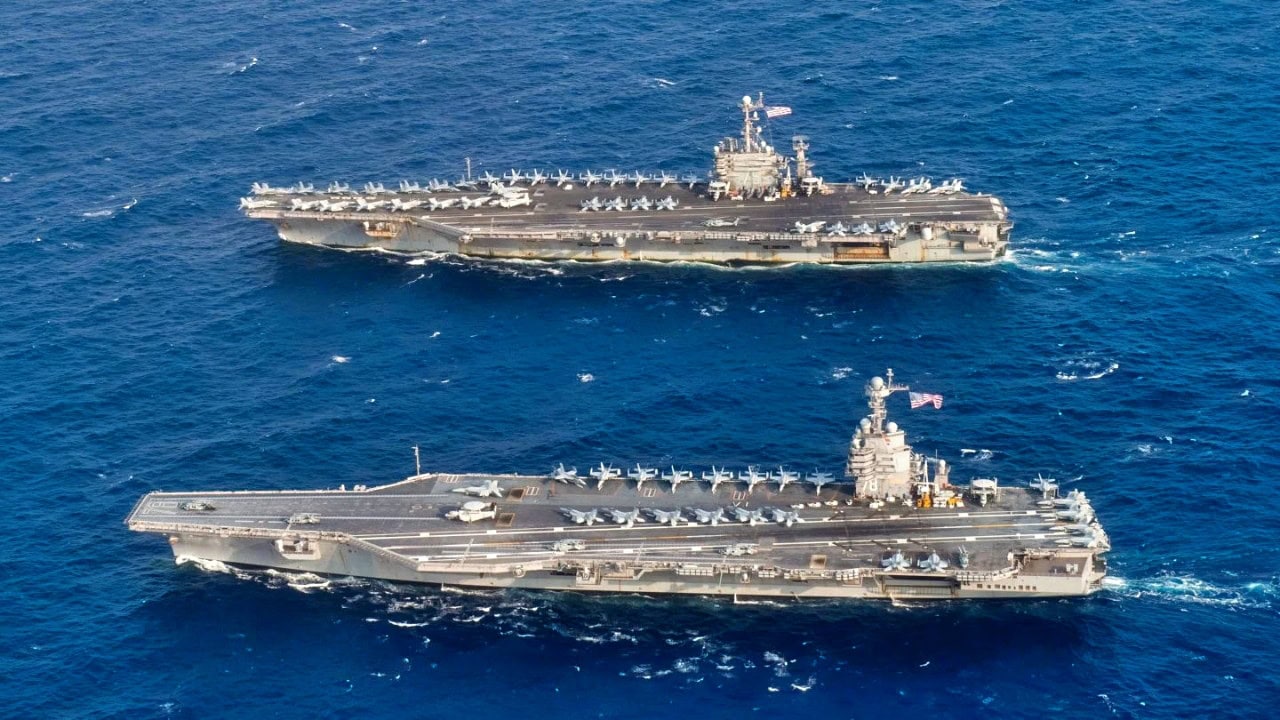
Summary and Key Points: Dr. Andrew Latham — a Macalester College professor of international relations and political theory — delivers a sweeping strategic indictment of American naval procurement, arguing that the U.S. Navy’s crisis is fundamentally a failure of strategic clarity rather than industrial capacity.
-With 82% of warships currently under construction behind schedule, Latham traces the root cause from post-Cold War mission drift through the Littoral Combat Ship era to the Zumwalt-class destroyer debacle — three ships built for a strategic rationale that collapsed before they entered service.
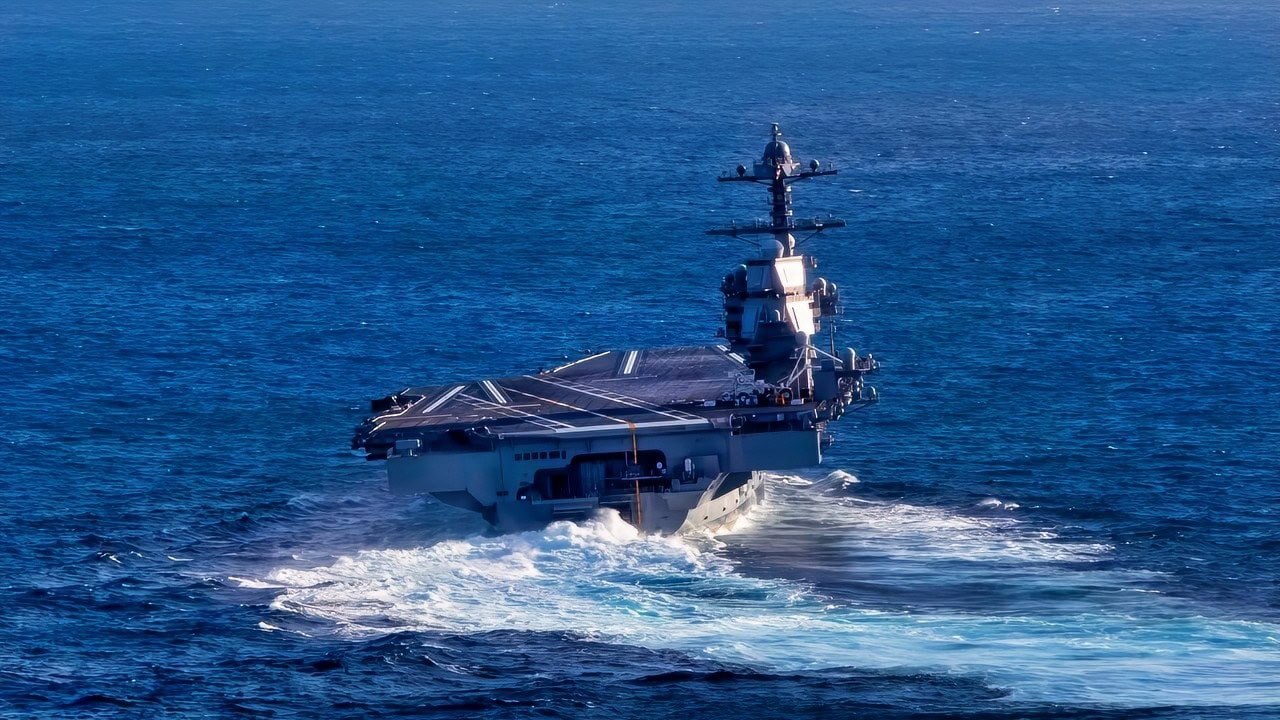
ATLANTIC OCEAN (Oct. 29, 2019) USS Gerald R. Ford (CVN 78) conducts high-speed turns in the Atlantic Ocean. Ford is at sea conducting sea trials following the in port portion of its 15 month post-shakedown availability.(U.S. Navy photo by Mass Communication Specialist 3rd Class Connor Loessin)
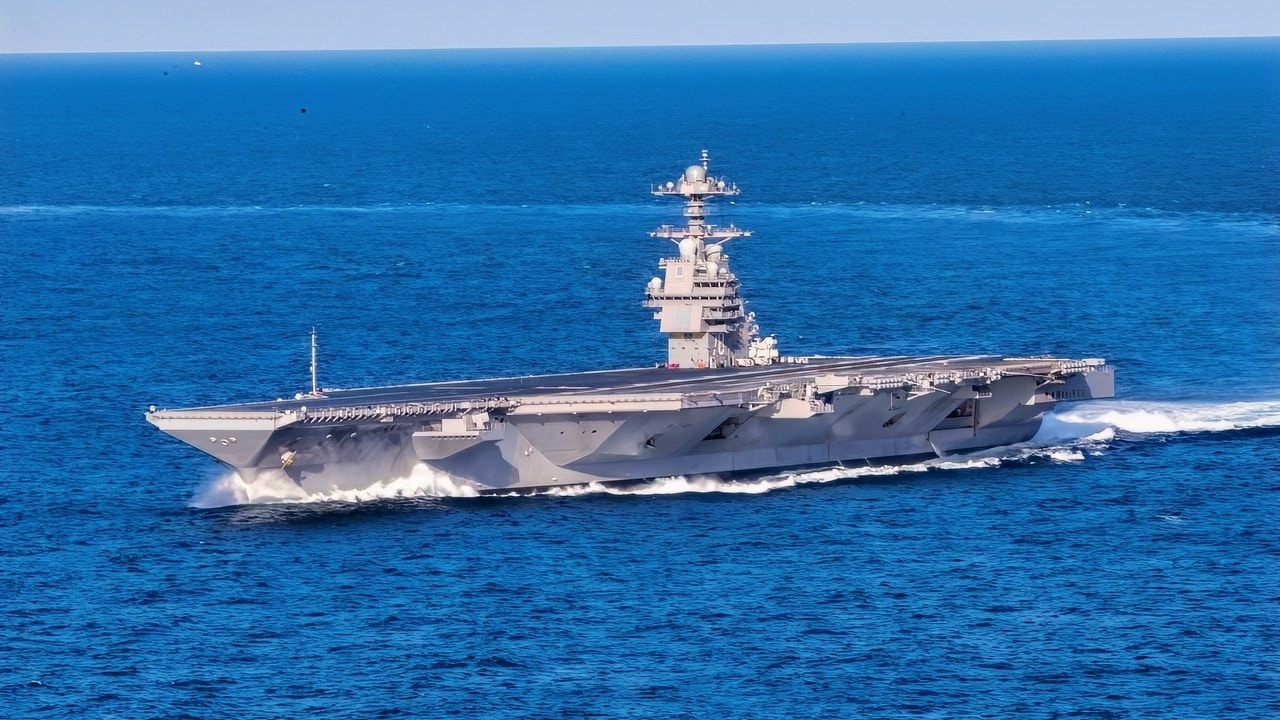
ATLANTIC OCEAN (Oct. 29, 2019) USS Gerald R. Ford (CVN 78) conducts high-speed turns in the Atlantic Ocean. Ford is at sea conducting sea trials following the in port portion of its 15 month post-shakedown availability. (U.S. Navy photo by Mass Communication Specialist 3rd Class Connor Loessin)
-Drawing on Alfred Thayer Mahan’s sea power doctrine, Latham contrasts America’s strategic whiplash with China’s People’s Liberation Army Navy, which has spent two decades steadily advancing toward a single objective: contesting U.S. naval dominance around Taiwan and across the Western Pacific.
The Real Reason 82% of New U.S. Navy Warships Are Late Has Nothing to Do With Shipyards
The easiest way to misunderstand the Navy’s shipbuilding mess is to treat it as a shipyard story. That is how the issue is usually framed. Too few workers, too much complexity, too much bureaucracy, too many delays. None of that is wrong, but it is only the visible part of the problem.
The deeper problem sits upstream. The Navy’s procurement troubles reflect not just industrial strain, but a long stretch of strategic drift. If Washington cannot decide what kind of fleet it wants, shipbuilders are never going to deliver it on time.
Recent reporting makes the scale of the problem hard to shrug off. Roughly 82 percent of the warships now under construction are behind schedule. That figure matters not simply because it is embarrassing, though it is. It matters because it points to something more serious than managerial sloppiness.
When Strategy Was Clear
For most of the Cold War, the Navy knew what it was for. Its central task was to deter and, if needed, defeat the Soviet Navy. Carrier groups projected power, attack submarines stalked Soviet submarines, and surface combatants helped protect sea lines and the larger fleet around them.
That strategic setting did not answer every question, but it answered the big one. The Navy was building for a recognizable adversary in a recognizable kind of maritime competition. Procurement could therefore follow a relatively stable logic.
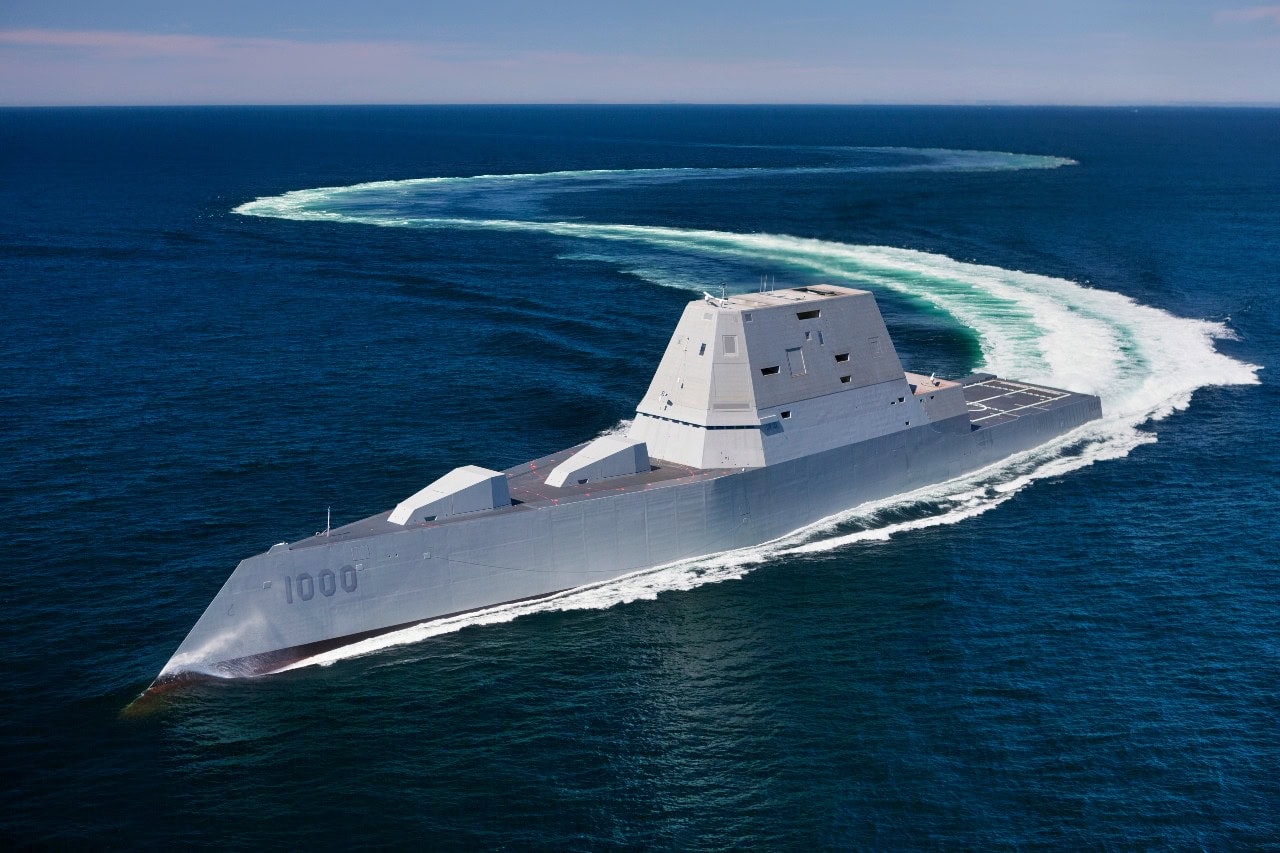
Zumwalt-Class Destroyer U.S. Navy.
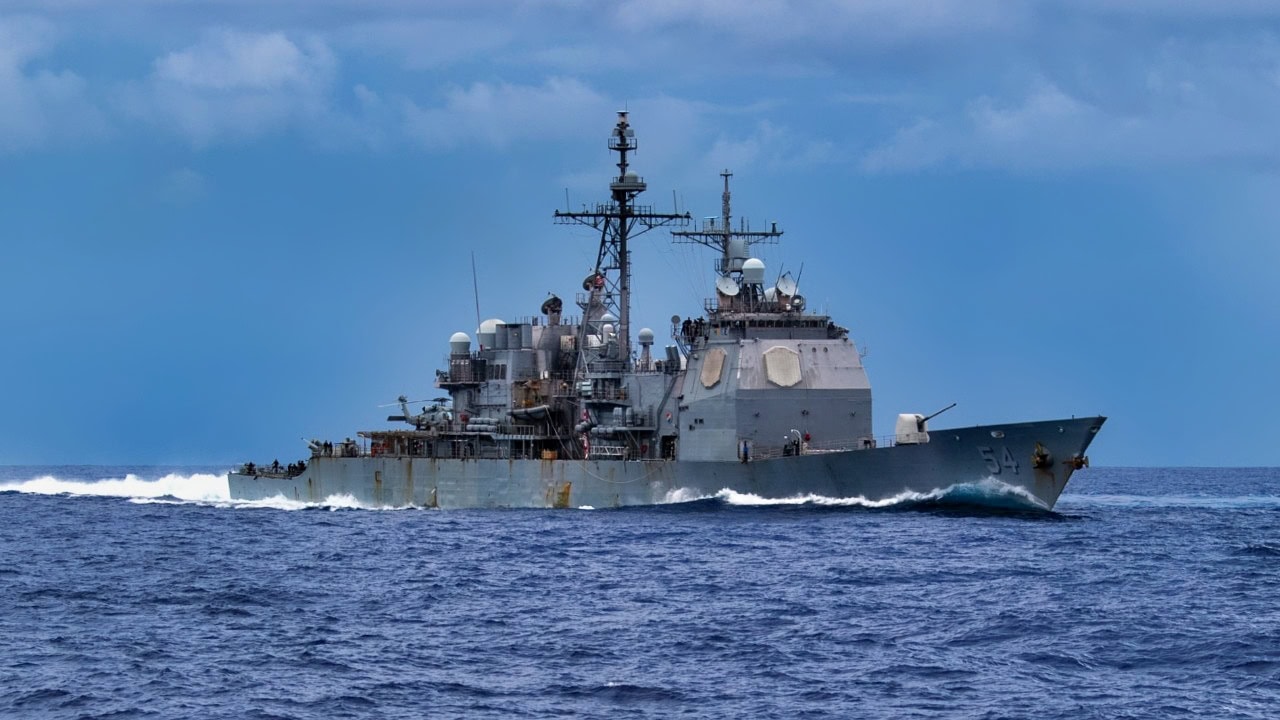
PACIFIC OCEAN (Sept. 14, 2020) The Ticonderoga-class guided-missile cruiser USS Antietam (CG 54) moves in formation during exercise Valiant Shield 2020. Valiant Shield is a U.S. only, biennial field training exercise (FTX) with a focus on integration of joint training in a blue-water environment among U.S. forces. This training enables real-world proficiency in sustaining joint forces through detecting, locating, tracking, and engaging units at sea, in the air, on land, and in cyberspace in response to a range of mission areas. (U.S. Navy photo by Mass Communication Specialist 2nd Class Nick Bauer)

HMS Talent Royal Navy Submarine
Naval thinkers have understood this for a very long time. Alfred Thayer Mahan’s point was never just that fleets matter. It was that sea power depends on the fit between national purpose, geography, and fleet design. When those things line up, procurement has a kind of internal discipline. When they do not, programs start wandering.
The Long Drift After 1991 for the U.S. Navy
After the Cold War, that discipline weakened. The Soviet Union disappeared, and with it went the organizing problem that had shaped American naval planning for decades. The United States still had a navy of overwhelming power, but it no longer had the same clarity about what that navy was primarily meant to do.
So, the mission set widened. The Navy enforced sanctions, supported interventions, reassured allies, patrolled distant waters, and backed expeditionary operations in places where no serious fleet could challenge it. Those were real missions, but they did not impose the same kind of coherent design logic that Cold War competition with the Soviet Union had imposed.
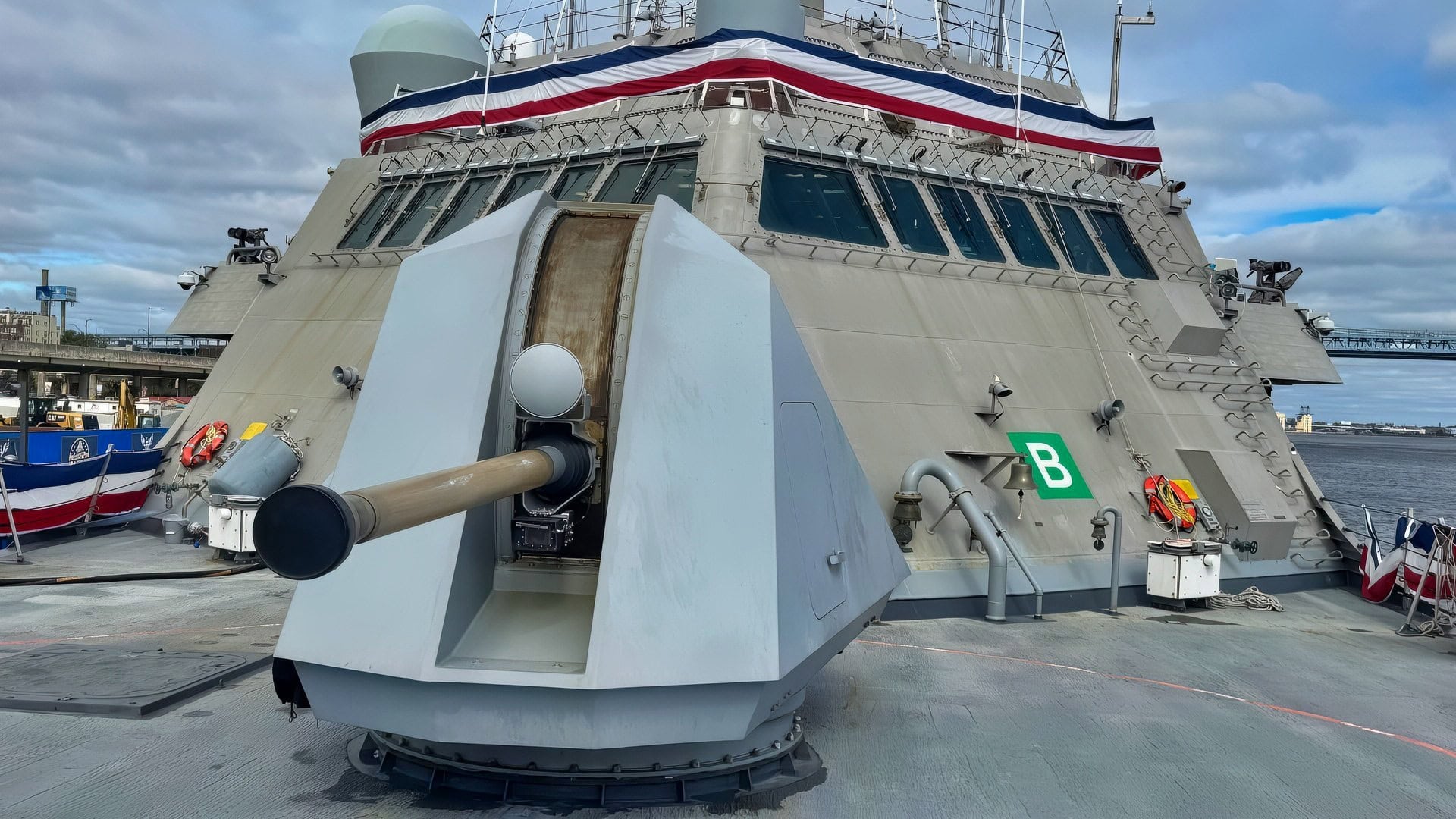
Littoral Combat Ship USS Cooperstown. Image Credit: 19FortyFive.com
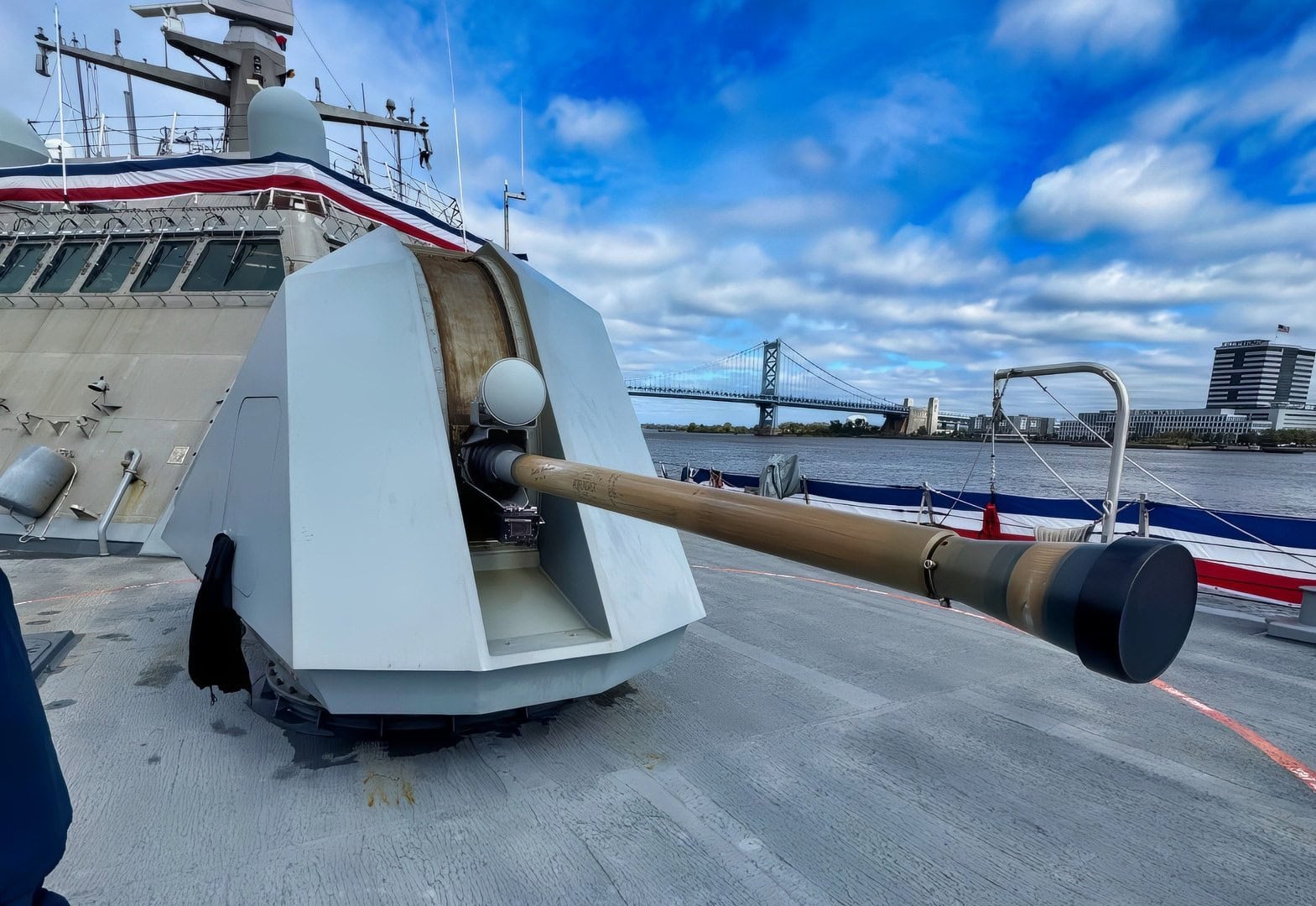
Littoral Combat Ship Deck Gun U.S. Navy. Image Credit: 19FortyFive.com
Then came the post-9/11 years, and the drift deepened. American strategy turned toward counterterrorism, irregular warfare, and operations near shore. The Littoral Combat Ship belongs to that moment. It made sense inside a world in which the United States expected to spend more time dealing with mines, swarming small craft, and permissive littorals than with a peer navy capable of contesting control of the sea.
That world did not last.
Ships Built for Yesterday’s Debate
China’s naval rise forced the United States back toward a much older problem. Suddenly, the key questions involved survivability, missile defense, range, sea control, and the problem of operating in a theater where the enemy could strike back with considerable force. The Western Pacific is not a permissive operating environment. It is a contested theater that punishes strategic confusion.
The trouble, of course, is that warships are not built overnight. Moving from concept to design, engineering, budgeting, and construction takes years. When strategy shifts, the ships already in the pipeline were designed for the assumptions that shaped the program at the start.
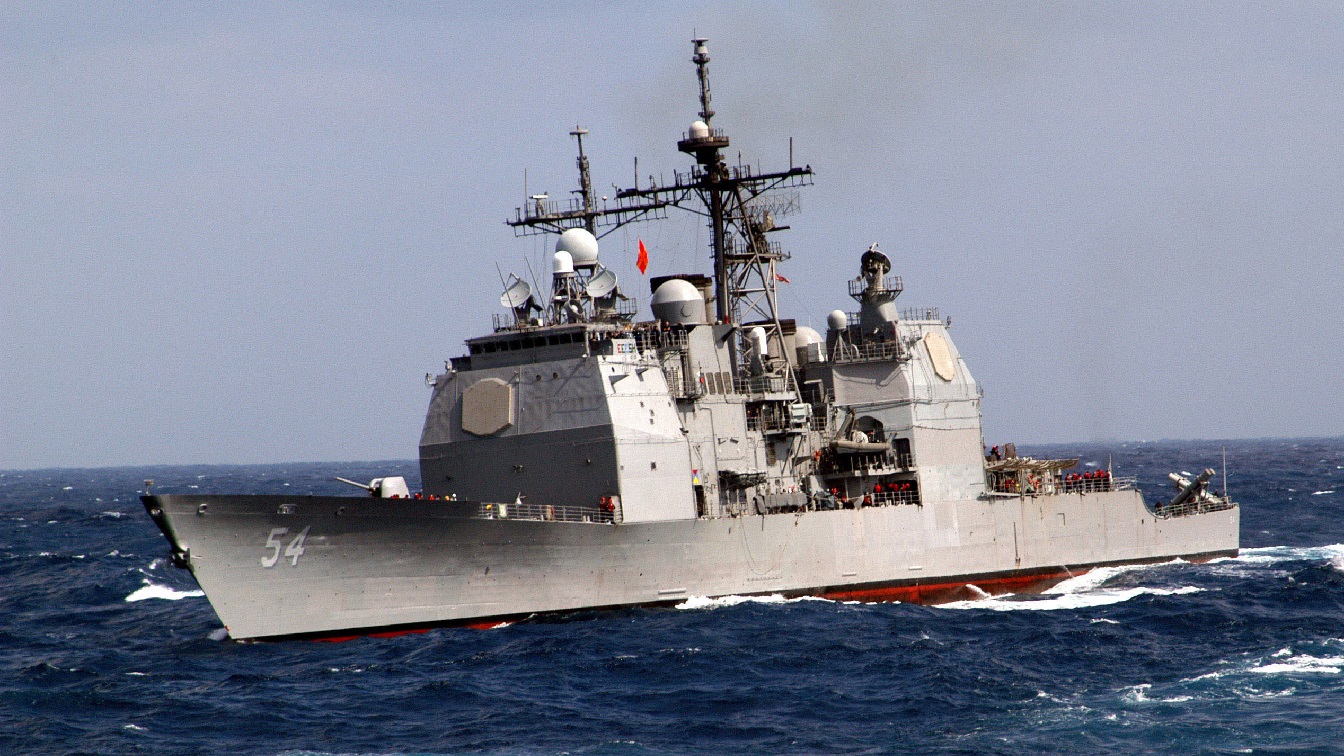
East China Sea (Mar. 28, 2003) — The guided missile cruiser USS Antietam (CG 54) underway in the rough seas of the East China Sea. Antietam is part of the USS Carl Vinson (CVN 70) Battle Group. Antietam and Carl Vinson have just completed participating in Exercise Foal Eagle and are continuing their deployment in the western Pacific Ocean. Exercise Foal Eagle is an annual joint and combined field training exercise between the U.S. and Republic of Korea armed forces. The exercise is designed to strengthen relationships and improve interoperability between both nations through real world training scenarios. U.S. Navy photo by Photographer’s Mate Airman Aaron Hampton.
That is where the delays and overruns begin to make more sense. When strategic priorities shift midstream, existing programs get revised rather than replaced. New capabilities are added, and requirements change as Washington tries to retrofit yesterday’s program for today’s strategic problem. As a result, costs go up, and delivery timelines are pushed back.
The Zumwalt-class destroyer remains the cleanest illustration of the pattern. It began life as part of a very different strategic conversation, one shaped heavily by land attack and littoral operations. As the rationale behind the program weakened, the order contracted until the Navy ended up with three ships that are still being pushed toward missions other than those that originally justified them. Needless to say, unit costs went through the roof.
That was not just a procurement failure. It was strategic whiplash forged in steel.
Why China Sharpens the Contrast
China makes the American problem easier to see because Beijing has been working from a far more consistent script. Over the past two decades, the People’s Liberation Army Navy has built toward a fairly clear objective: to contest American command of the sea in the Western Pacific and deny U.S. naval forces freedom of action in the waters around Taiwan.
That does not mean Chinese programs are flawless or that Chinese naval planners are more rational. It means, rather, that their shipbuilding has been guided by a steadier strategic question than the one guiding the United States.
History makes the point clearly enough. In earlier periods of naval competition—from Britain and Germany before 1914 to later U.S. fleet expansions driven by clearer geopolitical aims—strategic coherence tended to make industrial performance look better than it might otherwise have.
Shipbuilding does not require perfect conditions to function well. What it does require is a reasonably stable sense of what the fleet is supposed to do and what kind of ships that mission demands.
The Real Fix for America’s Navy Challenge
The United States still retains immense maritime strengths. Its submarine force, surface fleet, carrier aviation, and global logistics system remain formidable in ways few others can match. This is not a story about a navy in collapse.
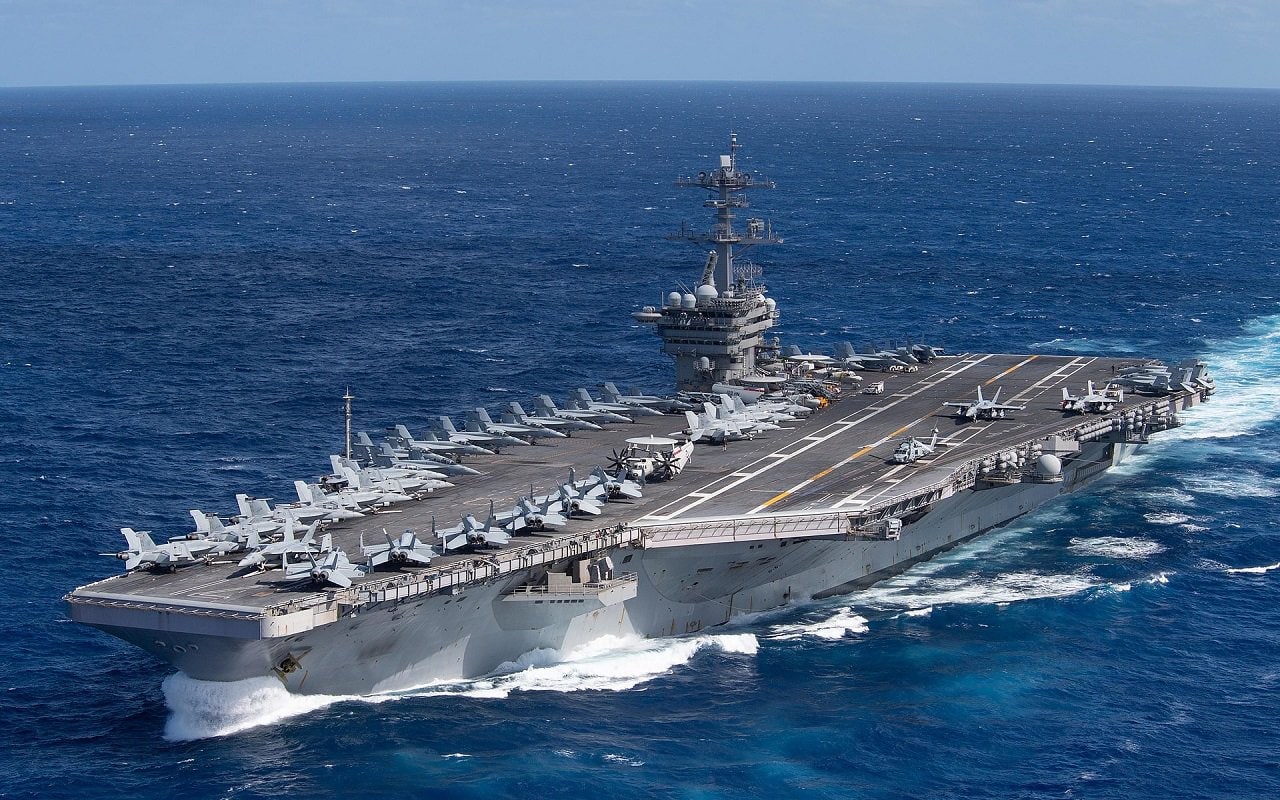
(Jan. 25, 2020) The aircraft carrier USS Theodore Roosevelt (CVN 71) transits the Pacific Ocean Jan. 25, 2020. The Theodore Roosevelt Carrier Strike Group is on a scheduled deployment to the Indo-Pacific. (U.S. Navy photo by Mass Communication Specialist Seaman Kaylianna Genier)
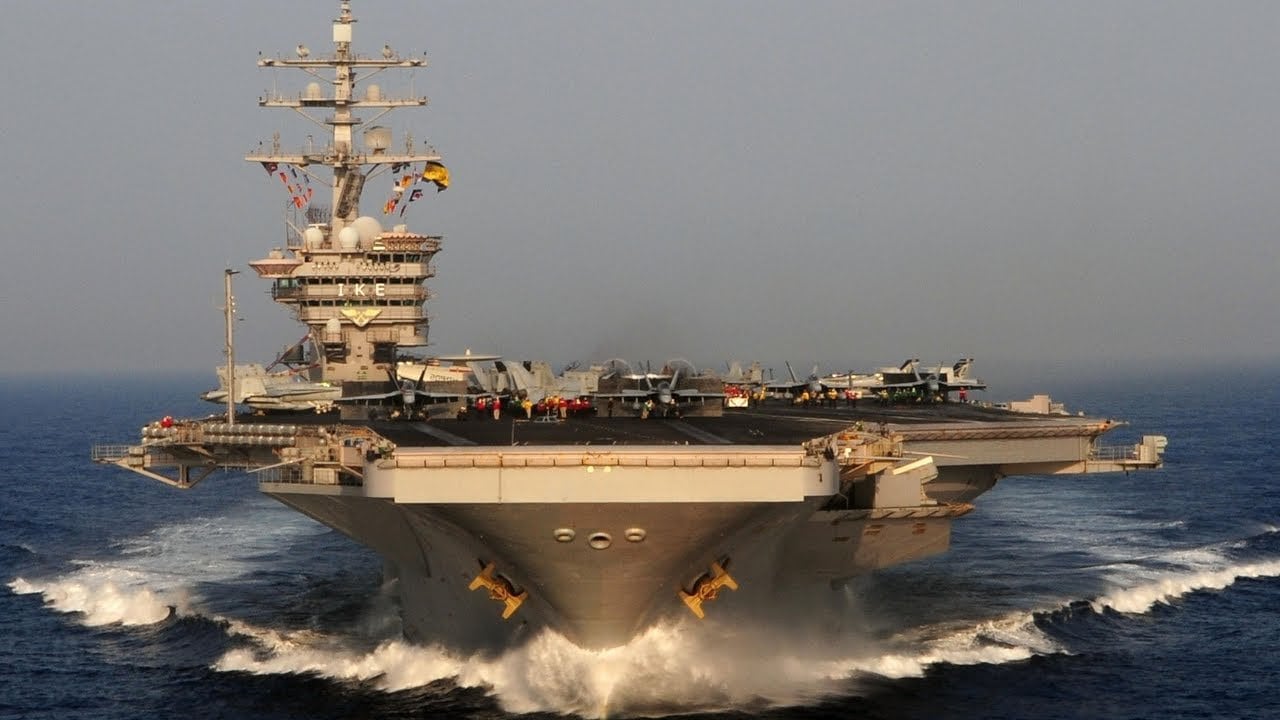
USS Dwight D. Eisenhower. Image Credit: U.S. Navy.
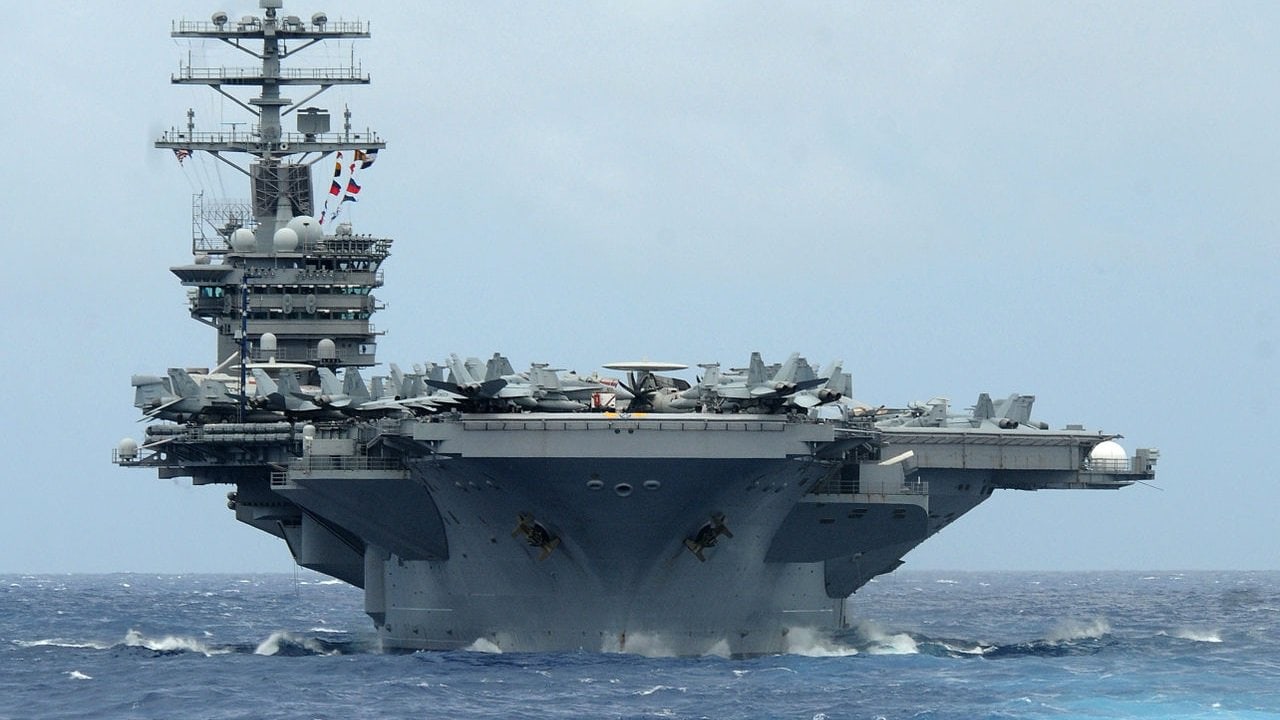
The aircraft carrier USS Nimitz (CVN 68) is underway during the Great Green Fleet demonstration portion of the Rim of the Pacific (RIMPAC) 2012 exercise. Nimitz took on 200,000 gallons of biofuel in preparation for the Great Green Fleet demonstration during Rim of the Pacific (RIMPAC) 2012. Twenty-two nations, more than 40 ships and submarines, more than 200 aircraft and 25,000 personnel are participating in RIMPAC exercise from June 29 to Aug. 3, in and around the Hawaiian Islands. The world’s largest international maritime exercise, RIMPAC provides a unique training opportunity that helps participants foster and sustain the cooperative relationships that are critical to ensuring the safety of sea lanes and security on the world’s oceans. RIMPAC 2012 is the 23rd exercise in the series that began in 1971. (U.S. Navy photo by Mass Communication Specialist 2nd Class Eva-Marie Ramsaran/Released)
It is, however, a story about a navy that has spent too long building amid unresolved strategic arguments. Many of the ships now entering or moving through production belong, in important ways, to earlier phases of post-Cold War thinking. That is why the problem is bigger than shipyard labor shortages or acquisition reform, important though both are.
Those issues matter, but they sit downstream from the real question. Washington has to decide what kind of naval war it is preparing for and what kind of fleet that war actually requires. Until that happens, the Navy will go on trying to build ships for several futures at once, and procurement systems do not handle that kind of ambiguity well.
Ships built under those conditions tend to arrive late. More troubling, they often enter service shaped by strategic debates that ended years before the vessel ever touches water.
About the Author: Dr. Andrew Latham
Andrew Latham is a professor of international relations and political theory at Macalester College in Saint Paul, MN. You can follow him on X: @aakatham. He writes a daily column for 19FortyFive.com