
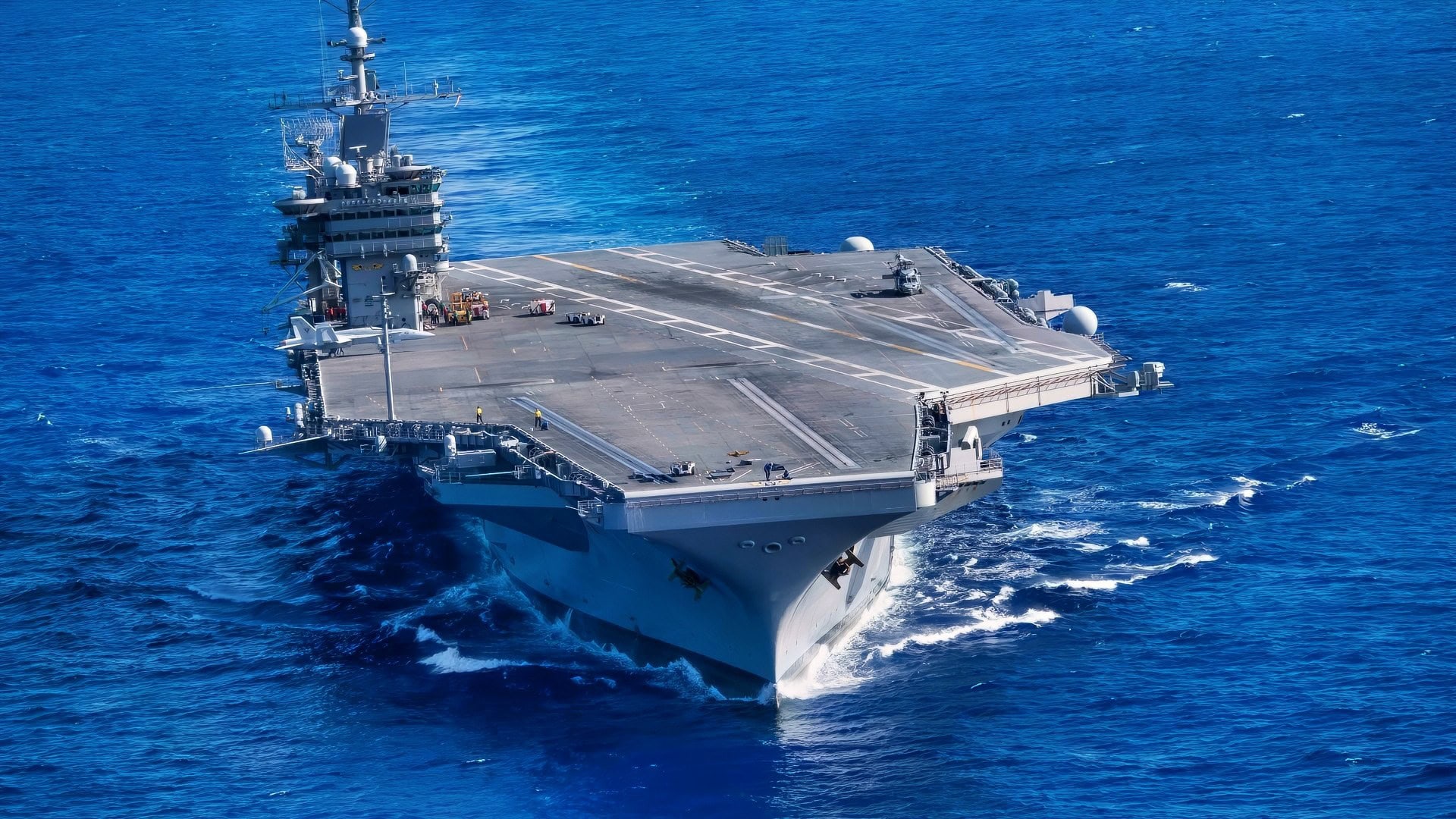
Summary and Key Points: Defense expert Isaac Seitz notes how the U.S. Navy faces a critical 2026 “maintenance crunch” as the USS John C. Stennis (CVN-74) refueling and complex overhaul (RCOH) slips 14 months behind schedule to October 2026.
-Labor shortages and a degraded steam turbine have pushed costs up by $483.1 million, creating a dangerous overlap with the USS Harry S. Truman (CVN-75), which begins its five-year overhaul in June 2026.
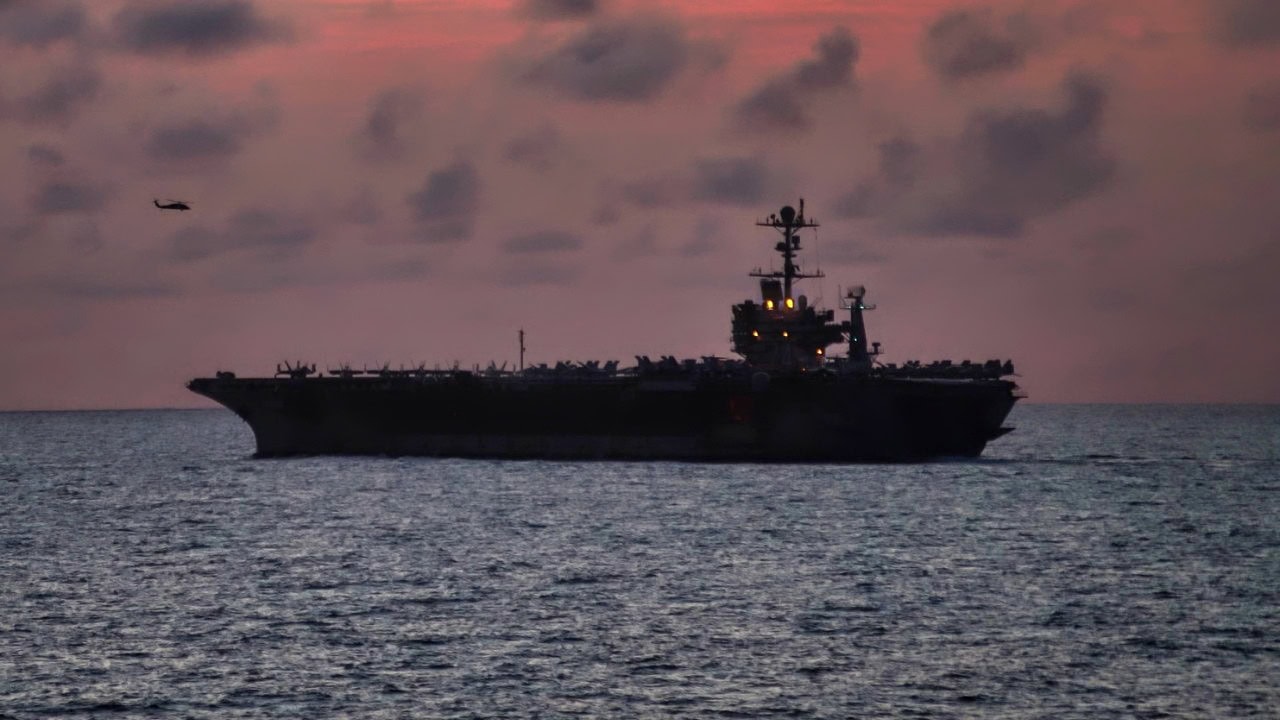
USS John C. Stennis Aircraft Carrier. Image Credit: Creative Commons.
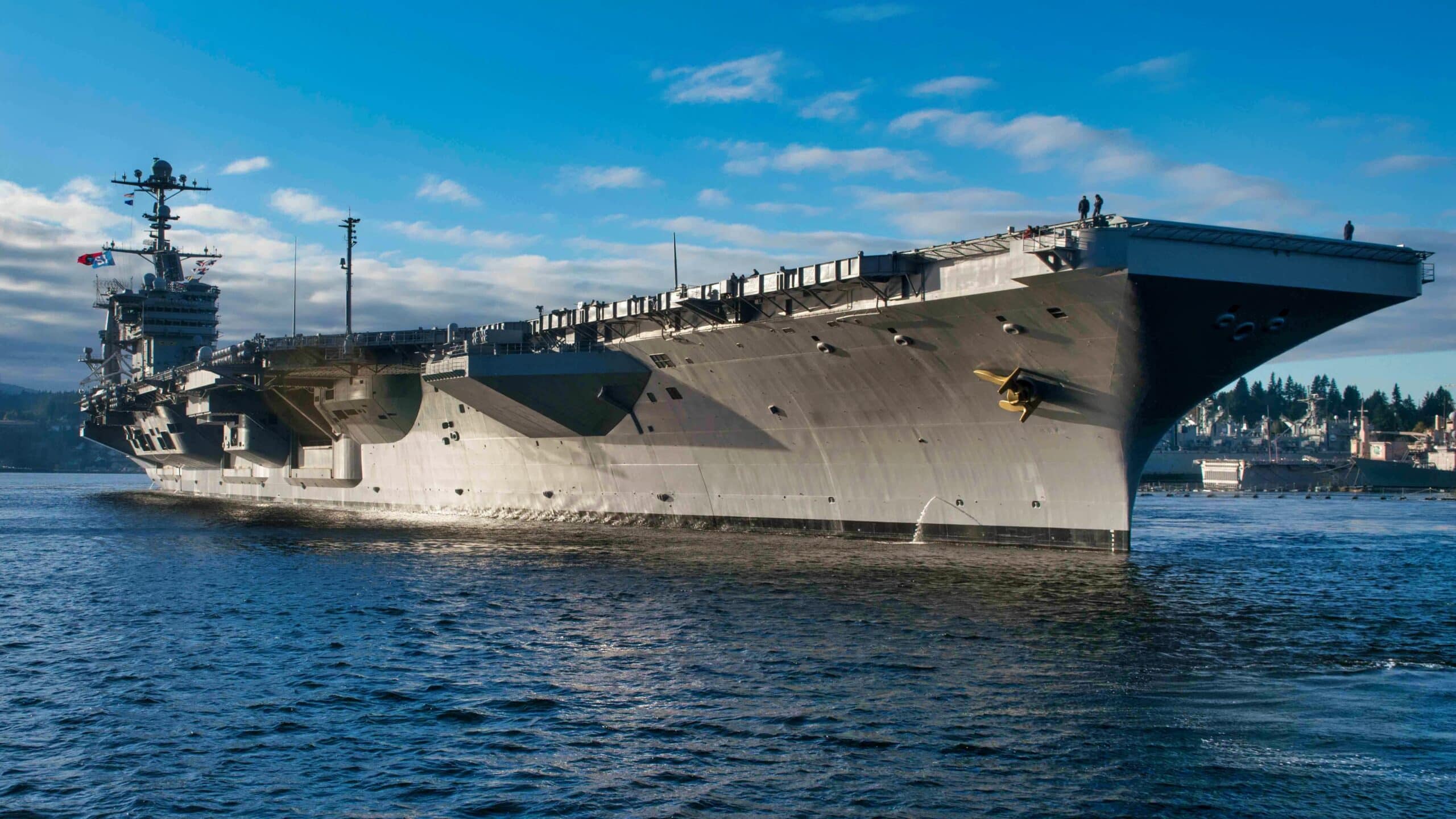
USS John C. Stennis Aircraft Carrier. Image Credit: Creative Commons.
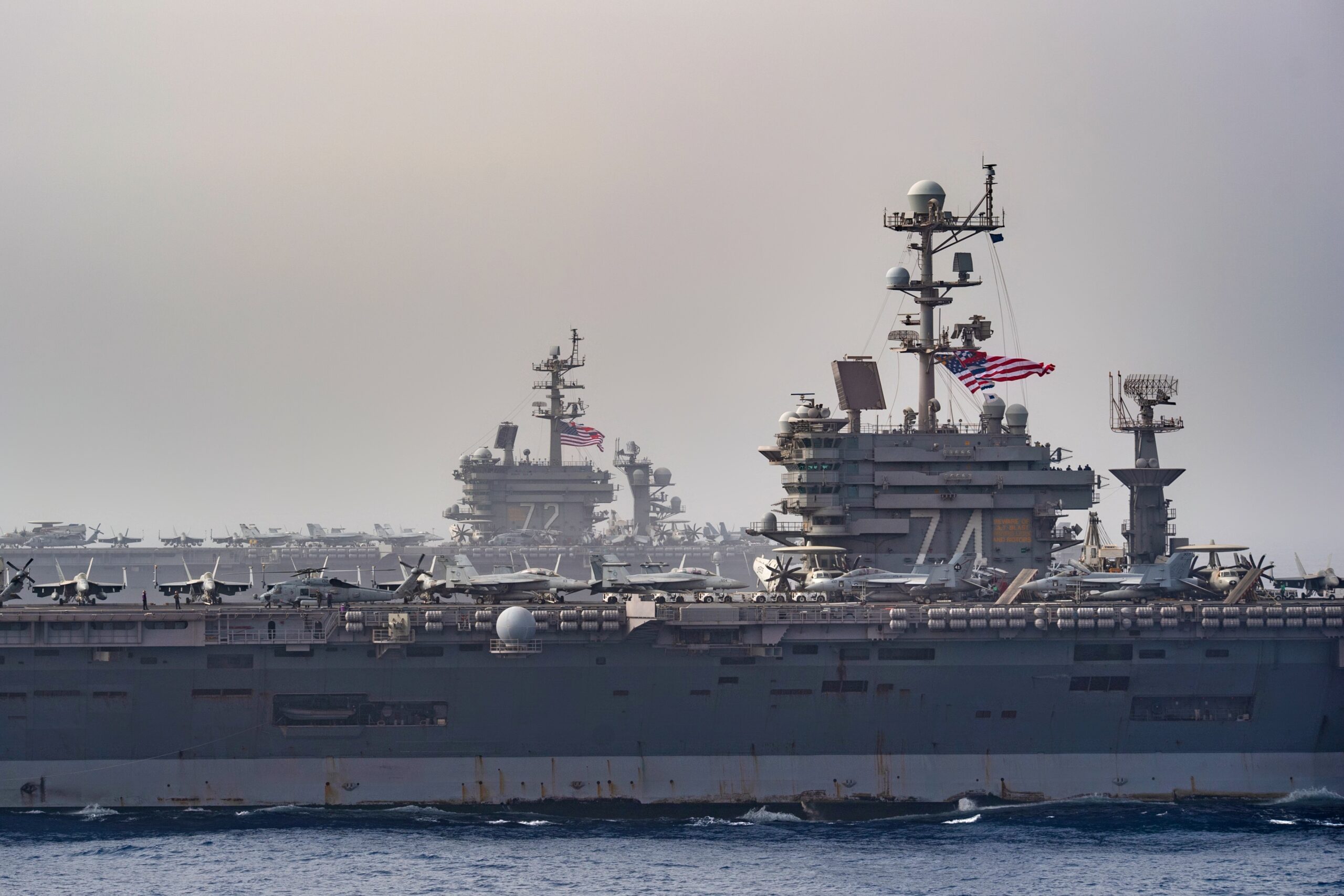
The aircraft carrier USS John C. Stennis (CVN 74) steams alongside the aircraft carrier USS Abraham Lincoln (CVN 72), background, in the Mediterranean Sea, April 24, 2019. The John C. Stennis Carrier Strike Group (CSG) 3 and Abraham Lincoln Carrier Strike Group (CSG) 12 are conducting dual carrier operations, providing opportunity for two strike groups to work together alongside key allies and partners in the U.S. 6th Fleet area of operations. John C. Stennis is underway in the Mediterranean Sea as part of the John C. Stennis Carrier Strike Group (JCSCSG) deployment in support of maritime security cooperation efforts in the U.S. 6th Fleet area of responsibility. (U.S. Navy photo by Mass Communication Specialist 3rd Class Grant G. Grady)
-With the USS Gerald R. Ford currently over 300 days into Operation Epic Fury, the Navy struggles to maintain its statutory 11-carrier requirement, highlighting a fragile industrial base and systemic shipyard decay.
The 2026 Aircraft Carrier Crunch: Why the Stennis and Truman RCOH Overlap is a Strategic Crisis
The U.S. Navy may face a shortage of mission-ready aircraft carriers as the USS John C. Stennis (CVN-74) experiences delays to its refueling and complex overhaul (RCOH). The delays are due to manpower shortages, as well as unexpected damage to one of the carrier’s steam turbines.
The USS Harry S. Truman (CVN-75) is scheduled to begin its RCOH before the Stennis returns to the fleet. This means two carriers are expected to be out of service at a time when the Navy needs as many aircraft carriers afloat as possible.
Yet Another Delayed RCOH
Although progress is steady, the Stennis overhaul has fallen behind its original schedule by approximately 14 months.
The Navy initially planned for completion in August 2025, but several factors extended the timeline. Rear Admiral Casey Moton explained that workforce shortages, material delays, and industrial-base instability have slowed work.
These same factors plagued the USS George Washington’s (CVN-73’s) RCOH. The workforce issues are expected at this point, but the discovery of a heavily degraded steam turbine on the Stennis further complicated repair efforts. Thankfully, the hard part of the maintenance is done, but the consequences of the delay still linger.
In its Fiscal Year (FY) 2026 request, the Navy allocated an additional $483.1 million in cost-to-complete funding specifically tied to the Stennis’ extended schedule.
That was part of a broader $2.3 billion line for Nimitz-class RCOH work.
These funds address time-related charges, contract changes, and equipment acquisition costs that accumulated during the added months of work. Even after the carrier returns to service in October 2026, financial closeout and remaining administrative tasks will likely run well into FY 2027.
The Shadow of George Washington’s RCOH Still Looms
The delay takes place after major lessons were learned from the troubled George Washington RCOH, during which long delays and living conditions for crewmembers resulted in significant morale issues and several suicides. Thankfully, the Navy learned its lesson and implemented stronger habitability standards.
It also enforced a new policy that keeps sailors off the ship until compartments are fully habitable.
The Navy funded a $78 million Carrier Refueling Overhaul Workcenter at Newport News that provides administrative spaces, fitness areas, counseling offices, and other support infrastructure intended to stabilize daily life for sailors and shipyard workers during multiyear overhauls.
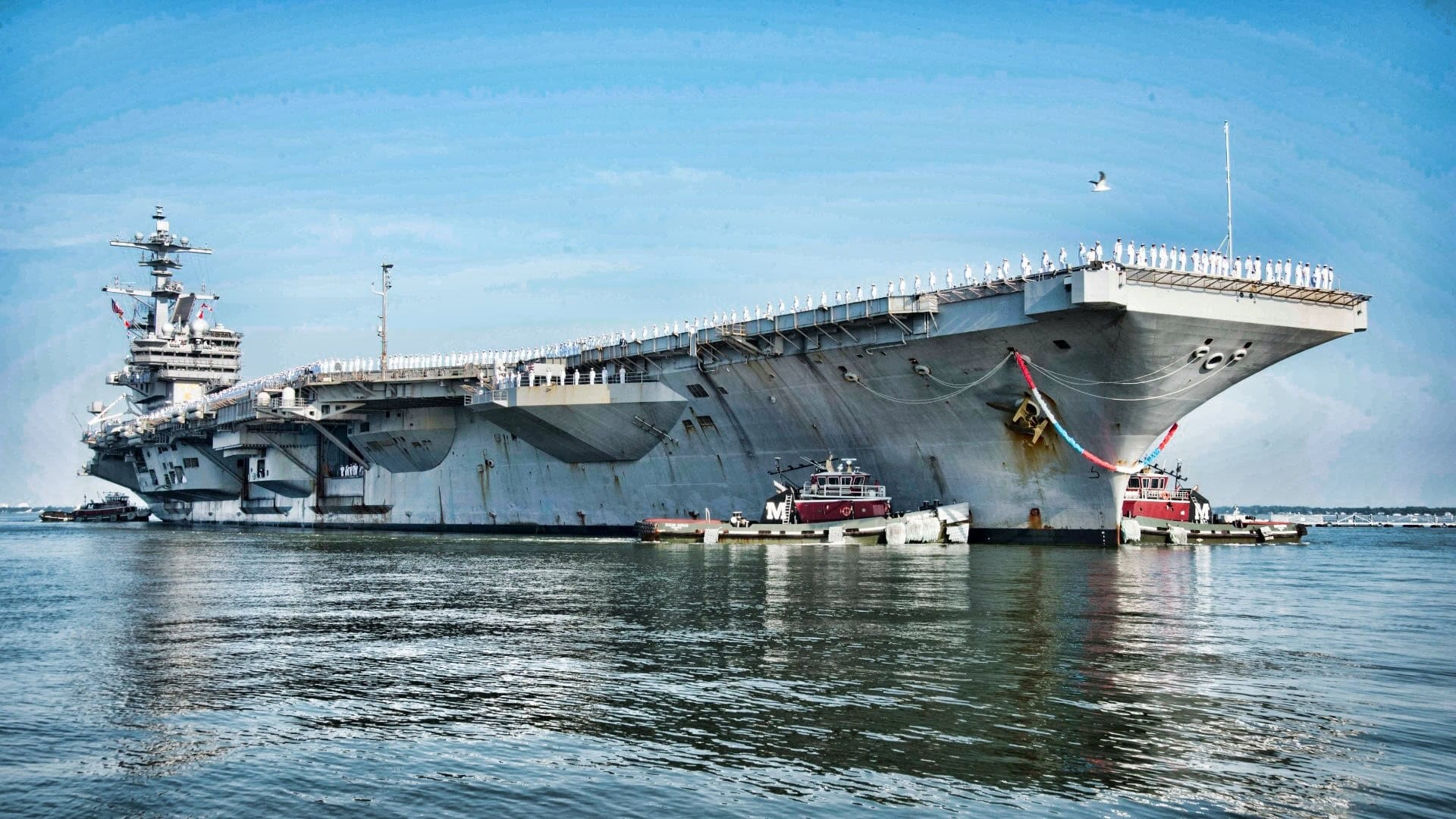
NORFOLK (Aug. 18, 2017) Tugboats guide the aircraft carrier USS George H.W. Bush (CVN 77) into port at Naval Station Norfolk (NSN). George H.W. Bush arrived at NSN with its carrier strike group following a seven-month deployment in support of maritime security operations and theater security cooperation efforts in the U.S. 5th and 6th Fleet areas of operation. (U.S. Navy photo by Mass Communication Specialist 2nd Class Patrick Ian Crimmins/Released)

120511-N-WO496-003 STRAIT OF HORMUZ (May 11, 2012) Guided-missile cruiser USS Cape St. George (CG 71) and aircraft carrier USS Abraham Lincoln (CVN 72) transit the Strait of Hormuz. Both ships are deployed to the U.S. 5th Fleet area of responsibility conducting maritime security operations, theater security cooperation efforts and support missions as part of Operation Enduring Freedom. (U.S. Navy Photo by Mass Communication Specialist 3rd Class Alex R. Forster/Released)
The delayed return of the Stennis carries broader implications for the carrier force.
By law, the Navy must maintain no fewer than 11 operational aircraft carriers, and the fleet is operating dangerously close to missing this threshold. Planned retirements, Ford-class delays, and legacy maintenance burdens have left little margin.
Force-structure planning documents project that the Navy will often hover at exactly 11 carriers throughout the 2020s and early 2030s, with only brief periods when it reaches 12.
The arrival of the future USS John F. Kennedy (CVN-79) in 2027 will help, but only modestly—because the pace of back-to-back Nimitz-class RCOHs is accelerating.
Down an Aircraft Carrier at the Worst Time
The USS Harry S. Truman (CVN-75) is scheduled to begin its RCOH in June 2026, just months before the Stennis is expected to re-enter the fleet.
Because the Truman’s overhaul will run until January 2031, there will be a significant overlap during which two East Coast carriers are in deep maintenance or post-maintenance testing simultaneously.
The Navy’s own contract materials and industrial-base assessments show that preparations for the Truman’s overhaul are already underway. Meanwhile, earlier damage suffered by the Truman during a February 2025 collision will likely complicate the RCOH.
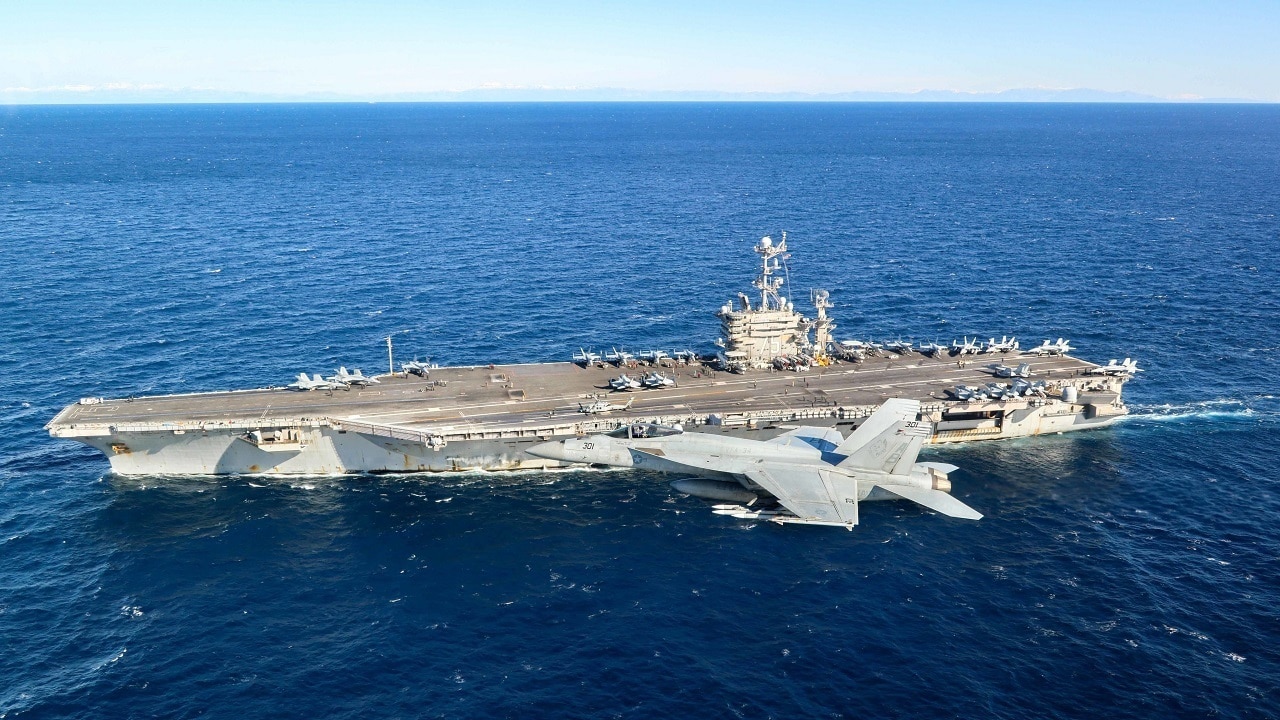
Super Hornets from VFA-34 embarked aboard USS Harry S. Truman.
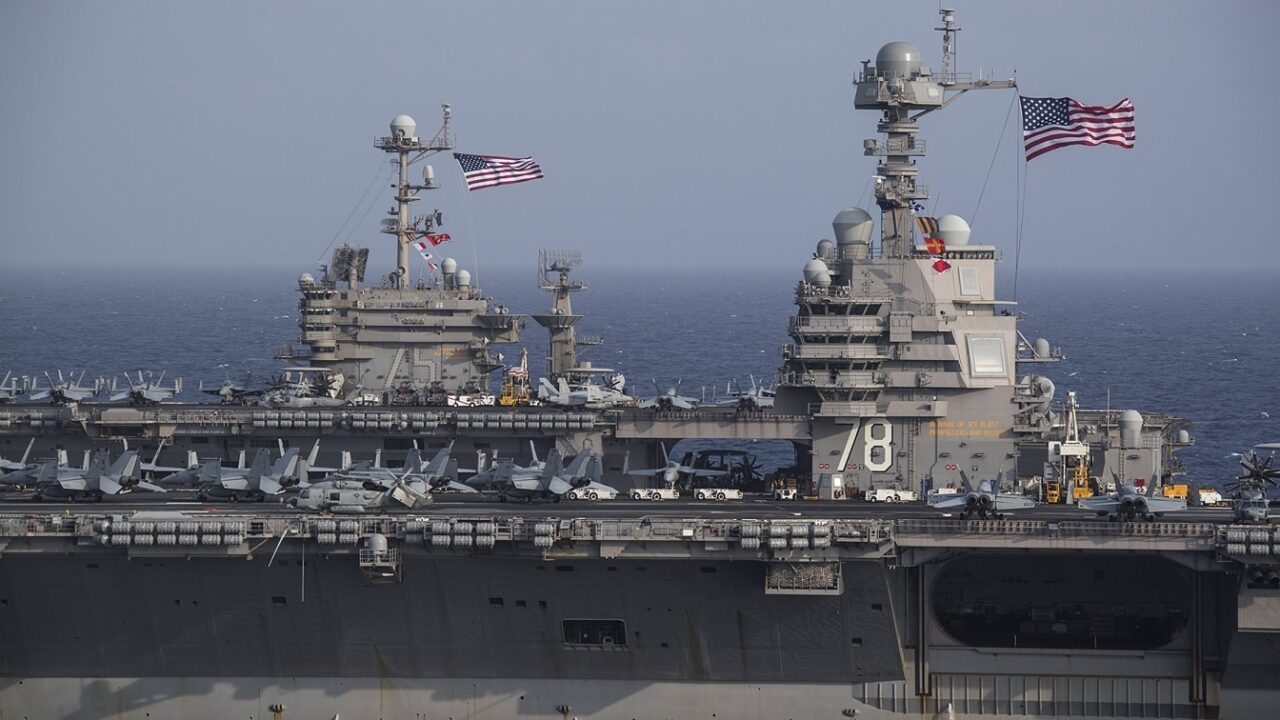
(June 4, 2020) The Ford-class aircraft carrier USS Gerald R. Ford (CVN 78) and the Nimitz-class aircraft carrier USS Harry S. Truman (CVN 75) transit the Atlantic Ocean, June 4, 2020, marking the first time a Ford-class and a Nimitz-class aircraft carrier have operated together underway. Gerald R. Ford is underway conducting integrated air wing operations and the Harry S. Truman Carrier Strike Group remains at sea in the Atlantic Ocean as a certified carrier strike group force ready for tasking in order to protect the crew from the risks posed by COVID-19, following their successful deployment to the U.S. 5th and 6th Fleet areas of operation. (U.S. Navy photo by Mass Communication Specialist 2nd Class Ruben Reed/Released
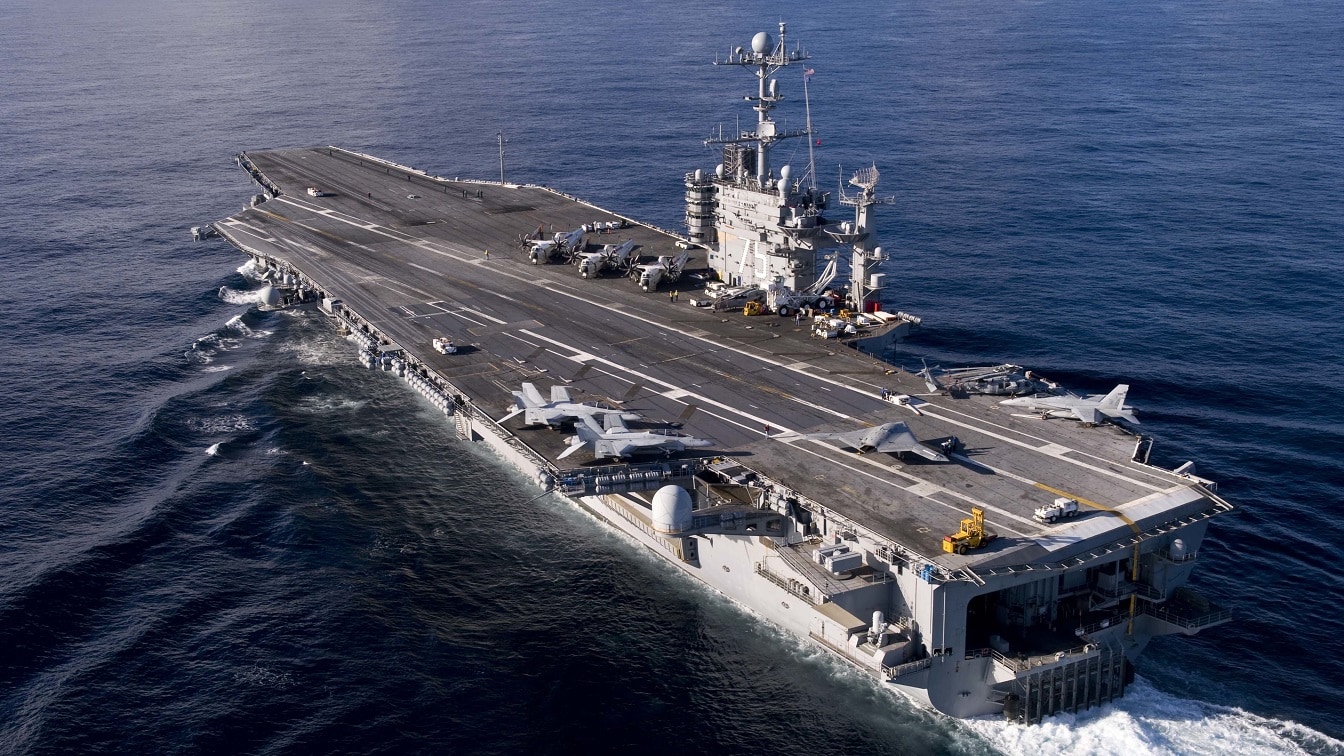
ATLANTIC OCEAN (Dec. 9, 2012) The X-47B Unmanned Combat Air System (UCAS) demonstrator taxies on the flight deck of the aircraft carrier USS Harry S. Truman (CVN 75). Harry S. Truman is the first aircraft carrier to host test operations for an unmanned aircraft. Harry S. Truman is underway supporting carrier qualifications.
Meanwhile, the carrier force as a whole is strained by maintenance backlogs and an overstretched industrial base.
In 2024, for example, there was a brief period when no U.S. aircraft carriers were deployed in the Pacific due to overlapping maintenance periods and homeport shifts involving three carriers.
By December 2025, the Navy surged two carrier strike groups into the Western Pacific to compensate, demonstrating both capacity and vulnerability; such surges can occur only when other theaters accept the risk.
And Then There’s Ford…
This is to say nothing of Operation Epic Fury, for which both the USS Gerald R. Ford (CVN-78) and Abraham Lincoln (CVN-72) are deployed. The Ford has been on deployment for more than 300 days now and is reaching its breaking point.
After reports emerged about the carrier toilets clogging, it was reported that a lint fire on the ship burned down a sizable portion of the crew’s bedding quarters, forcing many sailors to sleep on tables. Morale on the ship is bound to be low, and if its deployment continues for too much longer, things could go bad very quickly.
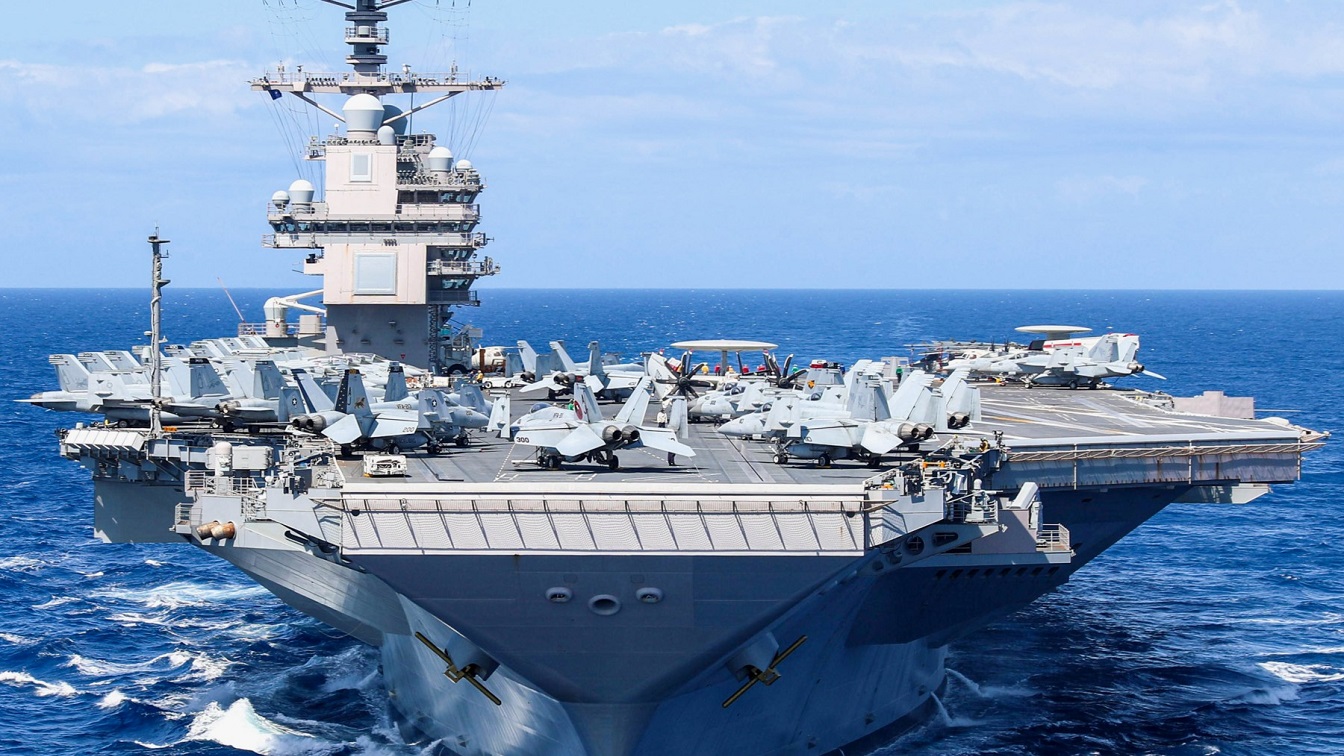
Ford-Class. Ford-Class Aircraft Carrier USS Ford.
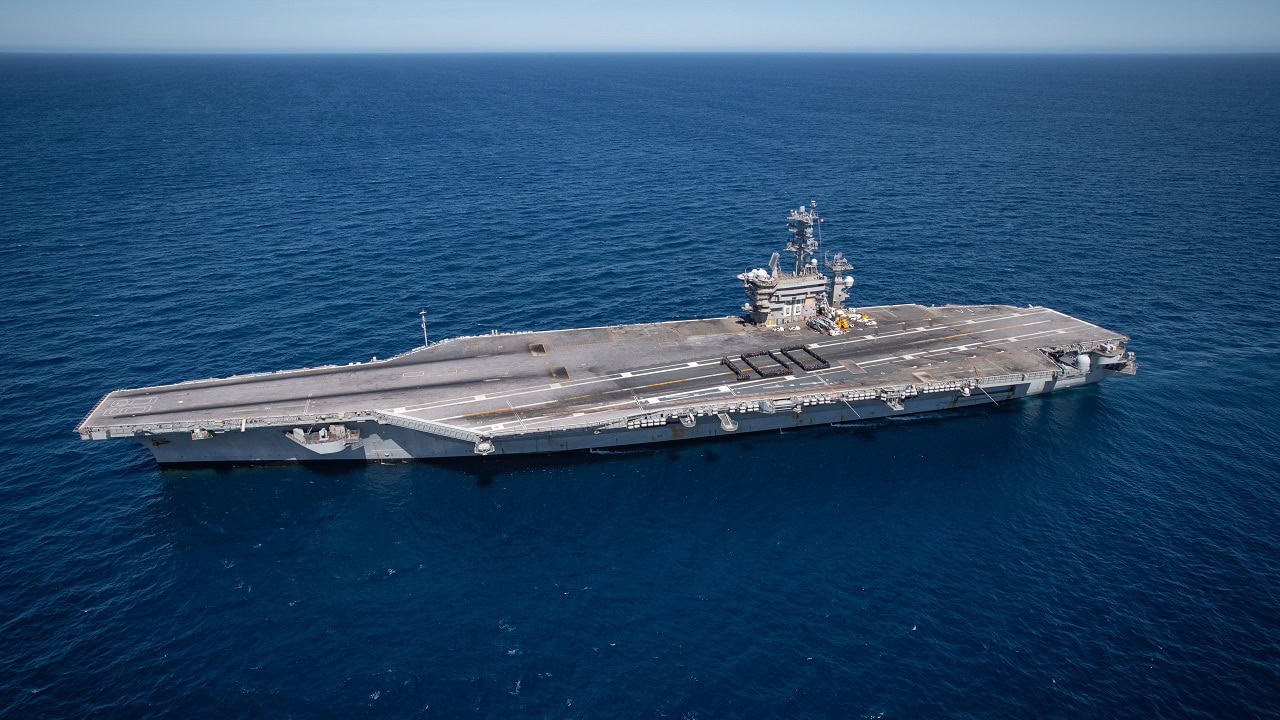
(Mar. 12, 2022) Sailors aboard USS Nimitz (CVN 68) assemble on the flight deck and form a human ‘100’ to commemorate the centennial of the aircraft carrier. On March 20, 1922 the former USS Jupiter (Collier #3) recommissioned as the USS Langley (CV 1), the U. S. Navy’s first aircraft carrier. One hundred years later, Nimitz and Ford-class aircraft carriers are the cornerstone of the Navy’s ability to maintain sea control and project power ashore. Nimitz is the first in its class and the oldest commissioned aircraft carrier afloat., carrying with it a legacy of innovation, evolution and dominance. Nimitz is underway in the 3rd Fleet Area of Operations. (U.S. Navy photo by Mass Communication Specialist 3rd Class Elliot Schaudt)
Against this backdrop, losing two East Coast aircraft carriers for RCOH is a frightening prospect.
While the Navy will likely retain its necessary 11-carrier count, it will narrowly meet the requirement. Despite efforts to streamline the RCOH process and address labor shortages, problems still persist—and delays are bound to recur until those problems are resolved.
About the Author: Isaac Seitz
Isaac Seitz, a Defense Columnist, graduated from Patrick Henry College’s Strategic Intelligence and National Security program. He has also studied Russian at Middlebury Language Schools and has worked as an intelligence Analyst in the private sector.