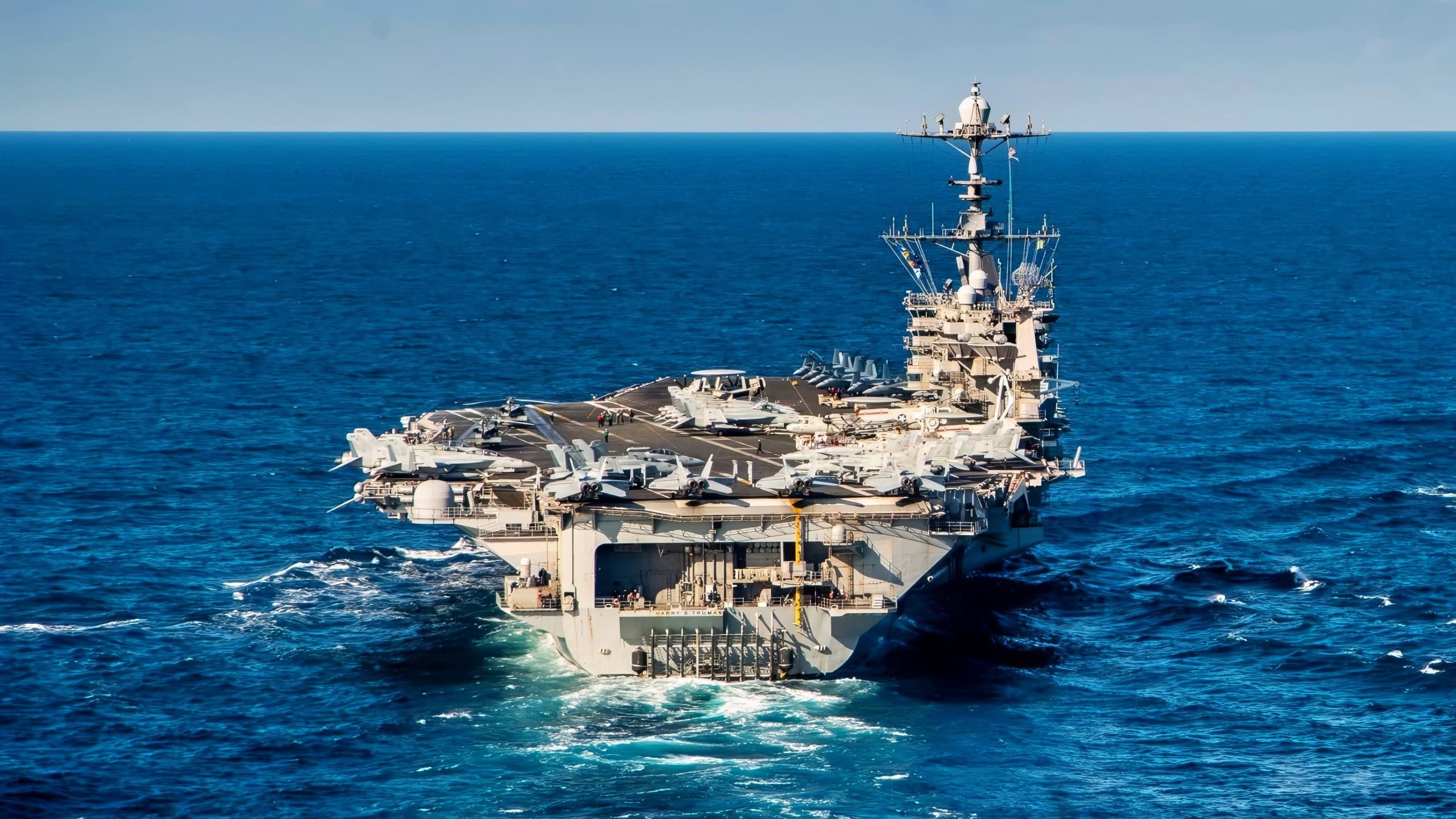
Summary and Key Points: Defense expert Brandon J. Weichert provides a scathing evaluation of U.S. Navy aircraft carrier readiness during the 2026 conflict with Iran, Operation Epic Fury.
-Despite a statutory requirement for 11 supercarriers, industrial bottlenecks at Newport News Shipbuilding—the nation’s only site for nuclear refueling—have reduced operational availability to just three or four mission-ready decks.
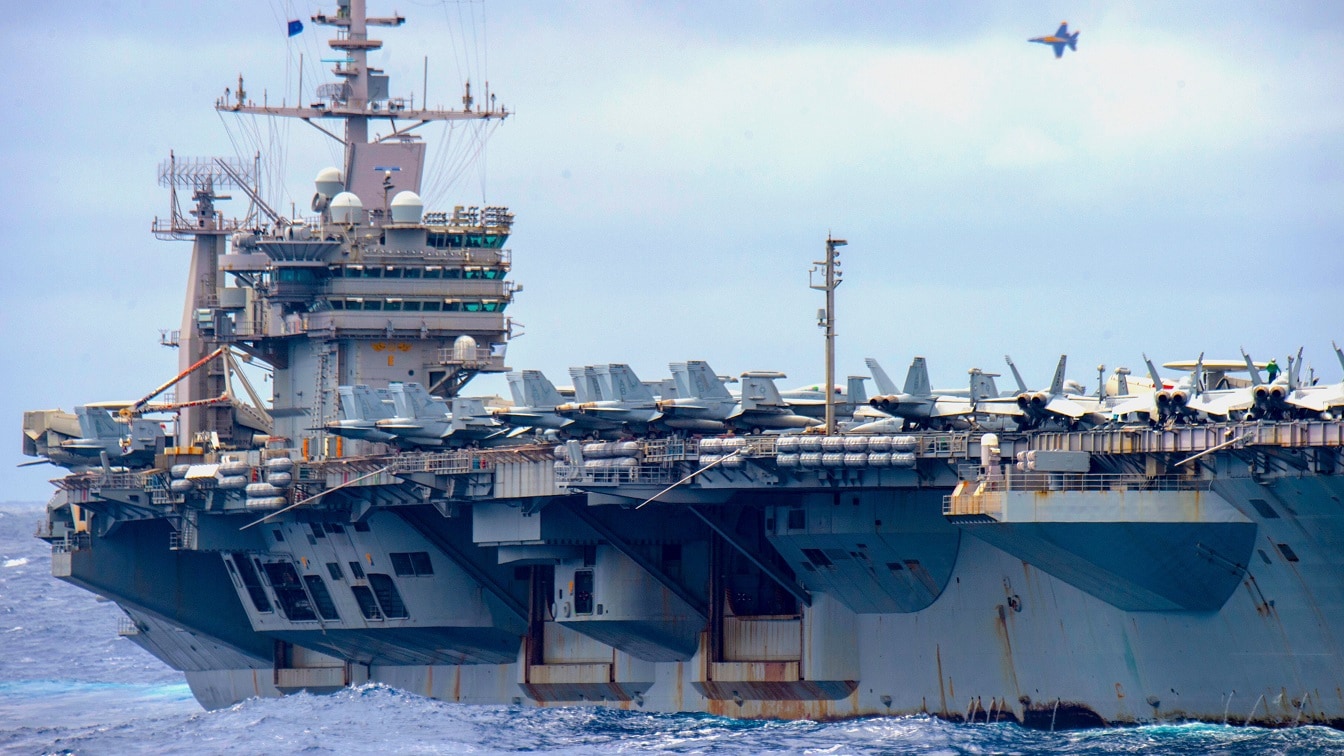
The Blue Angels, flies over the Nimitz-class aircraft carrier, USS Harry S. Truman (CVN-75) on May 20, 2020. US Navy Photo/
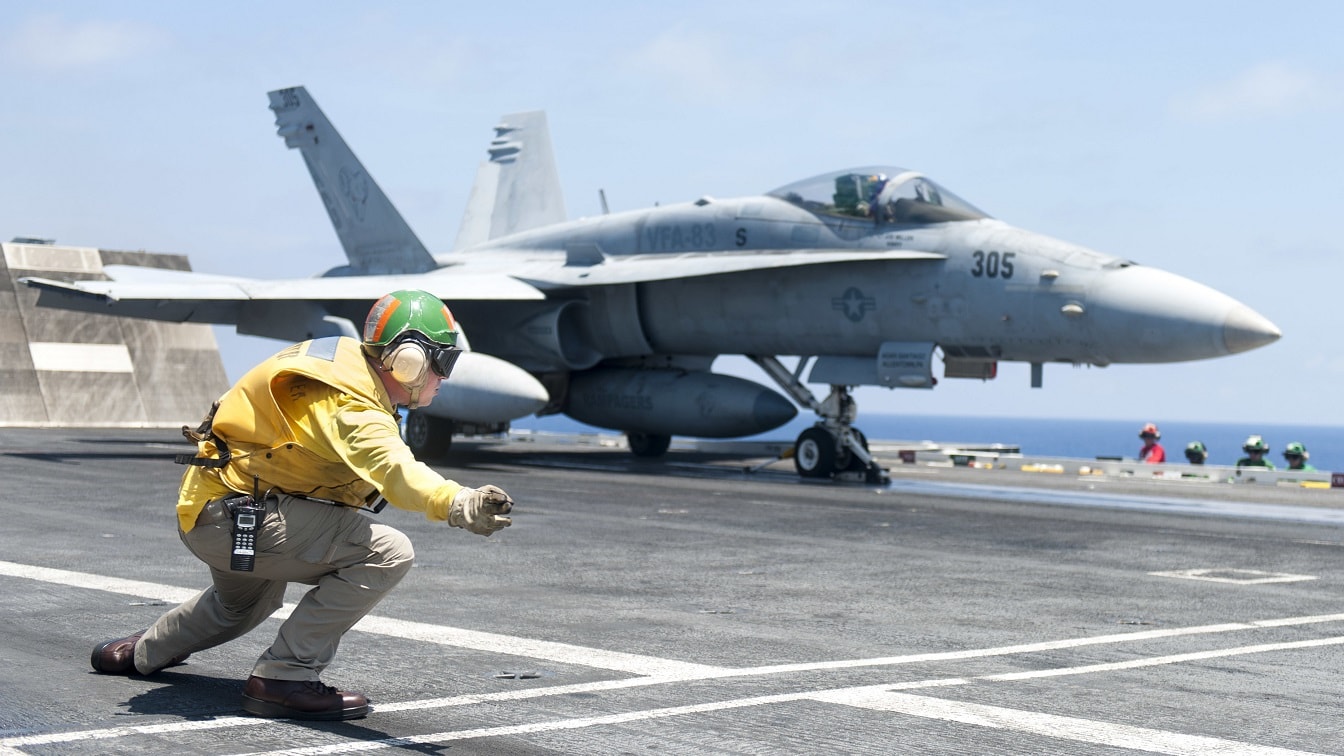
(June 15, 2015) Lt. B. J. Burnham signals to launch an F/A-18C Hornet, assigned to the “Rampagers” of Strike Fighter Squadron (VFA) 83, on the flight deck of aircraft carrier USS Harry S. Truman (CVN 75). Truman is underway conducting Tailored Ship’s Training Availability (TSTA) off the east coast of the United States. TSTA is the first combined training event of a ship’s inter-deployment training cycle that tests and evaluates shipboard drills, including general quarters, damage control, medical and firefighting. Upon successful completion of TSTA, Truman will be considered proficient in all mission areas. (U.S. Navy photo by Mass Communication Specialist 2nd Class K. H. Anderson/Released)
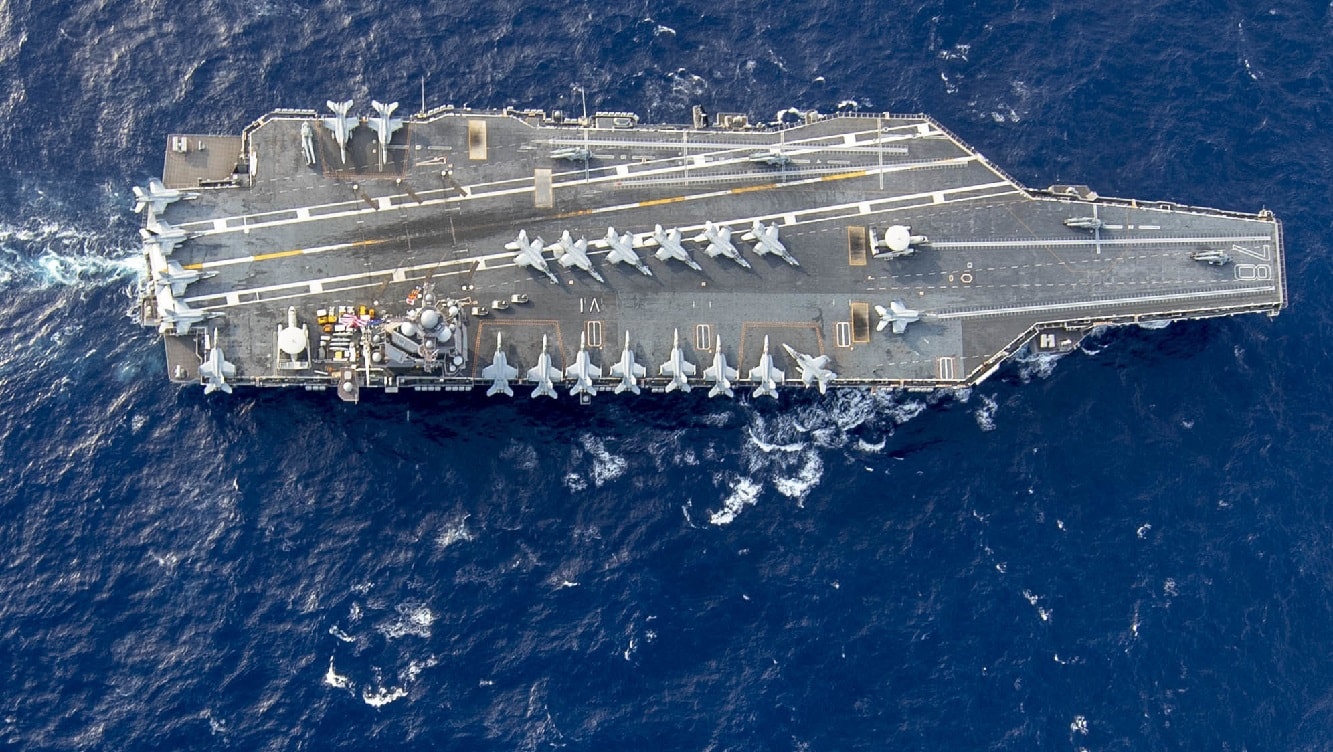
The Ford-class aircraft carrier USS Gerald R. Ford (CVN 78) and the Nimitz-class aircraft carrier USS Harry S. Truman (CVN 75) transit the Atlantic Ocean June 4, 2020, marking the first time a Ford-class and a Nimitz-class aircraft carrier operated together underway. Ford is underway conducting integrated air wing operations, and the Harry S. Truman Carrier Strike Group remains at sea in the Atlantic as a certified carrier strike group force ready for tasking in order to protect the crew from the risks posed by COVID-19, following their successful deployment to the U.S. 5th and 6th Fleet areas of operation. (U.S. Navy photo by Mass Communication Specialist Seaman Riley McDowell)
-Weichert highlights the high-profile failures of the USS Gerald R. Ford (CVN-78), including sewage malfunctions and a 30-hour laundry fire, alongside the 14-month delay of the USS John C. Stennis (CVN-74) RCOH.
-This force-structure crunch, compounded by Iranian ASBM threats, signals a “decline phase” for American power projection.
The 2026 Aircraft Carrier Crunch: Why Only Four U.S. Supercarriers Are Actually Mission-Ready
The United States finds itself waging a major regional war that does not appear to be abating.
Thus far, the strategy (if you can call it that) is to employ sweeping airstrikes across the country, in conjunction with Israeli Air Force planes, to destroy enough of the Islamic Republic of Iran that the people of Iran can overthrow their hated regime.
A War the Navy was Not Ready to Fight
Both the United States Air Force and the United States Navy are the tip of this particular spear.
There’s just one big program, at least when it comes to the Navy: the US Navy’s surface fleet—notably their aircraft carrier force—is at the nadir of its power.
Even before the initiation of hostilities on February 28, the US Navy was humiliated when its newest, most expensive aircraft carrier, the USS Gerald R. Ford, arrived in the CENTCOM area of responsibility (AOR) only to experience a bizarre malfunction in its sewage system.
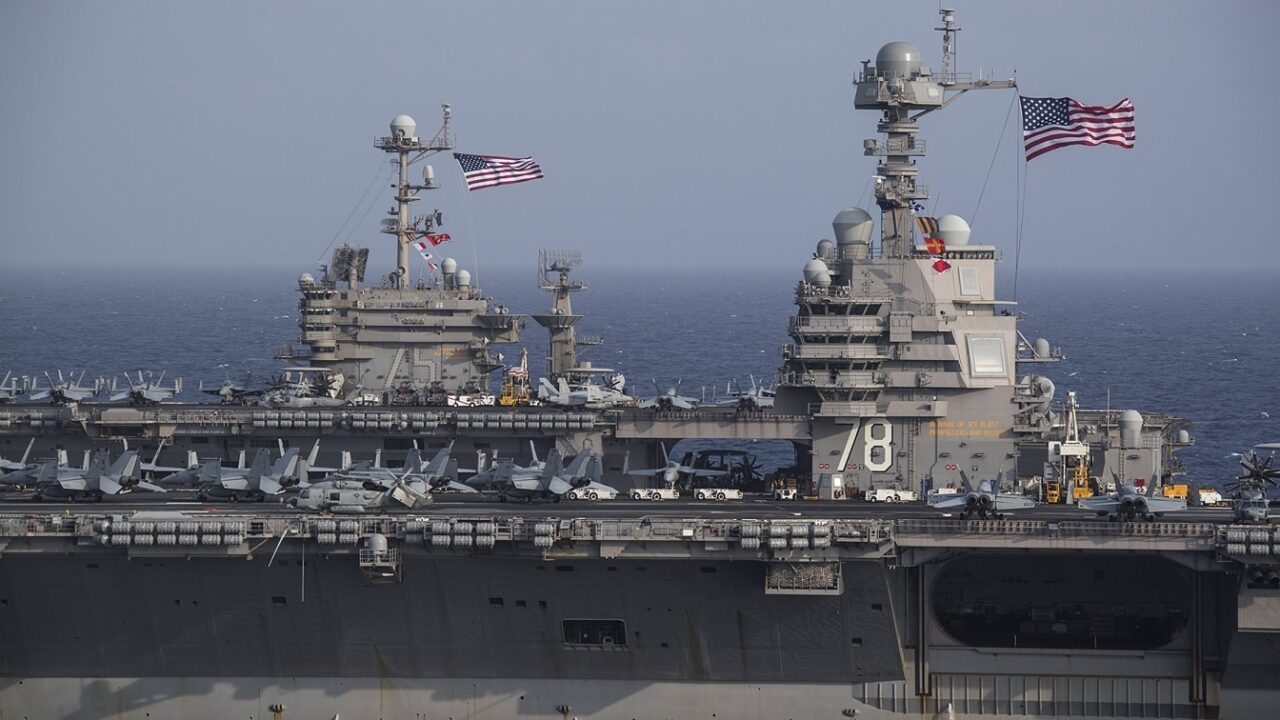
(June 4, 2020) The Ford-class aircraft carrier USS Gerald R. Ford (CVN 78) and the Nimitz-class aircraft carrier USS Harry S. Truman (CVN 75) transit the Atlantic Ocean, June 4, 2020, marking the first time a Ford-class and a Nimitz-class aircraft carrier have operated together underway. Gerald R. Ford is underway conducting integrated air wing operations and the Harry S. Truman Carrier Strike Group remains at sea in the Atlantic Ocean as a certified carrier strike group force ready for tasking in order to protect the crew from the risks posed by COVID-19, following their successful deployment to the U.S. 5th and 6th Fleet areas of operation. (U.S. Navy photo by Mass Communication Specialist 2nd Class Ruben Reed/Released
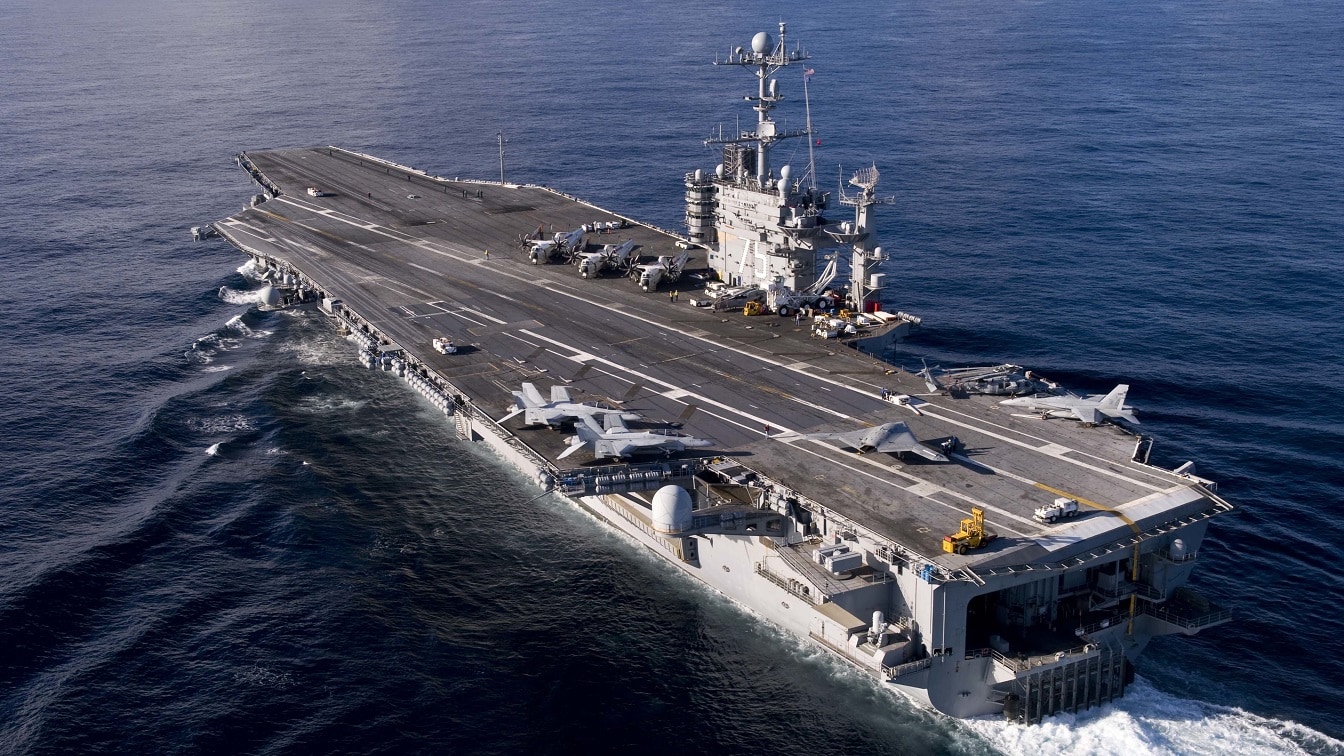
ATLANTIC OCEAN (Dec. 9, 2012) The X-47B Unmanned Combat Air System (UCAS) demonstrator taxies on the flight deck of the aircraft carrier USS Harry S. Truman (CVN 75). Harry S. Truman is the first aircraft carrier to host test operations for an unmanned aircraft. Harry S. Truman is underway supporting carrier qualifications.
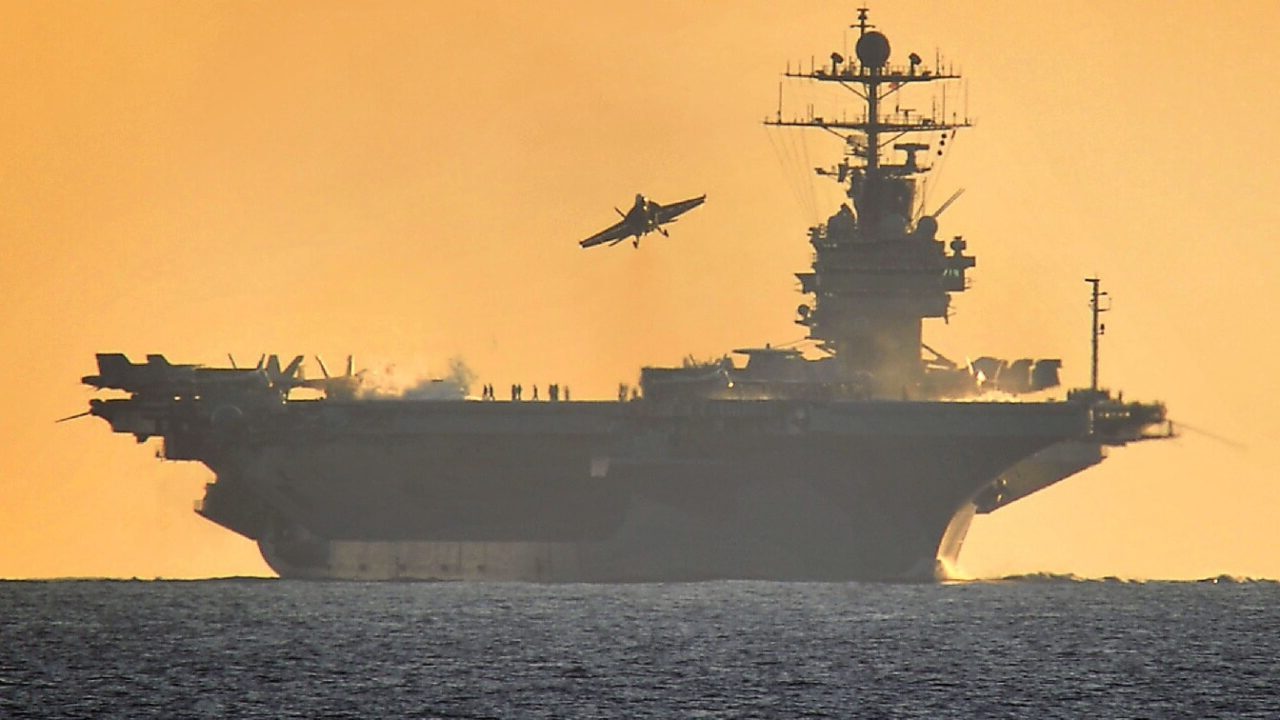
American Nimitz class aircraft carrier USS Harry S Truman is pictured during flying operations in the company of HMS Somerset in the Mediterranean. HMS Somerset was perforing anti-submarine duties for the immense vessel at the the time.
Shortly thereafter, as the war was underway, the Ford had an even weirder laundry fire onboard that left 200 sailors injured.
As a result, the Ford is sailing back to port, and the USS George H.W. Bush is underway to replace the Ford in the CENTCOM AOR.
Eleven Carriers On Paper, Only a Handful at Sea
But the problems with America’s carrier force run much deeper than just issues with the newest carrier.
While technically the Navy maintains a force of 11 active carriers at all times, barely four are operational at any given time. Carriers are complex pieces of equipment. Sailing the world for many months, conducting flight operations, places significant wear and tear on the carriers. They require serious overhauls due to that wear and tear.
The only problem is that America’s naval shipyards, already overburdened and undermanned, cannot complete such complex overhauls in a reliable timeframe.
If they could, the US would likely have more than three or four carriers at any given time.
Alas, the US military’s ability to reliably project power in significantly degraded environments is becoming harder as the inadequacies of the infrastructure supporting the Armed Forces reach crisis levels (and go ignored by elected leaders).
USS John C. Stennis and the Overhaul That Won’t End
Take, for example, the case of the USS John C. Stennis (CVN-74). The Nimitz-class carrier was first deployed in 1995 and is currently undergoing its Refueling and Complex Overhaul (RCOH), a midlife rebuild required for all nuclear carriers.
Originally expected to take only four years, the work has stretched to more than five-and-a-half years, with schedule slips and massive cost overruns.
Labor shortages, parts issues, and degraded systems (including propulsion components) have driven costs to hundreds of millions of dollars above projections.
Get this: RCOH can only be done at a single shipyard in the United States.

The Nimitz-class aircraft carrier USS George H.W. Bush (CVN 77) transits the Atlantic Ocean, Feb. 15, 2026. The George H.W. Bush Carrier Strike Group is at sea training as an integrated warfighting team. Composite Training Unit Exercise (COMPTUEX) is the Joint Force’s most complex integrated training event and prepares naval task forces for sustained high-end Joint and combined combat. Integrated naval training provides combatant commanders and America’s civilian leaders highly capable forces that deter adversaries, underpin American security and economic prosperity, and reassure Allies and partners. (U.S. Navy photo by Mass Communication Specialist 2nd Class Mitchell Mason)
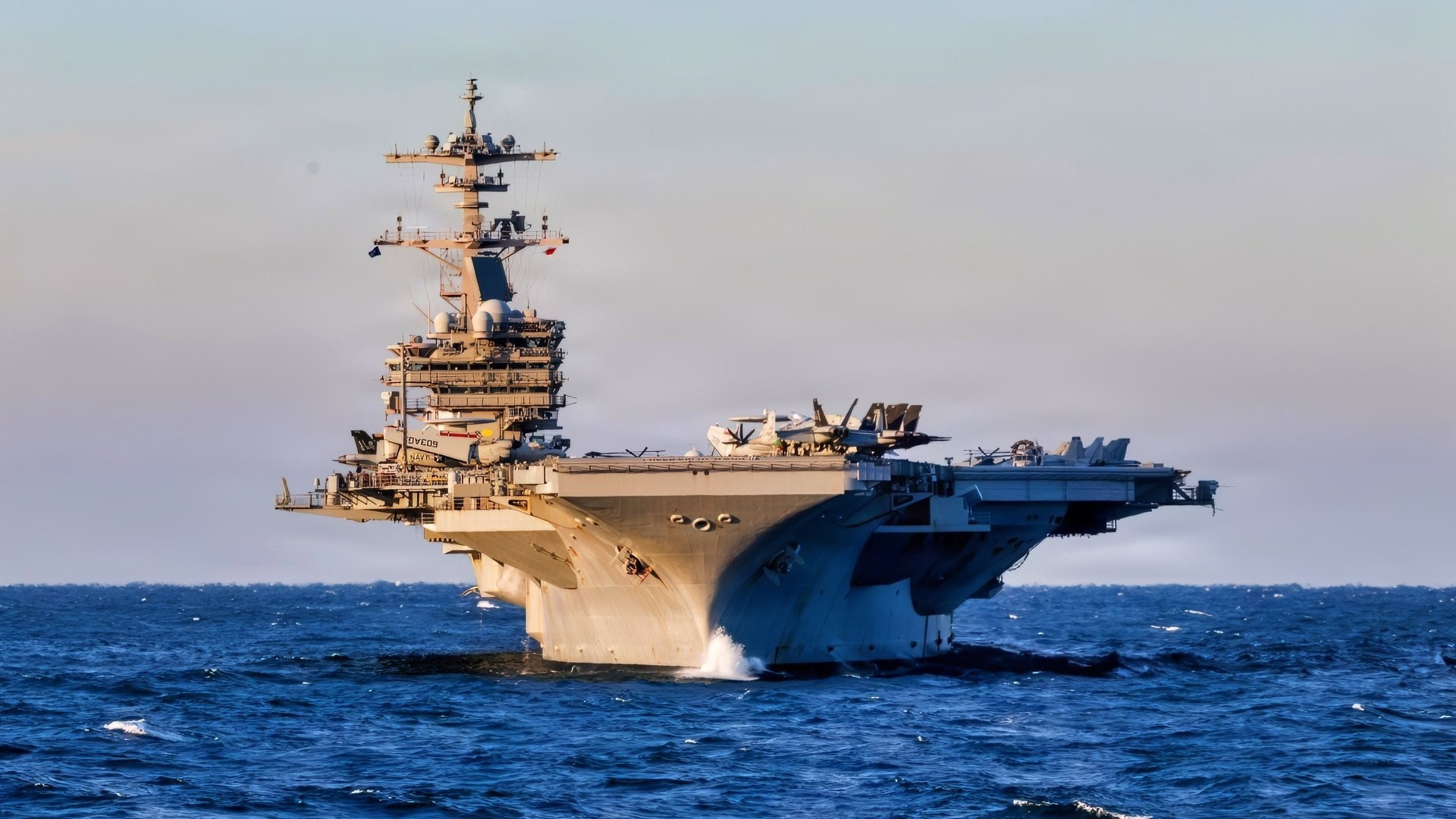
The Nimitz-class aircraft carrier USS George H.W. Bush (CVN 77) sails in the Atlantic Ocean, Feb. 6, 2026. The George H.W. Bush Carrier Strike Group is at sea as an integrated warfighting team. Composite Training Unit Exercise (COMPTUEX) is the Joint Force’s most complex integrated training event and prepares naval task forces for sustained high-end Joint and combined combat. Integrated naval training provides combatant commanders and America’s civilian leaders highly capable forces that deter adversaries, underpin American security and economic prosperity, and reassure Allies and partners. (U.S. Navy photo by Mass Communication Specialist 3rd Class John R. Farren)
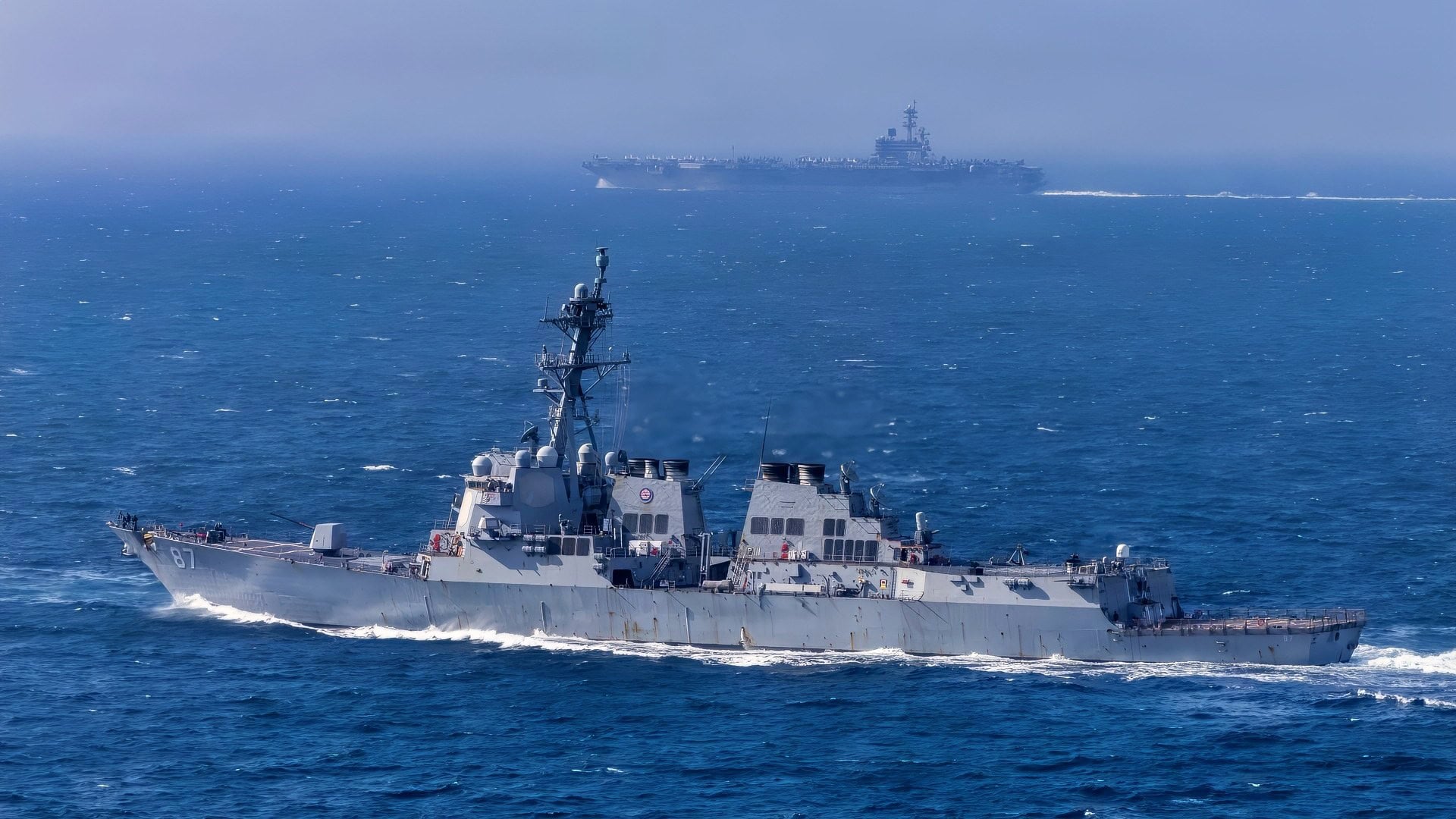
The Arleigh Burke-class guided-missile destroyer USS Mason (DDG 87) transits alongside the Nimitz-class aircraft carrier USS George H.W. Bush in the Atlantic Ocean, Feb. 21, 2026. The George H.W. Bush Carrier Strike Group is at sea training as an integrated warfighting team. Composite Training Unit Exercise (COMPTUEX) is the Joint Force’s most complex integrated training event and prepares naval task forces for sustained high-end Joint and combined combat. Integrated naval training provides combatant commanders and America’s civilian leaders highly capable forces that deter adversaries, underpin American security and economic prosperity, and reassure Allies and partners. (U.S. Navy photo by Mass Communication Specialist 2nd Class Jayden Brown)
That shipyard is Newport News Shipbuilding. That one yard has no redundancy and absolutely no surge capacity, which is an important feature to have, given that many analysts believe we are on the brink of a major war.
So, when there are delays for any reason, they cascade across the entire fleet. As my colleague at The National Security Journal recently assessed, these multiyear overhauls are tying up carriers in the shipyards longer than it took to build them—significantly thinning the US Navy’s global coverage.
Given these persistent shortages, one would think that the Navy would reorganize its strategy to better comport with the realities of its logistical and industrial shortfalls. Indeed, at the start of the second Trump administration, it seemed as though a reorientation of forces away from the rest of the world toward the Western Hemisphere was underway.
Since the outbreak of the Iran War, though, that is clearly not the case—and these shortfalls are exacerbated, especially as the carriers become tempting targets for Iranian anti-ship ballistic missile (ASBM) forces.
More Aircraft Carriers Headed to the Yard
Not only is the John C. Stennis sitting in the shipyard in an extended RCOH procedure, but the USS Harry S. Truman is preparing to enter an extended overhaul period as well. On top of that, the USS Nimitz, which was slated to be decommissioned this year, is apparently being kept in fighting condition for another year, until the Navy believes the geopolitical crises stretching their strained carrier force abate.
Meanwhile, the Navy’s new carriers, the expensive and complex Ford-class ships, are slow to deploy as shipyard backlogs and technical complications significantly delay their original launch dates. What you are witnessing is a classic force-structure crunch that all overextended great powers experience in their decline phase (which the United States is assuredly in the middle of).
A Force Structure Crunch in the Middle of a Major War
While the US Navy remains the world’s strongest naval force, it has little margin for error. What’s more, the enemies it is tasked with deterring and fighting are regional powers with strong defensive and asymmetric capabilities that completely upend the logic and advantages of American carriers.
These trends are both working against the Navy in the long run and, in fact, are ensuring that the Navy’s expensive fleet of flat tops is increasingly irrelevant, regardless of whether there is a sufficient number of them at the ready.
During the Cold War, the Navy maintained a fleet of 14 to 15 carriers, and there were many more shipyards in the United States capable of supporting the Navy’s carrier force than there are today.
What’s more, these factors led to faster overhaul cycles.
Today, on paper, the Navy maintains 11 carriers. Only between three and five are deployable, though. And sometimes, during crises, there are fewer available than that. In a modern war, numbers still matter more than the quality of the systems fighting.
The Iran War as a Stress Test: The Navy is Failing
The Iran War is the biggest conflict the United States has been involved in since the 2003 invasion of Iraq. It has already become a regional war and is now on the precipice of sliding into a global conflagration. Wars are the ultimate stress tests for militaries. The Iran War proves how dangerous of a situation the Navy finds itself in today.
The Stennis delay is a symptom of a much larger problem, which redounds to the naval shipyard bottleneck. The tempo of the Iran War is exacerbating everything, and the result is a risk of a carrier shortage.
A carrier shortage means that the rest of the fleet has to pick up the slack…and the rest of the US Navy’s fleet is struggling, too. We are in for a major strategic crisis the longer the Iran War rages and the greater the strain is placed on our diminished forces.
About the Author: Brandon J. Weichert
Brandon J. Weichert is the Senior National Security Editor at 19FortyFive.com. Recently, Weichert became the editor of the “NatSec Guy” section at Emerald.TV. He was previously the senior national security editor at The National Interest. Weichert is the host of The National Security Hour on iHeartRadio, where he discusses national security policy every Wednesday at 8pm Eastern. He hosts a companion show on Rumble entitled “National Security Talk.” Weichert consults regularly with various government institutions and private organizations on geopolitical issues. His writings have appeared in numerous publications, among them Popular Mechanics, National Review, MSN, and The American Spectator. And his books include Winning Space: How America Remains a Superpower, Biohacked: China’s Race to Control Life, and The Shadow War: Iran’s Quest for Supremacy. Weichert’s newest book, A Disaster of Our Own Making: How the West Lost Ukraine, is available for purchase wherever books are sold. He can be followed via Twitter/X @WeTheBrandon.