
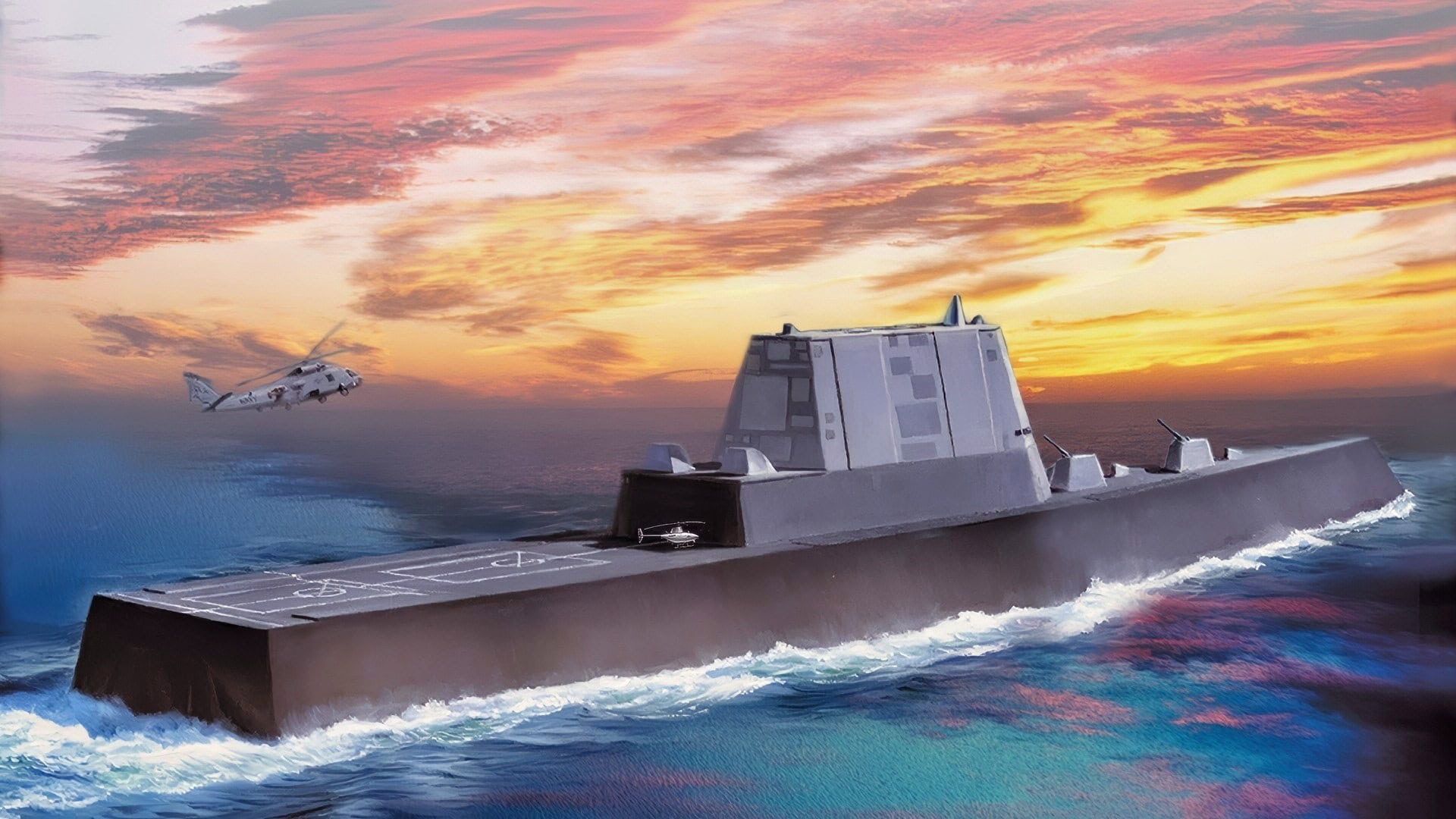
The Zumwalt-Class: A Stealth Destroyer with a Gun That Was Destined to Fail
The Zumwalt-class was supposed to change the way the U.S. Navy fights close to shore, but it became a controversy instead. This was a heavily armed warship whose primary weapon system became effectively useless.
The ship’s 155mm Advanced Gun System was designed to fire precision-guided shells at long range as a cheaper alternative to cruise missiles. But, by the time the system was finished, each round of ammunition became extraordinarily expensive – about as much as the missiles it was meant to replace, in fact, at roughly $800,000 to $1 million per shot.
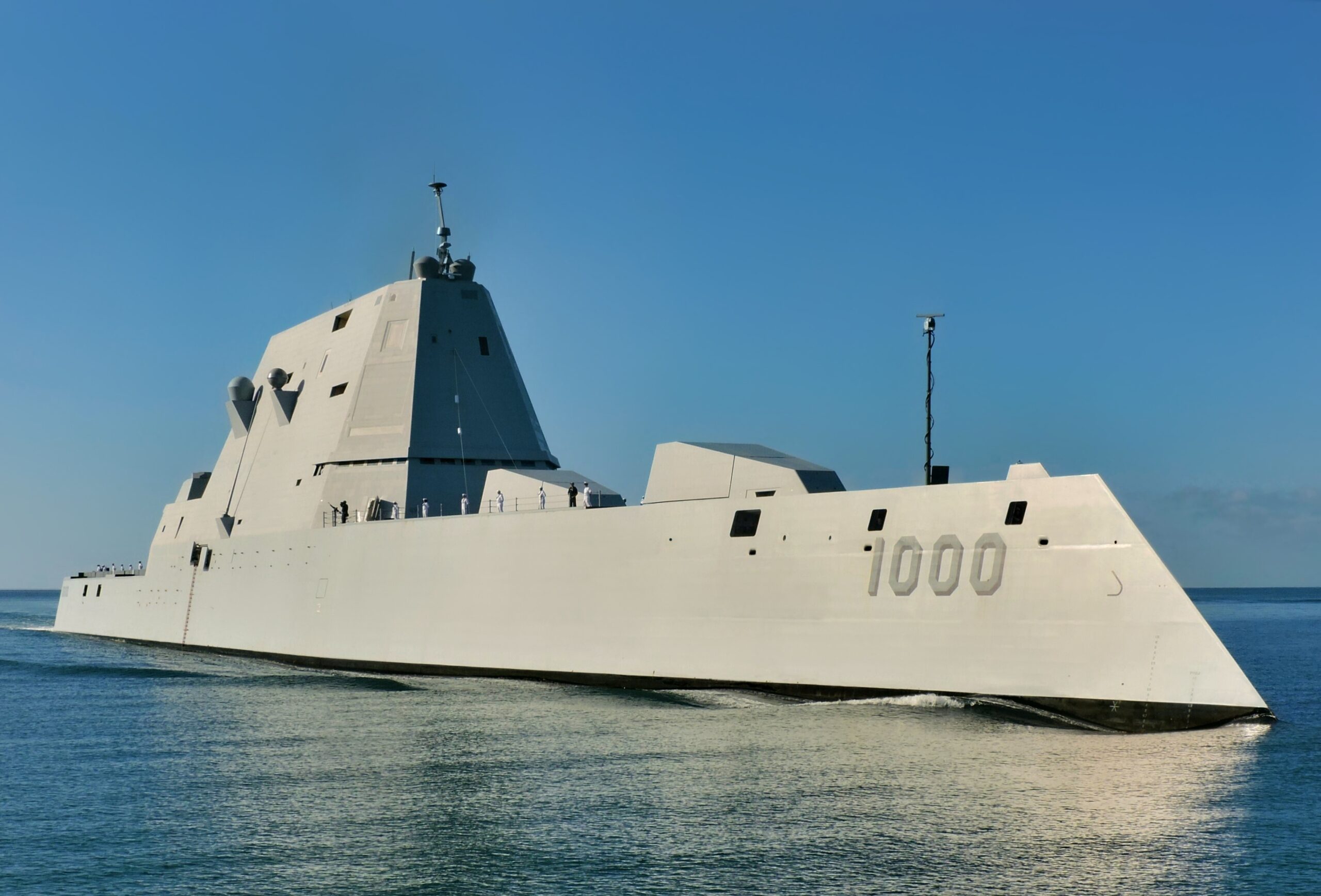
Zumwalt-Class Destroyer U.S. Navy. Image Credit: Creative Commons.
The U.S. Navy, unsurprisingly, canceled procurement of that ammunition in 2016. The result was a ship built around a gun system that was no longer usable.
In the years that followed, the ship’s role was completely redefined to ensure that a vessel that required extensive design and investment could serve a purpose. It is a good case study in how modern naval procurement can fail.
The Ship Built Around A Failed Gun
The Zumwalt-class destroyer did not begin as a conventional warship. Its origins lie in the U.S. Navy’s DD-21 program, later redesignated DD(X), which was conceived in the 1990s to support U.S. Marines during amphibious operations.
The requirement was specific: deliver sustained, accurate fire from offshore against targets deep inland. Historically, that role had been filled by battleships like the Iowa-class, whose large-caliber guns could bombard coastal targets. But battleships were retired, and the Navy needed a modern equivalent.
The solution was the Advanced Gun System (AGS), a pair of 155mm naval guns installed on each Zumwalt-class ship. These guns were designed to fire the Long Range Land Attack Projectile (LRLAP), a rocket-assisted, GPS-guided shell capable of striking targets up to roughly 80–100 nautical miles inland with high precision.
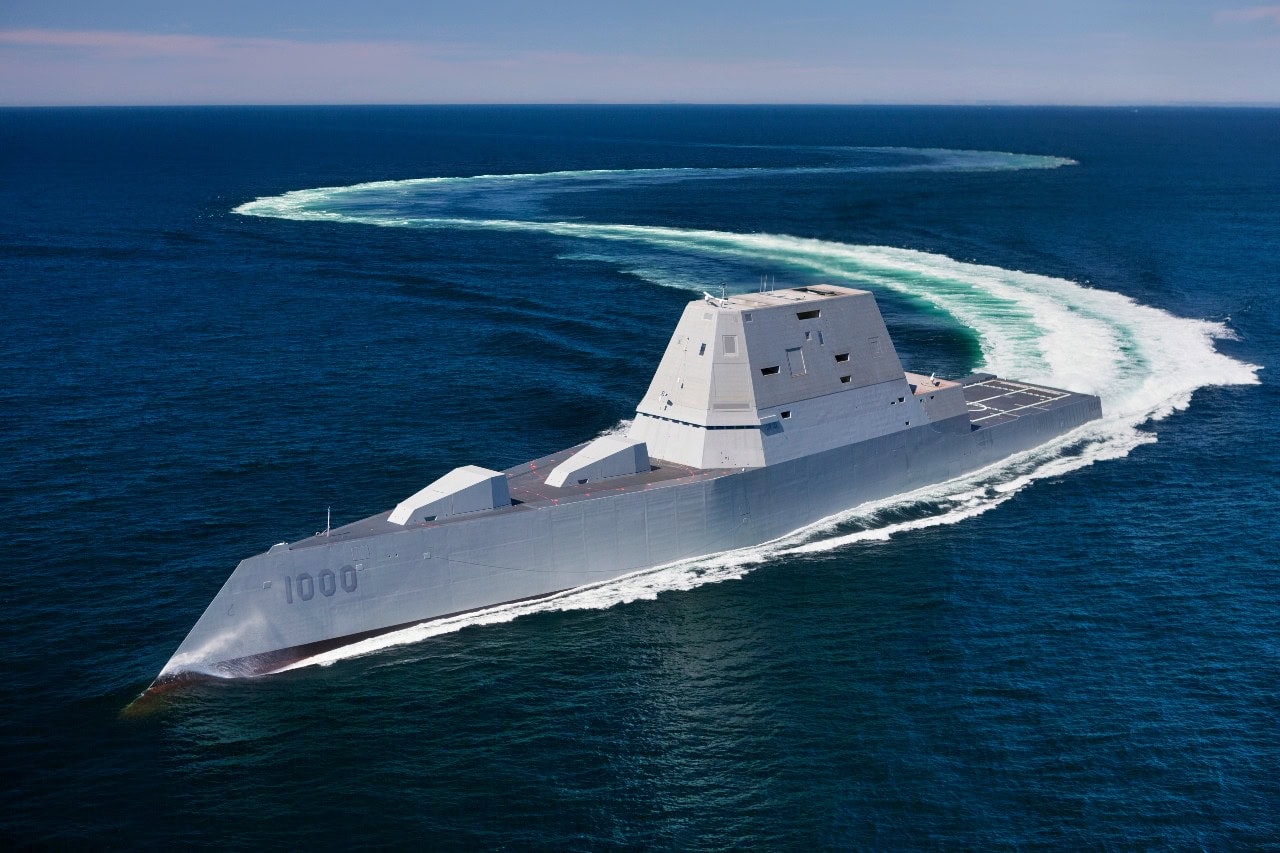
Zumwalt-Class Destroyer U.S. Navy.
The ship existed specifically to deliver this capability. The AGS was the core of the platform, with the hull and power systems built to support high-volume, long-range precision fire.
Ammunition Costs Spiral Out Of Control
The original concept behind the Zumwalt depended on scale. Early estimates suggested each LRLAP would cost tens of thousands of dollars – expensive for artillery, yes, but far cheaper than a cruise missile. But that assumption collapsed as the program evolved.
The Zumwalt class was initially planned as a fleet of around 32 ships. Over time, due to cost overruns and changing priorities, that number was cut first to 24, then to 7, and finally to only 3. That reduction had a predictable effect: the cost of each LRLAP round surged because development and production costs were spread across a much smaller number of units. By 2016, the per-round price rose to around $1 million.
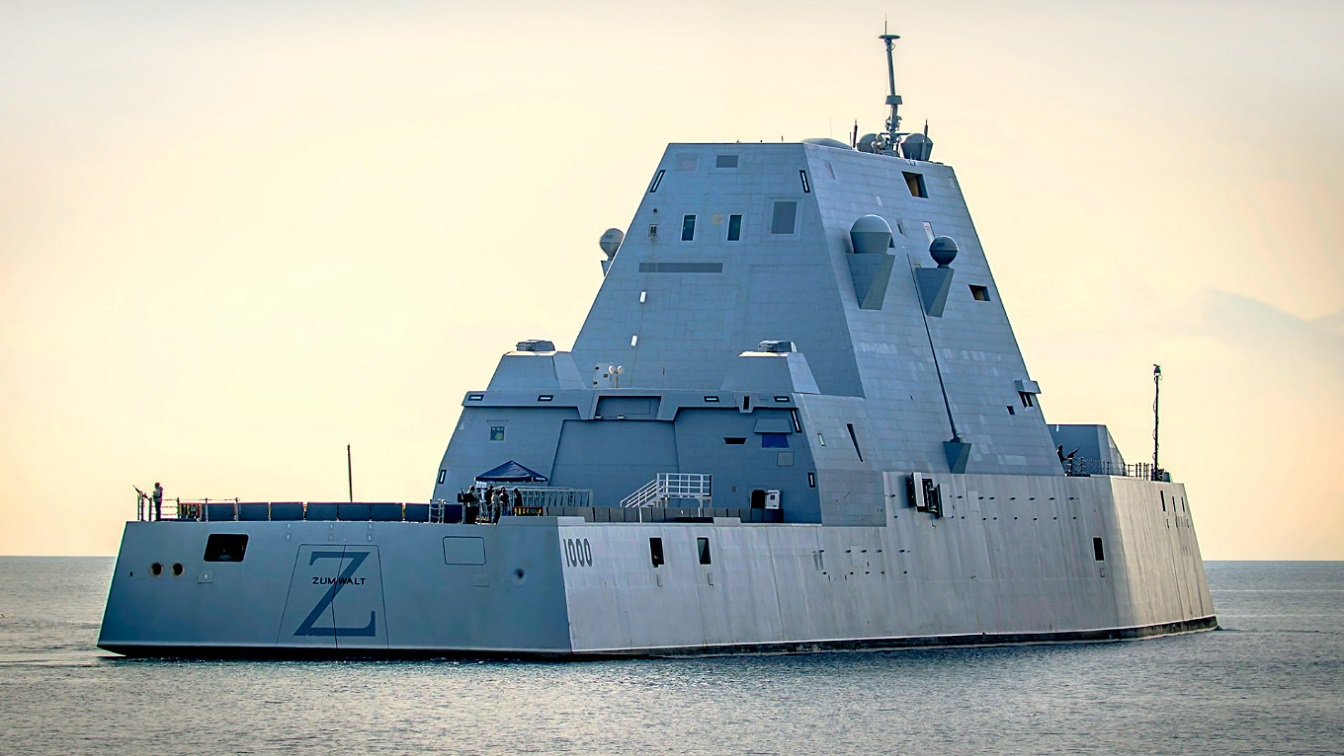
Zumwalt-Class, the largest destroyer on Earth today.
The total projected cost of a full ammunition buy of around 2,000 rounds was estimated at $1.8 to $2 billion, roughly the equivalent cost of an entire destroyer. At that point, the comparison that justified the system no longer made any sense. A Tomahawk cruise missile, depending on configuration, costs on the order of $1 million. The LRLAP, which had a shorter range and less flexibility, offered no cost advantage, and so the Navy canceled procurement.
A Gun That Couldn’t Fire
When the project was canceled, the Zumwalt’s Advanced Gun System posed a major challenge because it was not compatible with any other kind of ammunition. Unlike standard 155mm artillery systems used by the U.S. Army and NATO, the AGS required uniquely shaped projectiles and propellant systems.
It could not fire conventional shells. That meant there was no fallback option.
With LRLAP cancelled, the AGS effectively became unusable. The guns remained physically installed on the ships, but without ammunition, they could not perform their intended function. The Navy did explore alternatives.
One option was adapting the Excalibur GPS-guided artillery round, which costs roughly $70,000 per shot. However, Excalibur also had a significantly shorter range – roughly half of that of the LRLAP – and would require integration work for it to function effectively in the three-strong fleet.
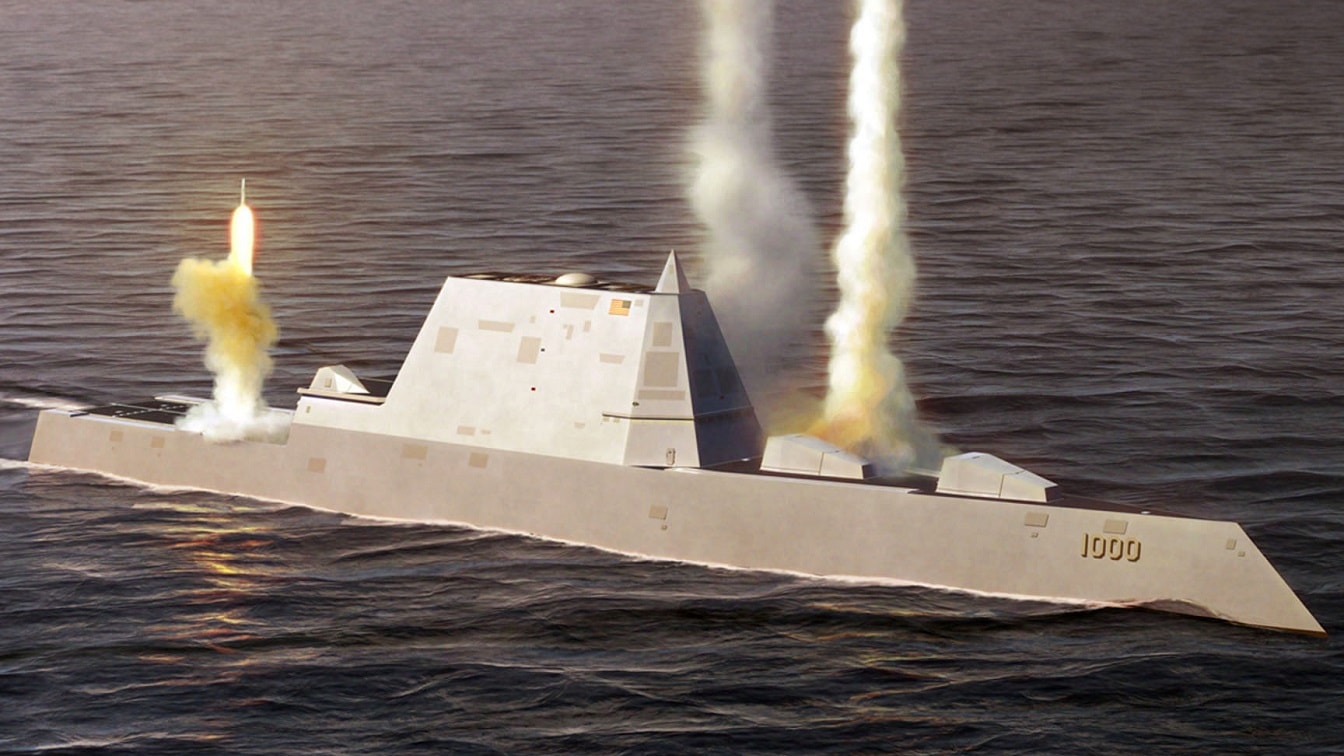
An artist rendering of the Zumwalt class destroyer DDG 1000, a new class of multi-mission U.S. Navy surface combatant ship designed to operate as part of a joint maritime fleet, assisting Marine strike forces ashore as well as performing littoral, air and sub-surface warfare.
Other proposals included developing entirely new munitions or adapting new technologies like hypervelocity projectiles, but none offered a near-term solution that would preserve the original concept and make the vessels useful even somewhat quickly. It meant the Zumwalt class had lost the mission it was designed to perform: naval gunfire support for onshore forces.
A New Mission for Zumwalt
Rather than decommissioning the ships, the Navy chose to find them an entirely new role. Beginning in the early 2020s, the service initiated plans to remove the gun systems entirely and place them with launch tubes capable of carrying hypersonic weapons.
Those weapons, which came from the Conventional Prompt Strike Program, were designed to travel at speeds above Mach 5 and strike targets at long range with high precision.
The conversion effectively transformed the Zumwalt into a long-range strike platform focused on high-value targets rather than coastal fire support.
That modification made sense, but it was by no means minor. It involved physically removing the gun mounts and redesigning internal spaces before integrating a completely different class of weapon system.
The ships are now expected to carry multiple hypersonic weapons, giving them a role that goes well beyond amphibious support and placing them firmly within the realm of great power competition.
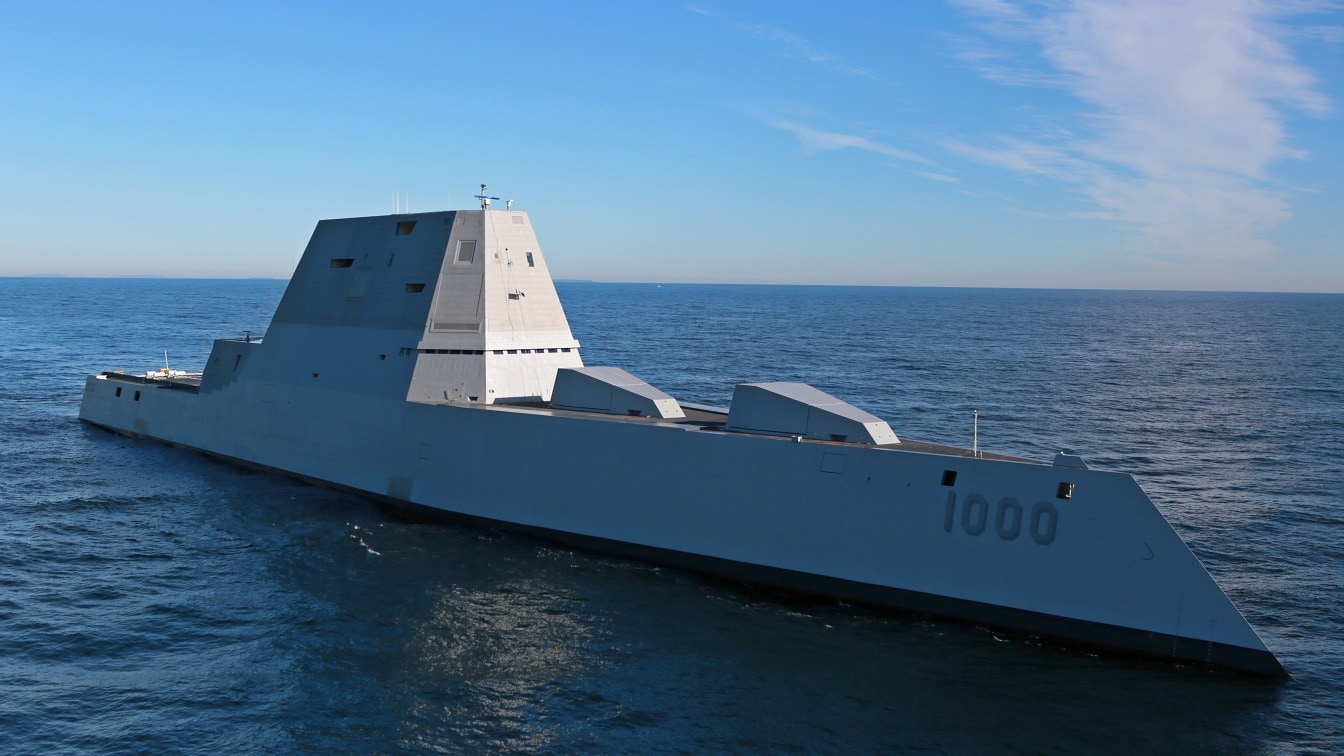
(Dec. 7, 2015) The future USS Zumwalt (DDG 1000) is underway for the first time conducting at-sea tests and trials in the Atlantic Ocean Dec. 7, 2015. The multimission ship will provide independent forward presence and deterrence, support special operations forces, and operate as an integral part of joint and combined expeditionary forces. (U.S. Navy photo courtesy of General Dynamics Bath Iron Works/Released). Zumwalt-Class
The Zumwalt in many ways was a failure, but in other ways, it is a testament to the ingenuity of U.S. military planners and engineers – even if the procurement and development process proved flawed.
A Hypersonic Testbed
In 2023, the U.S. Navy awarded Huntington Ingalls Industries a contract to begin planning the removal of the Advanced Gun Systems from the USS Zumwalt and USS Michael Monsoor, and their replacement with launch tubes for the Conventional Prompt Strike (CPS) hypersonic missile program. That work is presently underway, with the first operational deployment expected later in the decade.
The CPS weapon is designed to travel at speeds exceeding Mach 5 and strike targets at ranges exceeding 1,000 miles, placing it firmly in the category of strategic rather than tactical weapons.
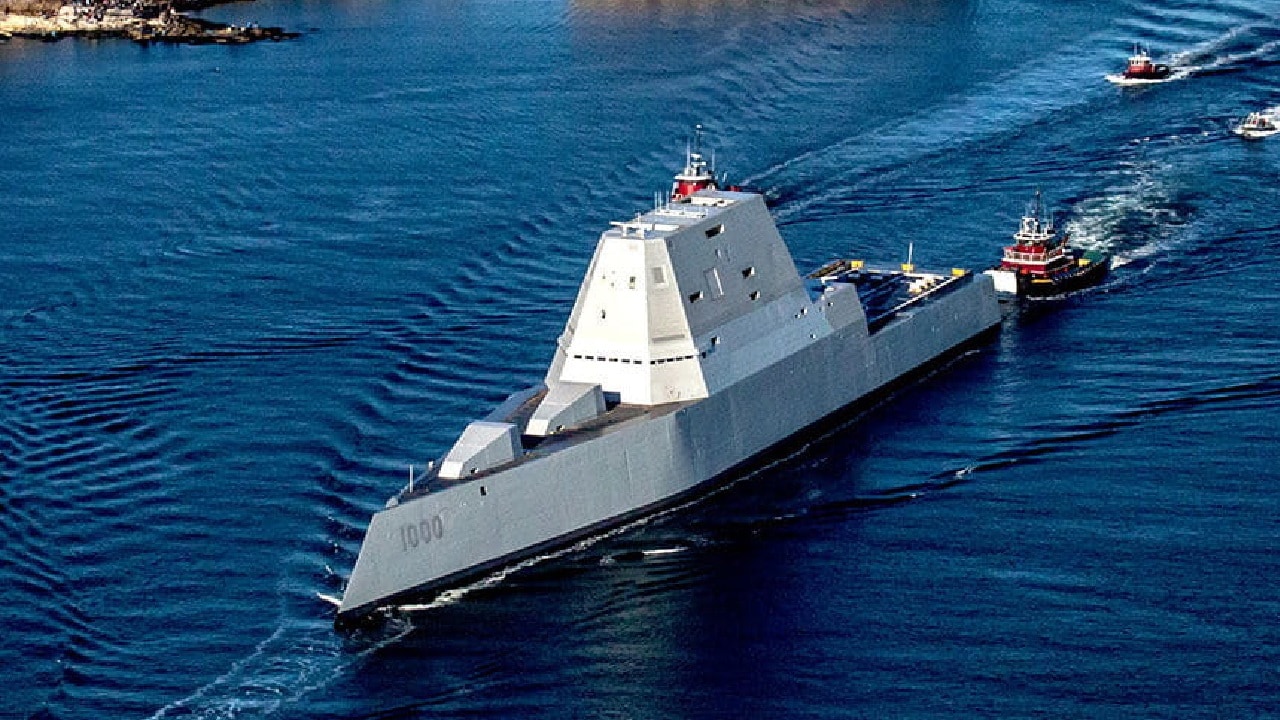
Zumwalt-class destroyer. Image Credit: Raytheon.
This shift aligns with a broader pattern in recent Pentagon planning, in which hypersonic weapons are being prioritised as a counter to near-peer adversaries such as China and Russia. In that context, Zumwalt is no longer a failed land-attack destroyer—it is becoming one of the first forward-deployed hypersonic strike platforms in the U.S. Navy.
The Zumwalt-Class Saved?
In some ways, it all worked out. The kind of war for which Zumwalt was originally built – large-scale amphibious assaults that require sustained naval gunfire support – has become less central to U.S. planning.
Instead, the focus is now shifting towards long-range precision strike and survivability in contested environments.
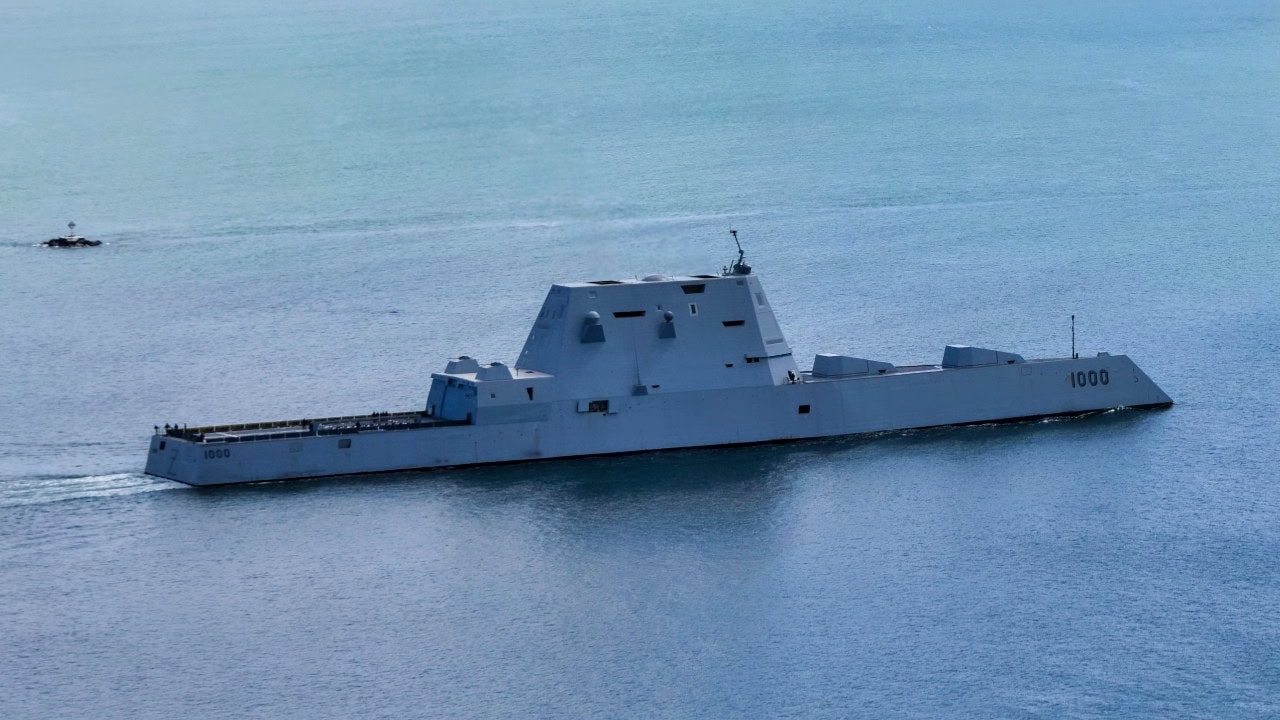
The Guided-missile destroyer USS Zumwalt (DDG 1000) departs San Diego as part of an operational underway. The milestone demonstrates the U.S. Navy’s commitment to advancing the lethality of its surface combatants by integrating cutting-edge technologies in Zumwalt’s combat systems, weapons, and engineering plants. (U.S. Navy photo by Mass Communication Specialist 2nd Class Natalie M. Byers)
So, in that sense, the Zumwalt program arrived at the wrong time. The Navy ultimately found a use for the ship, but only after it was forced to abandon the concept around which it was designed.
About the Author: Jack Buckby
Jack Buckby is a British researcher and analyst specialising in defence and national security, based in New York. His work focuses on military capability, procurement, and strategic competition, producing and editing analysis for policy and defence audiences. He brings extensive editorial experience, with a career output spanning over 1,000 articles at 19FortyFive and National Security Journal, and has previously authored books and papers on extremism and deradicalisation.