
China’s PLA Is Drawing Taiwan War Lessons From Operation Epic Fury and the U.S.-Israeli Air Campaign Against Iran
China desperately seeks unification with Taiwan. Xi Jinping is fixated on the island, knowing this issue will shape his political legacy. Chinese top leaders often worry about how history will view them. If Xi somehow “loses” and Taiwan achieves full independence, historians will see his leadership as a failure.
With the American and Israeli campaign against Iran during Operation Epic Fury, China might be reconsidering an assault or blockade against Taiwan. The United States and Israel have established air superiority over most of Iran’s airspace. Ayatollah Ali Khamenei has been eliminated.
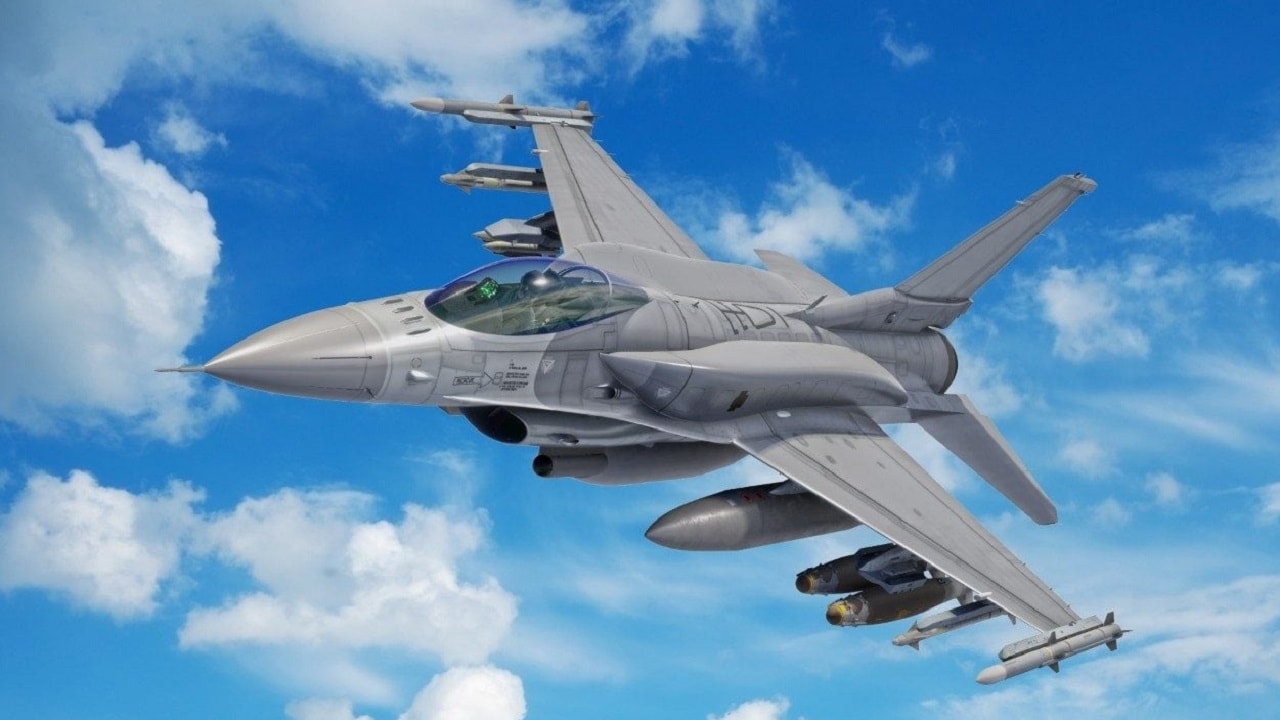
Image of F-16 Fighter. Image Credit: Creative Commons.
Thousands of military targets and nuclear sites have been destroyed, and the entire operation could conclude within weeks.
The Chinese Are Drawing Lessons from the War Against Iran
China has observed these successes but can also learn from the problems during the conflict with Iran. An American F-35 was damaged by Iranian anti-aircraft fire but landed safely.
Three F-15E Strike Eagles were shot down in a friendly fire incident caused by a Kuwaiti fighter jet making a series of errors. A U.S. Navy F/A-18 E/F Super Hornet was nearly shot down by an Iranian man-portable missile.
Dwindling U.S. Missiles
Furthermore, U.S. Tomahawk cruise missiles have been heavily depleted. THAAD interceptors may be running low, and the Iranians seem to have destroyed a THAAD battery radar system.
The Navy is using many SM-Standard Missile interceptors to defend the USS Abraham Lincoln carrier strike group.
The Americans and Israelis are urgently working to eliminate Iranian ballistic missile and drone launch and production sites before the supply of U.S. projectiles is exhausted.
China May Be Better at the ‘Kinetic Missile Fight’
China is learning from what I call the “Kinetic Missile Fight.”
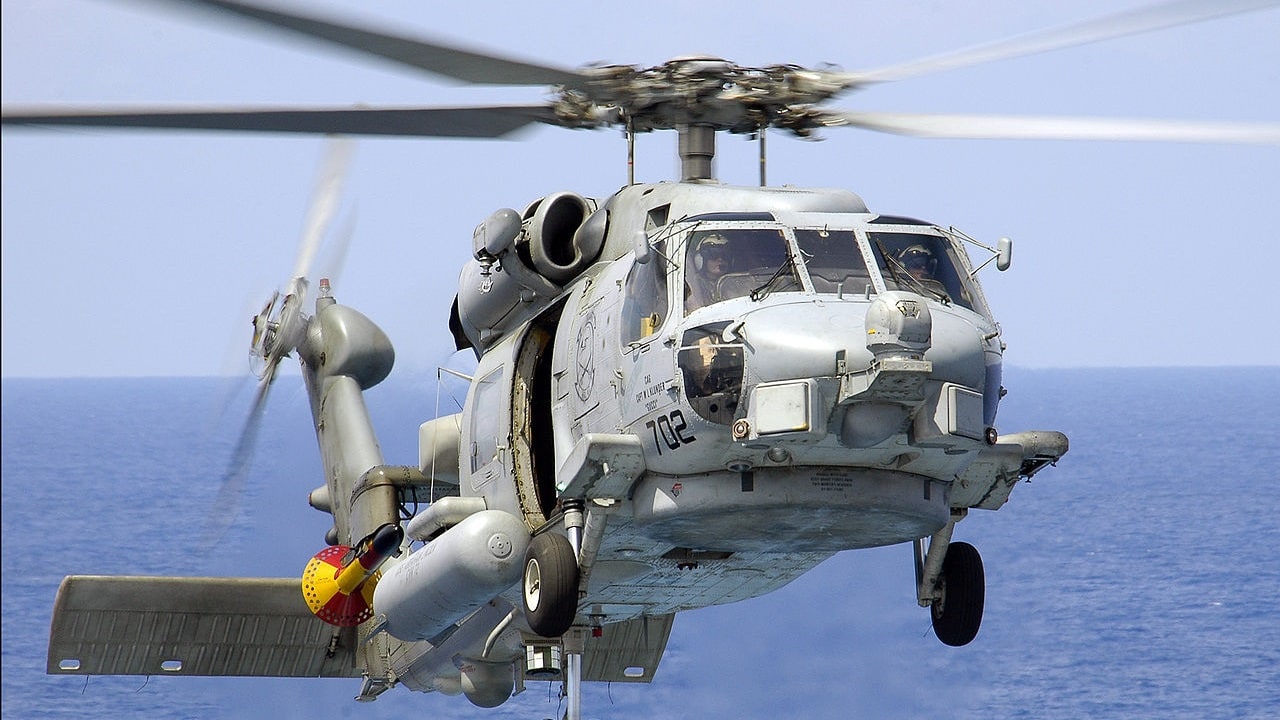
An SH-60B Seahawk assigned to the Saberhawks of Helicopter Anti-submarine Squadron Light Four Seven (HSL-47) prepares to land aboard the Nimitz-class aircraft carrier USS Abraham Lincoln (CVN 72).
The United States needs a plan to replenish missiles and interceptors in the event of a two-front war. China may be able to withstand an American intervention during kinetic operations. However, the United States will need to rebuild its missile stocks before it can effectively respond to a Chinese attack on Taiwan.
U.S. Aircraft Carrier Force Is Struggling
Many U.S. Navy aircraft carriers are out of action due to extended maintenance periods and multi-year Refueling and Complex Overhaul (RCOH) procedures. The USS Gerald R. Ford needs repairs to its sewage system and fixes to address fire damage.
The USS Abraham Lincoln has been fighting hard during Operation Epic Fury, and it will not be rerouted to the Indo-Pacific. The Navy is working to accelerate the readiness of the new Ford-class supercarrier USS John F. Kennedy, which is scheduled for active duty in 2027.
China’s Small Carrier Fleet Packs a Punch
Meanwhile, China has three operational aircraft carriers, with at least two in the water at all times. This could be the moment for the People’s Liberation Army Navy to take independent action. The People’s Liberation Army Air Force is also powerful.
Consider just one aircraft – the J-20. There might be as many as 1,000 stealth Mighty Dragons in the fleet. Additionally, the People’s Liberation Army Rocket Force has a vast array of ballistic, cruise, and hypersonic missiles that could serve as “Guam-killers” and “carrier-killers.”
U.S. Intelligence Changes Its China-Taiwan Assessment
China might currently have the desire to carry out an amphibious landing in Taiwan, but the U.S. intelligence community has revised its assessment of a potential forced unification attempt. The American national security and intelligence agencies have often cited the “2027 prediction” as a possible date for Chinese aggression across the Taiwan Strait. Now, the United States believes that no attack will occur that year.
The annual intelligence report on the People’s Republic’s military power states that “China, despite its threat to use force to compel unification if necessary and to counter what it sees as a U.S. attempt to use Taiwan to undermine China’s rise, prefers to achieve unification without the use of force, if possible,” the U.S. intelligence agencies said in the report.
The U.S. states that Chinese leaders do not currently plan to invade Taiwan in 2027, nor do they have a set timeline for unification, the report said.
No, the China Invasion of Taiwan Will Not Be a Slam Dunk
This was a surprising conclusion. To be sure, any amphibious operation against Taiwan would be challenging. The terrain in Taiwan is mountainous and rocky, with limited safe landing zones.
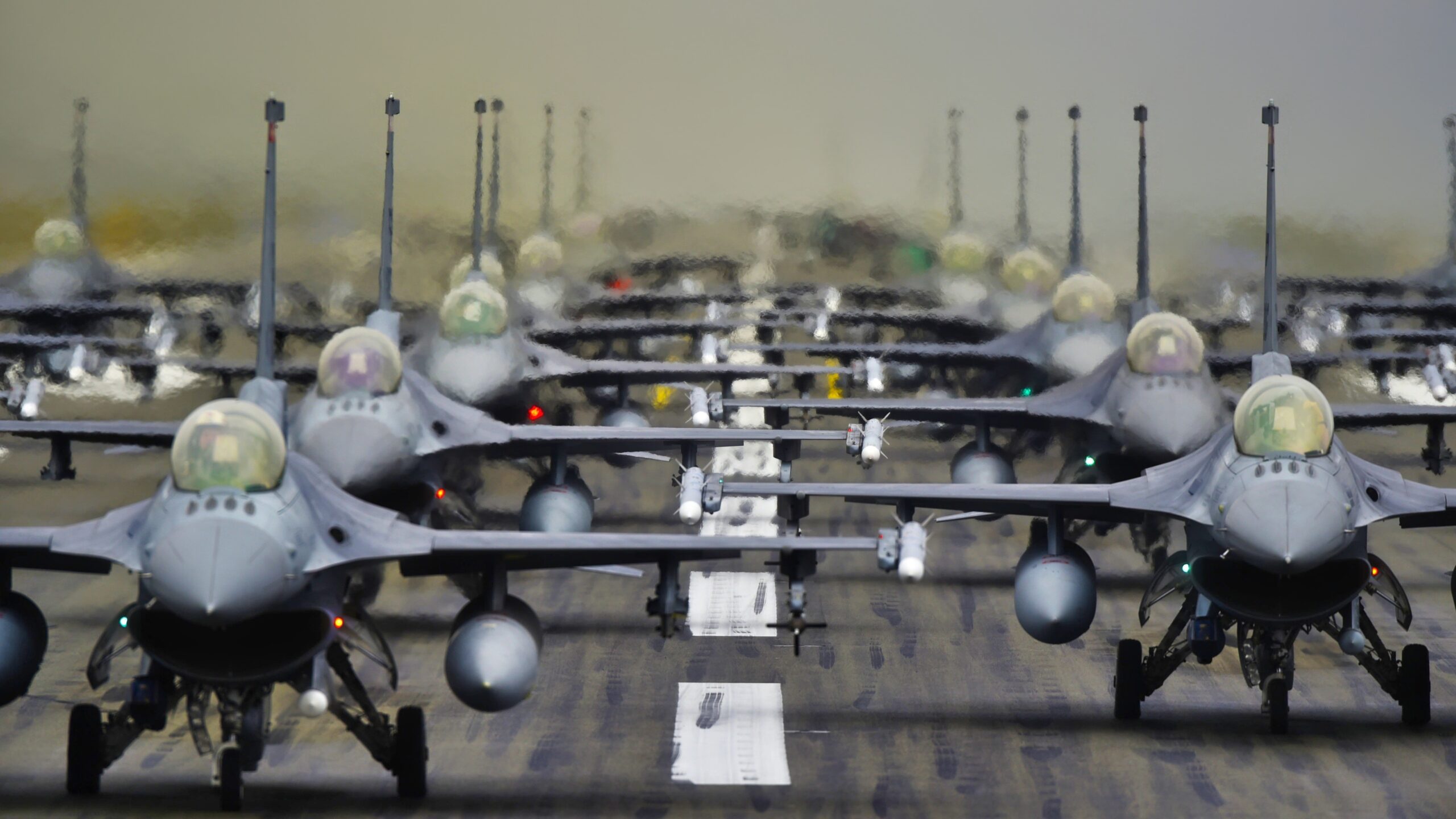
F-16 Fighter in a Elephant Walk. Image Credit: Creative Commons.
The Taiwanese possess their own missile systems and fighter jets to defend once China establishes a beachhead, and there are plans for a guerrilla war of attrition against the Chinese invaders. The People’s Liberation Army could become bogged down in a quagmire similar to the Russo-Ukrainian War.
So China may bide its time, but for how long? The Chinese have certainly practiced aerial warfare and other tactics against Taiwan through “Gray Zone” operations that simulate conflict. This involves numerous flights by fighter jets and bombers in Taiwan’s Air Defense Identification Zone.
Are the U.S. Intelligence Analysts Correct?
I have mixed feelings about the latest U.S. intelligence prediction of a Chinese attack on Taiwan. The assessment appears to be confident, but it’s unclear who is behind it or what their sources are telling the authors.
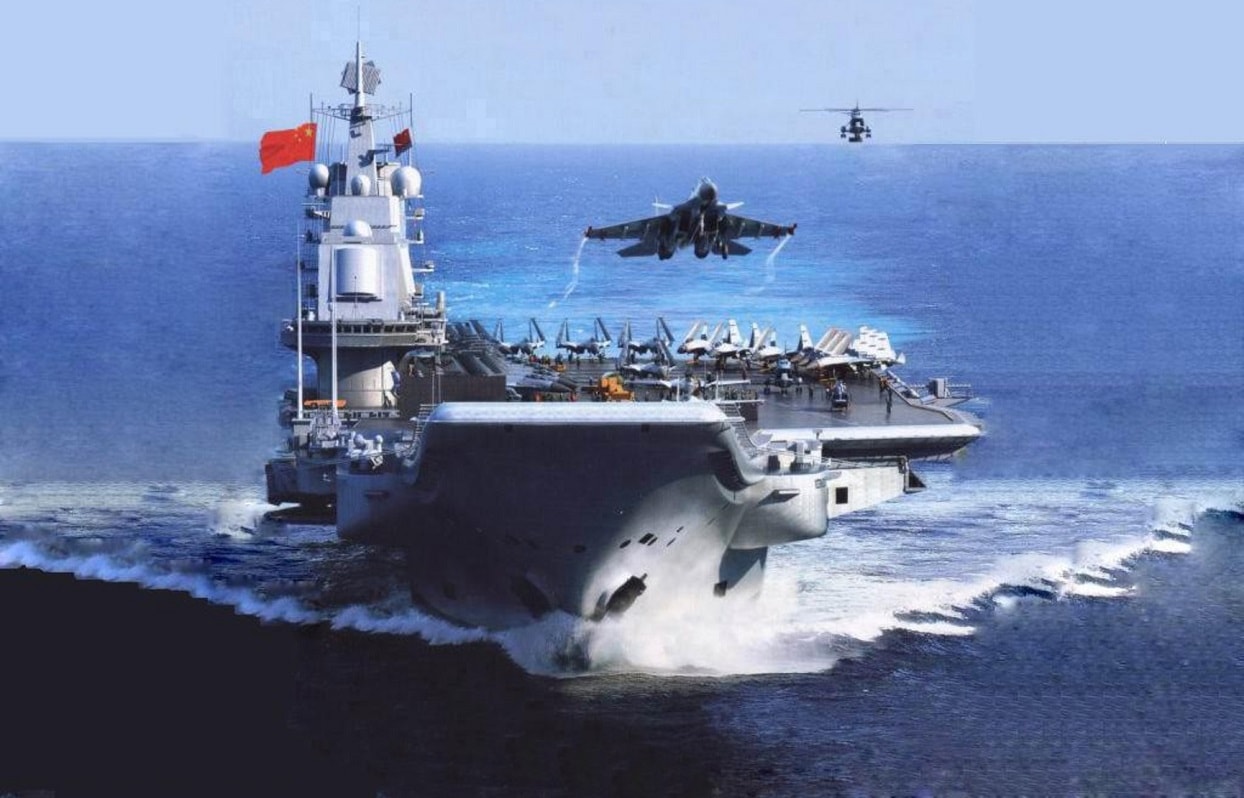
Chinese PLAN Navy. Image: Chinese Internet.
I wish China would resist an attack. Any war over Taiwan would be bloody and would last much longer than the 100 hours some PLA generals predict. Still, China might take the risk and send its forces to cause significant damage.
Trump Will Meet with Xi Soon
It’s also uncertain how President Donald Trump would respond to an invasion. Trump is scheduled to visit China from May 14 to 15. The summit with Xi is expected to focus on trade issues, but the Taiwan question may come up. Xi will likely complain about U.S. arms sales to Taiwan, and Trump might gripe about China’s unfair trade practices against the U.S. However, the war in Iran could delay the summit again.
Can the Two Leaders Make a Comprehensive Peaceful Plan of Action?
As a result of this diplomatic effort, China is unlikely to attack Taiwan anytime soon. Xi and Trump both want to reach a mutual understanding on trade and defense issues. Trump believes he has a good relationship with his Chinese counterpart.
However, while diplomacy may be progressing well, Chinese generals and admirals are closely monitoring Operation Epic Fury. They want to see how long the missions will last, how involved the Iranian forces are, how much they are being reduced, and when U.S. missiles and interceptors will run out.
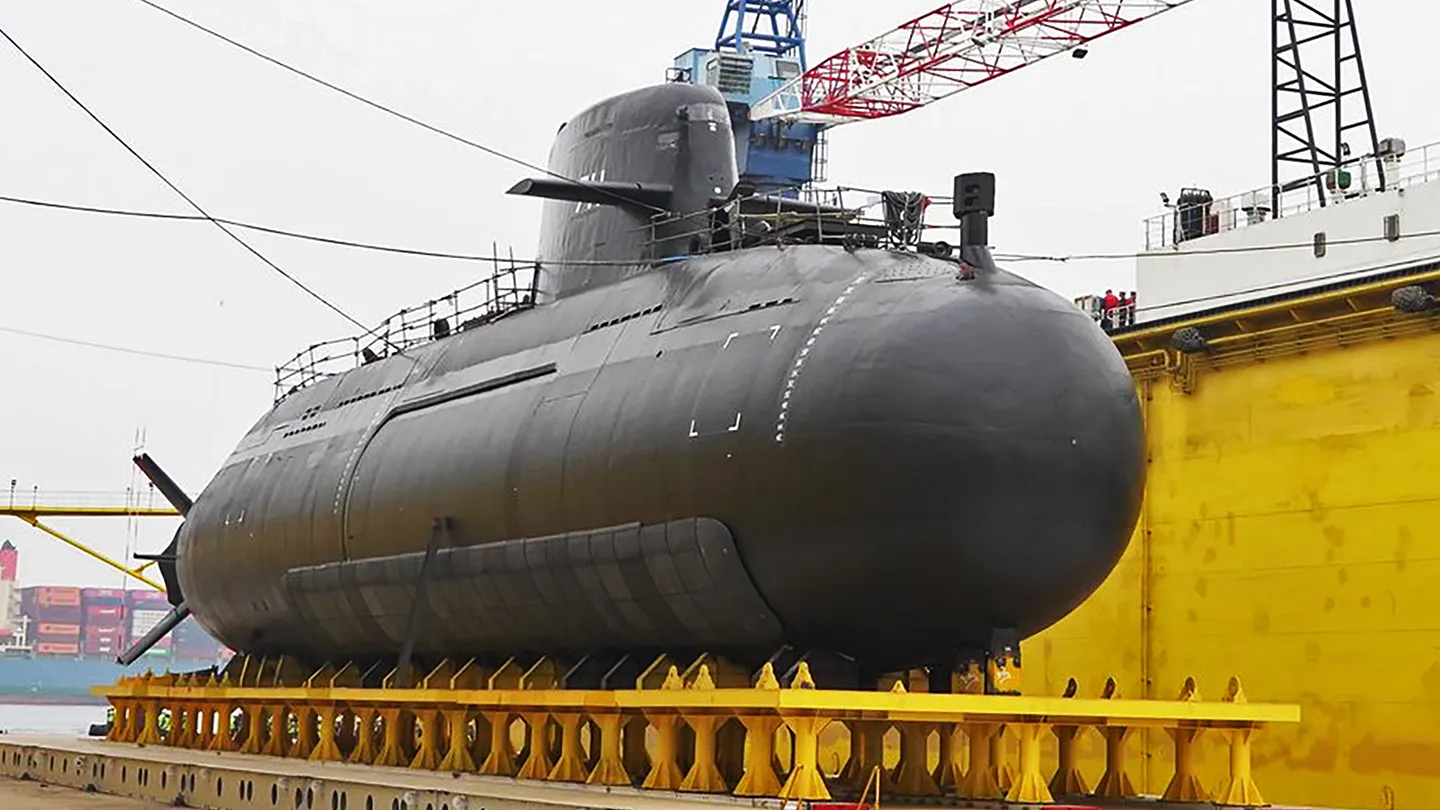
Hai Kun-Class Submarine. Image Credit: Taiwan Government.
Look for no Chinese attack on Taiwan this year, but I still have that 2027 date etched in my head, even though the U.S. intelligence community has given different guidance.
Let’s hope they are correct in their assessment and that Xi decides not to take Taiwan by force but instead to absorb it peacefully, since that is his supreme objective. Status quo, of course, would be the best scenario.
About the Author: Brent M. Eastwood
Author of now over 3,000 articles on defense issues, Brent M. Eastwood, PhD is the author of Don’t Turn Your Back On the World: a Conservative Foreign Policy and Humans, Machines, and Data: Future Trends in Warfare plus two other books. Brent was the founder and CEO of a tech firm that predicted world events using artificial intelligence. He served as a legislative fellow for US Senator Tim Scott and advised the senator on defense and foreign policy issues. He has taught at American University, George Washington University, and George Mason University. Brent is a former US Army Infantry officer. He can be followed on X @BMEastwood.