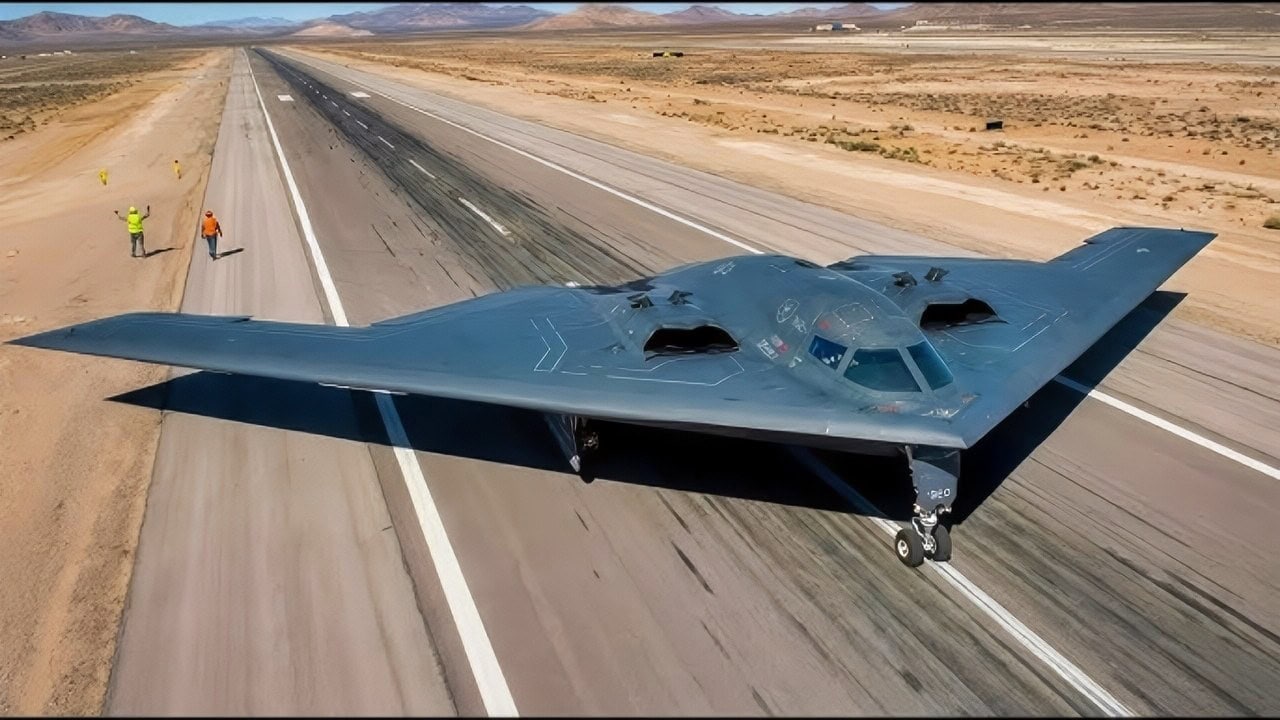
The H-20 Program Emerged in 2016 — There Are No Confirmed Flight Tests or Operational Deployments as of 2026
The Great H-20 Bomber Mystery: The U.S. Air Force is the world’s leader in stealth technology. Not only does the service operate two different single-seat stealth fighters—the F-22 Raptor and the F-35A—but it also uses the world’s only stealth bomber, the Cold War-era B-2 Spirit.
Additionally, the Air Force is preparing to accept into service what it calls the world’s first sixth-generation bomber, Northrop Grumman’s B-21 Raider.
The United States has great depth of experience working with stealth technology.
However, so does its main geopolitical rival, China, which fields several stealthy fighters and is set to build many more.
But when considering stealth bombers, China has just one in development, and it appears to be a long way from active service.
What explains the disparity between the two countries’ stealth bomber programs?
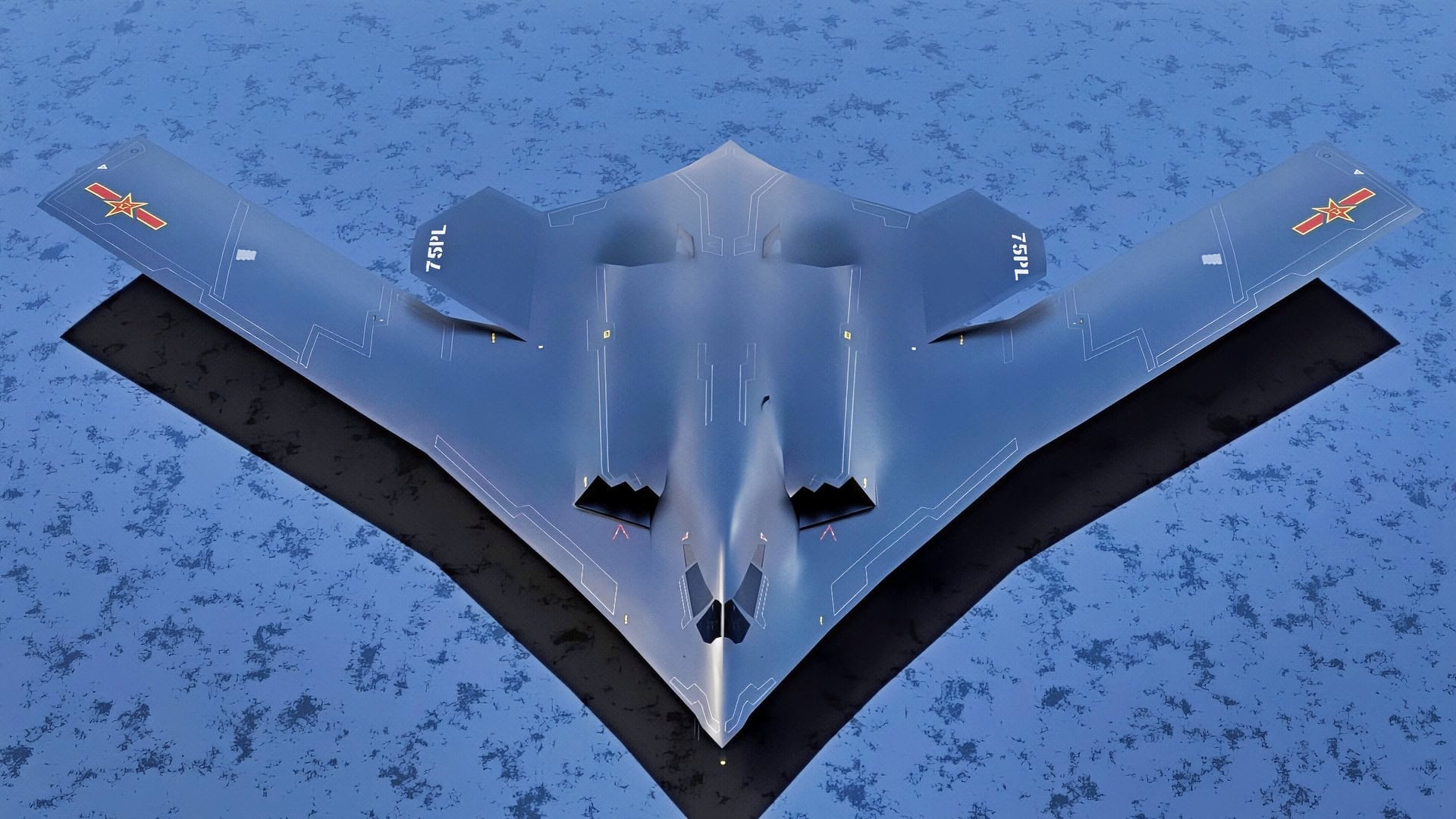
H-20 Bomber Mock Up X Screenshot 2026
U.S. stealth technology is a story decades in the making, one defined by continuous development.
In the 1970s and 1980s, Lockheed developed the F-117 Nighthawk, which validated the concept of low-observable aircraft in combat.
Though greatly outclassed by modern stealthy technology, the jet is still used for training.
In the 1980s and 1990s, the United States developed and fielded not the world’s first stealth bomber, the B-2 Spirit, which is also a strategic bomber.
Fast forward to now, and Northrop Grumman’s B-21 Raider builds on those forays into stealth technology by introducing a fully digital design, new materials, and the ability to network with other aircraft. It is far more advanced than the B-2 and F-117 that came before the Raider.
What is described above is more than just a sequence of improved aircraft—these platforms are the products of a continuously refined development cycle.
Systems and attributes are being improved, including radar-absorbent materials, fuselage shaping, careful edge alignment, thermal and infrared management, and mission systems integration.
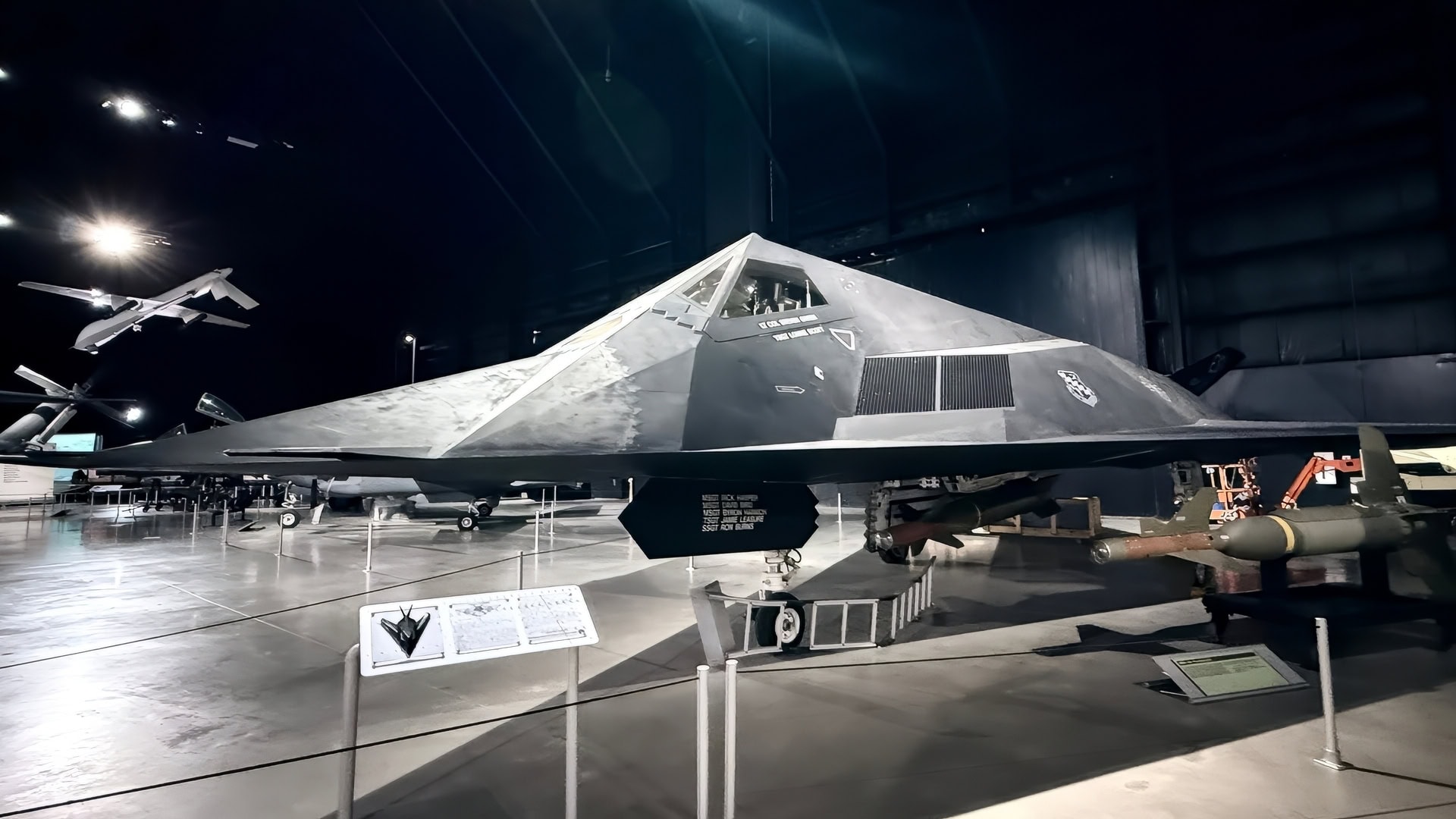
F-117A Nighthawk 19FortyFive.com Image. Taken in July 2025 at the National Museum of the U.S. Air Force by Harry J. Kazianis.
The Raider benefits from decades of operational use and data as well as modeling, all of which coalesce to give the bomber the ability to operate deep inside contested adversary airspace and to integrate with command networks.
The Effort in China: Enter the H-20
The development path for a stealthy strategic bomber in China looks completely different. Rather than steadily testing and experimenting with stealth technology over decades, China is attempting to leapfrog into a new aircraft category.
For decades, the People’s Liberation Army Air Force, (PLAAF), has relied on the Xian H-6, a variant of the Soviet Union’s Tupolev Tu-16 heavy strategic bomber. China’s H-20 program emerged in 2016.
The program sought to introduce a flying-wing stealth bomber similar to the B-2 Spirit. That bomber, the H-20, is China’s first attempt to build a truly intercontinental stealth bomber, rather than just an incremental evolution of previous aircraft. But as of today, there are no confirmed tests or operational deployments of the H-20.
Stealthy Systems, not Platforms
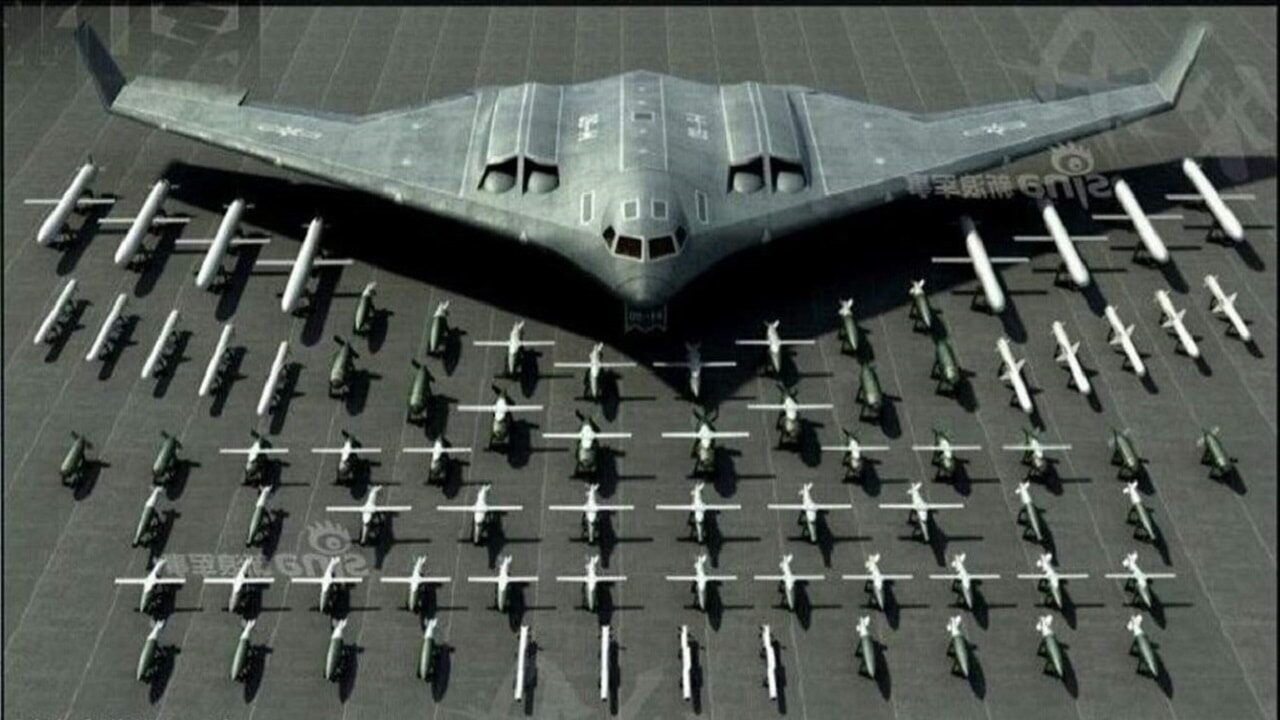
H-20 Stealth Bomber. Image Credit: Artist Rendering Chinese Internet.
What explains China’s halting progress in building a stealth bomber compared to the United States?
China is, after all, one of the world’s leading military powers and benefits from a generous defense budget.
Stealth technology is much more than just building a flying wing that can stay airborne; it is the perfection and integration of many different technologies onto a single bomber platform. It is a realm in which the United States is unrivaled.
The task only begins with radar-absorbent materials. Maintenance cycles need to be integrated into the aircraft’s design. Engine inlet design, heat suppression, aircraft skin integrity, and mission planning and routing are what make a stealth bomber successful.
It is not enough to simply have a bomber with some stealthy attributes.
Though China has certainly mastered some aspects of a successful stealth bomber—notably, the country’s stealth fighters are thought to indeed qualify as highly stealthy aircraft—there are several crucial areas in which China lags. One of these is combat experience.
China’s Dearth of Combat Experience
China has not fought a war of any kind since a brief conflict with Vietnam in 1979.
Though sporadic skirmishes lasted beyond the end of major engagements, that war was hardly a Chinese victory.
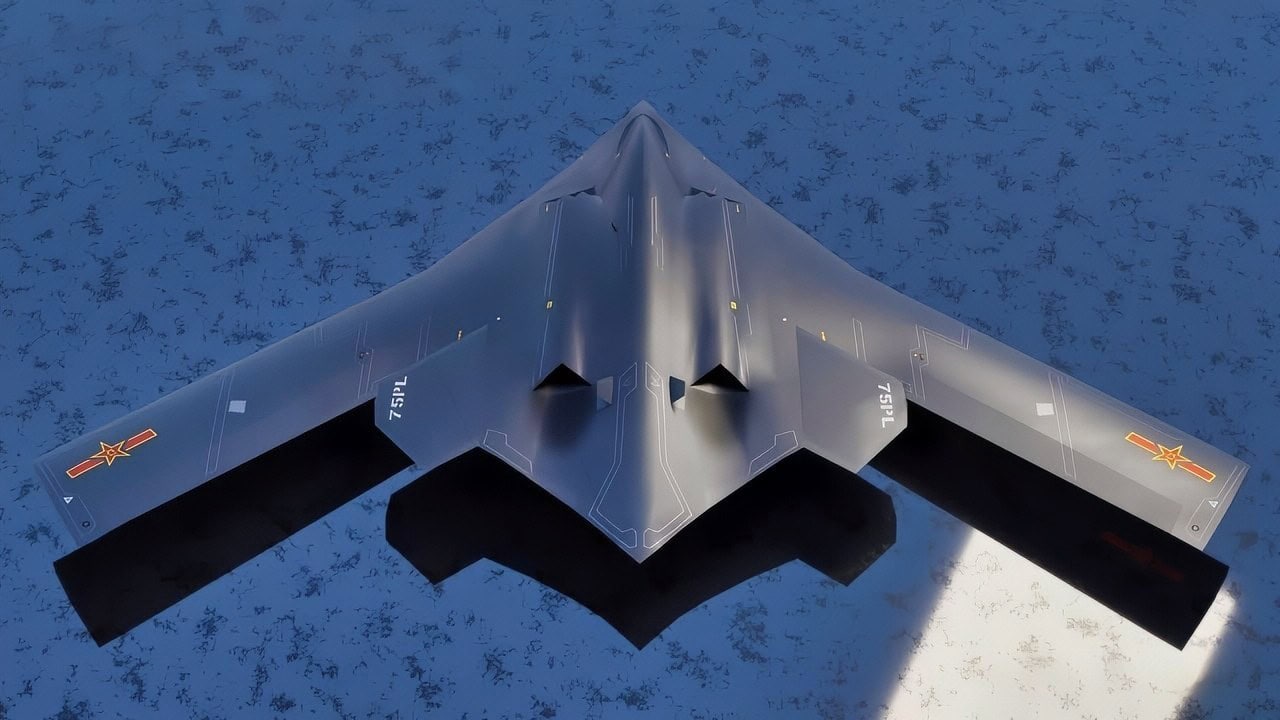
H-20 Bomber YouTube Screenshot Artist Rendering
The United States, on the other hand, has had ample opportunities to evaluate the combat-effectiveness of its aircraft. B-2 Spirit bombers have flown combat missions in Kosovo, Iraq, Afghanistan, Iran, and elsewhere.
The real-world use helped the Air Force refine not only how the B-2 was employed, but how it was maintained. This experience is of nearly incalculable value, and it significantly contributed to the design of the B-21. China has no combat experience with stealth bombers—nor with its stealth fighters.
Time, Location, Money, and Experience
The gap between Chinese and U.S. stealth bombers is thus a question of experience, not merely platform design.
While the United States has spent forty-plus years refining the tactics, materials, and strategic doctrine that a stealth bomber embodies, China is attempting to learn on an accelerated timescale. Therein lies the disparity.
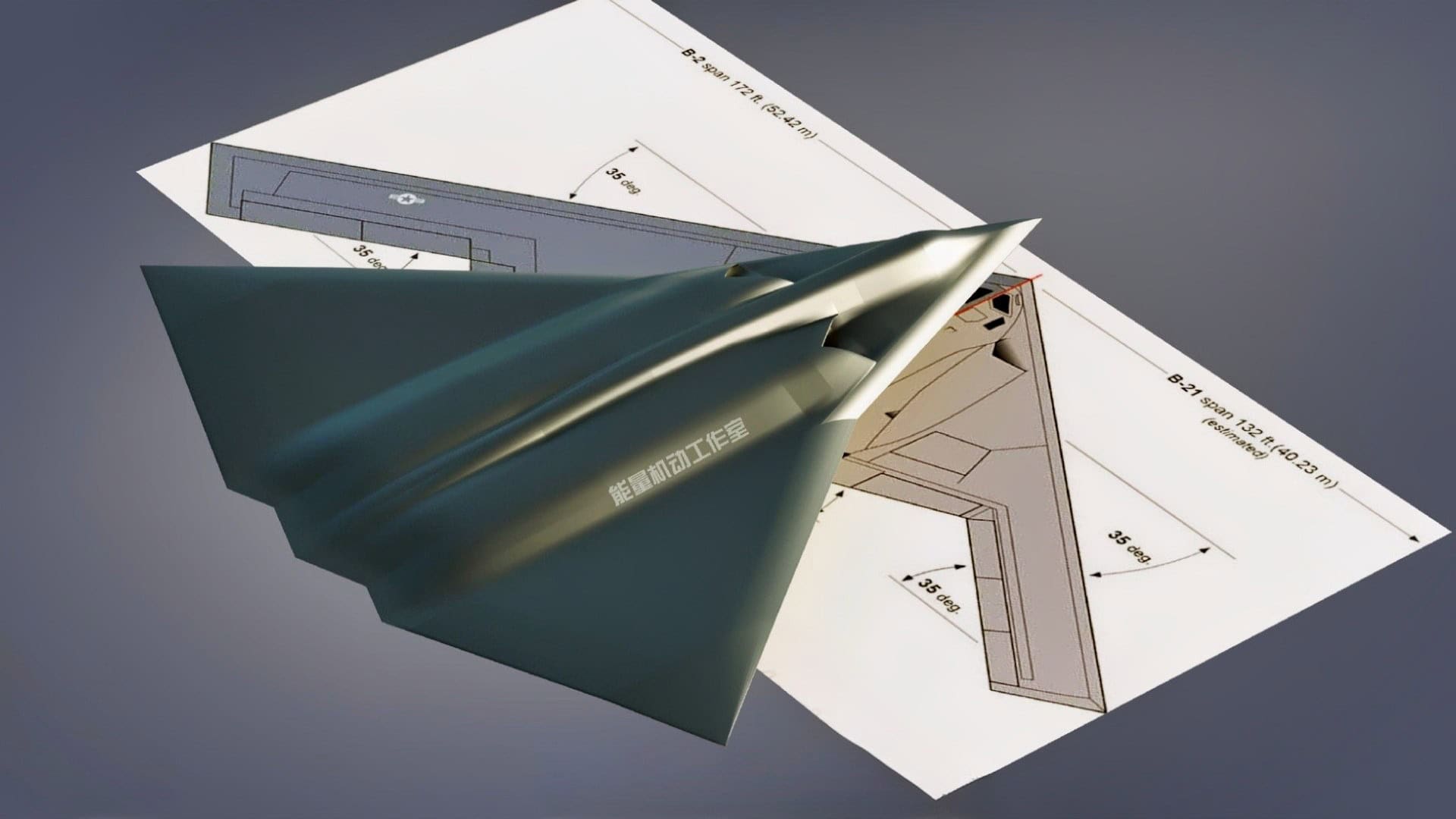
H-20 Stealth Bomber Computer-Generated Image from X
The issue, for China, is not simply a question of building a stealth bomber.
It is a much more complex problem: How does an air force build a fleet of stealth bombers that is credible, survivable, and integrated with other aircraft? It is one of the most complex engineering and doctrinal challenges ever faced by an air force.
MORE – The U.S. Navy Can’t Solve the Tomahawk Missile Shortage
About the Author: Caleb Larson
Caleb Larson is an American multiformat journalist based in Berlin, Germany. His work covers the intersection of conflict and society, focusing on American foreign policy and European security. He has reported from Germany, Russia, and the United States. Most recently, he covered the war in Ukraine, reporting extensively on the war’s shifting battle lines from Donbas and writing on the war’s civilian and humanitarian toll. Previously, he worked as a Defense Reporter for POLITICO Europe. You can follow his latest work on X.