
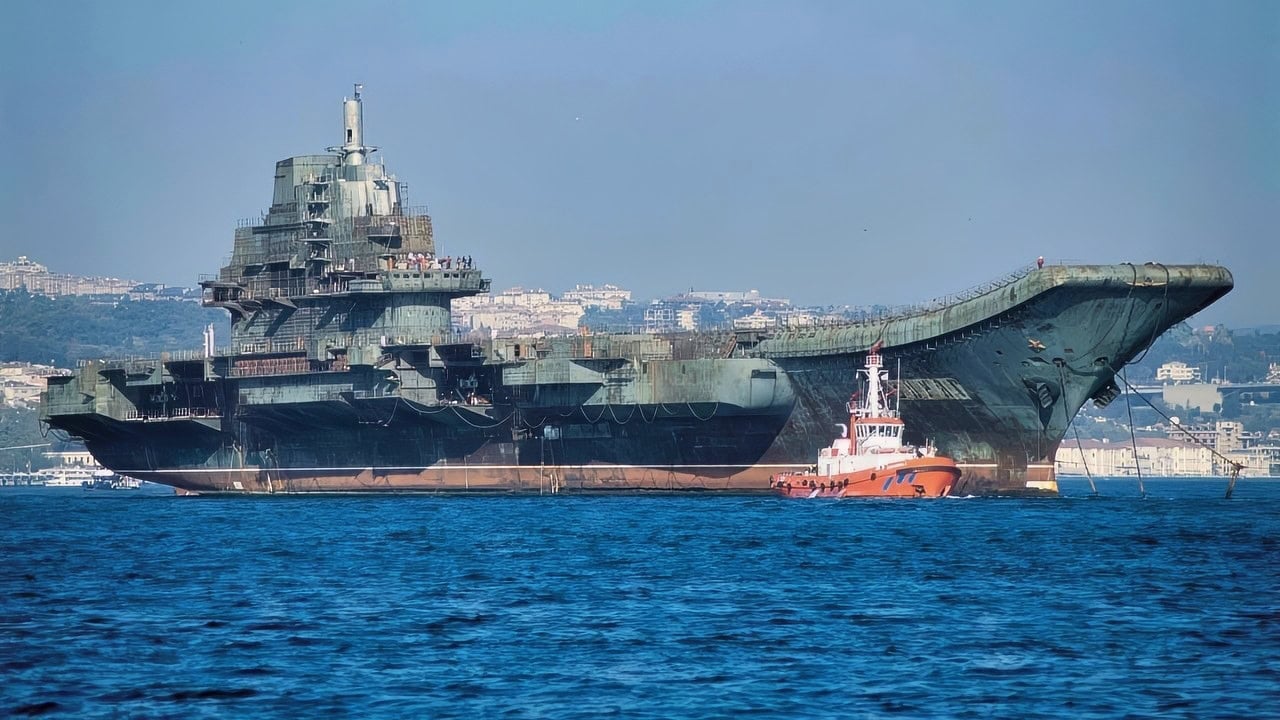
Ukraine Sold the 60,000-Ton Varyag Aircraft Carrier for $20 Million to a Macau Company Run by Former PLA Officer Xu Zengping
In 2012, the Type 001 Liaoning officially entered into service, becoming China’s first official aircraft carrier, much to the displeasure of the West.
Originally constructed in the Soviet Union, Liaoning was a Kuznetsov-class aircraft carrier intended for the Soviet Navy, but the dissolution of the USSR left the unfinished carrier in the hands of the cash-strapped Ukrainian Navy.
China, seeking to acquire its own aircraft carrier, bought the rapidly deteriorating ship through a dubious Macau-based company to avoid raising unnecessary alarms.
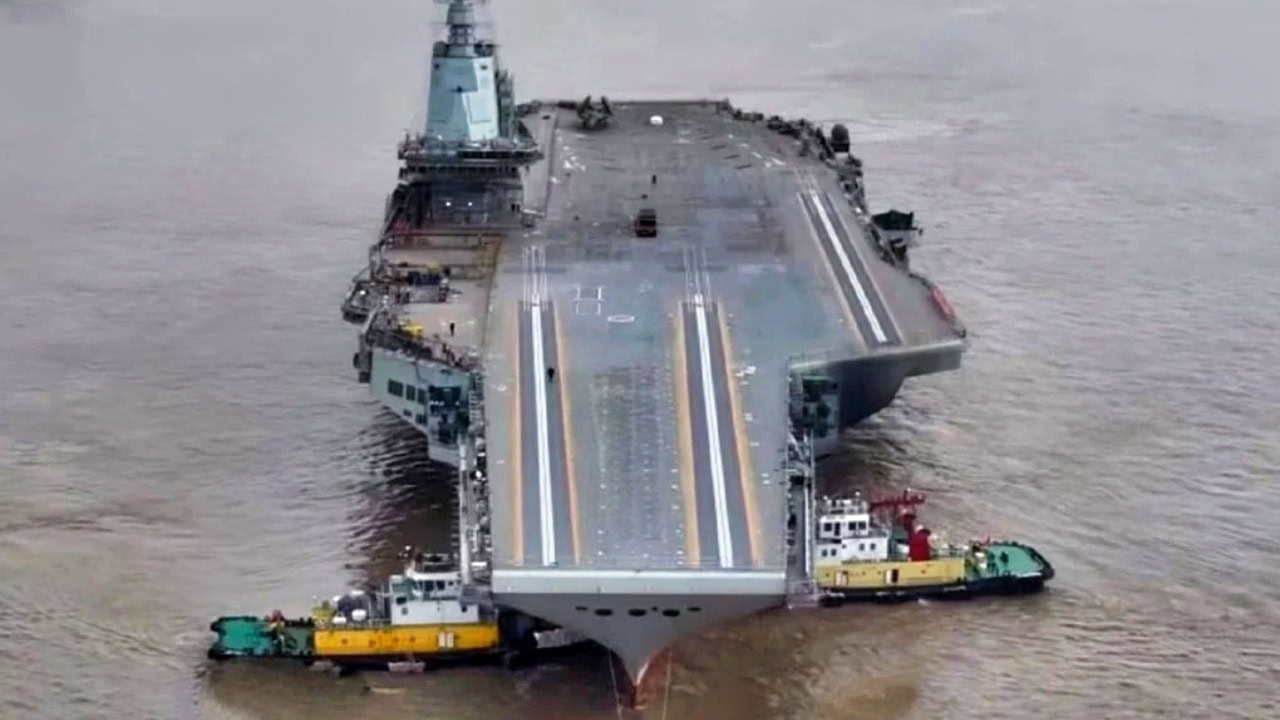
China Aircraft Carrier. Image Credit: Chinese State Media.
After a little bit of deception and a long haul from Mykolaiv to Dalain, the PLAN eventually received its first aircraft carrier.
The Soviet Origins of the Future Liaoning
The ship that would ultimately become China’s first aircraft carrier began its life as a Soviet project. In 1985, the Soviet Union laid down the keel of an aircraft carrier at the Black Sea Shipyard in Mykolaiv, then part of the Ukrainian Soviet Socialist Republic.
The vessel was originally named Riga and was part of Project 1143.6, later known as the Kuznetsov-class.
These ships were intended to serve as “heavy aircraft-carrying cruisers,” a designation chosen in part to comply with the Montreux Convention governing passage through the Turkish Straits. Launched in 1988 and renamed Varyag in 1990, the ship was structurally complete but far from operational, lacking engines, electronics, weapons, and critical internal systems.
The dissolution of the Soviet Union in 1991 abruptly ended construction. Custody of the ship transferred to the newly independent Ukrainian state, which inherited not only the unfinished hull but also the massive financial burden associated with maintaining or completing it.
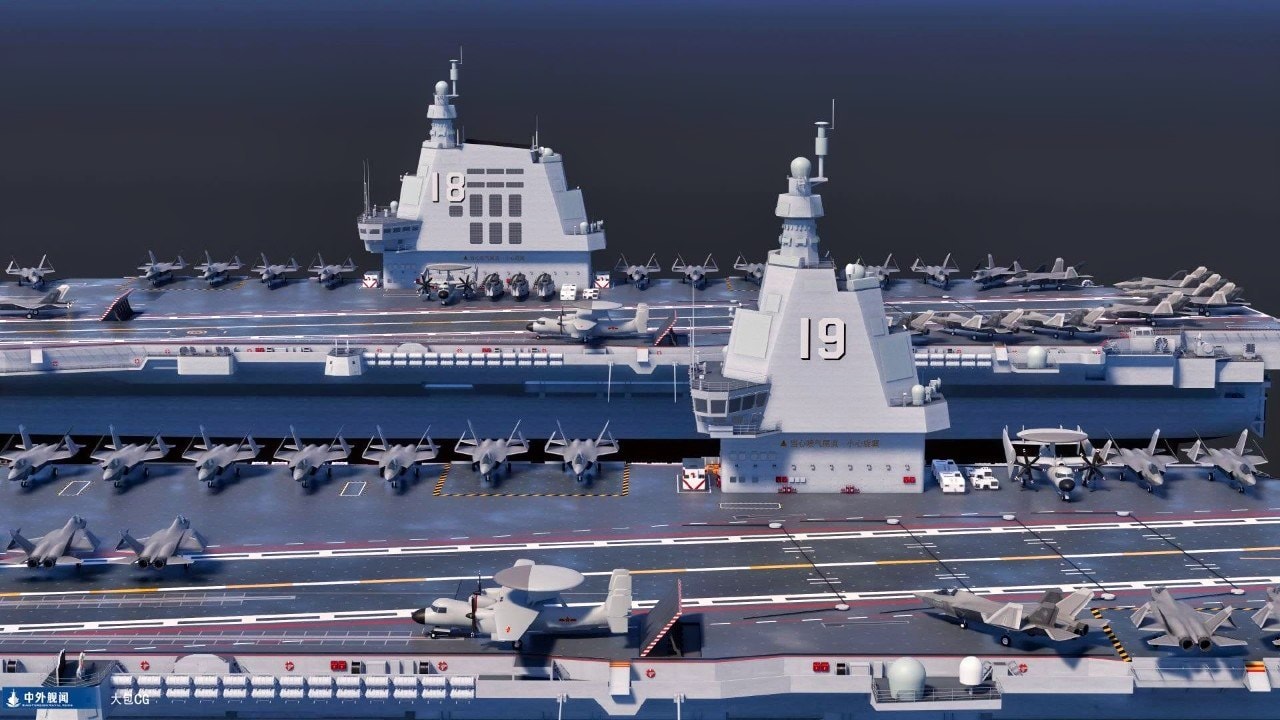
China Aircraft Carrier Models. Image Credit: Creative Commons.
Ukraine had neither the strategic need nor the economic means to operate an aircraft carrier, especially during a period of severe post-Soviet economic contraction. By the mid-1990s, Varyag sat idle at the dock, partially dismantled and steadily deteriorating
Varyag in a Cash-Strapped Ukraine
As Ukraine struggled to stabilize its economy, the Varyag became an increasing liability. Maintaining the hull required security, dock space, and basic upkeep, all of which imposed costs with no realistic prospect of return. Ukrainian authorities explored various options, including scrapping the ship or selling it for conversion to civilian use.
Direct sale to a foreign navy, however, would have risked diplomatic backlash, particularly from NATO countries concerned about the proliferation of advanced naval capabilities. As a result, Ukrainian officials opted for a nominally civilian sale that would allow the ship to be removed discreetly from their inventory.
In 1998, Ukraine sold Varyag for approximately US$20 million, a fraction of its original construction cost. The buyer was a Macau-registered company claiming to represent private commercial interests rather than any government or military organization. The purchaser of Varyag was Chong Lot Travel Agency, a company registered in Macau and fronted by Xu Zengping, a former Chinese army officer turned businessman.
Officially, the company claimed that it intended to convert the enormous warship into a floating casino and entertainment complex, supposedly to be moored in Macau.
The story immediately raised a lot of eyebrows, but it provided just enough legal and diplomatic cover to allow the sale to proceed. Later interviews and investigative reporting made clear that Xu was acting with the knowledge and encouragement of figures within the Chinese military establishment, though the transaction was deliberately kept at arm’s length from the Chinese state itself.
Hauling a Half-Finished Carrier From Ukraine to China
Purchasing the hull was only the beginning. Varyag had no engines, rudder, or propulsion system, meaning it could not move under its own power.
Transporting a 60,000-ton, engine-less aircraft carrier from the Black Sea to the Pacific would become one of the most difficult heavy-lift towing operations in maritime history.
The operation his a rut almost immediately when Turkey refused to allow the ship to transit the Bosporus and Dardanelles Straits.
Under the Montreux Convention, Turkey has the authority to restrict the passage of large military vessels, and Turkish officials argued that towing Varyag posed unacceptable risks to navigation and coastal infrastructure in Istanbul.
As a result, the ship remained stuck for more than a year as negotiations dragged on, incurring substantial towing and maintenance costs. Eventually, in 2001, Turkey granted permission.
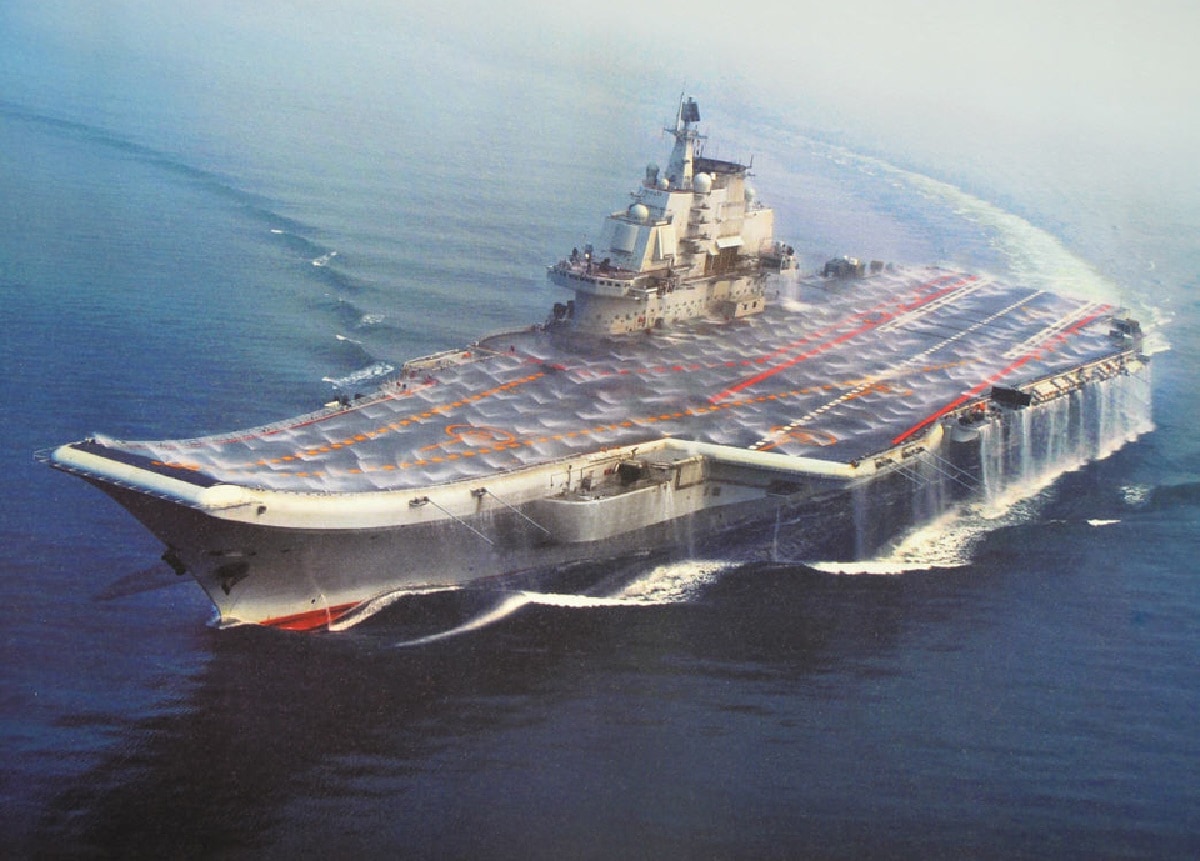
Liaoning Aircraft Carrier
The ship was then towed through the Mediterranean, around the Cape of Good Hope, across the Indian Ocean, and through the South China Sea. In March 2002, after a journey that took nearly four years from purchase to arrival, Varyag finally entered Dalian port in northeastern China.
Transformation into Liaoning
Once inside China, they dropped all pretenses about a casino ship.
The hull was transferred to Dalian Shipbuilding Industry Company, a major state-owned enterprise closely linked to China’s naval modernization programs.
Chinese engineers spent years studying the unfinished carrier, reverse-engineering Soviet design principles, and reworking the structure to accommodate modern electronics, propulsion systems, and weapons.
The ship was adapted for short takeoff but arrested recovery (STOBAR) operations using a ski-jump ramp, consistent with the original Kuznetsov-class design.
Sea trials began in August 2011, and on 25 September 2012, the ship was officially commissioned into the People’s Liberation Army Navy as Liaoning, hull number 16. With that ceremony, China became the last permanent member of the United Nations Security Council to operate an aircraft carrier.
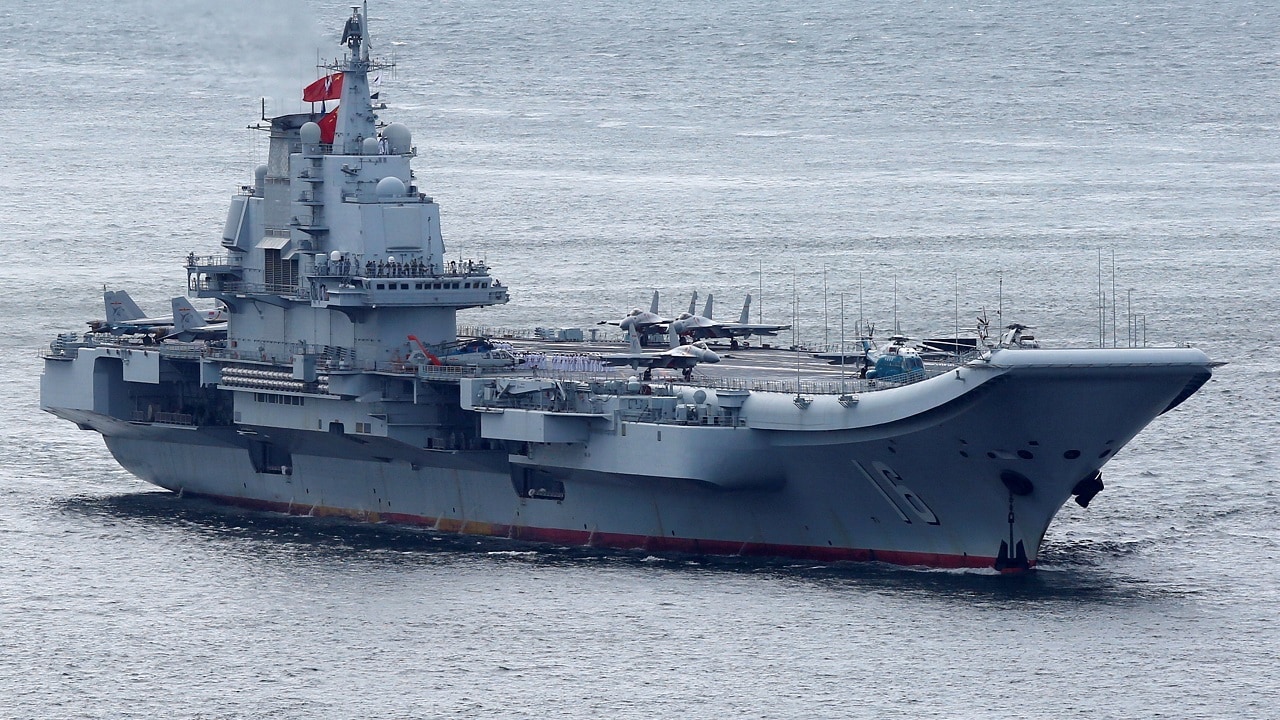
Members of the People’s Liberation Army navy are seen on board China’s aircraft carrier Liaoning as it sails into Hong Kong, China July 7, 2017. REUTERS/Bobby Yip
Officials in China maintained that the ship was for research training purposes, but by that point, there was little that the U.S. or its regional allies could do. The Chinese Navy officially obtained its first aircraft carrier.
The design of Liaoning was studied in depth and used to build China’s second carrier, the Type 002 Shandong, which entered service in 2019.
About the Author: Isaac Seitz
Isaac Seitz, a Defense Columnist, graduated from Patrick Henry College’s Strategic Intelligence and National Security program. He has also studied Russian at Middlebury Language Schools and has worked as an intelligence Analyst in the private sector.