
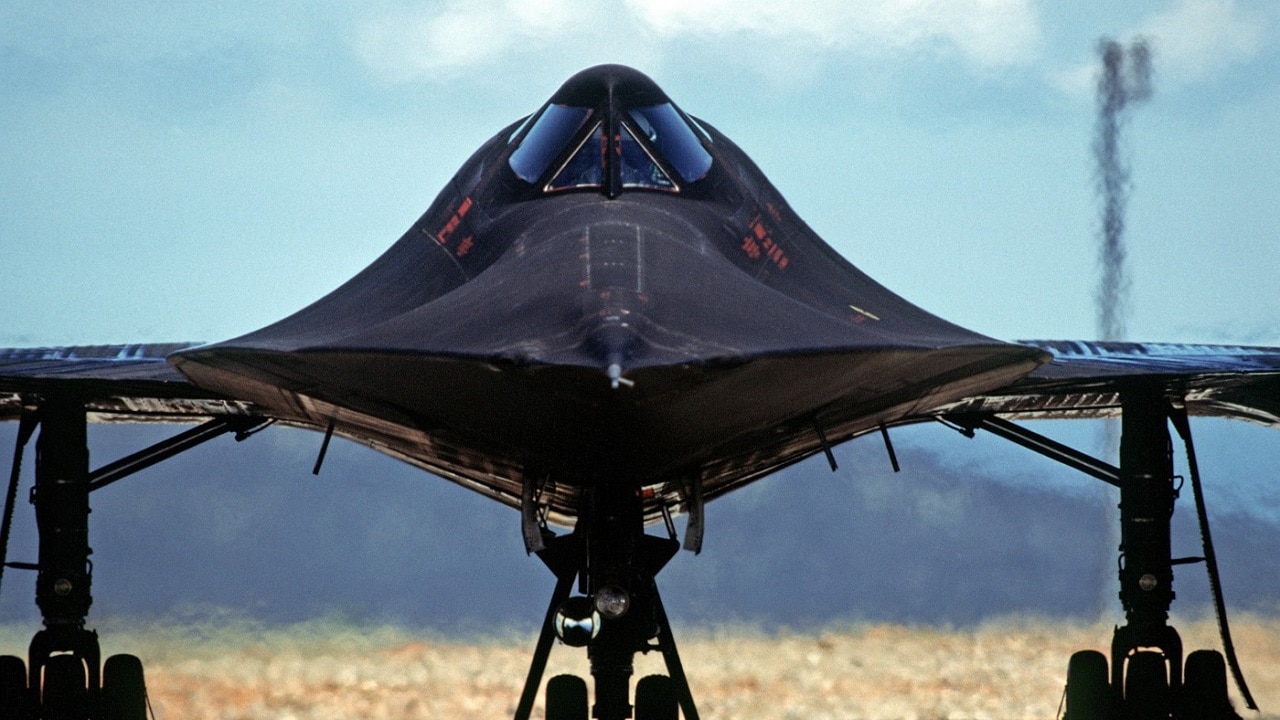
The SR-71 Blackbird’s Real Speed Limit Was 427°C at the Compressor Face — Pratt & Whitney Wouldn’t Guarantee the J58 Engines Past That Temperature
The SR-71 retains its spot as the fastest known crewed, air-breathing jet to be formally put into service. The Blackbird’s top speed was officially Mach 3.2, but it has reached Mach 3.55 (approximately 2,400 mph).
No official data shows a higher sustained speed under normal operations. Even decades after retirement, it has not been eclipsed by any subsequently introduced aircraft.
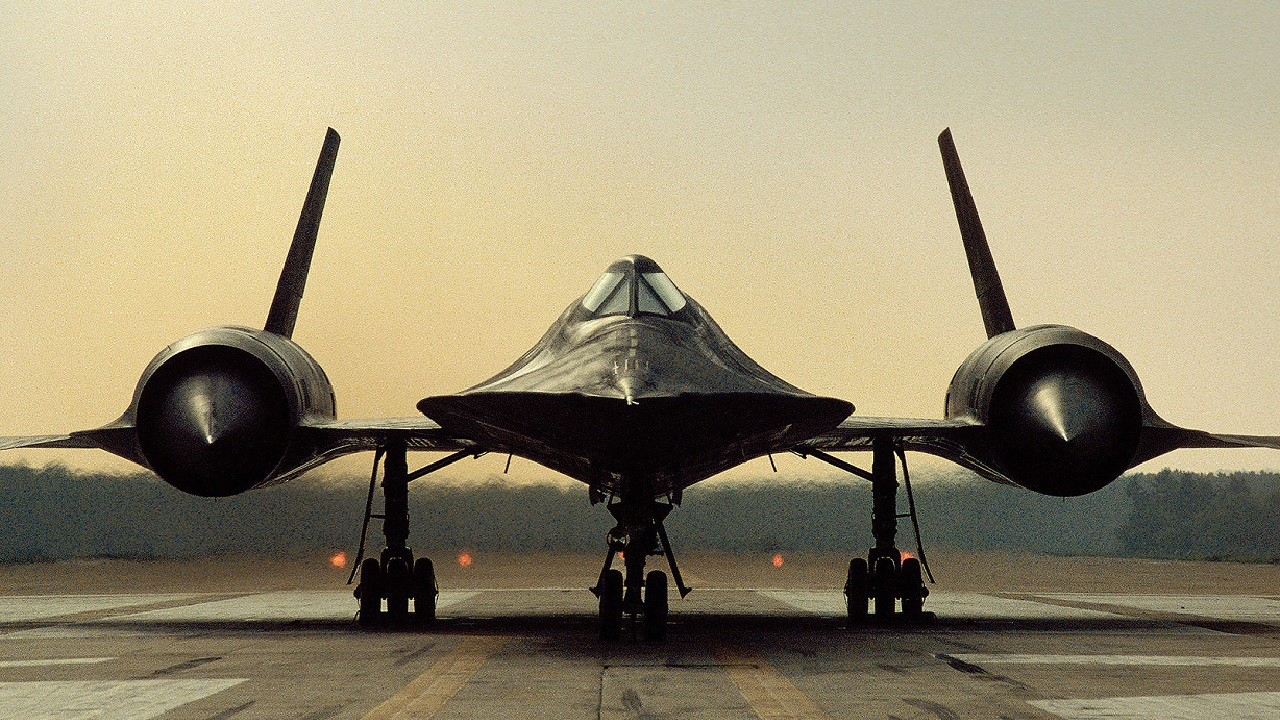
SR-71 Spy Plane. Image Credit: Creative Commons.
This makes the SR-71’s performance an ongoing benchmark point for aeronautical design, even as technology has changed dramatically in the decades since its inception.
The limitation on its speed was not due to the aircraft’s titanium frame but to a crucial safety restriction on its Pratt & Whitney J58 engines.
The SR-71’s Engines Were The Key Factor of Limiting Its Speed
The SR-71 Blackbird’s speed was primarily limited to around Mach 3.2–3.35 due to engine inlet temperature limits, specifically to avoid exceeding 427°C (800°F) at the compressor face. Exceeding this temperature risked engine damage. While colder outside air sometimes allowed pilots to push past Mach 3.3, this increased the risk of severe unstarts.
The compressor inlet temperature was a limiting factor. The Pratt & Whitney J58 engines were certified for safe operation only up to 427 °C. Going faster generated heat that could damage the engines.
The Pilots Explain the Limits of The Blackbird’s Speed
In another compelling piece by Linda Sheffield Miller, the Pratt & Whitney J-58 engines were the reason for the limits.

SR-71 Blackbird. Image: Creative Commons.
“Right in front of the engine compressor was a temperature probe that reported the temperature to the pilot; when the temperature was around 427C, 800 degrees Fahrenheit, that’s as fast as they were allowed to go,” Sheffield Miller wrote. But she added, however, that “a cold blast from frigid weather could make a difference in reducing the temperature,” making it possible for the aircraft to go faster than that.
Former SR-71 Blackbird pilot David Peters told Sheffield Miller that the outside air temperature played a role in the SR-71’s speed.
“A little clarification on the speed thing. You are absolutely correct on the 427 °C. The issue is that I have been limited to less than Mach 3 on a few occasions because the outside air temperature was quite above standard, and 427 °C came up at about 2.95.
“On other occasions, like the Murmansk deal I got above 3.4 (3.49 on the one occasion) and wasn’t close to 427 °C. The actual limiting airspeed is around 3.55, at which point, with the shock wave at full retraction, the spike loses the intercept and can no longer position it correctly in the inlet,” Peters added.
“Also, the overflow of the shock starts to go over the wing and interfere with the flight controls. So the limiting speed as configured would be about 3.55, so long as you don’t exceed 427 °C.”
Pratt & Whitney’s Engine Warranties
Mike Relja, who worked on the SR-71’s for over 30 years, was quoted by Sheffield Miller in another piece, “I don’t know of any warranty that P&W had or any other parts manufacturer, for that matter. On March 6, 1990, during the speed run, Ed Yeilding stated that Don Emmons permitted them to fly at the maximum Mach 3.3 limit.
“They asked Lockheed if they could exceed that number, and Lockheed said no, if the aircraft had an unstart above 3.3, it may go out of control and come apart, hard to keep the pointy end forward.
“Also, no fuel flow limits established above 3.3 M were ever tested.
“Pratt & Whitney did give them clearance to exceed 427 CIT for 30 minutes to a limit of 450 CIT, but that wasn’t needed; they stayed at the book limit of 427 CIT.”
Pratt & Whitney would not honor the warranty or guarantee anything beyond 427; after that, the engine could come apart. The SR-71 crewmembers were too responsible to risk and exceeded the temperature limit. They wanted to keep the engines under warranty and keep the aircraft flying.
62 years after its first flight, the SR-71 is still the king of the crewed, air-breathing aircraft. But the reign of the king may soon be coming to an end.
Lockheed Let The Cat Out of the Bag
In 2023, Lockheed posted on Twitter or “X,” which set tongues to wagging.
The first, with an image of the SR-71, reads, “The SR-71 Blackbird is still the fastest acknowledged crewed air-breathing jet aircraft,” implying that there is an even faster aircraft out there.
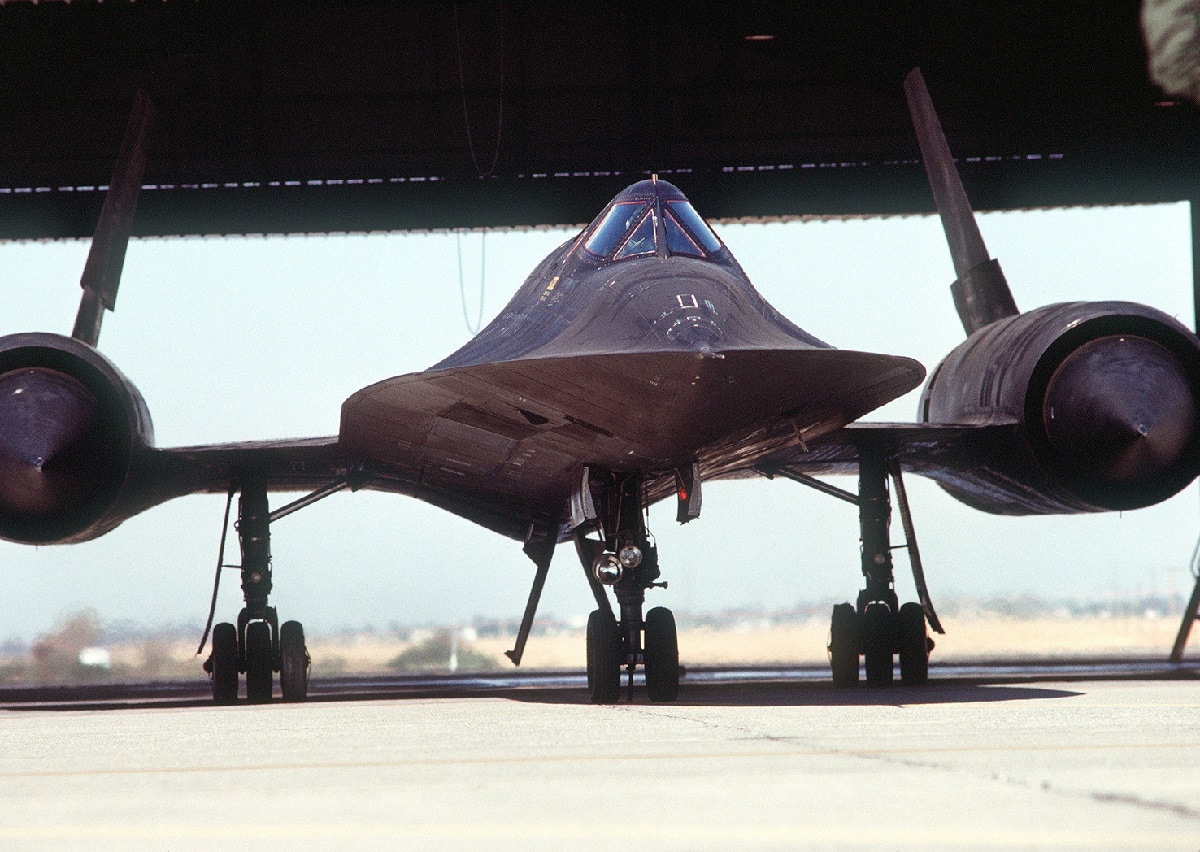
SR-71. Image: Creative Commons.
Another tweet, posted to celebrate the success of the latest Top Gun film, featured an image of the high-speed aircraft from that film. Interestingly, Lockheed Martin said, “To celebrate, we are sharing some Maverick-worthy images of real aircraft.”
Skunk Works Project – The SR-72 Son of Blackbird (SOB) or Darkstar
Lockheed Martin’s super-secretive Skunk Works is actively working on a super-secretive aircraft, the SR-72 Darkstar. And despite going over budget by just a smidgen ($335 million), the Darkstar seems ever closer to reality.
They have been working on a Mach 6+ intelligence, surveillance, reconnaissance, and strike aircraft, the SR-72. This aircraft uses advanced turbine-based combined-cycle engines, enabling unprecedented speed and global reach within minutes.

Front view of Lockheed SR-71A (Blackbird, s/n 61-7972, A19920072000) on display at the National Air and Space Museum’s Steven F. Udvar-Hazy Center, Chantilly, Virginia.
The Darkstar is the successor to the SR-71 Blackbird, which some aviation experts call the “Son of a Blackbird, or SOB. New production facilities at the Skunk Works have led many to believe that either production has already begun or will soon for the Darkstar.
Skunk Works Tackling The Engine Riddle For Mach 6
In June 2017, Lockheed Martin’s executive vice president and general manager for Skunk Works, Rob Weiss, told the media that testing was complete on the turbine-based combined cycle hypersonic propulsion system for the SR-72 and that they were “getting close” to beginning work on what he described as an SR-72 Flight Research Vehicle (FRV).
This single-engine technology demonstrator was said to be “about the size of an F-22 Raptor” and was meant to demonstrate the platform’s ability to take off under conventional turbofan power, accelerate up to supersonic speeds, and then transition from turbofan power to a much more exotic dual-mode scramjet that would allow the aircraft to achieve maximum speeds well above Mach 6.
“Hypersonic aircraft, coupled with hypersonic missiles, could penetrate denied airspace and strike at nearly any location across a continent in less than an hour,” Brad Leland, Lockheed Martin’s hypersonics manager, said in a Lockheed Martin press release that has since been taken down.
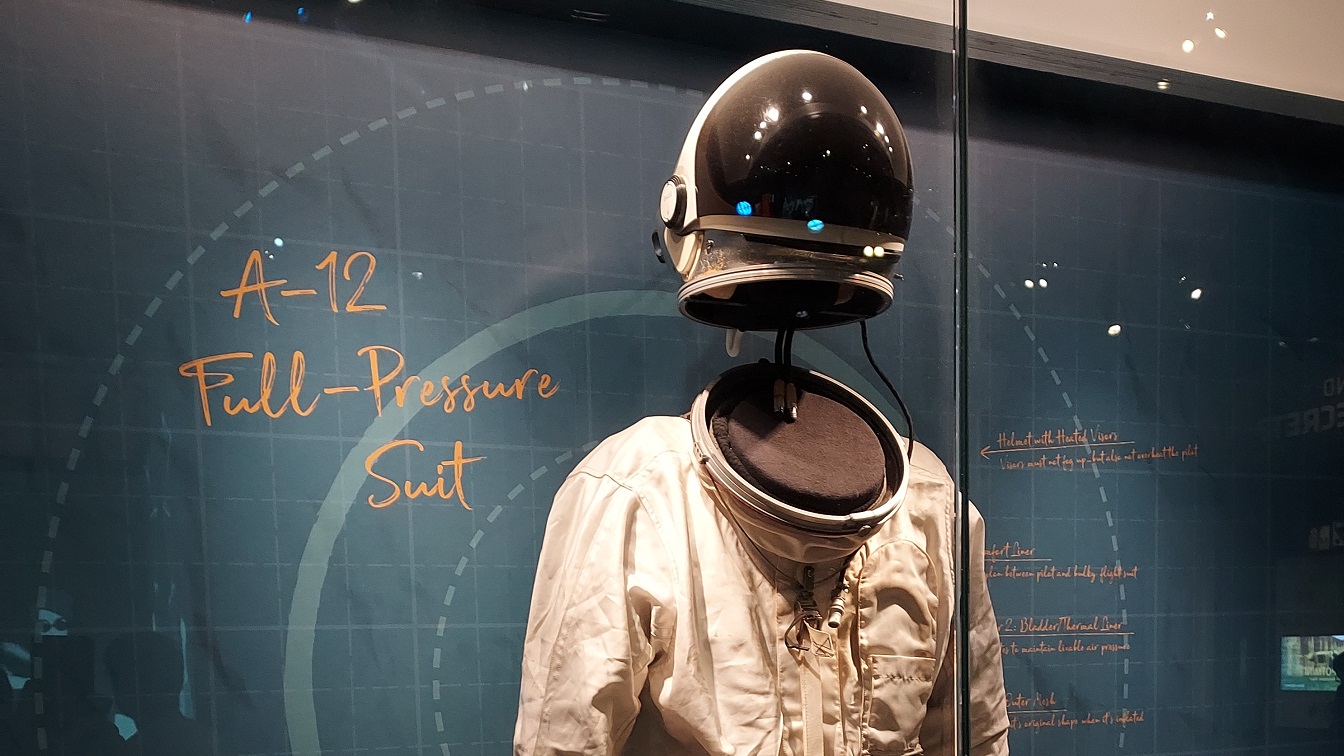
Flight suit. Image Credit: 19FortyFive Original Image.
“Speed is the next aviation advancement to counter emerging threats in the next several decades. The technology would be a game-changer in theater, similar to how stealth is changing the battlespace today.”
The work on the airframe, which will generate a ton of heat at Mach 6, is ongoing and will require extensive research and development, but the signs are there that Lockheed is serious about building it.
The long reign of the Blackbird’s speed records may be coming to an end.
About the Author: Steve Balestrieri
Steve Balestrieri is a National Security Columnist. He served as a US Army Special Forces NCO and Warrant Officer. In addition to writing on defense, he covers the NFL for PatsFans.com and is a member of the Pro Football Writers of America (PFWA). His work was regularly featured in many military publications.