
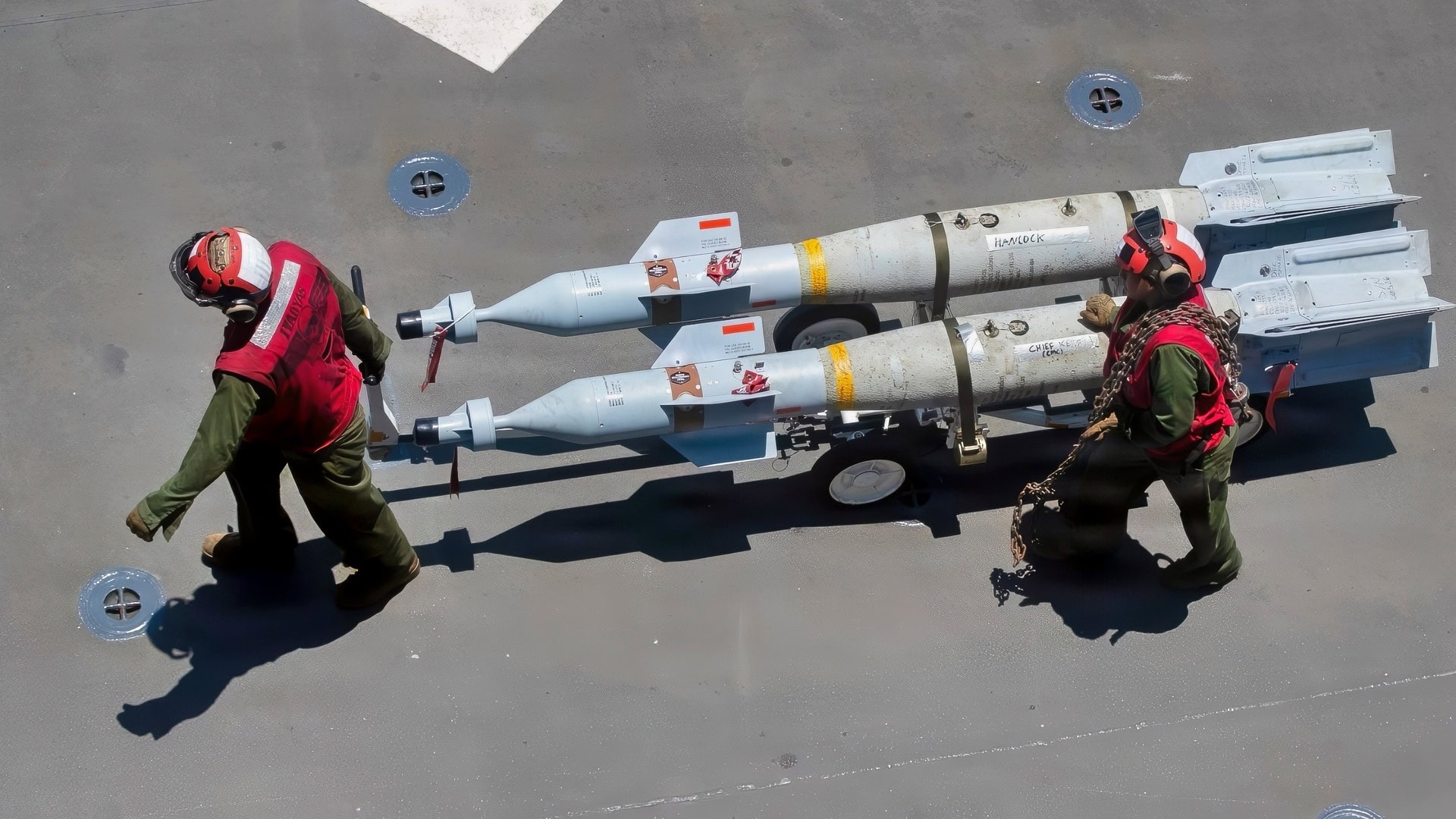
The Geography of the Strait of Hormuz Favors Iran — 21 Miles Wide, Within Range of Coastal Defenses, and Covered by Nearby Iranian Islands
The opening decapitation strike during Operation Epic Fury was indeed epic.
With the upper echelons of the Islamic regime’s leadership decimated, there was speculation that the country would crumble from the inside out.
But though many of that regime’s top decision-makers were killed, the conflict continues, with new problems quite literally on the horizon.
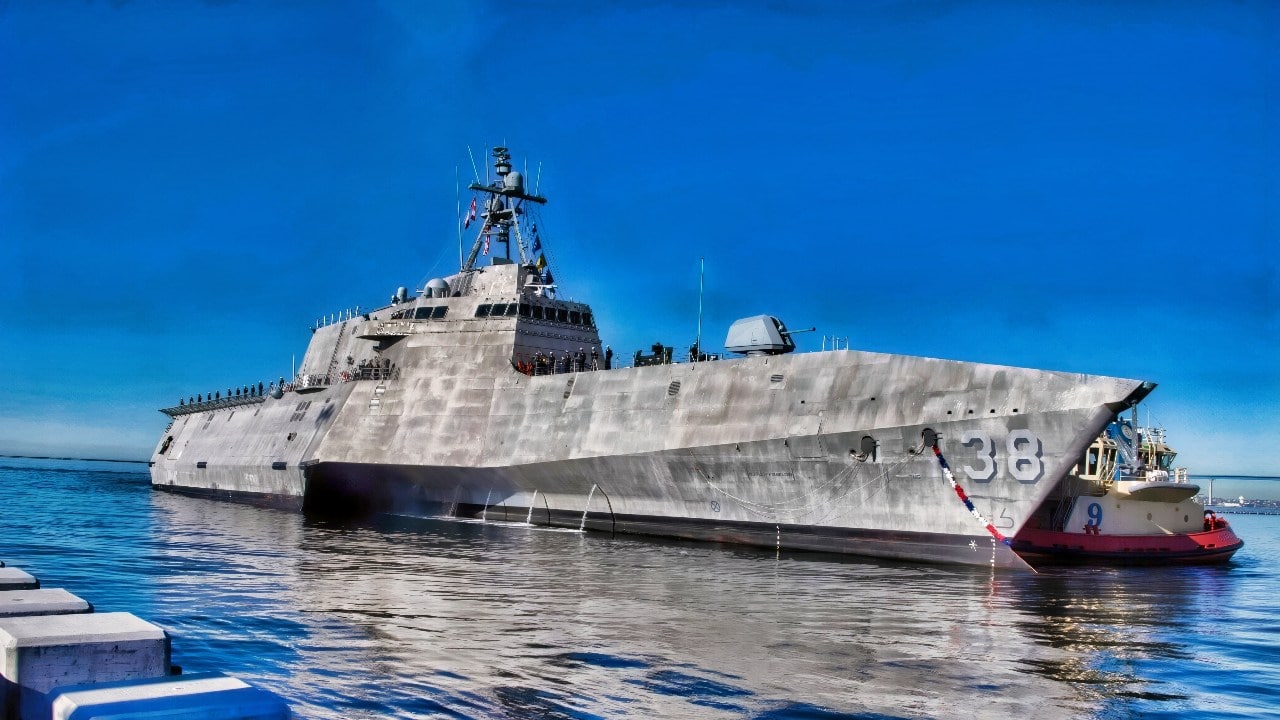
The Independence-Variant littoral combat ship USS Pierre (LCS 38) prepares to moor pier side during its arrival to its homeport of San Diego for the first time, Dec. 5, 2025. Pierre, the second U.S. Navy ship to bear this name, commissioned in Panama City, Fla. Nov. 15 as the final independence-variant LCS. Littoral combat ships are fast, optimally-manned, mission-tailored surface combatants that operate in near-shore and open-ocean environments, winning against 21st-century coastal threats.
One of the most significant challenges would be to suppress or destroy Iran’s capability to threaten commercial shipping transiting the Strait of Hormuz.
And while Iran does not have a trump card in its hands, it has several options that could seriously hamper or traffic and threaten to destroy or seriously harm both civilian tankers and American warships.
Keeping the Strait of Hormuz open would require a sustained air campaign, necessitating the use of electronic warfare aircraft, as well as intelligence and surveillance operations conducted by the U.S. Navy and its partners within the United States military and internationally.
The advantage lies with Iran, which would not need to control the Strait outright; it would instead need to deny the area to traffic.
Even just the threat of destruction would be enough to bring traffic to a minimum.
Chinese Anti-ship Weapons
Iran’s capabilities include anti-ship missiles, fast attack craft, naval mines, submarines, and unmanned drones.
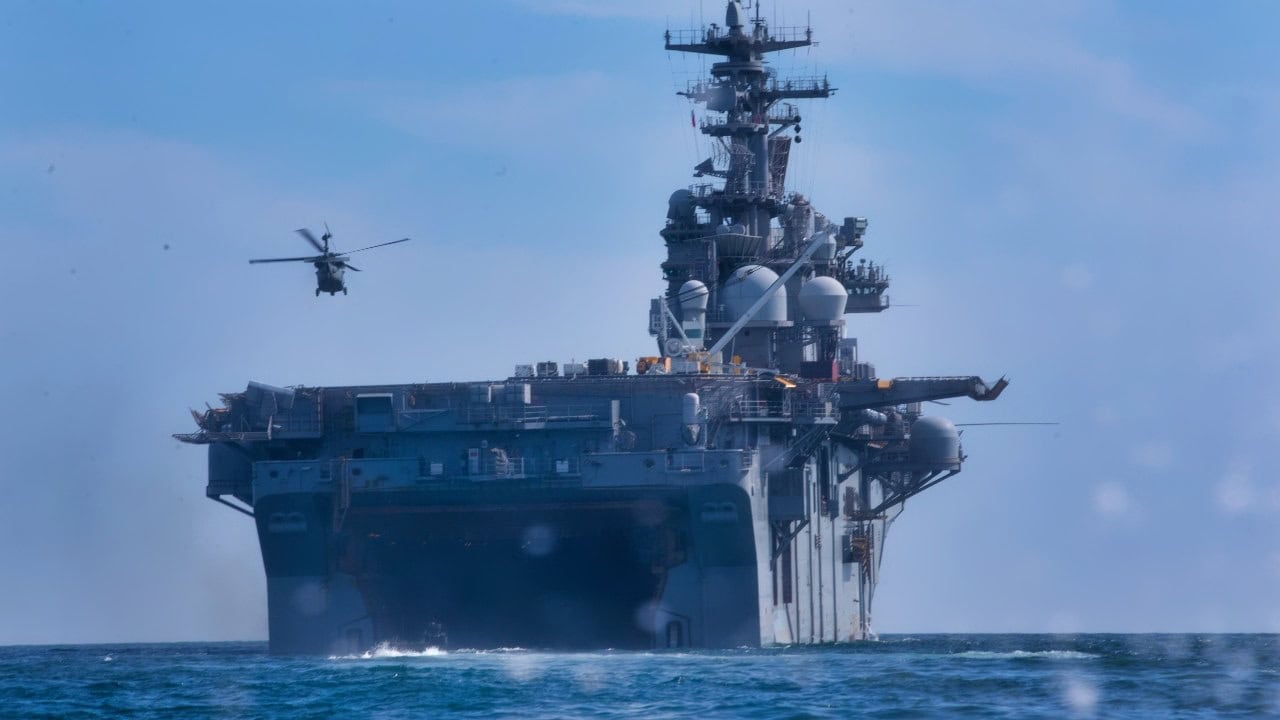
U.S. Marines with Bravo Company, 2d Assault Amphibious Battalion, 2d Marine Division approach the USS Wasp (LHD 1) in assault amphibious vehicles off of Onslow Beach during a three-day ship-to-shore exercise on Camp Lejeune, N.C., June 27, 2020. During the exercise, the Marines conducted amphibious maneuvers and dynamic ship-to-shore operations with the USS Wasp (LHD 1). (U.S. Marine Corps photo by Lance Cpl. Jacqueline Parsons)
In February, Reuters reported that Iran was close to securing a deal with China for Chinese-made CM‑302 anti-ship cruise missiles.
These supersonic weapons are believed to have a range of about 290 kilometers and fly low over the ocean surface.
Though Iran had been engaged in negotiations for the missiles with China for several years, talks accelerated following Israel’s 12-day War against Iranian targets over the summer.
It is unclear if those negotiations bore fruit before the beginning of Operation Epic Fury, the joint Israeli-American campaign against Iran that began in February.
Earlier last month, American warplanes dropped a series of bunker-busting, deep penetration munitions.
The 5,000-pound munitions, designed to tear through many meters of earth and concrete before detonating, explicitly targeted anti-ship cruise missile infrastructure on the Iranian coast along the Strait of Hormuz.
It is unclear if Chinese anti-ship weapons were targeted, but in a post on X, formerly Twitter, CENTCOM explained that the “anti-ship cruise missiles in these sites posed a risk to international shipping in the strait.”
Sea Mines
Iran is believed to have a substantial stock of naval mines of various designs and vintages. They are month the most disruptive of Iran’s cards and the most time-consuming to neutralize.
They can be deployed in myriad ways, by submarines, by frogmen, by disguised fishing ships, or by aircraft.
Clearing naval mines requires specialized mine-clearing assets, including minesweeping ships, helicopters, underwater drones, and manual clearing.
It is slow, painstaking work — and leaves demining personnel and assets dangerously exposed if not covered by other elements. Even a relatively small suspected minefield can take days, if not weeks, to fully clear.
Secured Sea Lanes and Traffic Escorts
But once initial threats are reduced and lanes are cleared through naval minefields, warships from the United States Navy and other countries could establish protected corridors through which traffic can sail. But persistent air cover would be needed, as well as robust surveillance assets — and clearing sea lanes is easier than holding them.
During the Tanker War in the 1980s, similar operations protected shipping, though the threat environment of today is significantly more complex than it was then.
Indeed, it is unlikely that the United States Navy would turn toward the kind of escorts seen during the Battle of the Atlantic during the Second World War.

A Falcon Heavy rocket launches into the sky, surrounded by smoke and fire during takeoff.
Once the door to traffic had been opened, however, keeping the strait open would require a sustained presence to deter renewed attacks.
Patrols from the air, surveillance, and a preparedness to strike Iran again would be absolutely necessary.
One solution could be to leverage the B-52 Stratofortress’s incredible payload capacity. Equipped with thousands of pounds of precision munitions, that bomber could be a valuable platform circling the Strait.
Iran War Risks in Hormuz
The geography of the Strait of Hormuz does favor the defender. About 21 miles wide at its narrowest point, it lies well within Iranian coastal defenses.
And Iranian forces can operate not just from the coast, but also from nearby islands.
Even under ideal conditions, it would take a long time to establish a secure opening.

Dec. 4, 2017) Sailors man the rails as the Navy’s forward-deployed aircraft carrier, USS Ronald Reagan (CVN 76), arrives at Commander, Fleet Activities Yokosuka after a scheduled patrol. The Ronald Reagan Carrier Strike Group conducted 87 days of strike group operations in the Western Pacific, including the waters south of Japan, the Philippine Sea and the South China Sea. Ronald Reagan provides a combat-ready force, which protects and defends the collective maritime interests of the U.S. and its allies and partners in the Indo-Asia-Pacific region. (U.S. Navy photo by Mass Communication Specialist 2nd Class Janweb B. Lagazo/Released)
One early marker of success could be maritime insurance firms issuing coverage for ships seeking to transit the area, recognizing the robustness of American naval protection.
Clearing mines could prove one of the more difficult challenges, but keeping the strait open for any length of time would be difficult and likely require a long-term U.S. Navy presence.
Though not impossible, it would be slow and carry its own risks.
About the Author: Caleb Larson
Caleb Larson is an American multiformat journalist based in Berlin, Germany. His work covers the intersection of conflict and society, focusing on American foreign policy and European security. He has reported from Germany, Russia, and the United States. Most recently, he covered the war in Ukraine, reporting extensively on the war’s shifting battle lines from Donbas and writing on the war’s civilian and humanitarian toll. Previously, he worked as a Defense Reporter for POLITICO Europe. You can follow his latest work on X.