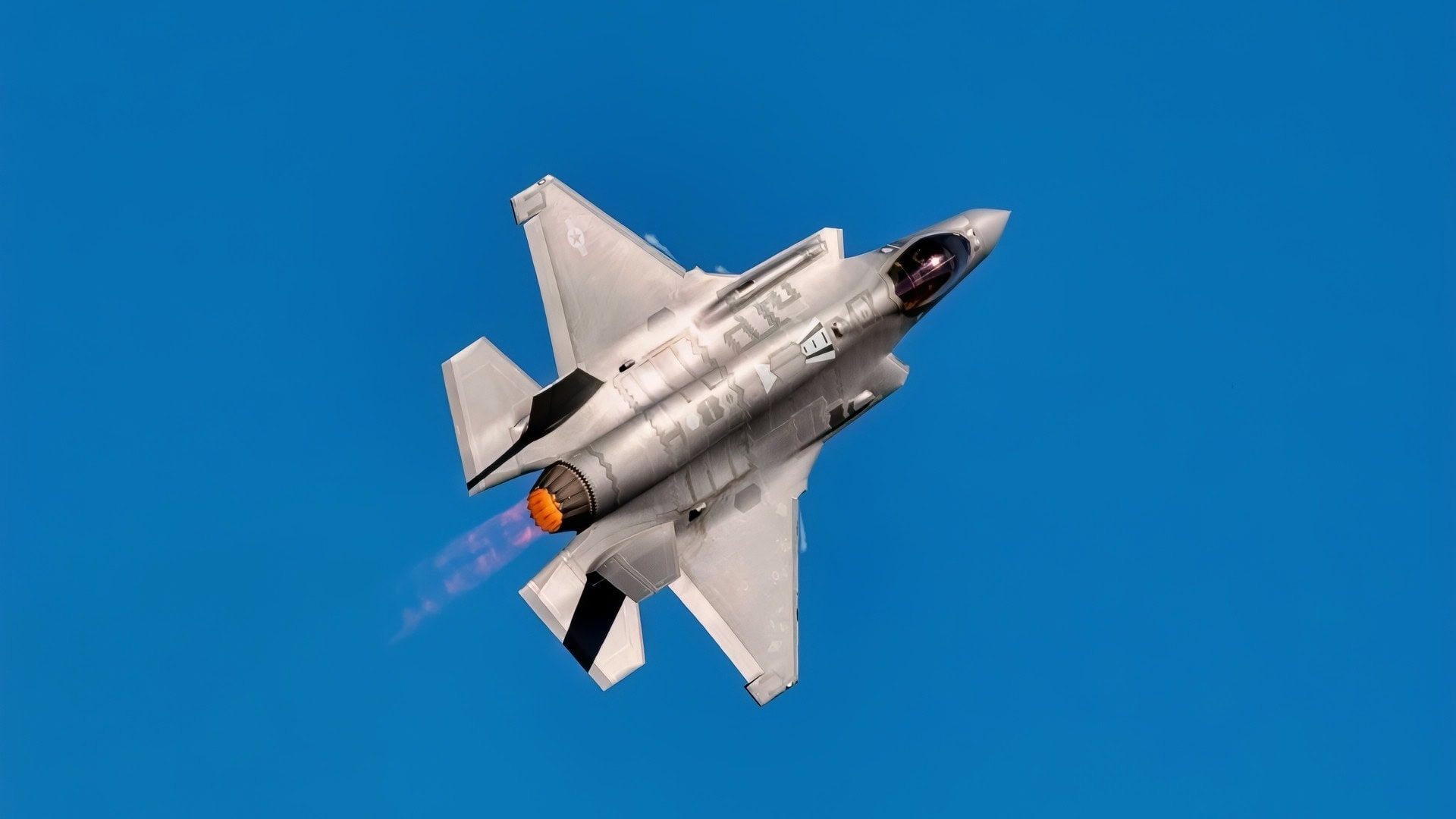
The U.S. has largely achieved air superiority around Iran, and the USS Tripoli is an amphibious ship built for aviation with F-35Bs and Osprey helicopters, so perhaps some might be inclined to wonder if the U.S. could somehow secure the Strait of Hormuz… purely from the air?
At first glance, such a prospect seems unlikely if not entirely unrealistic, given the tactical circumstances in the ocean and along the Iranian coastline.
The Iran Geography Problem
In order to remove threats to ships transiting through the Strait of Hormuz, the U.S. Navy would have to destroy essentially “all” of Iran’s small boats and coastal missiles and launchers, something which has yet to happen.
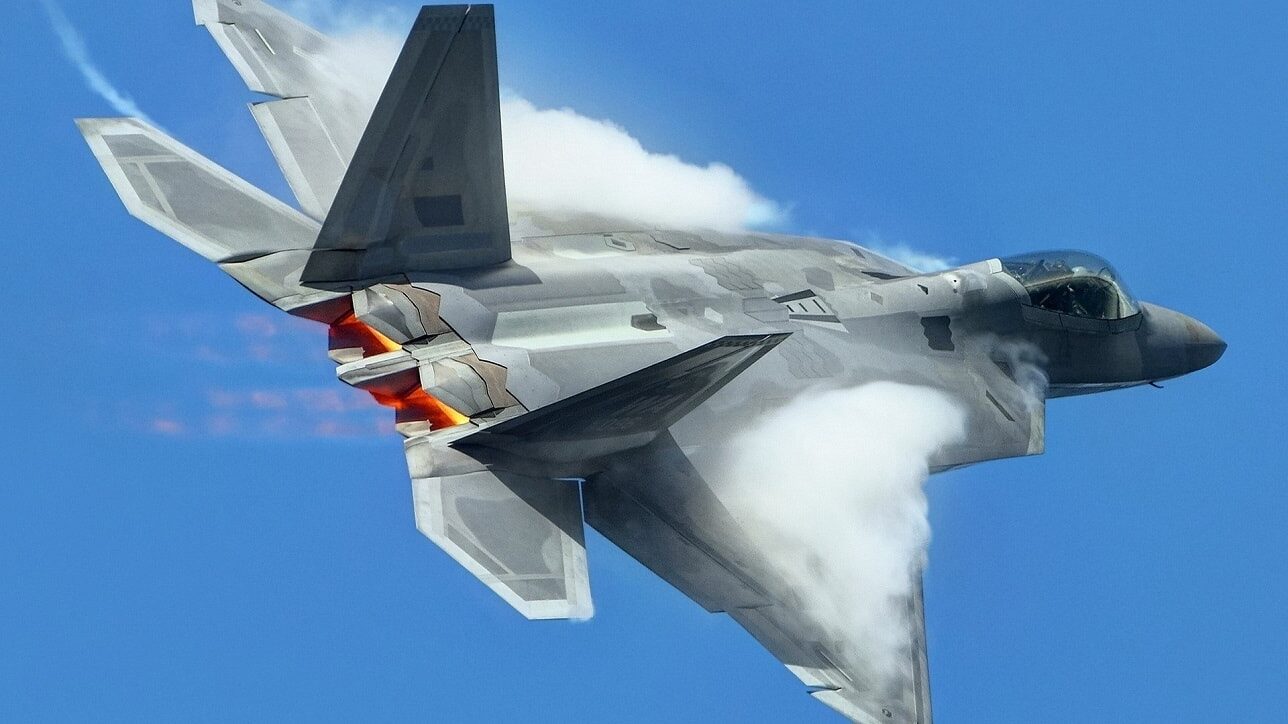
F-22. Image Credit: Creative Commons.
Many small boats have been destroyed from the air with precision air strikes, yet the Iranians have posted videos of underground cities filled with small boats, so it’s not clear just how much their fleet has been destroyed.
At the very least, given the remaining Iranian missiles and launchers, it seems nearly impossible that Iran does not retain some kind of credible small boat threat.
Drones, satellites, warships, and surveillance aircraft could keep a 24/7 watch over the strait, but it seems unrealistic that a swarm of small boats attacking ships in the Strait of Hormuz could be “seen” and “destroyed” fast enough from the air to protect vessels passing through.
Suicide or kamikaze boats filled with explosives could swarm commercial ships passing through the Strait, something very difficult to counter with air power alone.
Drone Threat in the Strait of Hormuz
There is also the drone threat from the air, something the U.S. Navy has experience countering, yet at-sea drone defense would seem to require surface warships armed with Aegis radar, interceptors, and countermeasures.
One key lesson learned from the Red Sea, according to U.S. Navy Commanders, is that carrier-launched aircraft have proven critical in drone defense, as they can often see threats beyond the radar horizon and serve as command-and-control gateways, alerting surface ships to incoming attack drones.
In some cases, fighter jets have been in a position to shoot and destroy attacking drones from the air, yet air power alone seems hardly sufficient to track and counter Iranian Shahed drones targeting ships passing through the Strait.
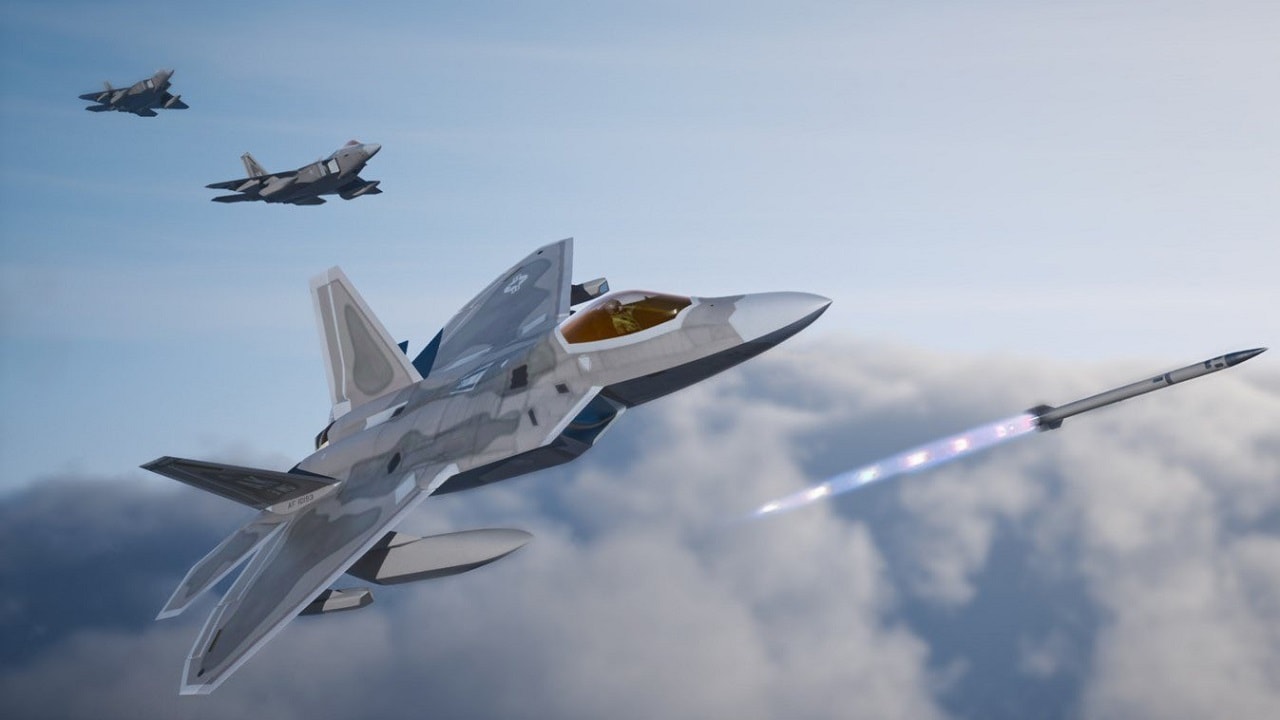
F-22 Raptor. Image Credit: U.S. Air Force Social Media.
Iranian Coastal Fired Missiles
Perhaps the most difficult element of ensuring safe passage through the Strait of Hormuz from the air pertains to Iran’s ground arsenal of missiles and launchers.
While most assessments of the war thus far have determined that anywhere from one-half to two-thirds of Iran’s ballistic missile stockpile has been destroyed or rendered inoperable, a substantial threat of ground-launched ballistic missiles from the coastal areas along the Strait would be difficult to fully eliminate from the air.
This is particularly true given that the IRGC has been “digging” out underground weapons, repairing launchers, and reconstituting an ability to launch precision-guided ballistic missiles.
Warships on the water, however, could change this equation and potentially “protect” ships passing through the Strait of Hormuz.
The U.S. Navy’s extensive experience in the Red Sea demonstrated that U.S. Navy surface warships have a nearly “flawless” ability to track and intercept or destroy incoming ballistic missiles.
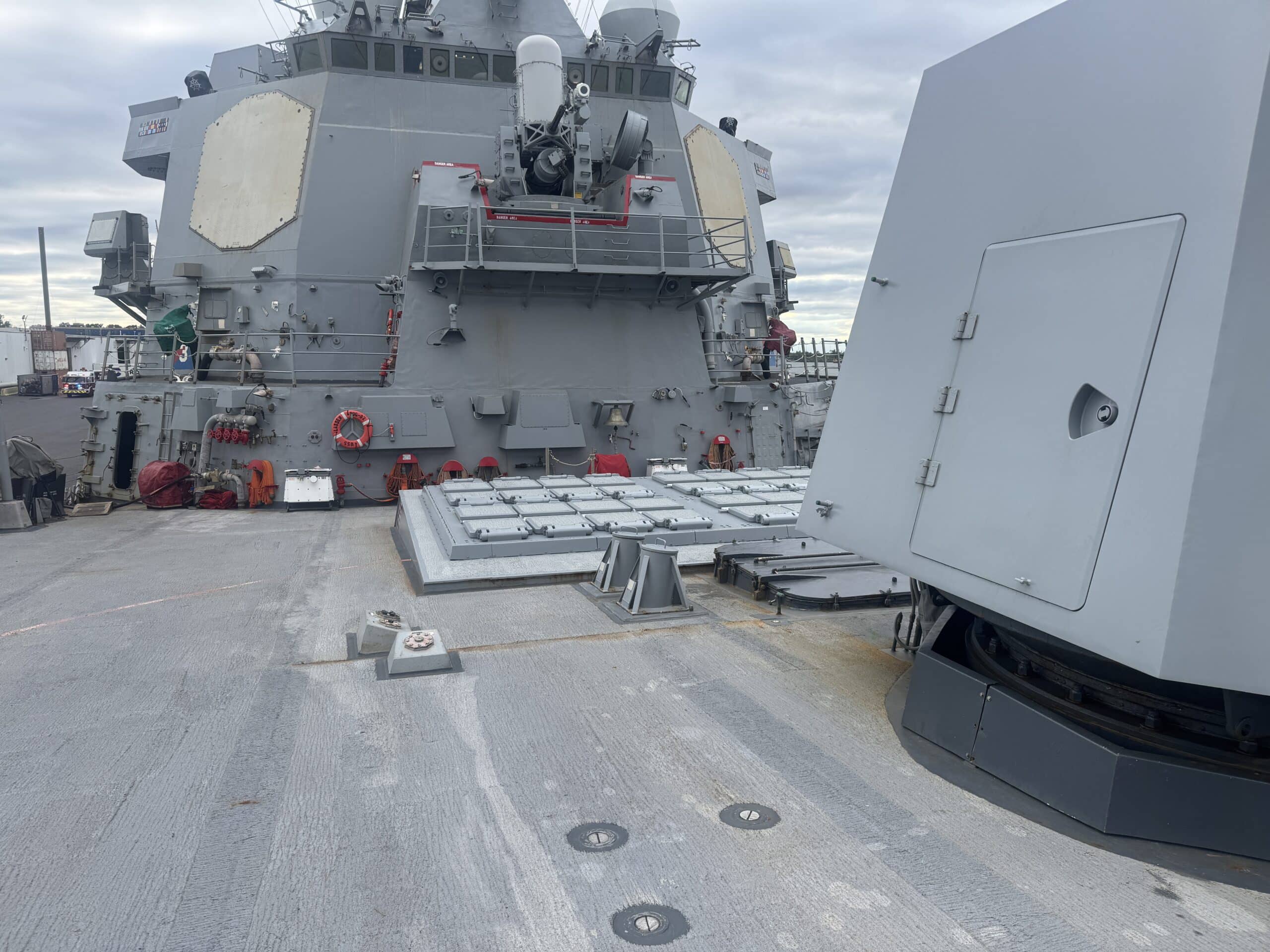
19FortyFive.com Photo Onboard USS Lassen. Image Credit: Stephen Silver.
However, there is reason for some hesitation with this as well, given that the Iranians are likely to operate higher-level, more precise missiles than those fired by the Houthis.
Swarm Defenses
The largest threat to a U.S. Navy protected Strait of Hormuz is a question of pure numbers, meaning swarms of small boats or drones or a “salvo” of missiles all fired at once.
The intent with these strategies is to simply blanket or “overwhelm” ship defenses from so many “vectors” or “angles of attack” that incoming drones, boats, or missiles simply cannot be stopped.
With layered defenses, deck-mounted guns, proximity fuses, and non-kinetic options such as EW, Navy ships might still fare quite well countering swarms, yet these kinds of sheer “mass” or “volume” attacks can most likely “not” be stopped purely from the air.
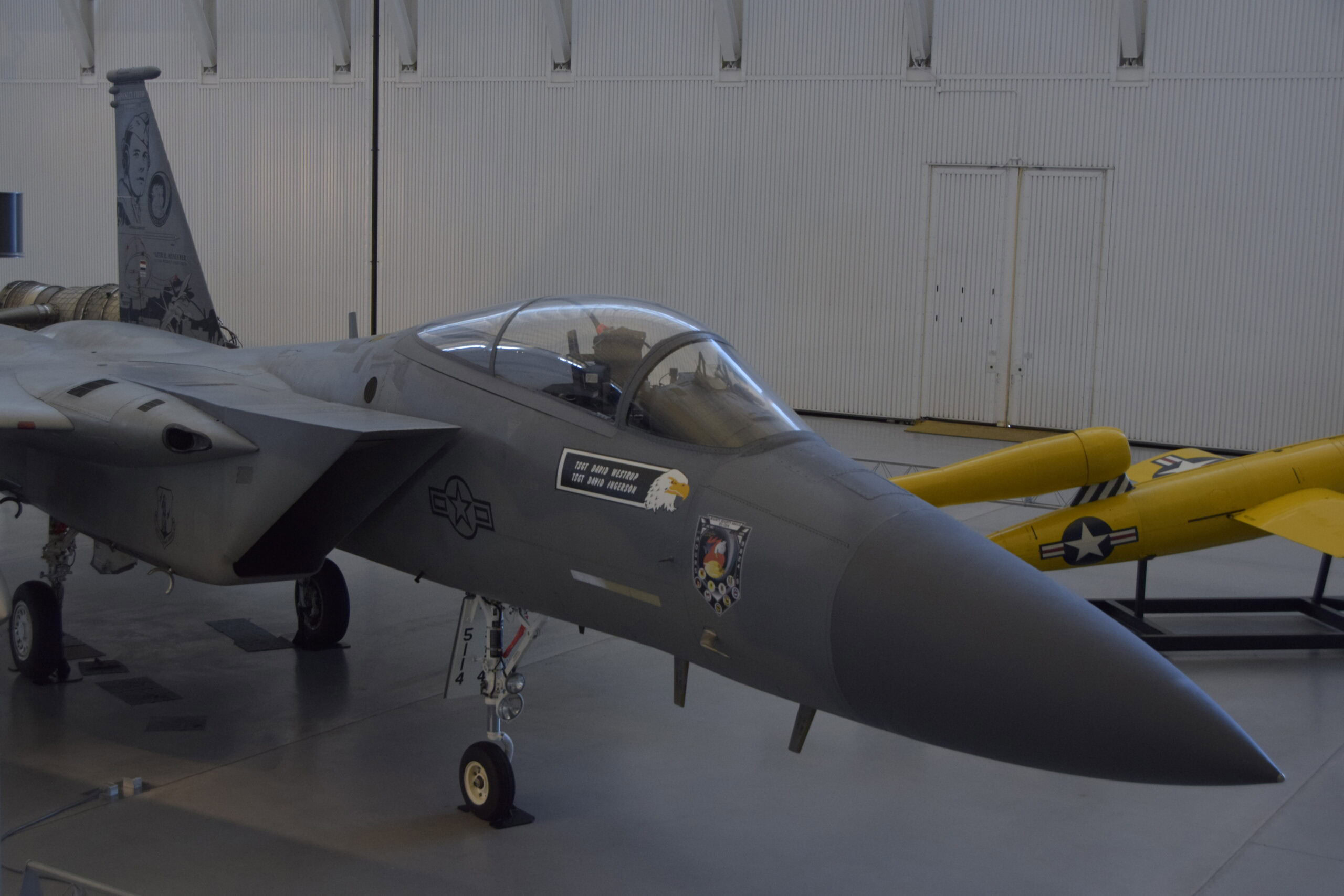
U.S. Air Force F-15 Fighter Image Taken at the Smithsonian. 19FortyFive.com Image.
Kris Osborn: Warrior Maven President
Kris Osborn is the President of Warrior Maven – Center for Military Modernization. Osborn previously served at the Pentagon as a highly qualified expert in the Office of the Assistant Secretary of the Army—Acquisition, Logistics & Technology. Osborn has also worked as an anchor and on-air military specialist at national TV networks. He has appeared as a guest military expert on Fox News, MSNBC, The Military Channel, and The History Channel. He also has a Master’s Degree in Comparative Literature from Columbia University.