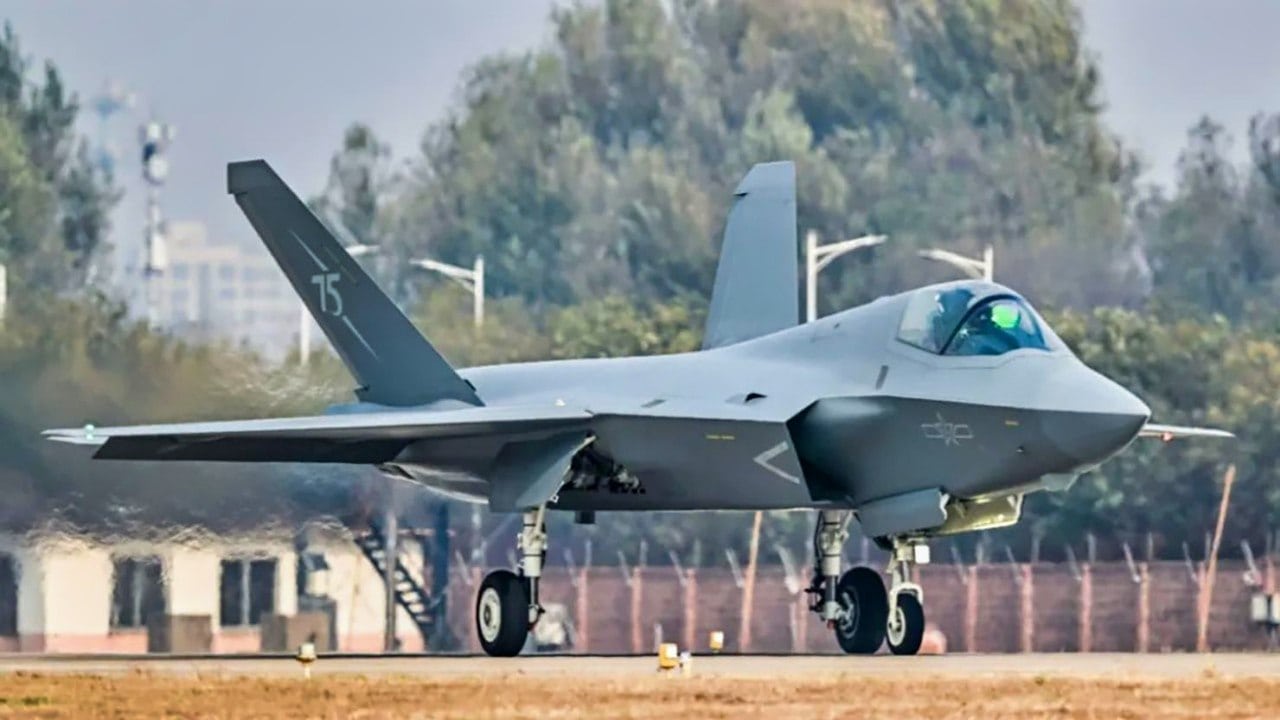
Key Points and Summary: Hoover Institution Fellow Eyck Freymann, who also serves as a Non-Resident Research Fellow at the U.S. Naval War College’s China Maritime Studies Institute, has published a new book titled “Defending Taiwan” warning that the United States has no serious contingency plan for a Chinese invasion of the island — and that the recent closure of the Strait of Hormuz following U.S. strikes on Iran demonstrates exactly the kind of failure of imagination that leaves the U.S. unprepared for the Taiwan scenario.
Taiwan: The Bigger Challenge Than the Iran War?
In his recently published book, Defending Taiwan, author Eyck Freymann, a Hoover Fellow at Stanford University and a Non-Resident Research Fellow at the U.S. Naval War College’s China Maritime Studies Institute, examines what the U.S. response might be to an invasion of the Republic of China (ROC) on Taiwan by the People’s Republic of China (PRC).
As one section of his book assesses, “The question of how the United States would respond to a Chinese invasion of Taiwan is not academic. It is the whole thing. And the answer, at the moment, is: Nobody knows.”
Several narratives intersect when it comes to this question. One is if an invasion of the island democracy, long claimed by Beijing, derided by the Chinese Communist Party (CCP) as “not a real country” and a “renegade province“, would be a prelude to WW III. But some of the defense experts 19FortyFive has spoken to question the claim.
The Taiwan War Threat
“Think about what we call the Second World War,” said one retired U.S. Army civilian academic. “No one called it that when it first began. When the Japanese invaded Manchuria, people talked about the ‘war in China.’ When Germany invaded Poland in September 1939, well, that was ‘the Polish War.’ Then, the Winter War at the end of the same year was ‘the war in Finland’ as Finland was invaded by the Soviet Union,” the source commented.
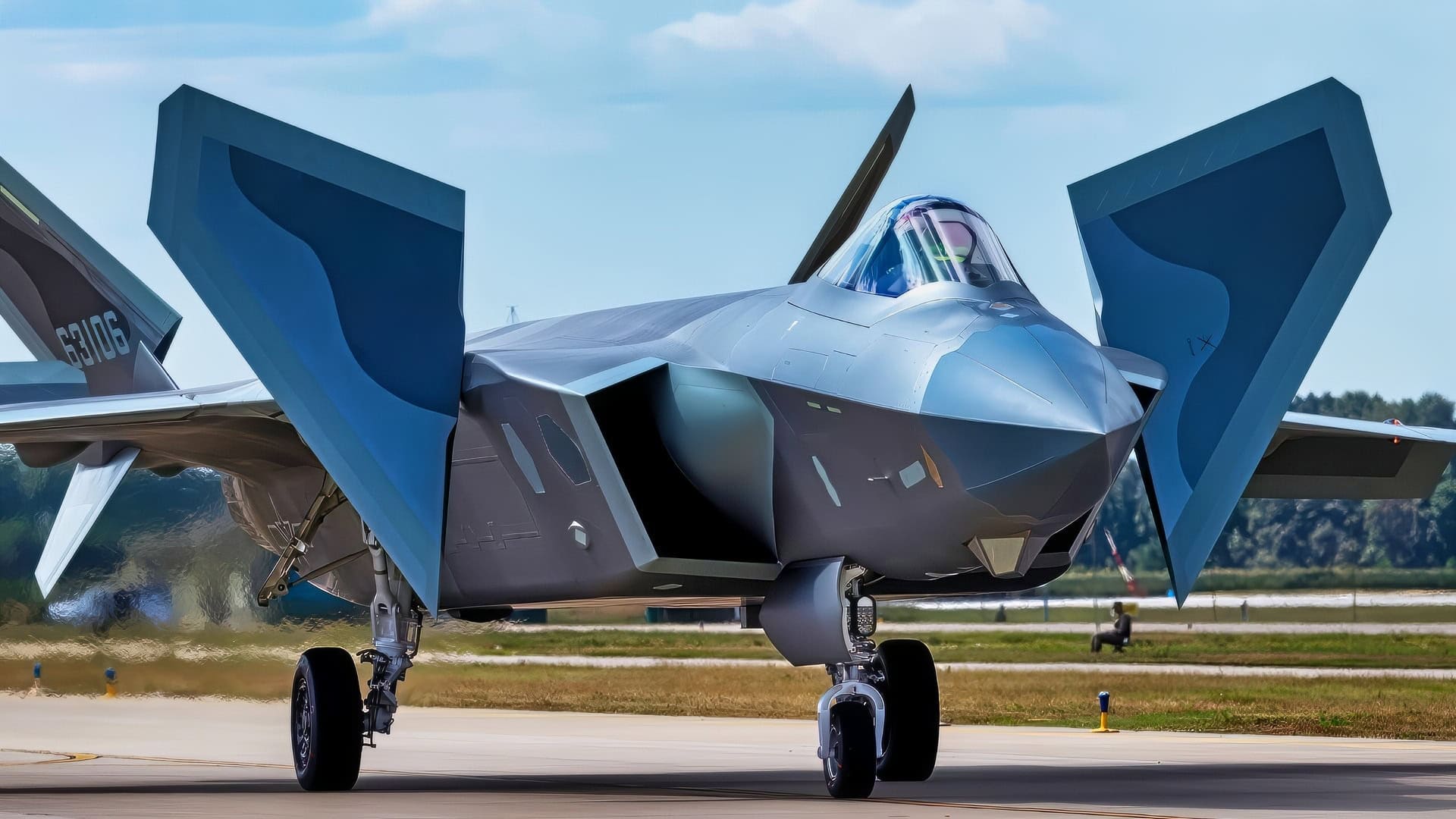
J-20 Fighter 2025 Photo. Image Credit: Creative Commons.
“Germany then invades France in 1940 after more than nine months of the ‘Sitzkrieg,’ and that was known as ‘the war in France,” he explained. “The point is that no one began using the term ‘Second World War’ until after the German invasion of the Soviet Union in June 1941, the Japanese attack on Pearl Harbor in December 1941, and the declarations of war by the U.S., Nazi Germany, and Italy. There was no recognition that it had already begun until years later.”
By the same token, he and others say, we are already in WW III, and, as in the previous conflict, the major actors are trying to play behind-the-scenes roles without becoming directly involved. The PRC is supplying Russia with support for its war in Ukraine by sending Moscow numerous components needed for the production of critical munitions, intelligence data from satellites, and other remote sensing/collection assets, and financial assistance in the form of purchases of Russian energy and commodities.
In the case of drone production, the PRC has even been supplying components and dual-use technology to both Russia and Ukraine to support those industries.
“It is a time-honored practice of nations in wartime to make as much money as possible by selling to both sides,” said the same civilian academic. “The Chinese are as adept at this as anyone.”
Refusing to Learn Lessons
What Freymann points out is that the U.S. and its allies are refusing to learn the lessons that are being provided by the current war in Iran.
On February 27, one day before the first air strikes on Iran, Freymann notes, “the Strait of Hormuz was the world’s most important energy choke point and one of its most secure. Roughly one-fifth of the global oil supply passed through it every day. Tankers transited routinely. Insurance rates were stable.
“The possibility that the strait might close was discussed in think tanks and priced into risk models, but it belonged to the category of events that informed people acknowledged as a possibility without really believing,” Freymann continued.
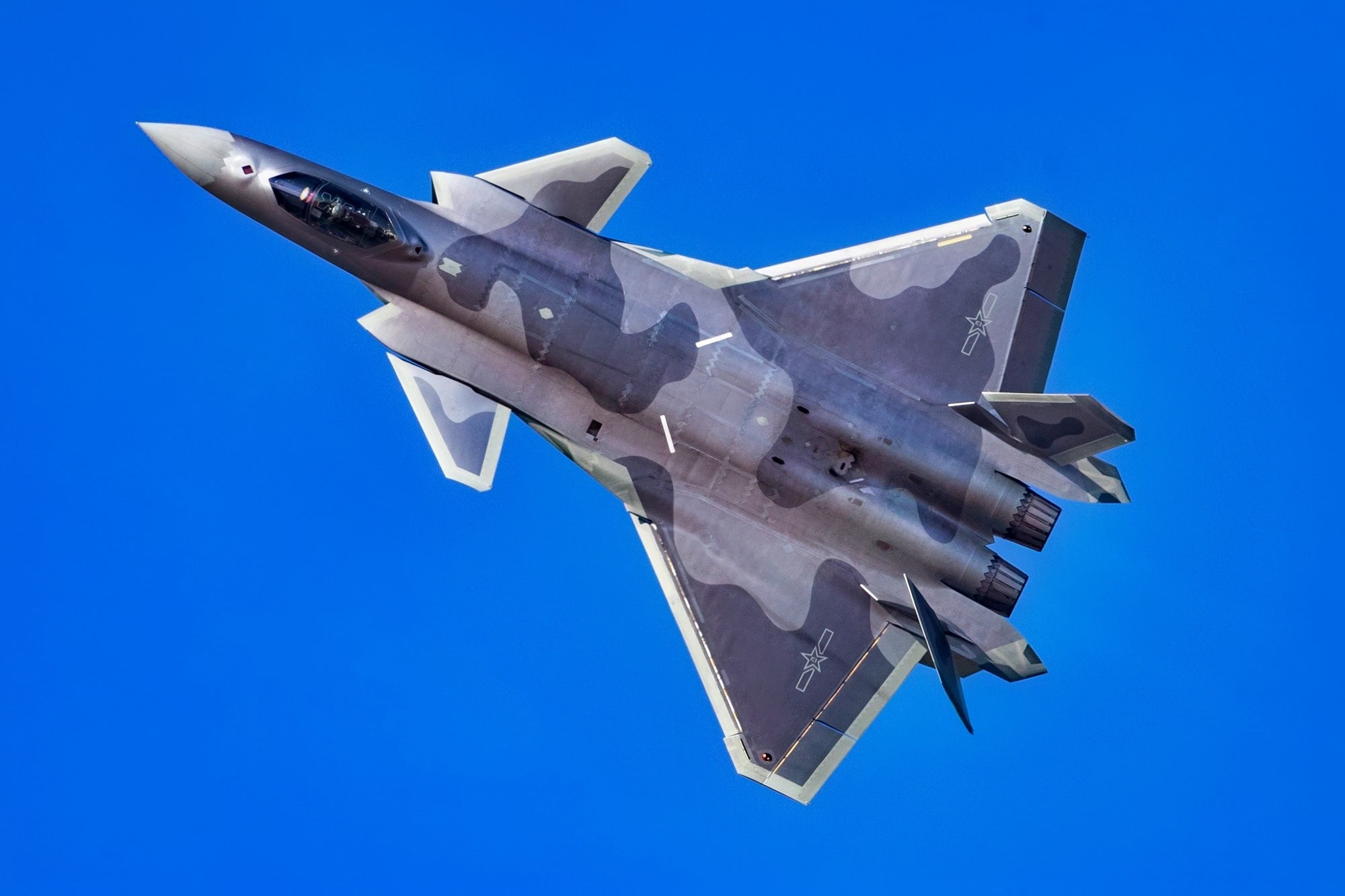
J-20 Fighter from China. Image Credit: Creative Commons.
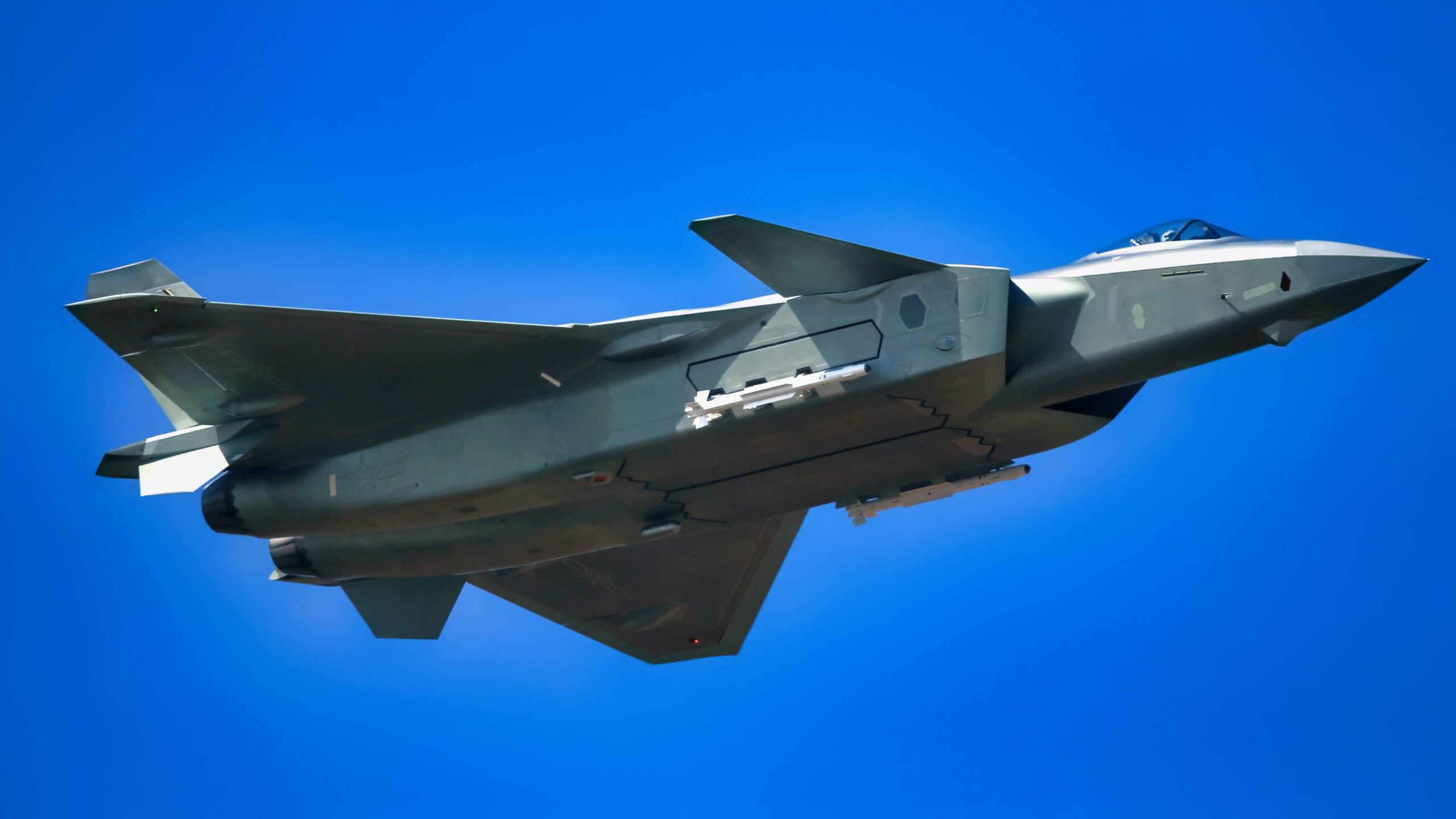
J-20 Fighter. Image Credit: Creative Commons.
A possibility that is acknowledged but that no one believed would ever actually happen is the same backdrop that has always accompanied any discussions about an invasion of the ROC. And as someone who lived in Kyiv and almost died when Russia invaded in the first round of war, this
was also the line from every “informed” or “logically derived” assessment I ever heard about whether Russian President Vladimir Putin would invade Ukraine.
Russia’s calculus was based on a set of assumptions that Russia would be able to walk into Ukraine and meet no meaningful resistance — assumptions that were based on what has now proven to be egregiously erroneous intelligence data and other analysis.
“Putin’s biggest mistake was not only a lack of understanding that his own intelligence people were only going to tell him what he wanted to hear,” said a Russian defense expert who spoke with 19FortyFive. “He also ignored the warnings of how badly this invasion could turn out from some of his most senior retired, high-ranking military officers.”
Therefore, the idea that an invasion of the ROC is not possible because it makes no sense is no longer a justification for assuming it will never happen. To continue to think in this manner is — as the Brits say — “don’t know because don’t want to know.”
Raising the Stakes
Perhaps the more important lesson not being taken on board is the extent of the disruption an invasion of the ROC would cause to the global economy. The impact would be far more damaging and widespread than the current oil price spikes caused by disruptions to traffic through the Strait of Hormuz.
Freymann drills down on this issue, writing, “The Taiwan Strait does not just carry oil. It carries the circulatory system of the digital economy, including chips on which every advanced weapons system depends. If the United States and China found themselves in a serious confrontation over Taiwan, the economic disruption might begin before any shots were fired.
“Or, if the conflict started suddenly, insurance markets, shipping routes, and capital flows would all react simultaneously and far more violently than they did after Donald Trump struck Iran. There is no emergency stockpile of chips; no equivalent of releasing 400 million barrels of oil.” Freymann wrote.
“Escalation would be likely. If China tried to starve Taiwan into submission via a blockade, the island — in conjunction with allies including the U.S. — could respond with extensive strikes on mainland targets, large-scale mine warfare, and escalation into cyberspace and outer space. Both sides would likely target each other’s satellites, disrupting communications, surveillance, and precision targeting. If the crisis escalated [further], the use of tactical nuclear weapons could not be ruled out.”
Again, the answer to what would happen on the U.S. side is that no one actually knows.
In December 2023, the bipartisan House Select Committee on the CCP released an alarming report concluding that “The United States lacks a contingency plan for the economic and financial impacts of conflict” with the People’s Republic of China. To date, the U.S. Government
still has not communicated any credible economic contingency plan.
“Even if Washington refrained from full-scale economic warfare to decouple with China, an invasion and blockade of Taiwan would disrupt supply chains, leading to rapid, broad-based, and potentially sustained shortages of key goods, as well as inflation and mass layoffs,” writes Freymann.
“The effects on developing economies would be profound. Capital would flee from assets perceived as risky — particularly in countries like South Korea and Malaysia that are deeply dependent on electronics and other supply chains involving trade with both sides.
These supply chains, once disrupted, might take many years to heal. Replacement of semiconductor manufacturing equipment or facilities damaged during a conflict could take years.”
In short, he concludes, “The Iran war is showing us, in real time, what that failure of imagination looks like. The question is whether Washington will treat it as a warning or a learning opportunity with great bearing on the lurking crisis that matters most.”
About the Author: Reuben F. Johnson
Reuben F. Johnson has thirty-six years of experience analyzing and reporting on foreign weapons systems, defense technologies, and international arms export policy. Johnson is the Director of Research at the Casimir Pulaski Foundation. He is also a survivor of the Russian invasion of Ukraine in February 2022. He worked for years in the American defense industry as a foreign technology analyst and later as a consultant for the U.S. Department of Defense, the Departments of the Navy and Air Force, and the governments of the United Kingdom and Australia. In 2022-2023, he won two awards in a row for his defense reporting. He holds a bachelor’s degree from DePauw University and a master’s degree from Miami University in Ohio, specializing in Soviet and Russian studies. He lives in Warsaw.