
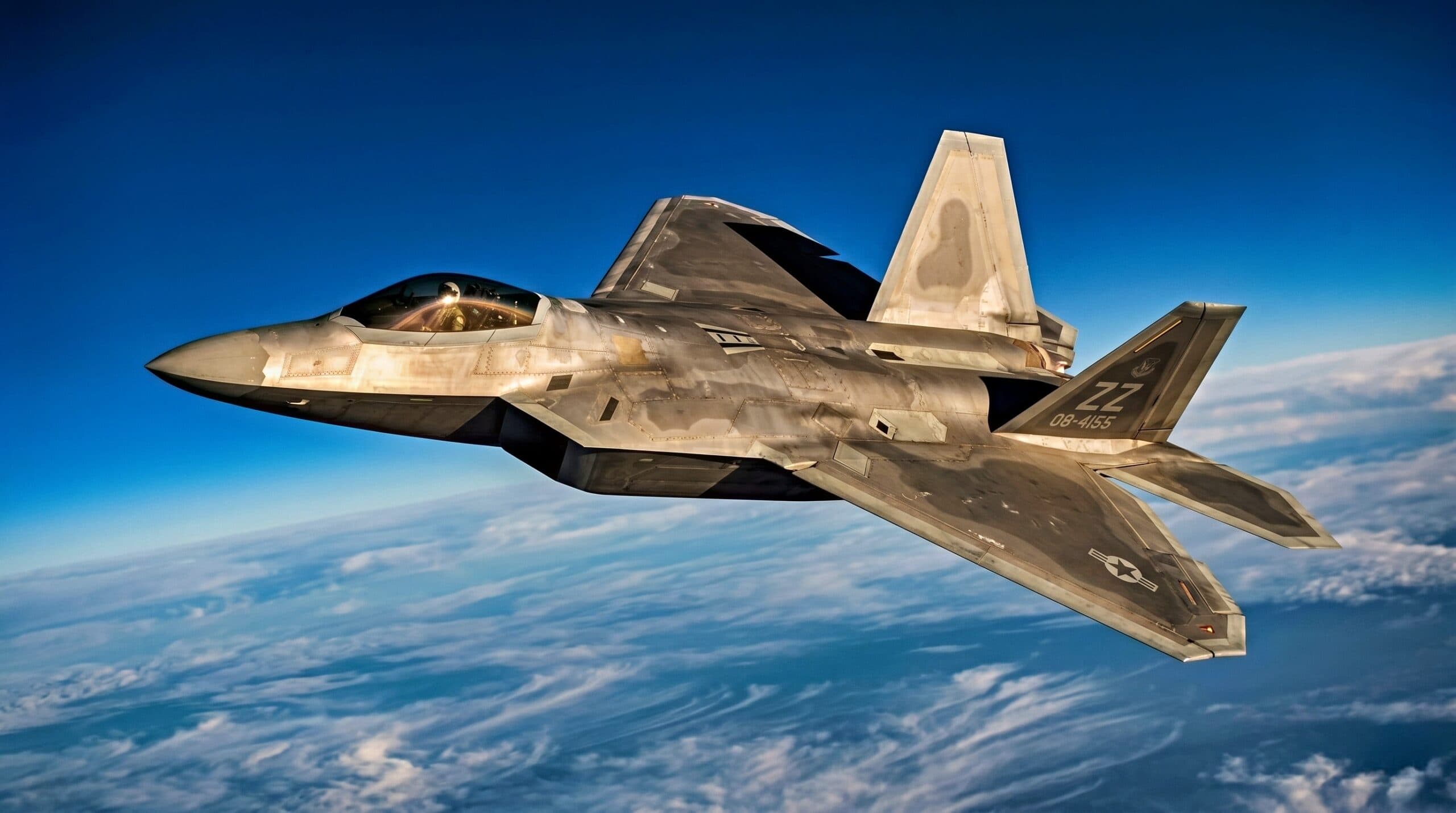
The J-35A is the newest fifth-generation stealth fighter in use by the PLAAF and the PLAN. This latest aircraft is optimized for both naval and conventional operations and is among the most advanced in China’s inventory. Meanwhile, the U.S. still operates the F-22 and the F-35. In 2024, however, it was announced that the F-22 Raptor would receive a deep modernization upgrade package to keep the aircraft relevant until the F-47 becomes operational. But how does the new “Super Raptor” stack up against China’s newest stealth fighter?
The “F-22 Super Raptor” vs China’s J-35A
The F-22 “Raptor 2.0,” or “Super Raptor,” as it is sometimes called, is a modernization program for the now aging fifth-generation stealth fighter. Lockheed Martin pitched a package to transform the F-22 into a “fifth-generation plus” aircraft and serve as a stopgap while the F-47 is developed.
One of the main focuses of the Raptor 2.0 program is to increase the aircraft’s range.
This is done using external low-observability drop tanks, which allow the F-22 to carry more fuel and cover greater distances. Testing on these new drop tanks began in 2024, if not earlier, when an aircraft was spotted flying with them near the Mojave Air and Space Port.
The J‑35A, on the other hand, is a medium‑weight multirole stealth fighter derived from a concept that originally had little to do with the People’s Liberation Army at all. Its lineage traces back to the FC‑31 “Gyrfalcon,” a privately funded Shenyang Aircraft Corporation project intended in the early 2010s to compete on the export market. That effort initially struggled to find a buyer and was overshadowed domestically by the Chengdu J‑20.
This changed when the PLAN expressed interest in a navalized version of the aircraft for operation on its newest aircraft carriers. Once the naval variant of the aircraft was adopted, a land‑based version for the PLA Air Force followed naturally.
Stealth Capabilities
Both aircraft are stealth fighters, but they take different approaches to low observability.
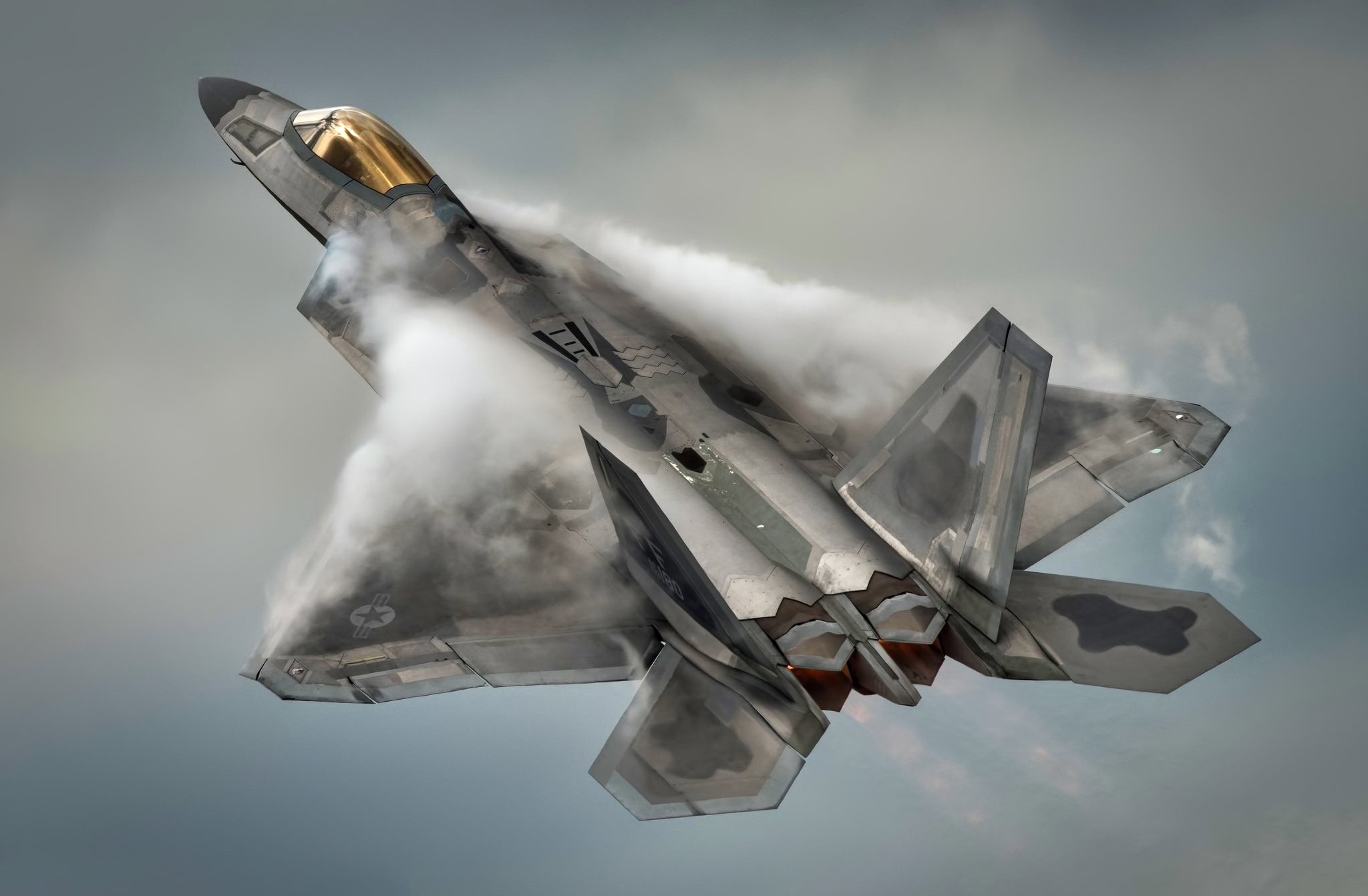
F-22 Raptor Fighter Jet US Air Force
The F-22 was designed to have the lowest feasible radar cross‑section against the most capable enemy radars of the time.
More importantly, it was designed before the post-Cold War budget cuts, meaning the designers were largely free to do what they wanted as long as it delivered results.
It achieves low radar visibility through edge alignment, deeply buried engines, complex inlet geometry, and extensive use of radar‑absorbent materials. Even the aircraft’s radar was designed to operate in ways that minimized the chance of detection by enemy receivers, allowing it to remain unseen in enemy airspace for as long as possible.
The J-35, by contrast, is a new and much less mature aircraft. Its overall configuration closely resembles that of the F-35, leading Western analysts to conclude that China may have stolen the aircraft’s secrets through cyber espionage.
The J-35A uses smooth shaping, internal weapons bays, and simplified inlets that reduce both radar signature and maintenance burden.
While the J‑35A is clearly a low‑observable aircraft, most analysts in the West, perhaps erroneously, deny that its stealth characteristics match those of the F-22 or F-35. There is really no way to validate the claims of China or those of Western naysayers.
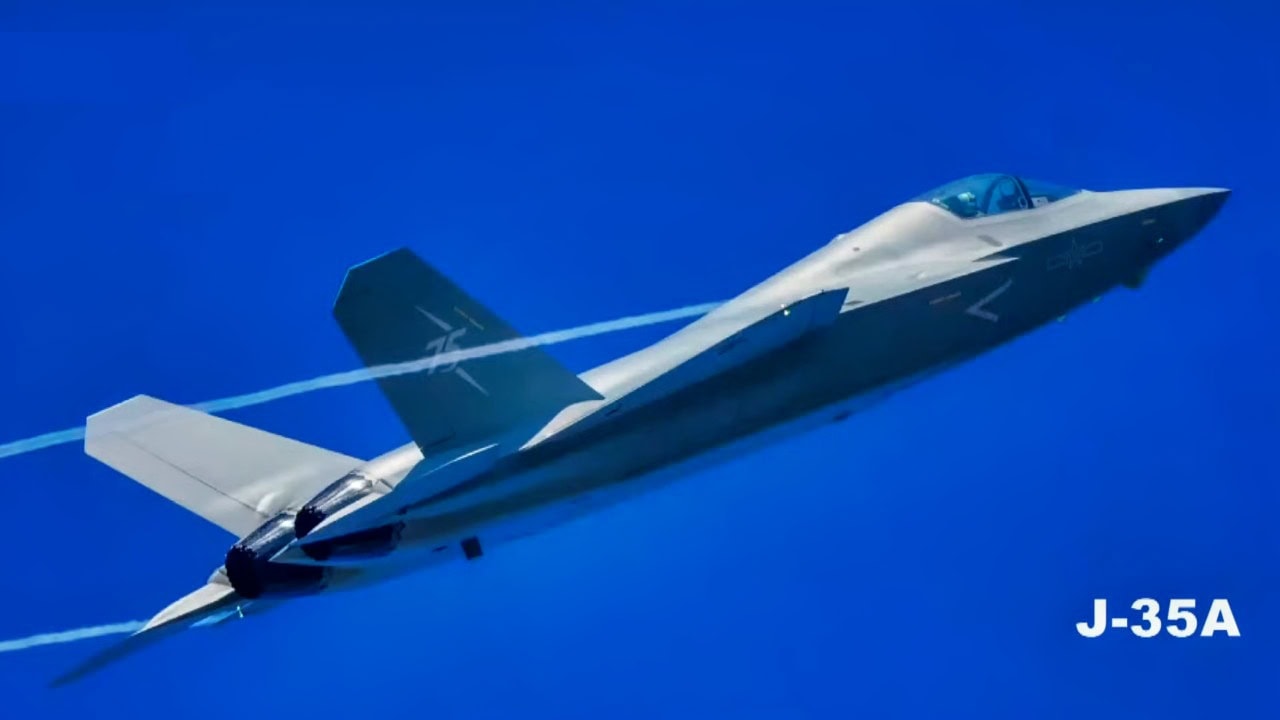
China J-35 Fighter. Image Credit: Creative Commons.
The simple fact is that we do not have enough information to adequately judge the aircraft. As the aircraft matures, its stealth characteristics will likely improve over time as design kinks are ironed out. In the meantime, all we can do is guess about the aircraft’s profile.
Engine Performance
In terms of flight performance, the F-22 is the clear winner.
The aircraft is powered by two Pratt & Whitney F119 engines that provide exceptional thrust, responsiveness, and reliability.
Combined with thrust‑vectoring nozzles and an aerodynamically efficient airframe, these engines give the Raptor unmatched maneuverability in the skies.
One of the requirements for the Advanced Tactical Fighter (ATF) program was prolonged supersonic flight without the use of afterburners. Not only did the engineers at Lockheed ensure this requirement was met, but they also designed the aircraft to function well in both close-range and BVR combat scenarios. This makes the F-22 especially adept as an air-superiority fighter, as it can dictate the terms of any engagement, even against the most capable opponents.
The J-35A, on the other hand, is still early on in its production life, and as such, its engines have undergone various changes.
Early iterations of the FC‑31 relied on Russian RD-93 engines as a stopgap measure. Subsequent prototypes and production aircraft transitioned to indigenous powerplants, beginning with the WS‑13, WS-21 and, lastly, the WS-19. The nozzles on recent engines are designed in a way to reduce their infrared signature as much as possible. Again, however, we run into the issue of insufficient information. We simply do not know how well the aircraft handles in the air.
China J-35 Fighter. Image Credit: Creative Commons.
Based on the aircraft’s layout, it is not unreasonable to assume that the J-35’s flight characteristics are similar to those of the F-35, if not a bit better. That is to say, decent, but not on par with the performance of the F-22.
Avionics and Sensors
Sensors and avionics are the cornerstone of any fifth-generation fighter jet. The F‑22’s sensor suite is built around the AN/APG‑77 active electronically scanned array radar, which remains among the most powerful and discreet airborne radars ever fielded.
Integrated tightly with passive electronic support measures, the radar allows the Raptor to detect, track, and engage targets at long range while emitting minimal exploitable energy.
Over time, software updates have refined its sensor fusion and situational awareness, enabling the pilot to understand the battlespace with exceptional clarity even in complex environments.
The Raptor 2.0 upgrade will reportedly enable the F-22 to command Collaborative Combat Aircraft, allowing it to serve as a command ship for unmanned drones that can perform reconnaissance and, if necessary, serve as decoys. The package also adds IRST pods, which now add a crucial capability to the F-22 that has been missing for several decades.
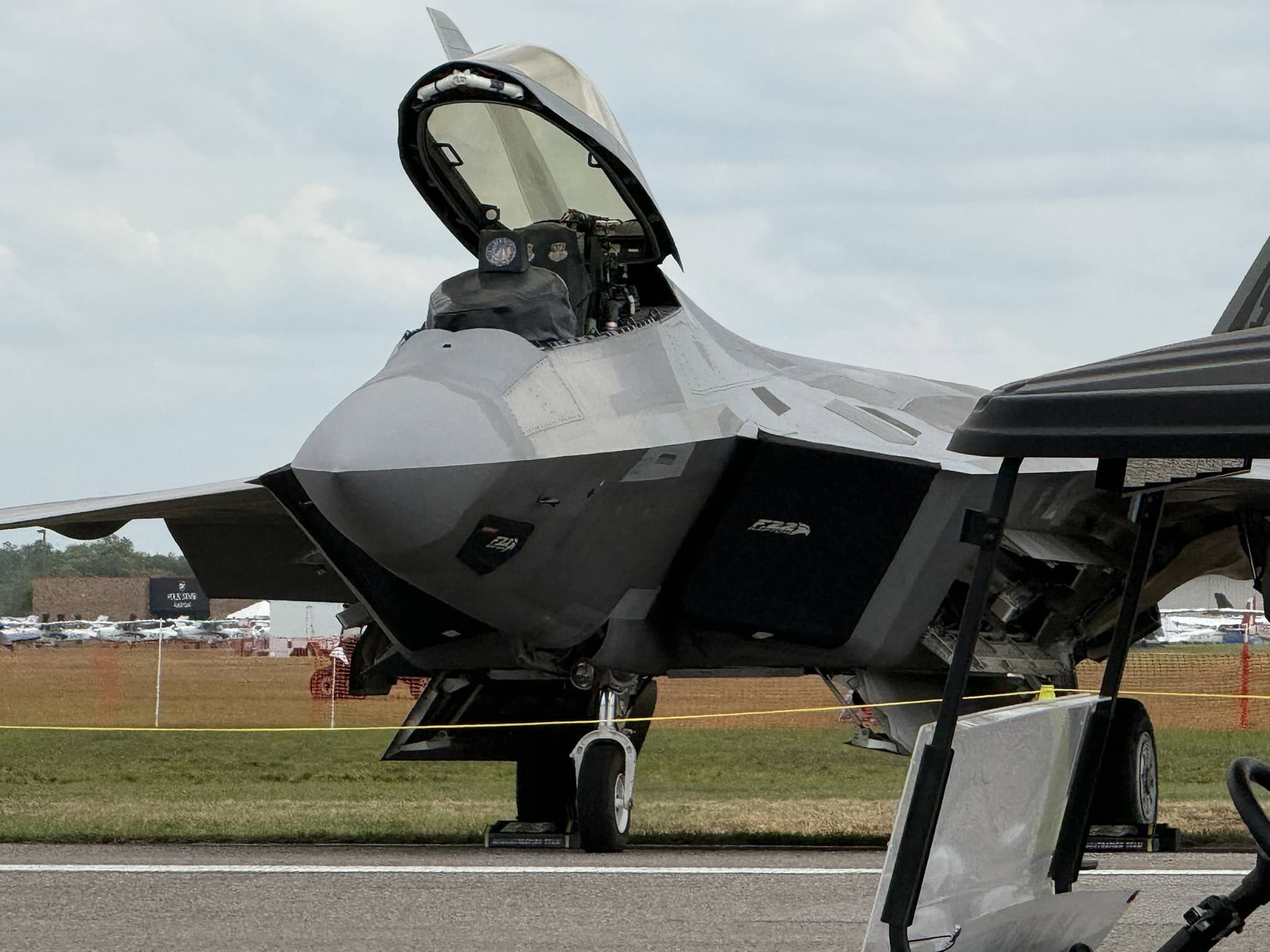
F-22 Raptor. Taken on 4/19/2026 by Harry J. Kazianis for 19FortyFive.com
The J‑35A’s avionics are less well understood due to limited information. The only information we have about the aircraft’s avionics suite comes from official Chinese sources, and even these are sparse on exact details.
The aircraft features the KLJ-7A AESA radar with a distributed aperture system; its range and exact details are unknown. According to official sources, the aircraft is expected to detect threats and share targeting data with other friendly systems. The J-35A is meant to serve as a node within a larger networked battlespace where information is constantly shared among command centers, airborne assets, and missile batteries.
Weaponry and Armaments
The F‑22’s internal weapons bays are optimized first and foremost for air‑to‑air combat, typically carrying combinations of advanced beyond‑visual‑range missiles and high‑off‑boresight short‑range weapons while preserving stealth.
Although the aircraft does have a limited precision‑strike capability, this has always been secondary to its primary mission of establishing and maintaining air superiority.
The Raptor 2.0 upgrade enables the aircraft to carry a wider range of advanced weaponry, most notably the AIM-260 Joint Advanced Tactical Missile, as well as other advanced air-to-air and air-to-ground weapons.
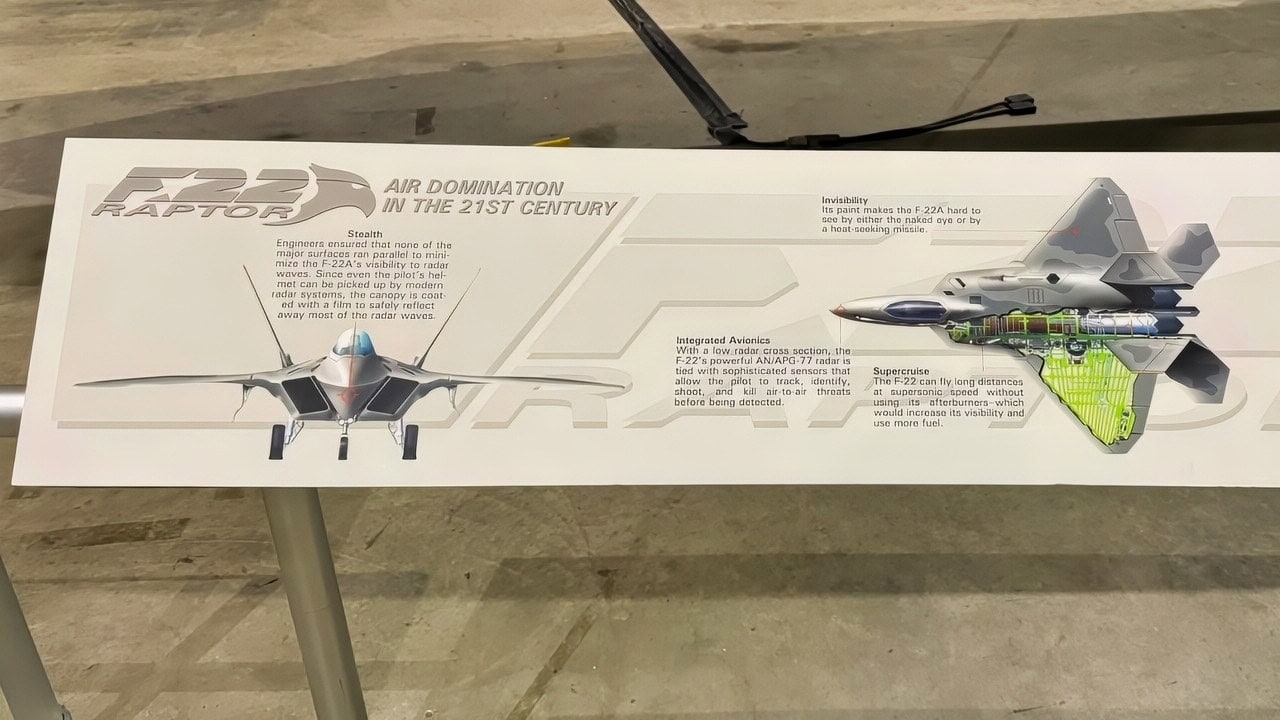
F-22 Raptor Diagram from National Museum of the U.S. Air Force. Image Credit: Harry J. Kazianis.
The J‑35A, by contrast, is designed from the outset to support a broader mission set.
The aircraft also features internal bays that can accommodate modern Chinese air‑to‑air missiles, such as the PL‑10 and PL‑15, as well as precision‑guided air‑to‑surface munitions. When stealth is not required, external stores can be carried to increase payload and flexibility.
This multirole orientation allows the J‑35A to function as an interceptor, strike fighter, escort, and sensor platform depending on mission requirements. In that sense, it aligns more closely with the F-35 than with the highly specialized F‑22.
Which Fighter is Better?
Both fighter have their strengths and weaknesses. In regions close to China’s mainland, the J‑35A would likely operate under the protection and guidance of extensive ground‑based radar networks, long‑range surface‑to‑air missiles, and other sensors.
In such an environment, the aircraft is heavily supported by other assets, which enhance its situational awareness and offset its individual disadvantages.
Conversely, the F‑22’s greatest strength lies in enabling the rest of the joint force clearing contested airspace so that less specialized aircraft, crewed or uncrewed, can operate with reduced risk.
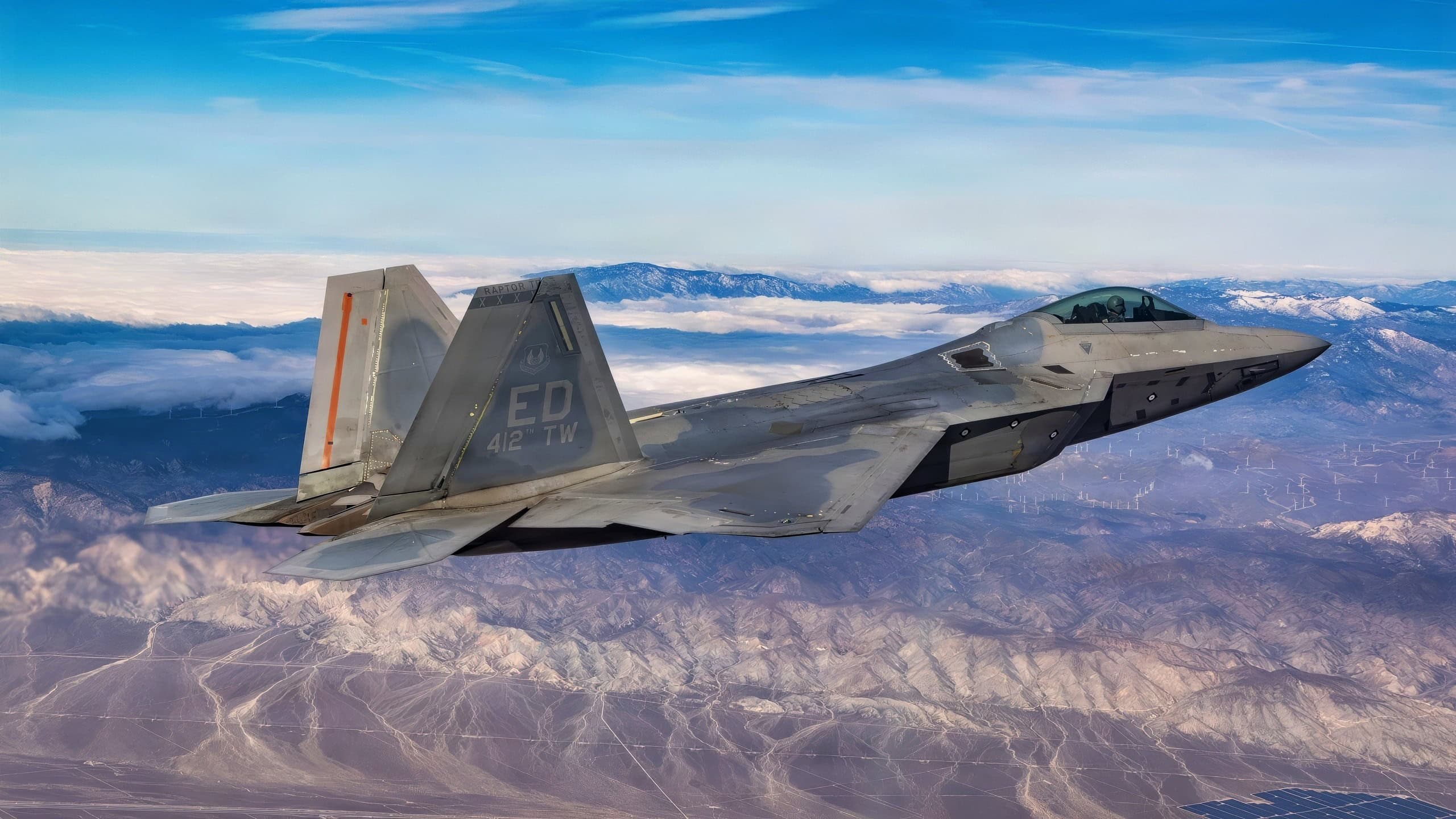
An F-22 Raptor assigned to the 411th Flight Test Squadron, Air Dominance Combined Test Force, soars over the Mojave Desert ahead of conducting high angle-of-attack maneuvers on Feb. 26, 2026. High AoA is a highly specialized set of combat aircraft maneuvers that are performed by experienced pilots and test pilots. Edwards AFB is one of the few places in North America where aviators can learn and become certified in this unique state of flying. (Courtesy photo)
Ultimately, the two aircraft were built for completely different purposes. The F-22 is a heavyweight air-superiority fighter.
It is meant to clear hostile airspace undetected and to win an air-to-air battle against any aircraft in existence.
The J-35A, on the other hand, is a medium-weight multi-role fighter designed to perform both air-to-air and air-to-ground missions in a networked battlefield. If the two were to meet in combat in a one-on-one scenario, then the F-22, especially with the Super Raptor upgrades, would almost certainly be victorious.
The Raptor sports better avionics (as far as we know), better flight performance, and has better stealth characteristics.
While it is unlikely that a J-35A and an F-22 will ever meet in a one-on-one encounter, in the super rare instance where the two do cross paths, the F-22 is likely to win.
About the Author: Isaac Seitz
Isaac Seitz, a Defense Columnist, graduated from Patrick Henry College’s Strategic Intelligence and National Security program. He has also studied Russian at Middlebury Language Schools and has worked as an intelligence Analyst in the private sector.