
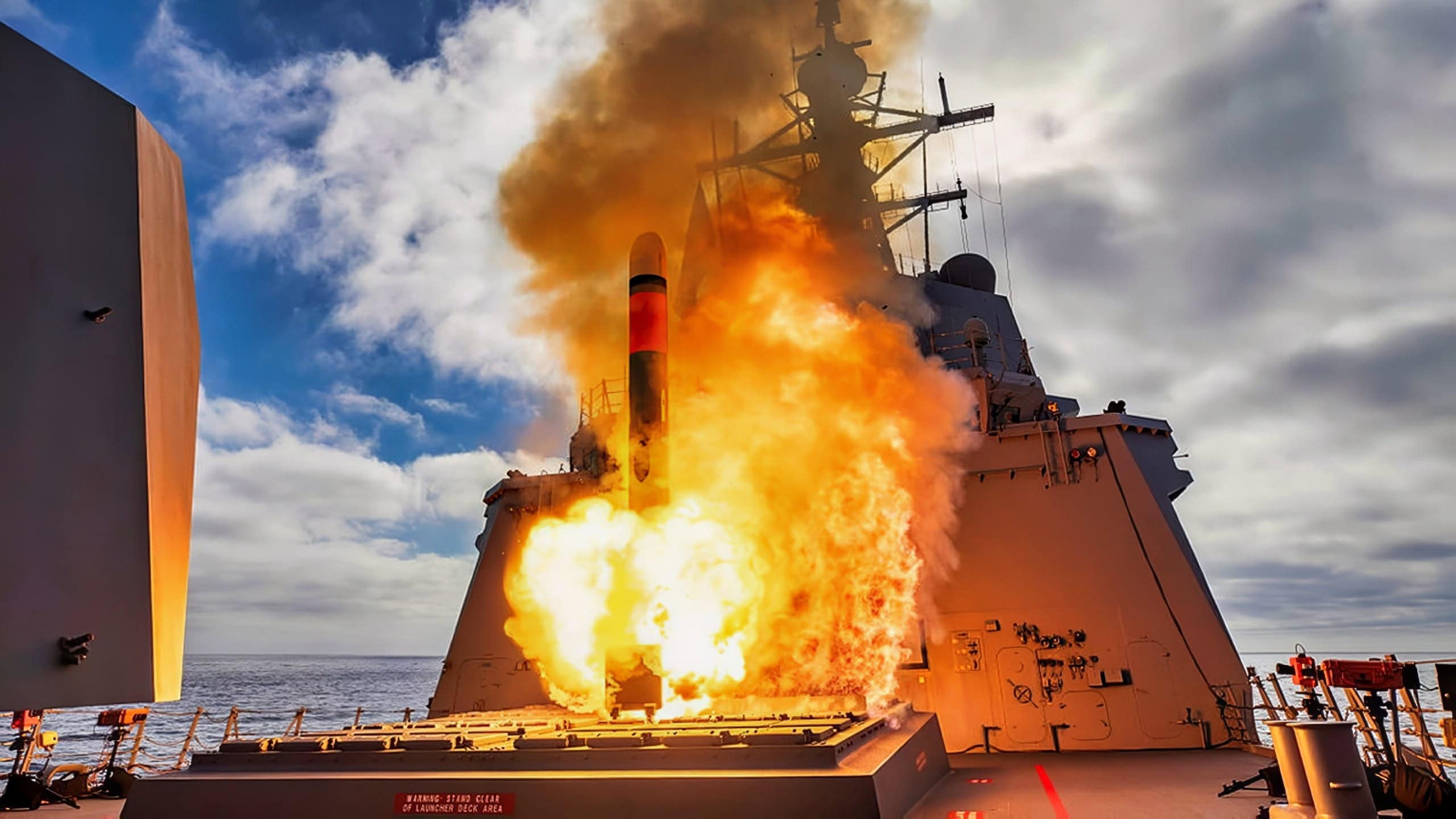
President Trump put a number on last night’s strikes himself, telling Fox News correspondent Trey Yingst by phone that 49 Tomahawk missiles had been fired at targets across Iran — the second consecutive night of American attacks, with a third promised tonight and the IRGC answering this morning with a dozen ballistic missiles at bases hosting US fighters. One night, 49 missiles. Set that number against the production line that replaces them, and the most under-covered story of this war comes into focus: the United States is spending its deep-strike magazine at a pace its industrial base cannot answer, in a war against a regional power, while the wars that would actually decide the century wait in the planning documents.
850 Tomahawks In The First Month: The Iran War’s Missile Bill
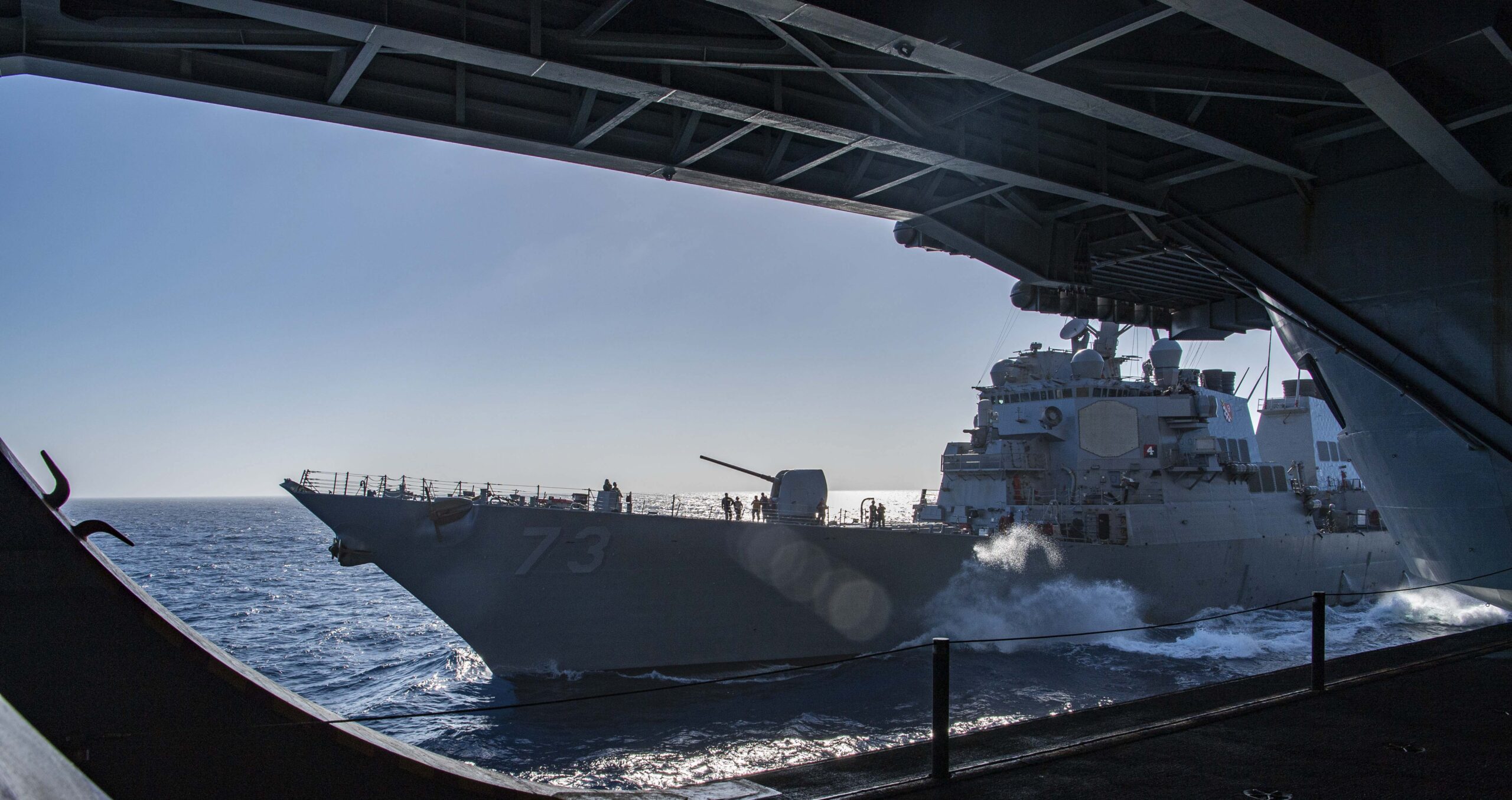
(Aug. 28, 2023) The Arleigh Burke-class guided-missile destroyer USS Decatur (DDG 73) steams alongside the aircraft carrier USS Nimitz (CVN 68) . Nimitz is underway conducting routine operations. (U.S. Navy photo by Mass Communication Specialist Seaman Tomas Valdes)
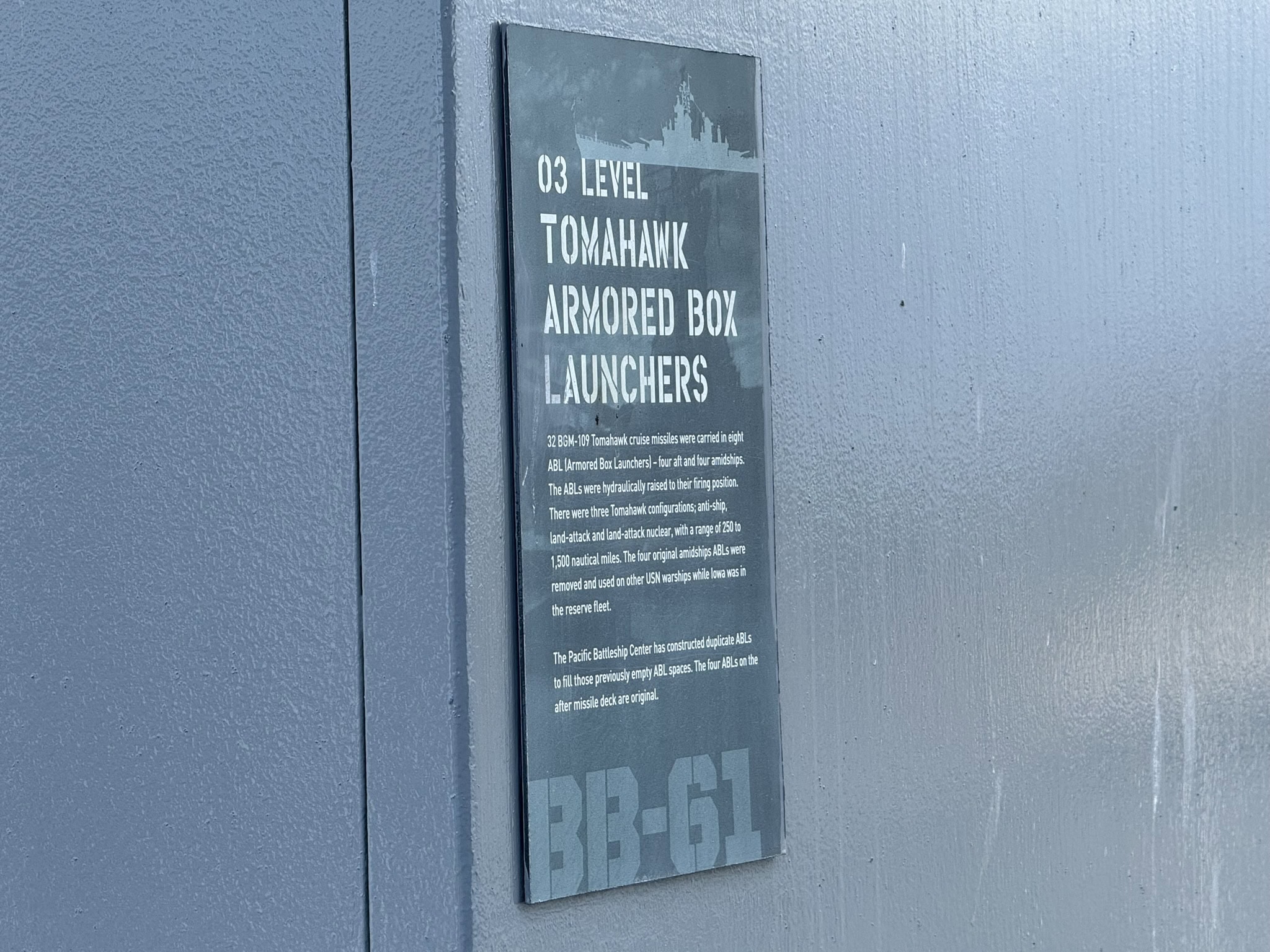
Tomahawk Box on USS Iowa. 19FortyFive.com Image.
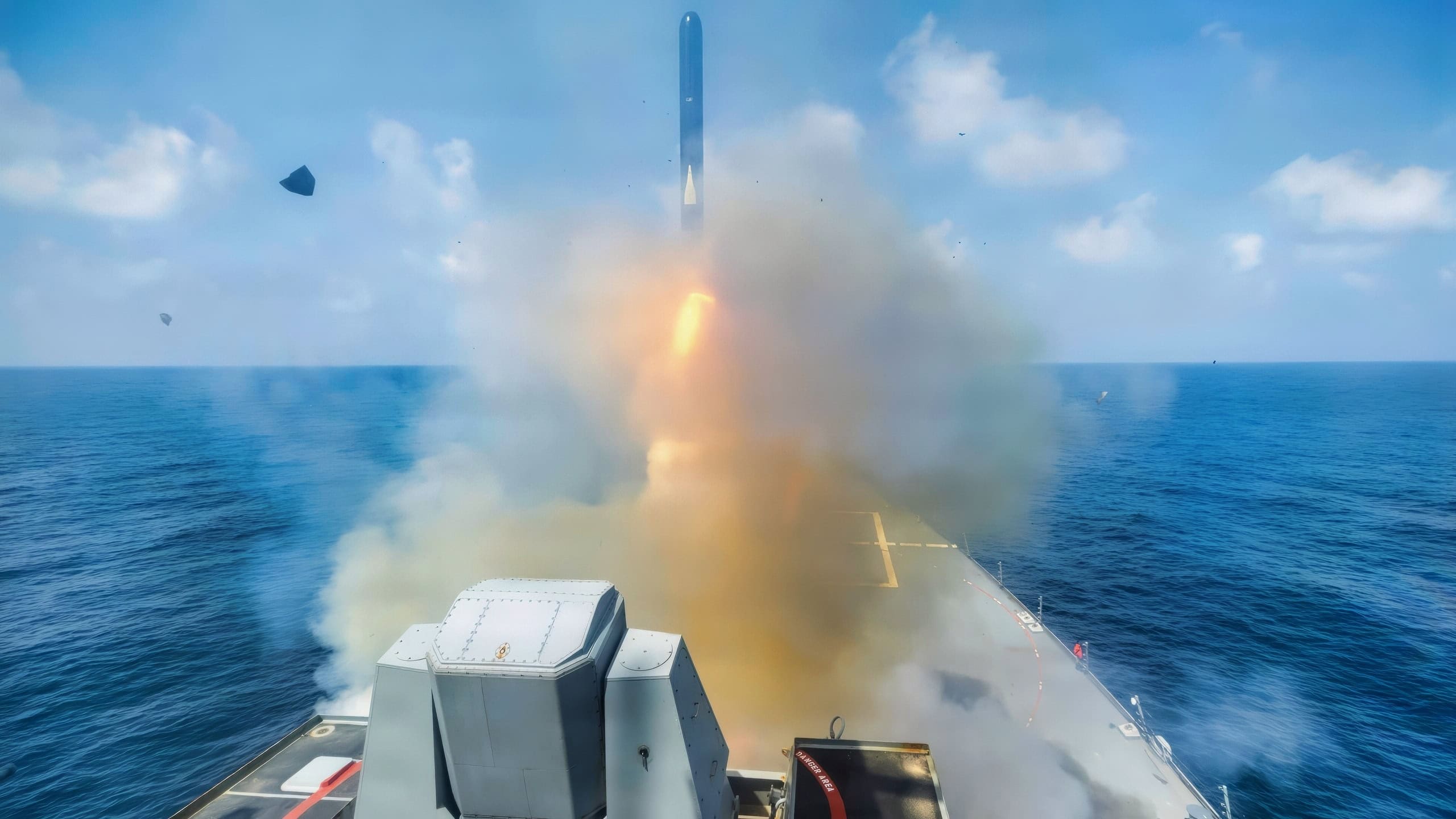
Arleigh Burke-class guided-missile destroyer USS Spruance (DDG 111) fires a Tomahawk Land Attack Missile (TLAM) in support of Operation Epic Fury, Feb. 28, 2026. (U.S. Navy photo)
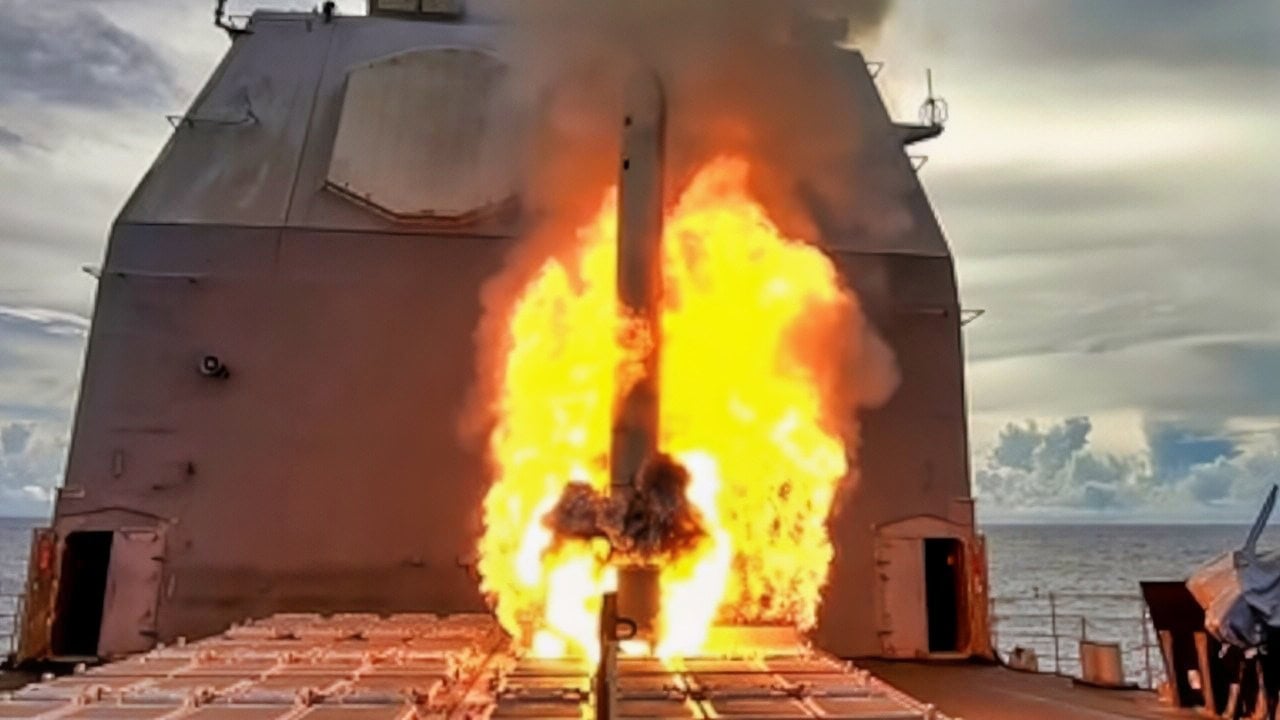
Tomahawk Missile Firing U.S. Navy Photo
The Tomahawk has been the opening move of every American president’s crisis playbook since 1991, and this war began the same way, with destroyers and submarines firing salvos in the first hours of Operation Epic Fury.
The scale this time was different. The Washington Post reported in late March that the US had fired more than 850 Tomahawks in just the first four weeks of the war, a rate that alarmed Pentagon officials and triggered internal discussions about how to make more available. By that same point, the cumulative total across all theaters since mid-2025 — Iran, the Red Sea campaign, and other operations — was approaching a thousand.
That was eleven weeks ago. The war is now in its 104th day, the strikes have continued through this week’s exchanges, and last night added 49 more. No official cumulative figure exists, but the arithmetic is not subtle: this war has consumed well over a thousand Tomahawks, and the meter is still running.
CSIS’s analysis of the air campaign noted that Central Command was visibly rationing the weapon, husbanding $3.5 million rounds because planners understood the scarcity even as the White House ordered new strike packages. Tom Karako of CSIS framed the problem to Fox News on the war’s first night: the Tomahawk is the missile every administration reaches for first, and “we’ve been using them far more frequently than we’ve been producing them.”
A Stockpile Of 3,100 Missiles And A Line That Built 90 A Year
The denominators make the expenditure genuinely alarming. The Pentagon’s total Tomahawk inventory is estimated at around 3,100 missiles, according to the Stimson Center’s Kelly Grieco, who put the pattern plainly: America keeps recognizing it lacks long-range strike capacity, keeps trying to build stockpiles, and, in her words, “we keep depleting them.”
Against that inventory, the production history reads like negligence. Industry has built between a dozen and a few hundred Tomahawks per year under standard procurement cycles, with the actual recent rate around 90 annually per CSIS, and the Navy requested just 57 missiles in fiscal 2026, months before the war began.
Run the two numbers together. The Iran war has consumed, conservatively, a third of the national Tomahawk inventory in fifteen weeks. At the recent production rate of 90 per year, replacing only what has been fired so far would take more than a decade. Last night’s single strike package — 49 missiles — represented roughly six months of the production line’s output.
However judicious CENTCOM’s targeters have been, the basic relationship between the firing rate and the build rate has been broken since February 28, and every additional night of strikes widens the gap.
The China And Russia Math: Weeks Of Magazine For Years Of War
The strategic problem sits one level up, because Iran is the easy case. Its navy, air force, and air defenses were largely destroyed in the war’s opening weeks — the president recites the list in his own social media posts — and the campaign has still consumed a thousand-plus deep-strike missiles.
A war with China presents targets that are harder, deeper, more numerous, and defended by the densest integrated air defenses on earth, at ranges that require American ships and submarines to survive inside a contested Western Pacific just to reach launch positions.
Years of published war-gaming have converged on the same finding: US long-range precision inventories run dry in the opening weeks of a great-power conflict, with nothing behind them but a production line measured in months per salvo. Those simulations were run against full stockpiles. The real stockpile now starts a thousand missiles lighter, and a Russia contingency — or simply a longer Iran war, with tonight’s third round already promised (but now pulled back, but stay tuned) and no deal signed — draws from the same emptying shelf.
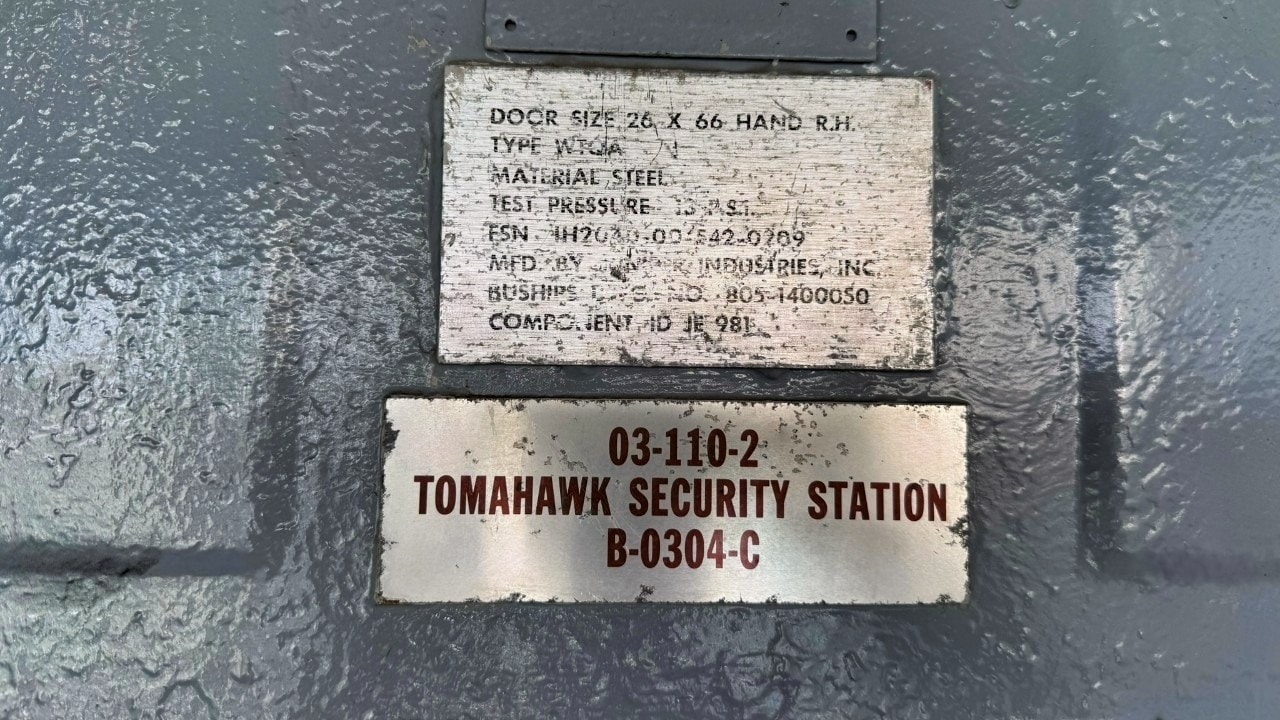
Battleship USS Iowa Tomahawk Missile Container. Taken by Harry J. Kazianis for 19FortyFive.com abord USS Iowa.
Deterrence arithmetic is the part Beijing can do without espionage. Chinese planners watching this war are not learning whether American missiles work; they learned that long ago. They are counting expenditures against published budgets and correctly concluding that the United States cannot fight for long at this tempo. A magazine that empties in weeks invites an adversary to plan for month two.
The Ramp To 1,000 A Year Is Real, And It Is Too Slow
The institutional response has finally arrived, and its scale concedes every point above. RTX signed framework agreements with the Pentagon in February to raise annual Tomahawk production to more than 1,000 missiles per year over a span of up to seven years, alongside similar surges for the AMRAAM and the Standard Missile family, backed by a corporate capital-spending jump to $3.1 billion. The fiscal 2027 budget request asks Congress for 785 Tomahawks — a 1,327 percent increase over the 55 procured in fiscal 2026, inside an overall missile-procurement spike of 188 percent that analysts bluntly assess as exceeding what the industrial base can currently deliver. The Navy’s portion runs about $3 billion, including $1.5 billion for modifications, explicitly framed as replenishing what the Iran war has drained.
Credit where due: a 1,000-a-year Tomahawk line is the correct answer, and the framework agreements represent the largest munitions mobilization since the Cold War. Nonetheless, the timelines tell the harder truth.
Factories take years to expand, supply chains for rocket motors and seekers take longer, and the ramp’s own architects describe a seven-year horizon — meaning the stockpile spent between February and June will not be fully restored until the early 2030s, assuming no further wars draw it down, an assumption this week’s strike tempo mocks nightly.
The United States never bought enough Tomahawks because peacetime budgets treated munitions as an afterthought next to ships and aircraft, and it is now relearning, live and on camera, that the platforms are only as fearsome as their magazines.
The ramp must be funded fully, accelerated past its current schedule, and protected from the first budget season that tries to raid it — because the next war will not wait seven years for the shelves to refill, and last night’s 49 missiles came off a shelf that is already far too bare.
About the Author: Harry J. Kazianis
Harry J. Kazianis (@Grecianformula) was the former Senior Director of National Security Affairs at the Center for the National Interest (CFTNI), a foreign policy think tank founded by Richard Nixon based in Washington, DC. Harry has over a decade of experience in think tanks and national security publishing. His ideas have been published in the NY Times, The Washington Post, The Wall Street Journal, CNN, and many other outlets worldwide. He has held positions at CSIS, the Heritage Foundation, the University of Nottingham, and several other institutions related to national security research and studies. He is the former Executive Editor of the National Interest and the Diplomat. He holds a Master’s degree focusing on international affairs from Harvard University.

