
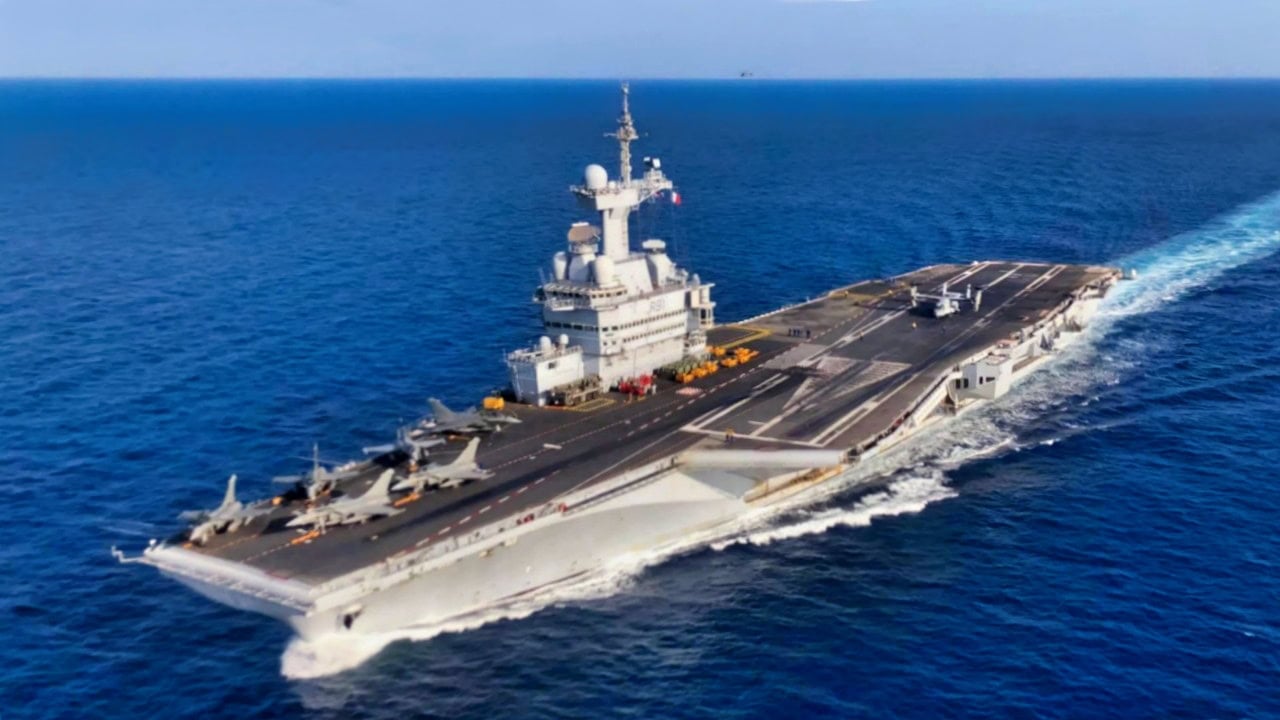
Americans arguing about defense procurement reach for the same two exhibits every time — the F-35’s trillion-dollar lifecycle and the Ford-class’s broken elevators — and both arguments could use a French perspective. France’s Charles de Gaulle, the only nuclear-powered aircraft carrier on earth outside the US Navy, took twelve years to build, had her construction stopped cold four separate times, ran past every budget, went to sea trials with a flight deck too short for her own aircraft, and lost a propeller in the middle of the Atlantic — after which she sailed for seven years on spare screws designed for carriers from the 1960s.
She was also, eventually, worth it: the ship France spent a decade ridiculing became the hardest-working carrier in Europe, and she is at war in the Eastern Mediterranean as this is written. With her successor now ordered and the fighter program meant to arm that successor canceled four days ago, the de Gaulle’s full story — the farce, the redemption, and the unsettled ending — has never been more worth telling.
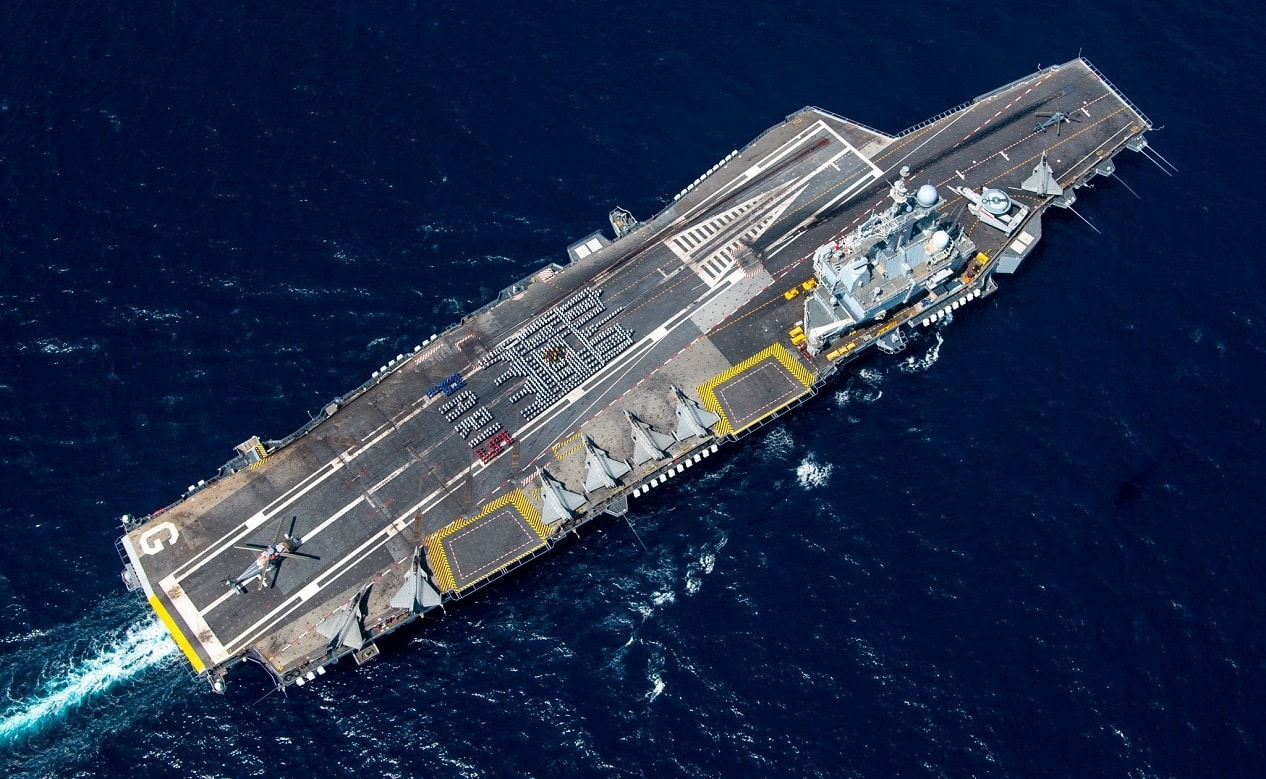
French Aircraft Carrier Charles de Gaulle.
Twelve Years, Four Stoppages: Building France’s Nuclear Carrier
The de Gaulle was conceived in confidence and built in poverty.
Ordered in 1986 to replace the aging Clemenceau-class carriers, she embodied two French decisions at once: that France would remain a carrier power independent of anyone, and that the new ship would be nuclear — partly for endurance, partly because nuclear propulsion was the club France intended to stay in. Her hull went down at the DCN yard in Brest in April 1989, and when she was launched in May 1994 she was the largest warship put in the water in Western Europe since HMS Ark Royal in 1950 — a national event for a program already in deep trouble.
The Cold War’s end and the early-1990s recession starved the project of money year after year, and construction was suspended entirely four times — in 1990, 1991, 1993, and 1995 — while the bill climbed past €3 billion, with overruns running at nearly a fifth of the program. A ship planned for the mid-1990s was commissioned in May 2001, five years late, twelve years after her keel was laid.
The long build created problems that money never could have predicted. Nuclear safety standards evolved faster than the shipyard worked, and inspectors eventually required additional radiation shielding around reactor spaces built to rules that had expired beneath them — a warship outlived by regulations while still under construction.
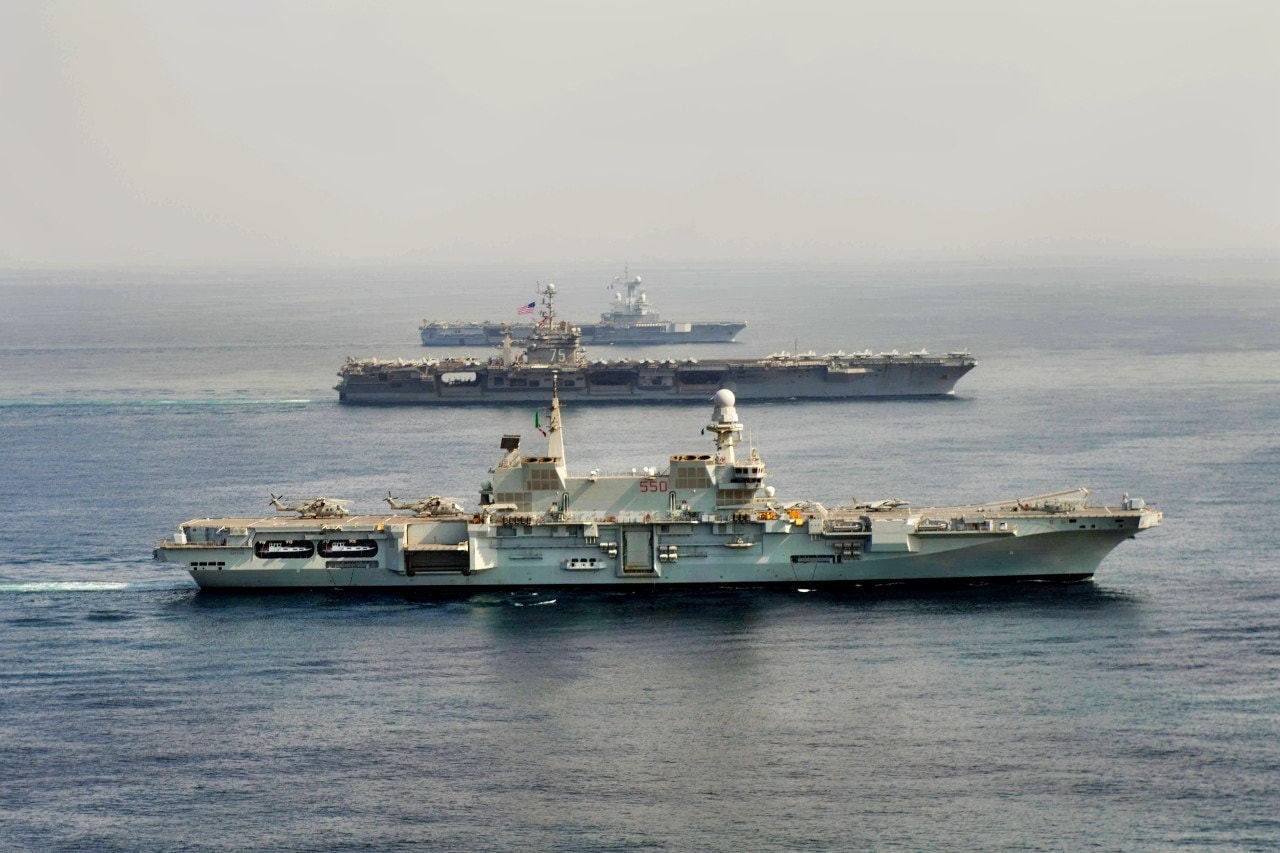
(Jan. 3, 2014) The Italian navy aircraft carrier ITS Cavour (CVH 550), front, the aircraft carrier USS Harry S. Truman (CVN 75) and the French navy aircraft carrier Charles de Gaulle (R 91), conduct operations in the Gulf of Oman. Harry S. Truman, flagship for the Harry S. Truman Carrier Strike Group, is conducting operations with Task Force 473 to enhance levels of cooperation and interoperability, enhance mutual maritime capabilities and promote long-term regional stability in the U.S. 5th Fleet area of responsibility. (U.S. Navy photo by Mass Communication Specialist 3rd Class Ethan M. Schumacher/Released)
Charles de Gaulle: The Flight Deck Was Too Short And The Propeller Fell Off
The sea trials that began in 1999 turned the program from expensive to legendary. The trials surfaced propulsion and electrical-generation problems, and then the embarrassment that defined her public image: the flight deck proved too short for the E-2C Hawkeye to operate with safe margins, and the deck had to be lengthened by 4.4 meters after the fact so the carrier could fly the radar aircraft her air wing was built around.
The fix itself was cheap; the symbolism was not, and it remains the detail every account of the ship reaches for first. The Ford class’s troubles played out in classified reliability data and congressional reports. The de Gaulle’s played out in a measuring tape.
Worse followed. On the night of November 9–10, 2000, during her final long-distance trials en route to Norfolk, her port propeller broke in the Western Atlantic, sending her home to Toulon and her service date past schedule yet again.
With the propeller supplier blamed for quality failures and replacements years away, the navy fitted spare screws originally manufactured for the Clemenceau and Foch — propellers from a previous generation of carriers — which caused vibration problems and capped her speed at around 25 knots until purpose-built replacements finally arrived with her 2007 refueling overhaul.
France’s brand-new nuclear flagship spent her first six years of service running on her predecessor’s spare parts. However bad an American procurement story gets, it does not get there.
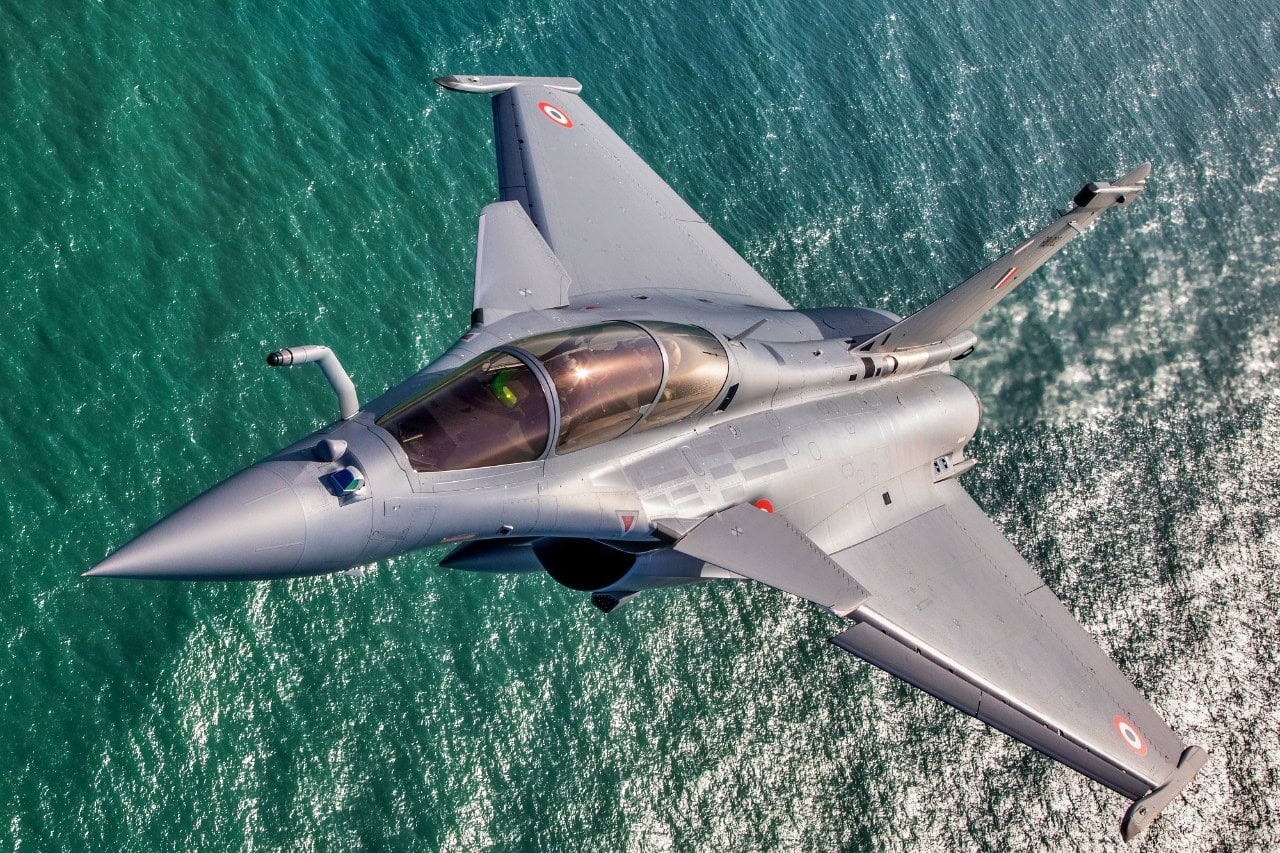
Dassault Rafale. Image Credit: Creative Commons.
A Submarine’s Heart In A Carrier’s Body: The K15 Compromise
Beneath the mishaps sits the structural compromise that no refit can cure. To control costs, France powered the 42,000-ton carrier with two K15 reactors derived from the plants in her ballistic-missile submarines rather than developing a carrier-scale reactor, and the arithmetic shows.
The de Gaulle is the slowest capital ship of her kind afloat — her design speed of about 27 knots trails every American carrier and matters operationally, because wind over the deck is launch performance. Her submarine-derived reactors also require refueling on a cycle of roughly seven years, each refueling an industrial event that removes France’s entire carrier force from the board for over a year, whereas American cores run for decades.
The choice saved money in 1986 and has cost availability every year since — and it explains why France Libre’s new K22 reactors were among the first components funded in the successor program. The lesson was learned at sea, slowly.
From Afghanistan To The Iran War: The Redemption Of R91
Then the ship France had spent a decade mocking went to work, and the ledger flipped. Weeks after September 11, she sailed for the Arabian Sea, and from December 2001, her Super Étendards and Hawkeyes flew combat missions over Afghanistan — a maiden combat deployment that most carriers never matched. Libya followed in 2011, where its air wing carried a major share of the campaign’s strike sorties.
The anti-ISIS war brought repeated deployments from 2015 onward, with her Rafales striking targets in Iraq and Syria across multiple cruises. She absorbed an 18-month mid-life overhaul in 2017–18 that modernized her for the Rafale-only era, survived the April 2020 pandemic outbreak that infected the majority of her crew and briefly made her a global headline for the wrong reasons, and in 2025 took her air wing to the Indo-Pacific — her first Pacific deployment, and France’s first carrier presence there in decades, exercising with American and allied fleets in waters Beijing considers its own.
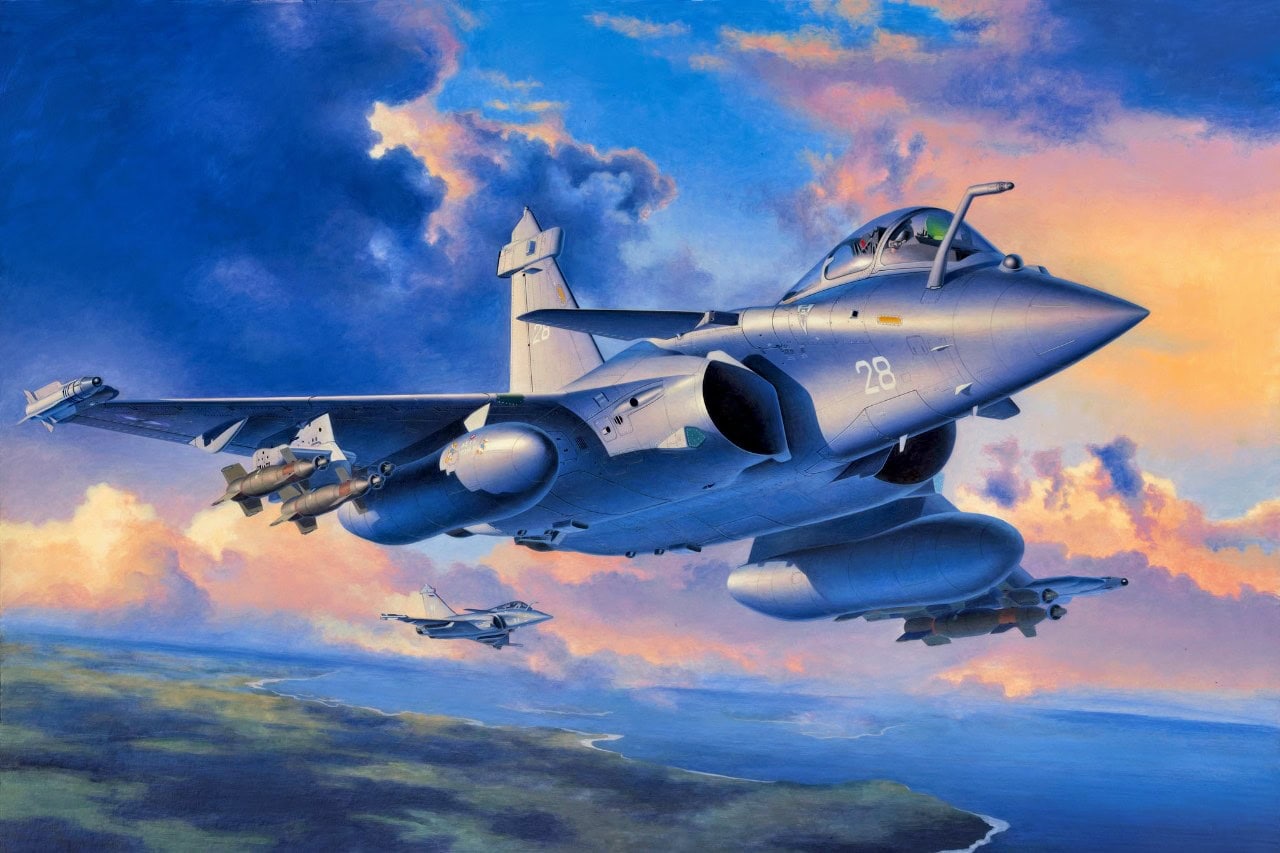
Dassault Rafale. Image Credit: Creative Commons.
And she is working now. In March, as the Iran war widened, she redeployed to the Eastern Mediterranean, where she has anchored allied escort operations through contested waters — the only non-American carrier doing sustained combat-zone work in this conflict, a quarter century into a career that began with a broken propeller.
Every navy that has laughed at her construction story has spent the past twenty years watching her show up to wars its own fleets sat out. The ship that was a punchline became a verb: when Europe needs a carrier somewhere, the de Gaulle goes.
What The FCAS Cancellation Means For Her Successor
The ending, though, has just been rewritten. The de Gaulle is scheduled to retire in 2038, the year her replacement — the 80,000-ton France Libre, now in early construction with commissioning targeted for 2038 — joins the fleet. The succession plan assumed a sixth-generation fighter to fill the new ship’s deck, and that assumption died this week: France and Germany formally ended the FCAS program’s manned fighter on June 8, announced at the Berlin Air Show where the partnership launched in 2018, after a mediator concluded in April that a jointly built fighter was no longer feasible amid the Dassault-Airbus deadlock.

FCAS Graphic from Airbus.

FCAS. Image Credit: Industry Handout.
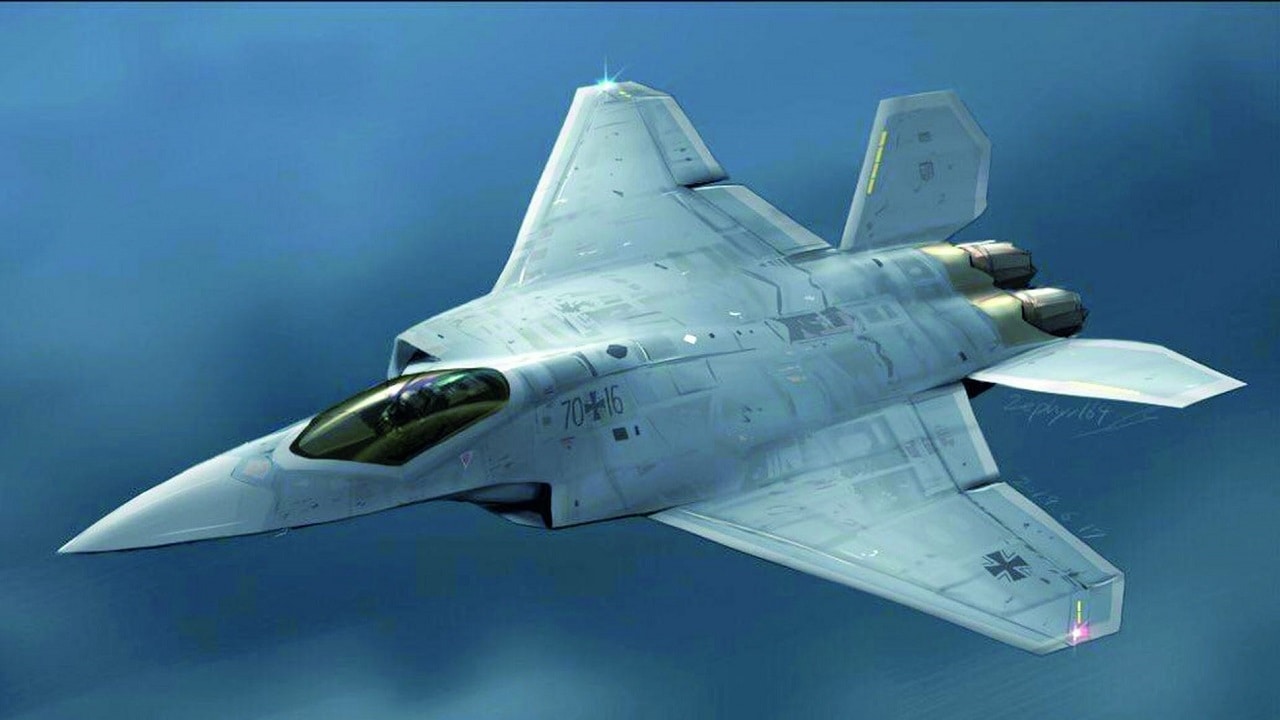
FCAS. Image Credit: Creative Commons.
The drone and combat-cloud elements survive in a reduced framework; the fighter does not, and with it goes the aircraft the Rafale was supposed to hand the deck to — leaving no agreed successor on the horizon and France pointed toward an evolved Rafale and a Dassault-led national program that exists today only as intent.
The irony lands squarely on the de Gaulle’s flight deck. The requirement that helped break FCAS was France’s own — a fighter that could operate from a carrier and deliver the ASMP-A nuclear missile — the mission that de Gaulle’s Rafales perform today as the airborne leg of French deterrence.
France would not compromise on the carrier fighter because the carrier is the centerpiece of French air power, and as a result, the next carrier now has no next fighter. The de Gaulle will spend her final decade flying the Rafale, and on current evidence, the France Libre will spend her first decade flying it too.
Charles de Gaulle: The Verdict?
The fair verdict on R91, with the whole record in view, doubles as the verdict her saga offers American procurement arguments.
Her construction was worse than the Ford’s and her compromises deeper than the F-35’s, and none of it ultimately decided what she became — careers, not construction stories, are how warships should be judged, and her career has been superb.
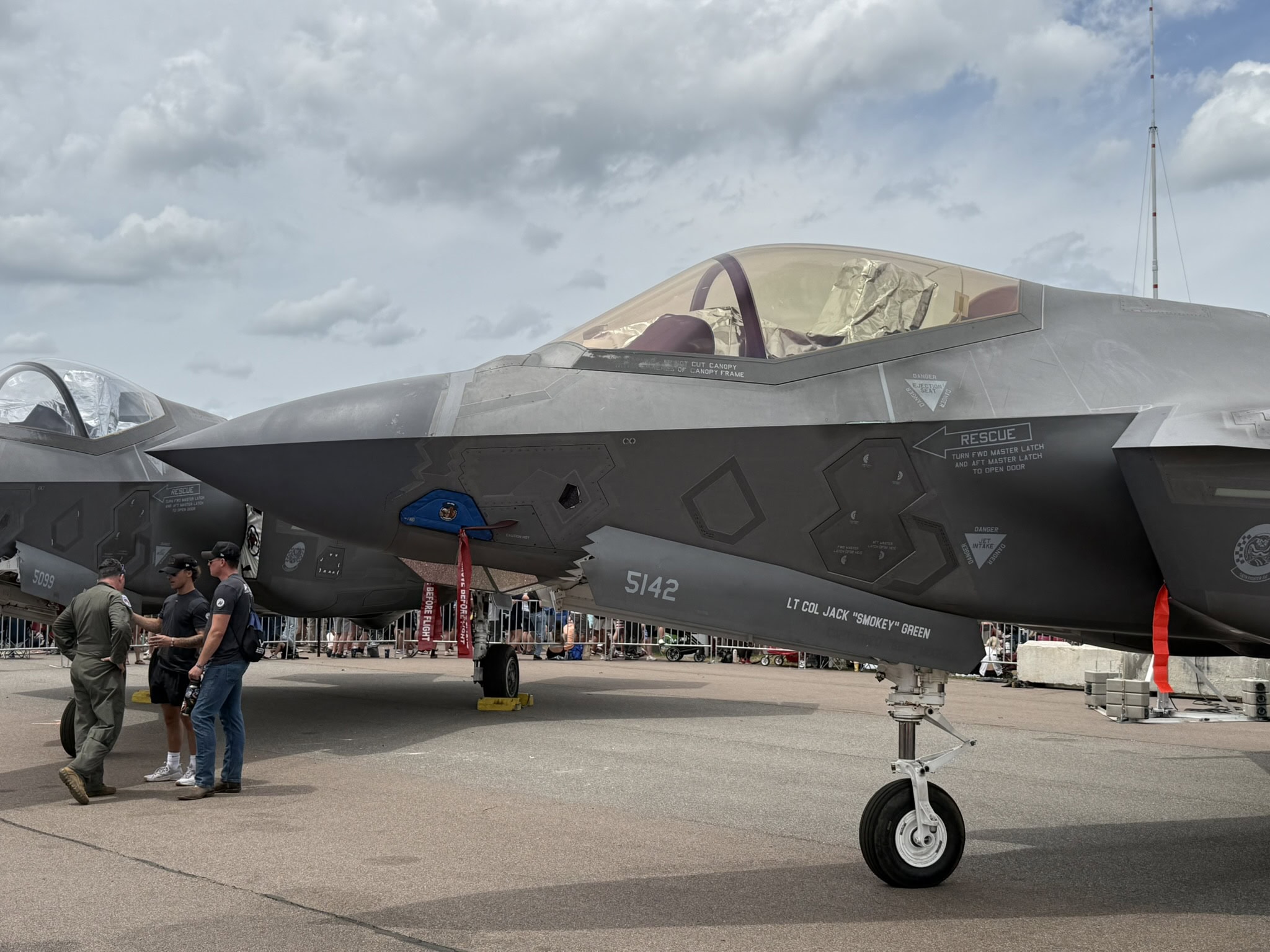
F-35 Stealth Fighter at Lakeland, Florida Air Show. Take on 4/19/2026. Image Credit: 19FortyFive.com
The caution runs the other way too: the compromises that could not be fixed, the underpowered reactors, and the fleet of one have constrained her every year of that career.
France built a flawed ship and a flawed fleet around a sound idea, redeemed the ship through twenty-five years of showing up, and is now repeating the fleet’s flaw at twice the tonnage while the airplane question reopens. The de Gaulle’s story is not finished teaching, and her successor seems determined to learn it the long way.
MORE – France’s Only Nuclear Aircraft Carrier Problem: The Propeller Fell Off
MORE – The Royal Navy Can’t Deploy a Single Nuclear-Attack Submarine
MORE – The SR-71 Blackbird Beat the U.S. Navy
About the Author: Harry J. Kazianis
Harry J. Kazianis (@Grecianformula) was the former Senior Director of National Security Affairs at the Center for the National Interest (CFTNI), a foreign policy think tank founded by Richard Nixon based in Washington, DC. Harry has over a decade of experience in think tanks and national security publishing. His ideas have been published in the NY Times, The Washington Post, The Wall Street Journal, CNN, and many other outlets worldwide. He has held positions at CSIS, the Heritage Foundation, the University of Nottingham, and several other institutions related to national security research and studies. He is the former Executive Editor of the National Interest and the Diplomat. He holds a Master’s degree focusing on international affairs from Harvard University.

