Eight European Defense Firms Combine to Develop German Team Gen 6 Fighter
Warsaw, Poland – Earlier this month, the Franco-German Future Combat Air System (FCAS) program was officially declared dead.
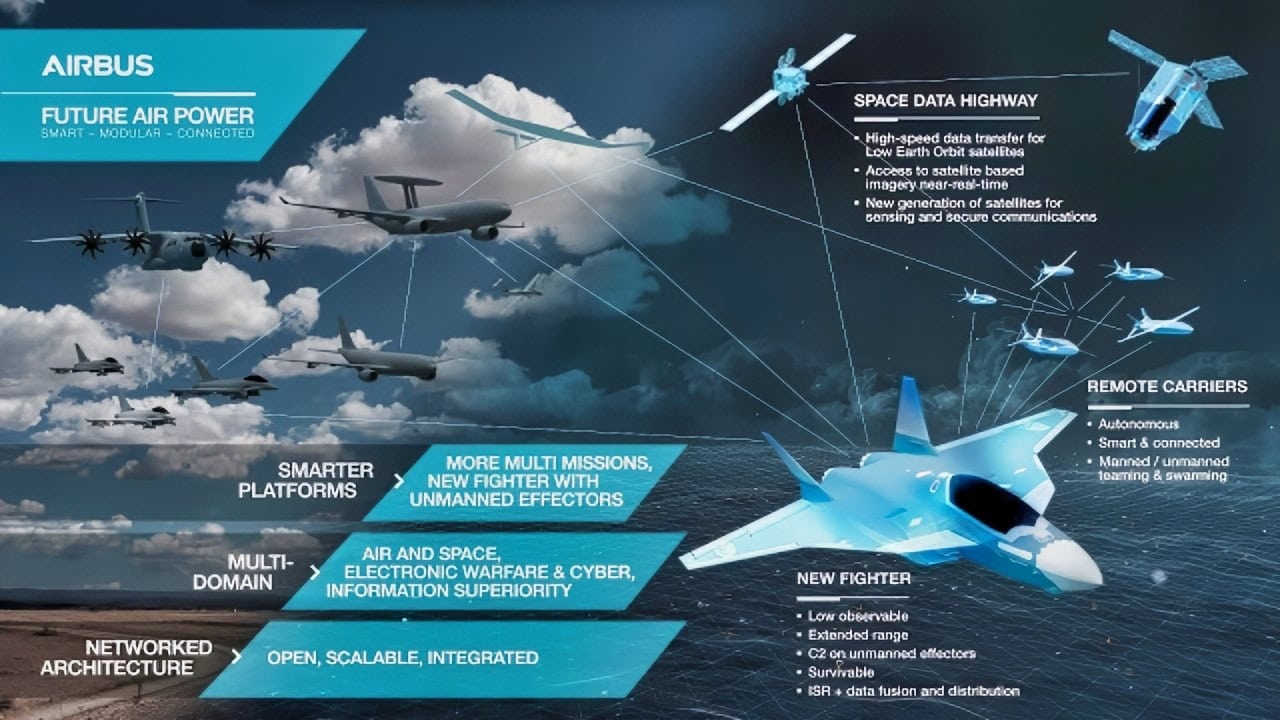
The project, also known by its French acronym of SCAF, was a joint effort to develop and build a 6th-generation fighter aircraft involving France’s Dassault Aviation, plus the major French subsystem suppliers for the Rafale fighter, combined with a group of aerospace firms affiliated with the German and Spanish enterprises under the Airbus Military umbrella.

FCAS. Image Credit: Industry Handout.
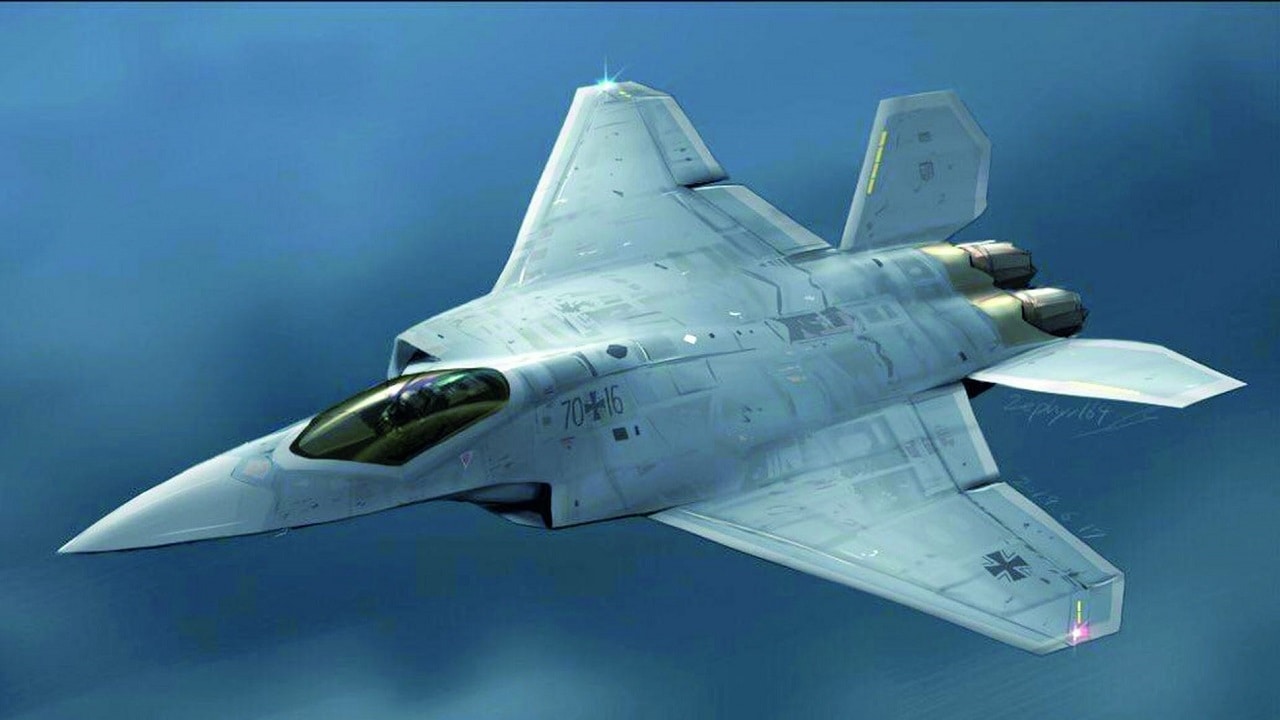
FCAS. Image Credit: Creative Commons.
The collapse of this proposed collaborative effort, which came down to the Germans and the French being unable to come to terms, is not much of a surprise.
Too many similar projects in the past have collapsed over conflicting agendas that neither side would compromise on.
A long analysis from this past week recalls these failed attempts at collaborative efforts for a major weapon system and observes, “The history of European combat aviation is littered with programs that struggled under the weight of competing national ambitions. In this respect, FCAS looks less like an extraordinary failure than the latest chapter in a recurring story.”
The Business & Industry Problems of the FCAS Fighter
The breakup of the original industrial partners, who will now design the next-generation fighter jet, follows months of conflict between Airbus and Dassault.
The conflicts within FCAS finally came to light in the summer of 2025, when Dassault began demanding greater control over the program.
On the German side, this endless maneuvering proved equally frustrating for both the politicians in Berlin responsible for the program’s budgeting and the Airbus executives in charge of the industrial side of the project. The collapse of the partnership this month means that years have been lost in the development process.
FCAS was originally launched in 2017 and was joined by the Spanish industry in 2019. It had been considered the newest and most ambitious flagship project to be a product of European defense cooperation.
Its collapse is seen as a setback to the goal of strengthening Europe’s military capabilities amid growing security threats from Russia.
The New Team Formation
The obvious consequence is that, as happened in the 1980s when France failed to join the Eurofighter program and went on to develop the Rafale, the Germans and the Spanish will go off on their own to develop a 6th-generation fighter aircraft.
On 11 June 2026, during the occasion of this past week’s ILA air show in Berlin, a group led by Airbus DS, plus seven other German and five Spanish companies, announced they will form Team Gen 6 to develop what will now be a Germany-backed fighter program to replace the now defunct FCAS consortium.
This new alliance will obviously proceed without the participation of French industry, necessitating a complete restructuring of the aircraft’s development.
Airbus has told several media outlets that the new Team Gen 6 companies have already submitted a position paper to German Defense Minister Boris Pistorius that outlines their concept for a 6th-generation combat aircraft.
One of the companies involved in the project has said that the companies are wasting no time and are considering signing an agreement to formalize the consortium in the near future. This new Team Gen 6 project will be largely led by the German industry and involves numerous contractors.
Beyond FCAS: Various Options for a New 6th-Generation Fighter
The consortium is also calling on the German government to ensure that contracts required for the program to proceed on schedule are awarded “fully and on time.” News services that have seen the actual paper submitted to the German MoD state that “on time” means by the second half of 2026, a period of time beginning slightly more than two weeks from now.
In addition to Airbus, the alliance includes the European missile manufacturer MBDA and six German firms: Hensoldt, Diehl Defense, MTU Aero Engines, Liebherr, Autoflug, and Rohde & Schwarz.
But the MoD in Berlin has still not made up its mind that this approach is the one they want to move forward with and fund. Pistorius said that talks with various “stakeholders” on the subject have been underway for months.
During last week’s ILA exposition, Pistorius told reporters that this proposed project was “conceivable and one possibility”, but he also said Berlin was evaluating other alternatives as well.
These options include buying additional US-made F-35 fighter jets or joining another aircraft development program. This is an option that has been discussed for several months now.
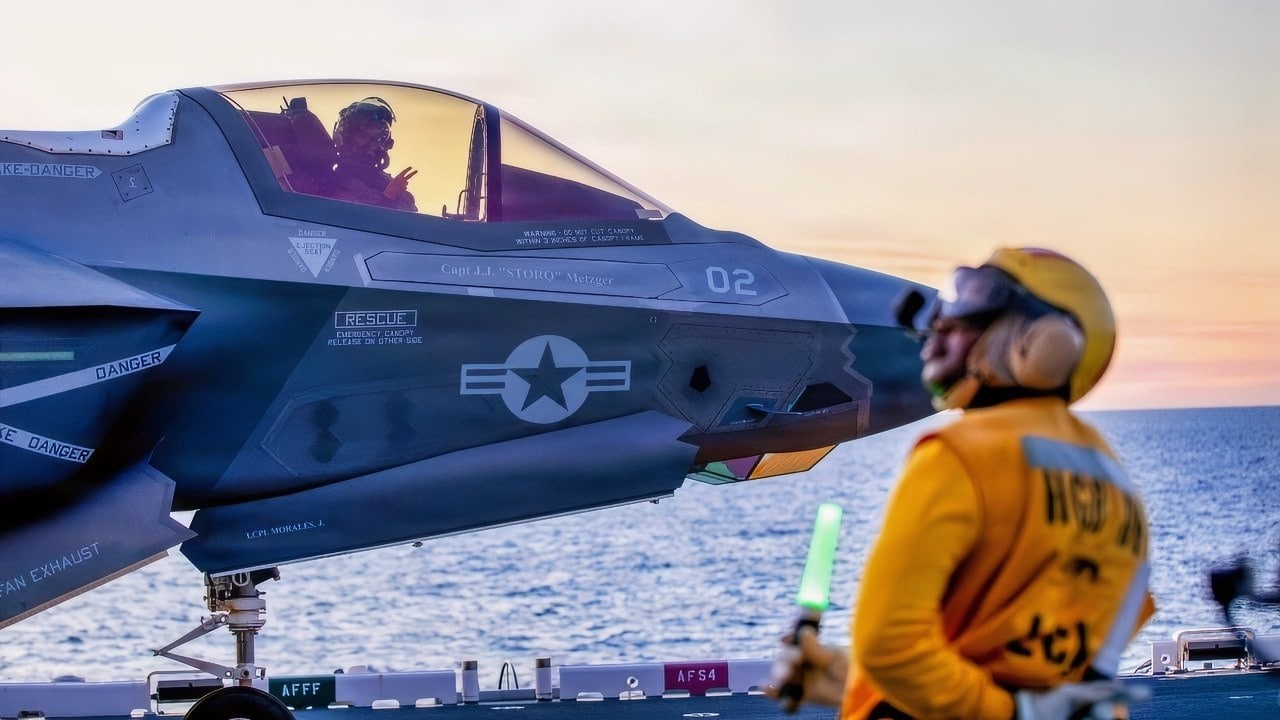
Chief Aviation Boatswain’s Mate (Handling) Stephane Togue, assigned to Wasp-class amphibious assault ship USS Makin Island (LHD 8), prepares to signal an F-35B Lightning II, attached to Marine Fighter Attack Squadron 211, for takeoff, Dec. 4, 2025. Makin Island is currently underway conducting routine operations in the U.S. 3rd Fleet. (Photo by Mass Communication Specialist Seaman Abraham Ramirez)
German Chancellor Friedrich Merz had previously questioned whether is made sense for the Luftwaffe to develop the aircraft now. “Will we still need a manned fighter jet in 20 years’ time? Do we still need it, given that we will have to develop it at great expense?” Merz said on Germany’s Machtwechsel podcast.
About the Author: Reuben F. Johnson
Reuben F. Johnson has thirty-six years of experience analyzing and reporting on foreign weapons systems, defense technologies, and international arms export policy. Johnson is the Director of Research at the Casimir Pulaski Foundation. He is also a survivor of the Russian invasion of Ukraine in February 2022. He worked for years in the American defense industry as a foreign technology analyst and later as a consultant for the U.S. Department of Defense, the Departments of the Navy and Air Force, and the governments of the United Kingdom and Australia. In 2022-2023, he won two awards in a row for his defense reporting. He holds a bachelor’s degree from DePauw University and a master’s degree from Miami University in Ohio, specializing in Soviet and Russian studies. He lives in Warsaw.