
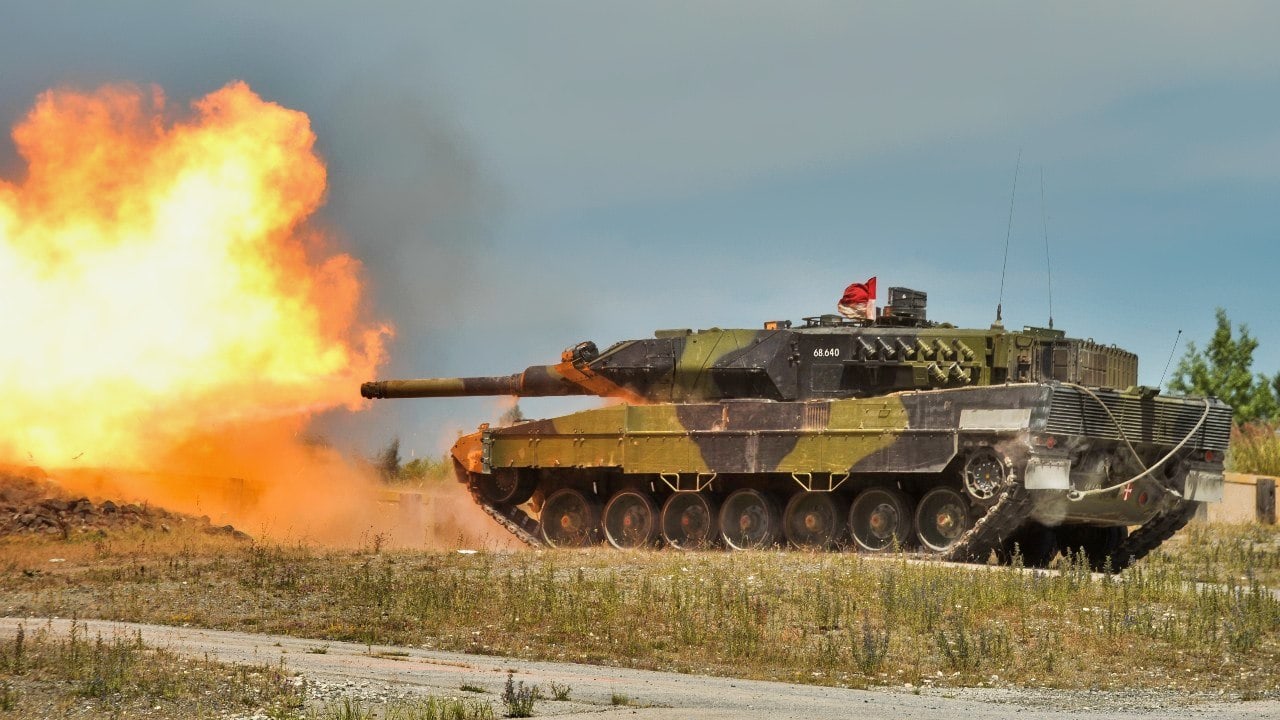
Any discussion of the best NATO tank ultimately centers on two tanks: the M1 Abrams and the Leopard 2 (although some brave souls occasionally insist it’s the Challenger 2).
The Leopard 2 is considered by many to be one of the strongest and most advanced tanks in the world.
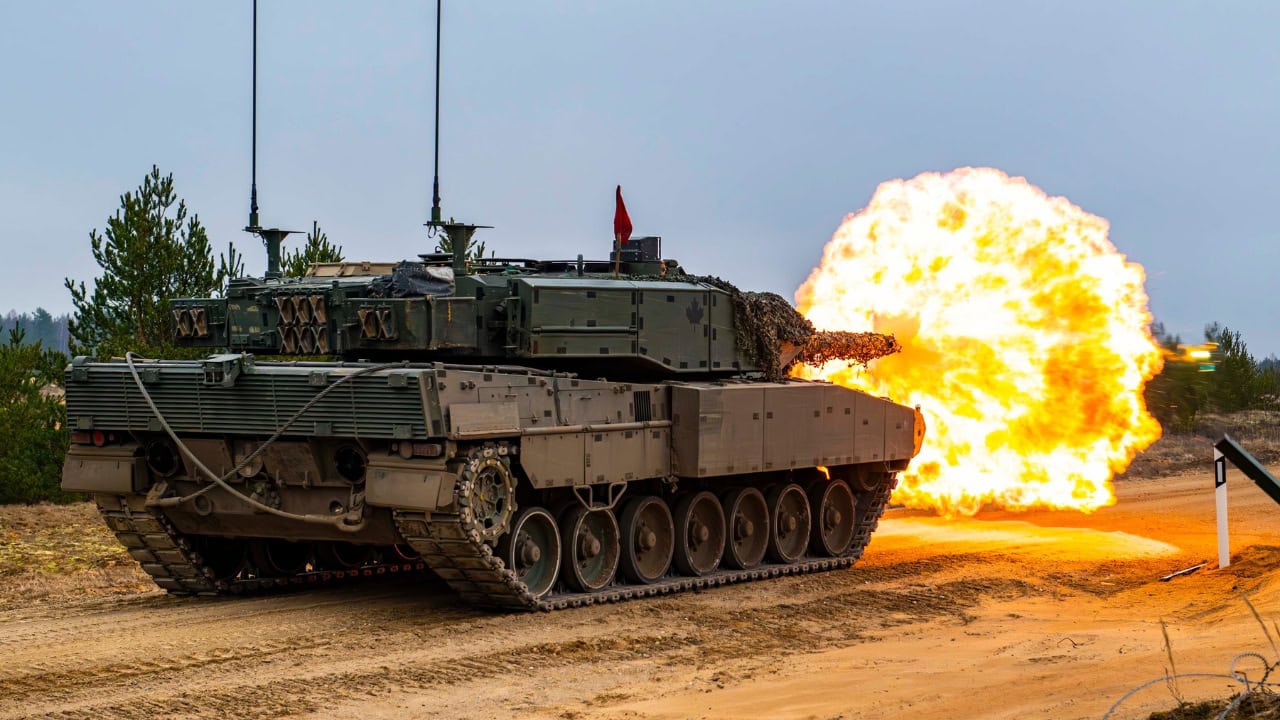
Canadian Armed Forces members with the Royal Canadian Dragoons, currently deployed on Operation REASSURANCE, take part in a live fire range for the Leopard 2 Main battle tank, with High Explosive ammunition, at Camp Adazi, in Adazi, Latvia, on 24 March, 2024.
Photo Credit: Corporal Bryan Bodo, Canadian Armed Forces Imagery Technician
Owned and operated by more than 20 nations, the tank has been a hit on the international market and is a mainstay in tank forces across Europe.
Thanks to continuous upgrade packages, the Leopard 2 has been and remains a highly lethal and survivable platform that can hold its own against enemy armor and protect its crew against the most advanced anti-tank systems.
Leopard 2: Design and Development
The Leopard 2 was developed in the wake of the failed KPz 70 (MBT 70) project with the Americans, which had attempted to build a joint main battle tank (MBT).

MBT-70 Tank. Image Credit: Creative Commons.
As is apparently the tradition with modern Germany, both parties ended up disagreeing and ultimately decided to disband the project.
The program’s failure, however, gave the Germans valuable insights and would heavily influence the development of the Leopard 2.
Under the guidance of Paul-Werner Krapke, the tank underwent multiple iterations, with several prototypes built and rigorously tested. The tank finally entered production in 1979 and was formally accepted into service that same year.
The hull of the Leopard 2, externally, does not differ too drastically from the Leopard 1, retaining the sloped frontal glacis and the flat sides common on practically every other MBT.
Where the two differed, however, was the inclusion of composite armor.
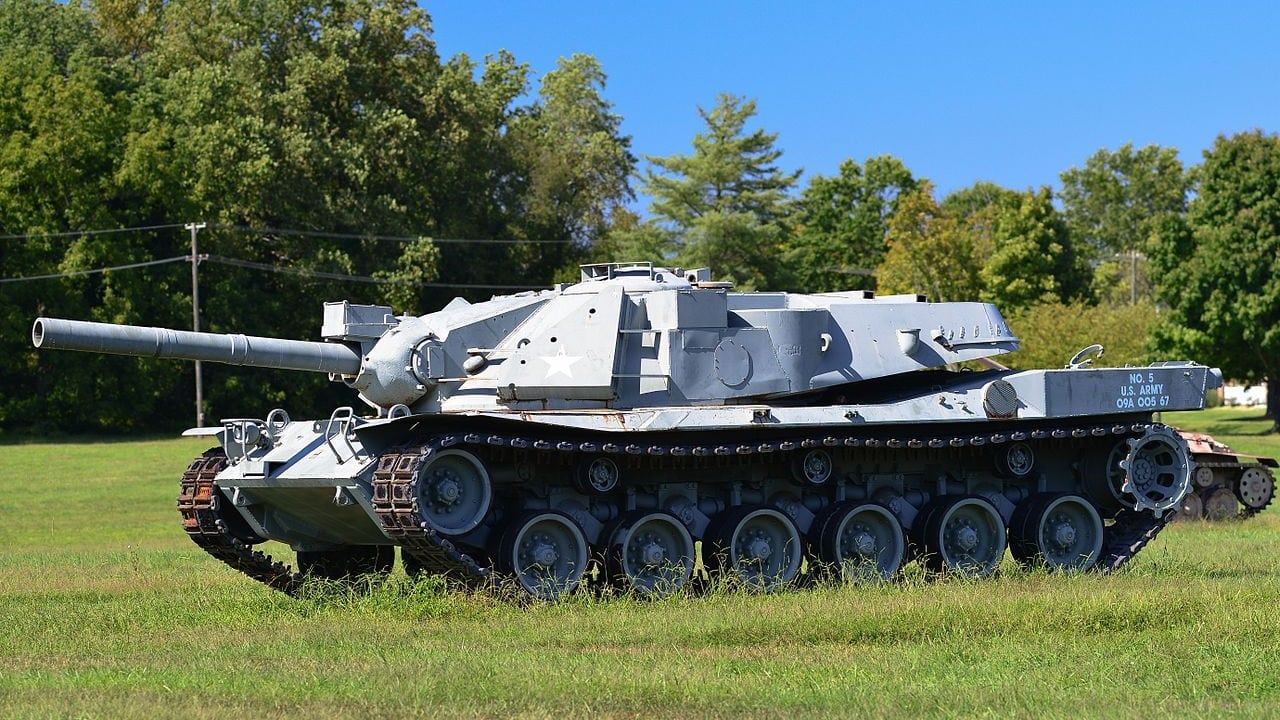
MBT-70 Tank.
The frontal hull and the turret of the Leopard 2 are reinforced with composite armor, which significantly improves their protection against shaped charges.
The Leopard 2A5 later added the easily recognizable wedge-shaped add-on spaced armor on the turret for better protection against modern sabot rounds.
The 2A5 also introduced spall liners in the crew compartment to protect against fragmentation.
World-class Mobility and Firepower
The Leopard 2’s mobility is provided by the MTU MB 873 Ka-501 engine. This massive engine delivers 1,500 hp, enabling the tank to travel at around 68 km/h on roads.
The tank has a power-to-weight ratio of 24.2 hp per ton, although later versions such as the Leopard 2A7 have a lower ratio due to their increased weight.
Despite its massive size and weight, the Leopard 2 is surprisingly maneuverable and smooth to drive.
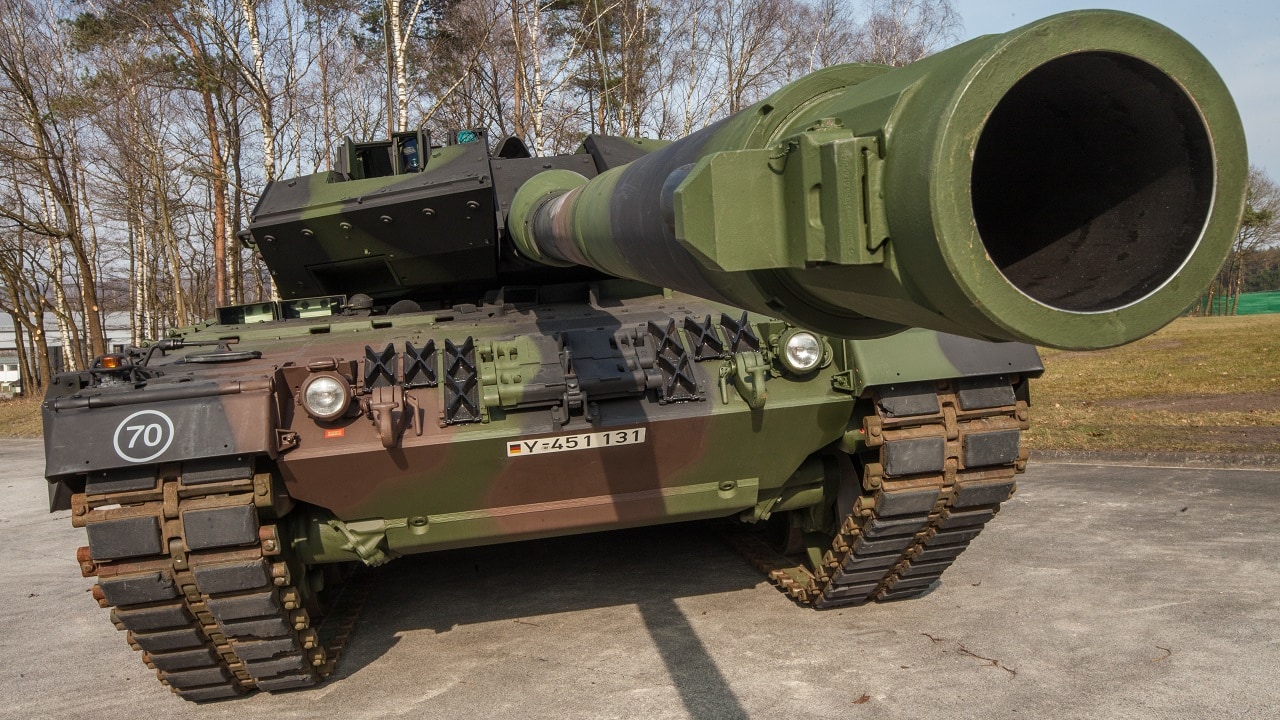
NATO Leopard 2 Tank. Image Credit: Creative Commons.
This is accomplished by the tank’s transmission and suspension system, which makes the tank appear more nimble than the rougher, more rugged Soviet designs.
The engine’s large size, however, adds weight to an already heavy tank, which can cause logistical issues when crossing certain bridges.
In terms of armament, the Leopard is armed with a Rheinmetall 120 mm smoothbore cannon. The tank initially used the L/44 gun, but this was later replaced with the more capable L/55 gun introduced on the 2A5.
Ammo in the tank is placed in a specialized compartment located in the bustle of the turret. An additional 27 rounds are stowed in a magazine in the front of the tank next to the driver.
If the ammunition in the back is ignited, blowout panels have been placed to direct the explosion outside of the tank to avoid harming the crew.
The gun is manually loaded, as with most Western MBTs, and is fully interoperable with NATO-standard rounds.
The tank’s fire control system (FCS) allows it to fire accurately while on the move and hit targets at ranges of 4-5 kilometers.
Digital Systems and Modularity
FCS is provided by the German EMES 15.
This system integrates data from the tank’s many sensors in order to ensure maximum accuracy.
Over time, the sights on the Leopard 2 have been upgraded to provide state-of-the-art thermal imagers for both the commander and gunner.
Its sensor suite and digital backbone have also been upgraded over time, increasing the tank’s overall situational awareness. The 2A7 added a new battle management system that enables near-instantaneous data sharing between the tank and other battlefield units.
These upgrades aim at increasing the Leopard 2’s performance in networked environments, even in the presence of enemy electronic interference.
One of the strongest factors working in favor of the Leopard 2 is its modularity and adaptability. The tank can be easily upgraded and modified to meet its operational needs.
This flexibility makes it especially ideal for exports, when customers have their own specific needs and requirements.
Canada, Poland, Sweden, Thailand, and multiple other customers field their own heavily modified versions of the tank, which feature changes to their turret armor and modifications to the tank’s sights based on customer needs.
This has made the Leopard 2 a hit on the global market, with more than 20 nations acquiring the tank and many more expressing interest.
One of NATO’s Strongest Tanks
With all this in mind, it is easy to understand why the Leopard 2 is considered one of the best tanks in the world. The tank has a lot going for it. It has world-class armor, deadly firepower, excellent mobility, and state-of-the-art FCS.
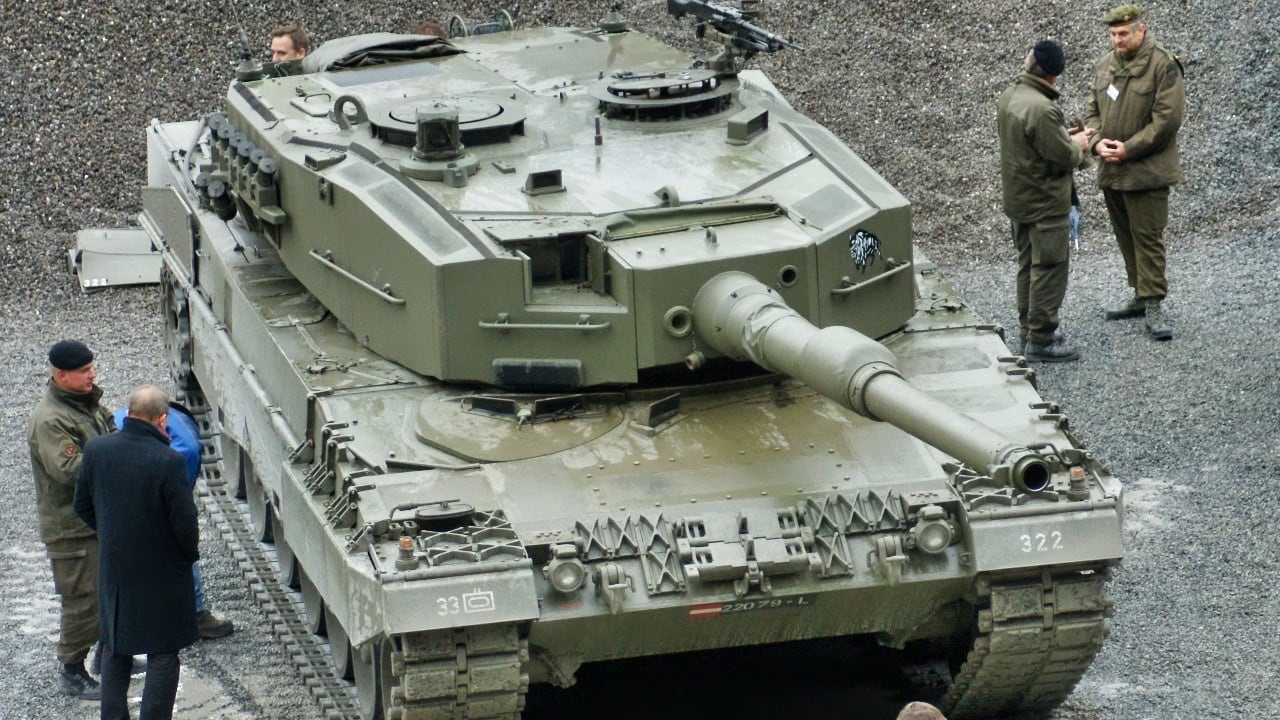
Germany Leopard 2 Tank. Image Credit: Creative Commons.
The one obvious downside is the tank’s enormous weight. Weighing 73.3 tons, the Leopard 2A7 competes directly with the Abrams and Challenger 2 for the title of heaviest tank in the West (the Challenger 2 wins that competition in case anyone was wondering).
Its heavyweight limits its versatility in some instances, especially when crossing certain bridges or traversing muddy terrain.
Costing between 13 and 15 million euros (17 million USD), the tank is incredibly expensive, with the new Leopard 2A8 costing even more.
To many armed forces around the world, however, this cost is worth it, given the capabilities offered by the Leopard 2. The tank’s continuous upgrades have ensured that it is always ready to meet its contemporary battlefield needs.
This, along with its aforementioned qualities, is why many believe that the Leopard 2 is one of the best tanks in the world.
About the Author: Isaac Seitz
Isaac Seitz, a Defense Columnist, graduated from Patrick Henry College’s Strategic Intelligence and National Security program. He has also studied Russian at Middlebury Language Schools and has worked as an intelligence Analyst in the private sector.