
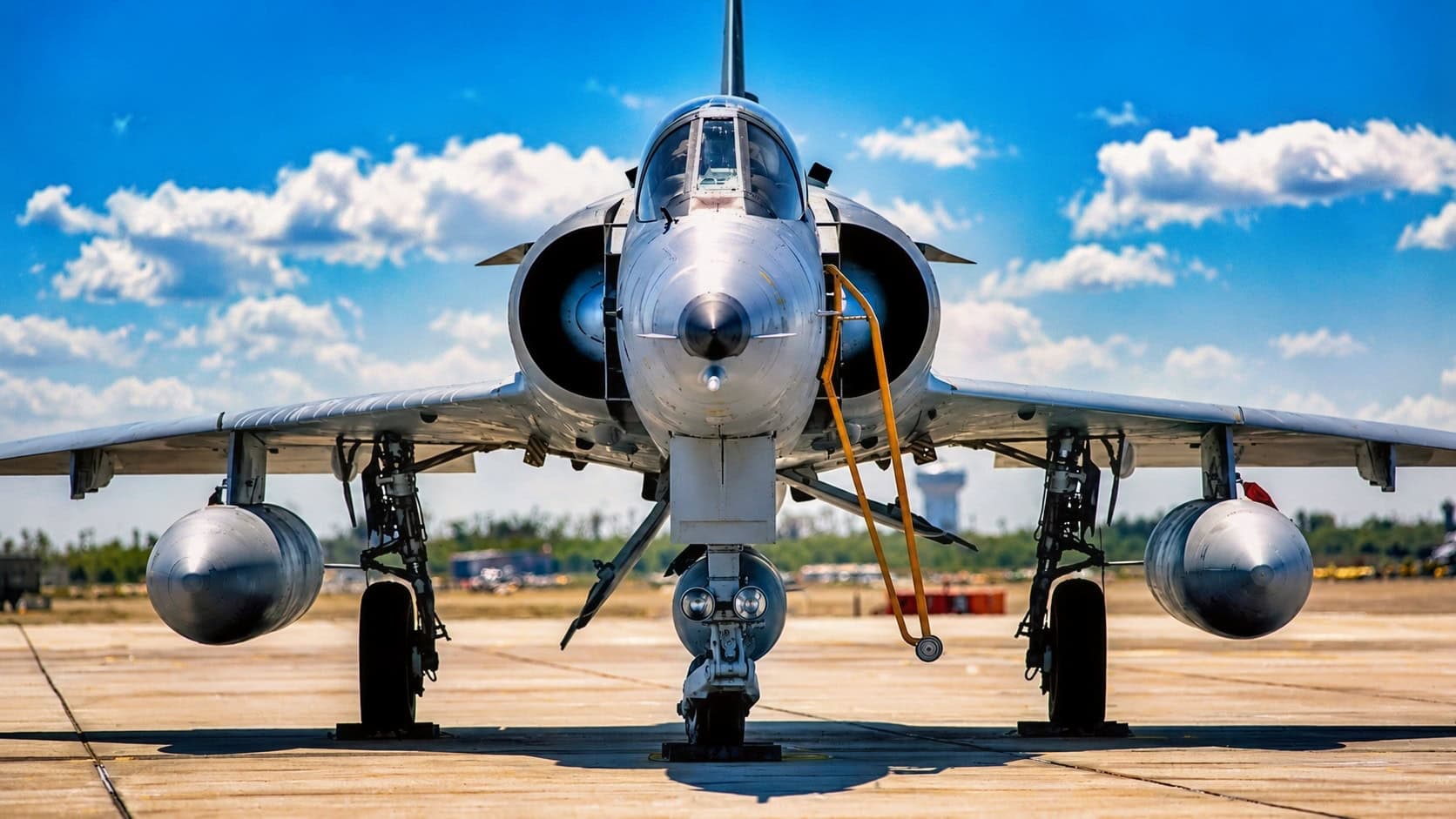
The Kfir fighter exists because an ally betrayed Israel. France built the Israeli Air Force in the 1960s, sold it the Mirage III that won the Six-Day War, and then embargoed Israel and kept 50 Mirage jets Israel had already paid for. Cut off from the supplier its entire fighter fleet depended on, Israel did something audacious: it built the jet itself, with the help of stolen blueprints, and when it turned that copy into a genuinely new fighter, it solved the engine problem not by going back to France but by fitting an American General Electric J79.
The Kfir proved Israel could build an airframe without anyone’s permission.
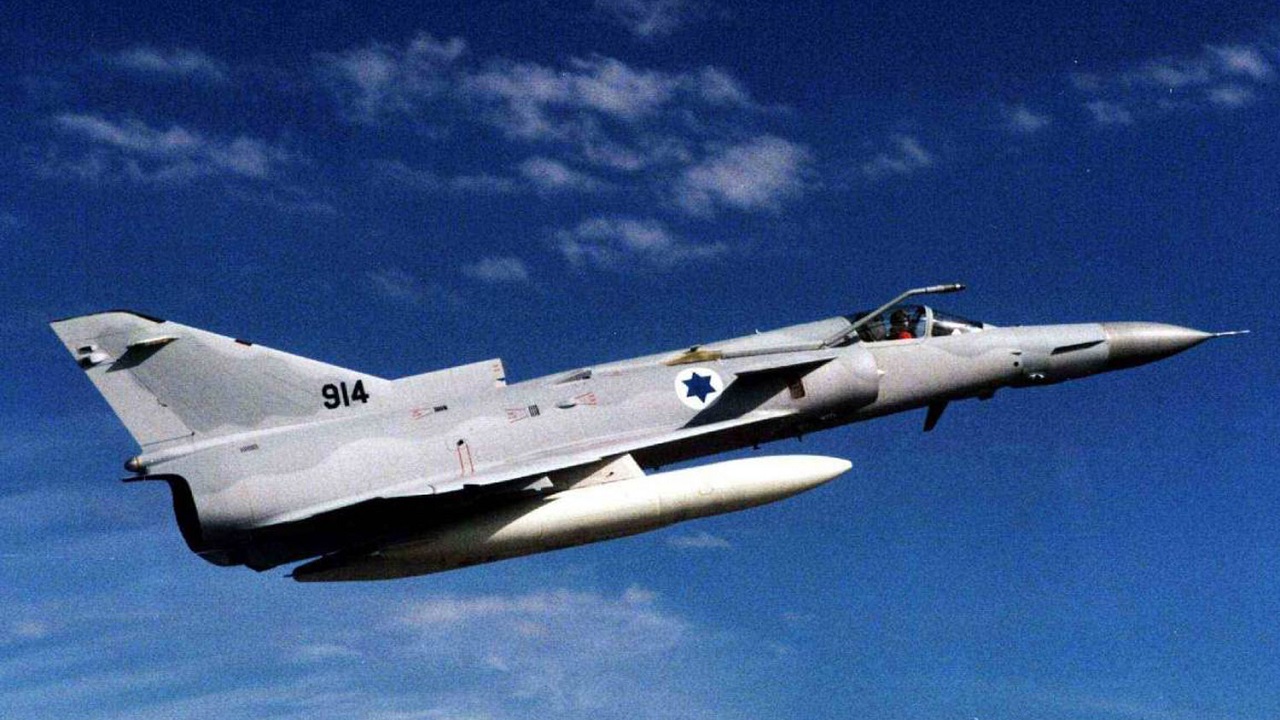
Israel’s Kfir fighter jet. Image Credit: Creative Commons.
It also proved the harder rule running through nearly every national fighter and tank program since, including Israel’s own Merkava: the airframe is the achievable part, but the engine still has to come from abroad, and Israel escaped French dependence only by trading it for American dependence.
The French Betrayal: The Ally That Built Israel’s Air Force
In the 1960s, France was Israel’s primary arms supplier and its closest defense partner, and the delta-winged Dassault Mirage IIICJ was the backbone of the Israeli Air Force. The first Mach 2 aircraft Israel ever acquired, the Mirage was the instrument of one of the most lopsided air victories in modern history, destroying the Egyptian, Syrian, and Jordanian air forces largely on the ground in the opening hours of the June 1967 Six-Day War. Israel’s air power was, in a real sense, French-built, and Israel had ordered 50 more jets to extend it: Mirage 5s, a simplified attack-optimized version of the Mirage designed partly to Israeli specifications, paid for in full.
Then the supplier turned. President Charles de Gaulle, seeking to repair France’s relations with the Arab world, imposed an arms embargo on Israel declared in 1967 and hardened in early 1969 after an Israeli raid on Beirut airport. Dassault finished building the 50 Mirage 5s, but France never delivered them, kept the paid-for jets, later flew them itself, and cut off support for the Mirage fleet Israel already operated.
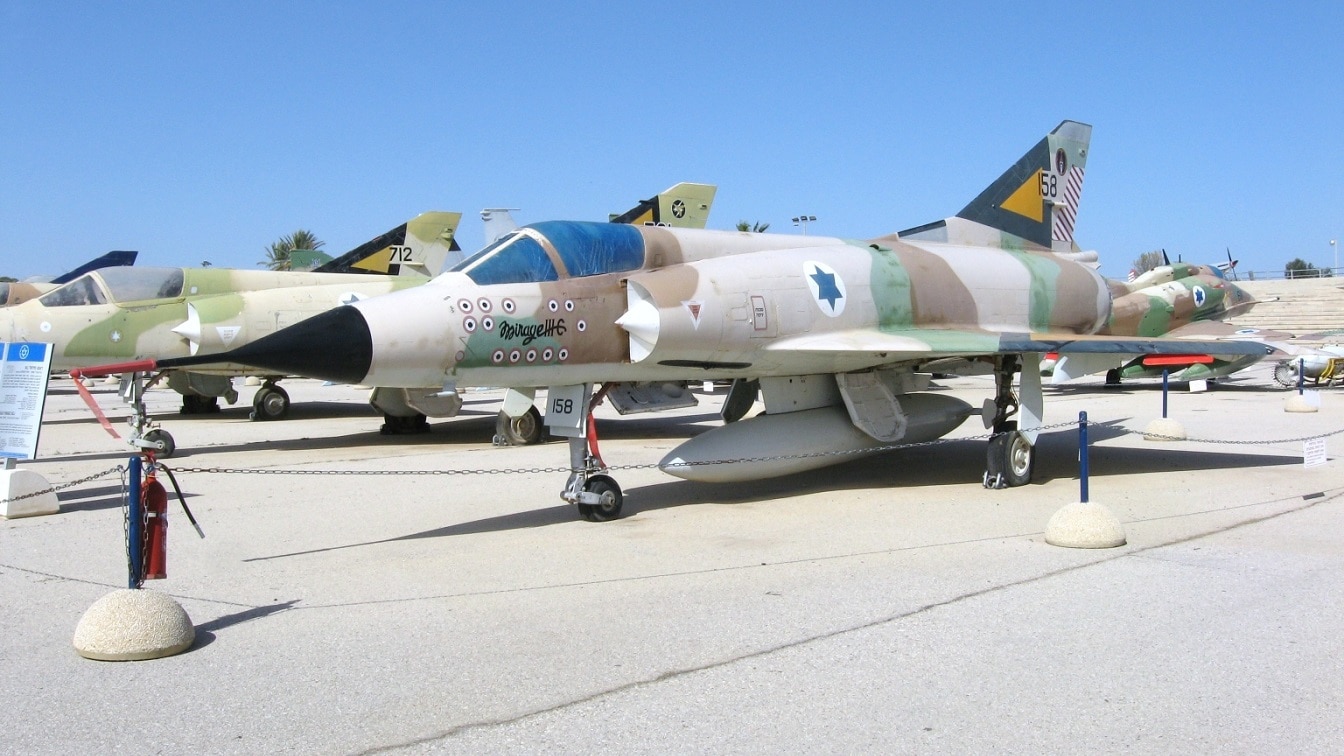
Israeli Air Force Mirage IIICJ 158 at the Israeli Air Force Museum in Hatzerim. Bears 13 kills markings and the colours of 101 Squadron.
The country that had built the Israeli Air Force had pulled the rug out from under it, at the exact moment Israel’s neighbors were taking delivery of ever more capable Soviet fighters. The lesson Israeli planners drew was permanent, and it would shape Israeli defense thinking for decades: never again let a foreign government hold a veto over the country’s ability to defend itself.
The Nesher: Building The Mirage Anyway
Israel’s first response was to build the Mirage 5 without France’s permission. The effort was aided by one of the Cold War’s most famous acts of industrial espionage. Alfred Frauenknecht, a Swiss engineer at a firm involved in licensed Mirage production in Switzerland, passed thousands of pages of technical documents to Israel before he was caught, tried, and imprisoned in 1971. With foreign technical specifications in hand, Israel reverse-engineered the Mirage 5 into the IAI Nesher, or “Vulture,” essentially an Israeli-built Mirage 5, in service by the early 1970s and flown in the 1973 Yom Kippur War.
The familiar version of that story, in which Israel stole the blueprints and built the jet from scratch in defiance of the world, is the documented core, but it is not the whole picture, and the fuller account makes the Kfir’s lesson sharper rather than softer. Some aviation historians argue the reality was messier and more collaborative than the spy-thriller legend allows.
By one well-researched account, the Frauenknecht blueprint story was partly a cover: the Swiss engineer worked chiefly on engine matters and was not positioned to hand over Mirage 5 airframe plans, and in January 1968, the American firm Rockwell International brokered a deal with Dassault for a batch of Mirage 5s to reach Israel through disguised subcontracting, with fuselages, wings, and engines built by separate European suppliers. If that account is right, even the jet that supposedly proved Israel’s total self-reliance leaned more on quiet foreign help, including from the very French manufacturer that had been cut off, than the heroic story admits. The myth is not that espionage happened. The myth is that Israel did it entirely alone.
The Engine Decision: An American Heart
The Nesher carried all the shortcomings of the original Mirage, and Israel wanted a genuinely better fighter. The decision that defined it was the engine. Israel evaluated two foreign powerplants, the British Rolls-Royce Spey turbofan and the American General Electric J79 turbojet, and chose the J79, the same engine that powered the F-4 Phantoms, which the Israeli Air Force was just then beginning to acquire from the United States.
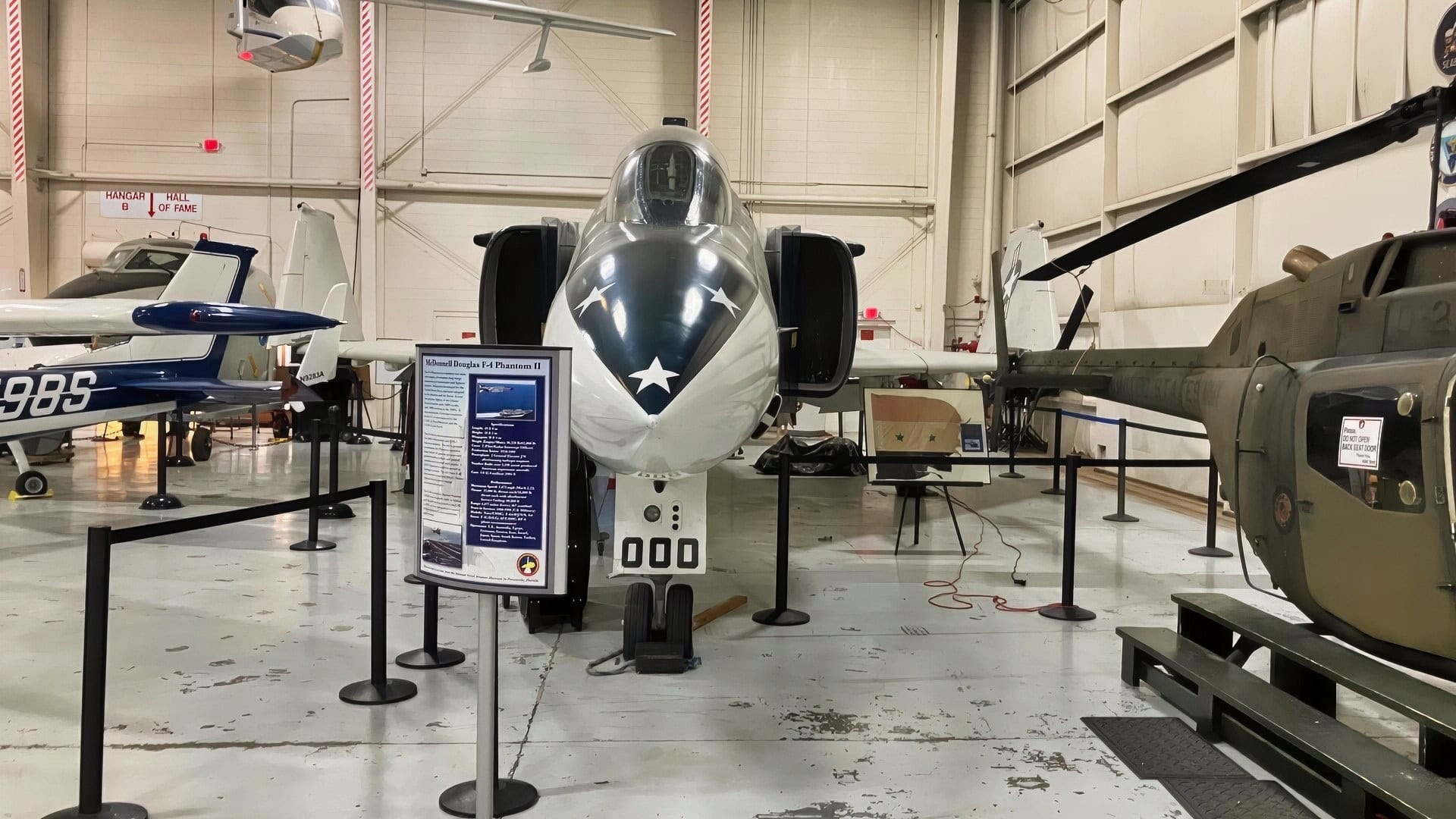
F-4 Phantom Fighter Aviation Museum of Kentucky. Taken by 19FortyFive on March 1, 2026.
Israel built it under license through IAI’s Bedek division. The J79 produced about 11,900 pounds of thrust dry and 17,900 with afterburner, far more than the French Atar it replaced, and the definitive Kfir C7 later flew on an uprated J79 variant with roughly 1,000 pounds more afterburning thrust.
That extra power came at an engineering cost, because the J79 ran considerably hotter than the French engine the Mirage was designed around. IAI’s engineers had to substantially rework the airframe to absorb it, shortening and widening the rear fuselage and adding cooling air intakes, including a distinctive scoop at the base of the tail fin. The definitive Kfir C2 then added the fixed canards behind the cockpit that corrected the Mirage’s handling and gave the jet its aggressive, purposeful silhouette. The Kfir entered Israeli Air Force service in 1975, and on July 27, 1979, escorting reconnaissance aircraft over Lebanon, a Kfir shot down a Syrian MiG-21 with a Shafrir-2 missile, its first and essentially only air-to-air kill in Israeli markings.
The Irony’s Payoff: A New Engine, A New Leash
Israel had built a fighter without France, a genuine national achievement and a point of lasting pride. But the jet that symbolized that independence ran on an American engine, and that engine carried American strings. Because the J79 was a U.S. design, even though Israel built it under license, every Kfir export sale required prior approval from the U.S. State Department, which gave Washington an effective veto over who Israel could sell the jet to and limited its export prospects for years. The Kfir did not end Israel’s dependence on a foreign engine. It swapped a French engine for an American one, and the new supplier held the same kind of leverage the old one had.
This is the same dynamic that binds Sweden’s Gripen today, where the American GE engine gives Washington a veto over Gripen sales, a leverage the United States exercised against Colombia’s purchase in 2025. The Kfir is that story’s ancestor, fifty years earlier. The country that builds the engine holds a leash on the finished aircraft, and the country that buys the engine accepts the leash as the price of having a jet at all.
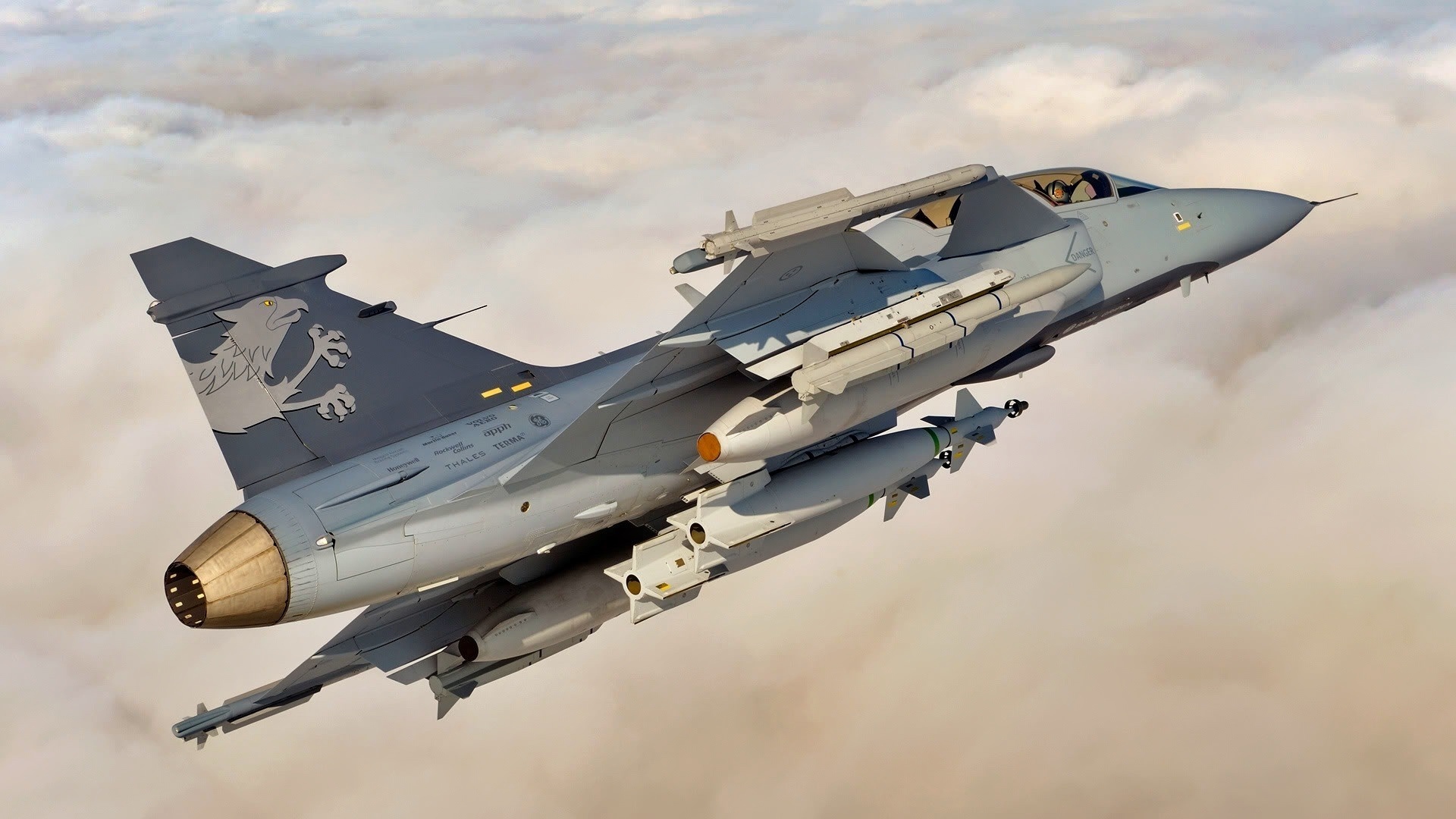
JAS 39. Image Credit: Creative Commons.
The Afterlife: Overshadowed At Home, A Long Life Abroad
The Kfir’s front-line career in Israel was short because Israel’s deepening relationship with the United States soon gave it far more capable American jets. The F-15 and F-16 assumed air superiority, and the Kfir was relegated to the ground-attack role; it was retired from Israeli Air Force service in 1996.
Its life abroad lasted far longer. Colombia, Ecuador, and Sri Lanka flew the Kfir, several of them in combat and several receiving deep upgrades that kept the type flying for decades after Israel let it go.
Its most distinctive second career came in American skies. Between 1985 and 1989, the U.S. Navy and Marine Corps leased 25 early Kfir C1s, designated them the F-21A Lion, and flew them as unarmed adversaries in dissimilar air combat training, the discipline of pitting pilots against aircraft that fly nothing like their own. Twelve went to the Navy’s VF-43 “Challengers” at NAS Oceana in Virginia, and thirteen to the Marines’ VMFT-401 “Snipers” at MCAS Yuma in Arizona.
The reason the Navy wanted them was specific: by the 1980s, the principal threat was the fast Soviet MiG-23, and the older aggressor jets could not replicate its performance, but the Kfir’s acceleration and high speed could, letting instructors give American pilots a realistic high-performance opponent. Painted in Soviet-style schemes, the Israeli jets spent the late 1980s dogfighting U.S. Navy F-14s and Marine F/A-18s in mock combat over the American desert, and private adversary-training contractors would fly upgraded Kfirs as “red air” over U.S. ranges for years afterward.
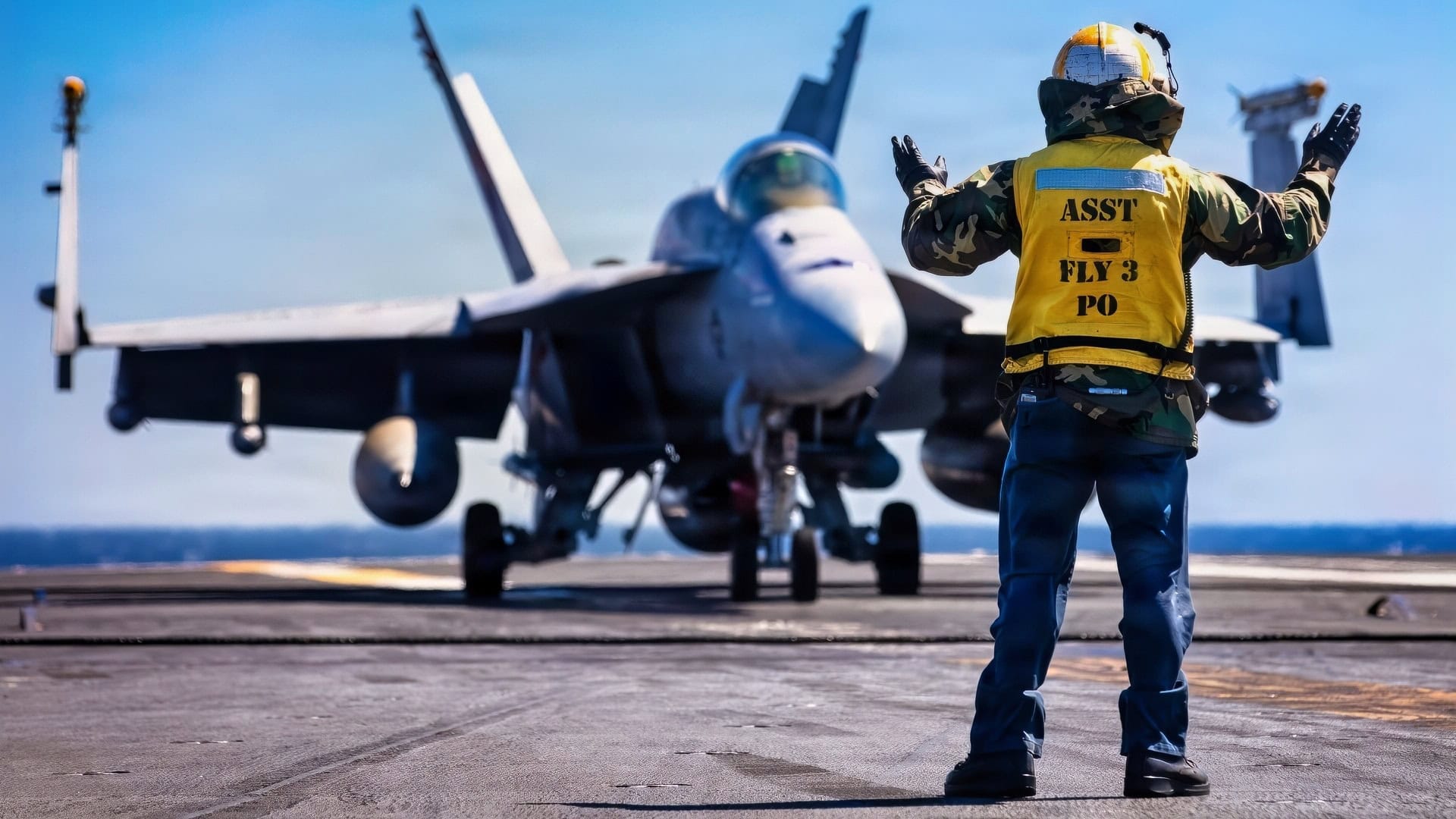
A U.S. Sailor signals to an F/A-18E Super Hornet aircraft, attached to Strike Fighter Squadron 31, on the flight deck of the world’s largest aircraft carrier, USS Gerald R. Ford (CVN 78), while underway during Operation Epic Fury, March 9, 2026. (U.S. Navy photo)
The Bigger Pattern: The Origin Chapter Of A Fifty-Year Rule
The Kfir is the original chapter of a story that has repeated across nearly every national armor and fighter program since. Turkey’s Altay tank was left without a heart when Germany imposed an embargo on its engine. South Korea’s K2 ran on a German engine and transmission because its own powerpack failed testing. Sweden’s Gripen and Turkey’s Kaan fly on American engines, giving Washington a veto over their exports. India’s Tejas runs on a General Electric engine because its indigenous Kaveri program failed. Israel’s own Merkava tank, the most sovereignty-driven armor program in the world, chose an American-built, German-designed powerpack and secured it through U.S. funding.
The Kfir set the template for all of it in the 1970s. Cut off by an embargo, Israel proved it could reverse-engineer and build a competitive airframe on its own, or close to it. What it could not do, and did not try to do, was build the engine. The engine came from America, and the American engine then gave Washington the same kind of veto over the Kfir that France’s control had once represented.
The hull, or the airframe, is the part that a given country can master under pressure. The engine is the part that a handful of firms in a handful of countries build for everyone else, and whoever builds it holds leverage over the finished weapon. That was true for an embargoed Israel in 1973, and it is true for Turkey, South Korea, India, and Sweden today.
The Verdict: You Can Build The Jet, Not The Independence
The Kfir is exactly what Israel built it to be: proof that a small country, betrayed by its main arms supplier and embargoed at its most vulnerable moment, could build its own fighter rather than surrender its air superiority.
That achievement was real, and the jet flew, fought, and served air forces around the world for half a century. The exception was the one part Israel could not make, the engine, and the exception decided everything that followed, because the American engine that freed Israel from France also tied it to the United States and let Washington control where the jet could go.
Israel set out to escape its dependence on a foreign supplier, and what it actually did was change suppliers. The airframe became Israeli; the heart stayed foreign.
About the Author: Harry J. Kazianis
Harry J. Kazianis (@Grecianformula) was the former Senior Director of National Security Affairs at the Center for the National Interest (CFTNI), a foreign policy think tank founded by Richard Nixon based in Washington, DC. Harry has over a decade of experience in think tanks and national security publishing. His ideas have been published in the NY Times, The Washington Post, The Wall Street Journal, CNN, and many other outlets worldwide. He has held positions at CSIS, the Heritage Foundation, the University of Nottingham, and several other institutions related to national security research and studies. He is the former Executive Editor of the National Interest and the Diplomat. He holds a Master’s degree focusing on international affairs from Harvard University.

