
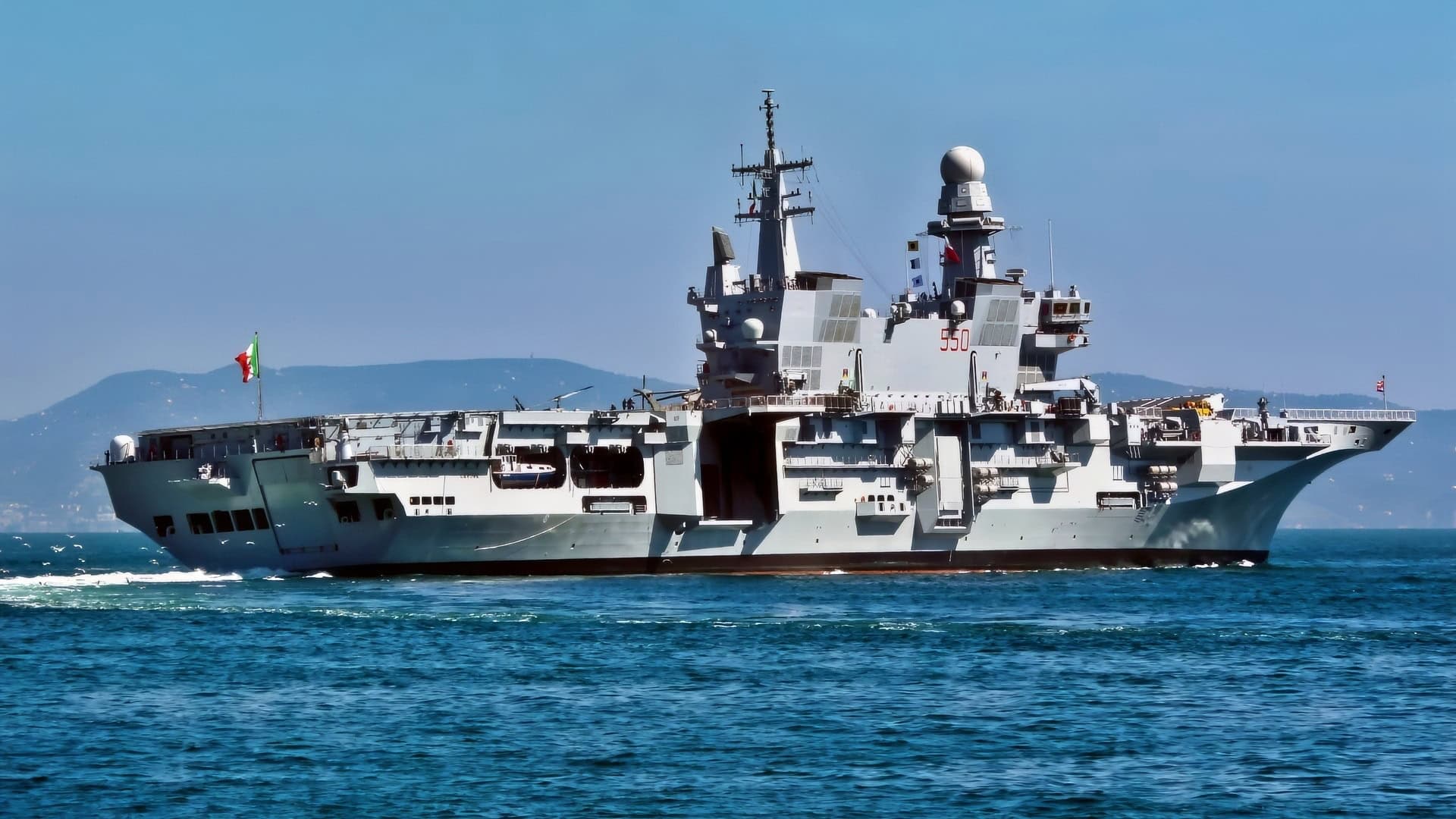
The United States leads the world as the foremost operator of aircraft carriers, and, really, no one even comes close. China is perhaps the closest competitor with three operational carriers, two of which are based on older Soviet designs. The Russians technically have a carrier, but it has been undergoing maintenance since 2018, and at this point, there is little chance it will ever hit the waves again. And then there is Italy. The Italian Navy, unbeknownst to most people, operates one modest aircraft carrier: Portaerei Cavour. Cavour is a comparatively small carrier, capable only of supporting V/STOL aircraft and helicopters, and is currently the flagship of the Italian Navy.
Despite its comparatively small size, the carrier plays a significant role in Italy’s geopolitical strategy, enabling the country to extend its reach far beyond its borders.
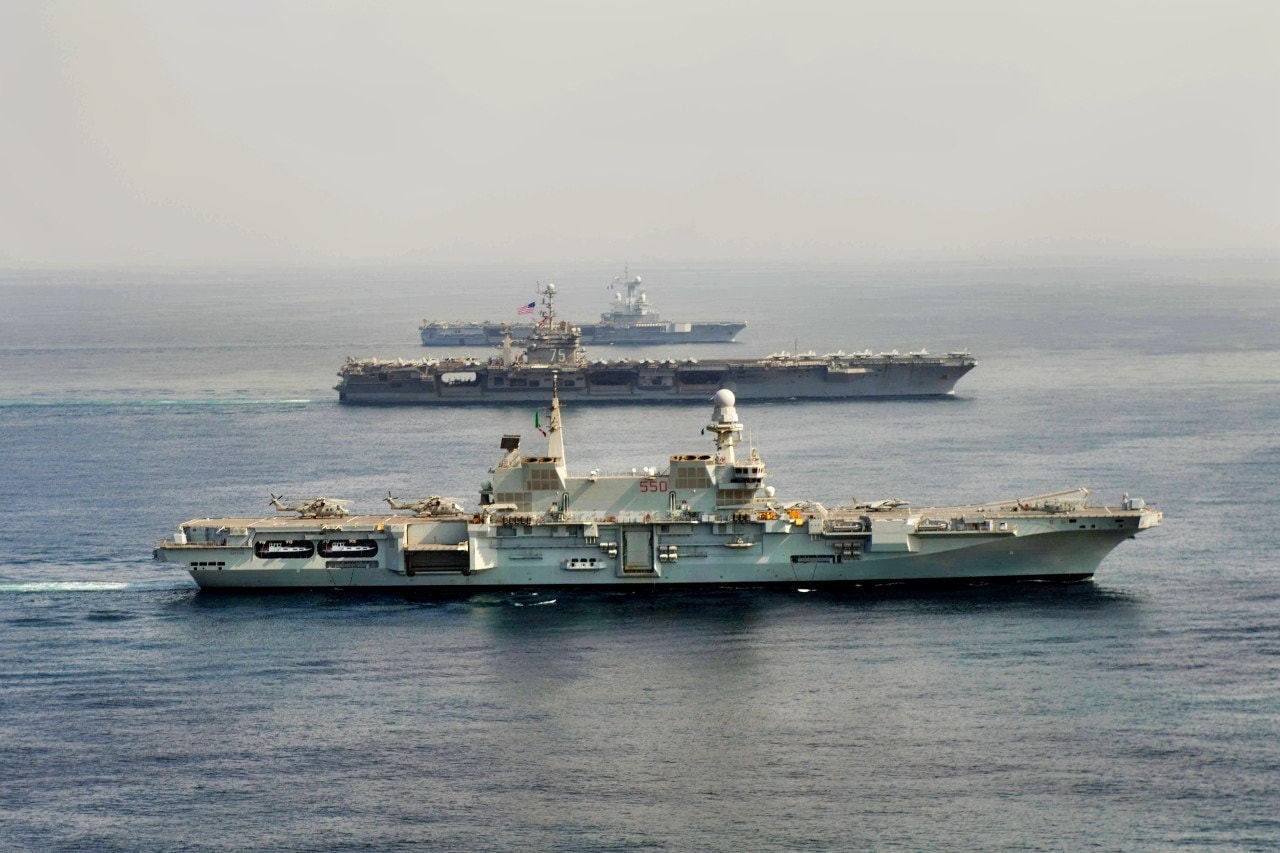
(Jan. 3, 2014) The Italian navy aircraft carrier ITS Cavour (CVH 550), front, the aircraft carrier USS Harry S. Truman (CVN 75) and the French navy aircraft carrier Charles de Gaulle (R 91), conduct operations in the Gulf of Oman. Harry S. Truman, flagship for the Harry S. Truman Carrier Strike Group, is conducting operations with Task Force 473 to enhance levels of cooperation and interoperability, enhance mutual maritime capabilities and promote long-term regional stability in the U.S. 5th Fleet area of responsibility. (U.S. Navy photo by Mass Communication Specialist 3rd Class Ethan M. Schumacher/Released)
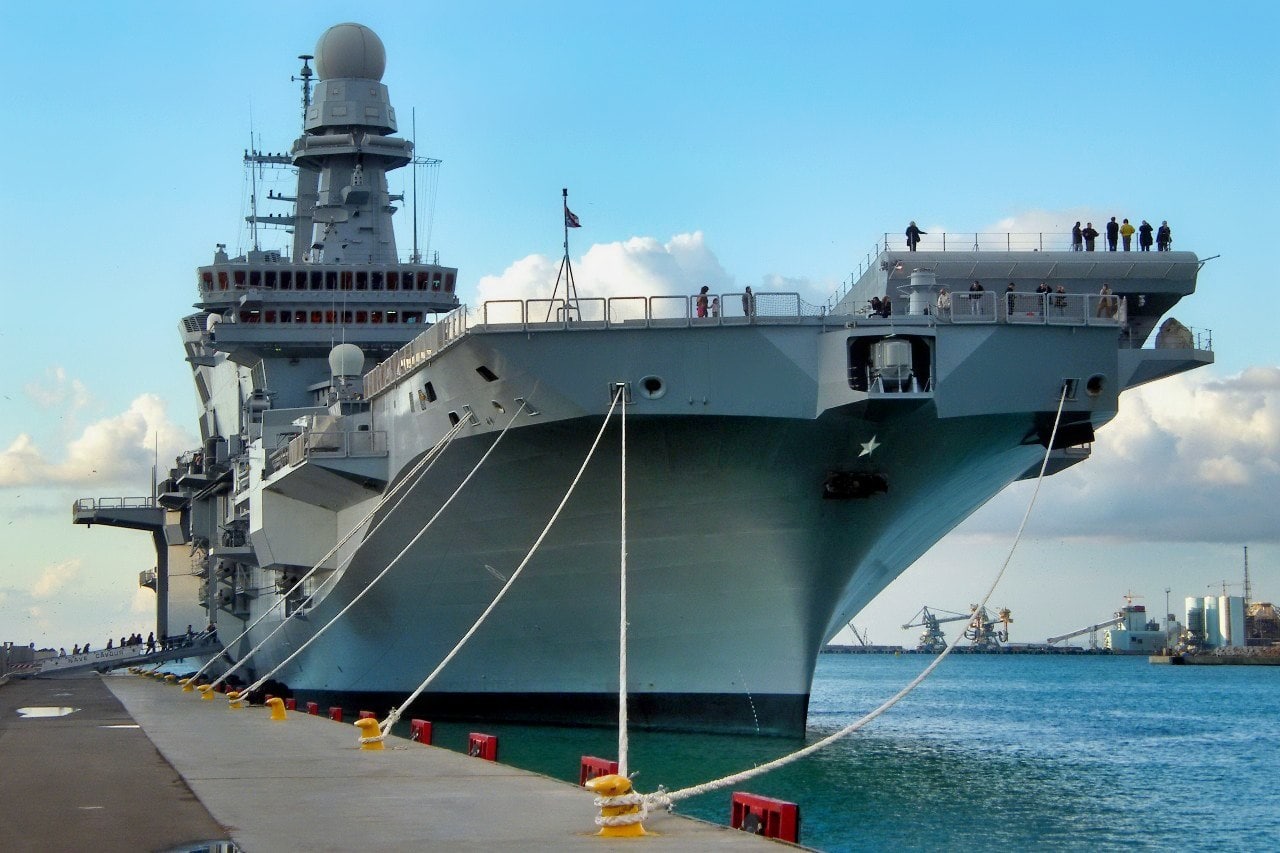
ITS Cavour at Port. Image Credit: Creative Commons.
Italy’s Aircraft Carrier: Construction and Modernization
Construction of Cavour was undertaken by Fincantieri, Italy’s primary shipbuilding company, with work beginning in 2001. The vessel was launched in 2004 and entered service after several years of testing and fitting out.
Measuring approximately 244 meters in length and displacing around 30,000 tons at full load, Cavour is smaller than the supercarriers operated by the U.S. Navy, but it is carefully designed for flexibility and efficiency. Its propulsion system combines diesel engines and gas turbines, allowing it to reach speeds exceeding 27 knots. The ship typically carries a crew of about 1,200 personnel, including both the ship’s company and the embarked air wing.
Cavour was temporarily out of action for several years as it underwent extensive modernization. Between 2018 and 2021, Cavour received upgrades to its flight deck and aviation support systems to handle fifth-generation F-35B stealth fighters.
The ship also received updates to its communication and command systems, ensuring that it could operate within modern networked warfare frameworks. After completing these upgrades, Cavour traveled to the United States for qualification trials with the F-35B, successfully demonstrating its ability to operate the aircraft before returning to service with the Italian Navy.
Cavour Carrier: Design and Capabilities
The Cavour’s flight deck was specifically designed to facilitate V/STOL operations. The deck includes a ski-jump ramp at the bow, enabling aircraft to launch with shorter takeoff runs. Initially, the ship’s air group consisted mainly of AV-8B Harrier II jets along with a variety of helicopters, including EH101 and SH-90 models for anti-submarine warfare, transport, and search-and-rescue missions.
However, the carrier can now accommodate F-35B VTOL stealth fighters. This transition has greatly expanded the ship’s operational potential, enabling it to conduct more advanced strike missions, surveillance, and coordination tasks in modern combat environments.
In terms of defense, Cavour is equipped with a range of systems designed to protect it from threats such as incoming missiles, aircraft, and small surface craft. Its arsenal includes Aster 15 surface-to-air missiles, which are part of a sophisticated air defense system, as well as OTO Melara 76 mm naval guns and close-in weapon systems.
These systems are supported by modern radar and electronic warfare equipment that enables the ship to detect threats at a distance and respond effectively. Although it is not intended to operate alone in high-threat environments, Cavour can defend itself while working in conjunction with escort vessels such as frigates and destroyers.
Small but Mighty: The Importance of Italy’s Lone Aircraft Carrier
Cavour plays a crucial role in Italy’s ability to operate across the Mediterranean and beyond. Italy’s geographic position places it near key maritime routes and regions of instability, necessitating a strong and capable Navy.
The aircraft carrier, in conjunction with the U.S. Navy and other NATO navies, plays an important role in protecting vital trade routes and other objects of interest in the Mediterranean. While Cavour is not a nuclear-powered carrier, the ship has still taken part in patrols around the world, sometimes traveling as far as Japan.
Italy, despite possessing a much smaller fleet than the U.S., still holds an important seat at the table in matters of international trade and maritime travel.
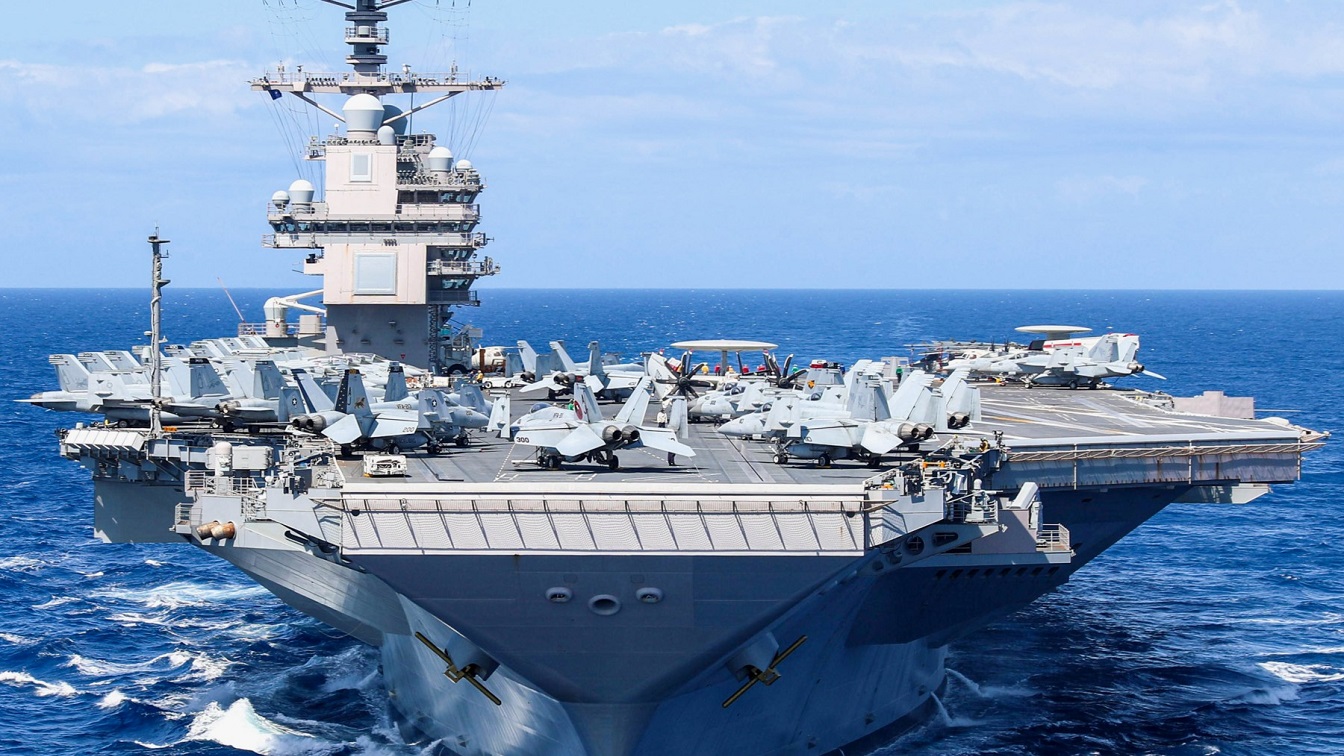
Ford-Class. Ford-Class Aircraft Carrier USS Ford.
Compared to the 11 supercarriers operated by the United States, Cavour seems small and unimpressive. It is smaller than the massive nuclear-powered carriers of the U.S., which can carry dozens of aircraft and operate globally for extended periods without refueling.
However, it is conceptually similar to other European vessels, such as Spain’s Juan Carlos I and, to some extent, the United Kingdom’s Queen Elizabeth-class carriers, though the latter are significantly larger. What distinguishes Cavour is its balance between air power, amphibious capability, and support functions, allowing it to perform a wide range of tasks without requiring a fleet of specialized ships.
True, Cavour pales in comparison to the Nimitz- or Ford-class ships, but Italy does not need a supercarrier (nor can it afford one). What it needs is a flattop capable of securing Italy’s interests in the Mediterranean, which is exactly the capabilities that the carrier can provide to the Italian Navy.
Is it the most capable carrier in the world? No, but it can meet the needs of the Italian Navy.
About the Author: Isaac Seitz
Isaac Seitz, a Defense Columnist, graduated from Patrick Henry College’s Strategic Intelligence and National Security program. He has also studied Russian at Middlebury Language Schools and has worked as an intelligence Analyst in the private sector.