
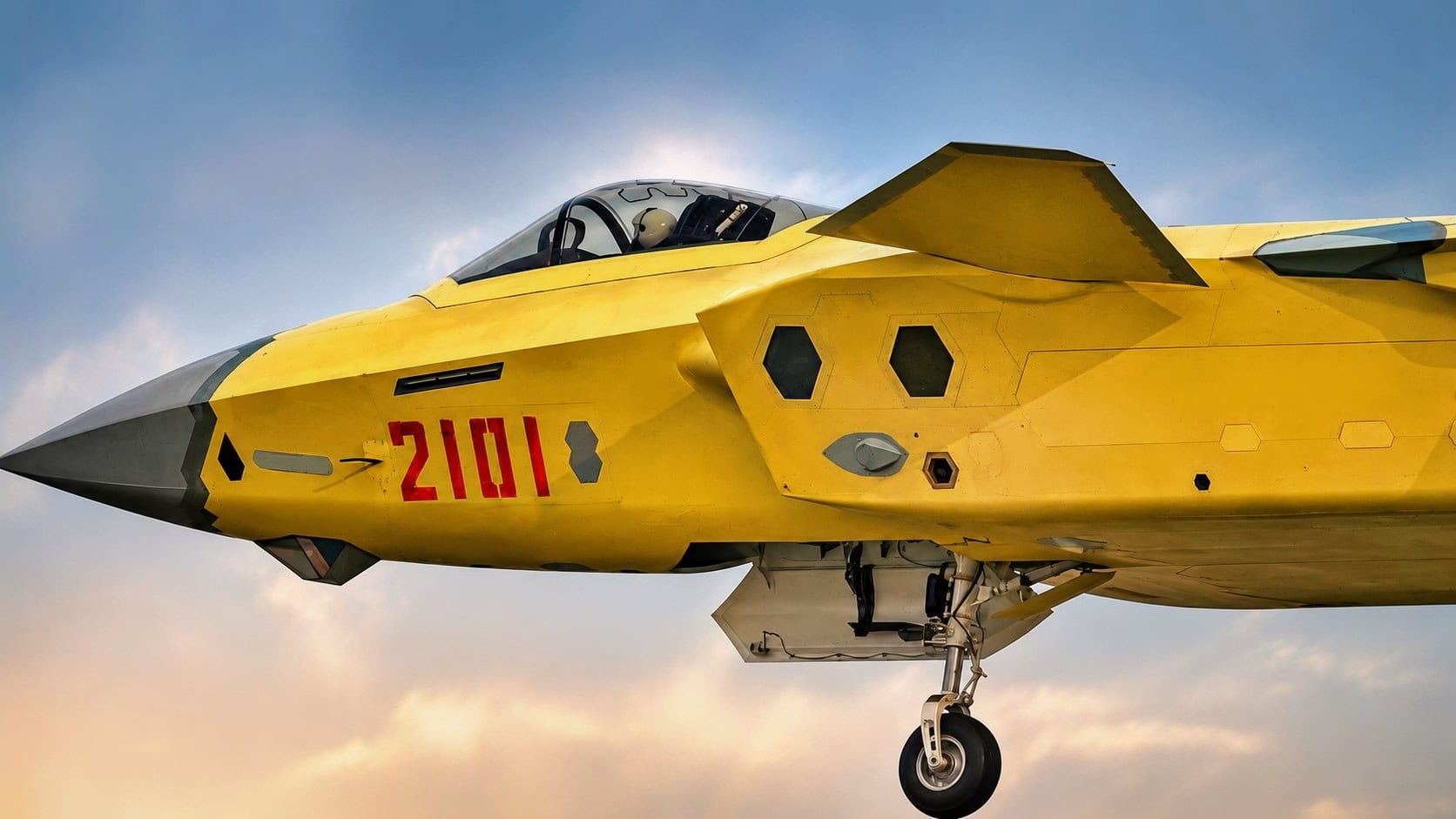
China’s J-20 “Mighty Dragon,” the People’s Liberation Army Air Force’s frontline stealth fighter, is missing something almost every other fighter on Earth carries. It has no gun. There is no internal cannon anywhere on the aircraft, making it the only fifth-generation fighter in service built that way. This was not an oversight or a gap to be filled later. China decided the gun was not worth its cost, that a stealth fighter built to kill at long range with missiles has no business in a close-in dogfight, and that the weight, volume, and radar-signature penalty of a cannon buys nothing the J-20 needs. It is a coherent bet about how future air wars will be fought. It is also a bet the United States already made, and lost, once. In the 1960s, American designers left the gun off the F-4 Phantom for the same reasons, certain that the age of the dogfight was over and missiles would settle everything from a distance. Then came Vietnam, where the missiles failed in the close-range fights the doctrine had ruled out, and Phantom crews found themselves staring at enemy fighters with no weapon that would work. The US put the gun back and has kept one on its fighters ever since. Now China has made the same choice the US made before that lesson, and the open question is whether Beijing has seen something Washington missed or is about to learn the hard way.
The Only Fifth-Generation Fighter Without A Gun
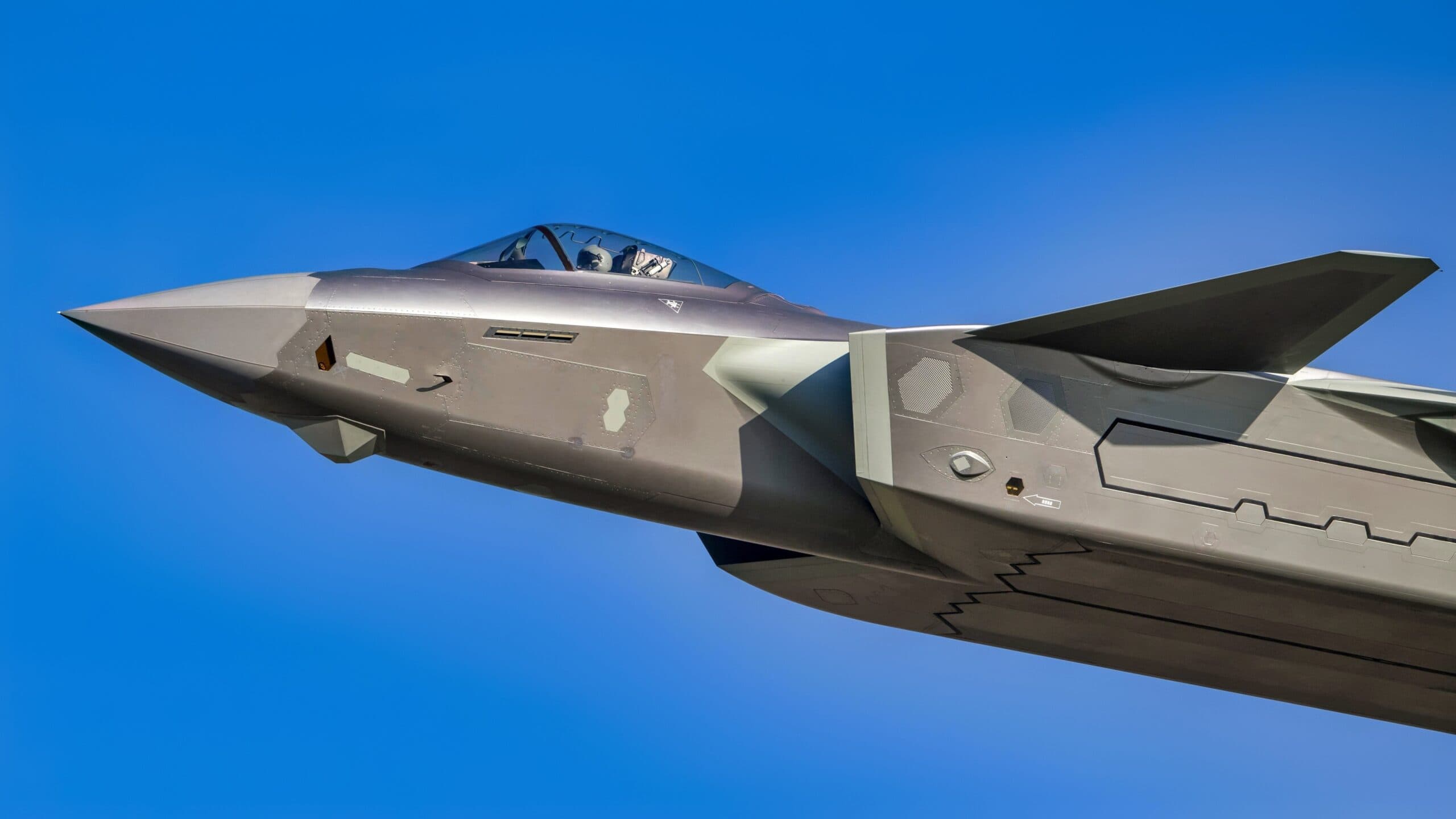
J-20 Fighter. Image Credit: Creative Commons.
Observers suspected the J-20 lacked a cannon for years, because photography of the jet since its first flight in January 2011 never showed a gun port or the telltale bulge of an internal cannon, and it never appeared with an external gun pod.
The absence was confirmed by aviation journalist Andreas Rupprecht in the January 2019 issue of Combat Aircraft, and it was effectively shown to the public at the November 2018 Zhuhai air show, where a pair of J-20s opened all their weapons bays in front of the crowd, revealing missiles but no guns. The 67-foot jet carries its weapons in three internal bays, with one short-range PL-10 infrared missile in each of the two bays along the intake “cheeks,” the rough equivalent of the American AIM-9 Sidewinder, and up to four long-range radar-guided PL-15 missiles in the larger centerline bay, the rough equivalent of the AMRAAM. All missiles, no cannon.
That makes it a genuine outlier, because every other fifth-generation fighter flying keeps a gun. The American F-22 has an internal 20mm M61 Vulcan. The F-35A carries an internal 25mm cannon, and the F-35B and F-35C carry the same gun in an external pod.
Even Russia’s Su-57, China’s fellow fifth-generation operator, mounts a 30mm internal cannon in its wing root. Among the world’s in-service stealth fighters, the J-20 is the only fifth-generation fighter to forgo a gun entirely.
China’s Bet Against The Dogfight
The omission is doctrine, not a defect, and the reasoning behind it is internally consistent.
The first piece is stealth. Every opening in a low-observable aircraft is a potential break in its radar-defeating skin, and a gun port, even behind a stealthy door, is one more seam on a jet whose entire value rests on not being seen.
The second is space and weight. A cannon, its ammunition, and its mounting hardware take up internal volume and add mass that a long-range design would rather spend on fuel, sensors, and missiles.
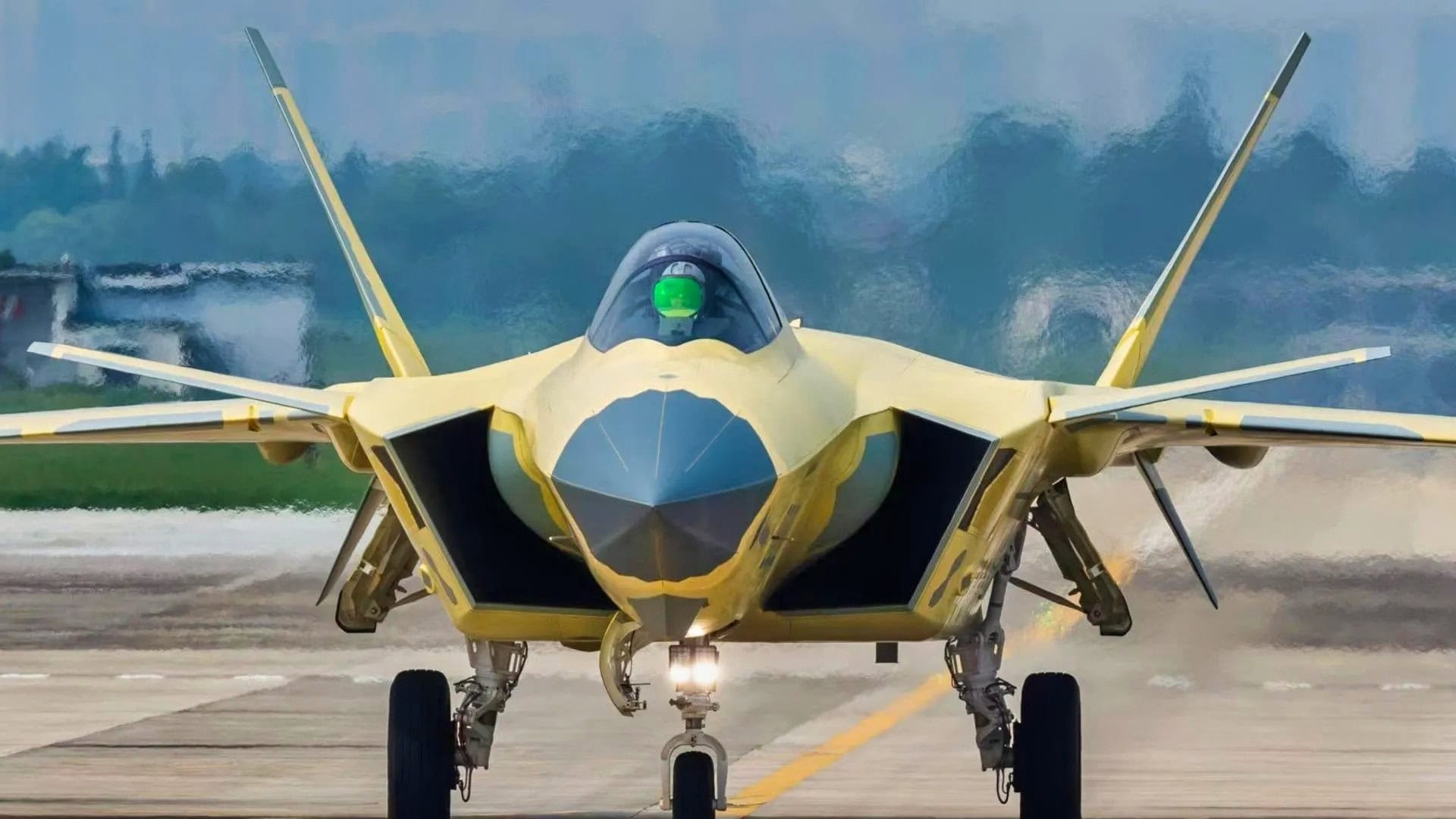
China J-20 Fighter. Image Credit: Creative Commons.
The third and most important is the mission. The J-20 is widely assessed as a long-range interceptor and penetration platform, a “first-look, first-shot” fighter meant to slip in and kill high-value support aircraft like aerial tankers and airborne early-warning planes from a distance, and to avoid the close-in merge altogether.
A former F-22 pilot put the logic plainly. Retired US Marine Corps Lt. Col. David Berke, who also commanded an F-35B squadron, told Business Insider that the Chinese “probably want to avoid a dogfight at all costs,” because the cannon serves one narrow purpose, useful only in the dogfight, and that is not where China wants the J-20 to be or what it wants to invest in.
Berke also made the point that cuts the other way for everyone, not just China, noting the United States itself likely has not scored an air-to-air gun kill in decades. By that reading, the gun is an answer to a question the J-20 intends never to ask.
America Made The Same Bet On The F-4 Phantom
The trouble is that the United States once reasoned itself into the identical choice, and reality refused to cooperate.
When the F-4 Phantom was designed in the late 1950s and early 1960s, the prevailing belief was that air-to-air missiles had made the gun obsolete and that the next war would be settled beyond visual range. So the early Phantoms, the F-4B, F-4C, and F-4D, were built without an internal gun, leaving it off for aerodynamic cleanness and weight saving and relying entirely on missiles.
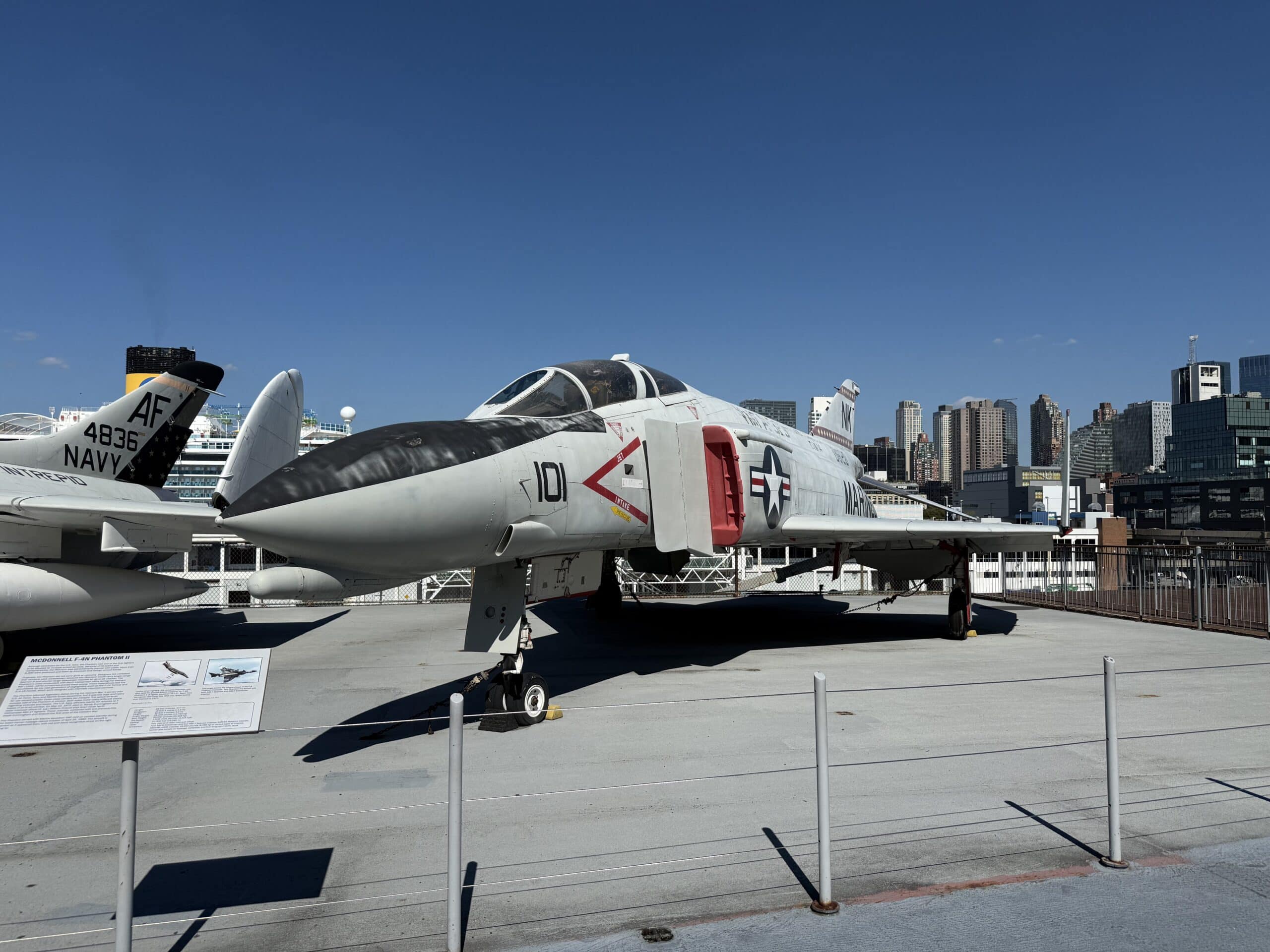
F-4 Phantom. 19FortyFive.com Photo.
Vietnam took that assumption apart. The missiles of the era, the early AIM-7 Sparrow and AIM-9 Sidewinder, and the especially poor AIM-4 Falcon, were unreliable in the swirling close fights, with minimum engagement ranges and firing sequences that often failed against a maneuvering target.
The rules of engagement usually required a pilot to visually identify an enemy before firing, which negated the whole point of a beyond-visual-range missile and dragged fights into close range. Phantom crews repeatedly ended up behind an enemy jet and too close to fire a missile, with no gun to use.
The stopgap was an external gun pod, the SUU-23 housing an M61 Vulcan, but it proved unworkable in practice, draggy, inaccurate without constant boresighting, and forcing the loss of the centerline fuel tank. John Chesire, a Navy pilot who flew 197 combat missions in the Phantom, summed up the feeling of being in that cockpit, saying simply, “I needed a gun, and I really wished I had one.”
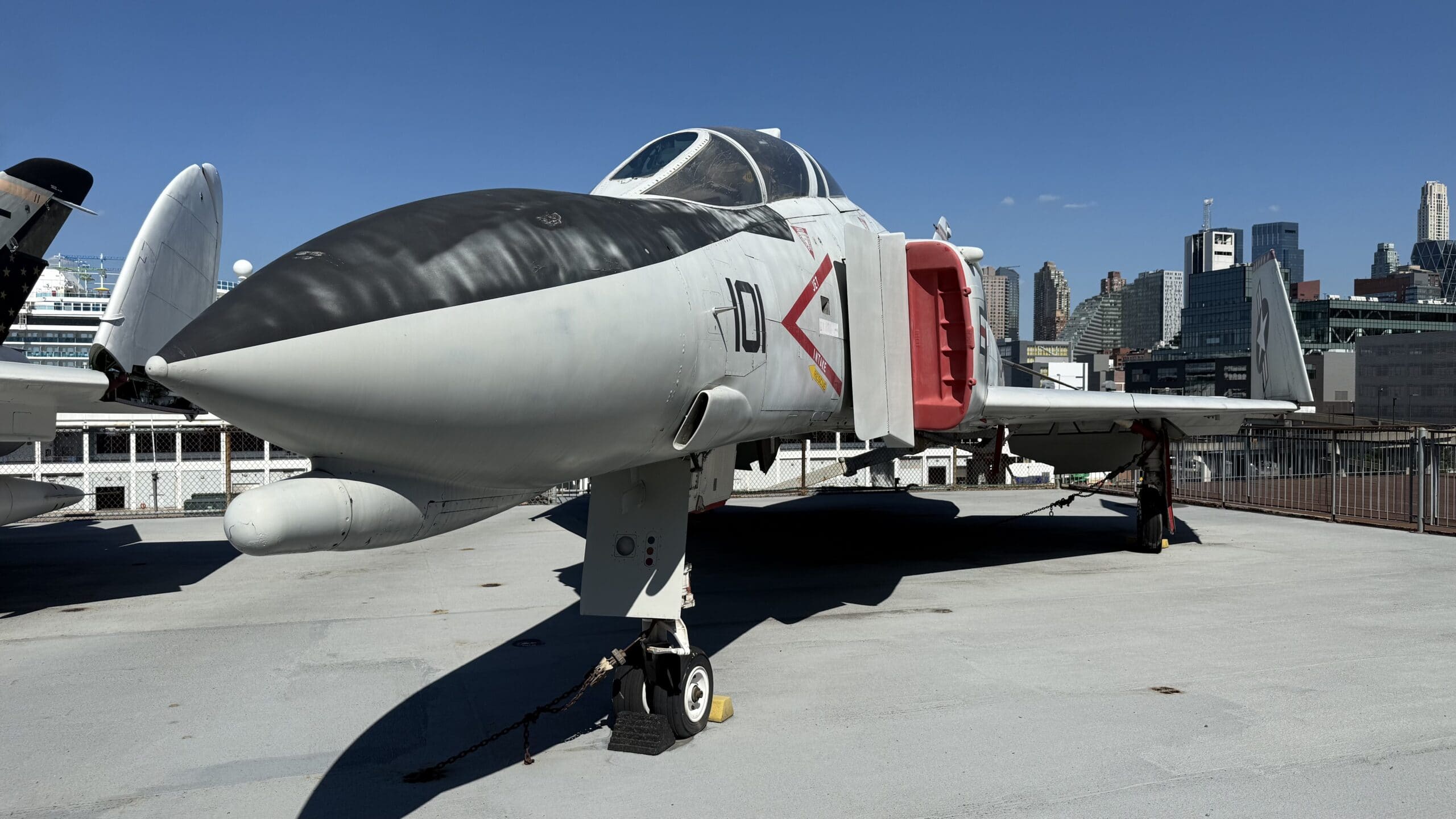
F-4 Phantom. 19FortyFive.com Photo.
The fix came with the definitive F-4E, which added an internal M61A1 Vulcan with hundreds of rounds in the nose, and combat had by then made it clear that dogfights weren’t dead. Nearly every American fighter since has carried a gun.
The Lesson Was More Than A Gun
The honest version of the Vietnam story is more complicated than “they forgot the gun and paid for it,” and the complication matters for judging China. The internal cannon was only part of the reckoning. Of all the F-4E kills in Vietnam, only a handful were actually scored with the gun, and the larger fixes were about people and tactics, not just hardware.
The Navy overhauled air-to-air training with its Top Gun school, the Air Force answered with aggressor squadrons and Red Flag, and crews moved from rigid missile-envelope thinking to fluid energy fighting.
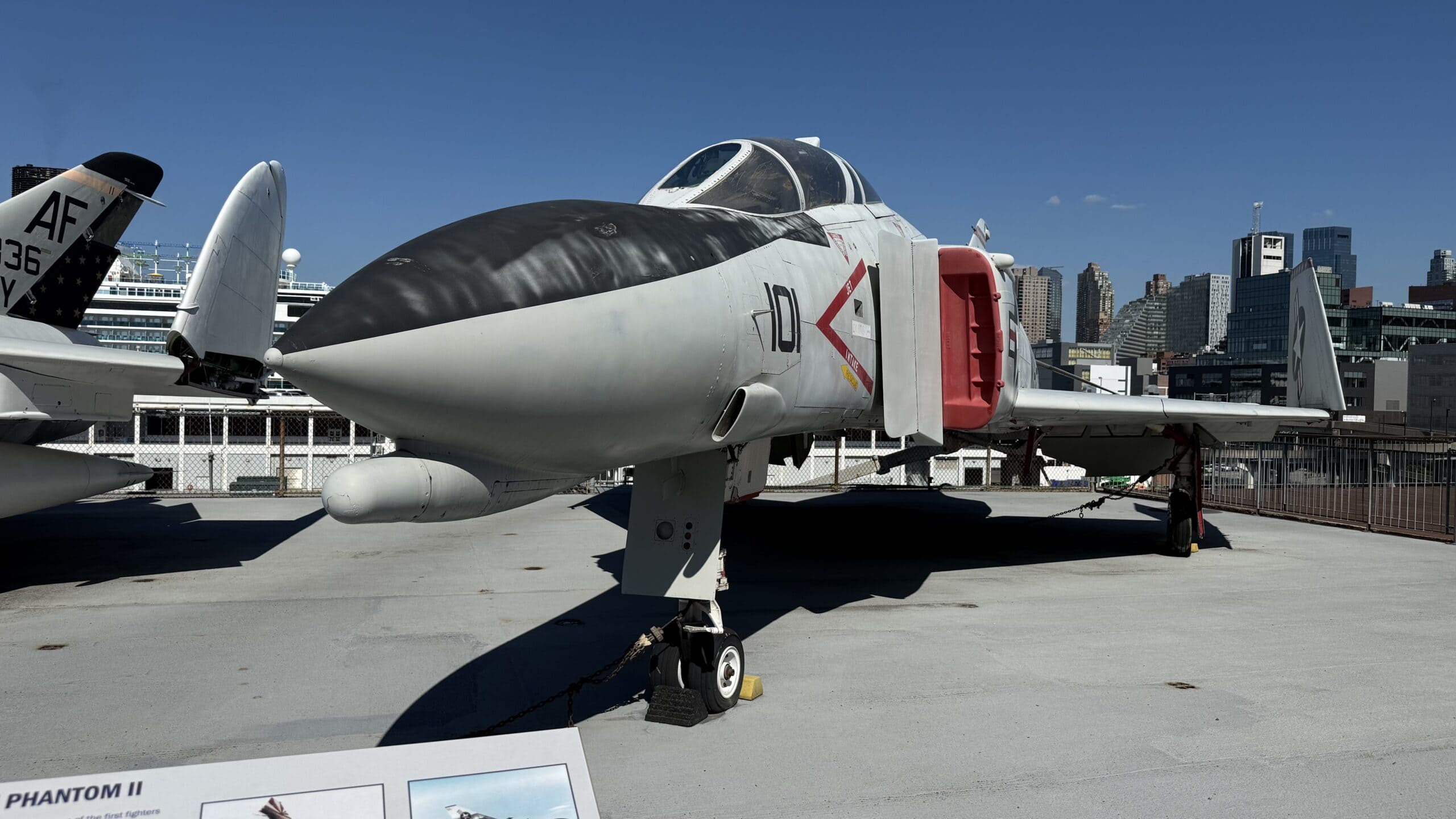
F-4 Phantom. 19FortyFive.com Photo.
The missiles themselves improved, with the AIM-7E-2 “Dogfight Sparrow” becoming the preferred weapon. The gun became the lasting symbol of the lesson, but the real lesson was broader: that the dogfight had not gone extinct and that a force that trains and equips as if it had will be punished. That is the lesson China is implicitly betting no longer applies.
Has Air Combat Finally Changed?
There is a serious case to be made that Beijing is right and that the situation is not the same as in 1968. The argument is that the specific conditions that created the Vietnam lesson have genuinely changed. Modern beyond-visual-range missiles like the AMRAAM and the PL-15 are vastly more reliable and far longer-ranged than the temperamental weapons of the 1960s.
Stealth and networked sensors are designed precisely so that a fighter like the J-20 can detect and shoot first and is never forced into a merge in the first place, and modern sensor fusion reduces the old reliance on close visual identification. China’s entire doctrine is built not to win the dogfight but to make it irrelevant, and as analysts have noted in head-to-head comparisons with the F-22, the J-20’s long range and missile-first design may matter more in the Pacific than close-in agility ever would. On that view, China is not ignoring Vietnam. It is betting the war that produced the lesson cannot happen the same way again.
The risk is the one the United States already ran. If a J-20 is ever forced into a close fight, by a malfunction, a surprise merge, an out-of-missiles situation, or electronic countermeasures defeating its missiles, it has no last-resort weapon.
A gun is immune to the things that degrade a missile, since flares, chaff, and jamming cannot fool it, and it does not depend on the aircraft’s radar to work, which is exactly why pilots have valued it as a backup long after the missile became the primary weapon.
The telling detail is that everyone else hedged, and China did not. The F-22 and the F-35 both kept a gun, and so did Russia’s Su-57, each of them building in the close-range fallback that the J-20 deliberately left out.
China has built a genuinely impressive aircraft, and the no-gun choice is logical given the war it expects to fight.
But it is a gamble on one specific theory of air combat, the same theory the United States held with total confidence right up until Vietnam taught it otherwise.
Whether China has correctly judged that long-range missile combat has finally made the gun obsolete, or is about to relearn a sixty-year-old lesson in some future fight over the Pacific, is genuinely unknown. It will remain unknown until a J-20 is tested in real combat, and none ever has been.
About the Author: Harry J. Kazianis
Harry J. Kazianis (@Grecianformula) was the former Senior Director of National Security Affairs at the Center for the National Interest (CFTNI), a foreign policy think tank founded by Richard Nixon based in Washington, DC. Harry has over a decade of experience in think tanks and national security publishing. His ideas have been published in the NY Times, The Washington Post, The Wall Street Journal, CNN, and many other outlets worldwide. He has held positions at CSIS, the Heritage Foundation, the University of Nottingham, and several other institutions related to national security research and studies. He is the former Executive Editor of the National Interest and the Diplomat. He holds a Master’s degree focusing on international affairs from Harvard University.

