
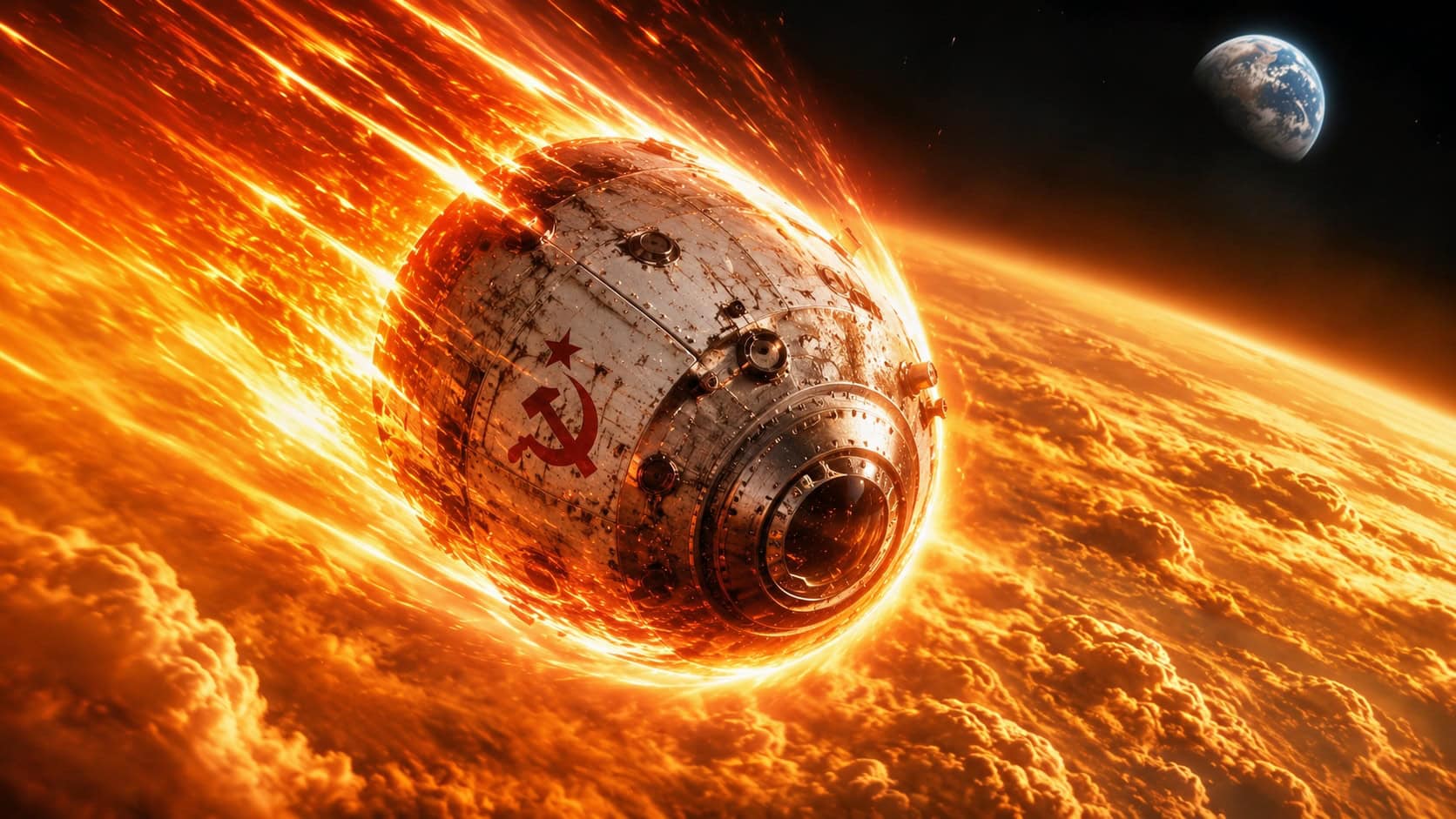
When the Soviet Union sent two probes plunging into the atmosphere of Venus in December 1978, they carried an instrument the Soviets had named “Groza,” the Russian word for thunderstorm. It was built around a microphone and an antenna, and it had one job: to find out whether Venus had lightning. As Venera 11 and Venera 12 descended through the planet’s crushing, sulfuric clouds, the instruments recorded what their names promised: bursts of electrical activity that the Soviet scientists interpreted as lightning and even thunder. It was the first serious report of lightning on a planet other than Earth, and much of the Western scientific world spent the next four decades unable to confirm it. NASA spacecraft that flew past Venus in the years that followed looked for the same lightning and could not clearly detect it, with one NASA team announcing flatly that it saw no sign of it. Nearly fifty years later, the argument the Soviets started has never been settled, the strongest single piece of evidence for lightning on Venus is still the data those landers radioed back in 1978, and whether the planet next door truly crackles with storms remains an open question.
The Soviet Probe Built To Hear Thunder on Venus
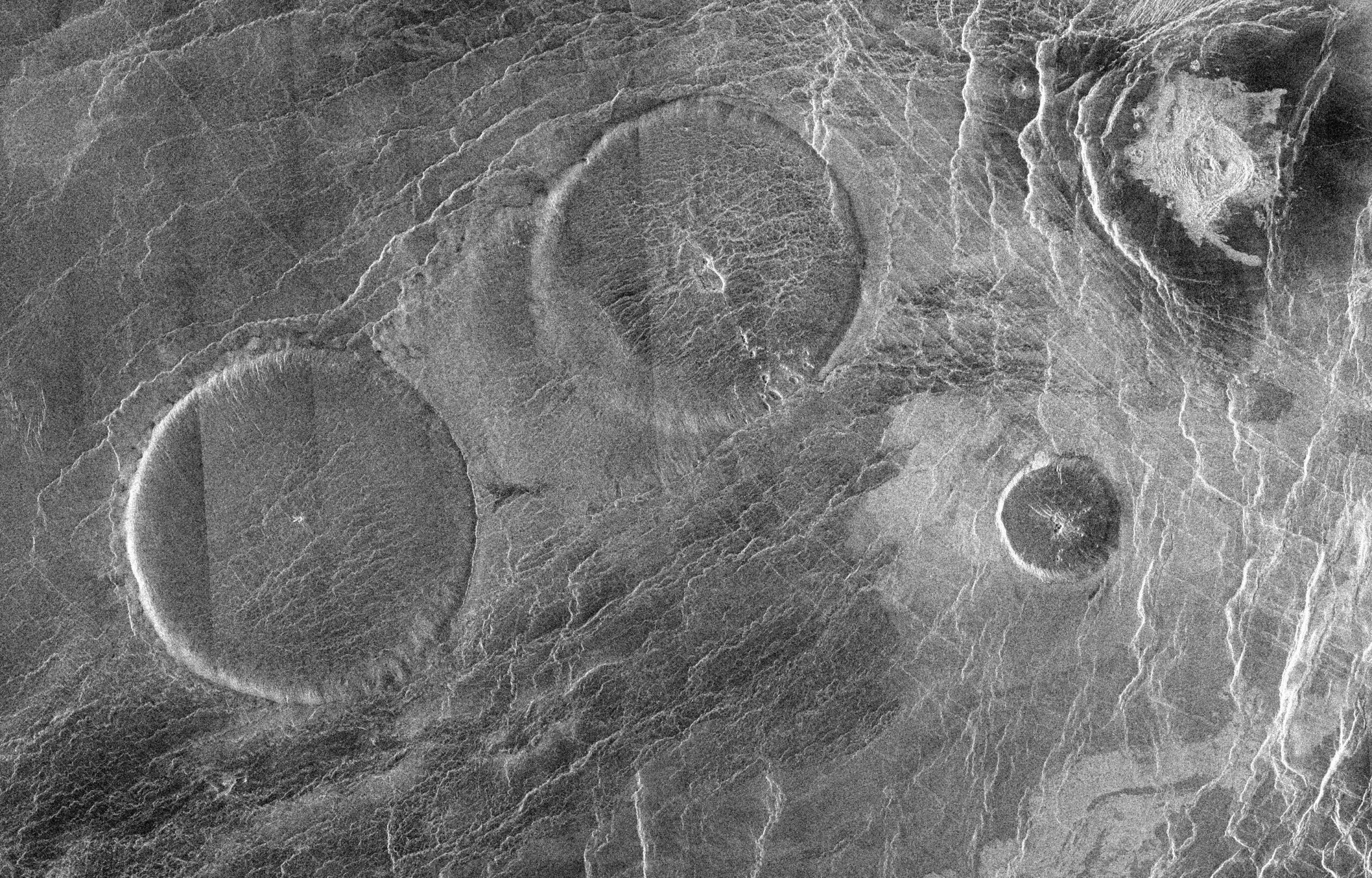
Surface of Venus. Creative Commons Photo.
Venera 12 lifted off in September 1978, and its lander separated and dropped through the Venusian atmosphere to a soft landing on December 21, with its twin Venera 11 setting down four days later.
Each survived for roughly an hour to two on the surface, in conditions that would destroy most machinery in seconds, with temperatures around 460 degrees Celsius and pressure about 90 times Earth’s at sea level. Both also suffered the same embarrassing failure that had haunted earlier Veneras; the protective covers over their cameras did not eject after landing, so neither returned a single picture of the surface, a story worth its own telling and one I have covered before.
The instrument that mattered for this story worked. The Groza suite was deliberately, almost defiantly, on the nose, named for the thing it was sent to find.
It paired a loop antenna with a microphone, the antenna to pick up the radio crackle produced by lightning, known as sferics, and the microphone to listen for thunder, recording across low-frequency bands near 10 and 36 kilohertz. The Soviets had not stumbled onto the question of Venusian lightning by accident. They built a machine named “Thunderstorm,” sent it into the clouds of another planet, and waited to see what it heard.
What Venera 11 And 12 Reported
During the descent, the landers recorded numerous pulses in the very low-frequency range, between roughly 10 and 80 kilohertz, that resembled the radio impulses produced by remote lightning on Earth.
The Soviet physicist Leonid Ksanfomality led the analysis, publishing it in 1979, and reported the signals as evidence of lightning and thunderstorm activity in the Venusian atmosphere. It was the first strong report of lightning anywhere beyond Earth, and although an earlier Venera orbiter had gathered data later interpreted as lightning, that interpretation was not developed until after Ksanfomality’s paper appeared, leaving Venera 11 and 12 holding the claim.
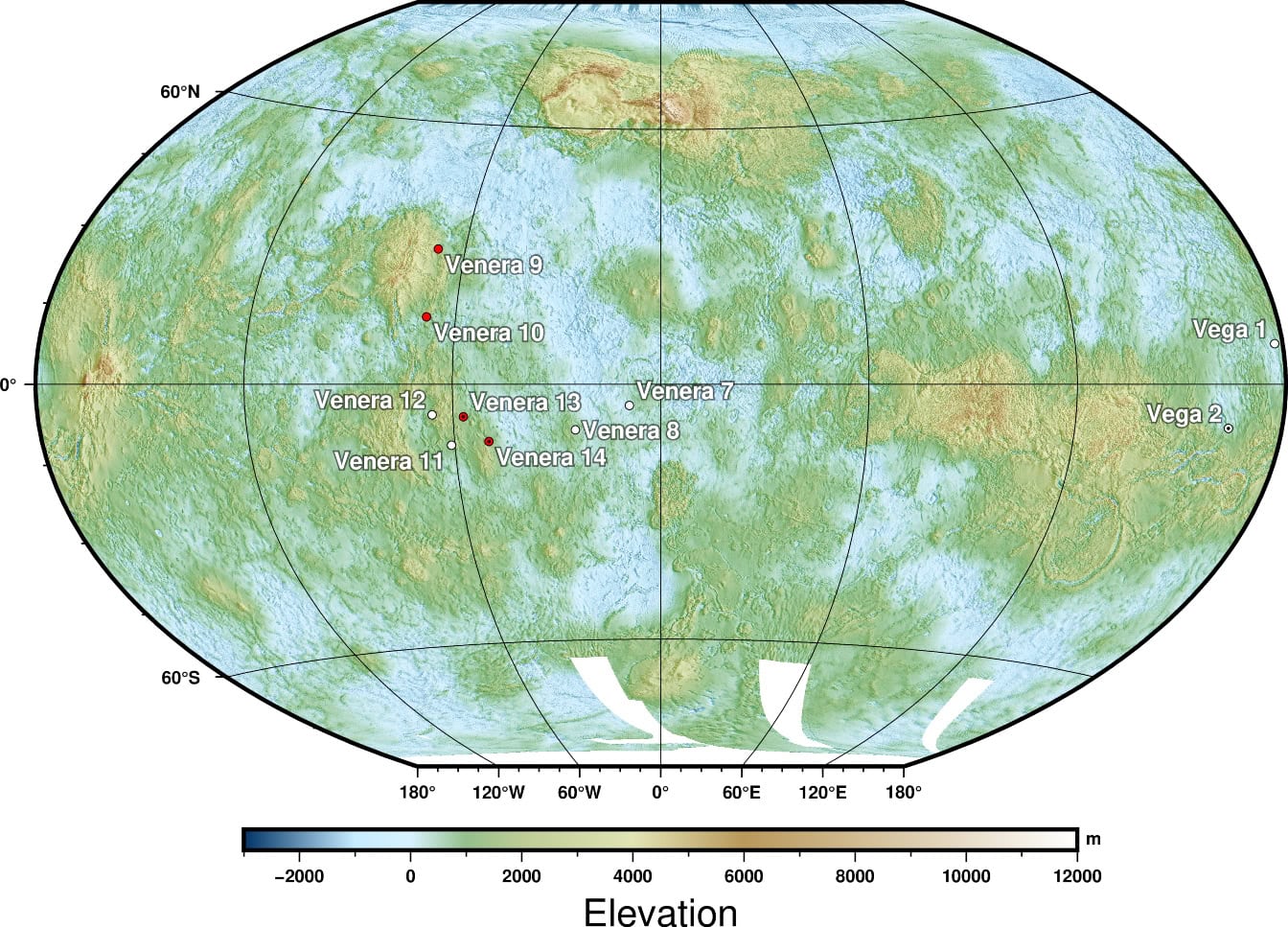
Venus Lander History Creative Commons Photo
It was not only the Soviets. Also in 1978, NASA‘s Pioneer Venus Orbiter, circling the planet, detected whistler-like waves in the ionosphere in a low-frequency band, signals that Frederick Scarf, Larry Taylor, and colleagues interpreted as further evidence that Venus had lightning. So within a single year, a Soviet lander beneath the clouds and an American orbiter above them had both reported electrical signatures consistent with lightning. The early evidence was not Soviet boasting. It had independent support from NASA’s own spacecraft, and for a moment, the case looked reasonably good.
The Decades The West Couldn’t Confirm It
Then the confirmations stopped coming, and the doubt that followed was not stubbornness. It rested on real physics and on later instruments that genuinely failed to see what the Soviets had reported.
When NASA’s Galileo probe swept past Venus in 1990 on its way to Jupiter, an instrument detected a few faint impulses that were read at the time as possibly lightning, but Galileo was far from the planet, the signals were weak, and they were later attributed to other sources entirely, including instrument effects and plasma waves rather than electrical storms.
The harder blow came from Cassini. During two flybys of Venus in 1998 and 1999, on its way to Saturn, Cassini’s radio and plasma wave instrument searched for the high-frequency radio bursts that lightning generates and failed to detect them, a negative result that physicist Donald Gurnett and his co-authors reported in Nature. Gurnett’s conclusion was blunt.
If lightning exists on Venus, he said, it is “extremely rare, or very different from terrestrial lightning,” because if Earth-like lightning had been flashing in the region Cassini watched, the instrument would have caught it easily. The same instrument, turned on Earth during a 1999 flyby, had picked up lightning continuously at rates up to seventy strikes per second.
Even so, the case was not closed against lightning, and Gurnett was careful to say so. Radio signals below about one megahertz cannot punch through Venus’s ionosphere from below, so Cassini simply could not rule out low-frequency electrical activity, which is exactly the band the Veneras had recorded from beneath the clouds. Skeptics pointed to that propagation problem as the likely reason the orbiters and the landers disagreed, and others suggested the Soviet signals might have had sources other than lightning. A later look at the follow-on Groza-2 instrument flown on Venera 13 and 14 in 1982 raised the possibility that some of what those sensors recorded came from charged aerosols rather than lightning, dust, and droplets brushing past the descending craft. And through all of it ran one stubborn gap; no spacecraft had ever recorded an unambiguous optical flash of lightning on Venus, the simplest and most direct proof there could be.
The Evidence That Swung Back
The argument did not stay settled against lightning either. Europe’s Venus Express, which orbited the planet from 2006 to 2014, carried a sensitive magnetometer, and over those years it repeatedly detected whistler-mode waves low in the ionosphere, the kind of signal that lightning sends climbing along magnetic field lines. In some cases, the activity ran continuously for more than two minutes, which suggested a storm churning somewhere below.
Christopher Russell and his colleagues, who led much of that work, inferred a global flash rate on Venus comparable to Earth’s, on the order of dozens of flashes per second.
That figure cut both ways. A flash rate that high would make Venus a genuinely stormy world, but it is hard to explain how so much lightning could be generated in Venus’s clouds, which are layered and stratiform rather than the towering, churning thunderheads that breed lightning on Earth.
A separate line of evidence came from chemistry, with ground-based measurements detecting nitric oxide in the lower atmosphere at levels that are difficult to produce by any process other than lightning. By the 2010s, the pendulum had swung back toward the belief that lightning is real, with no one able to prove it.
The Camera That Caught One Flash
Japan’s Akatsuki orbiter, which reached Venus in late 2016, set out to settle the optical question directly. It carried a dedicated lightning camera, the Lightning and Airglow Camera, the first optical sensor ever sent to another planet specifically to catch lightning flashes. It sampled at high speed, twenty thousand times a second, tuned to a wavelength of light that lightning should produce in Venus’s carbon-dioxide air, precisely so it could tell a real flash from a cosmic ray, stray light, or electrical noise, the ambiguities that had dogged every earlier optical search.
For its first several years, it saw nothing. Across dozens of nightside passes and many hours of watching, by far the most thorough optical search ever conducted at Venus, the camera recorded no flashes attributable to lightning, whereas the same effort at Earth would have logged thousands. Then, on March 1, 2020, it caught a single flash.
The transient was about ten times brighter than a typical terrestrial lightning bolt and lasted a few hundred milliseconds, far longer than the roughly one-millisecond flash of Earth lightning, characteristics that are unusual but still within the range Earth lightning can show. A meteor burning up in the atmosphere could not be entirely ruled out as the cause, though that was judged unlikely. Years of looking had produced one event that the instrument could not fully explain, which is close to the opposite of a clean answer.
Why Venus Lightning Is Still An Open Question
The most recent work has, if anything, made the radio case shakier. A 2023 reanalysis of the Venus Express whistler waves found that many of them appeared to be traveling toward Venus rather than away from it, meaning they could not have been generated by lightning in the atmosphere below, and NASA’s Parker Solar Probe, which has swung past Venus repeatedly in recent years, has not detected lightning radio signals either.
Lightning is firmly confirmed on other planets, prevalent on Jupiter and present on Saturn, which makes Venus the conspicuous holdout, the one place where decades of looking have produced contradiction rather than confirmation.
A detailed critical review in 2018 weighed all of it, the Soviet landers, Pioneer Venus, Galileo, Cassini, Venus Express, and the optical searches, and reached a conclusion that says a great deal about how little has changed. The most compelling evidence for lightning on Venus, it was found, remains the very low-frequency emissions recorded beneath the clouds by the Venera landers in 1978. The best data anyone has is nearly half a century old, gathered by an instrument named “thunderstorm.”
That may finally change. A wave of new missions is heading for Venus around the early 2030s, including NASA’s VERITAS radar orbiter, Europe’s EnVision orbiter, and NASA’s DAVINCI, which will descend through the atmosphere much as the Veneras did, carrying modern instruments through the very clouds where the Soviets first heard their signals.
Until one of them returns a clear answer, the situation is the same as it has been since 1978. A Soviet probe built to hear thunder reported hearing thunder; the spacecraft that came after could neither confirm nor refute it, and the planet next door has kept its secret for almost fifty years.
About the Author: Harry J. Kazianis
Harry J. Kazianis (@Grecianformula) was the former Senior Director of National Security Affairs at the Center for the National Interest (CFTNI), a foreign policy think tank founded by Richard Nixon based in Washington, DC. Harry has over a decade of experience in think tanks and national security publishing. His ideas have been published in the NY Times, The Washington Post, The Wall Street Journal, CNN, and many other outlets worldwide. He has held positions at CSIS, the Heritage Foundation, the University of Nottingham, and several other institutions related to national security research and studies. He is the former Executive Editor of the National Interest and the Diplomat. He holds a Master’s degree focusing on international affairs from Harvard University.