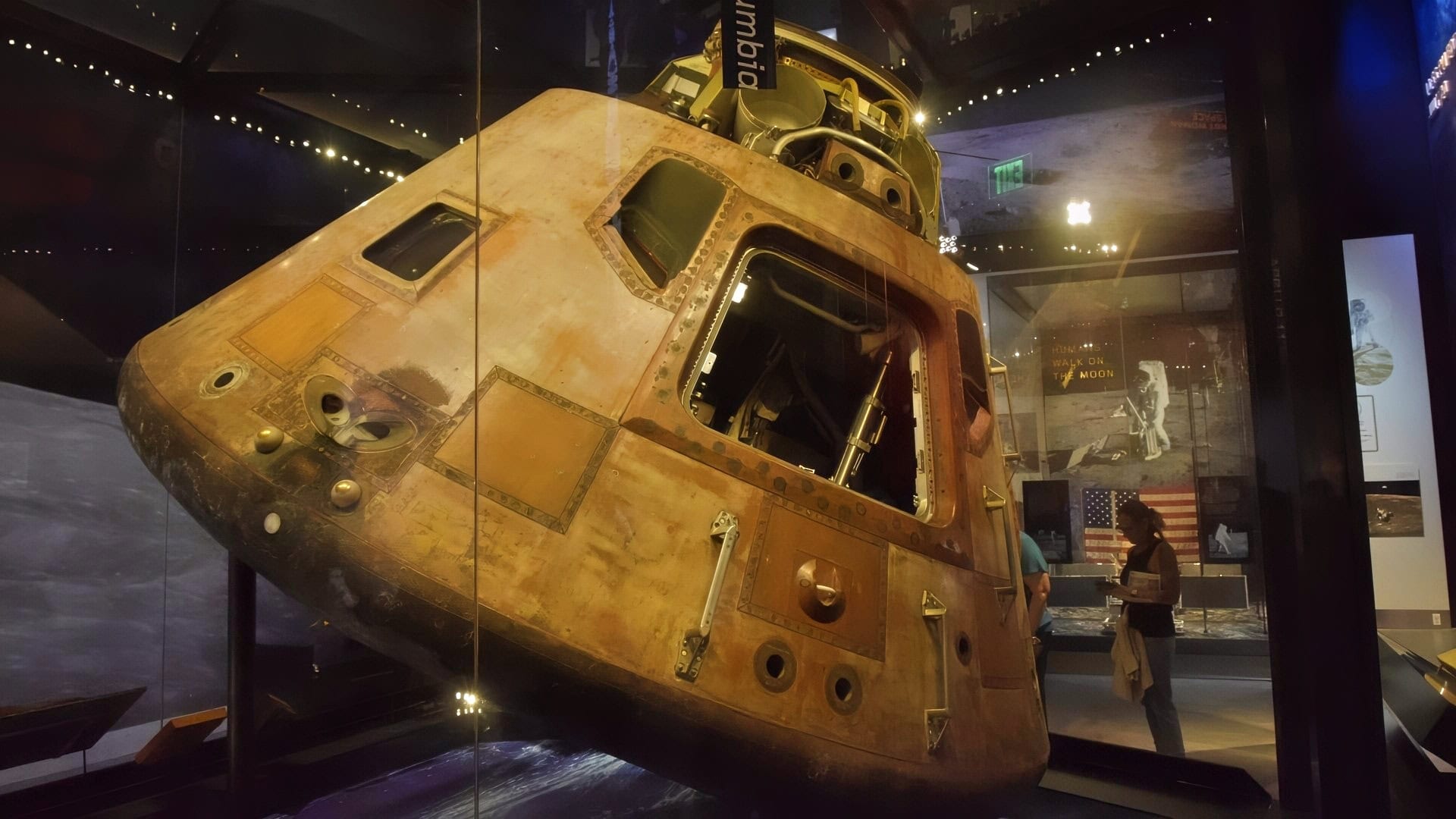
The story of Luna 15 is one of the great “what ifs” of the Cold War-era Space Race. It’s also a story most Americans are unfamiliar with.
We were told that Apollo 11 defeated the Soviet Union in the race to the moon.
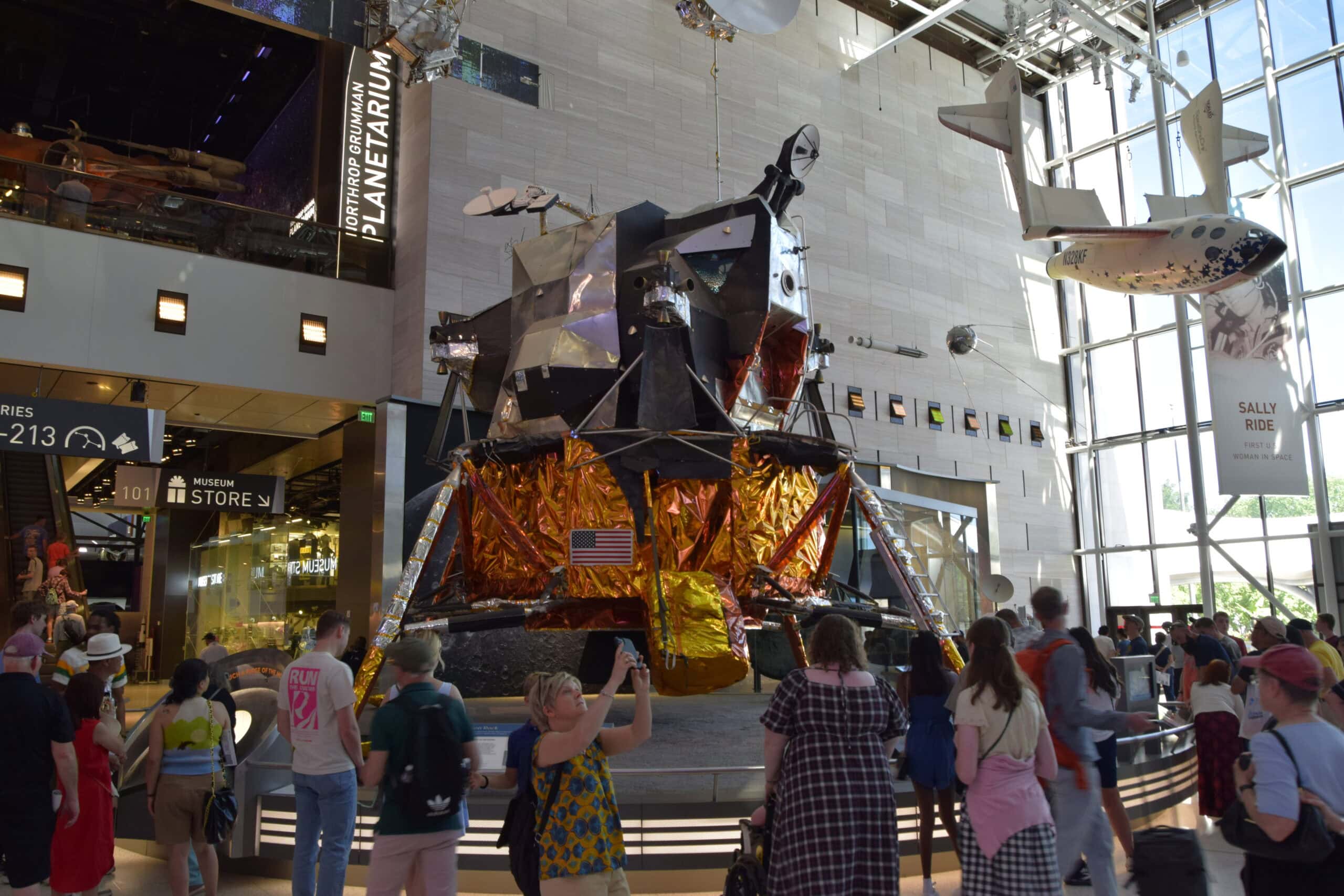
Apollo 11 Lander 19FortyFive Visit to the Smithsonian on 6/24/2026. Original 19FortyFive.com image.
Regarding the placement of human beings on the lunar surface, this is true.
But the Soviets, smarting from the failure of their own manned lunar program, decided to try to steal some of the limelight from the Americans by placing one of their uncrewed spacecraft into orbit around the moon.
In fact, the Luna 15 unmanned probe was already in orbit around the moon when Apollo 11 landed on the moon.
Moscow’s Last Chance to Steal the Headlines
By July 1969, the Soviet lunar program was dying. The Soviets had committed themselves to the needlessly complex, massive N-1 Moon rocket–the Soviet equivalent of America’s Saturn V heavy lift rocket.
But the N-1 kept exploding, taking Moscow’s dream of beating the Americans to the moon with it.
Just weeks before the US launched Apollo 11, the N-1 rocket exploded again, effectively forcing Moscow to abandon its plans for a manned lunar landing.
Rather than concede defeat, however, the Soviets launched the unmanned Luna 15 system. In effect, the Americans could declare victory in having placed humans on the lunar surface first.
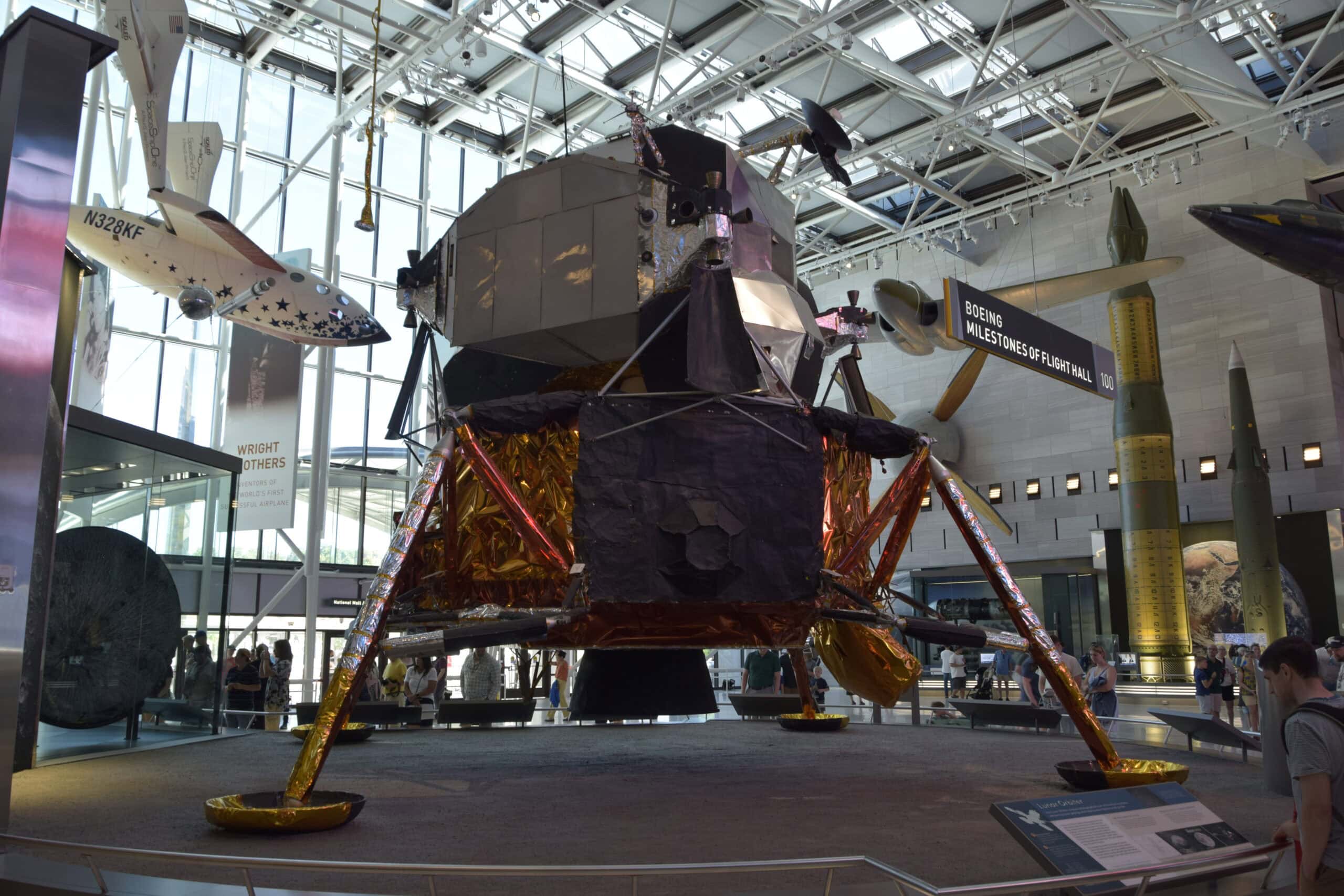
Apollo 11 Lander 19FortyFive Visit to the Smithsonian on 6/24/2026. Original 19FortyFive.com image.
But the Soviets could also claim a real victory because they became the first nation to land a robot, collect lunar soil, and return moon rocks safely to Earth.
If Luna 15 returned with samples before the Apollo astronauts splashed down, Soviet propagandists could argue that the USSR had still achieved a historic first.
A Secret Race Happening Above Apollo 11
Timing was everything. Luna 15 launched on July 13, 1969. Apollo 11 launched three days later. Ironically, because Luna 15 took a more direct approach, it reached lunar orbit before the Americans did.
While Armstrong, Aldrin, and Collins were still coasting toward the moon, the Soviet probe had already entered orbit around it.
For several days, two rival superpowers had spacecraft orbiting the moon simultaneously. One carried three astronauts.
The other carried a robotic drill, a sample collection system, and a return capsule. Very few people outside intelligence circles knew that the two missions were unfolding side by side.
NASA Didn’t Know Exactly What the Soviets Were Doing
American intelligence tracked Luna 15 closely, unsure what the Soviets were really up to (few believed the Reds were just doing a scientific survey).
Washington fretted about the prospect that Luna 15 was an espionage mission of some kind, or that the two spacecraft had simply collided.
What’s more, no one really knew where the Soviets planned to land Luna 15 on the lunar surface. Would the probe land at or near where the American astronauts were?
Through diplomatic channels and scientific intermediaries–including Britain’s Jodrell Bank Observatory–the Soviet Union quietly provided enough trajectory information to reassure NASA that Luna 15 would operate far from the Apollo landing site.
That exchange became one of the earliest examples of practical US-Soviet cooperation in space during the Cold War.
Moscow’s Plan Was Ambitious
Luna 15’s mission profile was truly ambitious for that era. Soviet leaders expected the probe to land automatically, drill into the lunar surface, collect the lunar soil, seal the sample, launch itself back into lunar orbit, and return to Earth safely.
Those missions would be accomplished without a single human on board, without the safety of modern computers.
Back in 1969, there was no GPS. No high-speed communications. Everything depended on autonomous systems operating hundreds of thousands of miles away.
In many ways, the mission resembled today’s robotic sample-return mission, which now (unfortunately) dominates NASA’s mission profile,e decades before they became commonplace.
Then Armstrong Stepped Onto the Moon
On July 20, 1969, Apollo 11 landed in the Mare Tranquillitatis crater. Neil Armstrong became the first human to walk on another world. While television audiences across Earth watched that momentous bit of history unfold, Luna 15 remained overhead, still orbiting. Moscow delayed Luna 15’s landing attempt while Apollo astronauts were on the surface.
Once Armstrong and Aldrin completed their moonwalk–but before Apollo 11 lifted off–the order finally came down from Moscow to land the Luna 15.
Disaster Four Minutes Later
Everything unraveled for the Soviet lunar lander almost immediately. Four minutes into the descent, radio transmissions were cut off.
Later analysis indicated Luna 15 likely crashed into the side of a mountain in Mare Crisium at high speed after an error during its automated landing sequence.
The spacecraft was destroyed.
Hours later, Apollo 11 lifted off successfully from the lunar surface carrying more than 47 pounds of lunar rocks and soil—the Soviet Union’s last attempt to upstage the Apollo moon program ended in complete failure.
Those were the days.
Failure That Led to Success?
In engineering, there are many references to the iterative design process. The Soviet Luna 15 experience was one such example of this iterative process.
You see, Soviet engineers learned from the crash. A year later, Moscow launched Luna 16 to complete what Luna 15 had started.
This time, the mission was a success. Indeed, Luna 16 returned about 101 grams of moon material to Earth.
It became the first fully robotic sample-return mission in history–a remarkable engineering achievement, even if Apollo had already eclipsed it in the public imagination.
The Soviet Luna program would later add successful robotic rovers and additional sample-return missions to its list of achievements.
Here’s Why Luna 15 Still Matters
Popular history often treats Apollo 11 as the final chapter in a straightforward competition. The reality was much more complex.
Even after losing the race to land humans on the moon, the USSR remained capable of sophisticated robotic exploration and continued pursuing alternative paths to scientific prestige.
Indeed, in areas such as uncrewed robotic exploration and even space station operations, the Russians outpaced the Americans for many years.
In retrospect, Luna 15 foreshadowed a strategy that has become increasingly relevant to NASA today.
Modern lunar programs–including robotic missions by multiple nations–often prioritize autonomous landers, sample-return spacecraft, and robotic exploration before committing to permanent human presence.
In that sense, Luna 15 was both the Soviet Union’s last desperate gamble in the moon race and an early glimpse of the future of planetary exploration.
After all, except visiting low-Earth orbit, humans haven’t really ventured into space since the final Apollo moon landing in the 1970s.
About the Author: Brandon J. Weichert
Brandon J. Weichert is the Senior National Security Editor at 19FortyFive.com. He also manages The Weichert Brief on Substack. Weichert also hosts “National Security Talk” on Rumble. He is the author of four bestselling national security books, the most recent of which is A Disaster of Our Own Making: How the West Lost Ukraine (Encounter Books). Follow him via Twitter/X @WeTheBrandon.