

I have spent a lot of time this year near or getting eyes on F-35 stealth fighters, especially near where I live outside of Orlando, thanks to a recent airshow I attended in Lakeland, Florida, where the F-35 was on display. But, sad to say, most of the general public doesn’t know the challenges their planes have. For example, I never thought, in a million years, they would be built or flown without radar. And, yet, that’s the sad state of affairs when it comes to the F-35 program in 2026.
The F-35 Stealth Fighter Has a Radar Challenge
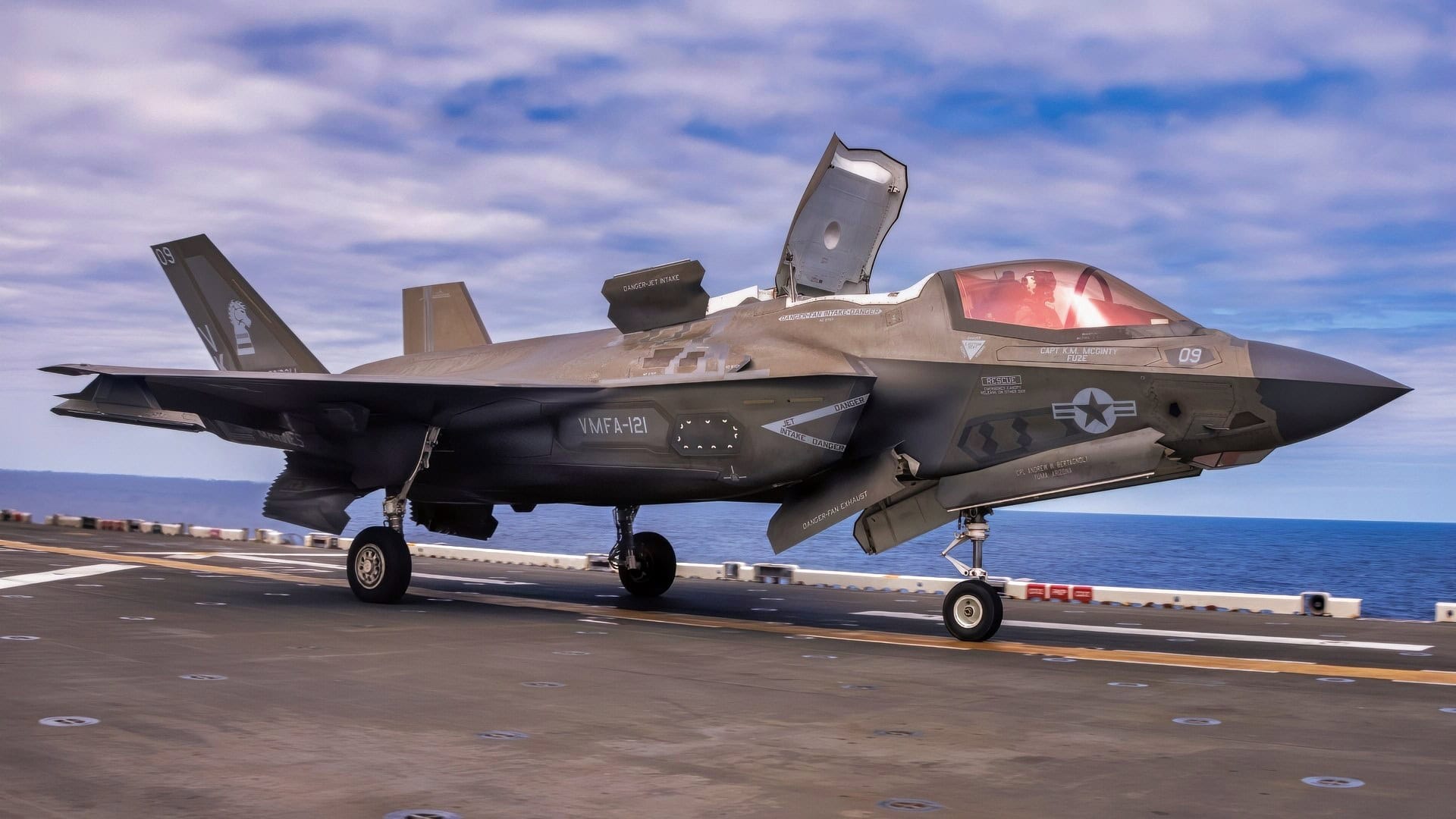
A U.S. Marine Corps F-35B Lightning II assigned to Marine Fighter Attack Squadron (VMFA) 121, 31st Marine Expeditionary Unit, takes off during a joint service flyover in the Philippine Sea, Feb. 26, 2026. Aircraft participated in a coordinated event to demonstrate joint service readiness and maritime capabilities. The 31st MEU is a persistent, combat credible force operating aboard the ships of the Tripoli Amphibious Ready Group in the U.S. 7th fleet area of operations, routinely interacting and operating with our allies and partners to contribute to deterrence, security, crisis response, and combat operations in the Indo-Pacific region. (U.S. Marine Corps photo by Lance Cpl. Victor Gurrola)
Here’s the issue: Six of the Marine Corps’ newest F-35B stealth fighters are flying with metal ballast bolted into their noses, where a radar is supposed to sit.
The head of the F-35 program confirmed it to senators last week, explaining that the jets were finished before the new radar intended for them was ready.
The admission was striking on its own. It also landed as the clearest sign yet that the deeper troubles dogging the most expensive weapons program in history, a stalled modernization effort, readiness at a record low, and a price tag that now runs past $2 trillion, are catching up with the F-35.
Six Marine F-35s With Ballast Instead Of Radars
The disclosure came at a Senate hearing on June 23, when Marine Lt. Gen. Gregory Masiello, who runs the F-35 Joint Program Office, was pressed by Sen. Mark Kelly, an Arizona Democrat, retired naval aviator, and ranking member of the Armed Services Committee’s airland panel.
Asked whether the Marines had been accepting jets with no radar, Masiello confirmed the service had taken six in that condition. Asked whether such an aircraft could count as fully mission capable, he conceded, “I don’t think I would count them as fully mission capable.”
The aircraft are F-35Bs built earlier this year as part of Lot 17, the first production batch designed around a new radar called the AN/APG-85. That redesign is the heart of the problem. The new airframes were given a unique forward bulkhead shaped for the APG-85, and the older AN/APG-81 radar cannot be dropped into them as a stopgap because the mounting does not match. Since the government buys the radar separately from the jet, the delay falls on the radar maker, Northrop Grumman, rather than on Lockheed Martin, which builds the aircraft. With the radar not ready, the choice was to deliver the jets now and install the radars later, or to stop accepting aircraft entirely.
The Marines opted to take them and wait. In place of the missing radar, crews bolt in ballast to keep the weight distribution right, and the jets are limited to basic flight training rather than combat.
No Air Force or Navy jets have been delivered this way yet, though both services are expected to accept some later this year. The first production APG-85 radars are not expected before 2028, at a unit cost of roughly $9 million.
Readiness At A Record Low for F-35
The radarless jets surfaced because Kelly was questioning Masiello about a problem that runs much wider.
Two weeks before the hearing, the Government Accountability Office reported that the share of F-35s able to perform all of their assigned missions, the full mission capable rate, had fallen from 38 percent to 25 percent between fiscal years 2020 and 2025, with the broader rate for jets able to fly at least one mission sitting at 44.1 percent.
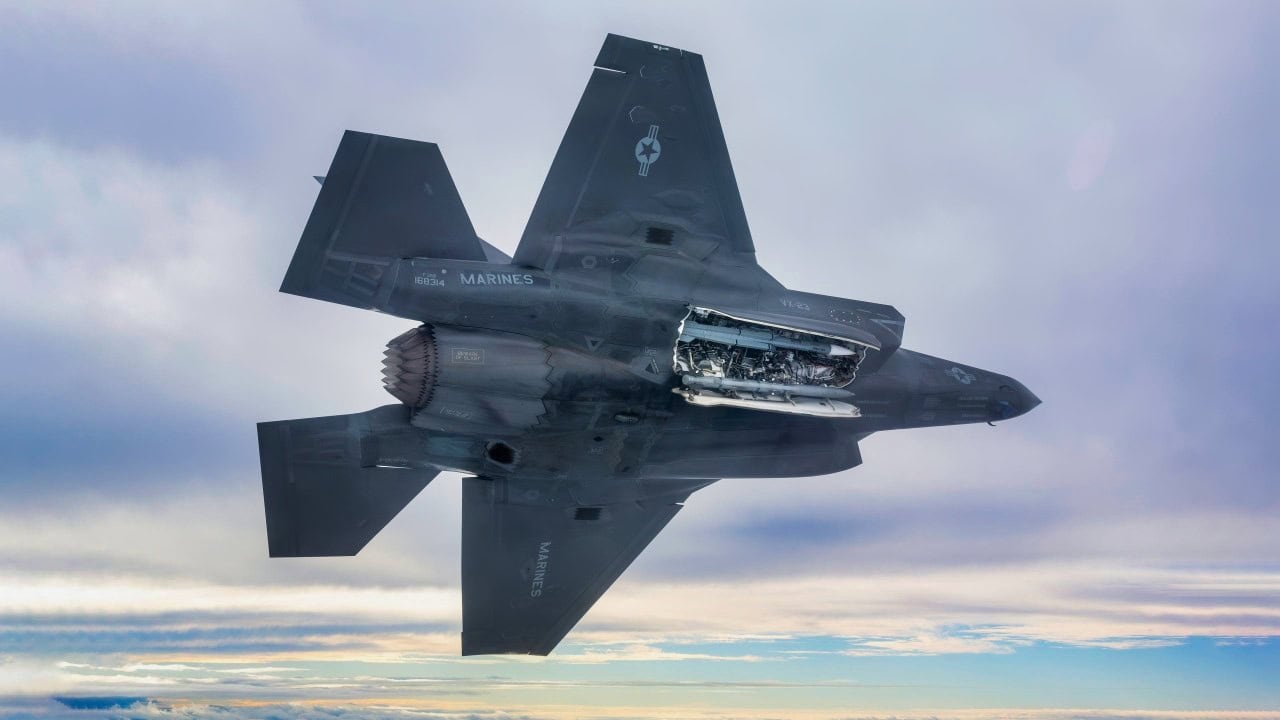
F-35B Armed with Meteor Missile. Image Credit: UK Government.
Masiello did not dispute the GAO’s figures, but argued that context was missing and that, measured the way his program counts it, the mission capable rate was closer to 56 percent. He acknowledged that jets without radar cannot be counted as fully mission-capable, which means the program is, in part, dragging down its own numbers by accepting incomplete aircraft.
The appearance was the first time the F-35 program’s leader had testified before the subcommittee since 2016, and in the years between, the fleet grew from 170 aircraft to more than 1,300. Masiello acknowledged that the support structure had been built for a force of 700 to 800 jets and had been outpaced by the one now flying. He pointed to years of underbuying spare parts as the fleet expanded, rather than a flaw in the aircraft itself, and said the program had reset its sustainment strategy to catch up.
The Cooling Problem With No Margin
A second issue Kelly drew out at the hearing points to a constraint that will shape the F-35 for years.
The full Block 4 upgrade, with its new radar and electronic warfare gear, will eventually demand far more cooling than the jet can currently supply. Masiello said the systems coming aboard will require 62 to 80 kilowatts of cooling, compared with the 32 kilowatts the aircraft provides today, and acknowledged that the present plan leaves no margin, which he said was not a sound way to operate.
The fix runs through Pratt & Whitney’s engine core upgrade, which is not slated for fielding until 2031, with broader power and thermal improvements arriving a few years after that.
There is an important wrinkle here. Masiello said the APG-85 radar itself will be ready before 2031 and will not require the full thermal upgrade, so the radar and the cooling shortfall are related but not strictly the same bottleneck.
Thermal management has been a long-running drag on the F-35, feeding into maintenance demands and the low readiness rates, and the general declined to discuss in an open setting what the cooling limits might mean for the radar’s initial fielding, deferring those specifics to a classified session.
A $2 Trillion Program Five Years Behind
The radar is one piece of Block 4, the most ambitious modernization the F-35 has attempted, and Block 4 has been in trouble for years. As of the GAO’s assessment last September, the effort was at least five years behind schedule and more than $6 billion over its original cost estimate. Its foundation, a hardware and software package known as Technology Refresh 3, is roughly three years late, and the delays rippled into deliveries: all 110 jets handed over in 2024 arrived late, by an average of 238 days.
The Pentagon began withholding money on late aircraft, $5 million per jet, later trimmed to $3.8 million, with much of it frozen until the jets can be brought up to a combat-capable standard. Block 4 once promised 66 new capabilities by 2026; it has since been pared to a smaller set not expected until 2031, and Masiello testified that 22 of the 55 currently planned capabilities have been fielded, seven last year and six due this year.
The money behind all of it is staggering. The program’s lifetime cost, from its 1990s origins through the 2070s, is pegged at $2.1 trillion, with acquisition running about $485 billion and sustainment projected near $1.58 trillion across a planned fleet of roughly 2,470 aircraft. The fiscal 2027 request bundles more than $13 billion for the jet in that year alone, including an order for 85 American aircraft and full funding for both Block 4 and the engine core upgrade.
The program is also seeking a separate $13.7 billion to reset sustainment through 2031, though the GAO noted the services that fly the jet will have to pay for it, and that the Navy and Marine Corps warned competing priorities could limit what they can put toward it. There are 832 American jets in service today out of more than 1,300 worldwide, spread across 42 bases and 13 ships.
What It Means For The Race With China
The reason the radar delay matters beyond the optics is what the APG-85 was built to do. Its gallium nitride architecture was designed to counter Chinese advances in stealth-defeating radar and electronic warfare, and to keep the F-35 ahead of fighters like China’s J-20 and Russia’s Su-57, as well as the dense air defense networks spreading across the Indo-Pacific.
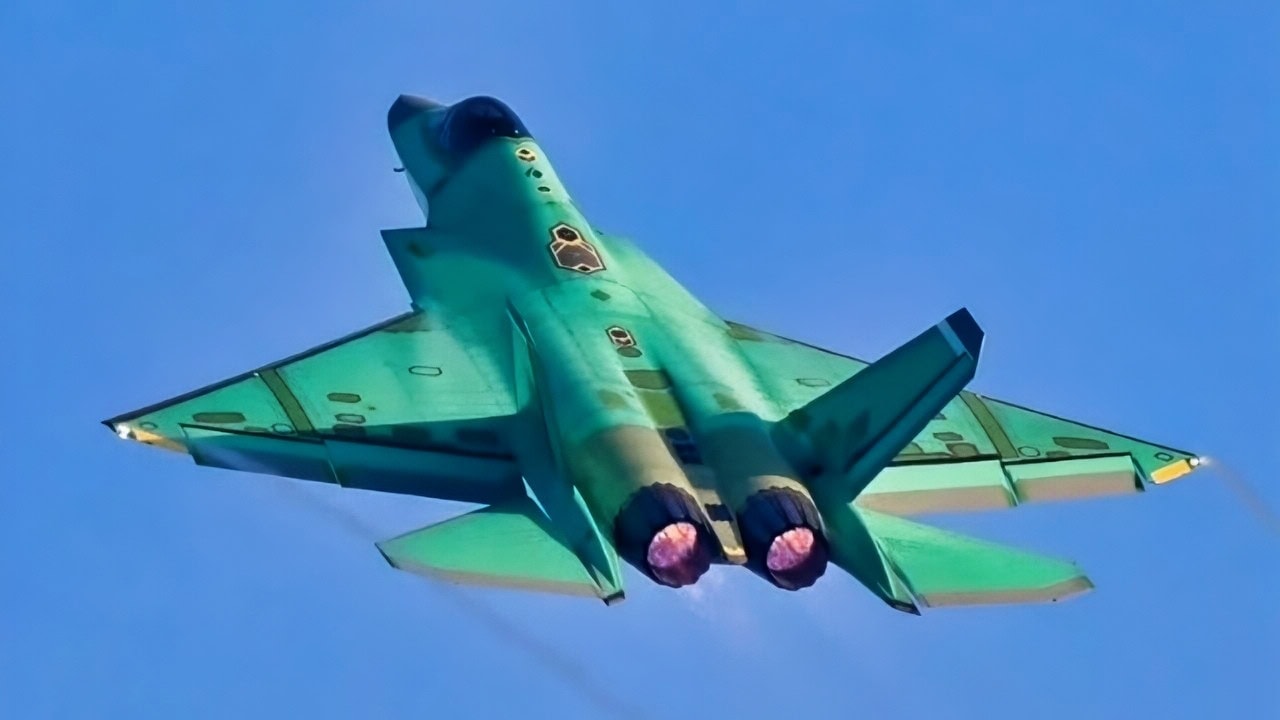
J-35A Stealth Fighter. Image Credit: Social Media Screenshot.
The new electronic warfare suite, which the Air Force has called a top priority, is directly tied to that radar. Every month, the upgrade slips, the specific edge it was meant to preserve erodes, and allied air forces are watching closely, since Japan plans for 147 of the jets, Australia 72, and South Korea 60. The program’s troubles are not only an American accounting problem; they touch the combat power of a coalition.
The strain is showing in Washington’s own choices. The Pentagon’s fiscal 2026 budget request cut the F-35 buy from 68 jets to 47 and redirected money toward drones, hypersonic weapons, and advanced munitions, a signal that even the program’s stewards are hedging while the modernization sorts itself out.
The Case For The Program’s Approach
The Pentagon’s defense of how this happened is more reasonable than the headline suggests. Officials deliberately ran development and production simultaneously, accepting that some jets would come off the line before Block 4 was finished, on the logic that building airframes ready to receive the upgrade is better than building older Block 3 jets that would later require an expensive, time-consuming retrofit.
By that reasoning, taking six radarless jets now saves years of rework down the line. The approach is a defensible engineering trade-off, not simply spin, and the program can point to history: in the 1970s, early F-15 Eagles were delivered amid an engine shortage, with available engines shuffled among airframes until production stabilized.
A radarless F-35 is also not helpless. As The War Zone has reported, such a jet can still draw a radar picture from other F-35s flying with it through the type’s data links, and it carries passive sensors, though its capability and survivability are severely degraded without its own radar, which is also central to the jet’s electronic attack punch.
There is a genuine argument, too, that fielding a radar before it is fully mature could damage confidence in the aircraft more than waiting for it to work.
The ballast in those six noses is a placeholder for a fix still years away, and the F-35 remains the backbone of American and allied airpower, with a rationale behind its troubled rollout.
What changed last week is that the program’s problems stopped being abstractions in a budget document. Six combat aircraft that cannot fight, a full mission capable rate of one in four, a cooling shortfall that will not be solved until 2031, and a radar that will not arrive in quantity until 2028 are now specific, countable facts, at the same moment China keeps fielding the very systems the upgrade was meant to defeat.
About the Author: Harry J. Kazianis
Harry J. Kazianis (@Grecianformula) was the former Senior Director of National Security Affairs at the Center for the National Interest (CFTNI), a foreign policy think tank founded by Richard Nixon based in Washington, DC. Harry has over a decade of experience in think tanks and national security publishing. His ideas have been published in the NY Times, The Washington Post, The Wall Street Journal, CNN, and many other outlets worldwide. He has held positions at CSIS, the Heritage Foundation, the University of Nottingham, and several other institutions related to national security research and studies. He is the former Executive Editor of the National Interest and the Diplomat. He holds a Master’s degree focusing on international affairs from Harvard University.

