
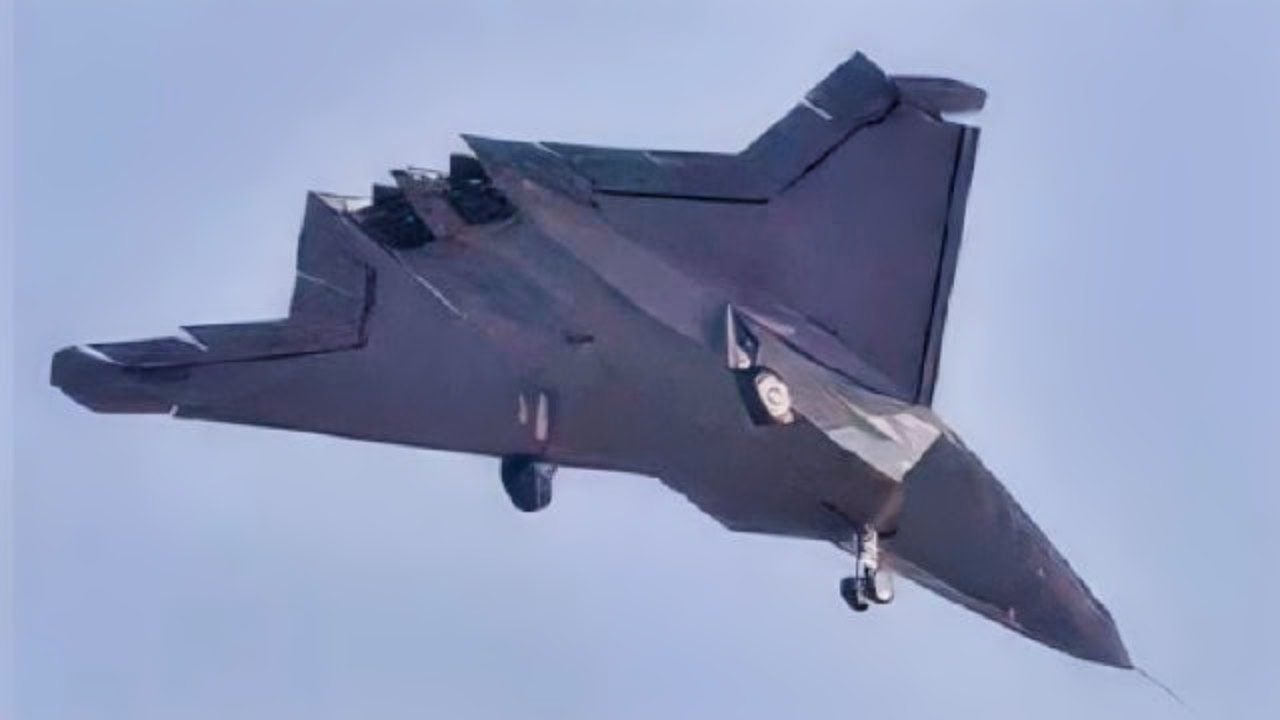
China let the world see something this weekend that no other country has put in its official media. In a promotional film marking ten years of service for the Y-20 transport, the People’s Liberation Army included a sequence showing its YY-20 aerial tanker refueling combat aircraft, ending with a fleeting shot of a tailless sixth-generation fighter pulling alongside the tanker to refuel. Analysts assessed it as the first appearance of a sixth-generation fighter in any nation’s official production, and the pairing it showed, a long-range new fighter joined to a maturing tanker fleet, points to a shift in how far into the Pacific Beijing intends to project air power.
China Puts Its New Fighter and Tanker Together on Screen
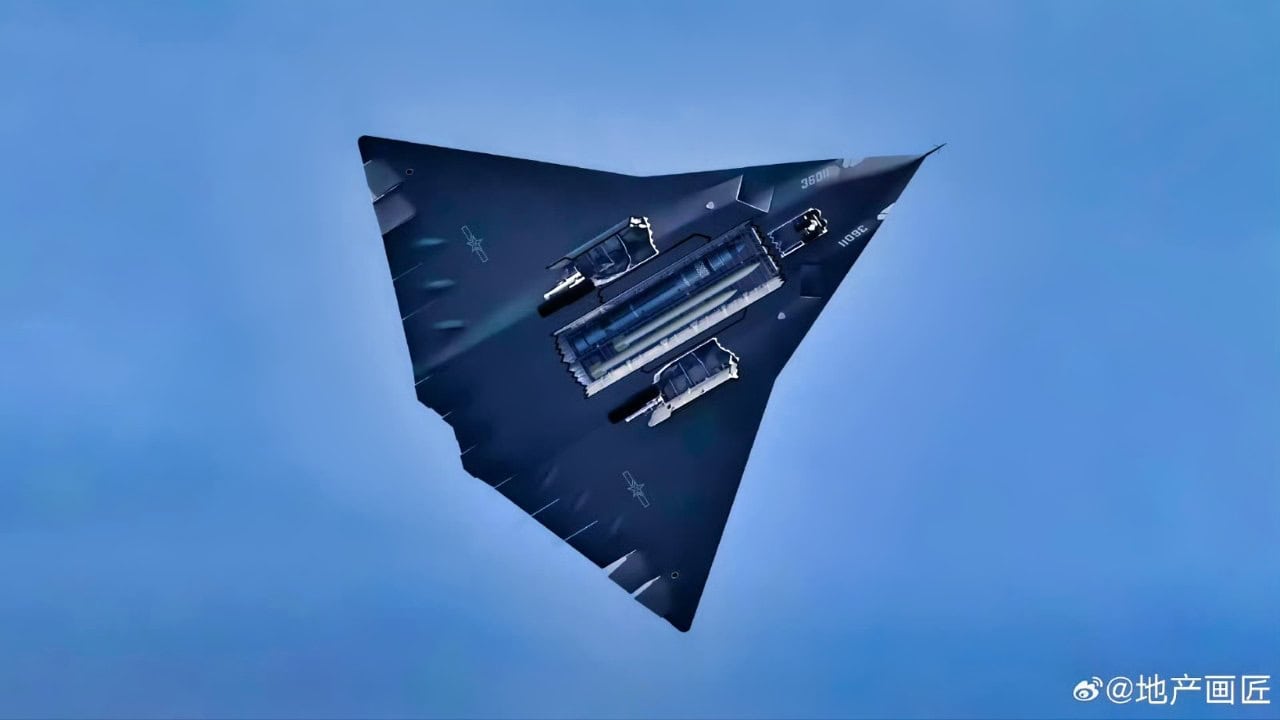
J-36 or JH-XX from China. Screenshot for Chinese Social Media.
The footage came from China Military Bugle, the official account of the PLA, in a film commemorating the Y-20’s tenth anniversary of its entry into service. In the closing sequence, a crew member aboard the tanker is asked who they are refueling and first names the H-6 bomber, then the next aircraft in line, a Chengdu sixth-generation fighter, which the final shot shows alongside the YY-20. Bloomberg reported the clip drew immediate attention because of its source, and the South China Morning Post described it as the first official footage of the aircraft to appear in Chinese state media. The jet has not been given an official designation; analysts widely refer to the Chengdu design as the J-36, a label assigned from observation rather than any Chinese announcement.
Why the YY-20 Tanker Is the Real Unlock: Aerospace Success
The fighter drew the headlines, but the tanker is what changes the geography. China had almost no meaningful aerial refueling capability until the early 2020s, relying on a small number of converted H-6 airframes that could carry less than 30 tons of fuel.
The YY-20, derived from the Y-20, the largest military transport in production today, carries roughly 90 tons of fuel, close to a fivefold increase, and newer aircraft fitted with higher-bypass WS-20 engines stretch the range further. The fleet has grown quickly. Janes, assessing satellite imagery and PLA releases, found the number of YY-20 tankers rising from a single aircraft in early 2022 to at least eight within a year, and called the program a critical component of China’s plan to project power beyond the First Island Chain.
What makes that capability consequential is that Chinese fighters were already designed for long-range engagements. Aviation Week has noted the PLA’s longstanding preference for large fighters with heavy internal fuel loads, designed to operate well beyond 1,000 km from China’s coast.
The J-20’s combat radius is estimated at a little over 2,000 kilometers, compared with roughly 1,000 for the American F-35, both analyst estimates rather than published specifications. A force that already outranges its Western counterparts gains far more from tanker support than one trying to close a range gap, which is part of why Beijing historically put tankers low on its list. Adding fuel in the air to a long-legged fighter is a multiplier, not a fix.
What Longer Reach Means for Guam and the Second Island Chain
This is where the reveal matters beyond the spectacle, and it is the part the originating coverage leaves out. The central problem facing any air force operating in the Western Pacific is distance, and China’s strategy has long been to push the point at which it can contest American intervention as far from its own shores as possible. Roderick Lee, research director at the China Aerospace Studies Institute, framed the stakes plainly to Flight Global, saying it is “extremely difficult to overstate” the importance of aerial refueling to future PLA operations because the aim is to deter or defeat U.S. intervention as far away from mainland China as possible.
He noted that the PLA is largely confined today to operations within the First Island Chain, running from Japan through Taiwan and the Philippines, and that reliably operating out to the Second Island Chain, which extends through Guam, is a goal that aerial refueling makes attainable.
The basing math is what gives this teeth. American power in the region depends heavily on a small number of fixed bases, with Guam as the central hub, and on aircraft carriers that must operate within range of a fight. A Chinese fighter force able to refuel in the air can hold targets at risk farther out, escort bombers and other aircraft deeper into the Pacific, and stay on station longer in contested airspace rather than turning for home as fuel runs low.
Aviation Week’s assessment is blunt on this point, noting that better-supported Chinese fighters will be more capable of operating against Japanese bases, Guam, and U.S. naval task forces, and of setting up distant barriers against American bombers and cruise missiles.
None of this arrives overnight. The sixth-generation fighter is not expected to enter service until the early 2030s, the tanker fleet is still expanding toward the numbers such operations would require, and the reach figures remain estimates.
The direction, though, is not in doubt: a Pacific in which Chinese air power can be sustained much farther from home is one in which America’s regional bases and its deterrence math come under greater pressure.
Business and Industrial Challenges: China’s Fighters Race While Its Bomber Stalls
The footage also fits a wider pattern in Chinese military aviation, one of striking unevenness. China is the only country to have unveiled sixth-generation fighters at the flight-prototype stage: two designs from Chengdu and Shenyang, both first shown on December 26, 2024, with the heavier Chengdu jet in the footage having flown several incrementally refined prototypes since then.
That tempo stands in sharp contrast to China’s strategic bomber program, the H-20, which was revealed in 2016 and has still produced no confirmed flight or production line, held back by industrial bottlenecks in engines, stealth materials, and large-composite manufacturing. The fighter and tanker programs are sprinting while the bomber sits idle, and a fuller account of how far China’s sixth-generation fighters have actually come, compared with the American F-47, is laid out in earlier reporting.
The American response is already shaping budgets and timelines. The F-47, the U.S. Air Force’s sixth-generation fighter under the Next Generation Air Dominance program, was conceived from the start to counter China in the Indo-Pacific, but Air Force Chief of Staff Gen. David Allvin has said it will not make its first flight until 2028, which places it years behind the Chinese prototypes that have been airborne since late 2024. U.S. officials acknowledge China may field an operational sixth-generation fighter first while maintaining that the American aircraft will be the more capable system.
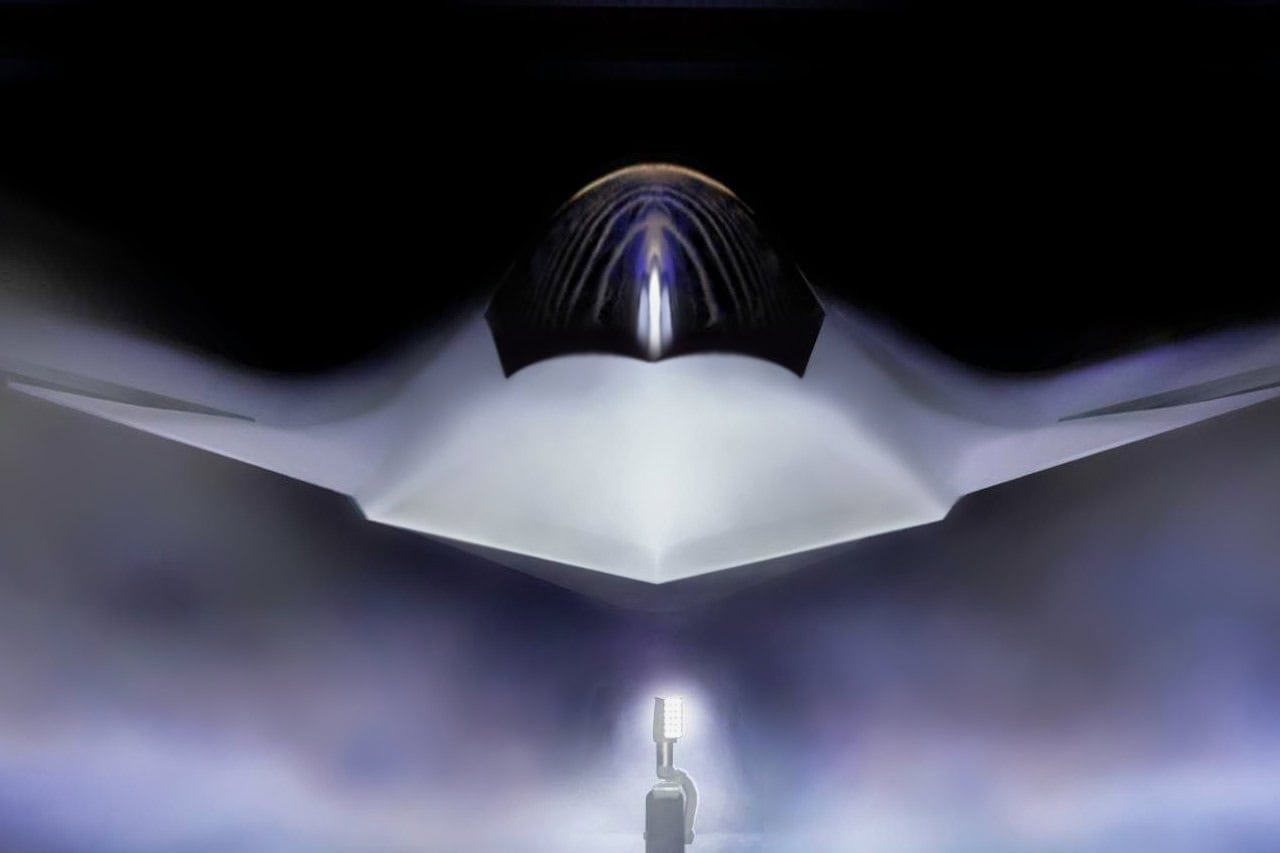
Shown is a graphical artist rendering of the Next Generation Air Dominance (NGAD) Platform. The rendering highlights the Air Force’s sixth generation fighter, the F-47. The NGAD Platform will bring lethal, next-generation technologies to ensure air superiority for the Joint Force in any conflict. (U.S. Air Force graphic)
Aerospace Milestones and the Plan Ahead
For now, China has done something neither the United States nor any other country has: putting a sixth-generation fighter on official camera, refueling in flight, and doing so alongside the tanker that gives the aircraft its reach.
The jet remains years from service and much about it is still inferred rather than known, but the message of the footage was deliberate.
Beijing wanted to show a fighter and a tanker built to operate together far out over the Pacific, and the Pentagon’s own assessments place that fighter’s service entry in the same decade the United States expects to field its answer.
About the Author: Harry J. Kazianis
Harry J. Kazianis (@Grecianformula) was the former Senior Director of National Security Affairs at the Center for the National Interest (CFTNI), a foreign policy think tank founded by Richard Nixon based in Washington, DC. Harry has over a decade of experience in think tanks and national security publishing. His ideas have been published in the NY Times, The Washington Post, The Wall Street Journal, CNN, and many other outlets worldwide. He has held positions at CSIS, the Heritage Foundation, the University of Nottingham, and several other institutions related to national security research and studies. He is the former Executive Editor of the National Interest and the Diplomat. He holds a Master’s degree focusing on international affairs from Harvard University.

