
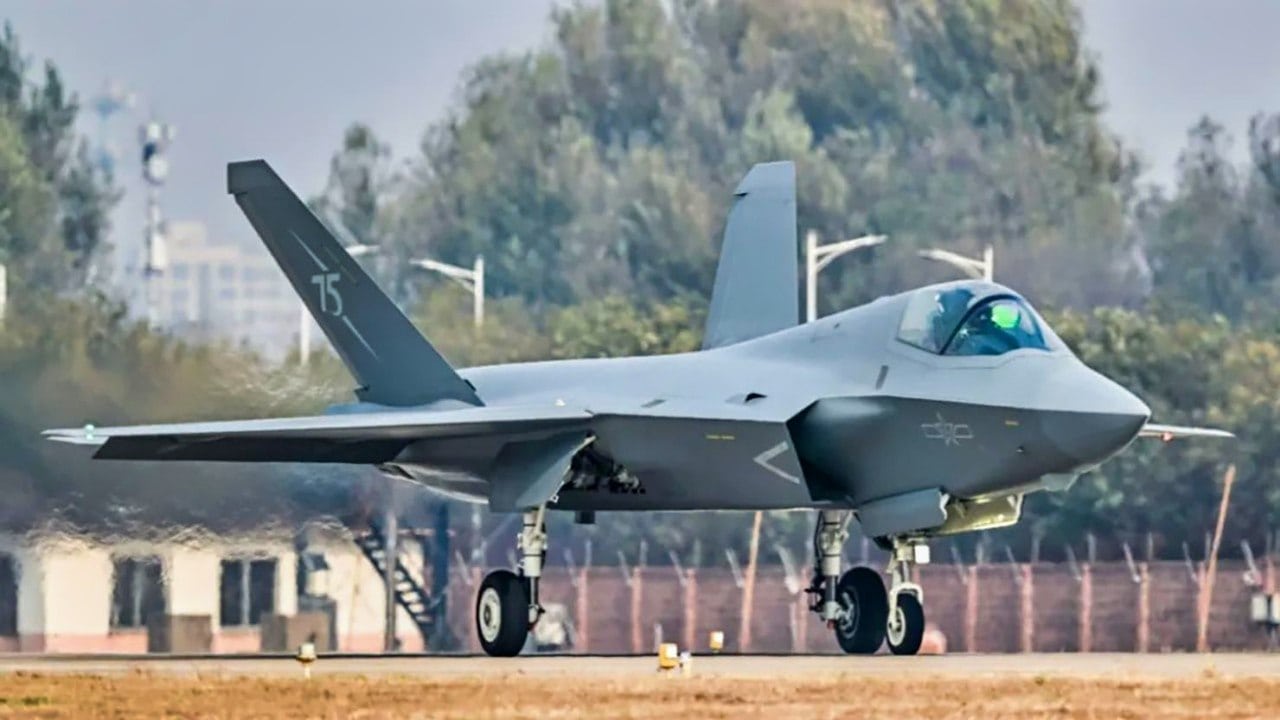
According to recent reports, the Shenyang Aircraft Corporation’s new plant recently produced its 30th serial airframe of the J-35 fifth-generation stealth fighter. Footage released by Chinese state media showed the most recent production frame, a naval J-35 with the serial number 350030, indicating that it is the 30th aircraft built. Officially introduced less than a year ago, production on the new fighter has proceeded at an impressive pace, with China seeking to ramp it up even faster. The aircraft is intended to serve as a lightweight counterpart to the J-20 and bolster the PLAN’s carrier aviation fleet. While little is still known about the aircraft in the West, the progress China has made on its J-35 program is undoubtedly impressive.
J-35: China’s Newest Stealth Fighter
The J-35 began as the FC-31 Gyrfalcon, a demonstrator aircraft originally intended for the export market.
The fighter made its first flight in 2014 at the Zhuhai Airshow, powered by two Klimov RD-93 engines. The aircraft has since changed significantly from its first FC-31 prototypes.
For several years, Shenyang continued to market the aircraft both internally to the PLA and abroad to foreign customers; at the same time, numerous improvements were made to the airframe.
The aircraft would not find its first customer until 2020, when the PLAN expressed interest in a navalized version of the FC-31. The naval J-35 made its first flight in 2021, with major redesigns to accommodate carrier operations.
Soon after, the PLAAF announced that a land-based version, the J-35A, would also be pressed into service.
The J-35 was officially introduced into the PLAN/PLAAF in 2025, making China the first nation in the world to field two types of fifth-generation stealth fighters alongside the United States. The aircraft has since undergone testing aboard the Type 003 Fujian aircraft carrier and has achieved “initial full-deck operational capability.” The aircraft has been tested on the carrier’s electromagnetic launch system and arresting gear multiple times and is fully compatible with the ship’s CATOBAR configuration.
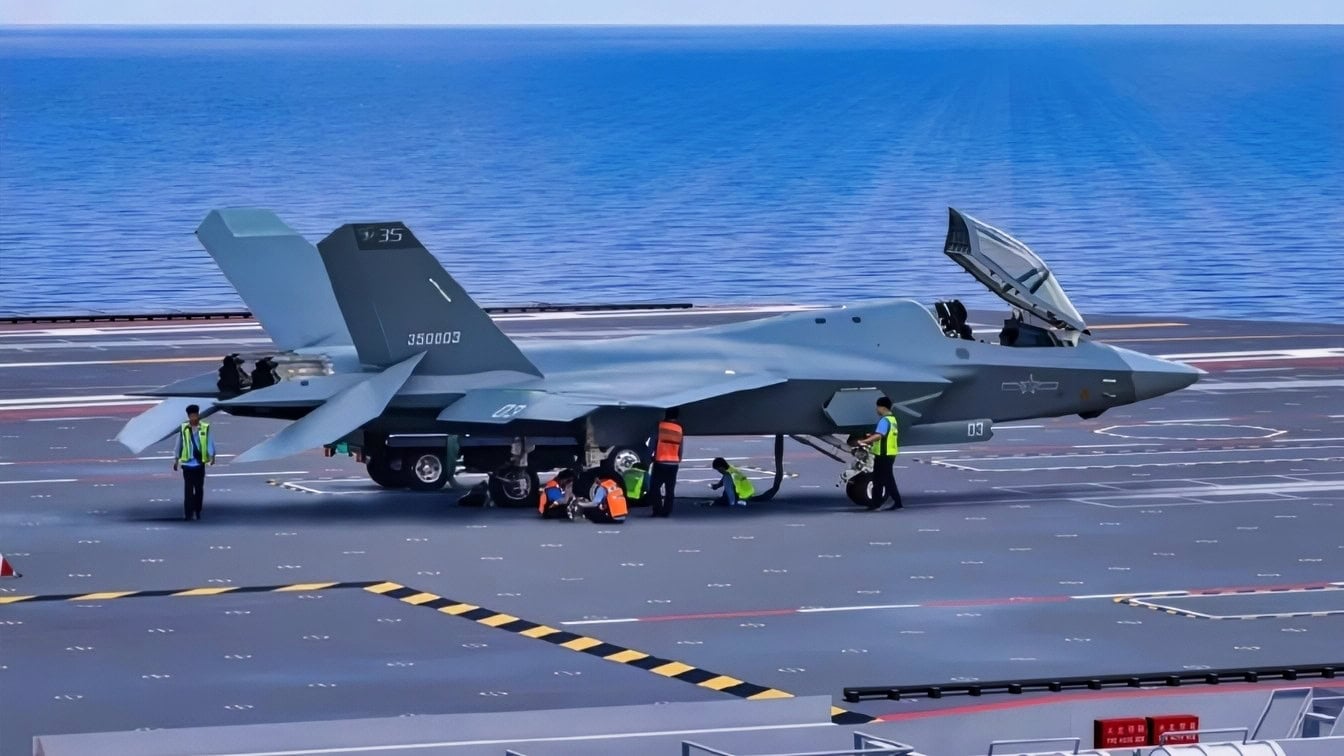
China J-35 Blue Shark Stealth Fighter
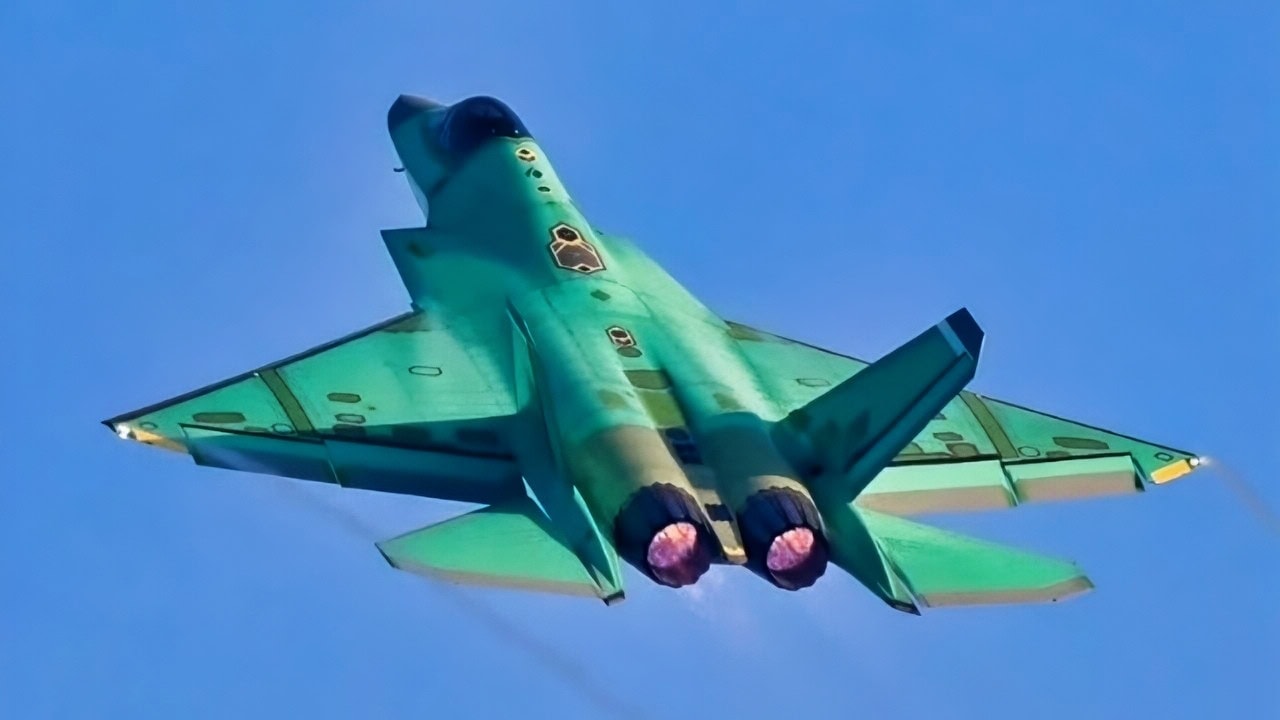
J-35A Stealth Fighter. Image Credit: Social Media Screenshot.
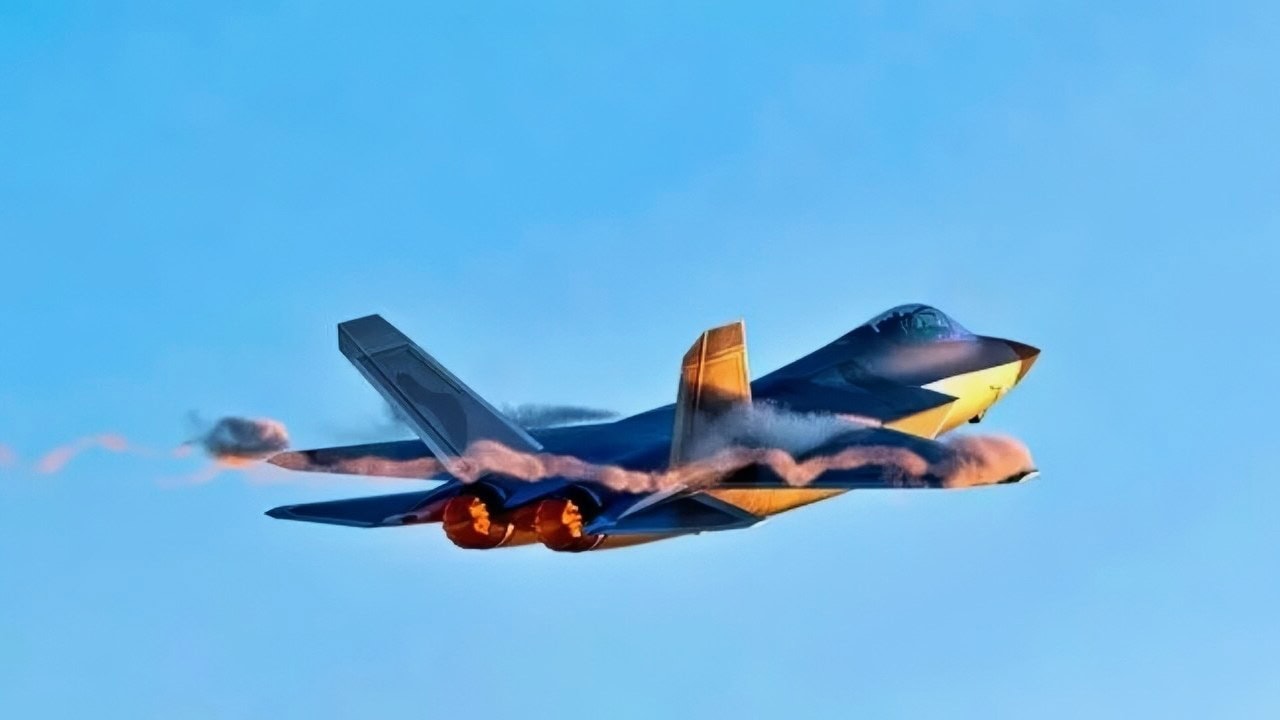
J-35A Fighter from China PLAAF. Image Credit: Creative Commons.
Ramping Up Production: The Business & Industrial Magic
What is more impressive is the production rate China has achieved on the J-35 project.
The aircraft has not yet been in service for a full year, and it is already at its 30th serial airframe. For comparison, the Su-57 entered service in 2020, and only around 40 serial airframes have been produced (not all of which have been put into service).
Granted, if we count the FC-31, the aircraft has been in development since 2012. Shenyang has had a lot of time to refine the aircraft and prepare for mass production has expanded its production facilities for serial production.
That said, some experts speculate that the aircraft will be produced on a smaller scale than the J-20.
The J-35 is intended to be the PLAN’s premier naval aircraft, complementing or even replacing the J-15. The aircraft itself is a direct challenge to the United States and its F-35.
It is no secret that the two aircraft share a similar fuselage and wing configuration, though this is partly attributable to stealth and aerodynamic considerations.
The J-35 is a significant boost to the PLAN’s power projection capabilities, enabling its carriers to launch air strikes without being detected by enemy radars until it is too late.
It is a significant force multiplier in the Pacific and makes U.S. planning for a Taiwan contingency all the more difficult.
Aerospace Questions: What is the J-35 Capable of?
In terms of actual specs and capabilities, there isn’t too much to go by except for footage and claims released by the CCP.
The aircraft is reportedly fitted with an advanced AESA radar and a distributed aperture system, which enables infrared search and track (IRST) and early-warning capabilities.
The FC-31 was advertised as having the KLJ-7A radar, which supposedly has capabilities similar to those of the American AN/APG-81 radar used on the F-35.
However, it is not known whether the J-35 actually uses the KLJ-7A or what the radar’s true capabilities are. The aircraft reportedly has a radar cross-section smaller than a human palm, according to Chinese propaganda.
Like the J-20, the J-35 has gone through several engines throughout its development history.
As stated earlier, the first FC-31 used Russian-made RD-93 engines, which were later replaced with more efficient domestically-made WS-13 engines.
Later prototypes and early production aircraft used improved WS-21 engines, while more recent aircraft use WS-19 engines.
These new engines are capable of producing around 26,000 lb of thrust each and enable the aircraft to reach speeds of Mach 1.8. The engines also reportedly enable the aircraft to supercruise, but there is no confirmation of this yet. It has a combat range of 670 nautical miles without external fuel tanks and can be fitted with PL-15 long-range missiles in its internal bays.
About the Author: Isaac Seitz
Isaac Seitz, a Defense Columnist, graduated from Patrick Henry College’s Strategic Intelligence and National Security program. He has also studied Russian at Middlebury Language Schools and has worked as an intelligence Analyst in the private sector.